
A 10-yard dumpster is one of the most commonly rented sizes for residential projects, small enough to fit in a standard driveway, big enough to handle a bathroom remodel or a garage cleanout. But when you start searching for a 10 yard dumpster rental price, the numbers you find can vary wildly. National averages only tell part of the story, and local factors like disposal fees and landfill regulations often have a bigger impact on your final bill than the dumpster itself.
At Dump Express, we rent 10-yard dumpsters across Cape Cod and the Plymouth area every day. We see firsthand how pricing shifts from town to town based on disposal costs, permit requirements, and the type of material being tossed. That experience gives us a clear picture of what actually drives the cost, and where people end up paying more than they should because they didn’t have the right information upfront.
This guide breaks down 2026 pricing for 10-yard dumpster rentals, covers the key factors that affect what you’ll pay, and gives you a straightforward framework for comparing quotes from any provider. Whether you’re clearing out a basement or managing a small renovation, you’ll walk away knowing exactly what to expect before you book.
Typical 10 yard dumpster rental price in 2026
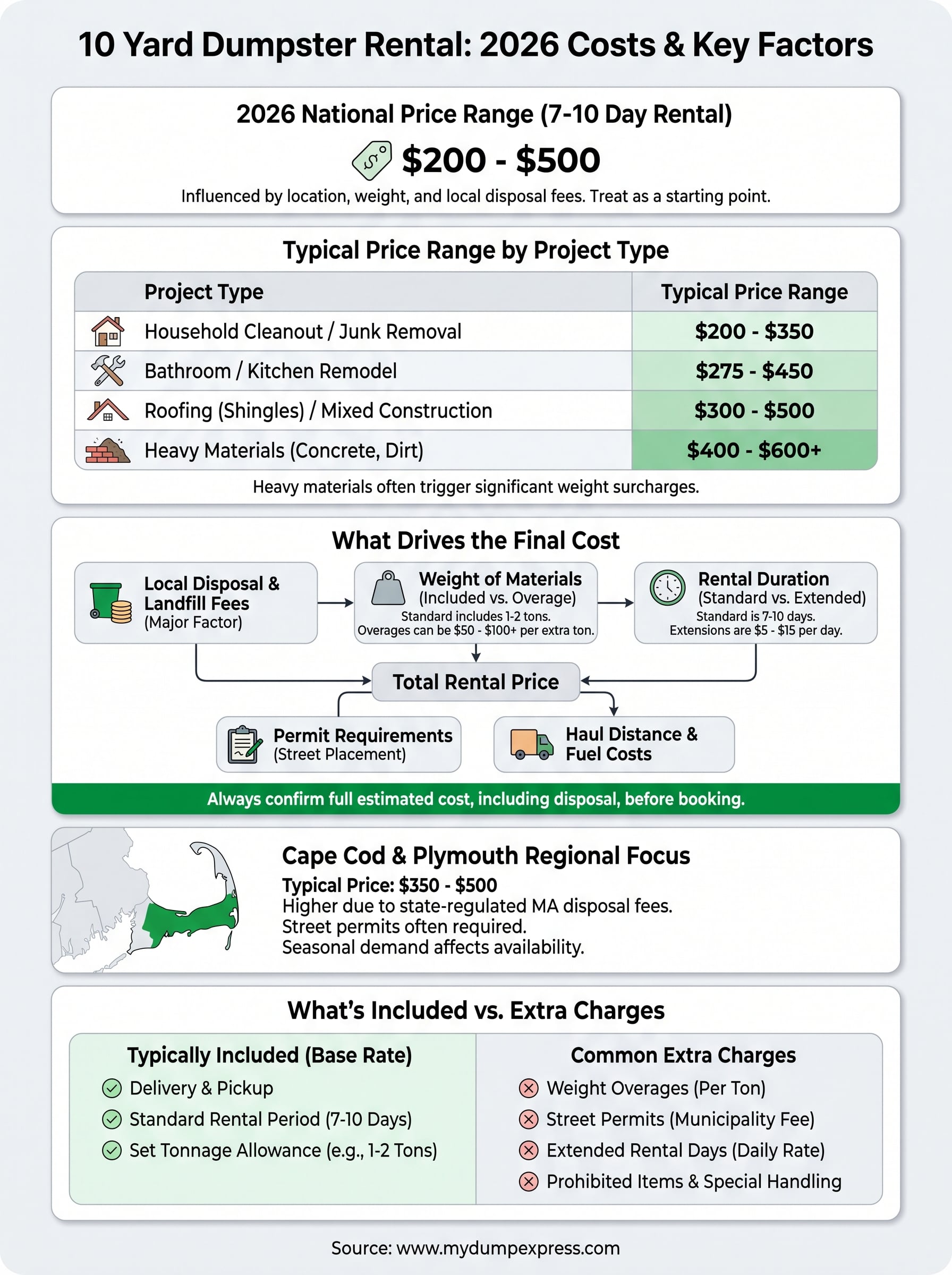
The average 10 yard dumpster rental price in 2026 falls between $200 and $500 for a standard rental period of 7 to 10 days. That range covers most residential projects using general household debris, but the number you actually pay depends heavily on your location, the weight of your materials, and how your local disposal facility charges for waste processing. Treat the national average as a starting reference point, not a firm quote.
National price range by project type
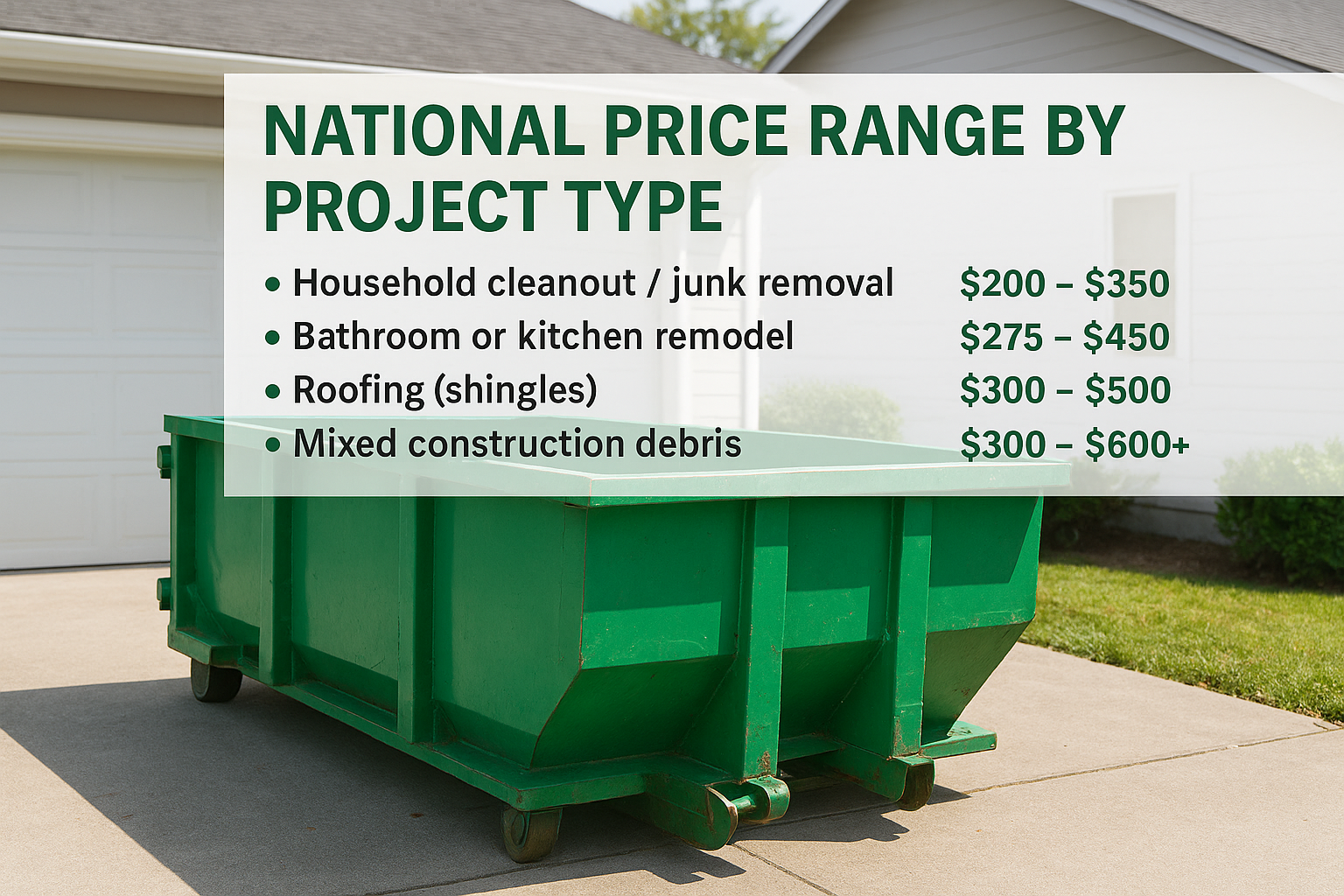
Prices shift based on what you’re throwing away. A straightforward cleanout with light household junk sits at the low end of the range, while heavier materials like roofing shingles, mixed construction debris, or dense soil push the cost higher because disposal facilities charge more to process them. The table below shows what most renters pay for a 10-yard dumpster in 2026, broken down by common project type.
| Project Type | Typical Price Range |
|---|---|
| Household cleanout / junk removal | $200 – $350 |
| Bathroom or kitchen remodel | $275 – $450 |
| Roofing (shingles) | $300 – $500 |
| Mixed construction debris | $300 – $500 |
| Heavy materials (concrete, dirt) | $400 – $600+ |
Heavy materials like concrete and dirt often trigger weight surcharges that can double your base rental cost, even when the dumpster itself is only half full.
Flat-rate vs. variable pricing models
Two pricing models dominate the dumpster rental market, and knowing which one you’re looking at changes how you compare quotes. Flat-rate pricing bundles delivery, pickup, and a set tonnage allowance into one number. Variable pricing starts with a low base rate and adds disposal fees, fuel surcharges, and overage charges separately. Both are legitimate approaches, but the final number can look very different from the initial quote depending on which model your provider uses.
With variable pricing, the base rate often looks attractive upfront. But once disposal fees, fuel surcharges, and weight overages get added in, your total can climb well above what a flat-rate provider would have charged from the start. Always ask for the full estimated cost including waste disposal, not just the delivery and pickup fee, before you commit to any provider.
How rental duration affects your total cost
Standard rental periods run 7 to 10 days with most providers, which covers the majority of home projects without any issues. If your project runs longer, expect to pay a daily extension fee that typically ranges from $5 to $15 per day, depending on the provider and your region.
Returning the dumpster early rarely lowers your bill. Most providers charge the full rental period regardless of how quickly you finish loading. The smarter move is to stage your project before the dumpster arrives so you can work efficiently within the standard window instead of paying for extra days you did not plan for.
Regional price differences to keep in mind
Where you live affects your 10 yard dumpster rental price as much as any other single factor. Urban markets with higher operating costs and longer haul distances to disposal facilities tend to run on the higher end of national ranges. Rural and suburban areas can be cheaper on the base rate but may carry higher disposal fees if the nearest transfer station is far away.
Northeast markets, including Massachusetts, routinely fall in the $300 to $500 range due to state-regulated disposal fees and higher operational costs. Understanding your regional baseline helps you recognize a fair quote and flag one that is padded with unnecessary add-ons before you sign anything.
What changes the price in your area
The national average for a 10-yard dumpster rental gives you a useful starting point, but your actual bill gets shaped by conditions specific to your location. Two customers renting the same size dumpster for the same number of days can end up with quotes that differ by $150 or more, purely because of where they live and what they’re throwing out. Understanding what drives those differences helps you evaluate quotes more accurately and avoid surprises.
Local disposal and landfill fees
Disposal fees represent the single biggest variable in your final cost. Every transfer station and landfill sets its own tipping rate, which is the fee charged per ton of waste delivered. When those rates are high in your area, your rental provider pays more to dispose of your debris, and that cost gets passed to you.
In Massachusetts, state-regulated disposal fees consistently push total rental costs above the national median, which is why local quotes often look higher than what you see on national comparison sites.
Seasonal demand also affects disposal availability in some regions. During peak construction months, transfer stations in high-traffic areas may charge premium rates or limit drop-off windows, both of which filter into your rental price.
Permit requirements and placement rules
Some towns require a street permit before a dumpster can sit on a public road or sidewalk. Permit fees vary widely, anywhere from $20 to over $100 depending on your municipality, and they typically fall on the renter rather than the provider. If you place the dumpster entirely on private property like a driveway, most towns waive the permit requirement entirely, which is worth checking before you book.
Local zoning rules can also limit where on your property a dumpster can sit, which sometimes requires a different delivery approach and adds time to the drop-off.
Haul distance and fuel costs
Your 10 yard dumpster rental price includes the cost of getting the dumpster to your door and hauling it away when you are done. Providers calculate that cost based on how far your location sits from their yard. If you are in a remote area or far from a disposal facility, fuel and drive time add to your base rate in ways that a centrally located customer would not see.
Providers with multiple yard locations can reduce that distance-based cost, which is one practical reason why local companies with regional infrastructure often quote more competitively than large national operators covering the same geography from a single hub.
What the price usually includes and excludes
When you get a quote for a 10 yard dumpster rental price, knowing what that number actually covers saves you from budget surprises when the invoice arrives. Most providers bundle several services into their quoted rate, but the line between included and excluded items varies enough between companies that you should always confirm the full breakdown in writing before you commit to any booking.
What your rental price typically covers
A standard quote from most dumpster rental providers includes delivery to your location, pickup when the rental period ends, and one load of waste disposal up to a set weight limit. That weight limit is the critical number to nail down, because it determines how much material you can load without triggering extra fees. Providers typically set their included tonnage between 1 and 2 tons for a 10-yard container, which covers most light residential projects with room to spare.
Your quote usually also factors in basic driver coordination and standard fuel costs within a reasonable service radius. Local providers with nearby yard locations tend to keep those built-in costs lower than national chains hauling from a distant hub.
Always ask your provider to confirm the exact tonnage included in your quote before you book, not after the dumpster gets picked up.
What usually gets charged separately
Weight overages are the most common source of unexpected charges. If your debris exceeds the included tonnage limit, most providers charge a fee per additional ton, which typically ranges from $50 to $100 or more depending on your area’s disposal rates. Heavy materials like concrete, tile, and roofing shingles push you over that limit faster than you might expect, even in a container that looks far from full.
Beyond weight, several other costs fall outside the standard rental rate. Permit fees for street placement, special handling fees for prohibited materials like mattresses or appliances, and extended rental days all appear as add-ons. Some providers also charge a same-day or weekend delivery premium that does not show up in the base quote. Running through this checklist before you confirm your booking keeps the final invoice close to what you planned for:
- Weight overage rate per additional ton
- Street permit fee if placing on a public road
- Extended rental day rate beyond the standard window
- Special handling or prohibited material fees
- Same-day or weekend delivery surcharge
How to choose a 10 yard dumpster for your project
A 10-yard dumpster sits in a practical middle range that works well for most residential cleanouts and small remodels, but it is not the right fit for every job. Before you commit to a size and factor in the 10 yard dumpster rental price, spend a few minutes thinking through your project scope, the type of materials you are clearing, and how much space you have on your property for a container.
Projects that fit a 10-yard container
This size holds roughly 10 cubic yards of material, which translates to about three to four pickup truck loads of debris. That capacity handles the majority of single-room renovation projects, moderate garage or basement cleanouts, and light landscaping jobs without leaving you paying for unused space. If your project involves tearing out one bathroom, clearing a cluttered basement, or stripping old flooring from a single room, a 10-yard container is likely the right call.
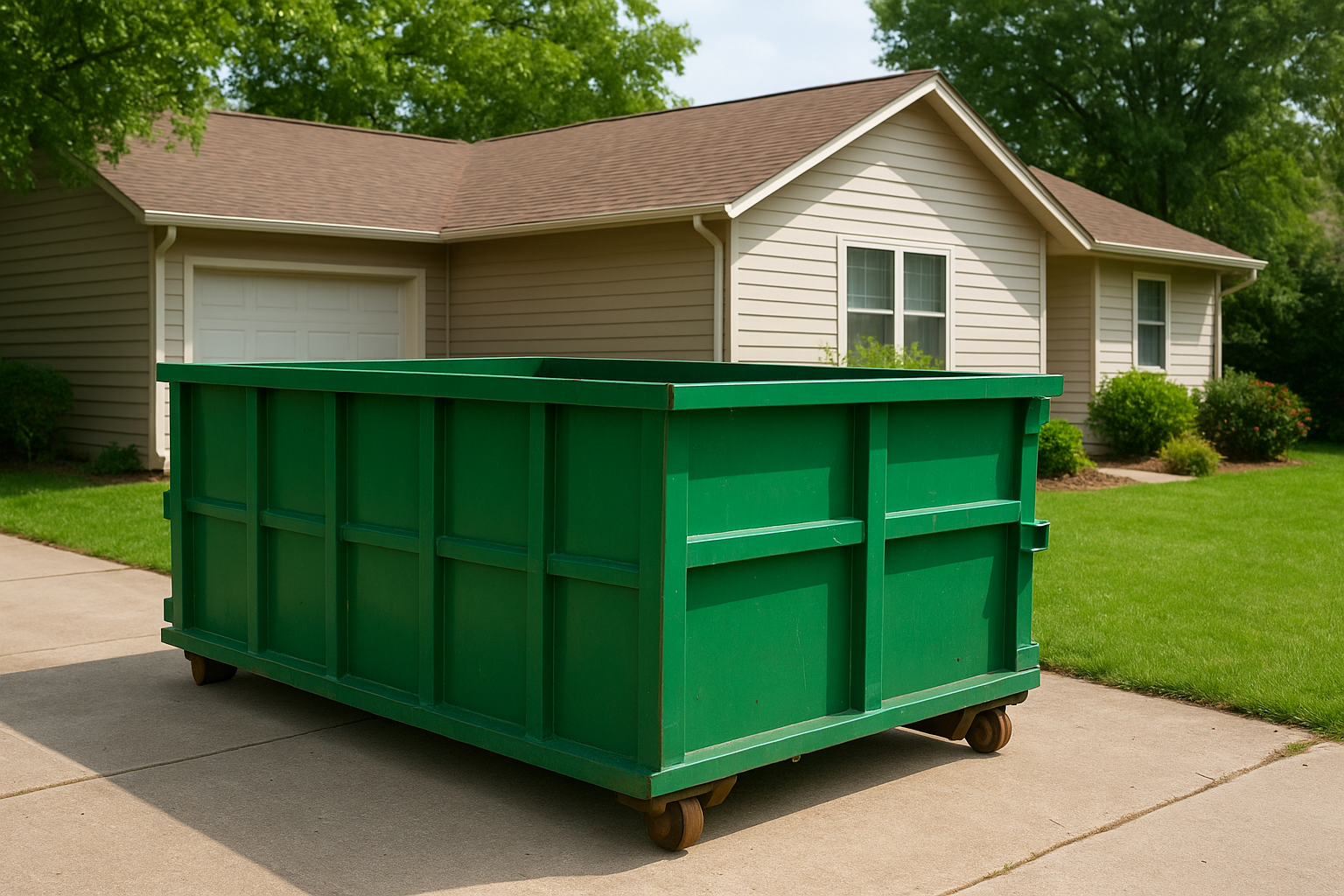
A 10-yard dumpster fits in a standard two-car driveway, which makes it the most accessible option for homeowners with limited outdoor space.
Here are common projects that typically fit within a 10-yard container:
- Bathroom or kitchen remodel involving one room
- Garage or basement cleanout with general junk and furniture
- Attic cleanout with boxes, old furniture, and light debris
- Small landscaping job with brush, branches, and light soil
- Single-room flooring removal including tile, wood, or carpet
When to size up or size down
Choosing the wrong container size costs you money in one of two ways. If you underestimate your load, you pay for a second haul, which is almost always more expensive than simply booking the next size up from the start. If you overestimate, you rent capacity you never fill and pay a higher base rate than your project required.
Size up to a 15-yard container if your cleanout spans multiple rooms, your renovation involves structural materials like drywall or subfloor, or you expect to fill the 10-yard unit and still have debris left over. Size down to a 5-yard container if your project is a small furniture clear-out, a single appliance removal, or a minor landscaping task where a 10-yard unit would sit mostly empty throughout the rental period.
Cape Cod and Plymouth pricing and local rules
Renting a dumpster on Cape Cod and in the Plymouth area comes with a specific set of cost drivers that national pricing guides simply do not reflect. Local disposal fees, town-specific permit rules, and the geography of the Cape all factor into what you pay, and understanding them helps you evaluate any 10 yard dumpster rental price you receive from a regional provider accurately.
What you’ll pay in this region
In the Cape Cod and Plymouth area, a 10-yard dumpster rental typically runs between $350 and $500 for a standard 7 to 10 day rental with general household debris. That range sits above the national median, and for good reason. Massachusetts disposal fees are regulated at the state level, which means transfer stations across the region charge higher tipping rates than many other parts of the country. Those rates feed directly into your rental cost, regardless of which provider you book through.
Comparing a Cape Cod quote to a national average without accounting for Massachusetts disposal fees will almost always make the local number look inflated when it is actually fair.
Material type still matters significantly here. Heavier loads involving roofing shingles, tile, or mixed construction debris push your total higher because disposal facilities charge more per ton for those materials. A light household cleanout on the low end of that range and a dense renovation tearout on the high end are both normal outcomes in this market.
Local rules that affect your rental
Several towns on Cape Cod and in Plymouth County require a street permit before a dumpster can sit on a public road or town right-of-way. Permit fees vary by town, and the application process differs as well. Placing your dumpster on a private driveway eliminates the permit requirement in most cases, which is the simplest way to avoid that added cost and scheduling step.
Seasonal timing also plays a role on the Cape. Summer months bring higher demand from contractors and homeowners running concurrent projects. Booking early in the spring or outside peak season gives you more scheduling flexibility and reduces the chance of delivery delays during busy stretches.
Why local knowledge changes your experience
A provider with multiple yards on or near the Cape can haul shorter distances to your site and to the disposal facility, which keeps fuel costs lower and turnaround times faster than a regional operator covering the same towns from a single distant hub. That infrastructure difference shows up both in competitive pricing and in scheduling reliability, particularly when you need same-day or next-day delivery on a tight project timeline.
Next steps to book the right dumpster
You now have a clear picture of what shapes a 10 yard dumpster rental price in 2026, from regional disposal fees to weight limits and permit rules. The next step is straightforward: confirm your project scope, estimate your debris weight honestly, and get a complete quote that includes tonnage, delivery, and disposal before you commit. If your project sits firmly in the one-room renovation or single-space cleanout category, a 10-yard container will handle it cleanly without paying for unused capacity.
If you are planning a project on Cape Cod or in the Plymouth area, Dump Express provides transparent, town-specific pricing with no hidden fees and a local team that knows the region’s rules and access challenges. Get a quote or book your dumpster rental today and get your project moving with a reliable delivery you can actually count on.