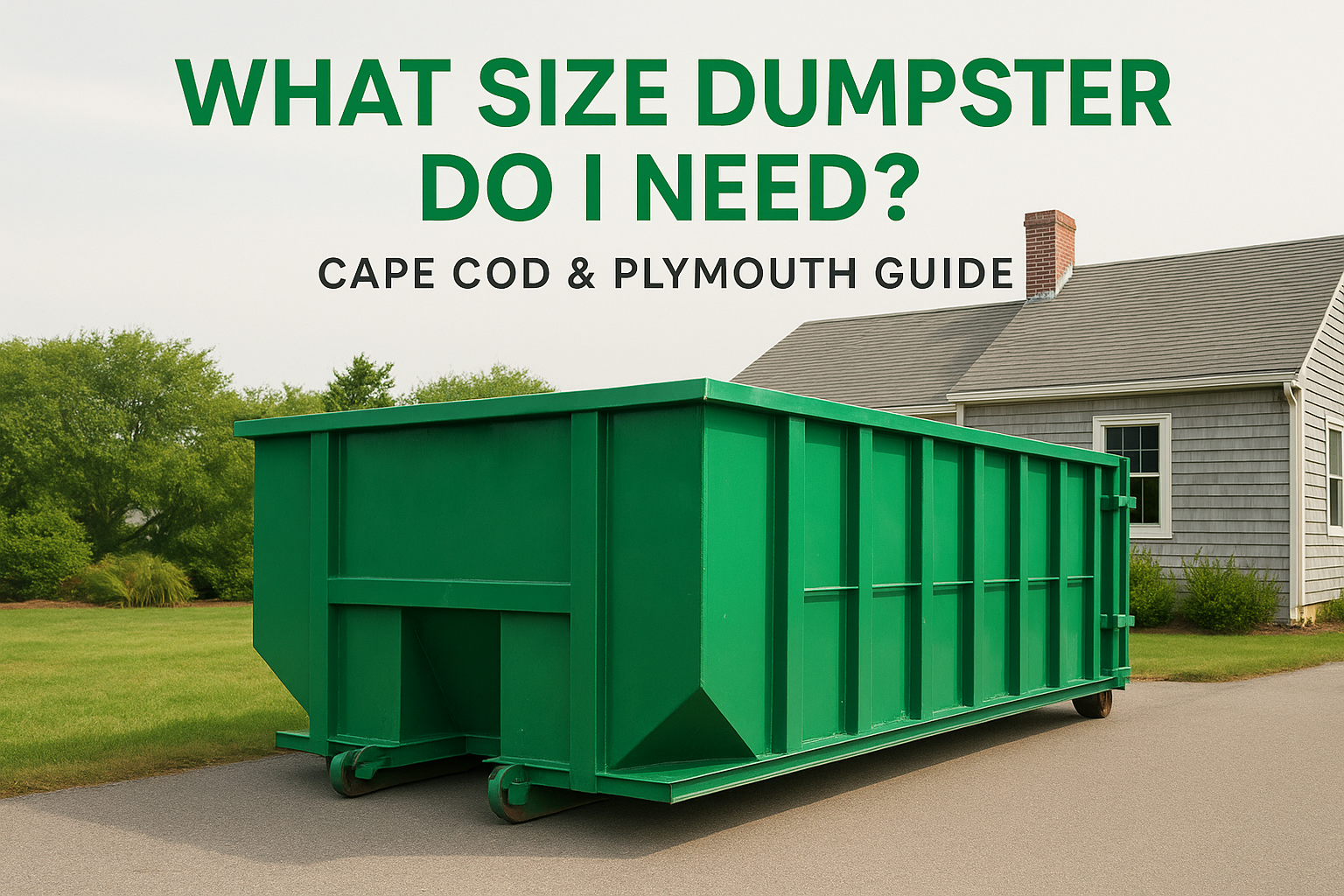
Whether you’re gutting a bathroom, clearing out a garage, or managing demo debris on a job site, the first question is always the same: what size dumpster do I need? Pick too small and you’re paying for a second haul. Pick too big and you’re wasting money on capacity you’ll never fill. Either way, it’s a frustrating (and avoidable) mistake.
At Dump Express, we’ve been delivering dumpsters across Cape Cod and Plymouth for over 20 years, and sizing questions are the number one thing our customers ask about before booking. We get it. Cubic yards don’t mean much until you’ve seen what actually fits inside a container. That’s why we put this guide together: real-world sizing breakdowns based on common projects, not vague estimates.
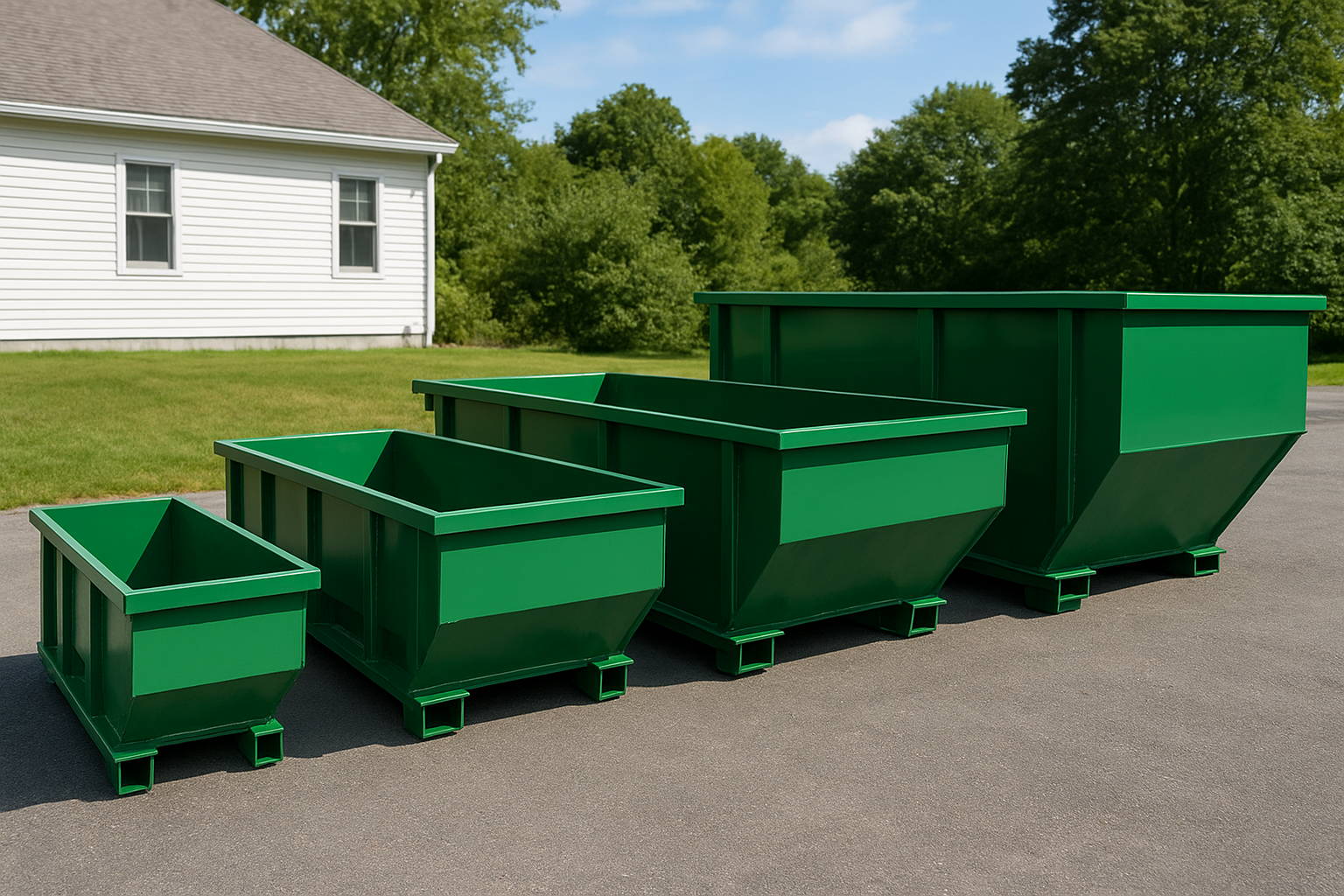
Below, you’ll find a comparison of our four dumpster sizes, 5, 10, 15, and 20 yards, with dimensions, capacity details, and project-specific recommendations to help you get it right the first time. No guesswork, no second trips.
How dumpster sizes work in our area
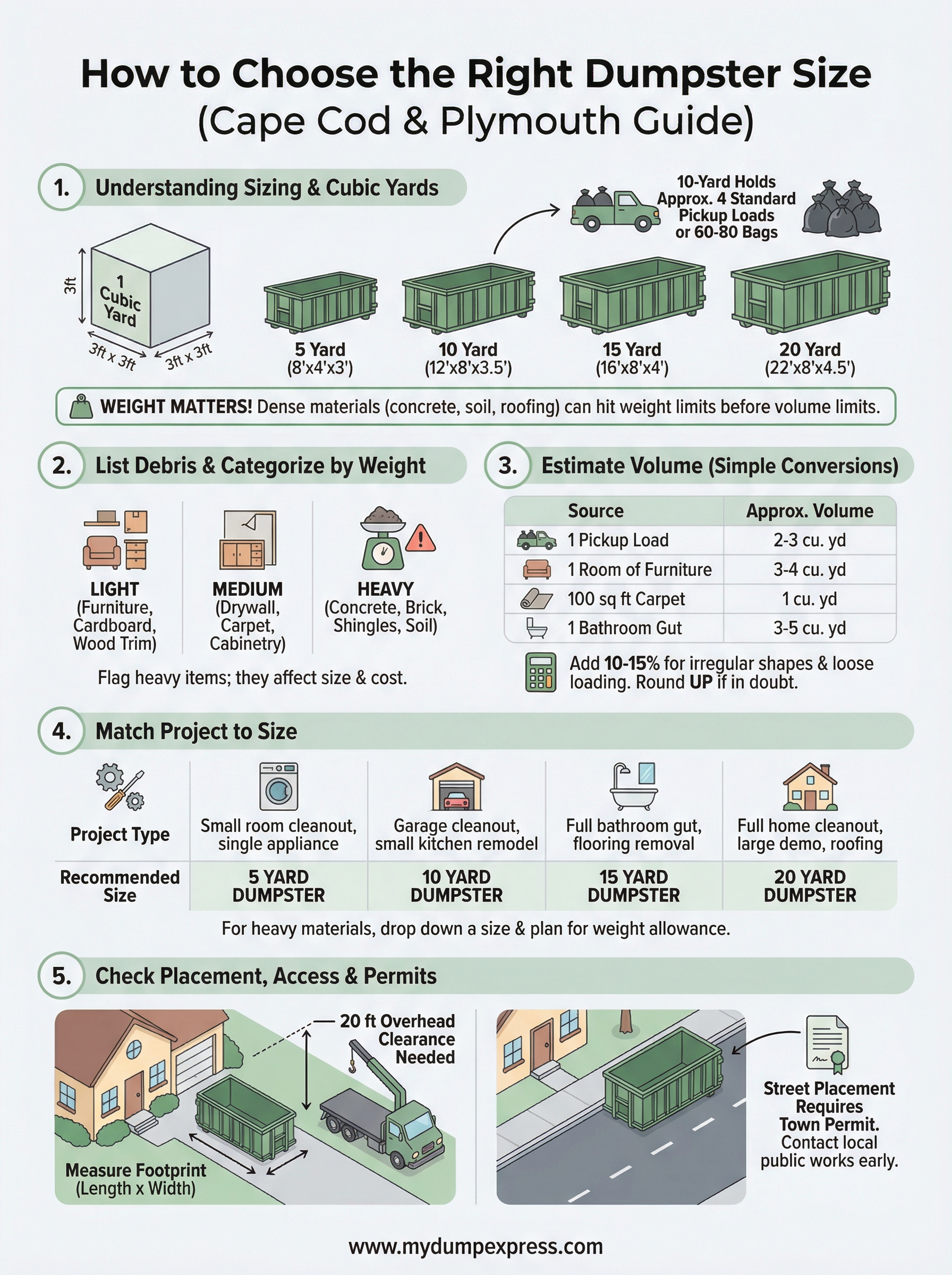
Dumpster sizes in the Cape Cod and Plymouth area follow the same standard system used across the country: cubic yards. One cubic yard equals 3 feet wide, 3 feet long, and 3 feet tall, or 27 cubic feet of space. Dump Express offers four container sizes: 5, 10, 15, and 20 cubic yards, and each one suits a specific range of projects. Understanding how these containers translate to real-world space is the foundation for figuring out what size dumpster do I need before you ever pick up the phone.
Cubic yards in plain terms
A cubic yard sounds abstract, but it becomes concrete fast. One cubic yard holds roughly six to eight standard black garbage bags, which means a 10-yard dumpster holds the equivalent of 60 to 80 bags of debris. That’s a useful mental anchor when you’re standing in a cluttered basement trying to gauge volume. Keep in mind that weight matters just as much as volume, especially with heavy materials like concrete, soil, or roofing shingles.
If you fill a small dumpster with dense material, you can hit the weight limit well before you hit the volume limit.
Dimensions and capacity by size
Below is a direct comparison of all four Dump Express containers, including approximate footprint dimensions and practical capacity guidance.
| Size | Approx. Dimensions | Holds About |
|---|---|---|
| 5 yard | 8 ft x 4 ft x 3 ft | Small cleanouts, 1 to 2 rooms of light furniture |
| 10 yard | 12 ft x 8 ft x 3.5 ft | Medium cleanouts, small bathroom remodel debris |
| 15 yard | 16 ft x 8 ft x 4 ft | Whole-room demo, mid-size renovation waste |
| 20 yard | 22 ft x 8 ft x 4.5 ft | Full home cleanout, large construction jobs |
Footprint size matters on Cape Cod properties where driveways can be narrow, tight, or shared. Before you book, measure your available placement space and factor in overhead clearance for the delivery truck.
Step 1. List your debris and watch the weight
Before you can answer what size dumpster do I need, you need to know exactly what you’re throwing out. Walk through your project space and write down every category of material you plan to discard: old furniture, drywall, flooring, appliances, yard waste, or construction debris. A physical list stops you from underestimating volume and forces you to flag heavy materials before you book.
Why weight limits change everything
Dense materials like concrete, brick, tile, and soil add up fast and can push a container over its weight limit long before you run out of space. Each Dump Express dumpster comes with a set tonnage allowance, and exceeding that limit means overage charges on your final bill.
If your project involves roofing shingles, concrete, or dirt, flag it before you book so we can match you with the right container and weight allowance.
Run your debris through these three categories before calling:
- Light: furniture, cardboard, clothing, plastic, wood trim
- Medium: drywall, carpet, general renovation debris, cabinetry
- Heavy: concrete, brick, tile, roofing shingles, soil
Knowing which category dominates your load tells you whether volume or weight will be your binding constraint, and that single insight drives the right container choice.
Step 2. Estimate volume with simple conversions
Once you’ve listed your debris categories, translate that list into cubic yards before you answer what size dumpster do I need. Most people think in truckloads or rooms, not cubic yards, so a few simple conversions bridge that gap. The goal is a working number you can compare directly to the container sizes covered in the previous section.
A solid estimate upfront saves you from booking a second dumpster later.
Common volume reference points
These conversions give you a reliable baseline for estimating how much space your debris will actually fill inside a container. Use them as a starting point, then add 10 to 15 percent to account for irregular shapes and loose loading.
| Source | Approximate Volume |
|---|---|
| One standard pickup truck load | 2 to 3 cubic yards |
| One standard room of furniture | 3 to 4 cubic yards |
| 100 sq ft of carpet removed | 1 cubic yard |
| 100 sq ft of hardwood flooring | 1.5 cubic yards |
| One bathroom gut (fixtures + drywall) | 3 to 5 cubic yards |
Add up your totals
Work through your debris list and assign a cubic yard estimate to each item using the table above. Then add those numbers together and round up to the nearest container size. If your total falls between two options, choose the larger one.
For example, clearing a bedroom (4 cubic yards) plus pulling carpet from two rooms (2 cubic yards) gives you a rough total of 6 cubic yards. That pushes past a 5-yard container, so booking a 10-yard is the right call.
Step 3. Match your project to 5, 10, 15, or 20
With your cubic yard estimate from Step 2 in hand, matching that number to the right container is straightforward. Use your total to find your project type in the table below, then confirm it aligns with your volume estimate before you book.
When in doubt between two sizes, always go up; a slightly larger container costs less than a second haul.
Project-by-project size breakdown
The table below maps common project types to the container that handles them most reliably. This is where answering what size dumpster do I need gets concrete: your project type and your volume estimate should point to the same container.
| Project Type | Recommended Size |
|---|---|
| Small room cleanout, single appliance removal | 5 yard |
| Garage cleanout, small kitchen remodel | 10 yard |
| Full bathroom gut, whole-floor flooring removal | 15 yard |
| Full home cleanout, large renovation, roofing job | 20 yard |
Heavy materials like concrete or shingles shrink your effective capacity, so drop down one size and plan for the weight limit rather than the volume limit. If your project mixes light and heavy debris, split your estimate by material type and weigh each category separately before finalizing your choice.
Step 4. Check placement, access, and permits
Once you’ve figured out what size dumpster do I need for your project, placement and access become your next priority. Cape Cod driveways can be short, narrow, or surfaced with gravel, and tight lots in older Plymouth neighborhoods sometimes limit where a delivery truck can safely maneuver. Confirm your placement spot before you book, not after the truck arrives.
Measure your space and clearance
Use a tape measure to check the length and width of your intended placement area against the container dimensions from the earlier table. You also need at least 20 feet of overhead clearance to accommodate the delivery arm on the truck. Low branches, power lines, and roof overhangs are common obstacles on Cape Cod properties.
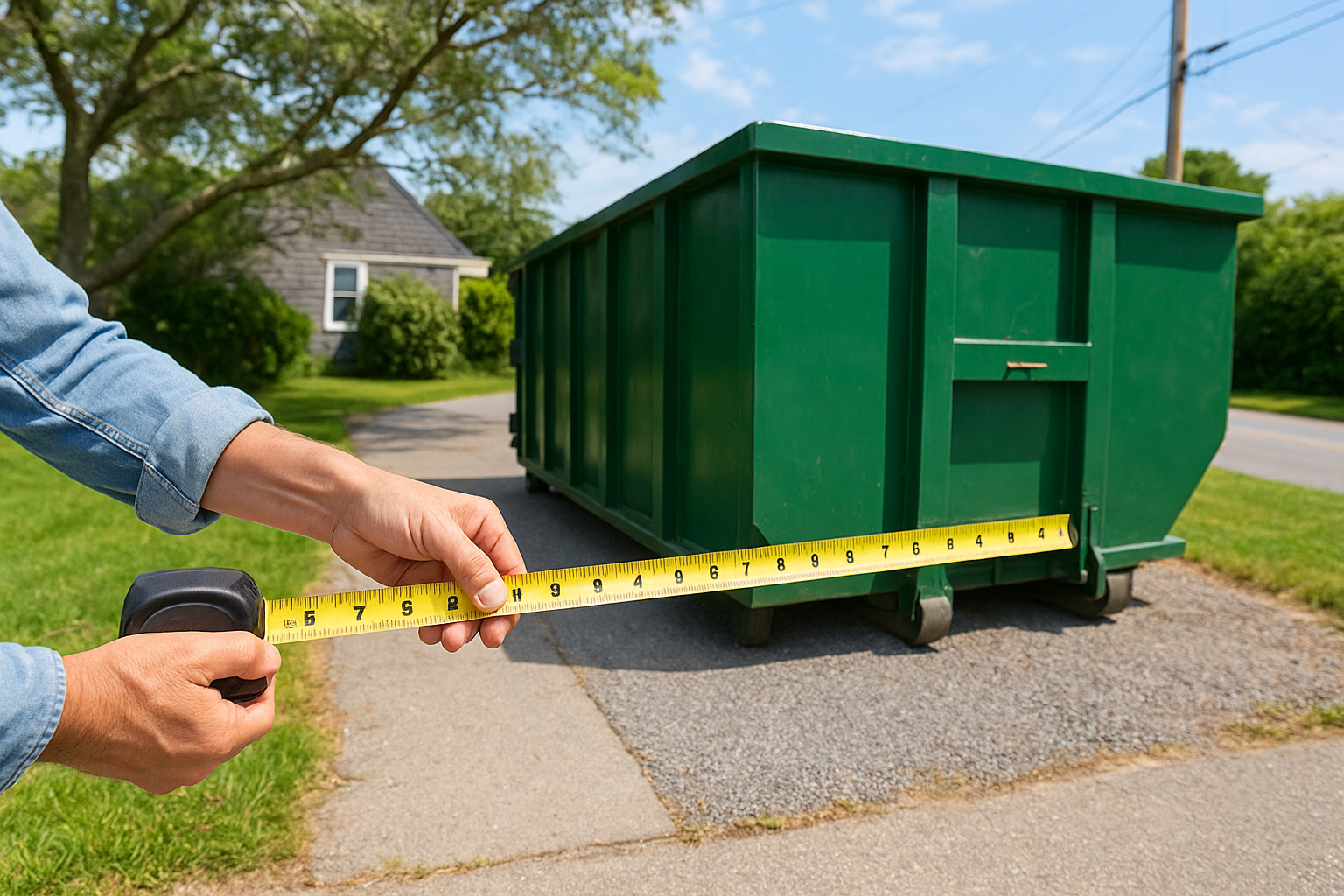
If your driveway is too tight or the surface is too soft, the driver may need to place the container on the street instead.
Permits for street placement
Street placement requires a permit from your local town office, and requirements vary across Cape Cod and Plymouth area municipalities. Contact your town’s public works or highway department at least a few days ahead of delivery to confirm what’s needed. Dump Express can advise you on local permit requirements when you call to book.
Quick recap and next step
Figuring out what size dumpster do I need comes down to four steps: list your debris and flag heavy materials, convert your totals into cubic yards, match that number to the right container, and confirm your placement space before delivery. Each step builds on the last, and skipping any one of them is how people end up paying for a second haul or dealing with a truck that won’t fit in the driveway.
Your next move is simple. Dump Express delivers to 40-plus towns across Cape Cod and Plymouth, seven days a week, with transparent pricing and no hidden fees on your final bill. Our team has handled every project type covered in this guide, from single-room cleanouts to full home renovations, and we can answer any last sizing question before you commit to a container. If two sizes still feel close, call us and we’ll settle it in minutes. Book your dumpster rental with Dump Express and get the right size on the first order.