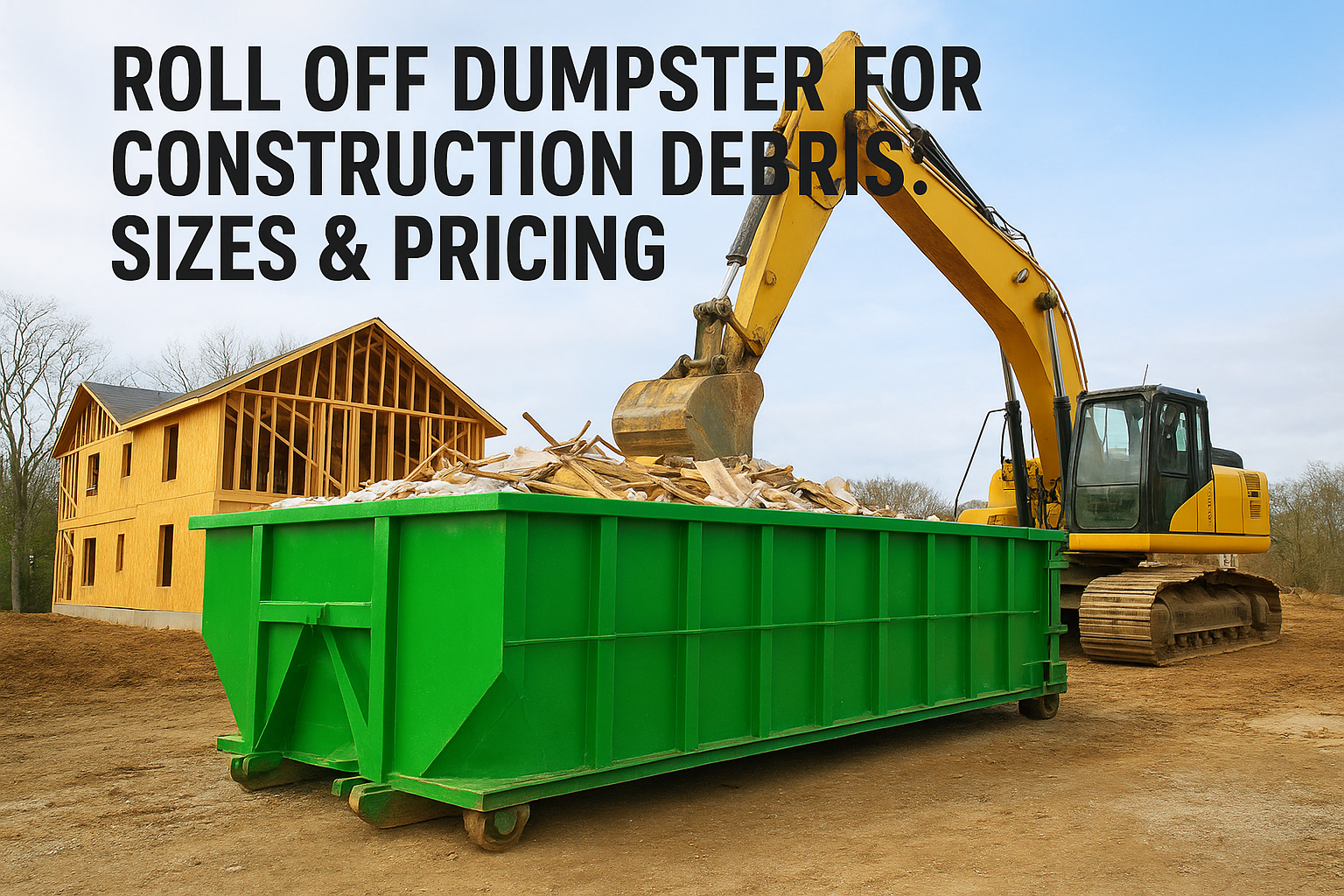
Construction and demolition projects generate a lot of waste, fast. Framing lumber, drywall scraps, old roofing, broken concrete, and general site debris pile up quickly, and without a plan to manage it, your job site becomes disorganized and unsafe. A roll off dumpster for construction debris is the most practical way to keep things moving. It sits on-site, takes heavy loads, and gets hauled away when you’re done. Simple as that.
But picking the right dumpster size and understanding what you’ll actually pay matters more than most people realize. Order too small and you’re scheduling a second haul, burning time and money. Order too large and you’re overpaying for capacity you didn’t need.
At Dump Express, we’ve spent over 20 years delivering dumpsters across Cape Cod and Plymouth for exactly these kinds of projects. This article breaks down the sizes available, what each one handles best, what pricing looks like, and how to make a smart choice before debris starts stacking up on your site.
Why construction debris needs a roll off dumpster
Construction sites produce a different category of waste than a standard home cleanout. Lumber, drywall, roofing materials, and broken concrete all require a container built for volume and weight. A regular trash bin won’t handle that load, and hauling debris yourself in a pickup wastes hours you can’t spare. A roll off dumpster for construction debris sits directly on your job site, giving your crew one designated place to dump material as the work progresses.
The volume problem with construction waste
Most people underestimate how fast debris accumulates on a job site. A single bathroom gut generates tile, subfloor, drywall, old fixtures, and framing scraps, which together can weigh several tons before demo is even finished. Residential trash bins and bag-based systems simply aren’t built for that kind of output.
Trying to manage construction waste in small batches costs more in hauling fees and lost labor hours than renting one properly sized container from the start.
When you consolidate everything into one roll off, your crew stops burning time on trash logistics and focuses on the actual work that moves the project forward. That alone tightens your timeline.
Safety and site organization
A cluttered job site is a dangerous one. Debris left on the ground creates trip hazards, blocks equipment access, and slows down every phase of work. A dedicated roll off container gives you a clear, central point for all waste, which keeps walkways open and reduces injury risk throughout the project.
OSHA identifies job site housekeeping as a critical safety requirement for construction operations. Having a designated container directly supports that standard. When workers know exactly where material goes, they get it there faster, and your site stays organized from the first swing of a hammer through final cleanup rather than devolving into a chaotic pile that slows everything down.
Roll off dumpster sizes for construction debris
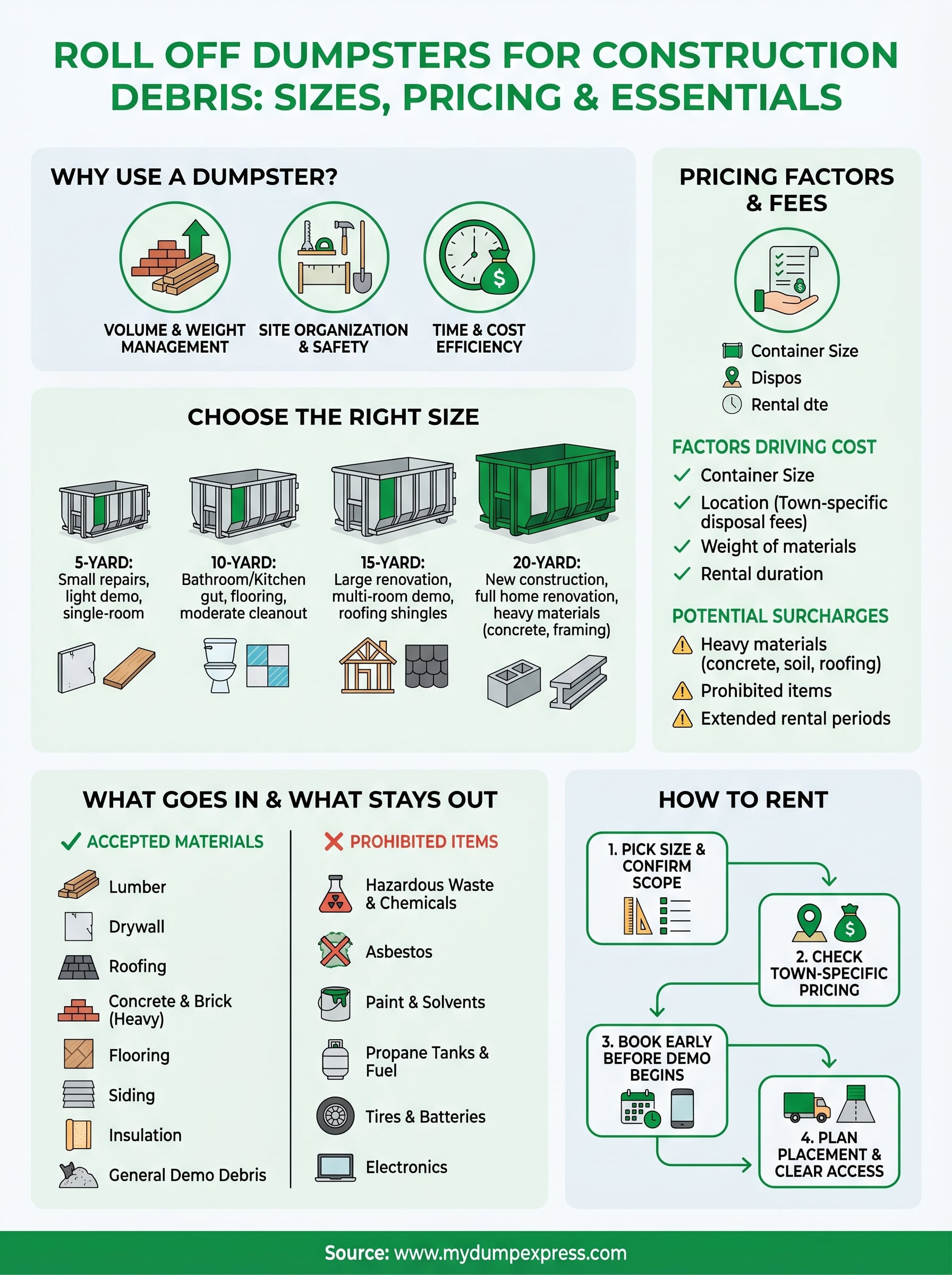
Choosing the right container size is the most important decision you make before a project starts. Order too small and your crew runs out of room mid-job, forcing a second haul and added cost. Order too large and you’re paying for capacity you never used. Dump Express offers four size options, each built for specific types and scales of construction work.
Smaller containers: 5-yard and 10-yard
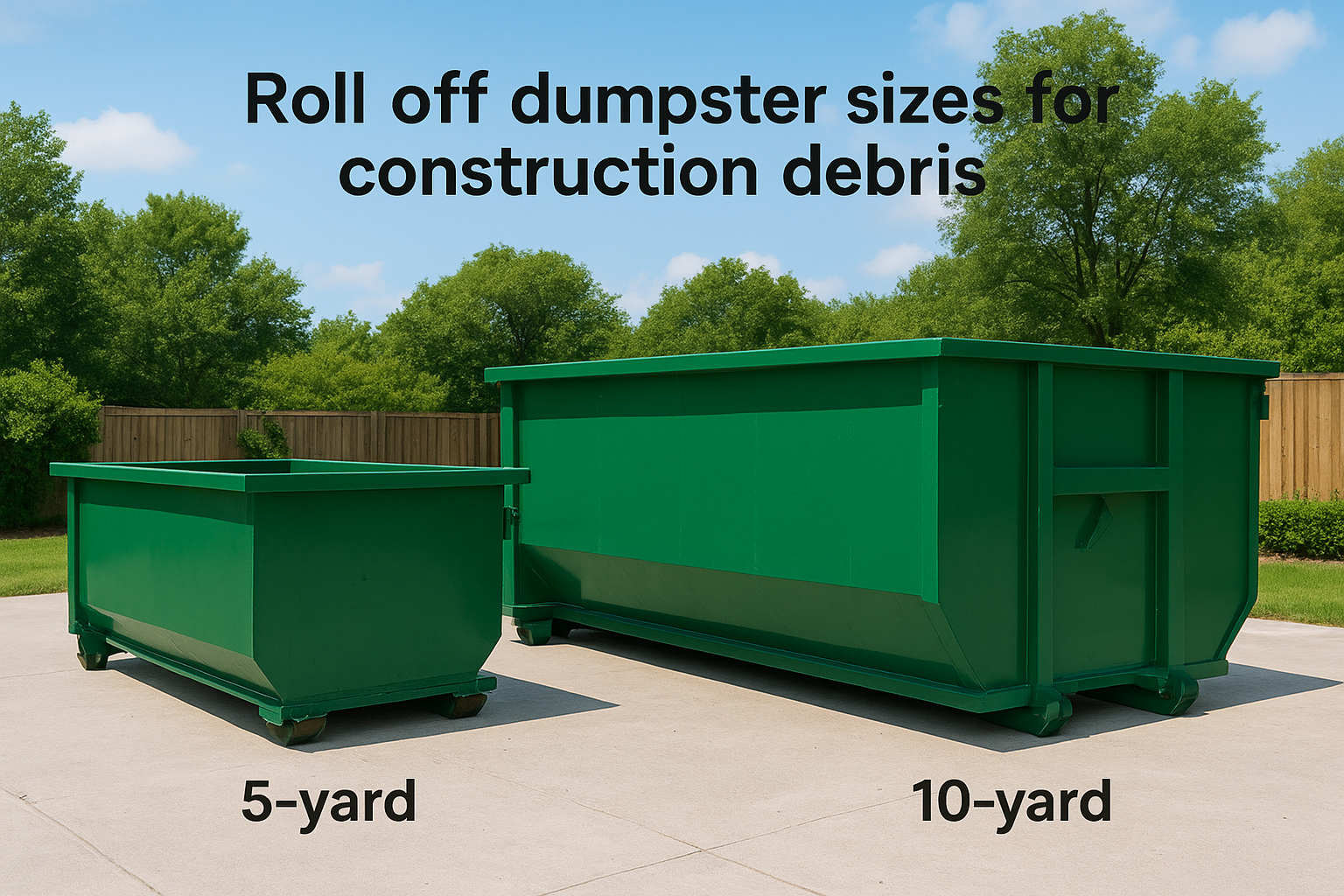
A 5-yard dumpster works best for minor repairs, small interior demo jobs, or single-room renovations where debris volume stays low. It fits in tight driveways and handles lighter loads of drywall scraps, lumber, and broken fixtures. The 10-yard container steps up to cover bathroom or kitchen gut jobs, flooring removal, or moderate cleanouts where volume builds quickly but overall weight stays manageable.
If you’re torn between a 5 and a 10, go with the 10 – running out of space mid-project costs more than the size upgrade.
Larger containers: 15-yard and 20-yard
The 15-yard option is where a roll off dumpster for construction debris really earns its place, handling larger renovation projects, multi-room demo work, and full roofing jobs where shingle volume adds up fast. Your best call for a complete home renovation, new construction site, or any project where heavy materials like concrete, framing lumber, and subfloor accumulate over multiple days is the 20-yard container.
Pricing and fees for roll off dumpster rentals
Roll off dumpster pricing varies based on container size, your location, and rental duration. At Dump Express, we publish town-specific pricing directly on our website so you know exactly what you’ll pay before you book. No callbacks required, no guessing.
What drives your total cost
Container size is the biggest pricing factor. Larger containers cost more because they carry more weight and take up more truck capacity. Your town’s disposal facility fees also factor in, since different municipalities charge different rates for accepting construction debris. That’s why pricing varies across Cape Cod and Plymouth area towns.
The main variables that affect your final price:
- Container size selected
- Town-specific disposal and tipping fees
- Weight of materials hauled
- Rental duration
Checking the town-specific pricing page before you book is the fastest way to get an accurate number for your project.
Surcharges to know about
Some materials carry additional fees beyond the base rental rate. Heavy debris like concrete, soil, and roofing shingles can trigger weight surcharges because they exceed standard load limits. Prohibited items that end up in your roll off dumpster for construction debris also generate fees, so knowing what goes in before you start saves money at pickup.
Rental duration is another variable. Standard rental periods cover most projects, but extended timelines may add to your total. Calling ahead to confirm your expected project length keeps surprises off your final invoice.
What you can put in and what stays out
Understanding what belongs in a roll off dumpster for construction debris before your project starts saves you from surcharges and disposal headaches at pickup. Most common construction materials are acceptable, but a few categories are strictly off-limits.
Accepted construction materials
Your dumpster handles the bulk of what a job site produces. Lumber, drywall, roofing shingles, flooring, siding, insulation, and broken concrete all go in without issue. Tile, plaster, metal framing, and general demo debris are also fine. Heavy materials like concrete and brick are accepted but may carry weight surcharges depending on volume.
Always confirm weight limits with your rental provider before loading heavy materials like concrete or soil to avoid unexpected fees at pickup.
What you cannot throw in
Certain materials require specialized disposal and cannot go into a standard roll off. These items are prohibited regardless of project type:
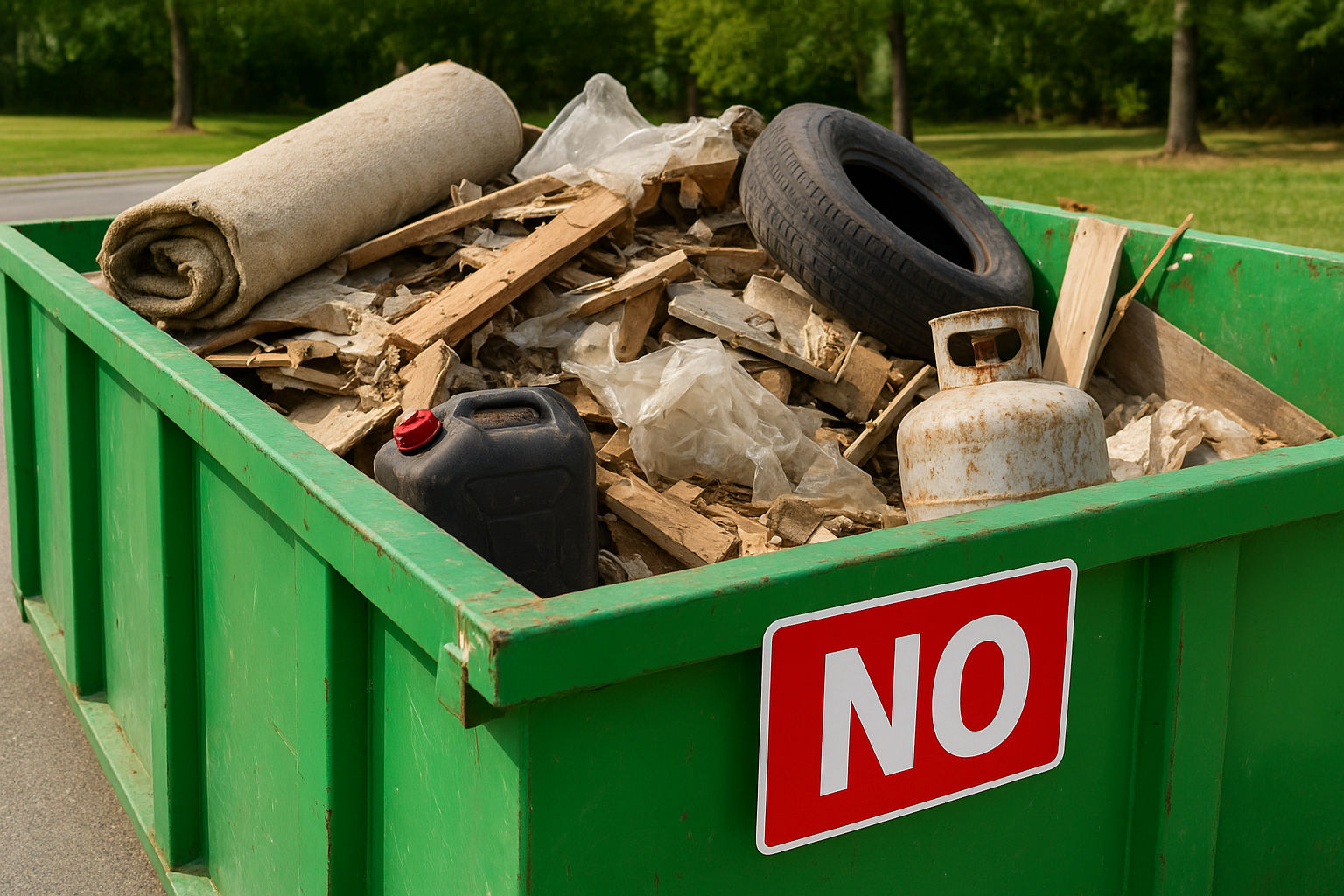
- Hazardous waste and chemicals
- Asbestos-containing materials
- Paint, solvents, and adhesives
- Propane tanks and fuel containers
- Tires and batteries
- Electronics
Asbestos and lead-based paint require licensed abatement contractors and cannot enter the waste stream through a standard dumpster rental. If your project involves older structures, test for these materials before demo starts. Disposing of prohibited items improperly generates additional fees and creates liability you want to avoid.
How to rent one in Cape Cod and Plymouth
Renting a roll off dumpster for construction debris in Cape Cod and Plymouth is straightforward when you work with a local provider who knows the area. Dump Express delivers to 40+ towns across the region, seven days a week, with same-day delivery available in select cases.
Pick your size and check pricing
Before you book, confirm your project scope and estimated debris volume so you choose the right container size from the start. Dump Express lists town-specific pricing on the website, so you can check your exact cost before calling or booking online.
- Identify your project type: demo, renovation, or new construction
- Estimate debris volume using the size guide
- Check your town’s pricing page for an accurate quote
Book early and plan your placement
Schedule your delivery before demo begins to keep your crew from waiting on a container. Once you book, plan where the dumpster sits on-site so drivers can place it efficiently on delivery day. Keep the drop zone clear of vehicles and low-hanging obstacles.
Booking your container a day before work begins keeps your crew moving from day one without delays.
Contact Dump Express directly with any questions about sizing, prohibited materials, or scheduling before you commit.
Quick recap
Renting a roll off dumpster for construction debris comes down to three things: picking the right size, understanding what you’ll pay, and knowing what goes in before you start. Container sizes from 5 to 20 yards cover everything from single-room demo jobs to full home renovations and new construction sites. Pricing depends on your town, the container size, and the weight of materials you load. Heavy debris like concrete and roofing shingles can add surcharges, so plan for that upfront.
Your job site stays safer and more organized when your crew has one clear place to dump material throughout the project. Prohibited items like asbestos, hazardous chemicals, and batteries stay out regardless of project type. Book your container before demo begins, confirm your placement zone, and check town-specific pricing before you commit to a size. Ready to get started? Book a dumpster rental with Dump Express and keep your project on schedule.