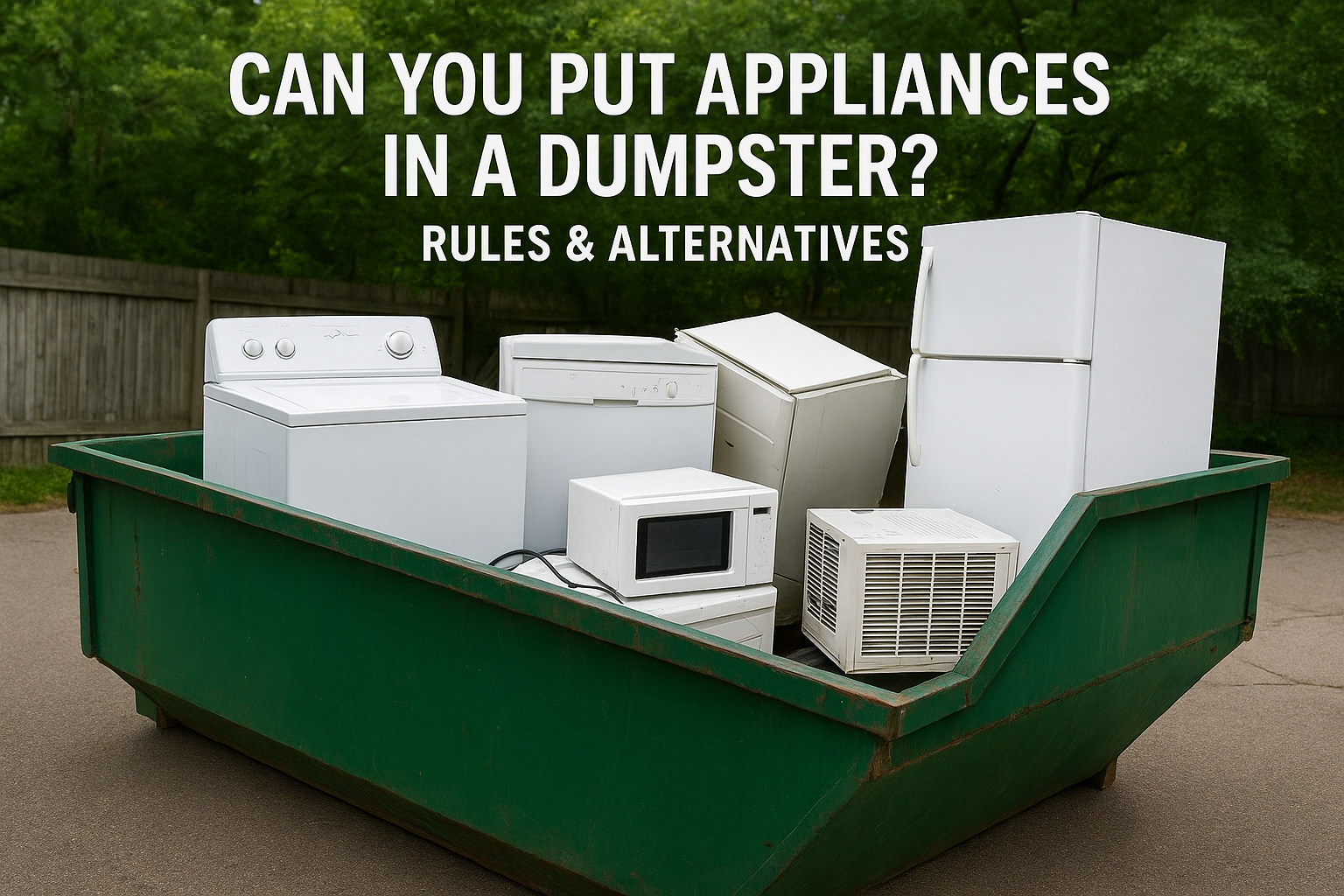
You’re mid-cleanout, staring at an old refrigerator and a busted washing machine, and the question hits: can you put appliances in a dumpster? The short answer is, it depends. Some appliances can go right in, while others are restricted or outright prohibited due to hazardous components like refrigerants, mercury, or capacitor oils.
At Dump Express, we handle dumpster rentals across Cape Cod and Plymouth every day, and appliance disposal questions are some of the most common calls we get. After 20+ years in the business, we know exactly which items our drivers can haul and which ones need a different disposal path, and we’d rather you know before loading day, not after.
This article breaks down which appliances are typically accepted in a rental dumpster, which ones aren’t, and what to do with the restricted items. We’ll also cover local regulations that may affect disposal in your area, plus practical alternatives so nothing holds up your project.
What counts as an appliance in dumpster terms
In dumpster terms, "appliance" covers a broader range of items than most people expect. Whether you’re asking can you put appliances in a dumpster after a kitchen remodel or a full basement cleanout, the answer depends heavily on what type of appliance it is and what components it contains. Dumpster companies and disposal facilities split appliances into two rough categories: small appliances and large appliances, and each category comes with its own set of rules, restrictions, and handling requirements.
Small appliances
Small appliances are the countertop and plug-in devices most people use every day. These items are generally compact, don’t contain refrigerants or significant hazardous materials, and are straightforward to dispose of alongside regular household debris. Most dumpster rental companies will accept them without much pushback, though a small surcharge may apply depending on the specific materials involved.
Common small appliances in this category include:
- Toasters and toaster ovens
- Blenders and food processors
- Coffee makers and electric kettles
- Vacuum cleaners
- Box fans and portable heaters
- Irons, hair dryers, and small kitchen gadgets
Large appliances
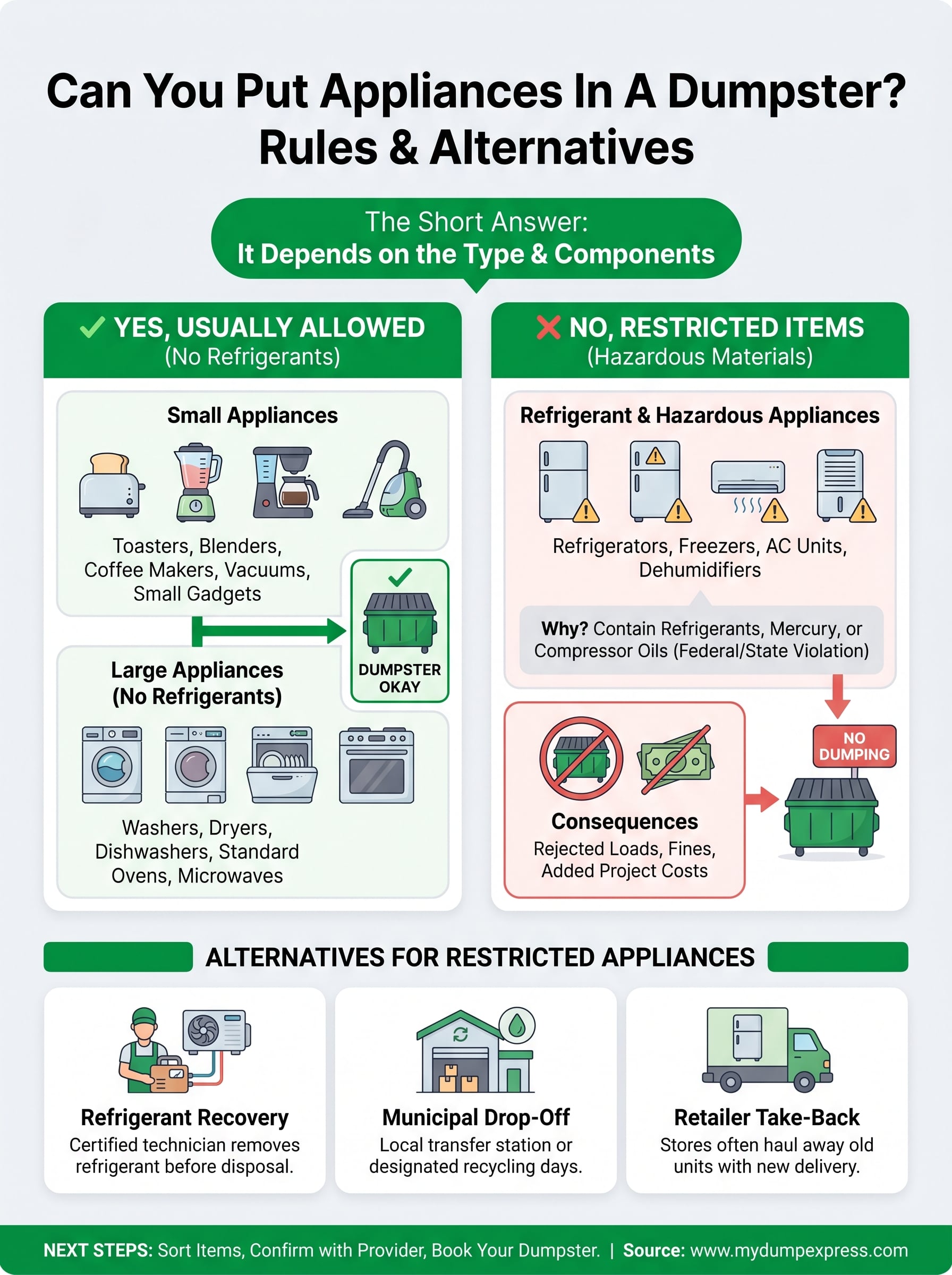
Large appliances, often called "white goods," include refrigerators, freezers, washing machines, dryers, dishwashers, ovens, and air conditioning units. These are the items that create the most confusion on loading day. Some, like dryers or gas ranges, may land in a standard dumpster without much issue. Others contain refrigerants, compressor oils, or mercury switches that make them hazardous to landfills and restricted under federal EPA rules and Massachusetts state regulations.
If an appliance has a compressor, a cooling coil, or a sealed refrigerant system, treat it as restricted until you confirm otherwise with your dumpster provider.
Beyond the hazardous materials concern, large appliances take up significant dumpster space, which affects how much else you can fit and what container size you actually need for your project.
Why dumpster rules for appliances matter
When you ask can you put appliances in a dumpster, the answer isn’t just about what physically fits in the container. Dumpster companies and licensed disposal facilities operate under strict rules set by the EPA and Massachusetts state law, and violating those rules carries real consequences, including fines, rejected loads, and added project costs.
Disposing of refrigerants improperly is a federal violation under the Clean Air Act, not just a local guideline.
The cost of getting it wrong
If a restricted appliance ends up in your dumpster, the driver may refuse the haul or the disposal facility may reject the entire load. Either outcome adds delays and potential surcharges to your project. You become financially responsible for the re-sorting and re-disposal of flagged materials, which can easily exceed what you paid for the original rental.
Why local Massachusetts rules add another layer
Massachusetts follows federal EPA guidelines but also enforces its own restrictions through MassDEP. Certain appliances trigger additional disposal fees or require certified handlers before removal. Knowing both federal and state-level requirements before loading day protects your timeline and keeps unexpected costs off your bill.
What appliances you can usually put in a dumpster
If you’re wondering can you put appliances in a dumpster, the good news is that a solid range of common household items are accepted by most dumpster rental companies without special handling. Generally, if an appliance doesn’t contain refrigerants, hazardous fluids, or sealed compressor systems, it can go straight into the container alongside the rest of your debris.
When in doubt, call your dumpster provider before loading day so you don’t face a rejected haul on site.
Small appliances
Countertop and handheld devices are the easiest category to work with. Items in this group contain minimal hazardous components and take up little space. You can typically toss the following into your rental dumpster without issue:
- Toasters, microwaves, and coffee makers
- Blenders, mixers, and food processors
- Irons, hair dryers, and electric shavers
- Box fans and space heaters
- Vacuum cleaners
Large appliances without refrigerants
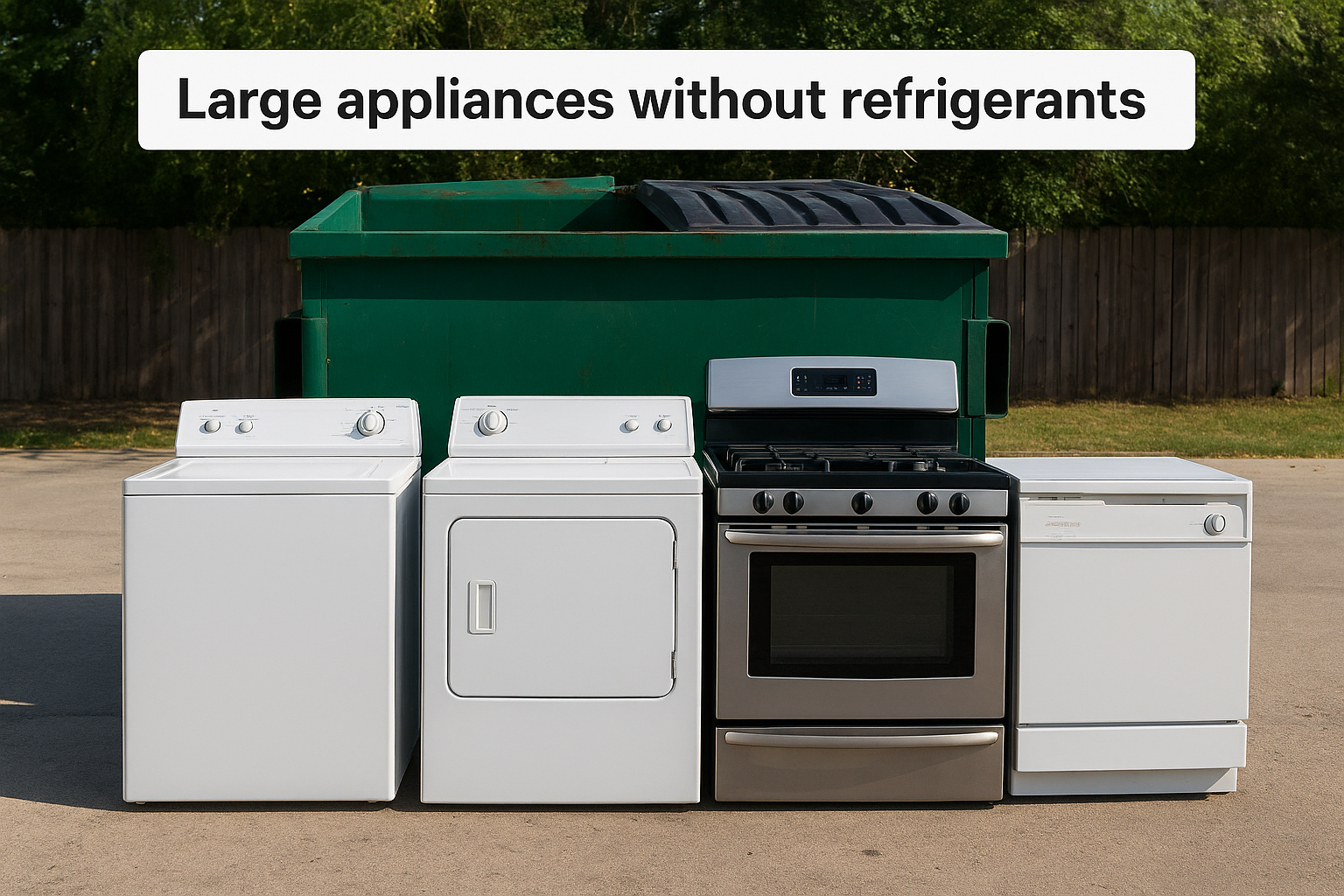
Washers, dryers, dishwashers, and standard gas or electric ovens are usually accepted because they don’t contain sealed refrigerant systems. Your rental provider will haul these items without additional hazmat handling, though weight and space limits on your container still apply, so confirm before loading day.
What appliances you usually cannot dump
If you’re asking can you put appliances in a dumpster, the category that creates the most problems involves refrigerant-containing equipment. Federal law under the Clean Air Act requires that refrigerants be recovered by certified technicians before any appliance is disposed of, which means certain items cannot go into a standard rental dumpster under any circumstances.
Skipping refrigerant recovery is a federal violation, not a local guideline, and it exposes you to serious fines.
Appliances with refrigerants or compressors
Refrigerators, freezers, window AC units, and dehumidifiers all fall into this category because each contains a sealed system that must be handled before removal. Your dumpster provider will reject these items on-site if they arrive unprepared. Restricted appliances in this group include:
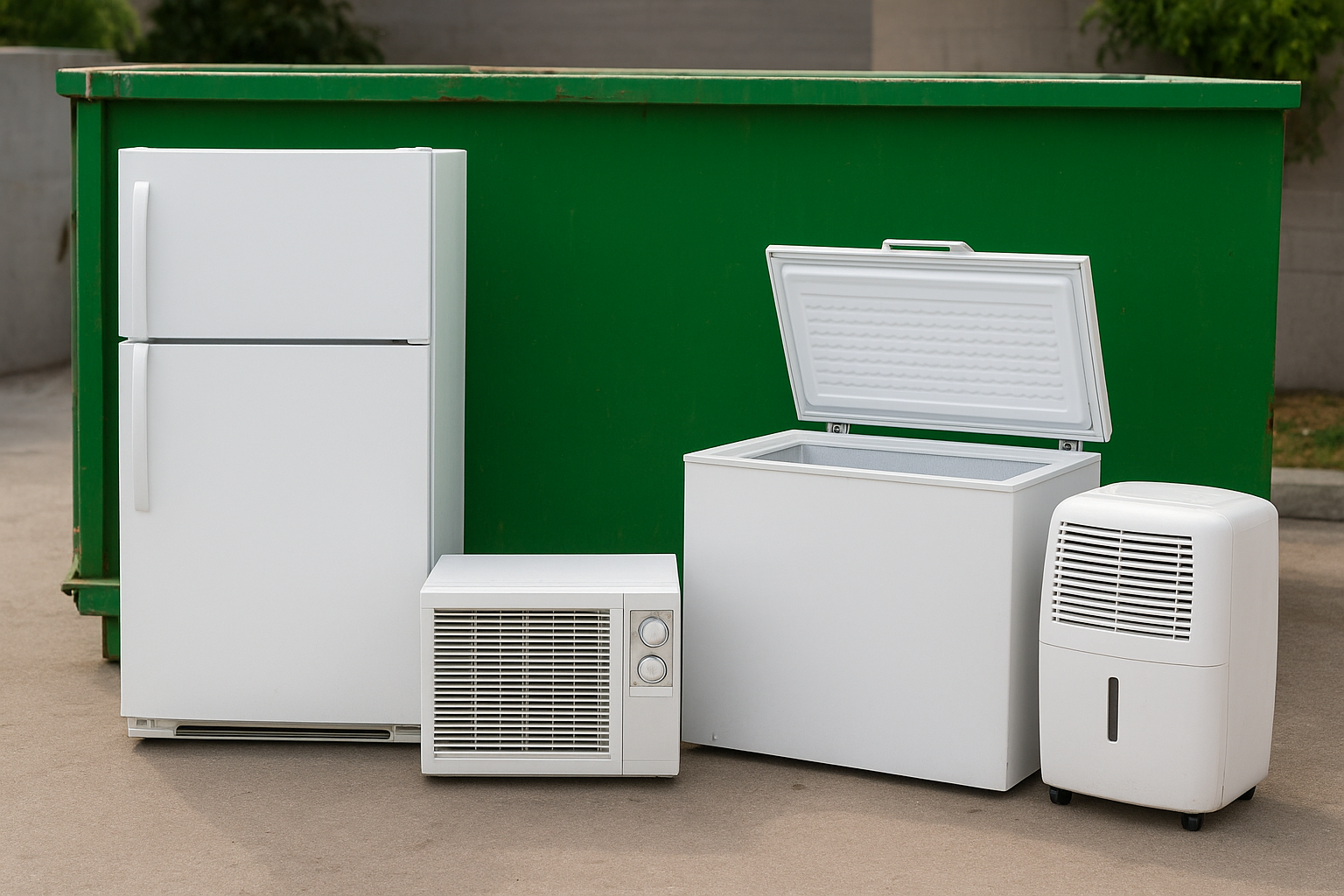
- Full-size and mini refrigerators
- Chest and upright freezers
- Window and portable AC units
- Dehumidifiers and wine coolers
Other restricted items
Central air conditioning components and older gas ranges with mercury switches are also off-limits for standard dumpsters. Beyond refrigerants, mercury-containing switches found in some older appliances add another layer of required handling before disposal. Check with your rental provider before loading anything that could contain sealed fluids or switching components.
How to dispose of restricted appliances in MA
When you’re figuring out can you put appliances in a dumpster and the answer is no for a particular item, Massachusetts gives you several legitimate paths to handle the situation without holding up your project. MassDEP-approved programs and local municipal services make restricted appliance disposal more manageable than most people expect.
Your local transfer station or municipal recycling program is often the fastest, lowest-cost option for restricted appliance disposal in Massachusetts.
Refrigerant recovery services
Before any refrigerant-containing appliance leaves your property, a certified technician must recover the refrigerant under federal Clean Air Act rules. Many HVAC contractors and appliance repair shops across Cape Cod and Plymouth offer this service for a modest fee. Once the refrigerant is properly extracted, the appliance body can move forward as scrap metal or bulk waste.
Municipal drop-off and retailer take-back
Most Cape Cod towns operate appliance drop-off events or accept large appliances at their transfer stations on designated days, so check your town’s schedule directly. Massachusetts law also requires major appliance retailers to take back your old unit when delivering a replacement, which gives you a straightforward option if you’re upgrading an appliance rather than simply discarding it.
Next steps before you toss an appliance
Before loading day, take a few minutes to identify every appliance on your list and confirm whether it contains refrigerants, mercury switches, or sealed compressor systems. If you’re still unsure whether can you put appliances in a dumpster applies to a specific item, a quick call to your rental provider saves you the hassle of a rejected haul or a surprise surcharge on pickup day.
Once you’ve sorted your restricted items and arranged refrigerant recovery or municipal drop-off, the rest of your cleanout can move forward without interruption. Small appliances and white goods without cooling systems go straight into your container, and knowing that ahead of time keeps your project on schedule.
Ready to book a dumpster for your cleanout or renovation in Cape Cod or Plymouth? Get a quote from Dump Express and we’ll help you choose the right container size for everything you need to haul.