
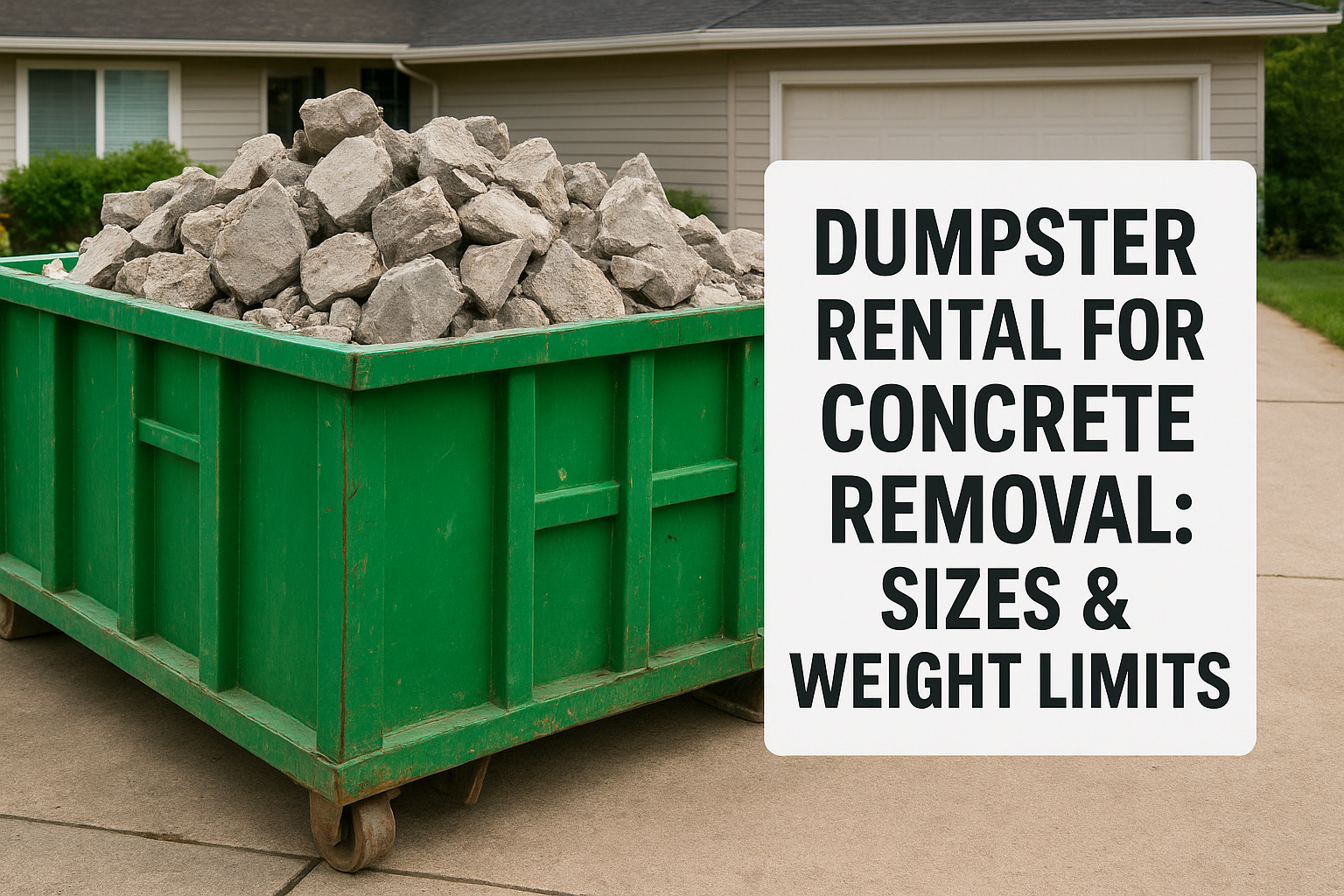
Concrete is one of the heaviest materials you’ll ever throw into a dumpster. A single cubic yard weighs around 4,000 pounds, which means a small patio demolition can max out a container faster than most people expect. That’s why dumpster rental for concrete removal requires a different approach than your typical cleanout or renovation project. Get the sizing or weight limits wrong, and you’re looking at overage fees, a second haul, or a dumpster that can’t be safely picked up.
At Dump Express, we handle concrete disposal projects across Cape Cod and Plymouth every week, from broken driveways and foundation slabs to sidewalk tear-outs. We’ve seen what happens when customers rent based on volume alone without factoring in weight, and it’s never a fun surprise. Our team helps you get the right container from the start so the job stays on budget and on schedule.
This article breaks down the dumpster sizes that work best for concrete removal, the weight limits you need to know, and what to expect on pricing. Whether you’re a homeowner pulling up a patio or a contractor demo-ing a foundation, you’ll find practical answers to plan your rental with confidence and avoid costly mistakes.
What a concrete dumpster rental includes
When you book a dumpster rental for concrete removal, you get more than a container dropped in your driveway. A standard rental covers delivery, a set rental period, and scheduled pickup once you’ve filled it. The key difference with concrete is that weight takes center stage, because providers size the container based on what your project will actually weigh, not just how much space the debris takes up.
Delivery and placement
Your driver delivers the dumpster to the spot you choose, whether that’s a driveway, a job site, or beside the slab you’re breaking apart. Placement matters more with concrete than with light debris because a loaded container can weigh several tons by pickup time. Your driver should confirm the surface can support that load before setting the container down.
A 10-yard dumpster loaded with concrete can top 10,000 pounds, so verify your surface is rated for that weight before the truck arrives.
Rental period and pickup
Most rental periods run from a few days up to a week, which typically covers the timeline of a concrete demo job. When you finish loading, you call to schedule pickup, and the driver hauls the container to a licensed disposal or recycling facility. Many facilities crush clean concrete and repurpose it as road base or fill material, which keeps usable material out of the landfill.
Scheduling the pickup day in advance rather than calling same-day helps, especially during busy summer months on Cape Cod. This keeps your project on track and avoids paying for extra rental days while you wait for an available truck.
Weight allowances in the base price
Every rental quote includes a base weight allowance, and that figure is the number you need to pay close attention to when renting for concrete. Standard allowances are often set for mixed debris, not dense material. Concrete regularly exceeds those allowances, which triggers per-ton overage fees on top of your base rate. Knowing the included tonnage before you book lets you pick the right size and avoid a surprise charge when the truck hits the scale.
Ask your rental provider what the included tonnage is for the size you’re considering. A direct conversation before booking can save you a significant overage charge once the truck hits the scale at the disposal facility.
Why concrete needs special dumpster rules
Concrete is not treated like typical household debris because it weighs far more than most people expect. Standard dumpster rental guidelines are built around mixed, lighter loads, and concrete breaks those assumptions quickly. When you book a dumpster rental for concrete removal, the weight-based rules shift in ways that directly affect your cost and your pickup timeline.
Density changes everything
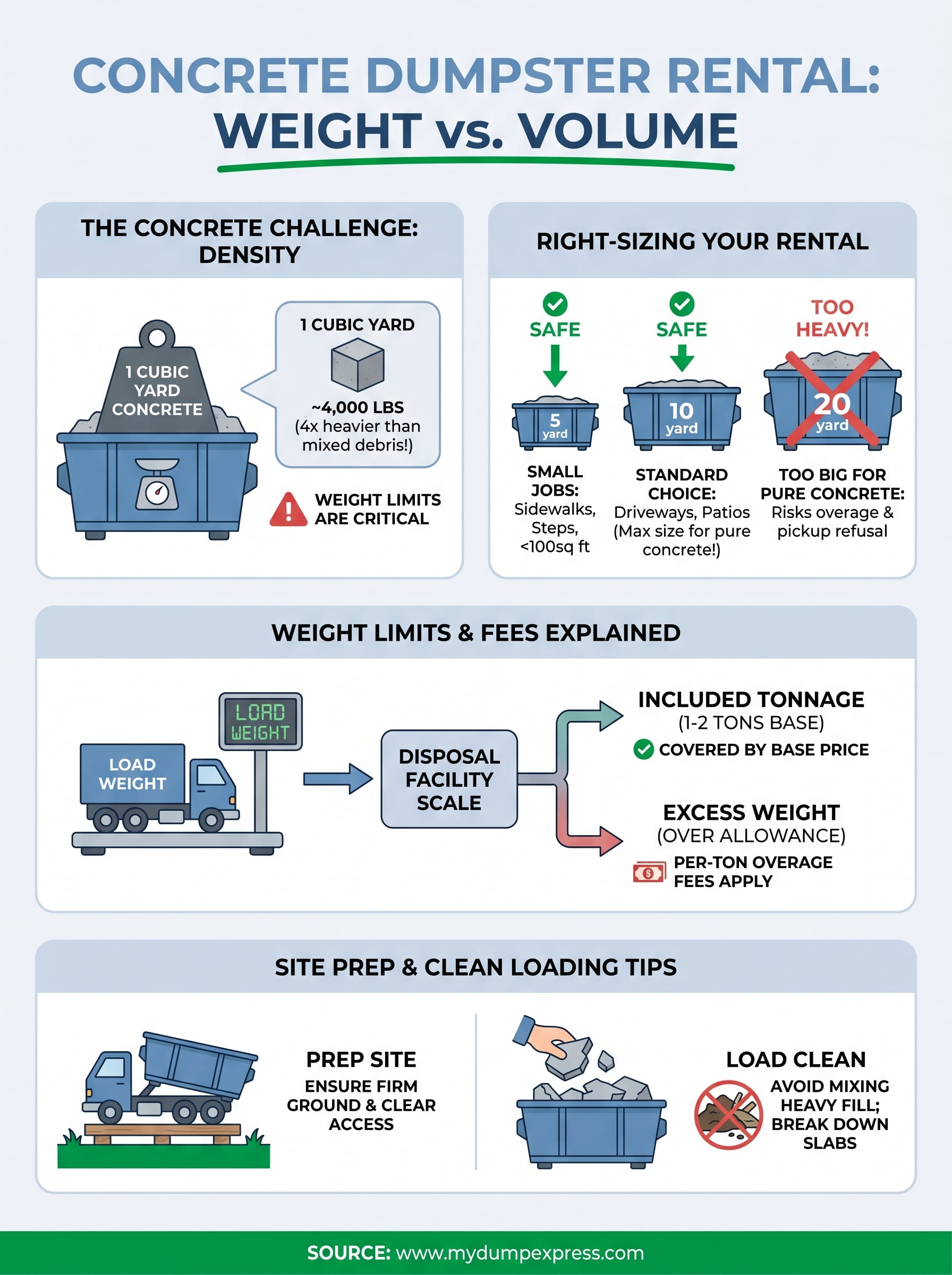
A single cubic yard of concrete weighs roughly 4,000 pounds, which is about four times heavier than the same volume of mixed construction debris. A 10-yard dumpster loaded entirely with broken concrete could tip the scales at 40,000 pounds, well beyond what most containers are rated to carry. Most rental providers cap the allowable weight on a concrete-only load below the container’s full cubic volume, which is why a 10-yard bin is typically the largest size most companies will approve for pure concrete.
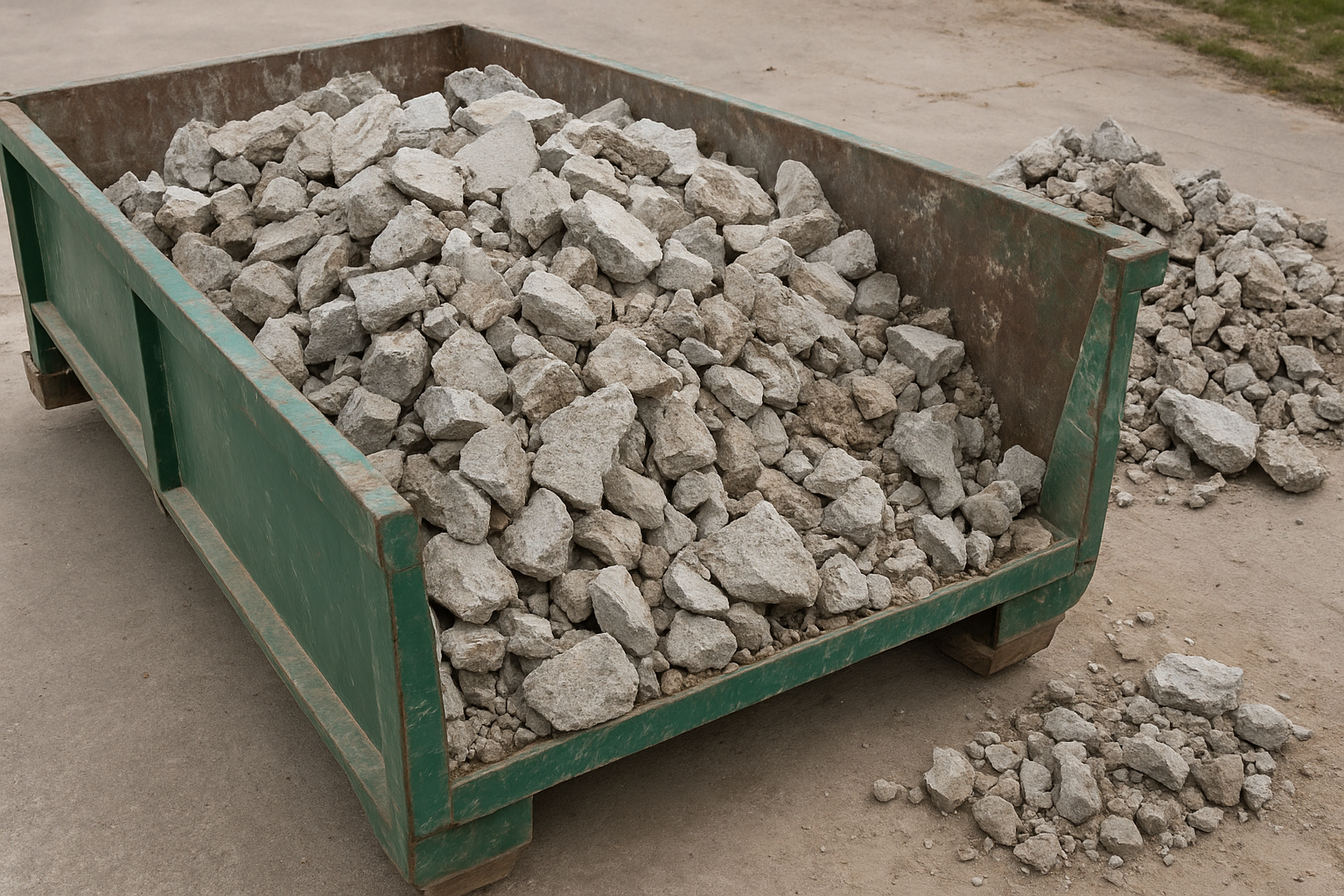
Filling any container beyond its rated weight capacity creates a safety hazard and can void your rental terms, leaving you responsible for damage to the truck or the road surface.
Why trucks and facilities set hard limits
Hauling trucks operate under legal axle weight limits set by state transportation law. If your container exceeds those limits, the driver cannot legally move it on public roads. Disposal facilities charge by weight, not by volume, meaning every extra pound adds cost.
Those per-ton fees apply at the scale house after your container is weighed, not when you place your order. That gap between booking and billing is where most concrete removal projects run over budget, especially when customers mix concrete with soil or fill the container past the marked load line.
How to choose the right dumpster size
Picking the right container for a dumpster rental for concrete removal comes down to two factors: how much concrete you have and how dense your load will be. Volume matters less than weight here, and that distinction should guide every sizing decision you make.
Smaller jobs: 5-yard and 10-yard containers
A 5-yard dumpster fits jobs like a single sidewalk section, a small set of steps, or a compact patio under 100 square feet. These containers handle tight loads without leaving you paying for unused space. If your project produces more than a few hundred square feet of broken slab, step up to a 10-yard container, which is the standard choice for driveways, mid-size patios, and partial foundation removals.
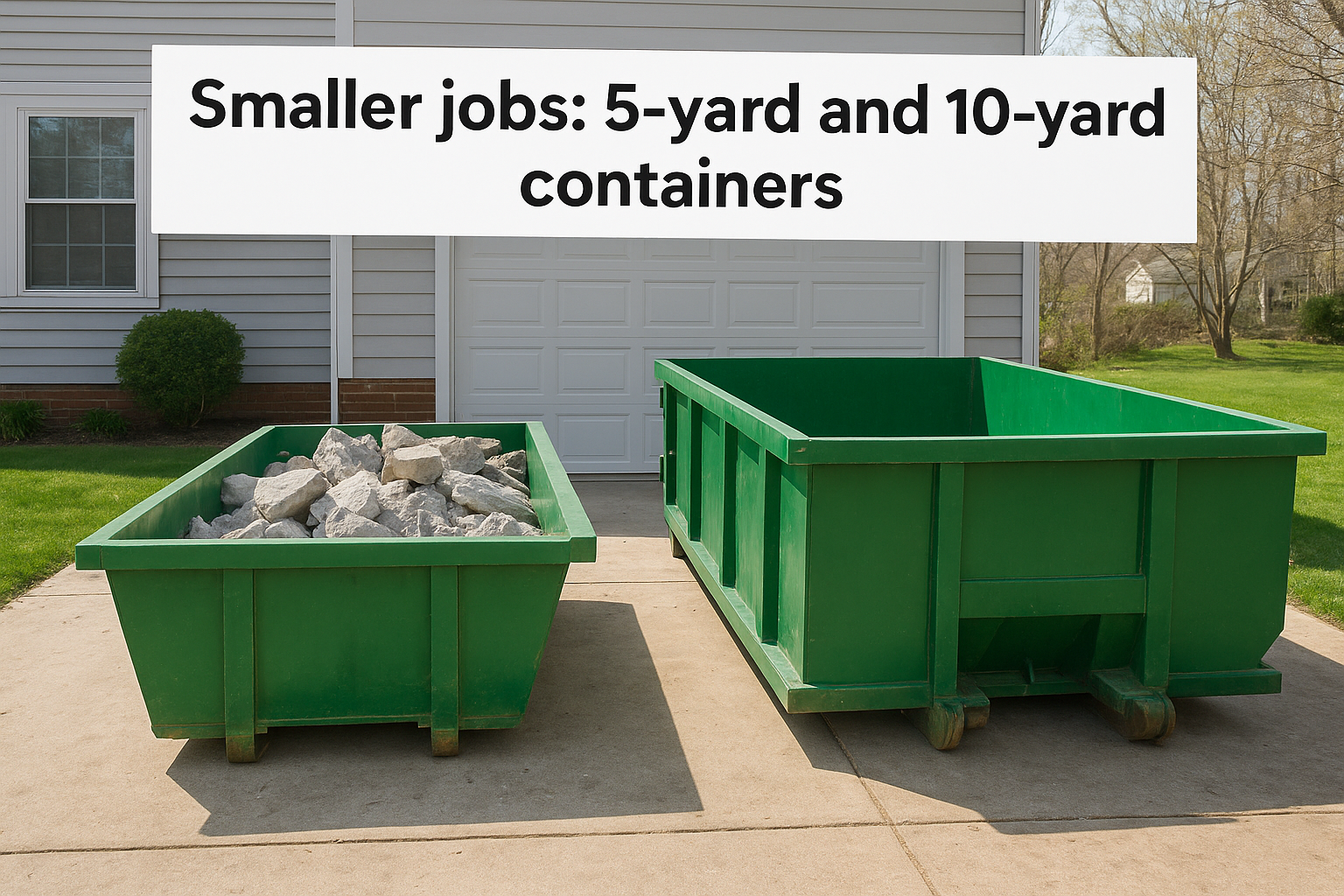
For most residential concrete jobs, a 10-yard dumpster is the largest size you should order, since the weight of a full concrete load will hit the legal haul limit before you reach the volume limit.
Why you shouldn’t go bigger
Ordering a 15-yard or 20-yard container for a pure concrete job creates a problem before your project even starts. Those larger sizes are built for lighter mixed debris, and a full load of concrete in either container will far exceed the truck’s legal weight capacity. Providers may refuse pickup or charge steep overage fees if the load can’t move safely.
If you have concrete mixed with lighter materials like wood framing, drywall, or general cleanout debris, a larger container may work for your project. Talk through your full load with your rental provider before booking so you get the right size the first time and avoid paying for a second pickup.
How weight limits and fees work
Every dumpster rental for concrete removal comes with a base weight allowance built into the quoted price. That figure represents how many tons the rental company expects a typical load to weigh. Concrete almost always pushes past that baseline, so understanding how the fee structure works before you book protects you from a larger bill than you planned for.
What the base weight allowance covers
Your rental quote typically includes one to two tons of debris weight. For light materials like drywall or household junk, that limit rarely becomes an issue. Concrete is different: even a modest sidewalk removal can produce three to five tons of broken material, which blows past most standard allowances before you finish loading.
Ask your rental provider for the exact included tonnage before you sign anything, not after the truck returns from the scale house.
How overage fees get calculated
Once your container hits the scale at the disposal facility, the facility records the total weight of your load. Your rental provider then subtracts the included tonnage and bills you for the difference at a per-ton overage rate, which typically runs between $50 and $100 per ton depending on your location and the facility. A load that runs two tons over your allowance can add $100 to $200 to your final invoice.
Reducing this risk starts with estimating your concrete volume honestly before booking and asking your provider to match the container size and included tonnage to that estimate. Getting those numbers aligned upfront keeps your costs predictable from start to finish.
How to prep your site and load clean
A little preparation before your dumpster arrives makes your dumpster rental for concrete removal run smoother and keeps your costs in check. Two things matter most: making sure the delivery area is ready before the truck shows up, and loading your container in a way that avoids overage fees and pickup delays.
Clear the area before delivery
Your driver needs enough clearance to set the container without repositioning multiple times, so walk the placement area the day before delivery and remove any parked vehicles, equipment, or loose material. Check overhead clearance too, since low-hanging branches or wires can block the truck arm from lifting the container into position.
If you plan to place the dumpster on a surface that isn’t poured concrete or asphalt, let your rental provider know ahead of time. Soft ground like grass or gravel can shift under a load of broken concrete, and your provider may recommend boards or planks under the container feet to distribute the weight.
Confirming your placement spot with your rental provider before delivery day takes two minutes and prevents a last-minute scramble when the truck arrives.
Load concrete separate from other debris
Mixing concrete with heavier fill materials like soil or gravel drives your load weight up fast and burns through your included tonnage before you finish the job. Load concrete on its own whenever possible, and keep lighter debris like wood or drywall for a separate load or a larger container.
Break slabs into manageable chunks before loading rather than dropping full sections into the container. Smaller pieces settle more evenly, reduce the risk of damage to the container floor, and make it easier to stay within the marked fill line.
Next steps
Renting a dumpster for concrete removal doesn’t have to be complicated, but it does require a few decisions before you call. Know your approximate volume, factor in the weight of your material, and confirm the included tonnage in your quote before you book. Those three steps alone prevent most of the overage fees and pickup delays that catch people off guard.
If you’re working on a driveway, patio, or foundation project on Cape Cod or in the Plymouth area, Dump Express can match you with the right container size and walk you through weight limits before you commit to anything. You get clear pricing upfront, a local team that knows the area, and reliable delivery and pickup on a schedule that fits your project. When you’re ready to move forward, book your concrete dumpster rental with Dump Express and get your project started without the guesswork.