
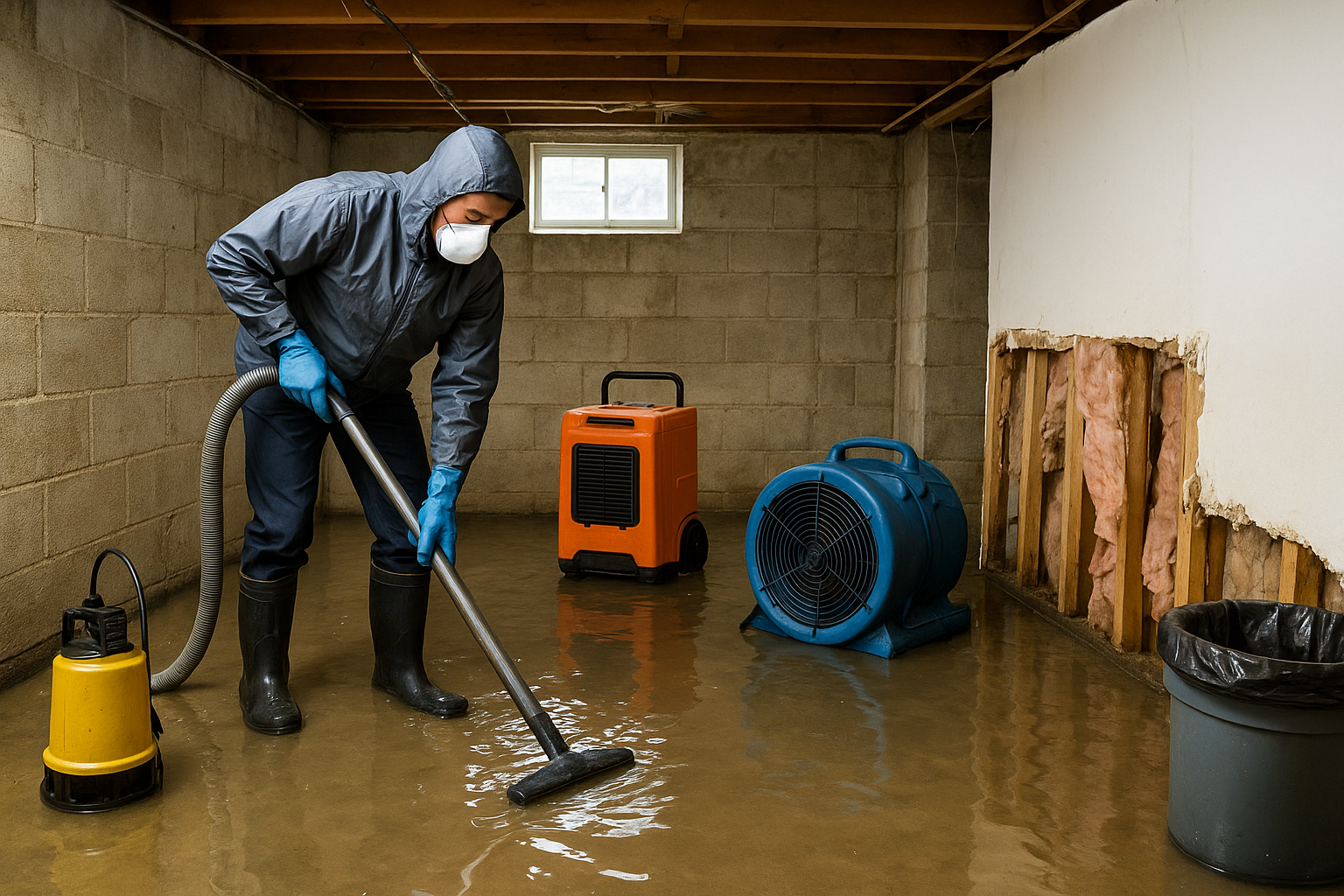
Standing ankle-deep in murky water with your belongings floating around you is nobody’s idea of a good time. Whether it’s a nor’easter, a burst pipe, or a failed sump pump, knowing how to clean out a flooded basement quickly and correctly can mean the difference between a full recovery and long-term structural damage to your home.
The cleanup process involves more than just pumping water out. You need to remove saturated materials, dry everything thoroughly, and disinfect surfaces before mold takes hold, often within 24 to 48 hours. That urgency means having a plan before you start, not figuring it out as you go. It also means dealing with a surprising volume of ruined materials, soaked drywall, carpet, insulation, furniture, that all need to go somewhere fast.
That’s where we come in. At Dump Express, we deliver dumpsters across Cape Cod and Plymouth daily, so you can get debris off your property without delays. Below, we’ll walk you through every step of a flooded basement cleanup, from safety precautions to final disinfection, so you can get your space back to normal as quickly as possible.
Before you start: safety and prep
A flooded basement can hide serious hazards behind the obvious mess. Before you touch anything, confirm the space is actually safe to enter. Floodwater can carry sewage, bacteria, and chemical contaminants, and the structural integrity of your floors and walls can be compromised if water has been sitting for hours or days. Taking ten minutes to prepare properly protects you from injuries that are far worse than the flood itself.
Identify electrical and structural hazards
Never enter a flooded basement if power is still running to that area. Electricity and standing water are a deadly combination, so locate your breaker panel from a dry area and shut off power before stepping inside. If your panel sits in the basement, call a licensed electrician before you do anything else. Also scan the space from the doorway for sagging ceilings, buckled walls, or cracked floor joists, all of which signal structural stress that can make the area unsafe.
If you smell gas or see signs of a structural collapse, leave the house immediately and call 911 and your gas utility before attempting any part of the cleanup.
Gather the right protective gear
Treat every flooded basement as a contaminated space, no matter how clean the water looks. Direct skin contact with floodwater can cause serious infections, so gear up fully before you go in. Pull together the following protective equipment before you start:
- Rubber boots (knee-high or taller)
- Heavy-duty waterproof gloves
- N95 or P100 respirator mask
- Safety goggles
- Disposable coveralls or old clothes you can bag right after
Document everything before you move it
Before you pull a single saturated item off the floor, photograph and video every part of the affected area. Walk the full basement and capture damaged drywall, flooring, furniture, appliances, and stored belongings from multiple angles. Your homeowner’s insurance claim depends on this evidence, and skipping this step can cost you significantly in disputes with your insurer.
Step 1. Stop the water and cut power
Before you do anything else, you need to stop the source of water and confirm power is off throughout the basement. Working in a space that’s still flooding is both dangerous and pointless. These two steps take priority over everything else, and skipping either one puts you, your home, and anyone helping you at serious risk.
Find and fix the water source
Your first task is to identify where the water is coming from and shut it down before cleanup begins. Common sources and the right response for each include:
| Source | What to do |
|---|---|
| Burst or leaking pipe | Shut off the main water supply valve |
| Failed sump pump | Check the power connection and motor |
| Groundwater through foundation cracks | Contact a waterproofing contractor |
| Municipal sewer backup | Call your local water utility |
If you cannot identify or control the source on your own, call a licensed plumber before moving forward with any part of the cleanup.
Do not start removing water until the source is fully stopped, or the work will be wasted.
Disconnect power to the basement
Shut off every circuit running to your basement from a dry location at your breaker panel. Never flip a breaker while standing in water or a wet area. If your breaker panel sits inside the flooded space, call a licensed electrician to handle the shutoff before you enter.
After power is confirmed off, unplug any appliances or extension cords still connected in the space. Do not restore electricity until a licensed electrician inspects the wiring and confirms it is safe.
Step 2. Remove water and damaged items
With the water source stopped and power off, you can focus on removing standing water and pulling out everything the flood has ruined. Speed matters here: every hour that water sits against wood, drywall, and concrete increases the damage and raises your mold risk significantly.
Pump out standing water
Start with the largest volume first. Rent a submersible pump or wet/dry vacuum to remove the bulk of standing water. A submersible pump handles deep water (over two inches) faster, while a wet vac works well for shallower puddles and hard-to-reach corners. Once you’ve pumped out the main water, use mops and absorbent towels to soak up any remaining surface moisture from floors and wall bases.
Pull out saturated materials
After the water is out, remove everything that absorbed it. Soaked drywall, carpet, insulation, and wood flooring cannot be dried in place and must come out to prevent mold growth inside walls and subfloors. Cut drywall at least 12 inches above the waterline to ensure you remove all compromised material, not just what looks wet at the surface.
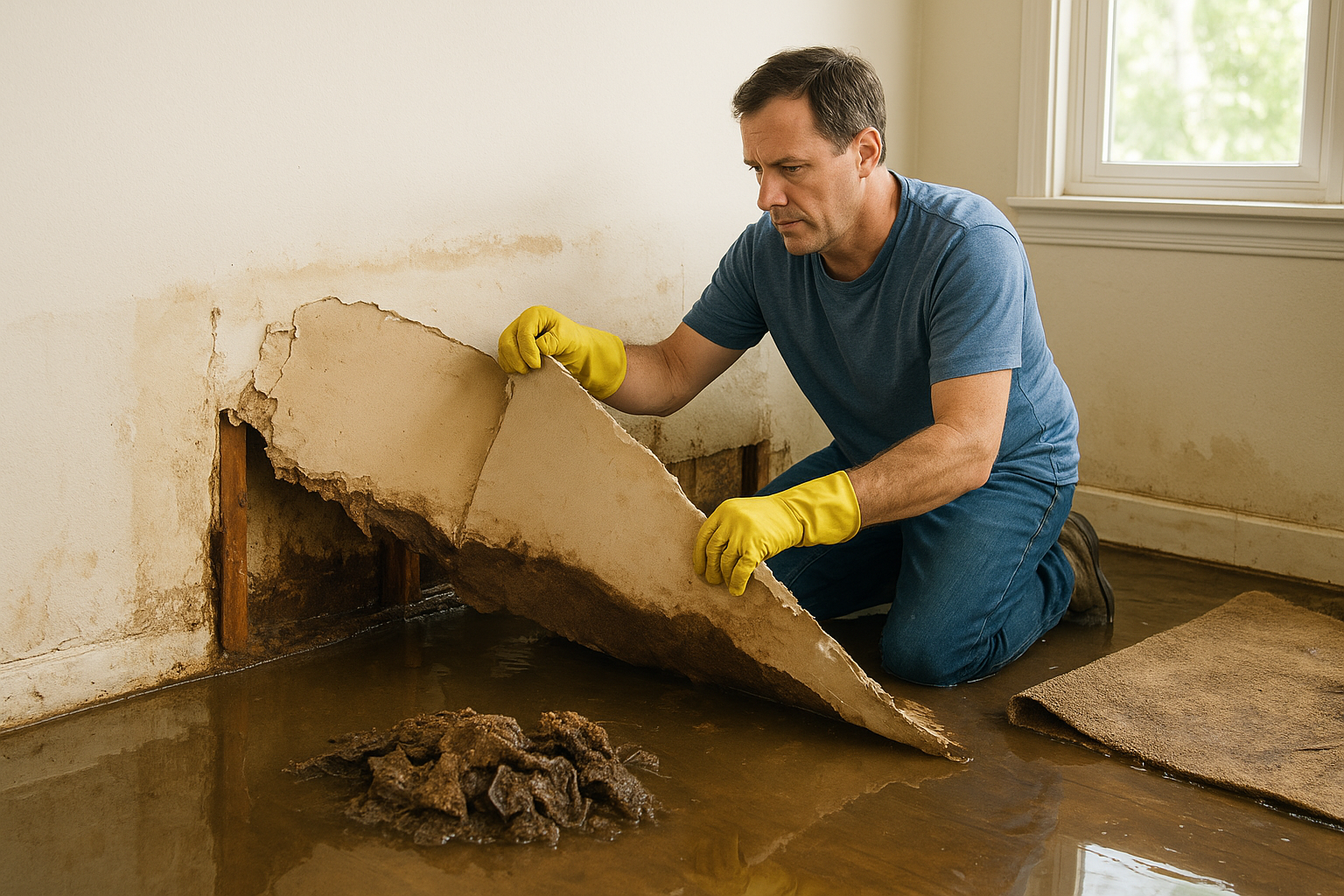
Bag soft materials like insulation separately and double-bag them, since they can carry contaminants that spread if the bag tears.
Ruined furniture, flooring, and debris will pile up fast. Having a dumpster on-site keeps that material off your lawn and organized so you can move through cleanup without stopping to haul loads to a transfer station.
Step 3. Dry fast and prevent mold
Once the water and ruined materials are out, drying the remaining structure is your most time-sensitive task. Mold can begin growing within 24 to 48 hours on damp concrete, wood framing, and subfloors, so moving fast is non-negotiable. This is the stage most people underestimate when working out how to clean out a flooded basement correctly.
Set up airflow and dehumidification
Industrial dehumidifiers and high-velocity fans do the heavy lifting at this stage. Rent at least one commercial-grade dehumidifier and position fans to push moist air toward open windows or doorways. Aim to bring relative humidity below 50% throughout the space before moving on to disinfection.
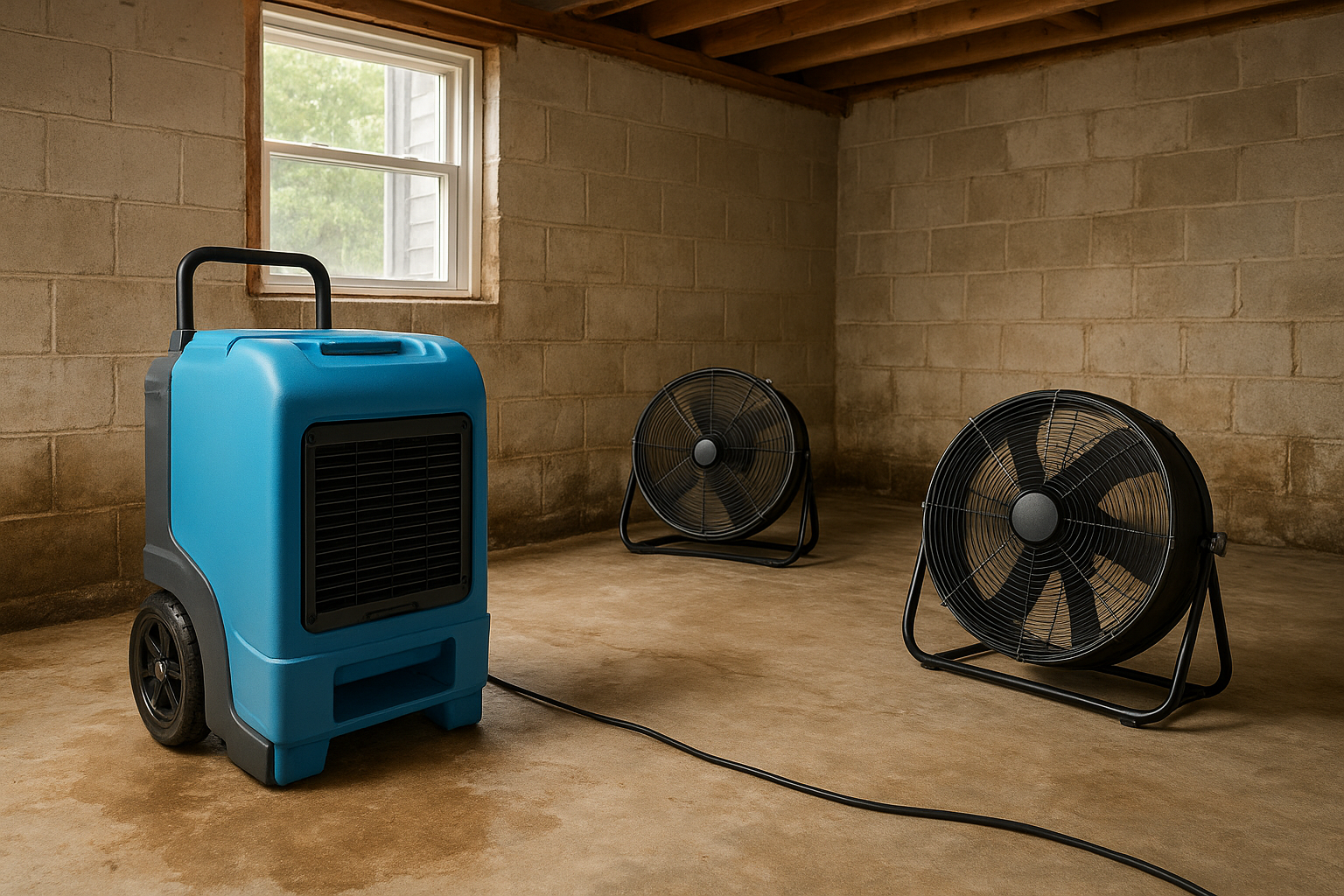
Gather this equipment before you start drying:
- Commercial dehumidifier (available at most equipment rental shops)
- High-velocity fans or air movers
- Pin-type or pinless moisture meter
- Thermometer to monitor room temperature
Keep doors and windows open during this phase, but close them if outdoor humidity is higher than indoor humidity, since bringing in wet air will slow the process significantly.
Check hidden moisture in walls and floors
Concrete and wood framing hold moisture long after surfaces feel dry to the touch. Use a moisture meter on wall studs, floor joists, and concrete slabs to confirm actual dryness before closing up walls or laying new flooring. Readings above 15% in wood mean the material needs more drying time.
Step 4. Clean, disinfect, and deodorize
Once the structure is dry, you still need to kill bacteria and eliminate odors that floodwater leaves behind. Skipping this step is a mistake: visible surfaces may look clean after drying, but contaminated residue can linger on concrete, wood framing, and wall studs, causing persistent smells and health risks.
Scrub and disinfect all surfaces
Start by scrubbing every surface that floodwater touched with a stiff brush and a detergent and hot water solution to loosen dirt and organic material. After scrubbing, apply a disinfectant solution to kill remaining bacteria and pathogens. A reliable mix is one cup of unscented bleach per gallon of water, which the CDC recommends for post-flood disinfection on hard surfaces.
Never mix bleach with ammonia-based cleaners, since combining the two produces toxic fumes that are dangerous in an enclosed basement.
Apply the solution to floors, walls, and any wood framing that contacted floodwater. Let it sit for at least 10 minutes before wiping.
Eliminate lingering odors
Persistent odors after disinfection usually mean moisture is still present somewhere in the space, so run your dehumidifier for another 24 hours and re-check readings with your moisture meter. For a straightforward fix, spread baking soda across concrete floors overnight to absorb residual odors, then sweep and bag it for disposal. Knowing how to clean out a flooded basement fully means not stopping until both the contamination and the smell are gone.
Get your basement back to normal
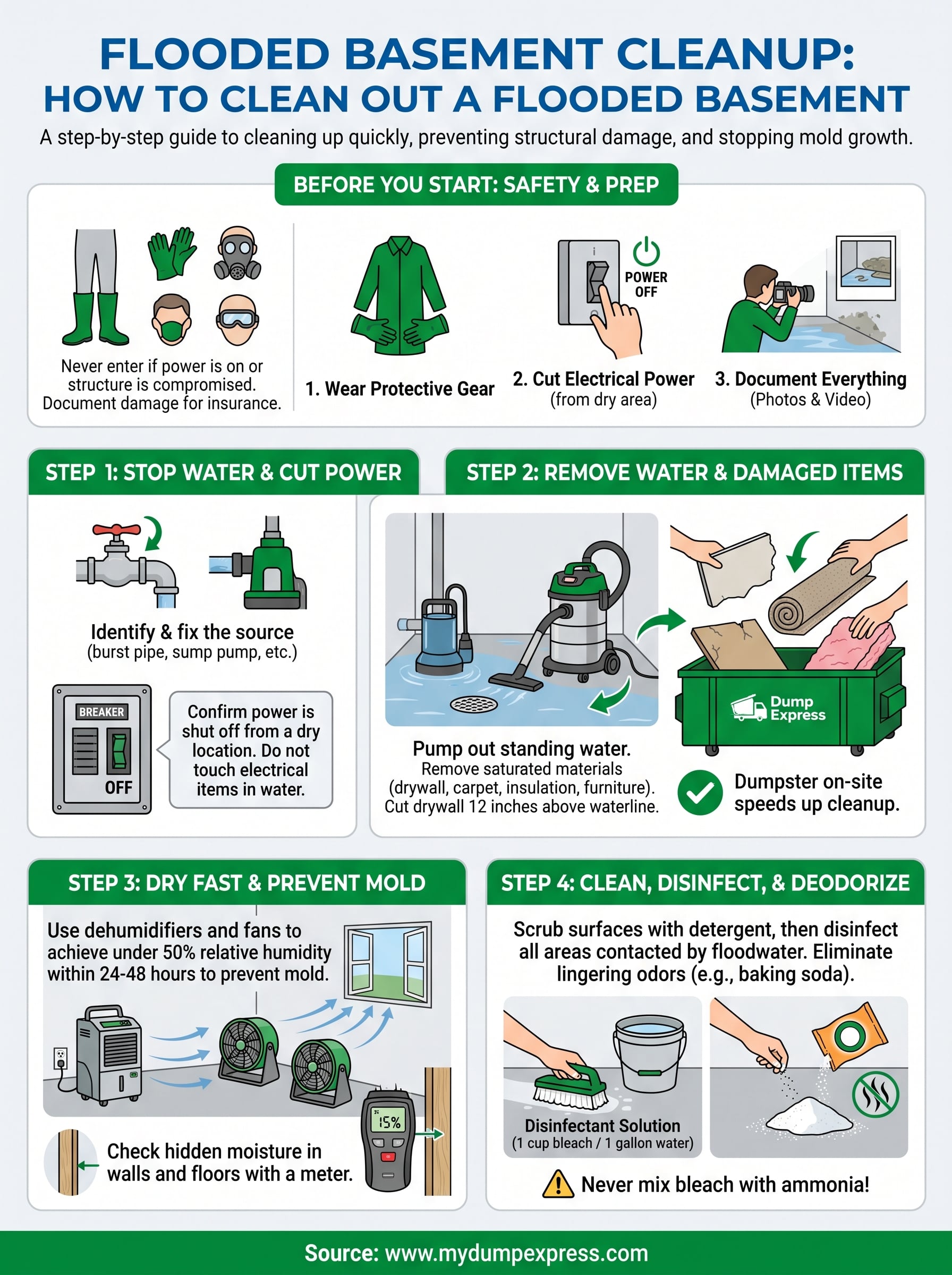
Knowing how to clean out a flooded basement takes you through several demanding stages, but once you’ve dried the structure and disinfected every surface, the hard part is behind you. Restoring flooring, repainting walls, and replacing insulation goes smoothly when the space is completely dry and free of contamination. Check your moisture meter one final time before any new materials go in, and confirm relative humidity stays below 50% for at least 24 hours before closing walls or laying new flooring.
The debris pile you generated throughout this process is often the last obstacle standing between you and a clean start. Soaked drywall, ruined carpet, damaged furniture, and bags of contaminated insulation add up to more volume than most people expect. Having a dumpster on-site lets you clear that material off your property fast and on your schedule. Rent a dumpster for your basement cleanup from Dump Express and get same-day delivery across Cape Cod and Plymouth.