
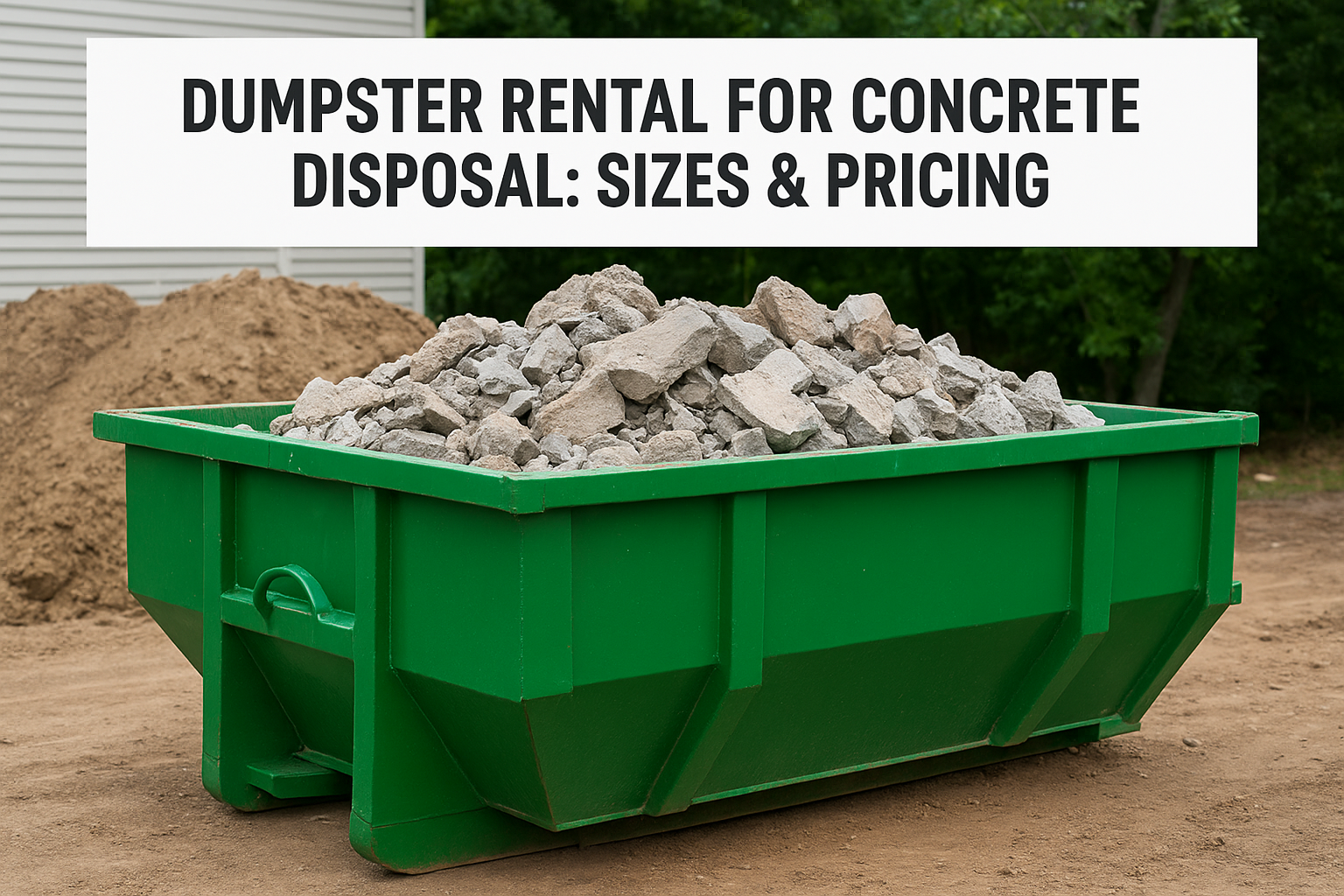
Concrete is one of the heaviest materials you’ll ever need to throw in a dumpster. A single cubic yard weighs roughly 4,000 pounds, which means a standard 20-yard container would be crushed under the load long before it’s full. That’s why dumpster rental for concrete disposal requires a different approach than your typical cleanout or renovation project, and it’s where most people run into problems. They order a size that makes sense visually, overload it by weight, and end up facing surcharges or rejected hauls.
At Dump Express, we handle concrete disposal projects across Cape Cod and Plymouth regularly. Broken driveways, old patios, foundation demo, we know what works and what doesn’t when it comes to matching the right dumpster to heavy material. With over 20 years in the region, we’ve learned that the key to a smooth concrete disposal job is getting the sizing and expectations right before the container hits your property.
This article breaks down the dumpster sizes best suited for concrete, what you should expect to pay, and the rules around weight limits that can make or break your project budget. If you’re planning any kind of concrete removal, this is the information you need before you book.
Why concrete needs a special dumpster
Concrete is one of the densest materials you’ll ever need to dispose of. Most general-purpose dumpsters are designed around a weight limit, not a volume limit, and concrete burns through that limit fast. When you fill a 20-yard dumpster even a quarter of the way with broken slabs, you can easily exceed what a hauling truck can legally transport. That’s not a minor detail. It’s the difference between a project that wraps up on schedule and one that stalls the moment the driver shows up.
The weight problem with concrete
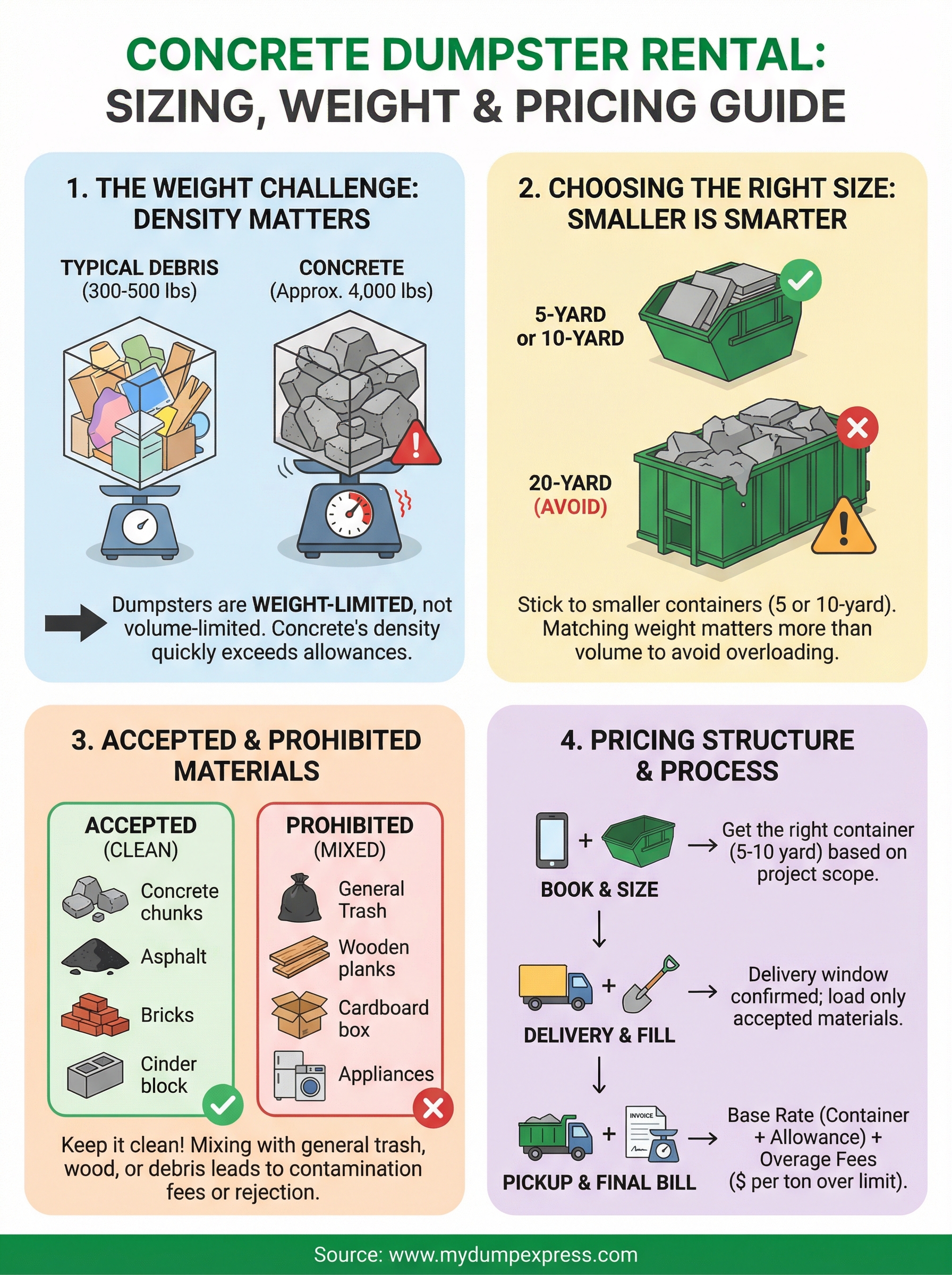
A single cubic yard of concrete weighs approximately 4,000 pounds. Compare that to general household debris, which typically runs between 300 and 500 pounds per cubic yard, and you can see immediately why ordering a large dumpster for concrete disposal makes no sense. A standard 10-yard container built for mixed renovation debris has a weight allowance that a concrete load can hit in just a few feet of depth. You simply cannot judge a concrete haul by how full the bin looks.
Concrete’s weight-to-volume ratio is roughly 8 to 10 times higher than typical household debris, which is why visual fullness tells you almost nothing about whether a container is safe to haul.
What exceeding the weight limit costs you
Overweight fees are charged per ton over the allowable limit, and those costs accumulate fast on any concrete project. In many cases, a hauler will refuse to pick up a container that exceeds safe transport weight entirely, leaving you with a full dumpster sitting on your property and a project that can’t move forward until the situation is resolved.
Selecting a smaller, heavy-duty container built for dense materials, and loading it correctly, keeps you within the weight threshold from the start. When you plan a dumpster rental for concrete disposal, matching the container to the weight of your load matters far more than matching it to the physical volume of debris you’re removing.
What you can put in a concrete dumpster
Not every heavy material belongs in the same container, and knowing the difference before you book a dumpster rental for concrete disposal saves you from surcharges or rejected loads. Most providers, including Dump Express, accept clean, broken concrete in their heavy-material containers, but there are real limits to what can go in alongside it.
Accepted materials
Concrete dumpsters are designed to handle dense, inert materials that share similar weight and disposal characteristics. The following materials are generally accepted for this type of container:
- Broken concrete slabs and chunks
- Asphalt and blacktop (must be in a separate dedicated dumpster, if accepted at all)
- Brick and masonry
- Cinder blocks and pavers
- Dirt and gravel (Must be in a separate dedicated dumpster, if accepted at all)
What not to mix in
Mixed loads that combine concrete with general trash, wood, or other debris create problems at disposal facilities. Many haulers will charge a contamination fee or reject the load entirely if they find mixed waste in a heavy-material container.
Keep your concrete container dedicated to heavy, inert materials only. If you have other debris from the same project, a separate container for that material is the more cost-effective approach.
Mixing concrete with general waste can disqualify your load from disposal at certified facilities, turning a straightforward pickup into a costly delay.
How to choose the right dumpster size
For concrete disposal, smaller is smarter. Unlike a general cleanout where a bigger container simply gives you more room, concrete’s extreme weight-to-volume ratio means you should size down, not up. A container that looks half-empty can already be sitting at its weight limit, and that’s where project budgets take a hit.
Stick to smaller containers
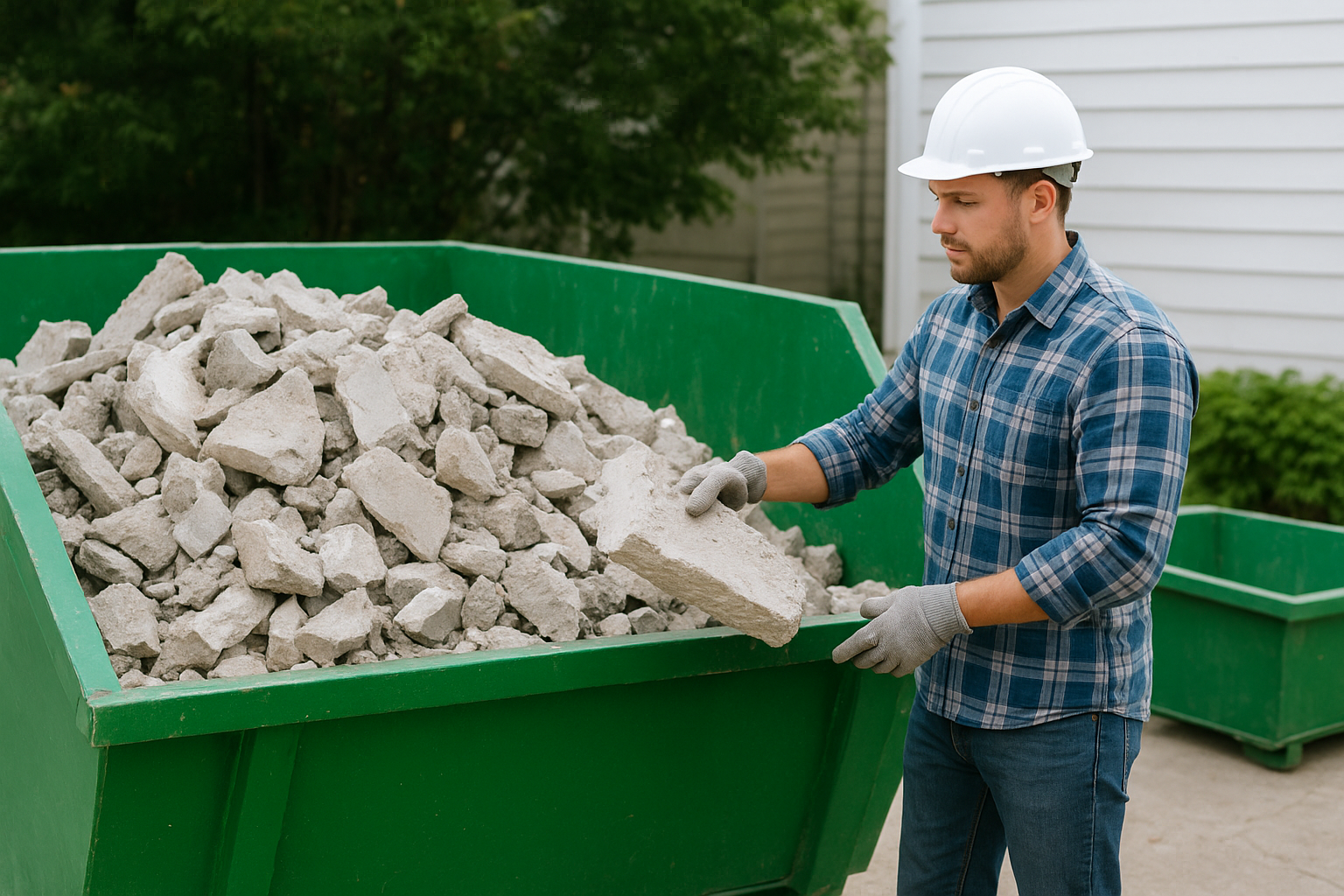
For most concrete jobs, a 5-yard or 10-yard dumpster is the right call. These smaller containers have lower weight thresholds that align with how much concrete you can safely haul in one trip. Ordering a larger bin doesn’t give you more capacity on a concrete job; it just gives you more room to accidentally overload it.
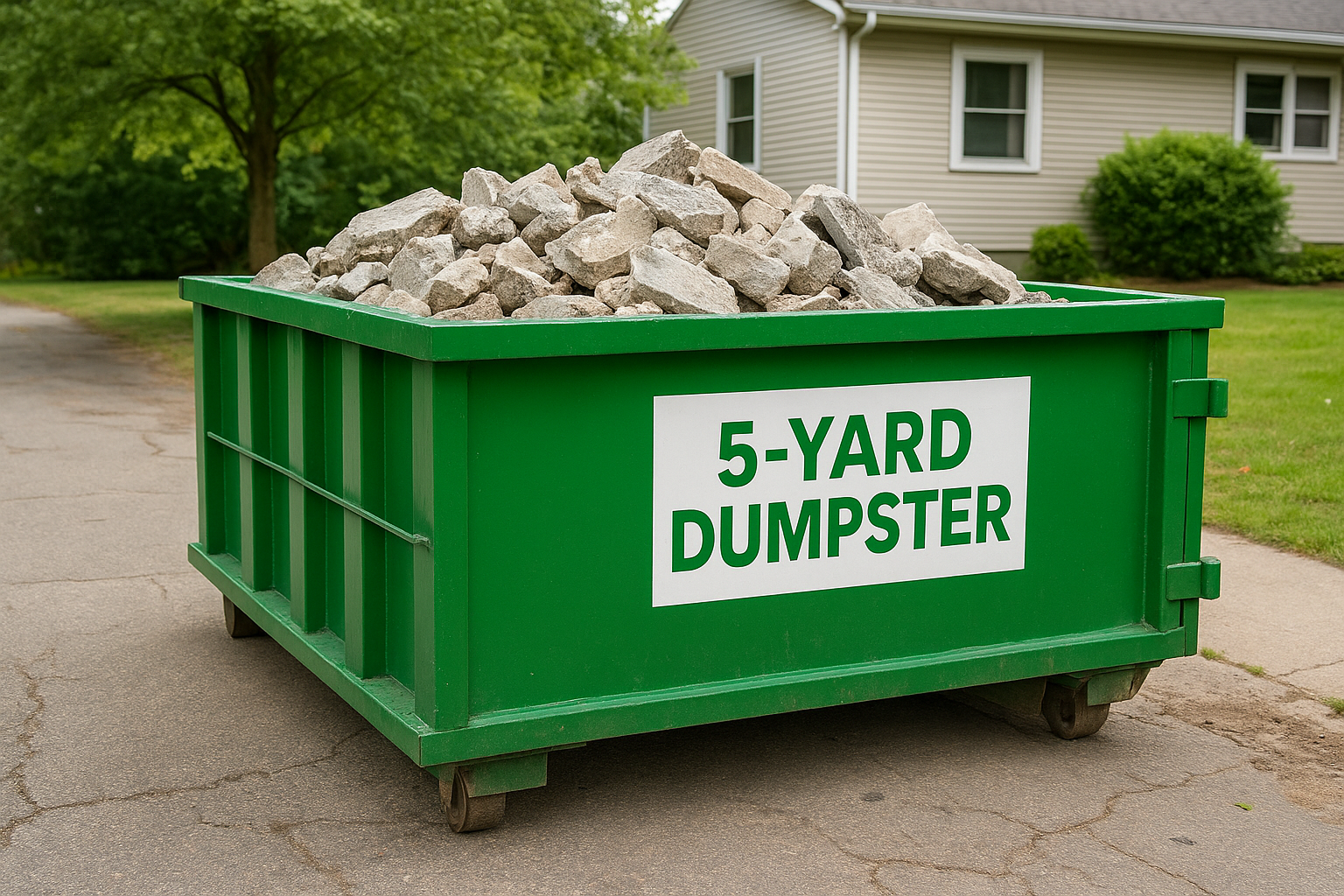
Choosing a 5-yard dumpster for a concrete project isn’t undershooting the job. It’s matching the container to the material’s weight, not its visual volume.
Match the size to your project scope
A single driveway or patio removal typically fits within a 5-yard container. Larger foundation work or multiple concrete structures may require a 10-yard unit or multiple hauls. When you book a dumpster rental for concrete disposal, tell your provider exactly what you’re removing, and they’ll steer you to the right size before the container ever reaches your property.
Concrete dumpster rental pricing and fees
Pricing for a dumpster rental for concrete disposal works differently than standard dumpster rentals. Most providers base their rates on both the container size and a base weight allowance, then charge per ton for anything over that threshold. Since concrete is so dense, your total cost depends less on how many days you keep the bin and more on how much your load actually weighs.
Base rates and weight allowances
Expect to pay a flat rental fee that covers the container and a set number of included tons, typically one to two tons for smaller containers. For a 5-yard or 10-yard concrete dumpster, base rates in the Cape Cod and Plymouth area generally run from $450 to $550 depending on your specific location and the volume of material you’re hauling.
Getting an accurate weight estimate upfront is the single best way to avoid surprise charges on a concrete disposal job.
Overage fees to watch for
Overweight charges typically run $120 to $150 per ton beyond your included allowance. These fees accumulate quickly on concrete projects, which is why choosing the right container size from the start protects your budget more than any other single decision you’ll make before booking.
How the rental works in Cape Cod and Plymouth
Booking a dumpster rental for concrete disposal with Dump Express is straightforward. You call or go online, describe your project, and we help you pick the right container size based on what you’re removing. We deliver across 40+ towns in Cape Cod and Plymouth, typically the same day or the next business day.
Scheduling your delivery
Once you book, we confirm a delivery window and drop the container wherever you need it on your property. Our drivers know the local access challenges across Cape Cod, tight driveways, unpaved surfaces, and narrow residential streets included. You won’t need to manage any of that yourself.
Telling us upfront that you’re disposing of concrete, not mixed debris, helps us place the right container and set accurate weight expectations before the job starts.
Pickup and final weight calculation
When your load is ready, we schedule a pickup on a business day when disposal facilities are open. Your final bill reflects the base rental rate plus any tonnage beyond your included weight allowance. There are no hidden fees. If your load comes in under the limit, you pay the base rate and nothing more.
What to do next
Now you have a clear picture of what a dumpster rental for concrete disposal actually involves. Weight limits, container sizing, and pricing structures work differently for concrete than for standard debris, and knowing those differences before you book keeps your project on track and your costs predictable. Most problems on concrete disposal jobs trace back to one decision made too early: choosing the wrong container without asking the right questions first.
Reaching out before you book takes five minutes and prevents the kind of surprises that turn a simple demo job into a budget headache. Contact Dump Express directly and tell us exactly what you’re removing, how much there is, and where your property sits on Cape Cod or in Plymouth. We’ll put you in the right container, lock in your pricing upfront, and get the dumpster to you fast.
Book your concrete dumpster rental with Dump Express and get the job done without the guesswork.