
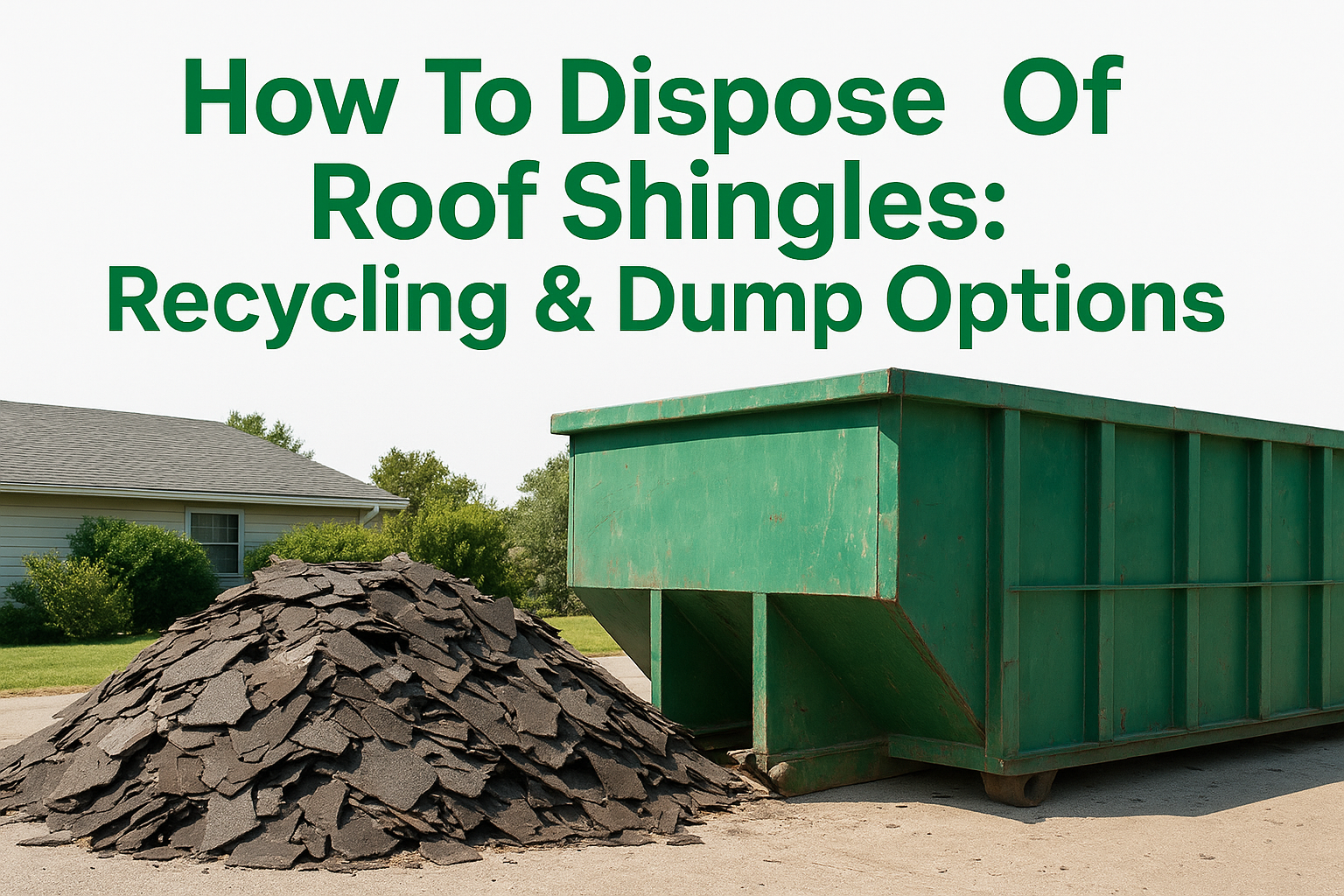
A typical roof replacement generates anywhere from 2 to 4 tons of old shingles, and all of that material has to go somewhere. If you’re mid-project or planning one, figuring out how to dispose of roof shingles properly can save you money, keep you compliant with local regulations, and even divert waste from landfills.
The good news is you have options. Shingle recycling facilities, local transfer stations, and dumpster rentals each come with different costs, rules, and levels of convenience. The right choice depends on how much material you’re dealing with, where you’re located, and how quickly you need it gone.
At Dump Express, we deliver dumpsters across Cape Cod and Plymouth for roofing projects every week, so we know what works and what doesn’t. This guide breaks down your disposal and recycling options step by step, with practical details on pricing, regulations, and sizing so you can get those old shingles off your property without overpaying or making extra trips.
What to know before you toss a single shingle
Before you start pulling shingles off the roof, a few basics will save you from costly surprises. Roof shingles fall into a specific waste category that not every disposal facility handles the same way, and weight, material type, and local regulations all shape which option actually works for your project. Skipping this groundwork often leads to rejected loads, extra trips, or fees you weren’t expecting.
Shingles weigh more than most people expect
A standard square of asphalt shingles (100 square feet of roofing) weighs between 200 and 350 pounds depending on the thickness and manufacturer. An average residential roof runs 20 to 30 squares, which means you could be hauling 4,000 to 10,000 pounds of material before the project is over. That weight directly affects which dumpster size you need, how many trailer loads you’ll make, and whether a given facility will accept your drop-off.
Underestimating shingle weight is one of the most common and expensive mistakes on roofing projects. Always calculate total tonnage before choosing a container or booking a haul.
Most people thinking about how to dispose of roof shingles skip this math entirely and end up with an overloaded trailer or a dumpster that hits its weight limit long before it’s visually full. Neither situation is cheap to fix after the fact.
Not every facility accepts shingles
Transfer stations, recycling centers, and landfills each have their own rules about shingles, and those rules differ significantly by town and county. Some facilities accept clean loads of asphalt shingles for recycling at a reduced rate. Others only take them as general construction and demolition debris, which typically costs more. A few facilities refuse shingles entirely or require them to be separated from other roofing waste like felt paper, nails, and metal flashing before they’ll accept the load.
Here’s a quick breakdown of the most common restrictions you’ll run into:
- Mixing shingles with other debris usually disqualifies the load from recycling and raises the tipping fee
- Asbestos-containing shingles require separate handling and cannot go to standard disposal sites
- Weight limits at transfer stations may require multiple trips if you don’t have a large enough vehicle
- Some towns on Cape Cod require a disposal permit for roofing debris over a certain volume
Calling your local transfer station before you load anything is always worth the five minutes it takes. Getting turned away at the gate with a truckload of shingles wastes an entire workday and puts you back at square one.
Step 1. Confirm shingle type and asbestos risk
Before you figure out how to dispose of roof shingles, you need to know exactly what type of shingles you’re dealing with. Material type determines which disposal and recycling routes are available to you, and skipping this step can result in rejected loads or serious regulatory violations.
How to identify your shingle type
Most roofs installed after 1990 use standard three-tab or architectural asphalt shingles, which are widely accepted at recycling facilities and transfer stations. Older roofs may include wood shakes, slate, clay tiles, or fiberglass shingles, each of which carries different disposal requirements. You can usually identify the material by looking at a loose shingle or pulling back a small corner near a ridge cap.
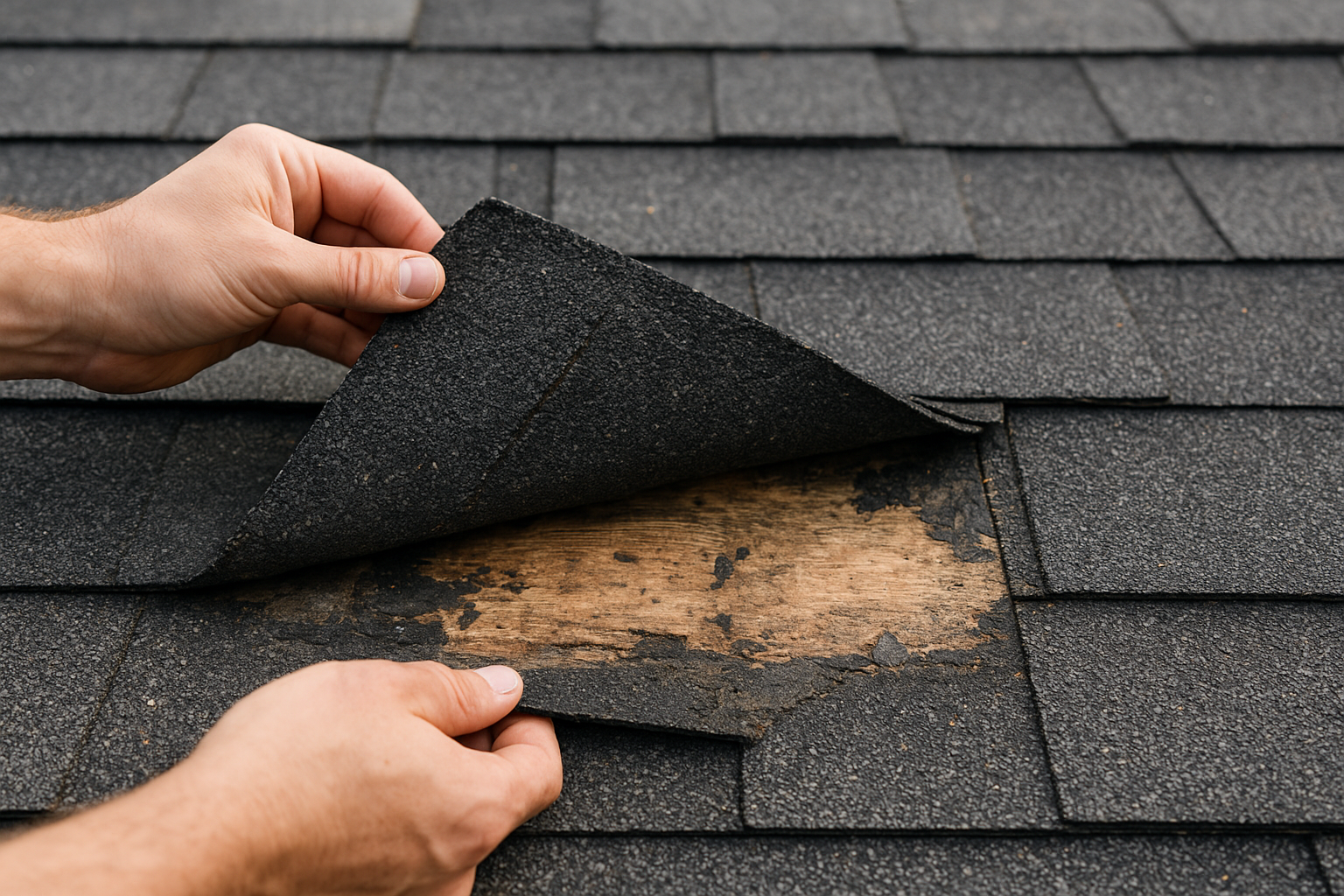
Here are the most common shingle types and their general disposal status:
| Shingle Type | Recyclable | Notes |
|---|---|---|
| Asphalt (3-tab or architectural) | Yes | Most widely accepted at recycling centers |
| Fiberglass asphalt blend | Yes | Same process as standard asphalt |
| Wood shake | Limited | Check local facility rules |
| Slate or clay tile | No standard recycling | Heavy; often landfill only |
| Asbestos-containing shingles | No | Requires licensed hazmat removal |
Testing for asbestos before disposal
Homes built before 1980 have a real chance of containing asbestos in roofing materials, and you cannot legally dispose of those shingles through standard channels. If you’re unsure, do not disturb the material until you’ve had it tested.
Do not attempt to remove or bag suspected asbestos shingles yourself. Licensed abatement professionals are required by law in most states, including Massachusetts.
Certified asbestos testing kits are available at hardware stores, or you can hire a licensed inspector to pull samples and send them to an accredited lab. Results typically come back within a few days, and the cost is minor compared to the fines for improper disposal.
Step 2. Pick the right disposal option for your project
Once you’ve confirmed your shingle type and ruled out asbestos, you can match your project to the right removal method. Three main options cover the vast majority of roofing jobs: shingle recycling facilities, dumpster rentals, and direct drop-offs at a transfer station. Each fits a different project size, budget, and timeline, so knowing which applies to your situation saves time and money before you pull the first shingle.
Shingle recycling facilities
Asphalt shingles can be ground up and repurposed into hot-mix asphalt for road paving, making recycling the most environmentally responsible path. You haul a load directly to a certified recycling facility, and tipping fees are often lower than standard landfill rates. Check that your load is free of felt paper, nails, and mixed debris before arriving, since contaminated loads are typically rejected or charged at a higher rate.
Recycled asphalt shingles have become a standard ingredient in road construction across the U.S., which means your old roof may end up paving a local road.
Dumpster rental
Renting a dumpster is the most practical option for how to dispose of roof shingles on a full tear-off or any job where material comes off over multiple days. You set the pace, the container stays on-site until you’re finished, and the rental company handles the haul. This works especially well when you need flexibility without making multiple trips to a facility yourself.
Dumpster rental fits best for:
- Full residential or commercial roof replacements
- Jobs where you’re also disposing of mixed roofing materials like flashing or underlayment
- Projects in areas where the nearest recycling facility is far from the job site
Transfer station drop-off
For smaller volumes, loading a pickup truck or trailer and driving to your local transfer station keeps costs low. Fees are charged by weight, so call ahead to confirm the per-ton rate for shingles and ask whether they accept mixed construction debris or require separated loads.
Step 3. Prep, separate, and load shingles the right way
How you prep and load your shingles directly affects whether your load gets accepted at a recycling facility and how much you end up paying in tipping fees. Taking 20 minutes to separate materials before loading saves you from a rejected load or an unexpected surcharge at the gate.
Separate materials before loading
The biggest mistake people make when figuring out how to dispose of roof shingles is tossing everything into the same pile. Recycling facilities require clean shingle loads, meaning no felt paper, metal flashing, nails embedded in wood, or roofing cement mixed in. Transfer stations that accept shingles for general debris disposal are more forgiving, but mixed loads almost always cost more per ton than separated shingle-only loads.
Keep these material categories separate as you work:
- Asphalt shingles only (clean load for recycling or reduced tipping rate)
- Felt paper and underlayment (general construction debris)
- Metal flashing, drip edge, and gutters (scrap metal or separate debris pile)
- Nails and fasteners (collect in a bucket to prevent flat tires on-site)
Load shingles safely into a dumpster
Shingles are dense, so how you distribute weight inside the container matters. Spread shingles evenly across the floor of the dumpster rather than piling them in one corner. This prevents the container from becoming unbalanced during pickup, which can cause the hauler to reject the load or charge a repositioning fee.
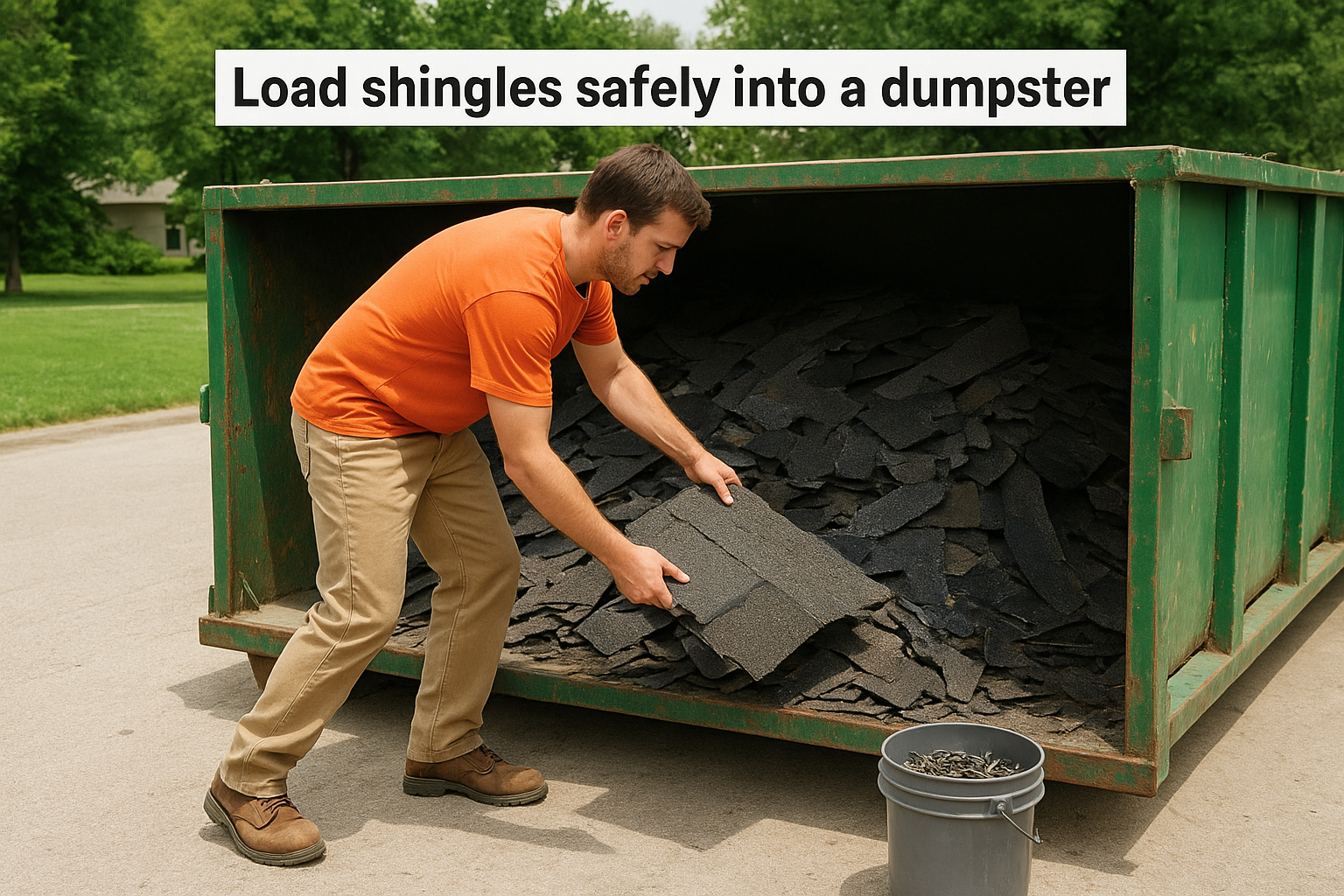
Load in layers no deeper than 12 inches at a time, walking material to the far end of the container before stacking higher.
Keep the load level with or below the container’s fill line at all times. An overfilled dumpster cannot be legally transported on public roads.
Step 4. Estimate costs and choose a dumpster size
Getting the numbers right before you book anything prevents the two most common budget mistakes on roofing jobs: renting a dumpster that hits its weight limit too early or ordering one that’s too large for the project. Both situations cost more than necessary, so a quick estimate upfront is worth your time.
What shingle disposal typically costs
Costs vary by location, facility, and disposal method, but the figures below give you a solid baseline when planning how to dispose of roof shingles on a typical residential job.
| Disposal Method | Estimated Cost |
|---|---|
| Dumpster rental (10-yard) | $350 to $500 flat rate |
| Dumpster rental (15-yard) | $450 to $650 flat rate |
| Transfer station drop-off | $60 to $120 per ton |
| Recycling facility (clean load) | $30 to $80 per ton |
| Asbestos abatement | $1,500 to $3,000+ depending on volume |
Recycling facilities charge significantly less per ton than landfills, so a clean separated load almost always saves money compared to mixed debris disposal.
Choosing the right dumpster size for roofing waste
Shingles are among the heaviest materials you’ll put in a dumpster, and visual fullness has nothing to do with weight capacity. A 10-yard container holds about 4 tons, which covers a standard 20-square residential roof tear-off in most cases. Move up to a 15-yard container if you’re also disposing of underlayment, flashing, and other roofing materials in the same load.
Use this quick reference to match your project scope to a container size:
- 5-yard: Partial repairs or small sections, under 10 squares
- 10-yard: Full residential tear-off, 20 to 25 squares, shingles only
- 15-yard: Full tear-off with mixed roofing debris included
- 20-yard: Large commercial roofs or multi-layer tear-offs
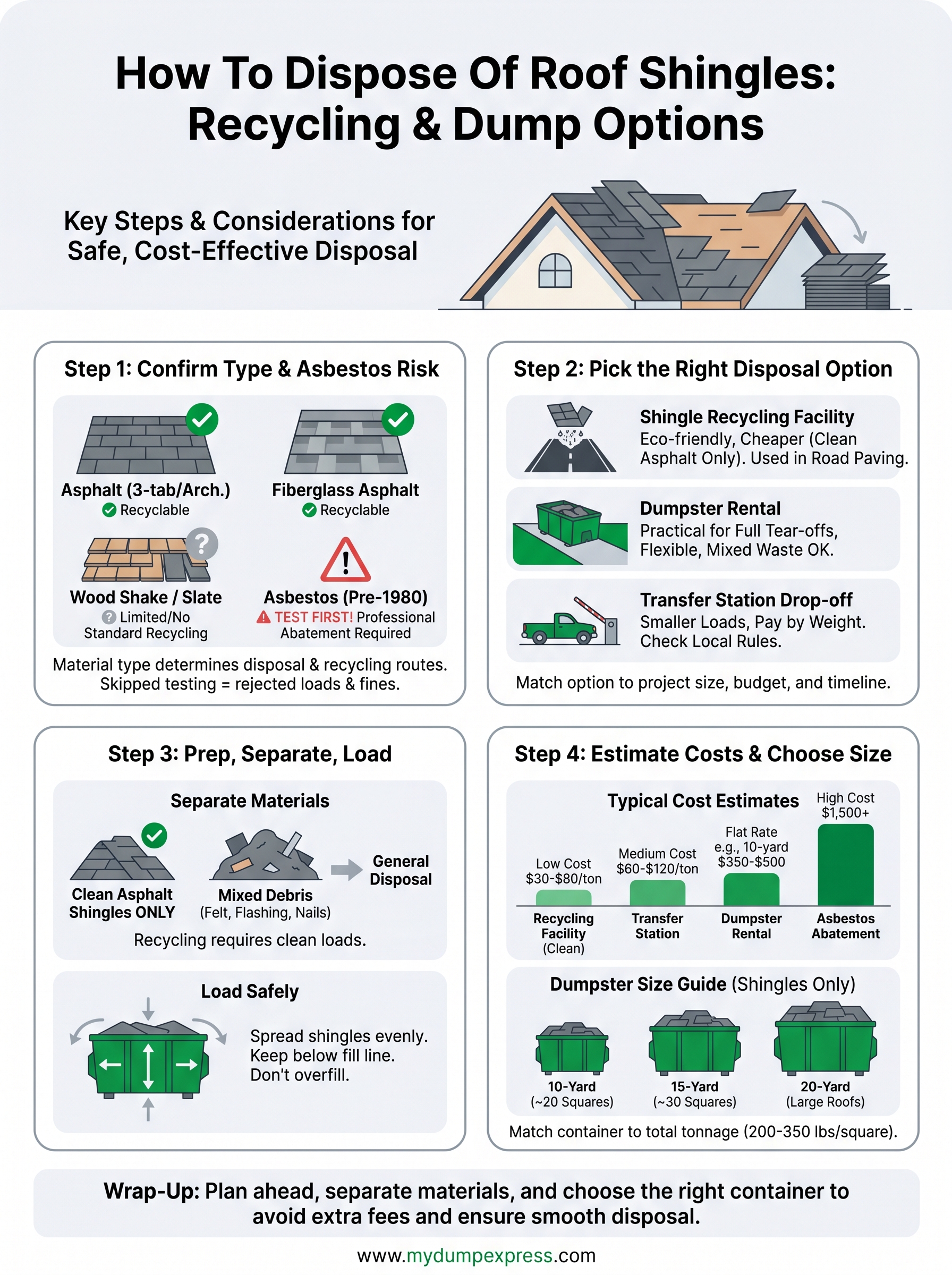
Quick wrap-up
Knowing how to dispose of roof shingles comes down to a few decisions made before the first shingle hits the ground. Confirm your shingle type and rule out asbestos, separate materials cleanly to qualify for recycling rates, match your container size to actual project tonnage, and choose a disposal method that fits your timeline and budget. Each step in this guide connects directly to saving time and avoiding fees you didn’t budget for.
For most residential and commercial roofing jobs on Cape Cod and in Plymouth, a dumpster rental is the most straightforward option because it keeps material off the ground, stays on-site until you’re done, and removes one trip from your schedule entirely. If you want a container delivered to your job site without the guesswork, get a fast quote from Dump Express and we’ll help you pick the right size for your specific project.