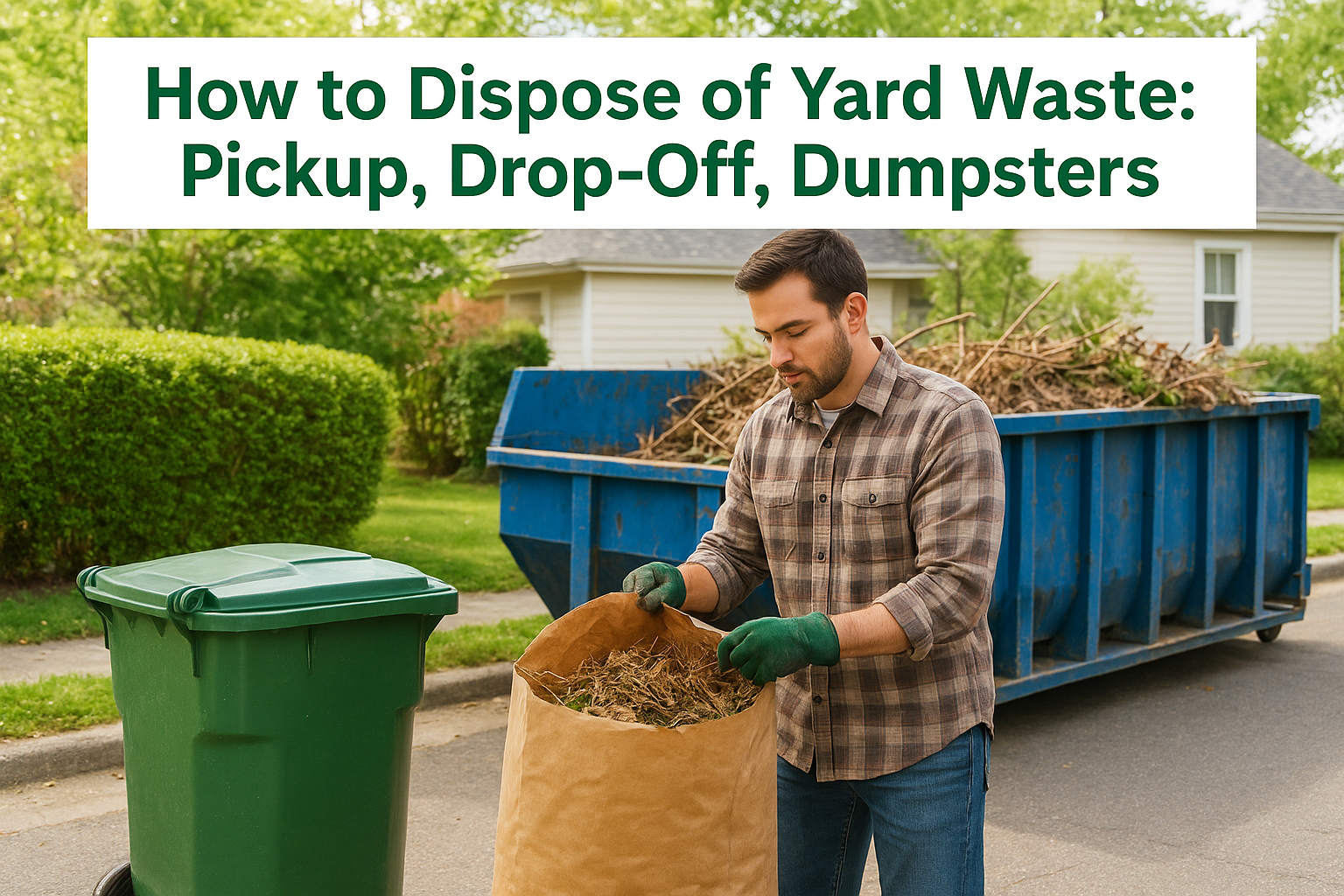
Branches from last weekend’s storm, bags of leaves piling up in the garage, grass clippings baking in the sun, yard debris adds up fast. And if you’ve ever Googled how to dispose of yard waste, you already know the answer depends on where you live, how much you have, and what type of material you’re dealing with. Not all disposal methods work for every situation.
The good news: you have options. Curbside pickup, municipal drop-off sites, composting, and dumpster rentals each solve a different version of the problem. At Dump Express, we help homeowners and contractors across Cape Cod and Plymouth handle large-scale yard waste removal with dumpster rentals, but we also know that’s not always what the job calls for.
This guide breaks down every practical disposal method available to you, from free municipal services to renting a dumpster for bigger projects. You’ll learn what each option costs, when to use it, and how to pick the right one based on the size of your cleanup.
What counts as yard waste and why it matters
Yard waste is any organic debris generated from maintaining or clearing your outdoor space. This category covers more material than most people expect, and knowing exactly what falls under this label is the first step toward figuring out how to dispose of yard waste correctly. Misclassifying your debris can get your curbside pickup rejected or result in disposal fees you didn’t budget for.
Common types of yard waste
Most municipalities and disposal facilities group yard waste into the same general bucket, but the specific materials they accept vary by location. Here is what typically qualifies:
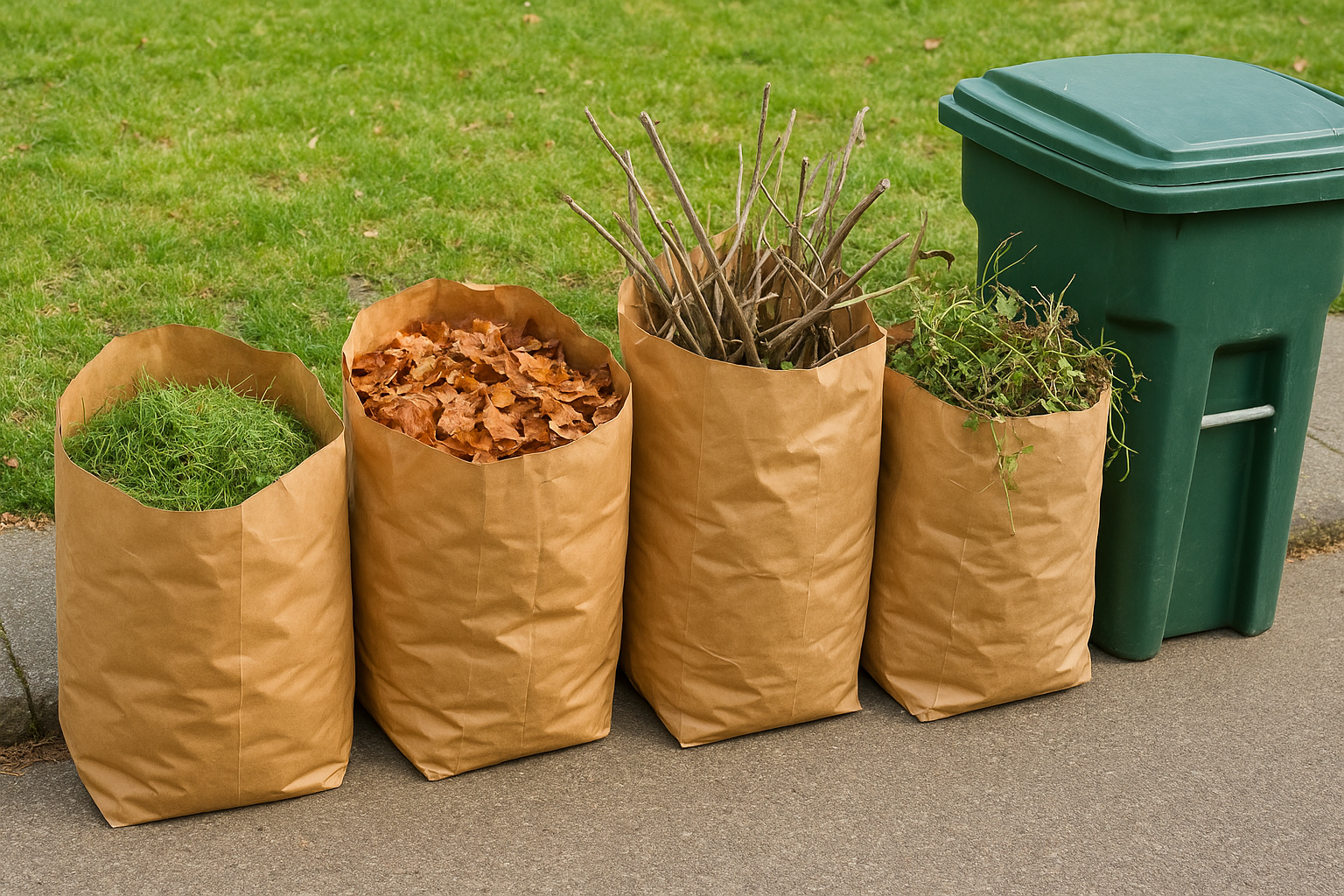
- Grass clippings from mowing
- Leaves (bagged or loose, depending on your town’s rules)
- Branches and brush (usually up to a certain diameter, often 4 to 6 inches)
- Garden trimmings such as plant stalks, vines, and pulled weeds
- Sod and dirt (accepted at some sites, rejected at others)
- Tree stumps (typically excluded from curbside but accepted at drop-off sites or via hauling)
Treated wood, painted wood, and construction lumber do not count as yard waste. These materials require a completely separate disposal method.
Why the classification matters
Yard waste is regulated separately from household trash in most areas because organic material can be composted or mulched rather than sent to a landfill. Many states and municipalities have outright banned yard waste from standard trash bins to cut landfill volume. If you mix prohibited materials into your yard waste bags or container, facilities can reject the entire load.
Understanding the classification also shapes which disposal method fits your project. A few bags of leaves call for curbside pickup, while a full storm cleanup with downed trees and root balls points toward a dumpster or professional hauling service.
Step 1. Use curbside pickup the right way
Curbside pickup is the easiest and cheapest way to handle small to moderate amounts of yard waste, but it only works if you follow your town’s specific rules. Every municipality sets its own schedule, bag limits, and container requirements, so checking your local public works website before you haul anything to the curb saves you from a rejected pile sitting in your driveway for another week.
Know your town’s rules before you put anything out
Most towns that offer yard waste pickup run it on a seasonal schedule, typically spring through fall, and they stop collecting during winter months. The specifics vary significantly from one town to the next, so confirm the following details with your municipality before collection day:
- Accepted materials: Leaves, grass clippings, and brush are common; sod, stumps, and treated wood usually are not
- Container type: Paper bags or reusable bins (plastic bags are frequently rejected)
- Size limits: Branches are typically capped at 4 feet long and 4 to 6 inches in diameter
- Pickup schedule: Weekly, biweekly, or specific seasonal collection dates
If your town rejects your pile, you will need to act quickly on other methods for how to dispose of yard waste before the next scheduled collection day.
Step 2. Take it to a yard waste drop-off site
Drop-off sites give you a reliable fallback when curbside pickup won’t work, whether your pile is too large, outside the seasonal collection window, or full of materials your town won’t accept at the curb. Most municipalities and counties operate dedicated yard waste transfer stations or composting facilities where you can bring debris directly, often at no charge or for a small per-load fee. This is one of the most practical ways to handle how to dispose of yard waste in volume without hiring a hauler.
What to expect when you arrive
Before you load your truck, call ahead or check your town’s public works website to confirm hours, accepted materials, and any fees involved. Many facilities only open on specific days, and some require proof of local residency before accepting your load. Showing up unprepared can mean a wasted trip and a full truck bed to deal with on the way home.
Mixing non-organic debris like concrete, treated wood, or household trash into your load can get the entire delivery rejected at the gate.
What to bring with you
Pack these items before you head out:
- Proof of residency such as a driver’s license or utility bill
- A tarp to secure your truck bed during transport
- A payment method since some sites charge a small fee per load
Step 3. Decide if you need a dumpster or hauling
When curbside pickup and drop-off sites fall short of what you need, renting a dumpster or hiring a hauler is the most practical way to handle how to dispose of yard waste at scale. This option fits large cleanup projects like storm damage clearing, full property cleanouts, or land clearing where you’re generating multiple truckloads of debris over several days.
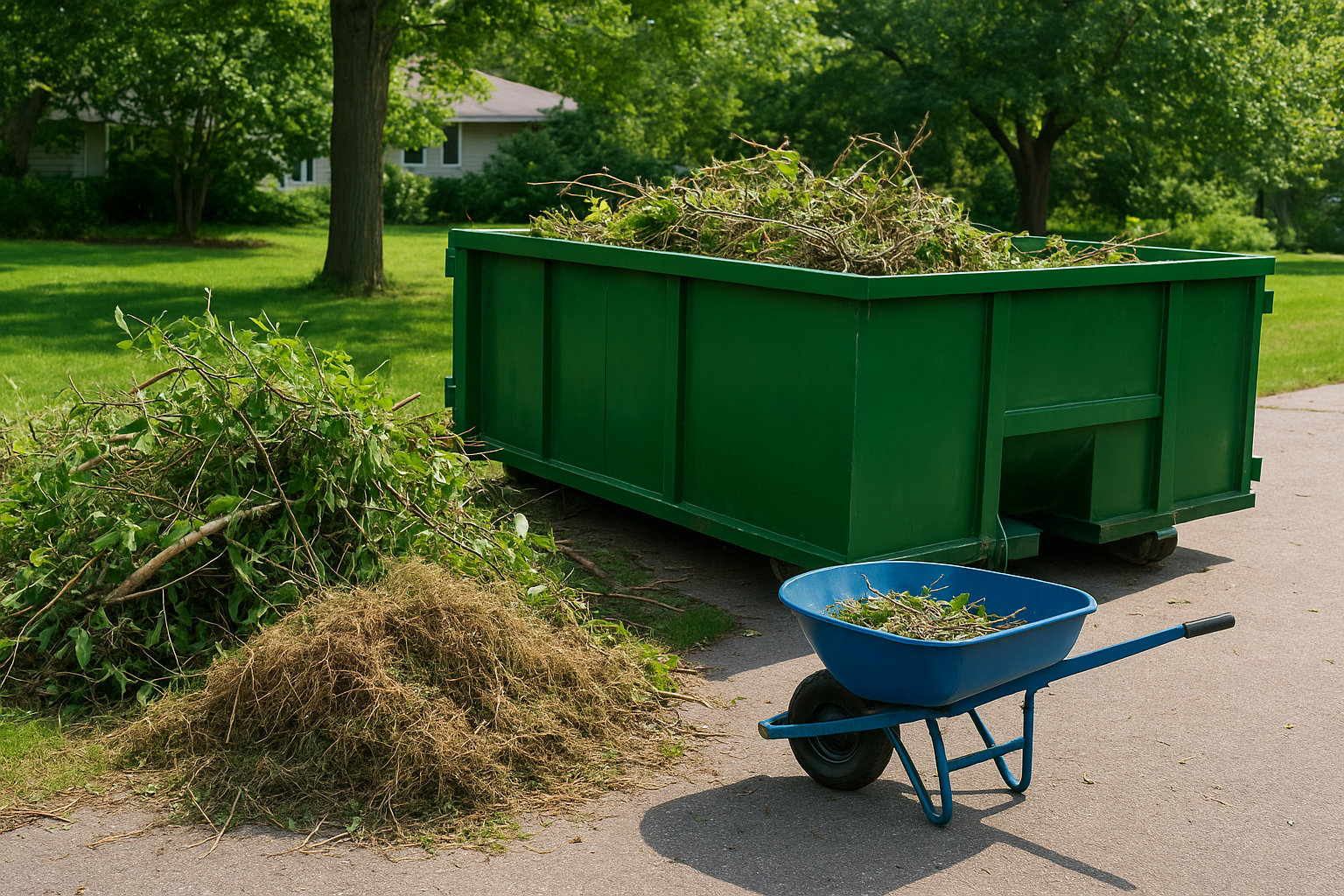
A single 10-yard dumpster holds the equivalent of roughly three to four pickup truck loads, making it far more efficient than repeated drop-off runs across town.
When a dumpster makes sense
A dumpster rental works best when you need several days to work through your yard at your own pace. Projects like removing overgrown brush, hauling large branch piles, or managing post-storm debris often stretch across multiple days. With a dumpster on-site, you load when it’s convenient for you rather than coordinating around a hauler’s fixed arrival window.
When to call a hauler instead
If your project involves a single large pile that’s ready for immediate removal, a hauler can be faster and more cost-effective than a multi-day rental. Choose a hauler when speed matters more than flexible loading time and your debris is already fully sorted and staged in one spot.
Step 4. Handle some yard waste at home
Not every cleanup requires a haul-away service. For smaller amounts of organic material, handling yard waste on your property is a practical and free alternative. Two methods work well for most homeowners: composting and mulching in place.
Compost your organic material
Composting turns grass clippings, leaves, and garden trimmings into usable material for your lawn and garden beds. Set up a dedicated bin or pile in a corner of your yard, then layer green material (fresh clippings, food scraps) with brown material (dry leaves, small twigs). Turn the pile every few weeks to keep it breaking down efficiently.
A well-maintained compost pile can process a full season’s worth of yard trimmings without needing any outside disposal.
Mulch leaves and clippings directly
If you want to know how to dispose of yard waste without doing much extra work, mulching is the simplest answer. Run your mower over dry leaves and leave the shredded material on the lawn. Grass clippings can go straight back onto the turf after mowing, returning nitrogen to the soil without any bagging or hauling required. Both methods cut your debris volume significantly and reduce the number of loads you need to take to the curb or drop-off site.
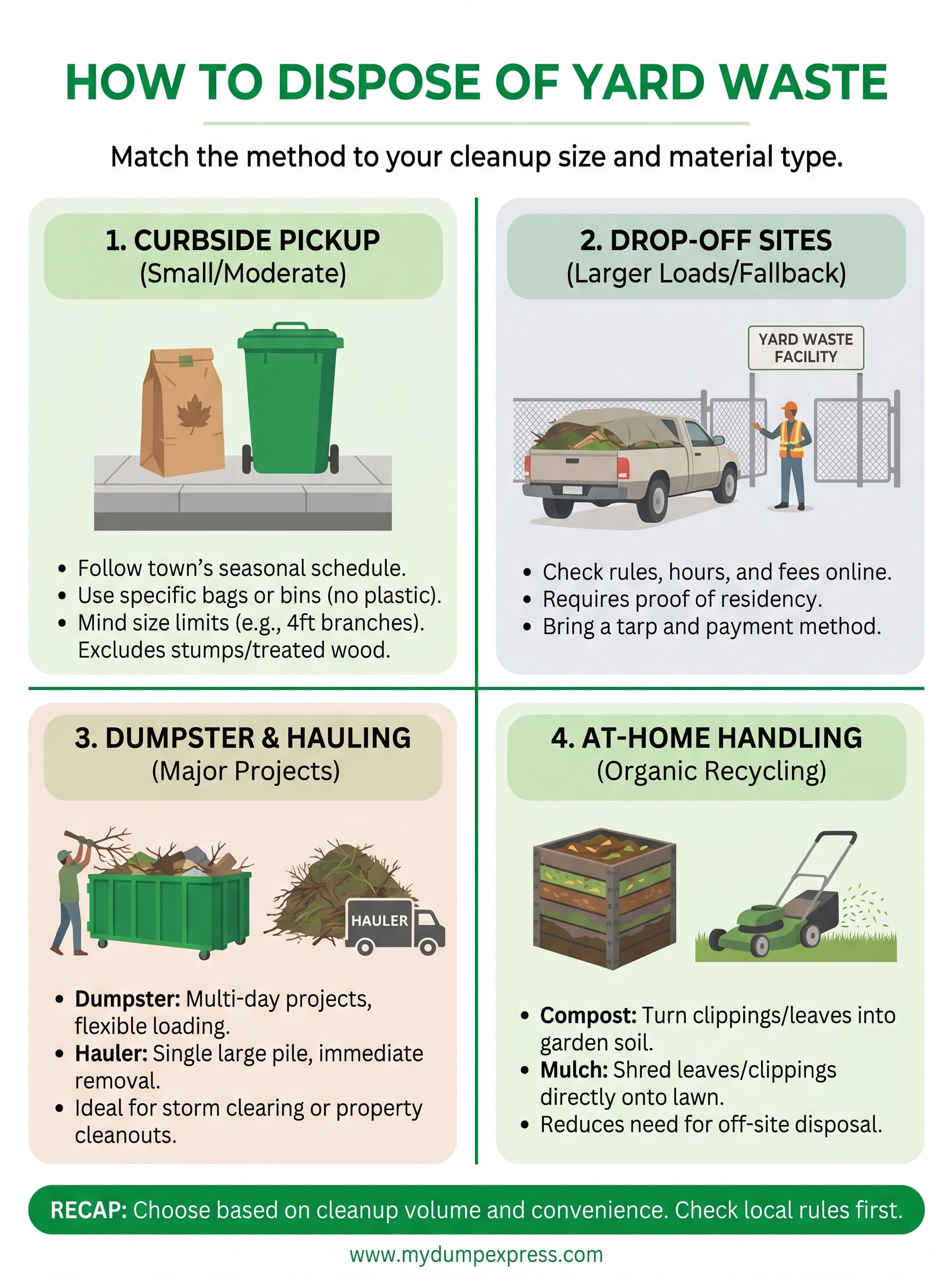
Quick recap
Knowing how to dispose of yard waste comes down to matching the right method to the size and type of your cleanup. Curbside pickup works well for small seasonal loads when you follow your town’s bag limits, container rules, and collection schedule. Drop-off sites give you a free or low-cost option when pickup won’t cut it, but call ahead to confirm hours, accepted materials, and residency requirements before you load your truck. Renting a dumpster fits large multi-day projects like storm cleanup or land clearing where you need flexibility and volume. Composting and mulching handle the everyday material right on your property, cutting down how much you need to haul away in the first place.
For larger cleanup jobs on Cape Cod or in the Plymouth area, a dumpster rental keeps your project moving without repeated trips to the drop-off site. Get a dumpster delivered to your property and work through your yard on your own schedule.