
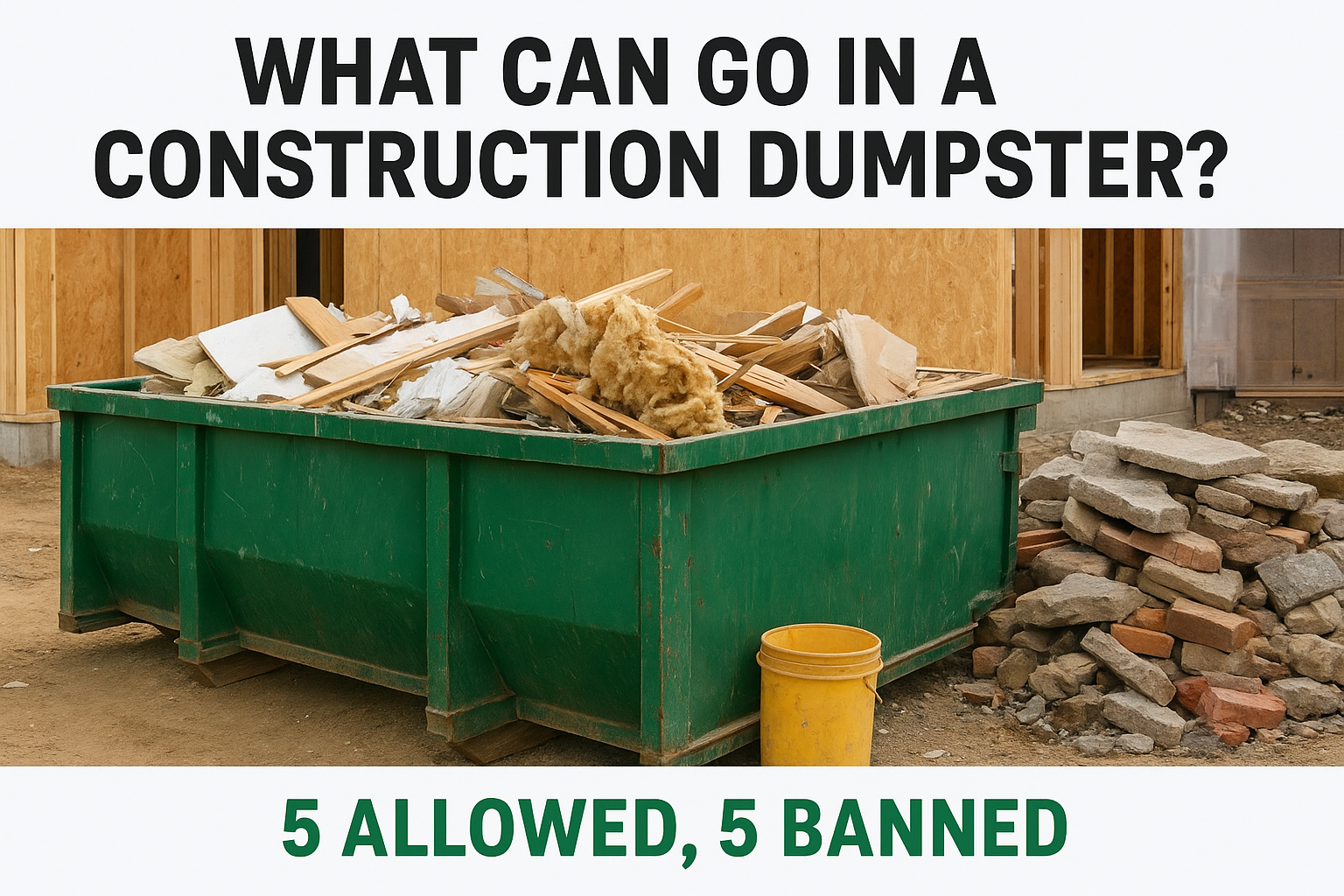
Tossing everything from a renovation into a roll-off container seems straightforward, until you get hit with a surcharge or, worse, have your load rejected at the disposal facility. Knowing what can go in a construction dumpster before you start loading saves you time, money, and a real headache on an already busy job site. The rules aren’t always obvious, and they vary depending on your hauler and local regulations.
At Dump Express, we deliver dumpsters across Cape Cod and Plymouth for renovation and construction projects every day. Our team fields these “can I toss this?” questions constantly, so we put together a clear breakdown of the most common materials you’re allowed to load and the items that are strictly off-limits. Below, you’ll find 5 accepted and 5 banned items to reference before your next project hits demo day.
1. Mixed construction debris and general jobsite trash
This is the broadest category people encounter when researching what can go in a construction dumpster. A standard roll-off handles the bulk of what a typical renovation or demo job generates, but even within this general category, certain materials will trigger fees or outright load rejection at the disposal facility.
What you can toss
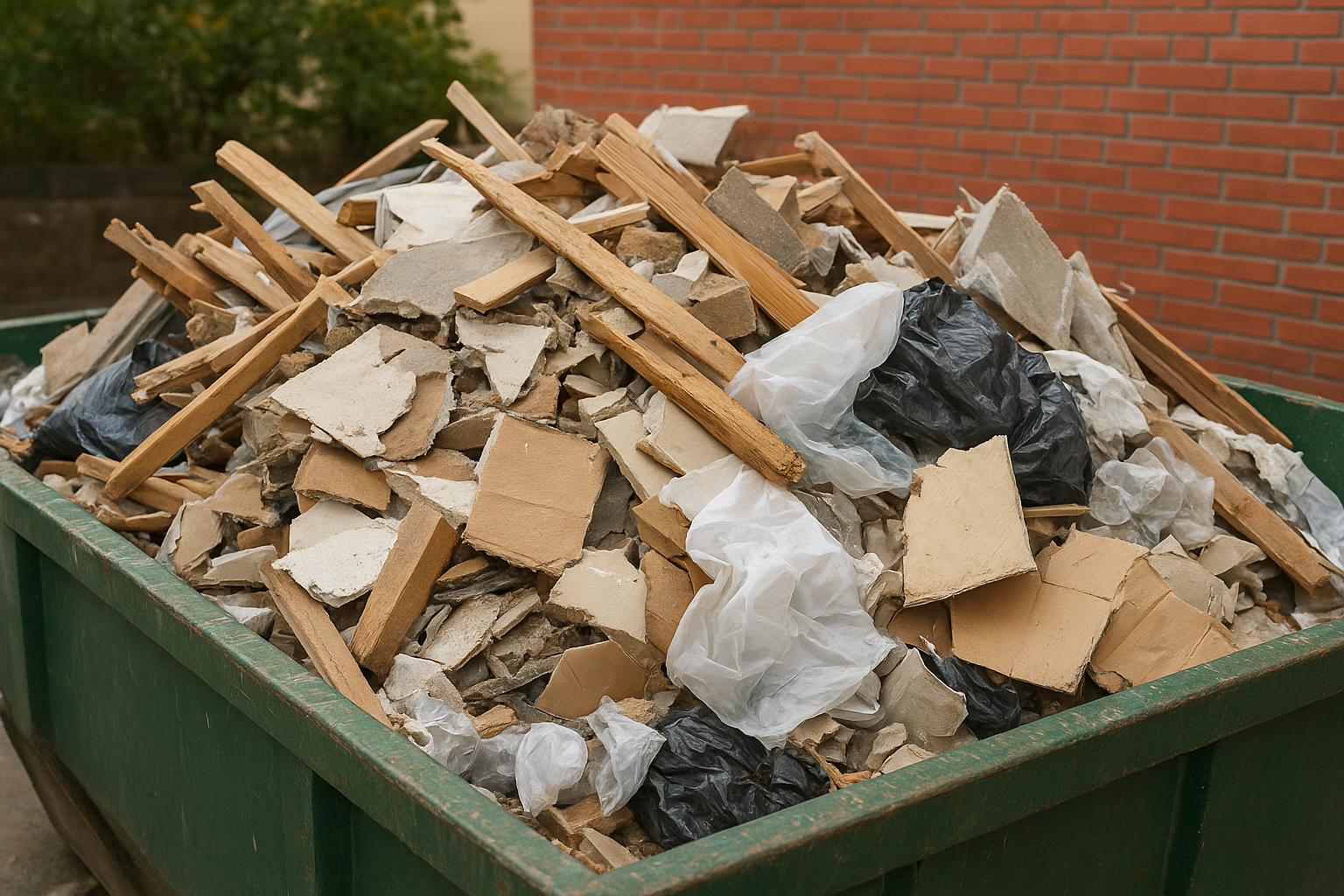
General jobsite trash and mixed construction debris are fair game for most roll-off dumpsters. You can load items like:
- Broken lumber scraps and wood trim
- Drywall pieces and ceiling tile fragments
- Flooring remnants, tiles, and underlayment
- Cardboard packaging and plastic sheeting
- Everyday dunnage generated during the project
If it came off the structure and isn’t hazardous, it almost certainly belongs in this category.
What you must keep out
Hazardous materials are never acceptable in a standard construction dumpster, no matter how small the quantity. Paint cans, solvents, adhesives, and chemical containers of any kind must stay out. Even a partially full can of stain or epoxy can trigger a contamination fee or cause your entire load to be rejected.
Mixing prohibited items with clean debris doesn’t hide them – disposal facilities inspect loads, and one banned item can compromise your entire haul.
Common fees and how to avoid them
Contamination surcharges are the most frequent extra charge on mixed debris loads. You avoid them by sorting prohibited items before you load and keeping a designated collection area on site for anything questionable. When in doubt, call your hauler before you toss it.
Safer disposal options
For hazardous construction waste, a certified hazmat facility or your local transfer station is the correct destination. Cape Cod and Plymouth residents can check with their town’s waste management department for scheduled drop-off events, which are often free or low-cost.
2. Wood, drywall, and interior demo materials
Interior demo projects generate large volumes of wood framing, drywall, and finish materials, one of the most common load types people ask about when researching what can go in a construction dumpster. Understanding what belongs in this category helps you load efficiently and avoid delays on site.
What you can toss
Clean wood framing, trim, cabinets, and doors are all acceptable. You can also load standard drywall sheets, plaster board, and ceiling tiles. Hardwood flooring, laminate, and vinyl planks from interior demo go in without issue.
What you must keep out
Lead paint and asbestos-containing materials are the major concerns in this category. Drywall from homes built before 1980 may contain asbestos, and older wood trim can carry lead paint. Both require specialized abatement and disposal, not a standard roll-off.
If your project involves a pre-1980 structure, test materials before loading anything into the dumpster.
Common fees and how to avoid them
Wet or contaminated drywall is a frequent source of surcharges because it adds weight and is harder to process. Keep drywall dry during your project and avoid mixing it with dirt or insulation to prevent extra fees.
Safer disposal options
Licensed asbestos abatement contractors handle the testing and legal disposal of flagged materials. Your local health department can direct you to licensed professionals in the Cape Cod and Plymouth area.
3. Concrete, brick, and other heavy masonry
Heavy masonry is one of the most common questions people have when figuring out what can go in a construction dumpster. Concrete, brick, and rubble are accepted in most roll-offs, but their weight creates specific rules you need to know before you load.
What you can toss
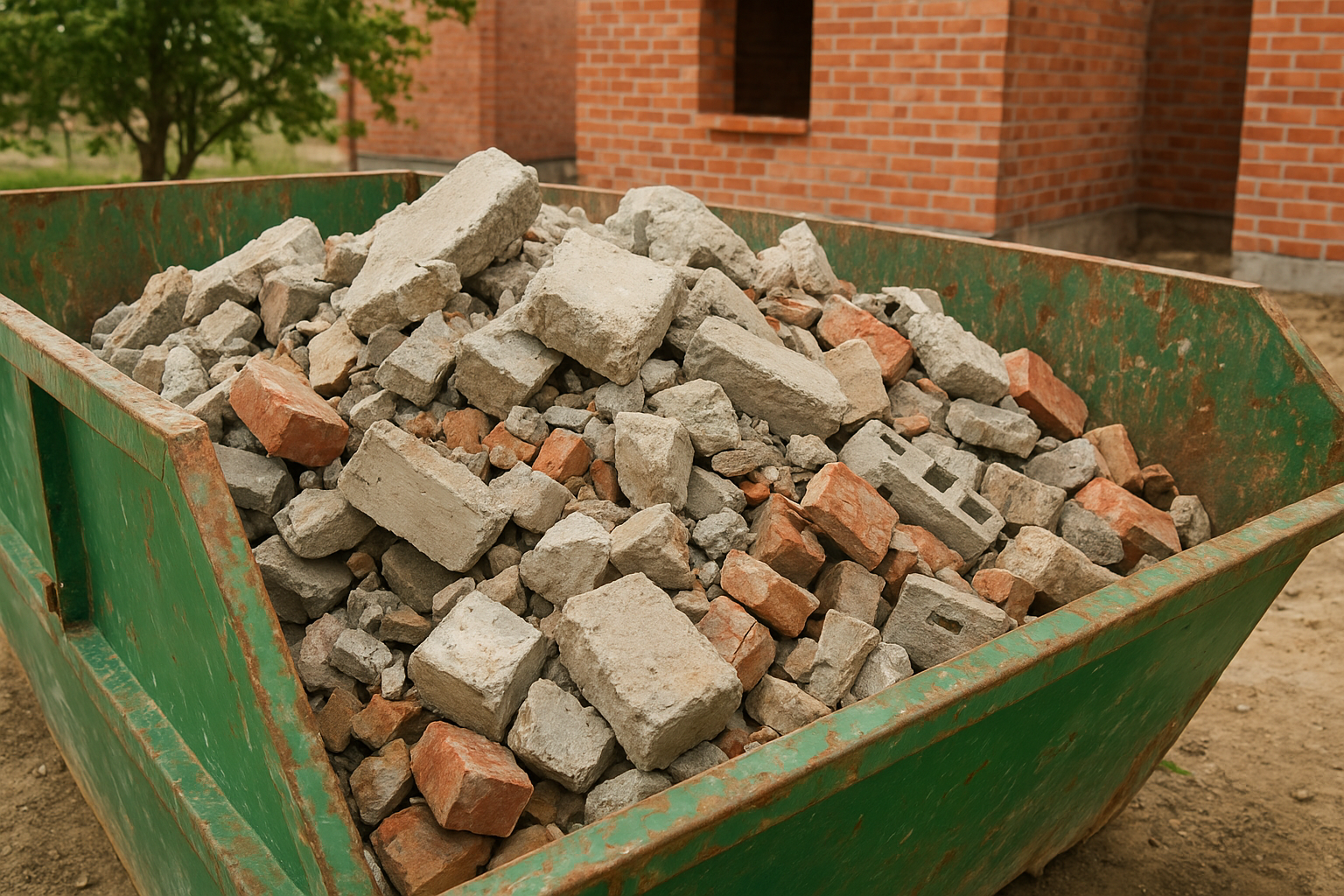
Broken concrete slabs, bricks and cinder blocks all go in a standard construction dumpster. You can also include mortar, tile, and ceramic pieces from demolition work without issue.
What you must keep out
Reinforced concrete with exposed rebar can cause problems at some facilities, so check with your hauler first. You must also keep out asbestos-containing masonry products, which appear in older construction and require specialized handling.
Heavy masonry fills weight limits fast, so size your dumpster with your hauler’s weight cap in mind before you start loading.
Common fees and how to avoid them
Overweight surcharges are the biggest risk with masonry loads. Mixing heavy concrete with lighter debris pushes your total weight up quickly. Load masonry first and separately when possible to stay within the rental’s included weight allowance.
Safer disposal options
Concrete recyclers accept clean masonry and often process it at a lower cost than standard disposal. Your hauler can point you toward local recycling facilities in the Cape Cod and Plymouth area.
4. Roofing materials and insulation
Roofing projects are another area where people frequently ask what can go in a construction dumpster. Both tear-off shingles and insulation materials come with specific rules, and getting them wrong means extra charges or a rejected load.
What you can toss
Standard asphalt shingles, wood shakes, and felt underlayment from a roof tear-off are all acceptable in a construction roll-off. You can also load fiberglass batt insulation and rigid foam board without issue on most loads.
What you must keep out
Asbestos-containing roofing materials, common in homes built before the 1980s, require licensed abatement and cannot go in a standard dumpster. Keep out vermiculite insulation as well, which often contains asbestos and needs separate testing before disposal.
If your home was built before 1980, test roofing materials for asbestos before your crew starts tearing anything off.
Common fees and how to avoid them
Shingles add weight fast, and mixed roofing loads can push you over your included weight allowance quickly. Estimate your shingle tonnage before booking to choose the right dumpster size and weight tier.
Safer disposal options
Licensed asbestos abatement contractors handle flagged roofing materials legally. Your local health department or waste authority can connect you with certified professionals in the Cape Cod and Plymouth area.
5. Metal, fixtures, and appliances
Metal and fixture removal is a standard part of any kitchen, bath, or structural renovation, and it’s another area where people ask what can go in a construction dumpster. Most scrap metal and old fixtures are accepted, but a few items require separate handling before your crew starts loading.
What you can toss
Scrap metal, steel framing, copper pipe, and conduit all go in a standard roll-off without issue. You can also load old sinks, toilets, cabinets, doors, and non-working fixtures from interior demo work.
What you must keep out
Refrigerant-containing appliances such as refrigerators, air conditioners, and freezers are banned from standard dumpsters. These units require EPA-certified refrigerant recovery before disposal anywhere.
Never load a refrigerant-containing appliance into a roll-off – it’s an EPA violation, not just a hauler policy.
Common fees and how to avoid them
Leaving appliances with refrigerants in a load triggers automatic removal fees if discovered at the facility. Pull those units out before loading and arrange separate appliance pickup through your municipality or an appliance retailer.
Safer disposal options
Many municipalities offer free appliance pickup for refrigerators and AC units. Local scrap metal recyclers also accept steel, copper pipe, and fixtures, often at no charge, which keeps that material out of landfill entirely.
Quick recap and booking checklist
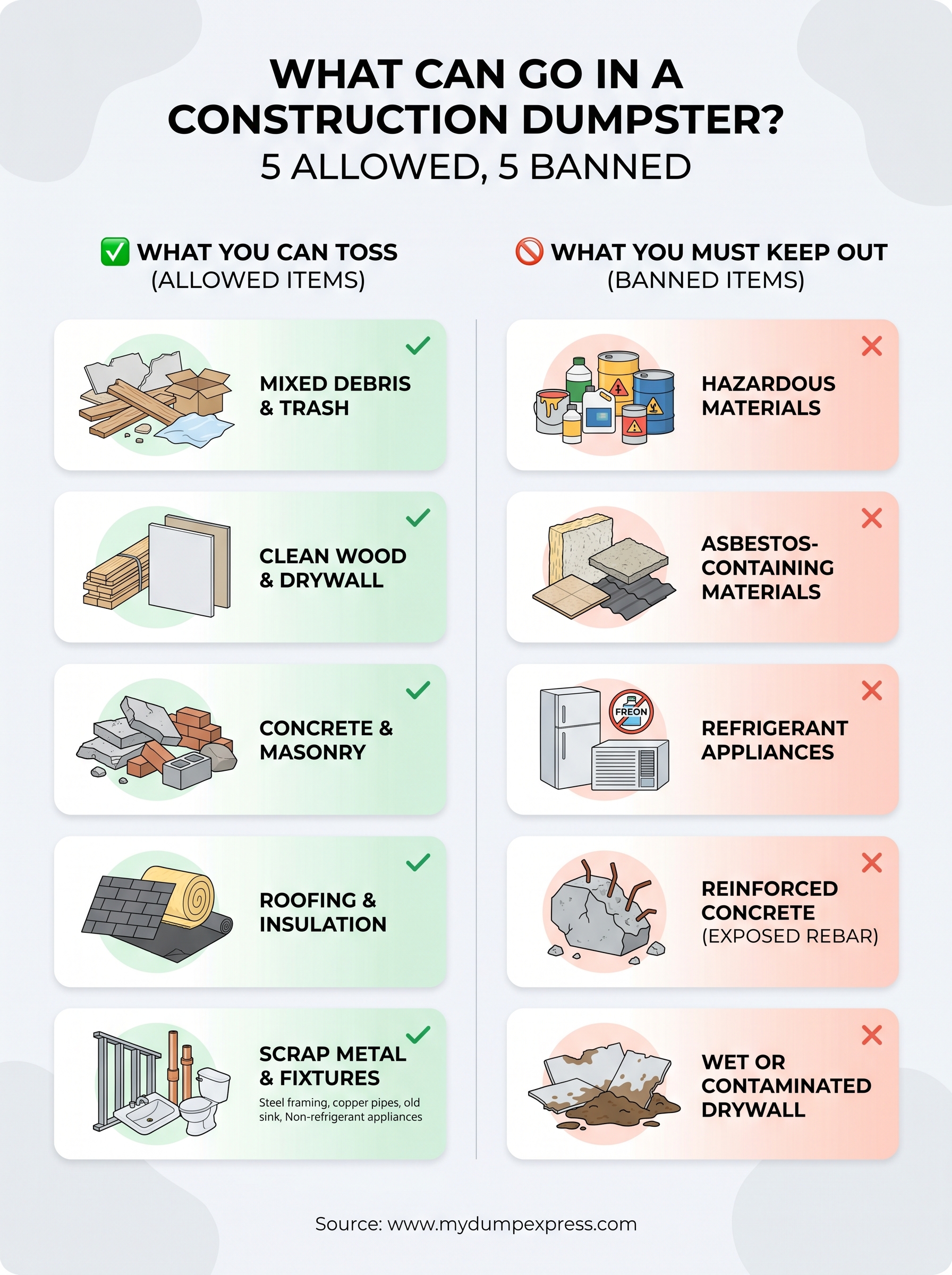
Now you know what can go in a construction dumpster and, just as importantly, what stays out. Here is a fast reference before you book: load mixed debris, clean wood, drywall, concrete, standard shingles, and scrap metal freely. Keep out hazardous materials, asbestos-containing products, refrigerant appliances, and any chemical containers, no exceptions. Sort prohibited items on site before loading starts, and call your hauler with any material questions before tossing something you are unsure about.
Before you reserve your dumpster, confirm your estimated material weight against the rental’s included allowance, especially if you are loading masonry or roofing. Choose your size based on project scope, not just visual volume, since heavy materials fill weight limits long before they fill the container. Getting those details right the first time eliminates surprise charges and keeps your project on schedule.
Ready to book? Reserve a construction dumpster on Cape Cod and get same-day or next-day delivery across 40+ local towns.