If you’ve ever searched for a dumpster rental, you’ve probably come across the term "roll-off dumpster" and wondered what makes it different from any other dumpster. It’s a fair question, and the answer matters more than you’d think, especially when you’re planning a cleanout, renovation, or construction project and need to choose the right container for the job.
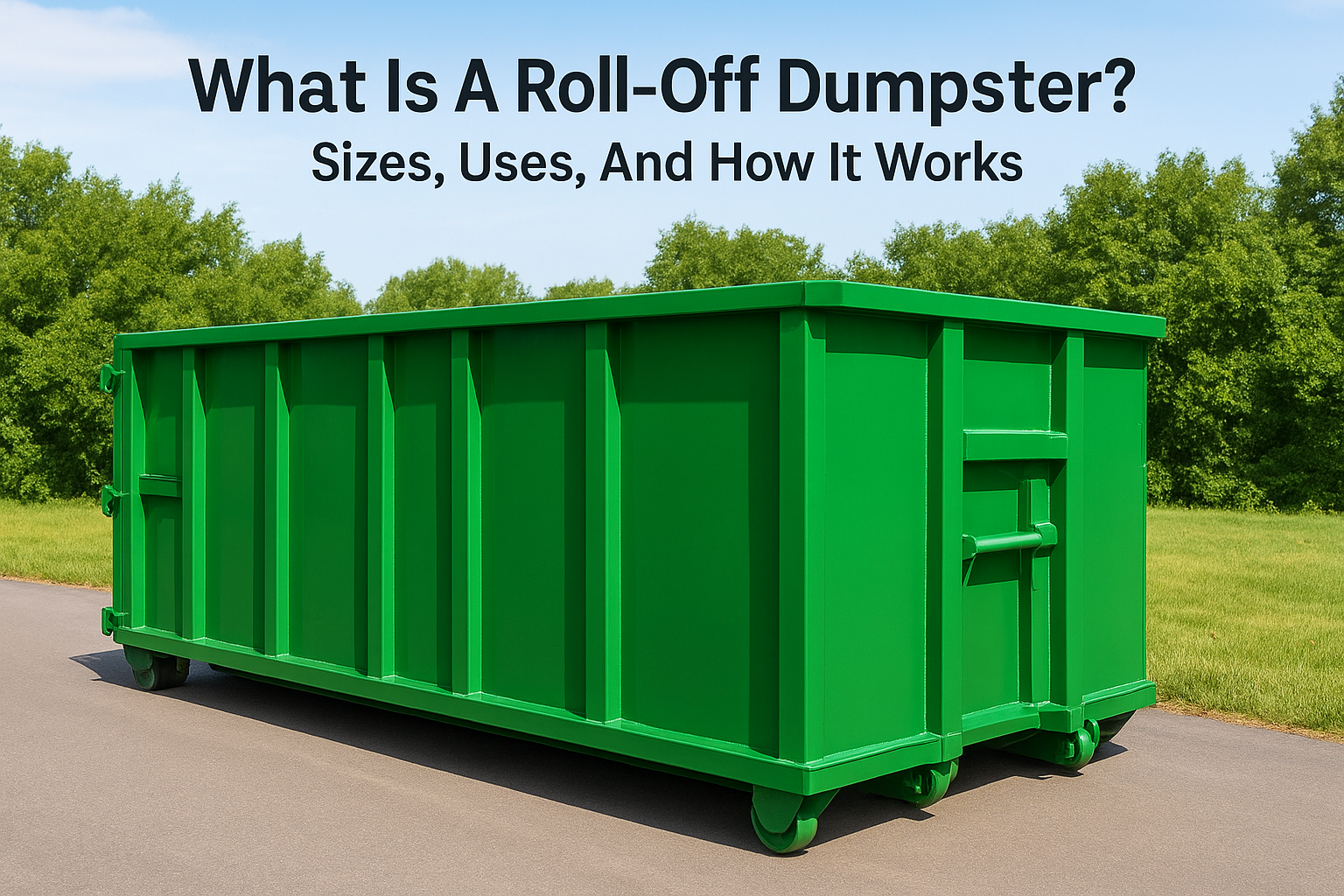
A roll-off dumpster is the open-top, rectangular container you see on job sites and driveways. It gets its name from the way it’s delivered: it literally rolls off the back of a specialized truck. Unlike the permanent dumpsters behind restaurants or office buildings, roll-off containers are temporary, dropped off when you need them and picked up when you’re done.
At Dump Express, we’ve been delivering roll-off dumpsters across Cape Cod and Plymouth for over 20 years. Below, we’ll break down exactly how roll-off dumpsters work, what sizes are available, what they’re commonly used for, and how to figure out which one fits your project.
Why roll-off dumpsters matter
When you’re dealing with a large volume of waste, whether from a kitchen tear-out, a roof replacement, or a full garage cleanout, your options are limited. You can rent a truck and make repeated trips to the transfer station, hire a junk removal crew, or rent a roll-off dumpster and load it on your own schedule. Roll-off containers win on cost and convenience for most projects that generate more than a pickup truck load of debris, which is most home improvement and construction projects.
The alternative usually costs more
Hauling debris yourself means renting a truck, buying tarps, and making multiple trips to a disposal facility, all while paying by the hour or mile. Junk removal services work for small loads, but per-item pricing adds up fast when you’re clearing out years of accumulated material. Understanding what is a roll off dumpster, and when it applies to your situation, saves you real money. Here’s how the common alternatives compare:
- Truck rental: You handle all loading, tarping, and dump fees per trip
- Junk removal crew: Useful for small volumes, but costs spike on larger cleanouts
- Curbside pickup: Strictly limited in quantity and won’t accept construction debris
A single roll-off dumpster rental often replaces five or more truck trips to a transfer station, and you only pay once.
Your project timeline depends on it
Waste removal is rarely the first thing people plan, but it’s often what slows a project down when it’s not handled early. A dumpster on your driveway gives you one centralized place to put debris as you work, so you’re not making last-minute decisions mid-project. Contractors on job sites know this well: a full container that doesn’t get picked up on time can halt work entirely, which is why reliable scheduling matters as much as the container itself.
How a roll-off dumpster works
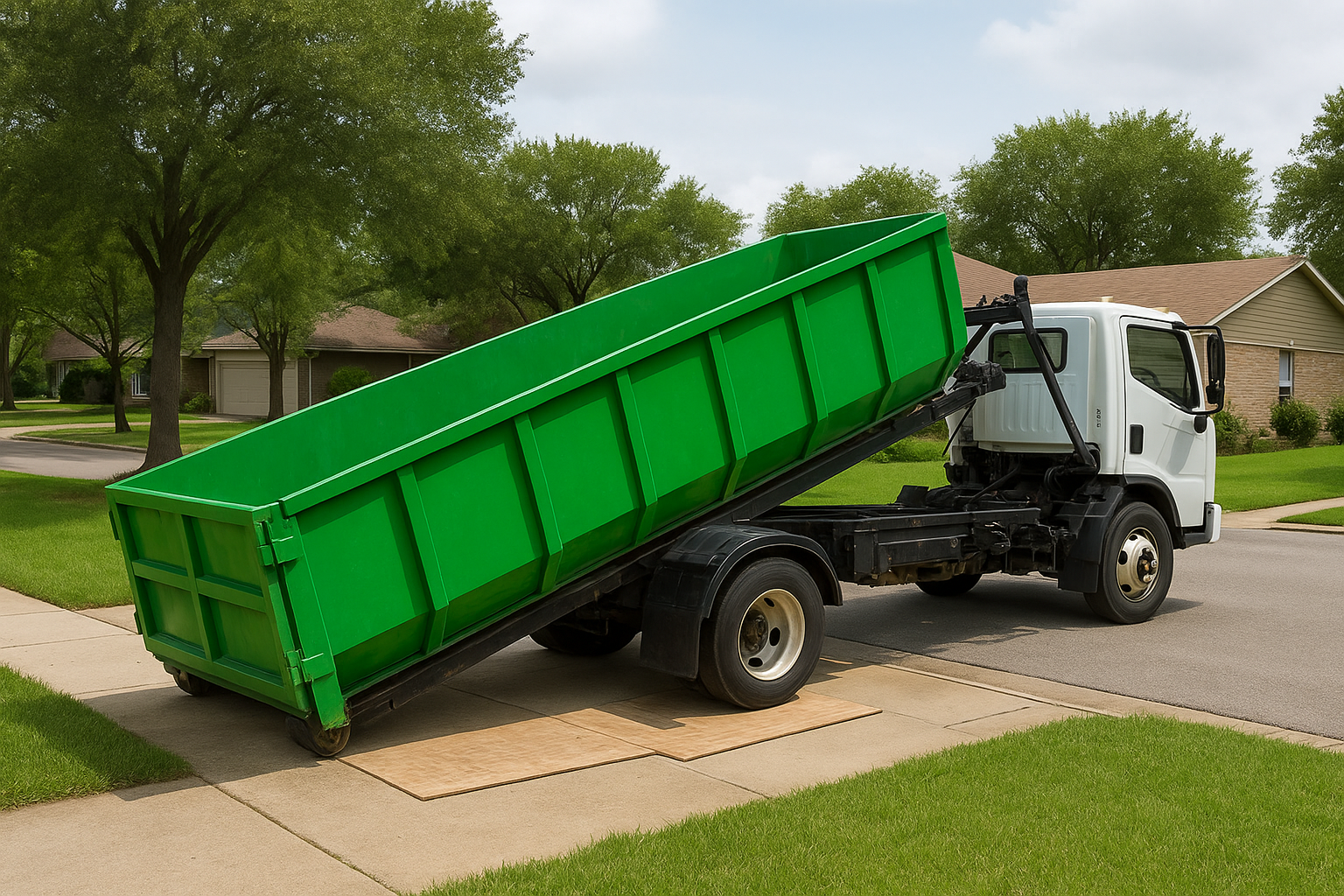
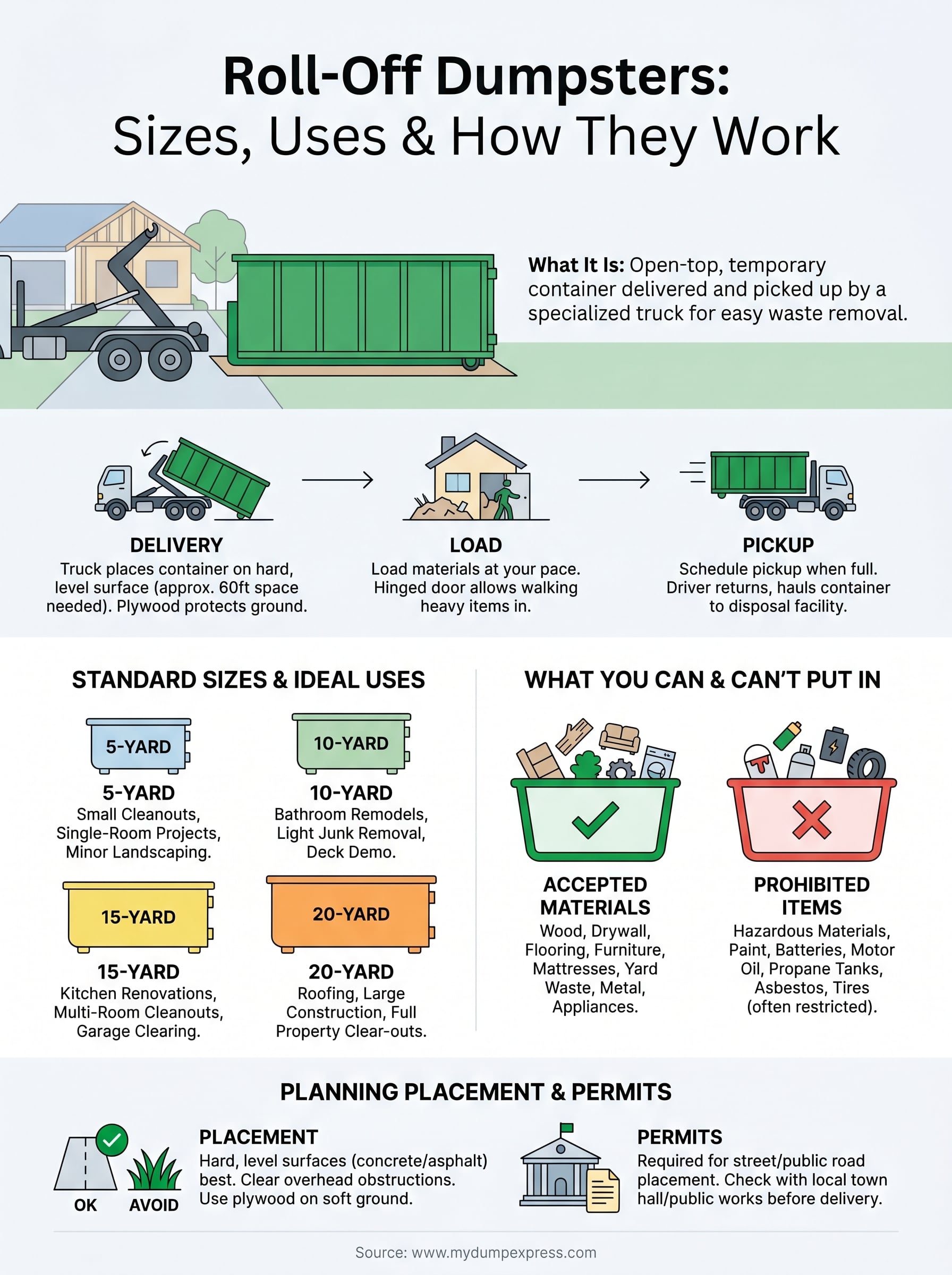
Understanding what is a roll off dumpster starts with knowing the delivery process. A specialized roll-off truck backs up to your chosen drop spot, then uses a hydraulic system to slide the container off the truck bed and onto the ground. The whole process takes just a few minutes. When your rental period ends, the driver returns, hooks up the container, and hauls it to a licensed disposal facility.
The drop-off and pickup process
The truck needs roughly 60 feet of clear, straight driveway or road access to position and drop the container safely. Soft ground like lawns can cause the container to sink, so most drivers place plywood boards under the wheels to protect your surface. Once the container is on the ground, it’s entirely yours to load at whatever pace your project requires.
Loading through the swinging door
Most roll-off containers include a hinged door at one end that swings open to ground level. This door lets you walk heavy materials directly in rather than lifting everything over the side. You load debris as you work, and when the container is full or your project wraps up, you call to schedule pickup.
The swinging door makes a real difference when you’re moving heavy materials like concrete, tile, or old appliances.
Roll-off dumpster sizes and how to choose
Roll-off dumpsters come in four standard sizes: 5-yard, 10-yard, 15-yard, and 20-yard containers. Picking the right size is the most practical decision you’ll make before booking, because going too small means overflow charges or a second haul, and going too large means paying for space you never fill.
Matching size to your project
The 5-yard and 10-yard containers work well for smaller residential jobs like a single-room cleanout, a bathroom remodel, or minor landscaping. A 15-yard container handles bigger work like a full kitchen renovation or a multi-room cleanout with room to spare. Here’s a quick reference:
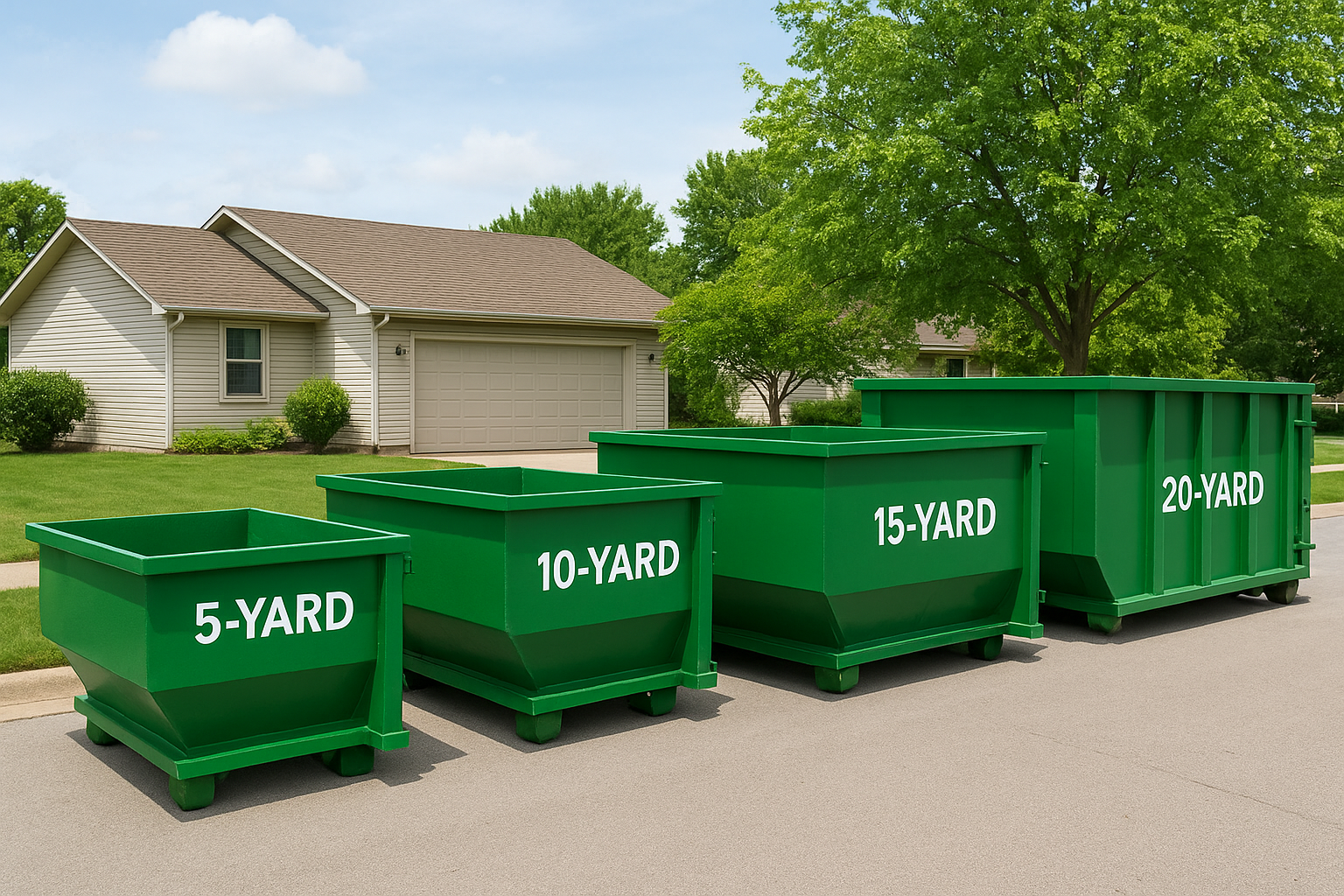
- 5-yard: Small cleanouts, single-room projects
- 10-yard: Bathroom remodels, light junk removal
- 15-yard: Kitchen renovations, multi-room cleanouts
- 20-yard: Roofing, large construction, full property clear-outs
When in doubt, size up: a slightly larger container almost always costs less than scheduling a second pickup.
When to go with the largest option
For roofing projects, major construction, or clearing an entire property, the 20-yard container is the right call. These jobs generate a surprising volume of debris, and running out of space mid-project creates a costly delay. If you’re still unsure what is a roll off dumpster size that fits your specific job, your rental company can walk you through the decision before you book.
What you can put in a roll-off dumpster
Most general construction debris and household waste goes in without issue. When you’re figuring out what is a roll off dumpster good for in terms of material, the answer covers a wide range: wood, drywall, flooring, furniture, appliances, yard waste, and roofing shingles all qualify. That said, every rental comes with a short list of prohibited items you need to know before you start loading.
Accepted materials
Your roll-off container handles the bulk of what residential and construction projects produce. Here’s what typically gets the green light:
- Wood, lumber, and framing materials
- Drywall and insulation
- Flooring, tile, and carpet
- Furniture and mattresses
- Yard waste and brush
- Metal scraps and appliances
When you load heavy materials like concrete or roofing shingles, fill the container evenly to keep weight distributed and avoid overloading one end.
What’s not allowed
Hazardous materials are off-limits in any roll-off container, no exceptions. Items like paint, batteries, motor oil, propane tanks, and asbestos require special disposal through a licensed hazardous waste facility. Tires and electronics may also be restricted depending on your local regulations. If you’re unsure about a specific item, call your rental company before you toss it in.
Planning delivery, placement, and permits
Before your container arrives, you need to confirm where it will sit and whether a permit is required. Sorting both out before delivery day keeps the project moving without last-minute surprises.
Coordinate placement and permits at least two to three days before your scheduled drop-off to avoid delays.
Choosing the right spot
Hard, level surfaces like concrete or asphalt work best for placement. Soft ground can cause the container to sink under the weight of debris. Keep the area free of overhead obstructions like power lines or low branches, since the truck needs vertical clearance to slide the container off the back.
Good placement surfaces:
- Concrete driveway
- Asphalt or packed gravel
- Flat, firm ground with plywood protection
Checking permit requirements
If you plan to set the container on a public road or street, most towns require a placement permit. Contact your local town hall or public works department to confirm the rules before delivery day. Understanding what is a roll off dumpster permit process in your specific town protects you from fines or a forced move mid-project. Ask your town office about:
- Whether a permit applies to your street type
- How far in advance you need to apply
- Any size or duration restrictions on public placements
Next steps
Now you know what is a roll off dumpster, how it gets delivered, what sizes are available, and what materials you can load. That knowledge puts you in a strong position to plan your project without guessing. The right container size, a clear drop spot, and a quick permit check are all you need to handle before booking.
Your next move is simple: figure out the scope of your project, run through the size guide in this article, and contact a local rental company to confirm availability and pricing. Local providers know the specific roads, towns, and regulations in your area, which saves you time and prevents surprises on delivery day.
If you’re working on Cape Cod or in the Plymouth area, Dump Express offers transparent pricing, reliable scheduling, and containers available seven days a week. Book your dumpster rental with Dump Express and get your project started without the runaround.