
Whether you’re clearing out a garage, gutting a bathroom, or managing demolition debris on a job site, one of the first questions is always the same: how much is this going to cost? Roll off dumpster rental rates depend on several factors, dumpster size, your location, what you’re throwing away, and how long you keep it. Without a clear breakdown, it’s easy to overpay or get hit with surprise fees.
At Dump Express, we’ve spent over 20 years delivering dumpsters across Cape Cod and Plymouth, Massachusetts, and pricing transparency is something we take seriously. We built this guide using that experience, real numbers, real context, and practical advice to help you budget accurately before you book.
Below, you’ll find average costs broken down by dumpster size, a look at what drives prices up or down, and tips to get the most value out of your rental. If you’re comparing options, this is a solid place to start making an informed decision.
What roll off dumpster rental rates include
When you get a quote for a roll-off dumpster, the number you see isn’t always the number you pay. Most rental companies bundle several services into a single flat rate, but others split them out and charge for each piece separately. Knowing what’s included in your quote before you commit helps you compare offers on equal footing and avoid unexpected charges on your final bill.
The base rental fee
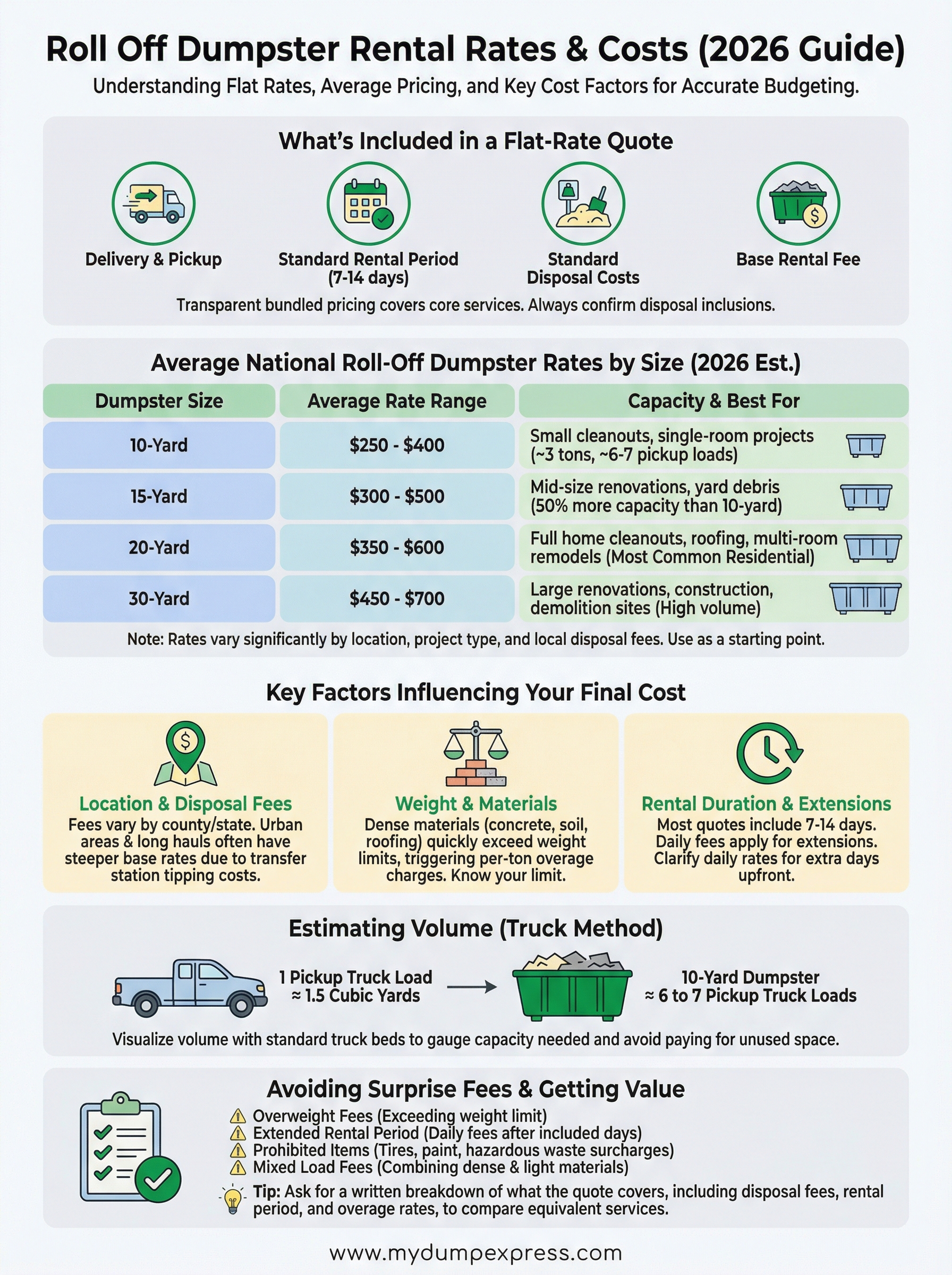
The base rental fee typically covers four core components: delivery of the dumpster to your location, a set rental period (usually 7 to 14 days depending on the provider), pickup when you’re done, and standard disposal costs for acceptable materials. Some companies also fold a fuel surcharge or environmental fee into this number, while others list those separately on the invoice.
If a quote looks unusually low, check whether disposal costs are included. Some providers charge the base delivery fee upfront and bill disposal separately after the dumpster is weighed at the landfill.
This bundled pricing model makes budgeting straightforward. When you see a flat-rate quote with all four components included, you can plan your project costs around a reliable number rather than waiting until pickup day to find out what you actually owe.
Extra charges to watch for
Even with a flat-rate quote, certain situations trigger additional fees that fall outside the base rate. The most common ones include:
- Overweight fees: Every dumpster has a weight limit. If your debris exceeds that limit, you’ll pay a per-ton overage charge. For heavy materials like concrete, soil, or roofing shingles, this adds up quickly.
- Extended rental period: If your project runs longer than the included rental window, most providers charge a daily rate for each extra day.
- Prohibited items: Loading restricted materials such as tires, paint, or hazardous waste can result in surcharges or refusal to haul the load entirely.
- Mixed load fees: Combining dense materials with lighter debris can push the total weight over the limit and generate charges you wouldn’t have faced if you’d separated them.
Understanding where extra charges originate puts you in a much better position to load your dumpster efficiently and stay within the quoted price. It also helps you ask the right questions when comparing roll off dumpster rental rates from different providers, so you’re evaluating the same services rather than just comparing headline numbers.
Average roll off dumpster rates by size in 2026
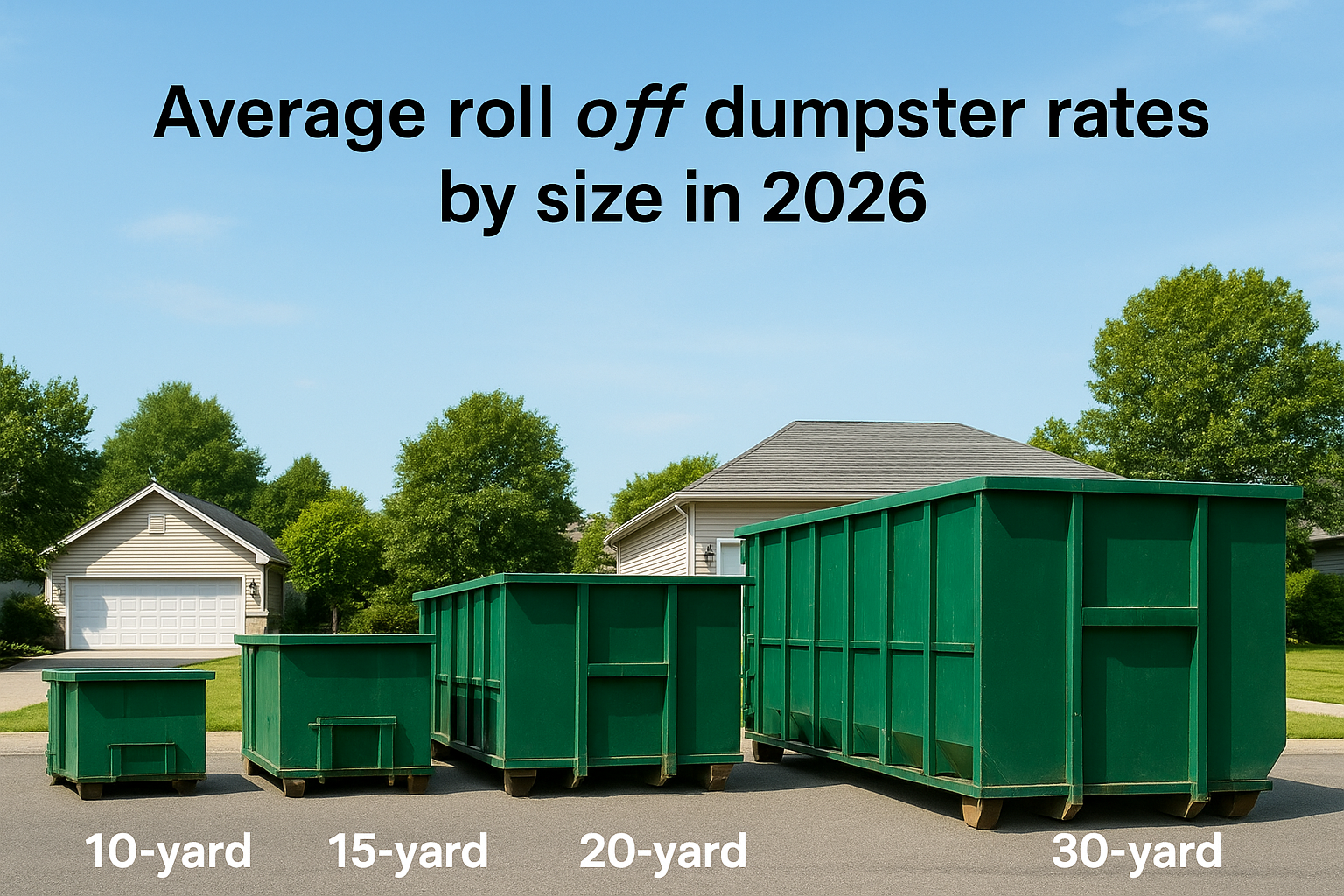
Dumpster pricing scales with container size, but the jump between sizes isn’t always linear. Rental rates vary by region, project type, and disposal costs in your area, so the numbers below reflect typical national averages you can use as a starting point when comparing quotes. Your actual roll off dumpster rental rates will depend on your specific location and the details of your project.
| Dumpster Size | Average Rate Range | Best For |
|---|---|---|
| 10-yard | $250 – $400 | Small cleanouts, single-room projects |
| 15-yard | $300 – $500 | Mid-size renovations, yard debris |
| 20-yard | $350 – $600 | Full home cleanouts, roofing jobs |
| 30-yard | $450 – $700 | Large renovations, construction sites |
Smaller dumpsters (10-15 yards)
A 10-yard dumpster fits targeted projects like a single-room cleanout, a small deck removal, or a garage purge. Most 10-yard containers hold roughly 3 tons of debris, and rates typically fall between $250 and $400 depending on your location and local disposal fees. Stepping up to a 15-yard container gives you roughly 50% more capacity, which works well for mid-size bathroom renovations or yard cleanups, with average rates ranging from $300 to $500.
Larger dumpsters (20-30 yards)
A 20-yard dumpster handles full home cleanouts, roofing tear-offs, and multi-room remodels. Average rates for this size run between $350 and $600, making it one of the most commonly rented sizes for residential projects. If your job generates high debris volume, like a large construction or demolition project, a 30-yard container typically runs $450 to $700 and gives you enough capacity to avoid paying for a second haul.
Renting one size larger than you think you need often costs less than scheduling a second pickup.
Factors that change your rate and common fees
Several variables push roll off dumpster rental rates higher or lower than the national averages listed above. Understanding these factors before you book gives you better control over your final cost and helps you ask the right questions when requesting a quote. Pricing isn’t random, and most of the differences between quotes come down to a handful of predictable drivers.
Location and disposal costs
Where you live has a direct impact on what you pay. Disposal fees vary by county and state because different transfer stations and landfills set their own tipping rates. Urban areas with higher operating costs and longer haul distances tend to have steeper base rates than rural markets.
Local regulations around specific waste types can also add processing fees that get passed along to you. Some municipalities require special handling for materials like electronics or appliances, and those surcharges show up on your final bill. Checking the local disposal rules in your area helps you anticipate costs before you book.
If you’re renting in a high-cost area, ask whether the quoted rate includes a fixed disposal allowance or if disposal is billed based on actual weight at the landfill.
Weight, materials, and rental duration
The weight of what you load matters as much as the volume. Dense materials like concrete, brick, soil, and roofing shingles weigh far more per cubic foot than furniture or general household junk. Most containers come with a weight allowance built into the base rate, and exceeding that limit triggers per-ton overage charges that can add hundreds of dollars to your bill if you’re not careful.
Rental duration also affects your total. Most providers include 7 to 14 days in the base rate, and daily extension fees kick in after that window closes. If your project timeline is uncertain, ask upfront what the daily rate is for extra days so you can build that into your budget rather than getting surprised when the invoice arrives.
How to estimate your dumpster size and weight
Getting the size right before you book saves you from paying for capacity you don’t need or ordering a second haul because your first container filled up faster than expected. Two things drive this decision: volume (how much space your debris takes up) and weight (how heavy your materials are). Both matter, and both affect your final cost.
Estimating volume by project type
A single-room cleanout or small garage purge typically fits in a 10-yard container. A bathroom or kitchen renovation, a full-home declutter, or a medium roofing job usually calls for a 15 to 20-yard container. Large construction or demolition projects generating significant debris volume generally need a 30-yard container to avoid overflow.
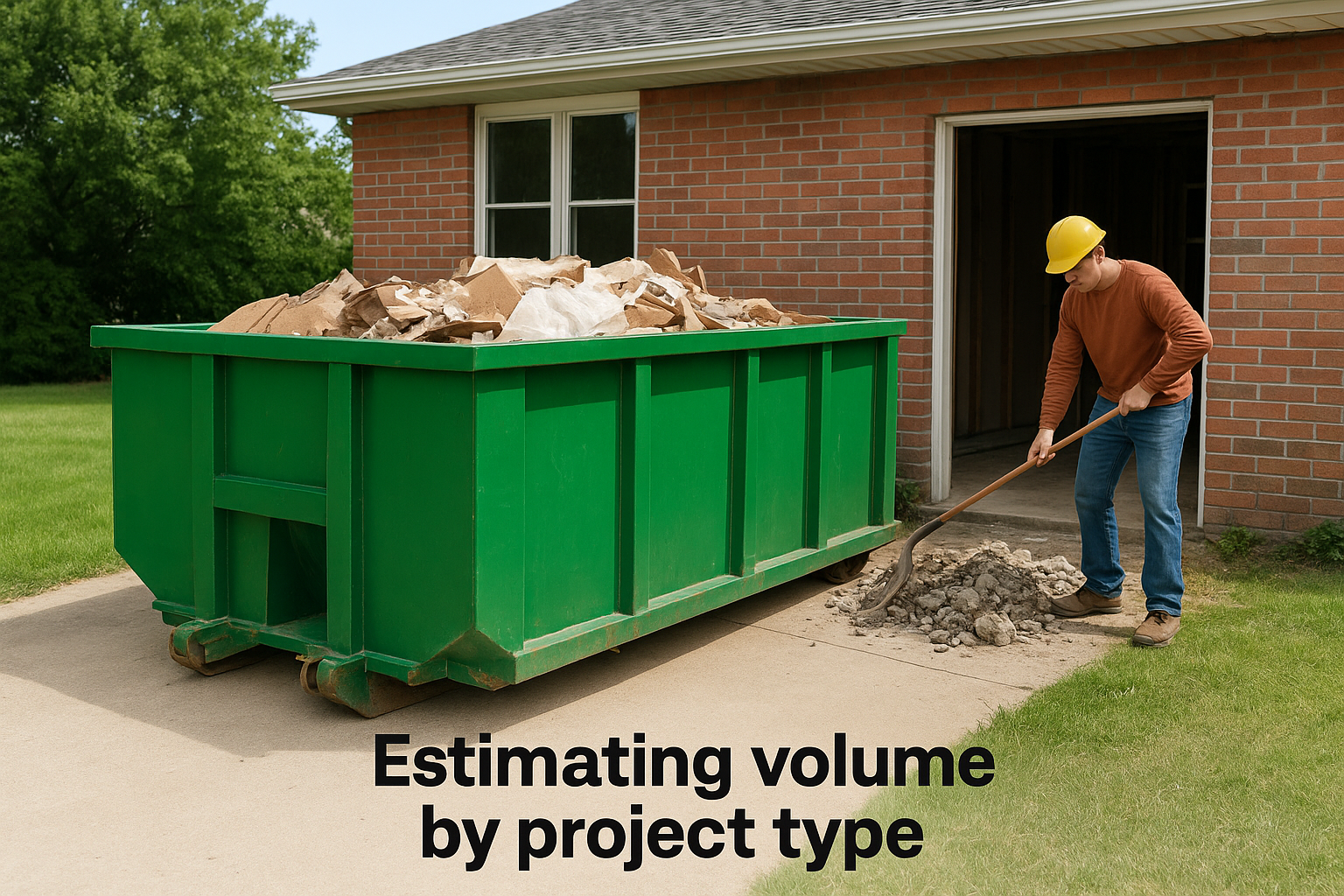
A practical way to estimate volume is to picture standard pickup truck beds. One pickup truck load equals roughly 1.5 cubic yards of debris. A 10-yard dumpster holds the equivalent of about 6 to 7 truckloads. Use that conversion to gauge how many trips to a landfill your project would otherwise require.
When in doubt, size up. The cost difference between a 10-yard and 15-yard container is usually smaller than the fee for a second delivery and pickup.
Estimating weight before you load
Volume tells you how full the dumpster will get, but weight determines whether you’ll pay overage charges. Heavy materials like concrete, brick, tile, and soil reach weight limits long before they fill a container to the top. If your project involves any of these, keep load weight front of mind as you fill the bin.
Concrete and masonry weigh roughly 1 ton per cubic yard. If you’re loading more than a few yards of heavy material, confirm the container’s weight limit with your provider before booking. Knowing both your volume and your weight upfront helps you choose the right container and avoid surprises when roll off dumpster rental rates come due at pickup.
How to compare quotes and avoid surprises
When you’re collecting quotes from multiple providers, comparing headline numbers without context leads to bad decisions. Two quotes can look identical on the surface but carry very different final costs depending on what’s bundled in and what’s billed separately. Before you pick a provider based on price alone, take a few minutes to ask the right questions and get answers in writing.
Ask what the quote actually includes
The fastest way to compare roll off dumpster rental rates accurately is to ask each provider for a written breakdown of what the quote covers. Specifically, confirm whether the rate includes disposal fees, what the included rental period is, and whether fuel surcharges are baked in or added at billing. Use the same list of questions for every provider so you’re comparing equivalent services rather than just headline numbers.
- Does the rate include disposal, or is that billed by weight at pickup?
- What is the included rental period, and what does an extension cost per day?
- Are there surcharges for specific materials like concrete, appliances, or mixed loads?
- Is there a fuel or environmental fee, and if so, how much?
A provider who answers these questions clearly and upfront is showing you how they’ll handle your entire rental experience, not just the sale.
Watch for fees that appear after pickup
Some charges only surface after your dumpster has been hauled away and weighed at the transfer station. Overweight fees are the most common, but you may also see administrative fees or undisclosed material surcharges that weren’t mentioned during booking. Ask each provider to confirm the per-ton overage rate before you commit. If a company can’t give you a clear number, that’s worth noting before you hand over payment information.
A second thing to verify is the cutoff for the rental period. Some providers count weekends, while others only count business days, and that difference can trigger extension fees on a project that fits comfortably within what you expected.
Next steps before you book
Now that you understand what drives roll off dumpster rental rates, you’re in a much better position to book with confidence. Before you commit, nail down your project type, estimate your debris volume and weight using the guidelines above, and confirm what each quote actually includes in writing. Getting these details right upfront saves you from overpaying or dealing with unexpected charges when the dumpster gets picked up.
Your next move is straightforward. Collect two or three quotes, ask each provider the same set of questions about disposal fees, rental periods, and overage rates, and compare the total cost rather than just the headline number. Choosing a provider who answers clearly and shows you upfront pricing is the simplest way to avoid billing surprises.
If your project is in Cape Cod or Plymouth, Massachusetts, get a quote from Dump Express and see flat-rate pricing for your town before you book.