
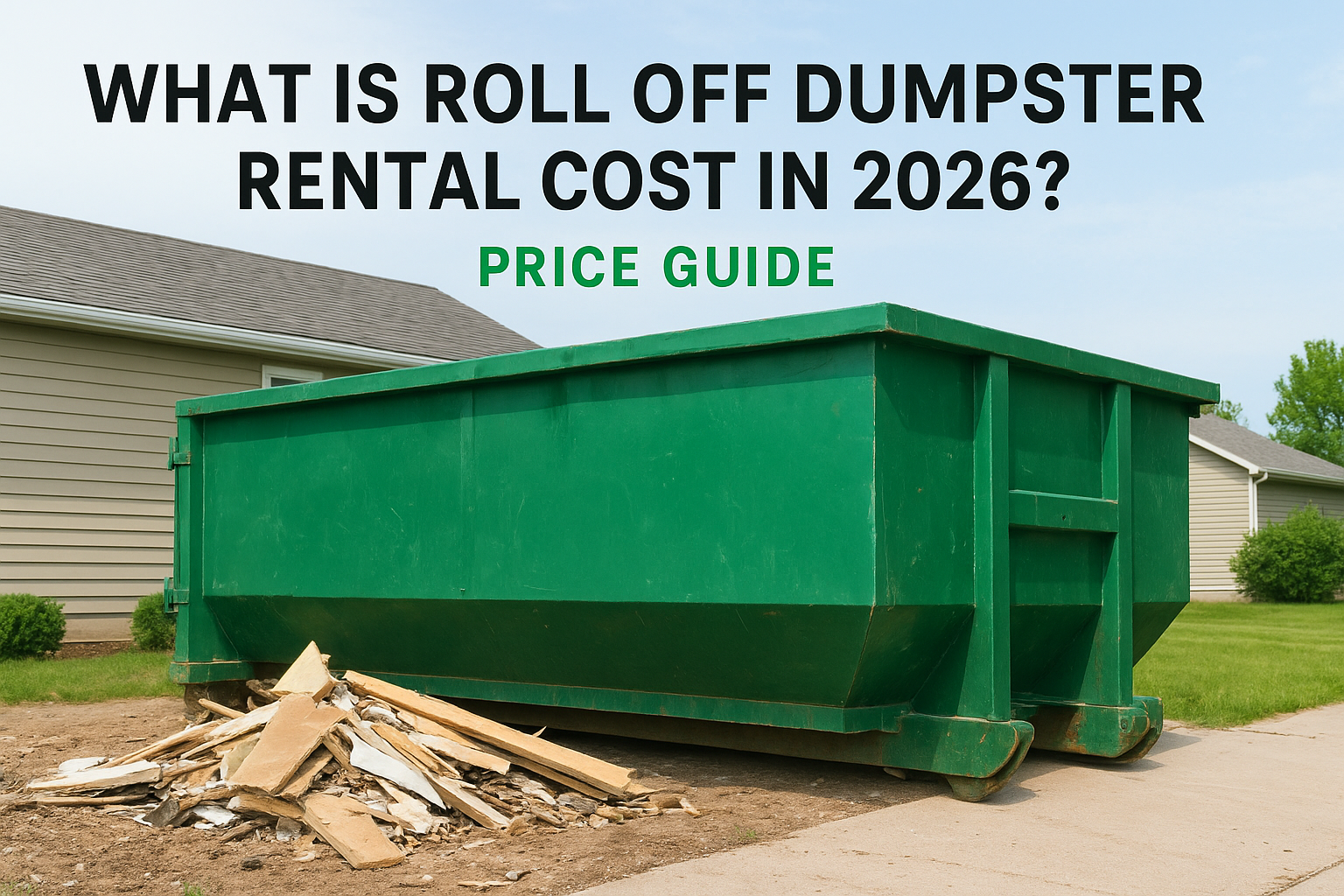
Whether you’re gutting a bathroom, clearing out a basement, or managing debris on a job site, one of the first questions that comes up is: what does roll off dumpster rental cost right now? It’s a fair question, and one that doesn’t always get a straight answer. Prices vary based on dumpster size, location, rental duration, and what you’re throwing away, which makes it easy to end up confused or blindsided by the final bill.
At Dump Express, we rent dumpsters across Cape Cod and the Plymouth area every day, and pricing transparency is something we take seriously. We’ve spent over 20 years helping homeowners and contractors figure out exactly what they need, and exactly what it’ll cost, before anything shows up in the driveway. That experience gives us a clear picture of what drives pricing in this industry and where people tend to overpay.
This guide breaks down average roll off dumpster rental costs in 2026 by size, explains the factors that push prices up or down, and gives you practical ways to keep your project on budget. Whether you’re renting for the first time or comparing quotes, you’ll walk away knowing what to expect and what to watch out for.
Average roll off dumpster rental cost in 2026
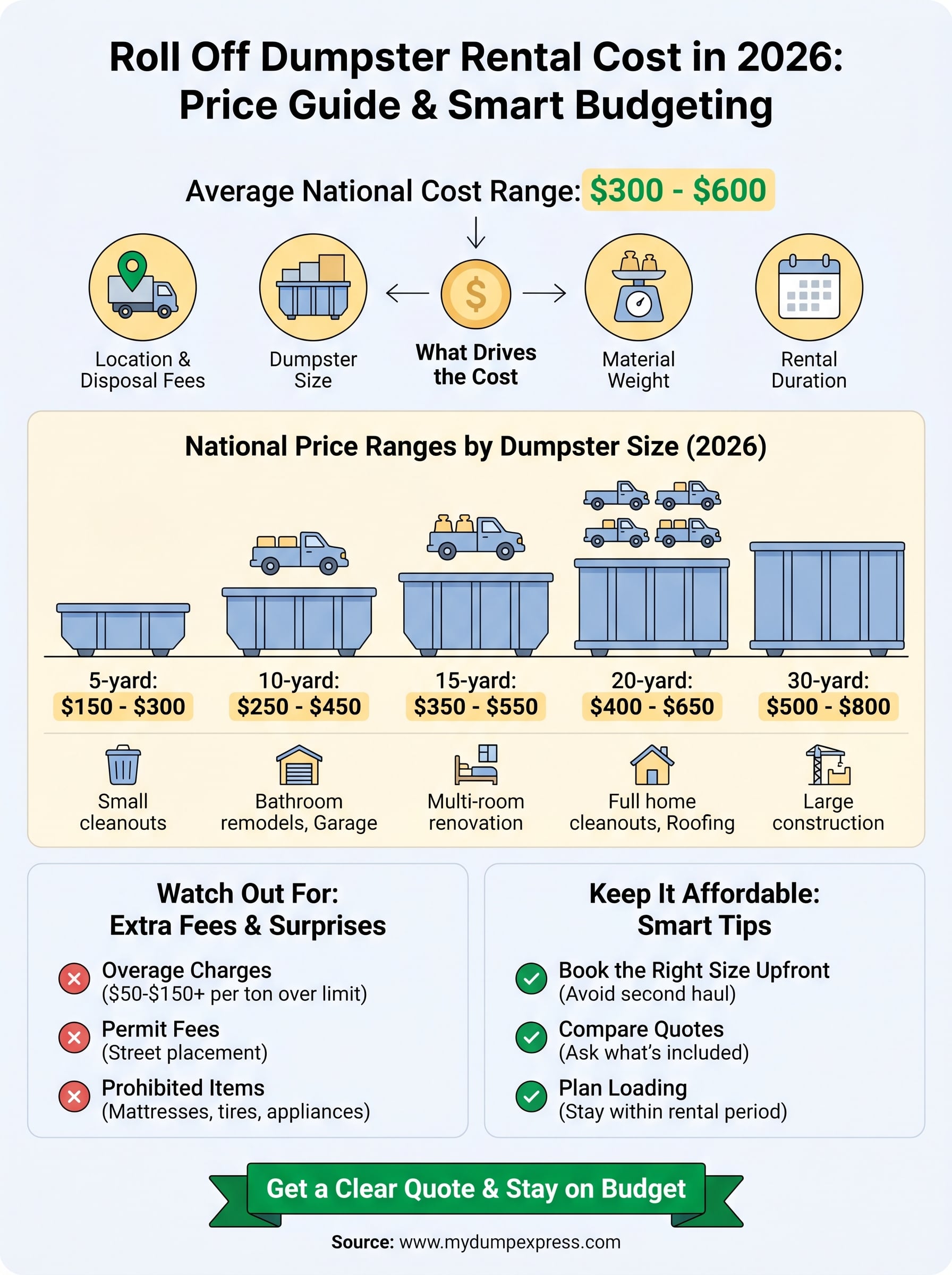
Across the country, roll off dumpster rental cost varies more than most people expect. The national average sits somewhere between $300 and $600 for a standard rental, but that number shifts based on where you live, which size you need, and how long you keep the container. In higher-cost regions like New England, metro areas, or locations with strict disposal regulations, prices tend to run toward the upper end of that range or beyond it. That spread makes it hard to budget from a single number, which is why breaking it down by size and market gives you a much more useful starting point.
National price ranges by dumpster size
The biggest driver in any quote is dumpster size. Rental companies measure capacity in cubic yards, and most offer containers ranging from compact 5-yard bins suited for minor cleanouts to larger 20-yard or 30-yard containers used on full renovations or active construction sites. Prices scale with size, but not always in a straight line. A smaller container can cost nearly as much as the next size up in some markets, which is part of why choosing the right size from the start protects your budget before you sign anything.
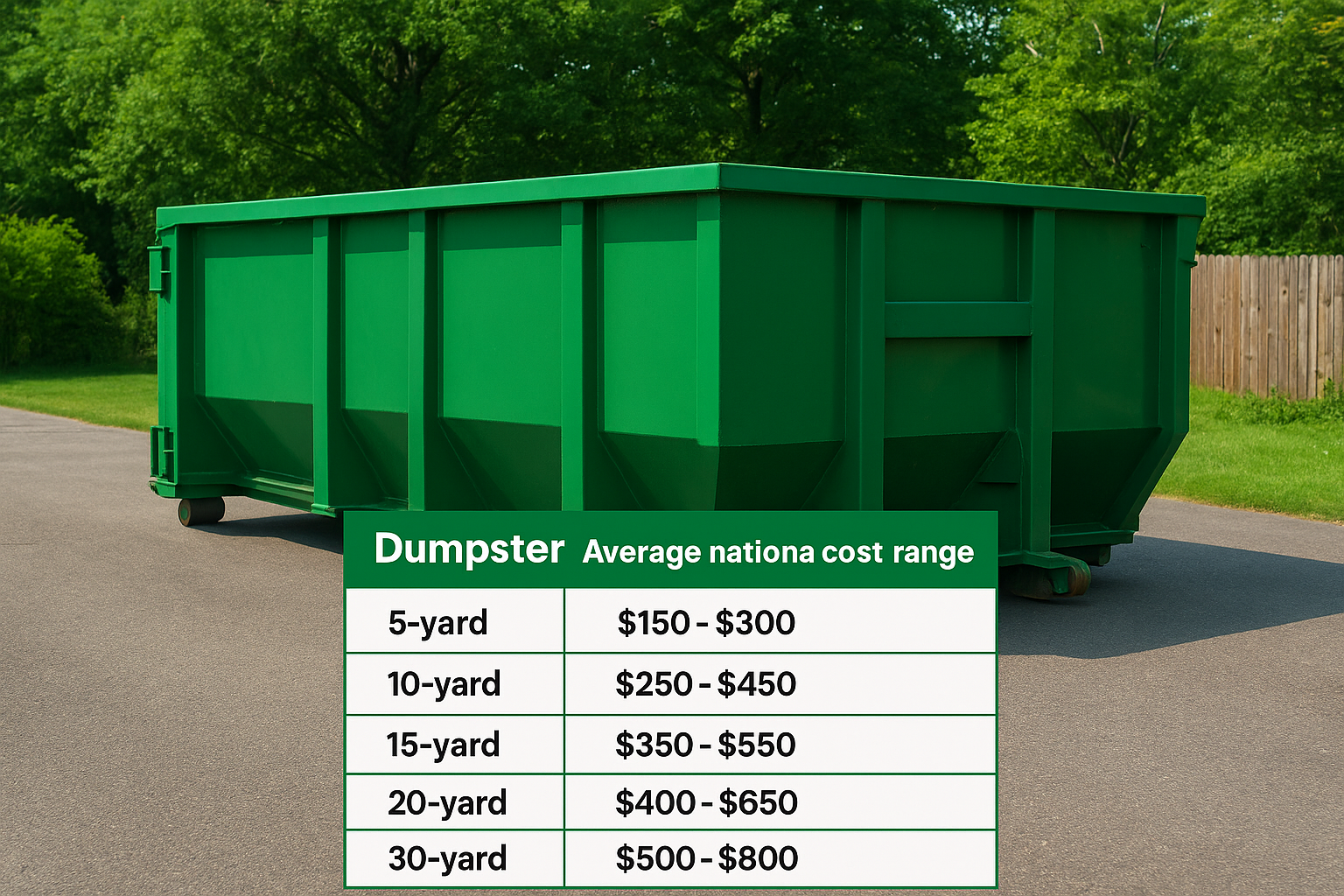
Here’s a general look at average national pricing by size in 2026:
| Dumpster Size | Average National Cost Range | Typical Use Case |
|---|---|---|
| 5-yard | $150 – $300 | Small cleanouts, single-room projects |
| 10-yard | $250 – $450 | Bathroom remodels, garage cleanouts |
| 15-yard | $350 – $550 | Multi-room renovation, mid-size jobs |
| 20-yard | $400 – $650 | Full home cleanouts, roofing, construction |
| 30-yard | $500 – $800 | Large construction, commercial projects |
The right size for your project matters more than finding the lowest base price. Ordering too small usually means paying for a second haul, which often costs more than upgrading to the correct size upfront.
What your rental price typically covers
Most base quotes include delivery, a set rental period (usually 7 to 10 days), pickup, and a built-in tonnage allowance. That last part, the weight limit, is where many renters get caught off guard. Once you exceed the included weight threshold, the company charges an overage fee per ton, which can add $50 to $150 or more to your final invoice depending on the type of material you loaded.
Rental duration is another area worth reading closely before you commit. Some companies build in short windows, then add daily fees once that period ends. Others offer timelines flexible enough to match how real projects actually run, which matters when a renovation hits an unexpected delay or a home cleanout takes an extra weekend. Always confirm what your quoted price includes so you’re comparing apples to apples across vendors.
On Cape Cod and in the Plymouth area, regional pricing reflects the local cost of licensed disposal facilities and transportation distance. Dump Express posts town-specific pricing directly on the website, so you see your actual number before making any calls. That level of transparency is worth seeking out wherever you rent, because a low headline price that comes with vague terms rarely saves you money by the time pickup day arrives.
Roll off dumpster prices by size and project
Knowing the national averages is useful, but matching the right dumpster size to your specific project is what actually determines your final cost. Most people either underestimate how much debris they’ll generate or rent a larger container than the job actually requires. Both mistakes cost money. The breakdown below connects those sizes to real project types so you can make a more accurate call before you book.
Residential cleanouts and home renovation projects
For most homeowners, the decision comes down to a 10-yard or 15-yard container. A 10-yard works well for single-room remodels, small garage cleanouts, or clearing out a storage area that has been accumulating clutter for a few years. A 15-yard handles more substantial jobs, like clearing multiple rooms, doing a full basement cleanout, or managing debris from a kitchen tear-out where cabinets, flooring, and drywall all end up in the bin at once.
If you’re unsure between two sizes, going one size up nearly always costs less than scheduling a second haul.
A 20-yard container fits full home cleanouts, large roofing jobs, and whole-room renovation projects. It’s the most popular size for homeowners tackling serious projects because it holds roughly the equivalent of six pickup truck loads, which is more than most people realize they’ll need until they’re halfway through the job and running out of space. Getting this call right at booking keeps your budget intact and your timeline clean.
Commercial job sites and construction projects
Contractors typically work at higher volume and tighter timelines, which makes sizing accuracy even more important. A 20-yard container handles moderate construction debris well, but larger framing, demolition, or multi-trade job sites often require a 30-yard unit to avoid overflow and scheduling delays caused by waiting for a swap-out.
The roll off dumpster rental cost for commercial projects also tends to rise faster when weight limits become a factor. Dense materials like concrete, roofing shingles, or heavy framing lumber push tonnage up quickly, and overage charges add up fast across a multi-week project. Matching container size to the type of material you’re disposing, not just the visual volume, keeps your costs predictable from the first delivery to the final pickup.
What drives the price and common extra fees
The base quote you receive from any dumpster rental company only tells part of the story. Several factors push your final bill higher than that initial number, and understanding them before you book gives you real control over where your money goes. Most surprises on the invoice come from three areas: location, weight, and the specific materials you’re loading into the container.
Location, permits, and disposal facility costs
Where you’re located shapes your roll off dumpster rental cost more than most people realize. Companies factor in fuel costs, delivery distance, and local disposal fees when building your quote. In areas with fewer licensed disposal facilities, or places where tipping fees at regional transfer stations run high, base prices reflect that reality. Some towns and municipalities also require a permit if the dumpster sits in a public right-of-way, like a street or sidewalk, rather than a private driveway. That permit fee, which typically runs $20 to $75 depending on the municipality, usually falls on you as the renter, so confirm with your provider whether it’s included or added separately.
Always ask your rental company whether a permit is required for your specific drop location before the delivery day, not after.
Weight limits and overage charges
Every rental includes a tonnage allowance in the base price, and the moment you exceed it, overage charges kick in. Those fees typically run $50 to $150 per ton over the limit, which adds up fast if you’re loading heavy materials like concrete, tile, roofing shingles, or wet soil. Light debris like furniture, cardboard, and drywall rarely triggers overages, but dense construction materials almost always push totals higher than renters expect.
Certain items also carry flat surcharges regardless of weight. Mattresses, tires, appliances with refrigerants, and paint or chemical containers are either prohibited entirely or accepted only with an extra disposal fee. Loading a prohibited item can result in the company refusing pickup or charging a significant removal fee on top of your rental cost. Before you start loading, check the prohibited items list your rental company provides and plan to dispose of those materials separately through the appropriate channels.
How to estimate your cost before you book
Getting a reliable estimate before you call a rental company starts with two pieces of information: how much debris you’re dealing with and what type of material you’ll be loading. Most people skip one of those steps, which is why their final invoice doesn’t match what they expected. Take ten minutes before you book to think through both, and your estimate will be accurate enough to budget around.
Start with your project volume
Walk through the space you’re clearing and make a rough count of what needs to go. Large furniture, appliance removal, bags of clutter, and construction debris each take up different amounts of space, and a visual pass helps you land on a realistic size estimate. A single-car garage cleanout with moderate clutter typically fits in a 10-yard container. A full basement or multi-room renovation usually pushes into 15 to 20-yard territory. If you’re unsure, the simplest method is to picture the debris loaded into pickup trucks and use this rough guide:

- 10-yard: fits roughly 3 pickup truck loads
- 15-yard: fits roughly 4 to 5 pickup truck loads
- 20-yard: fits roughly 6 pickup truck loads
Estimating on the generous side and booking one size up is almost always cheaper than paying for a second haul after the first container fills up.
Factor in your location and material type
Your roll off dumpster rental cost depends heavily on where the container will be delivered and what you’re putting into it. If you’re in a market with higher disposal fees or a longer delivery radius from the nearest yard, base prices will reflect that. Confirm with your rental provider whether your town or drop location requires a permit for street placement, since that fee adds to your upfront cost and is easy to miss when comparing quotes.
Material weight matters just as much as volume. Concrete, tile, and roofing shingles are dense enough to hit weight limits even in a half-full container, while lighter loads like furniture or bagged household items rarely trigger overages. Before you finalize a size, think through the dominant material in your project. If you’re mixing heavy debris with lighter items, let your rental company know upfront so they can help you select a container with a weight allowance that fits what you’re actually loading.
How to keep your dumpster rental affordable
The most effective way to control your roll off dumpster rental cost is to make a few smart decisions before the container arrives. Most overspending on dumpster rentals happens because of avoidable choices: renting the wrong size, ignoring weight limits, or booking without reading the fine print on overage fees and add-ons. A little preparation at the start reduces the chance of a surprise charge at the end and keeps your total cost predictable from delivery to pickup.
Book the right size from the start
Undersizing is one of the most common and costly mistakes renters make. When a container fills up before the job is done, you either pay for a second haul or try to cram materials in ways that trigger overfill fees. Both outcomes cost more than simply booking the correct size from the beginning. Before you call, take a realistic inventory of your project and use the pickup truck estimate method covered earlier in this guide to land on a size that gives you a reasonable buffer.
Booking one size up from your minimum estimate almost always costs less than scheduling a second pickup.
If you are working with heavy materials like concrete, tile, or shingles, size up and ask your rental company about the weight allowance included in each container. A heavier load in a smaller bin can still trigger overage fees even when the container looks half full. Matching both volume and weight to the right container protects your budget from both directions.
Compare quotes and ask what’s included
Not all dumpster rental quotes cover the same things, which makes direct price comparisons harder than they look. One company’s $350 quote might include delivery, pickup, and a 2-ton weight allowance, while another’s $300 quote might not cover permit fees, a short rental window, or any weight buffer at all. When you gather quotes, ask each company to confirm what the base price covers so you can compare total expected costs rather than just headline numbers.
Planning your loading timeline carefully is another way to reduce costs. Having your project materials ready to load before the container arrives helps you stay within the included rental period without paying daily extension fees. Keep prohibited items off your loading list entirely, since disposal surcharges for mattresses, tires, or appliances with refrigerants can add unexpected fees that a bit of advance planning eliminates completely.
Final takeaways
Roll off dumpster rental cost comes down to four things: dumpster size, location, material weight, and what your quote actually includes. Getting any one of those wrong is what leads to surprise charges on the back end. The best protection is a clear estimate and an honest conversation with your rental provider before anything gets delivered to your driveway.
Booking the right size from the start, understanding your weight allowance, and knowing which materials carry extra fees keeps your project on budget from the first day to the last. Comparing quotes on total cost, not just the base price, gives you an accurate picture of what you’ll actually pay. If you’re working on a project in Cape Cod or the Plymouth area and want straightforward pricing with no guesswork, get a dumpster rental quote from Dump Express and see your town-specific cost upfront before you commit to anything.