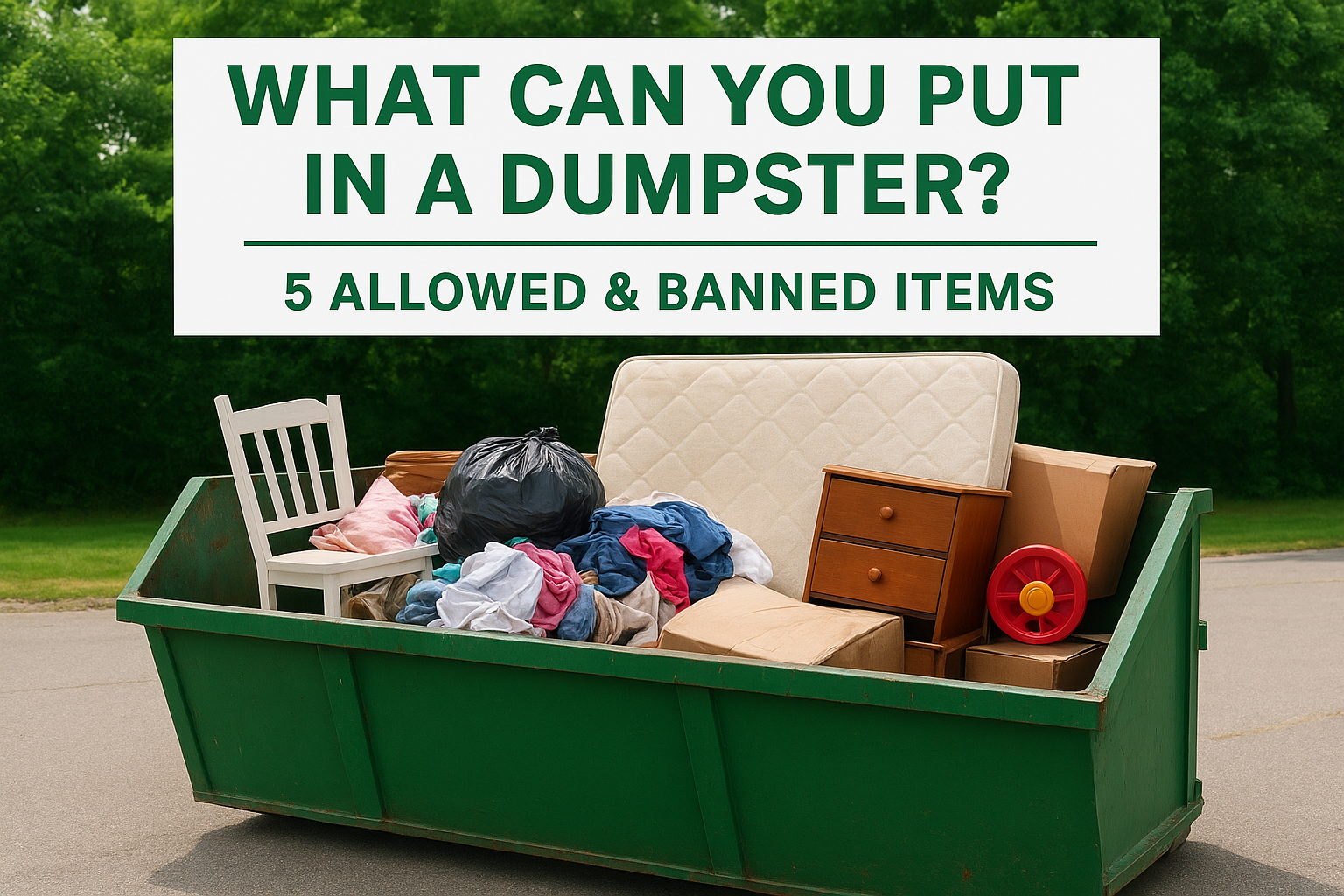
You rented a dumpster, or you’re about to, and now you’re staring at a pile of stuff wondering what can you put in a dumpster without getting hit with extra fees or having your load rejected. It’s a fair question. Most people don’t think about disposal rules until they’re mid-project with a full garage and a half-loaded container sitting in the driveway.
Here at Dump Express, we deliver dumpsters across Cape Cod and Plymouth every day, and this is one of the most common questions our customers ask. The answer matters more than you’d think, tossing the wrong item can result in surcharges, refused pickups, or even environmental violations depending on your town. The rules aren’t always obvious, either. Some items that seem perfectly fine to throw away are actually banned from every dumpster on the road.
This guide breaks down five categories of items you can put in a dumpster and five that are strictly off-limits. We’ll explain why certain materials are prohibited, what to do with them instead, and how to avoid surprises on pickup day. Whether you’re cleaning out an attic, tearing down a deck, or managing a job site, this list will help you load your dumpster the right way the first time.
1. Confirm your dumpster rules with Dump Express
Before you start loading, take five minutes to confirm what goes in your specific rental. Dumpster rules vary by company, town, and the disposal facility handling your load. Knowing what you can put in a dumpster upfront depends on a combination of your provider’s policies, local regulations, and the type of project you’re running.
What affects what you can toss
Your location and the disposal facility your dumpster is routed to both shape the rules. Some facilities accept mixed debris, while others require separated materials. Weight limits, fill lines, and material restrictions all factor into what’s allowed before we pick up your container.
Quick questions to answer before you load
Think through your project before you throw anything in. What kind of waste are you generating, and does any of it fall into a restricted category? Knowing your material types upfront, especially if you have heavy materials like concrete or wet soil, saves you from a surprise surcharge or a rejected load.
Town and facility rules to check in Cape Cod and Plymouth
Cape Cod and Plymouth towns each follow their own transfer station and disposal facility guidelines. Some towns have stricter rules on yard waste, construction debris, or mixed loads. Dump Express serves 40-plus towns in the region and can tell you exactly what applies to your pickup location before you book.
Calling Dump Express before you book takes two minutes and can prevent a refused pickup or an unexpected charge on your final invoice.
Items to call about first to avoid a refused pickup
A few categories need a quick conversation before you load. Mattresses, tires, and large appliances are common examples that may require special handling or added fees. If you’re unsure whether something belongs in the container, call us first rather than risk a rejected load on pickup day.
Common fee triggers to avoid
Overloading past the fill line and mixing in prohibited materials are the two most frequent reasons customers see extra charges. Keep your load within the container walls and stick to approved debris types to stay within your original quote.
2. Household junk and furniture
Clearing out a home is one of the most common reasons people rent a dumpster, and most household junk loads cleanly without extra charges. General clutter, old belongings, and worn-out furniture all fit within what can you put in a dumpster for a standard residential rental.
Common items that usually go in
Clothing, toys, books, boxes, and general clutter all go in without issue. Sofas, chairs, tables, bed frames, and non-upholstered wood furniture are accepted in most cases.
Items that often cause extra fees or restrictions
Mattresses and box springs often carry a surcharge because disposal facilities charge extra to process them. Large appliances like refrigerators and air conditioners may also trigger fees due to refrigerant removal requirements.
If you have mattresses or appliances to dispose of, call Dump Express before you load so we can give you accurate pricing upfront.
How to prep bulky items to save space
Break down furniture before it goes in. Remove legs from tables, disassemble bed frames, and flatten soft items to keep your load compact and avoid hitting the fill line too early.
Cleaner options than the dumpster when available
Donation centers and local charities will take usable furniture, which keeps your disposal costs down. Items in decent condition can also move through online resale platforms or curbside pickup programs before you resort to the dumpster.
Safety and mess prevention tips
Wear gloves when handling old furniture and check each piece for loose nails or broken glass before tossing it in. Keep heavier items on the bottom of the load to prevent shifting during transport.
3. Renovation and construction debris
Renovation projects generate a lot of debris fast, and most standard construction waste falls within what can you put in a dumpster without any problem. Knowing which materials are accepted and which ones push against weight limits keeps your project moving without delays or extra charges.
Typical debris that is usually accepted
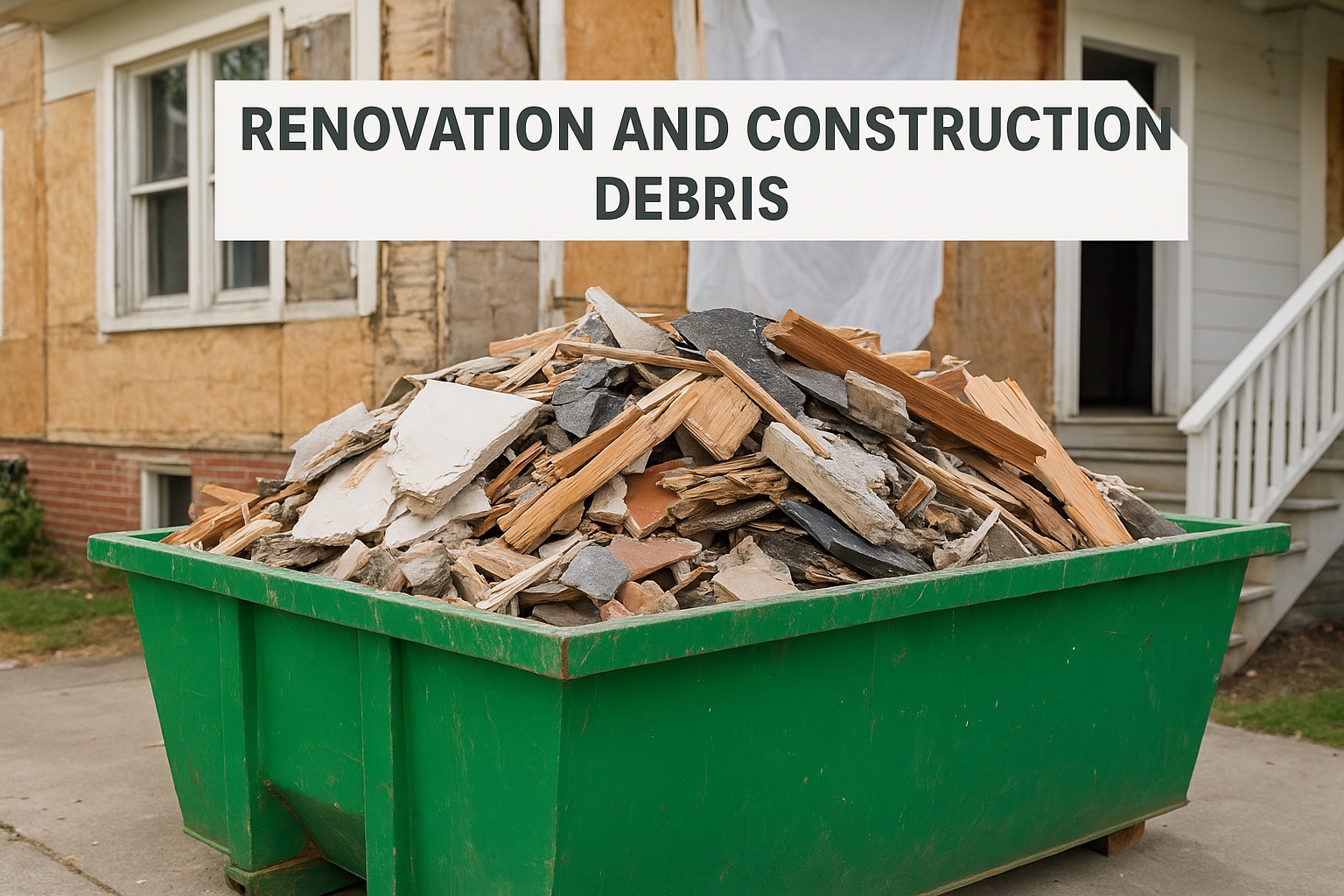
Drywall, wood framing, flooring, roofing shingles, and siding are all standard materials that go into a construction dumpster. General demo debris like cabinets, trim, and subfloor material is accepted in most cases.
Heavy materials that can max out weight limits fast
Concrete, brick, and ceramic tile are dense and add weight quickly. Even a small pile can push your load past the weight limit on a 10-yard or 15-yard container, so keep heavy materials to a minimum unless you order a container specifically rated for them.
Call Dump Express before loading heavy materials so we can match you with the right container size and avoid overage fees.
Materials that change the rules on a job site
Asbestos-containing materials and treated lumber fall outside standard disposal rules and require separate handling. If your renovation involves an older structure, test for hazardous materials before you start demo work.
How to load to stay under the fill line
Place flat heavy items like drywall sheets on the bottom and stack lighter debris on top. Keep everything inside the container walls to avoid a refused pickup.
Simple ways to avoid overage charges
Separate concrete and masonry from lighter debris when possible. Ordering the right container size upfront and calling with material questions before you load prevents the most common overage situations on renovation jobs.
4. Yard waste, brush, and dirt
Landscaping cleanups and yard projects are a frequent reason people ask what can you put in a dumpster, and the rules here vary more than most expect. Accepted materials depend heavily on your disposal facility, so confirm before you start loading.
What yard waste is usually allowed
Branches, brush, leaves, and grass clippings are accepted in many standard dumpsters, though some facilities require them separated from construction debris. Small tree limbs and pruned shrubs typically go in without issue when cut down to a manageable size.
What is often limited or not accepted
Stumps and large root balls are often restricted because of their weight and bulk. Some facilities also limit the volume of organic yard waste mixed with other debris, so ask Dump Express before you load a mixed haul.
Dirt, soil, and rocks rules that surprise people
Clean fill dirt and gravel add weight fast and can push your load over the container’s weight limit with very little volume. Rocks and soil are often restricted to specific container types because standard dumpsters are not rated for heavy fill material.
Call Dump Express before loading any soil or rock to make sure your container size matches the weight of your load.
Cleaner alternatives like composting and drop-offs
Local composting programs and municipal drop-off sites accept yard waste for free or low cost in many Cape Cod towns, which keeps your dumpster space open for bulkier debris.
Loading tips for wet, heavy, or loose material
Bag loose leaves and wet clippings before tossing them in to prevent material from blowing out during transport. Spread heavy soil or gravel evenly across the bottom of the container to distribute weight.
5. Hazardous and prohibited items
Hazardous materials are banned regardless of what can you put in a dumpster in every other category. These items get rejected by every licensed disposal facility because they pose serious risks to workers and the environment during transport and processing.
Liquids, fuels, and chemicals
Motor oil, gasoline, and household cleaning chemicals cannot go in a dumpster under any circumstances. These liquids create contamination and fire hazards that put drivers and facility workers in danger.
Paint, stains, and solvents
Liquid paint and chemical stains are prohibited in all standard dumpsters. Dried latex paint in small quantities is sometimes acceptable, but wet paint cans and solvent-based products need to go to a hazardous waste drop-off site instead.
Check with your local Cape Cod or Plymouth municipality for scheduled hazardous waste collection events near you.
Batteries, electronics, and light bulbs
Car batteries, lithium batteries, and fluorescent bulbs all contain materials that require separate handling. Electronics like TVs and computers fall under e-waste rules and need to go through a certified recycling program rather than a standard dumpster.

Tires, propane tanks, and sealed containers
Tires are banned from standard dumpsters across the board. Propane tanks and any sealed pressurized container are fire risks that no disposal facility will accept on a standard haul.
Appliances, refrigerants, and asbestos concerns
Refrigerators, freezers, and air conditioners contain refrigerants that require certified removal before disposal. Asbestos materials from older structures need licensed abatement contractors and cannot go into any standard dumpster under any conditions.
Final checklist
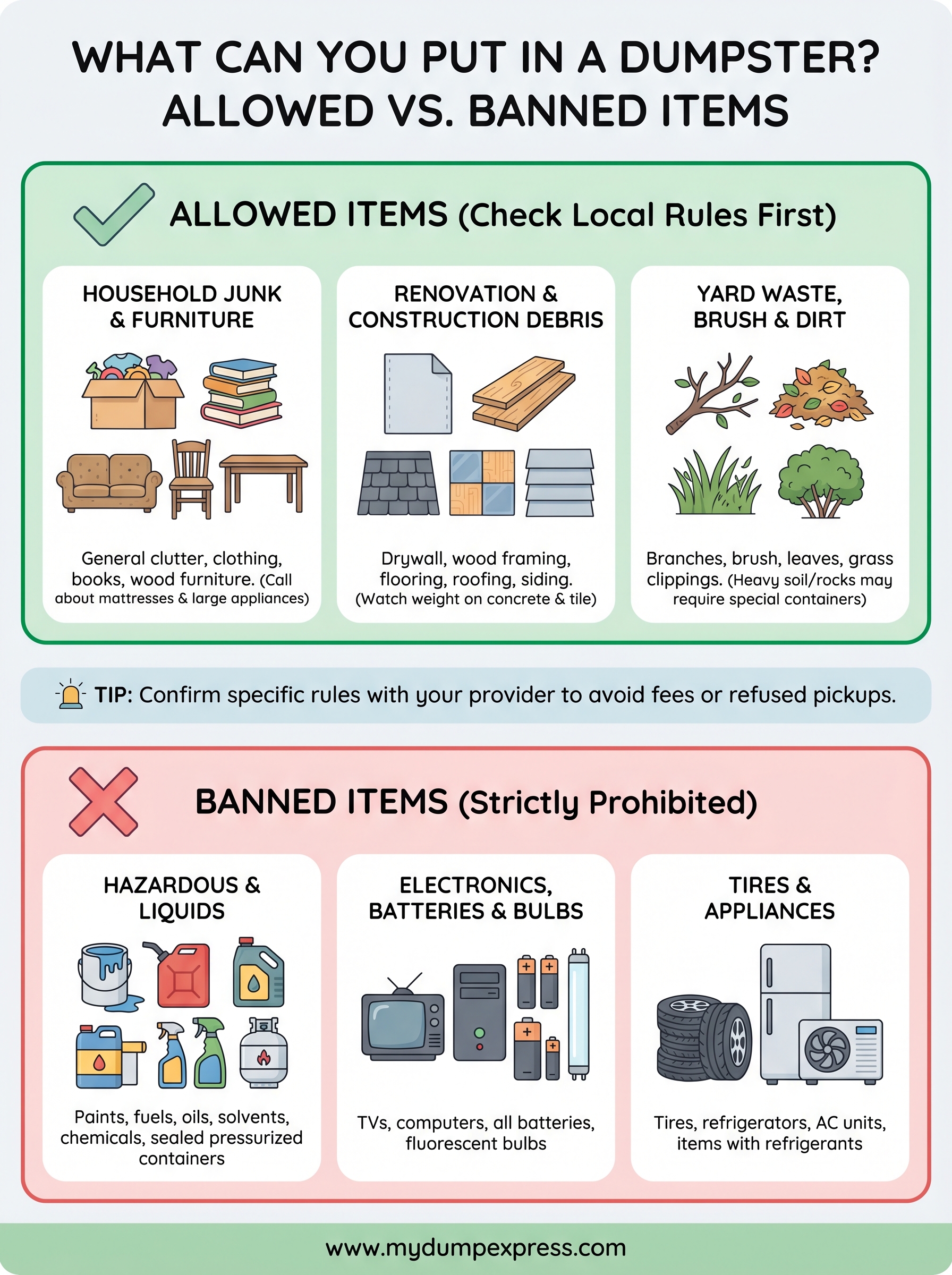
Now you know what can you put in a dumpster and what needs to stay out. Before you start loading, run through this quick summary: general household junk, furniture, and renovation debris like drywall and wood are all accepted in a standard rental. Yard waste and brush are usually fine but depend on your specific town and disposal facility, so always confirm before you load.
Heavy materials like concrete, soil, and rock add weight fast and can push you over the container limit with a surprisingly small volume. Hazardous materials, liquids, tires, refrigerants, and asbestos are banned without exception across every licensed facility.
Call ahead if you have mattresses, large appliances, or any material you are unsure about. That short conversation prevents most surcharges and refused pickups before they happen. Book your dumpster rental with Dump Express and our local Cape Cod team will confirm exactly what your container covers before delivery day.