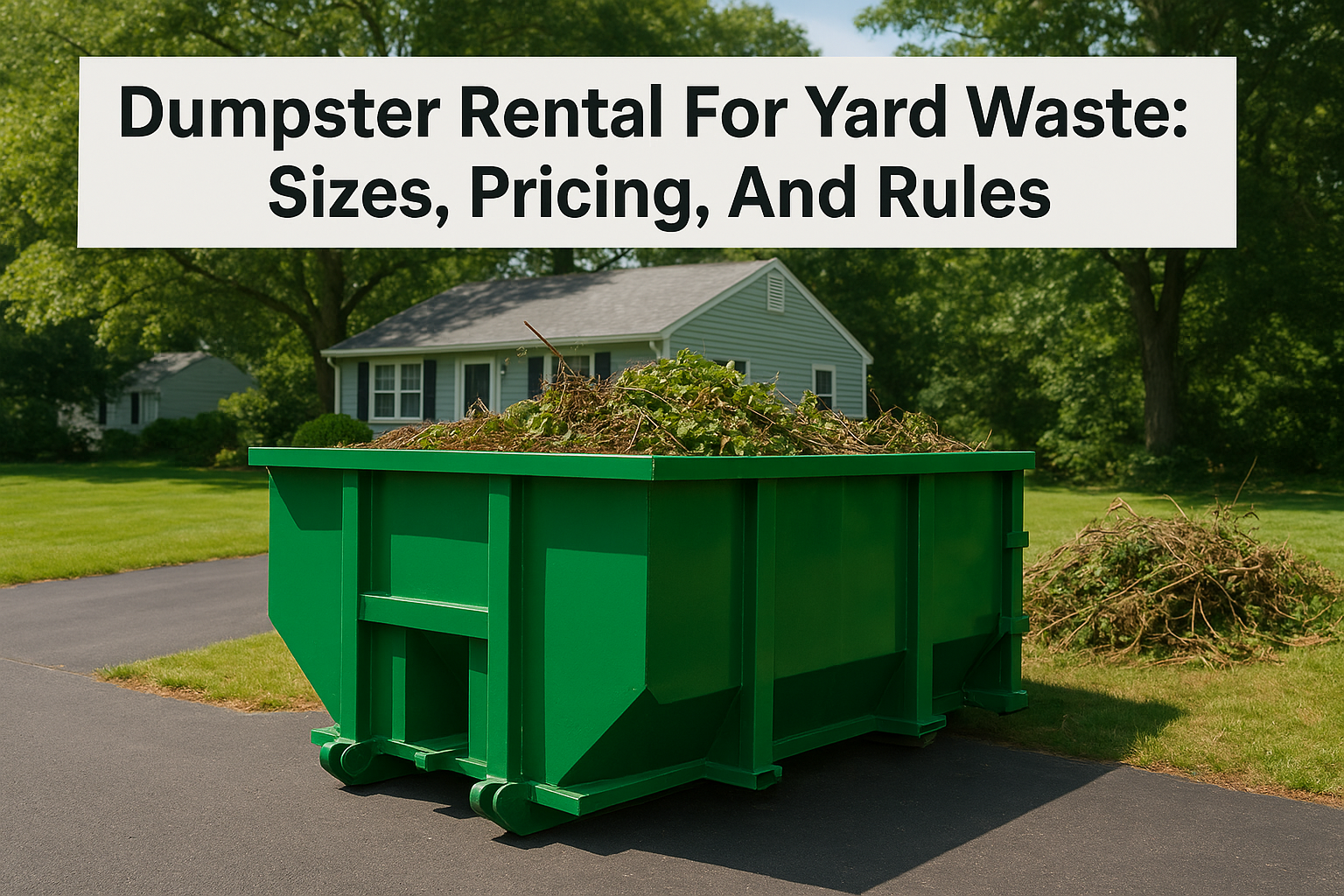
Spring and summer on Cape Cod mean overgrown hedges, fallen branches, old mulch, and piles of debris from landscaping overhauls. Bagging it all up and making dozens of trips to the transfer station eats your entire weekend. A dumpster rental for yard waste gives you one container, one pickup, and a clear yard, without the back-and-forth. But not every dumpster company accepts organic debris, and pricing varies significantly by town, so knowing what you’re getting into before you book matters.
At Dump Express, we deliver 5- to 20-yard dumpsters across 40+ towns in Cape Cod and Plymouth for exactly these kinds of projects. We handle yard cleanups, landscaping tear-outs, and seasonal property maintenance every week, so we know which materials go in, which don’t, and what size container actually fits the job. That local experience saves you from overpaying or ending up with a dumpster that’s too small halfway through.
This article breaks down the dumpster sizes that work best for yard waste, what you can expect to pay, and the rules around disposing of organic debris in our area. Whether you’re clearing brush after a storm or gutting old landscaping for a full redesign, you’ll have the information you need to rent the right dumpster the first time.
Why rent a dumpster for yard waste
Most yard projects generate far more debris than you expect. A single afternoon of trimming overgrown hedges, pulling dead shrubs, or raking up old mulch can fill your truck bed twice over. Hauling that load to the transfer station once might feel manageable, but when the pile keeps growing over a full weekend project, multiple trips add hours and fuel costs that make the whole job feel endless.
The problem with bagging and hauling it yourself
Bagging yard waste is physically demanding work, and most Cape Cod towns have strict limits on how much bagged material you can drop off at once. Transfer stations often cap loads, charge by the bag, or restrict organic debris to specific drop-off windows. If you’re tackling a full landscape overhaul or cleaning up after storm damage, those restrictions turn a one-day job into a multi-week process. Hiring a hauling service for that volume gets expensive fast, and you lose control over the timing entirely.
If your project generates more than a few bags of debris, renting a dumpster almost always costs less per cubic yard than making repeat hauling trips yourself.
When a dumpster makes the most sense
A dumpster rental for yard waste fits projects where the volume is too large or the timeline too tight for bagging and hauling. Full property cleanouts, seasonal landscape refreshes, tree removal aftermath, and grading work all create debris that piles up faster than you can manage piece by piece. When you have a container on-site, you load it on your schedule, work at your own pace, and call for pickup when you’re finished.
Contractors get even more value from having a dumpster on-site. A landscaping crew that rents one for the duration of a job keeps the site clean, reduces liability, and avoids multiple load runs in work trucks that slow the project down. For homeowners, the convenience alone justifies the cost: you spend your energy on the actual project, not on logistics.
Here’s when renting a dumpster is the right call for yard debris:
- You’re removing more than 3 to 4 cubic yards of material
- The project spans multiple days or weekends
- Your town limits curbside organic waste pickup volumes
- You need the site cleared before a contractor or landscaper arrives
What counts as yard waste and what doesn’t
Most organic debris from your property qualifies as yard waste, but not everything that comes out of your yard is treated the same way. Before you load up a dumpster rental for yard waste, it helps to know exactly what the disposal facility accepts so you don’t get hit with a rejection fee or a surcharge at drop-off.
Materials that go in without a problem
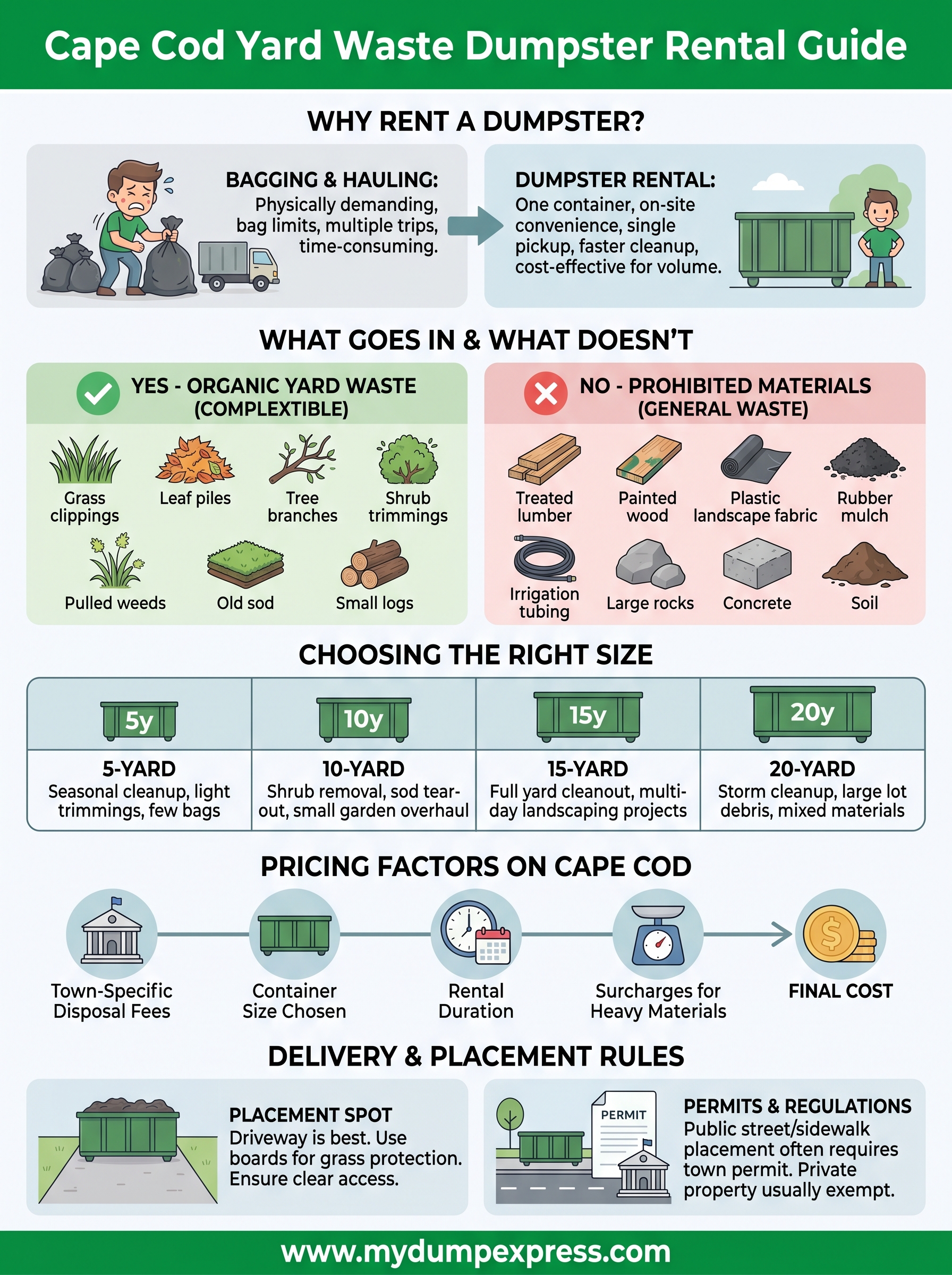
The majority of what you generate during a typical yard cleanup or landscaping project is accepted without issue. Grass clippings, leaves, brush, tree branches, shrubs, and sod all fall into the standard yard waste category. Most facilities in Massachusetts process this material as compost or mulch, so volume is rarely a concern as long as the debris is clean and free of non-organic materials.
Common yard waste items that go in the dumpster:
- Grass clippings and leaf piles
- Brush, hedges, and shrub trimmings
- Tree branches and small logs
- Pulled weeds and garden plants
- Old sod from grading work
- Rotted firewood
Materials that don’t belong in a yard waste dumpster
Certain items look like yard waste but create problems at the facility or require a separate disposal process. Treated lumber, painted wood, and pressure-treated fence posts contain chemicals that disqualify them from organic composting streams. Similarly, plastic landscape fabric, rubber mulch, and irrigation tubing need to go in a general waste container, not a yard waste load.
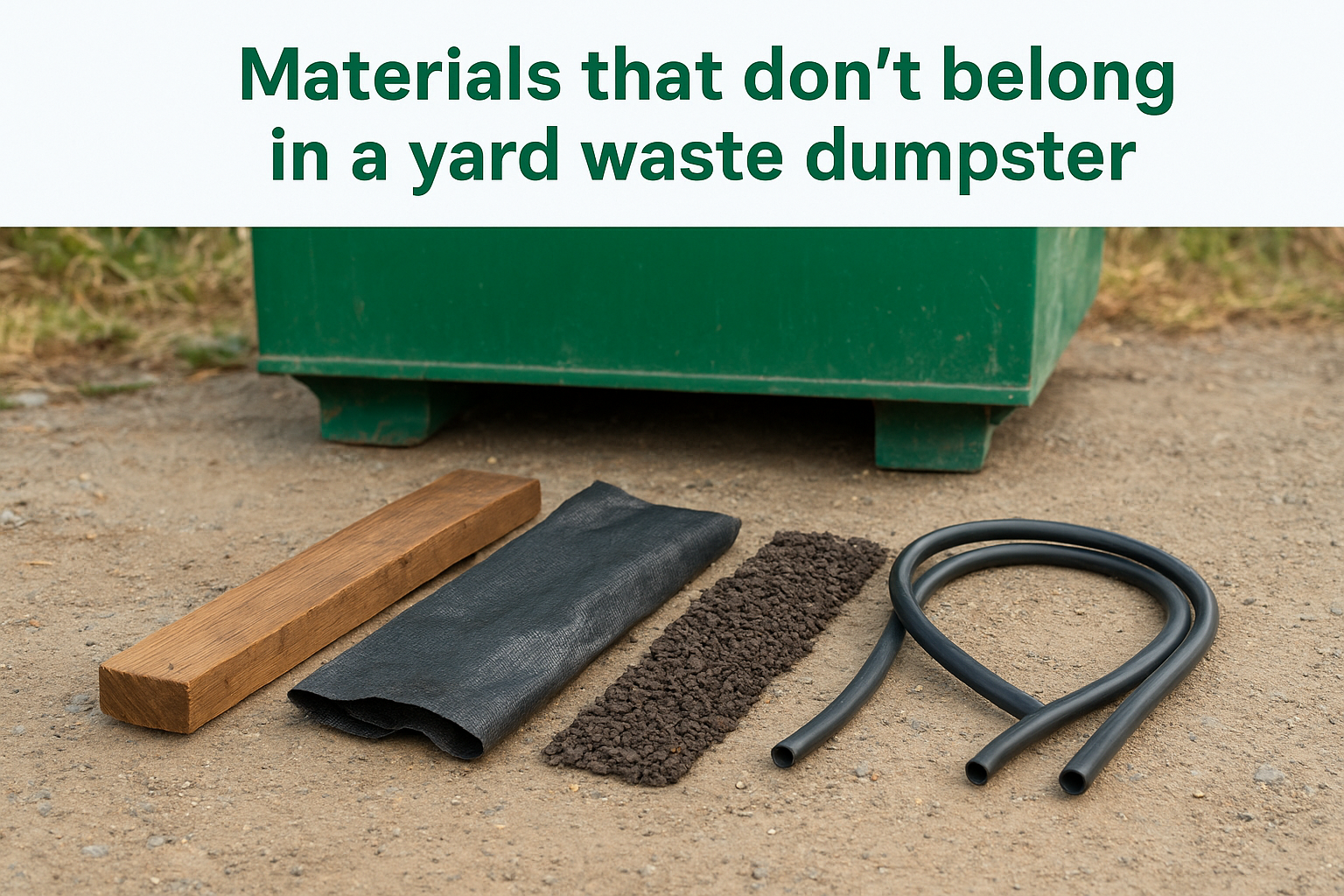
If you mix prohibited materials into a yard waste dumpster, the entire load may be reclassified as general waste, which carries a higher disposal fee.
Rocks, concrete, and soil in large quantities also carry weight-based surcharges at most facilities. A small amount of dirt mixed into sod or root balls is fine, but don’t use the dumpster as a solution for excess fill dirt from excavation work.
How to choose the right dumpster size
Picking the wrong size is the most common mistake people make when booking a dumpster rental for yard waste. Go too small and you’re left with a pile that doesn’t fit; go too large and you’re paying for space you don’t use. Estimating your debris volume before you book takes five minutes and saves you from both problems.
Match the container to your project
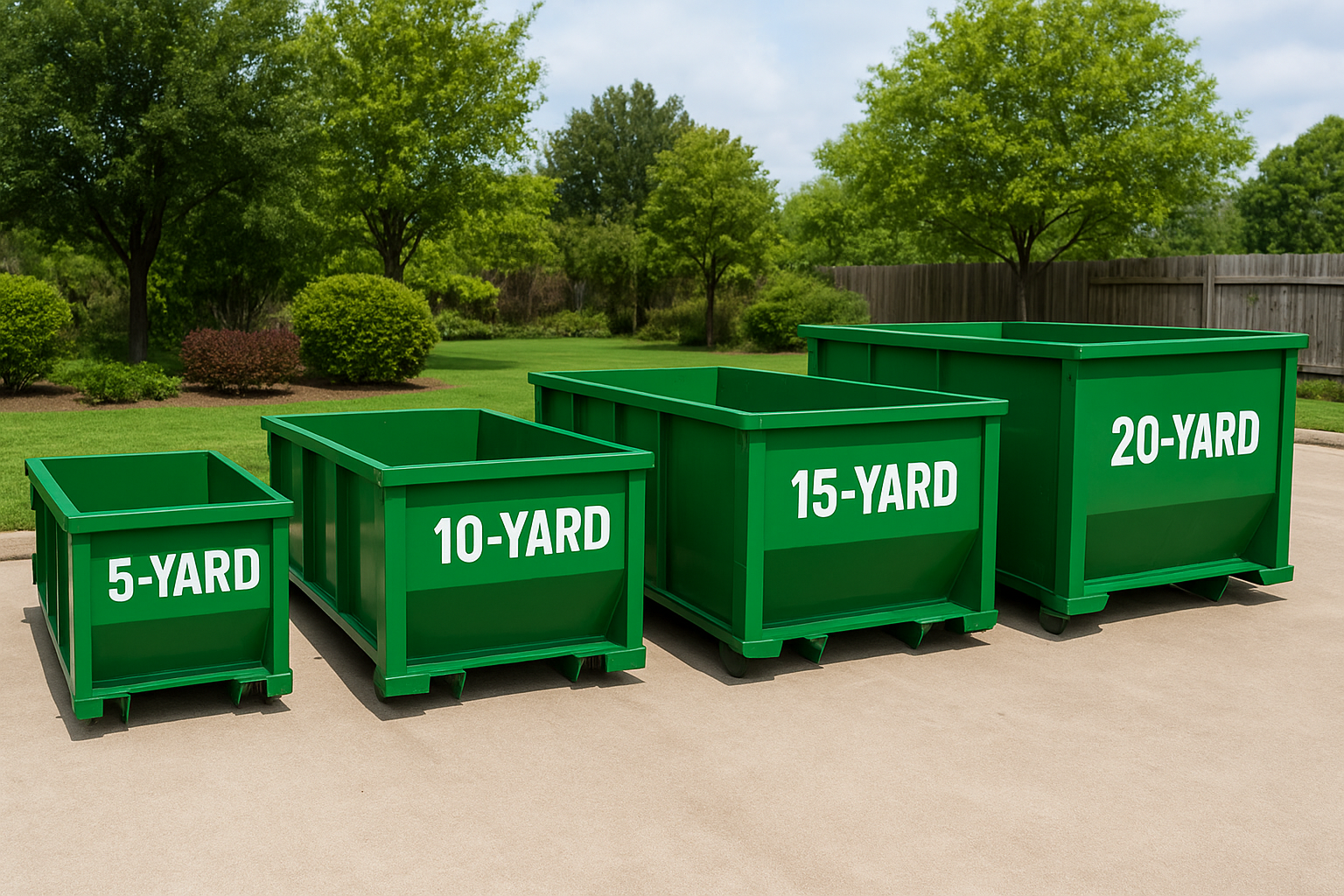
Dump Express offers four sizes: 5-yard, 10-yard, 15-yard, and 20-yard containers. For light seasonal cleanup like leaf removal, grass clippings, or a few bags of trimmings, a 5-yard dumpster handles the job without overspending. A 10-yard container fits a half-day landscaping project, such as pulling old shrubs, removing sod from a garden bed, or cleaning up after a single tree trimming.
For larger projects, a 15-yard dumpster covers most full-property cleanouts, multi-day landscape refreshes, and medium shrub or brush removals. The 20-yard option is the right call when you’re dealing with storm damage across a large lot, removing multiple mature shrubs with root systems, or combining yard debris with rotted wood from an old outdoor structure.
When in doubt, size up. The cost difference between containers is usually smaller than the cost of a second haul.
A quick sizing reference
Here’s a simple breakdown to guide your decision before you book:
| Project type | Recommended size |
|---|---|
| Seasonal cleanup, light trimmings | 5-yard |
| Shrub removal, sod tear-out, garden overhaul | 10-yard |
| Full yard cleanout, multi-day landscaping | 15-yard |
| Storm cleanup, large lot, mixed debris | 20-yard |
Your project scope doesn’t always fit neatly into a category, and that’s fine. If you’re unsure, reach out before booking. The Dump Express team can walk you through the right choice based on your specific property size and project timeline, which prevents both under-ordering and over-spending.
What a yard waste dumpster rental costs
Pricing for a dumpster rental for yard waste varies based on your location, the container size you choose, and the volume of material you load. On Cape Cod and in Plymouth, town-specific disposal fees and travel distance from the yard both factor into the final price, which is why a flat national rate you find on a general rental site rarely reflects what you’ll actually pay locally.
Always confirm pricing by town before booking. A transparent company will show you the exact cost upfront, with no surprise fees after pickup.
What drives the price
Several variables affect your total cost. Container size is the most direct factor: a 5-yard dumpster costs less than a 20-yard simply because you’re using fewer resources. Beyond that, rental duration plays a role. Most companies build a set number of days into the base rate, and extending your rental past that window adds a daily fee. If your project runs longer than expected, communicate early so you can adjust the schedule without extra charges stacking up.
Surcharges are the other cost factor worth watching. Heavy materials like large root balls, compacted soil, or dense brush can push a load over the standard weight limit, triggering a per-ton overage fee. Sticking to clean, dry yard debris keeps the weight manageable and your cost predictable.
What you can expect to pay on Cape Cod
Dump Express lists town-specific pricing directly on its website so you know the cost before you ever pick up the phone. Rates start at the lower end for small containers on straightforward residential jobs and increase with size and distance. Booking online takes a few minutes, and the price you see is the price you pay. There are no hidden fuel charges, environmental fees buried in the fine print, or charges added after the dumpster leaves your property.
Delivery, placement, and local rules in Massachusetts
Getting a dumpster rental for yard waste delivered is straightforward, but where you place the container and whether you need a permit depends on your property and your town’s rules. Massachusetts municipalities handle this differently, so confirming the details before delivery day keeps your project on track and avoids unnecessary complications.
Choosing the right placement spot
Your driveway is almost always the easiest and safest location for a yard waste dumpster. A flat, paved surface protects both the container and the ground underneath, and it keeps the dumpster accessible without blocking traffic. If you need the dumpster on grass, boards or plywood under the wheels prevent lawn damage and make pickup easier for the driver.
Keep the delivery area clear of low-hanging branches, power lines, and parked vehicles. Dump Express drivers need clear access on arrival and at pickup, so a blocked driveway or tight turn can push your delivery back and slow the whole project down.
Permits and Massachusetts regulations
Placing a dumpster on a public street or sidewalk in Massachusetts typically requires a permit from your town’s public works department or select board. Requirements vary by municipality, and some Cape Cod towns enforce this more strictly than others. If your dumpster stays entirely on private property, you usually don’t need a permit at all.
Check with your town hall before scheduling delivery if you plan to use street space; some towns require 48 to 72 hours of advance notice for permit processing.
Dump Express has delivered across 40+ Cape Cod and Plymouth towns for over 20 years, so we know the local requirements and can flag any town-specific issues before they become your problem. If your project involves a tight driveway, a corner lot, or a narrow access road, mention that when you book so we can plan the right approach from the start.
Wrap-up and next steps
A dumpster rental for yard waste works best when you match the container size to your project, confirm what materials your disposal facility accepts, and sort out placement and permit requirements before delivery day. The right size saves you money; the right placement saves you headaches. Yard debris like brush, sod, branches, and trimmings all go in without issue as long as you keep out treated wood, plastic materials, and heavy fill dirt that trigger surcharges.
Dump Express serves 40+ towns across Cape Cod and Plymouth with transparent, town-specific pricing and a team that knows local regulations from years of experience in the area. You get a clear price upfront, reliable delivery, and a driver who shows up when scheduled. If you have questions about sizing or your specific project, reach out before you book. Ready to clear the yard? Book your dumpster rental on Cape Cod today and get the container delivered on your schedule.