
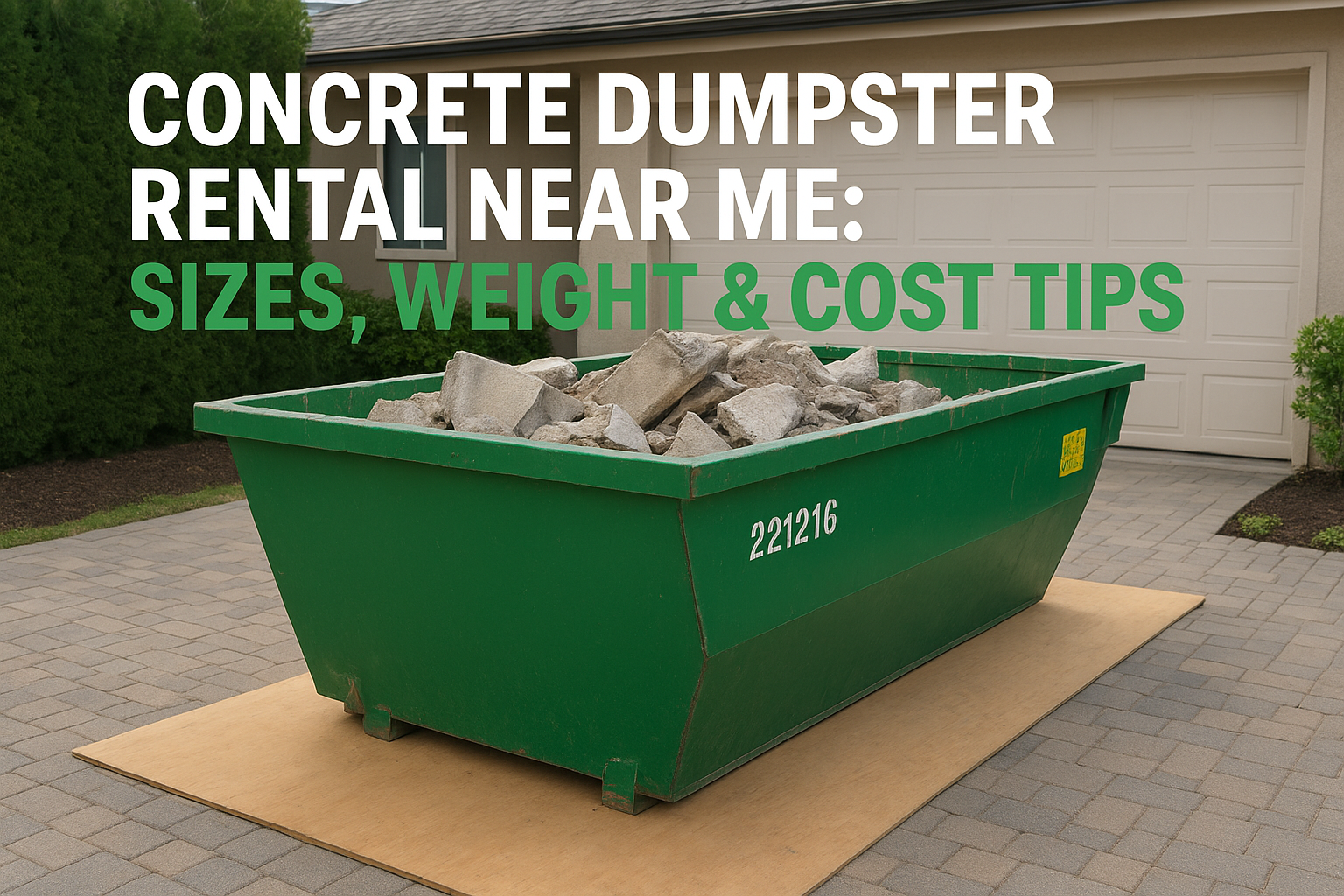
Concrete is one of the heaviest materials you’ll ever throw into a dumpster, and renting the wrong container for it can cost you hundreds in overage fees. If you’re searching for a concrete dumpster rental near me, you’re probably dealing with a demolition project, a patio tearout, or a driveway replacement, and you need a container that can actually handle the weight without blowing past its limit.
The challenge with concrete disposal isn’t just finding a dumpster. It’s finding the right size at a fair price while understanding exactly how much weight you’re working with. Most people underestimate how fast concrete fills a container and how quickly tonnage adds up.
At Dump Express, we handle heavy debris rentals across Cape Cod and Plymouth every week. We’ve seen what happens when homeowners and contractors order the wrong size for concrete, and it’s never fun. This guide covers everything you need to know: dumpster sizes suited for concrete, weight capacities, cost factors, and practical tips to keep your project on budget and on schedule.
What to know before renting a concrete dumpster
Concrete disposal follows different rules than standard junk removal, and most rental companies apply weight restrictions that are stricter for heavy materials. Before you book a concrete dumpster rental near me, you need to understand a few ground rules that will directly affect your cost and your project timeline.
Concrete requires a dedicated container
Most dumpster companies, including Dump Express, do not allow you to mix concrete with other debris like wood, drywall, or general household junk. When you load mixed materials into a roll-off container, the sorting and disposal process gets more complicated, which drives up costs for everyone. A dedicated concrete dumpster lets the hauler take your load directly to a concrete recycling facility, which keeps tipping fees lower and your rental price predictable.
Ordering a concrete-only dumpster is almost always cheaper than mixing concrete with general waste, because recycling facilities charge far less than landfills for clean concrete loads.
Here is what typically counts as acceptable concrete debris for a dedicated container:
- Broken slabs and patio concrete
- Driveway chunks and curbing
- Sidewalk pieces
- Concrete blocks and pavers
- Foundation rubble (confirm with your rental company before loading)
Weight limits are the biggest variable
Unlike a furniture cleanout where volume is the primary concern, concrete projects are almost entirely weight-driven. A standard 10-yard dumpster can hit its weight capacity with just a few inches of concrete spread across the bottom, because concrete weighs roughly 4,000 pounds per cubic yard. That means a modest pile of broken slabs can exceed the container’s limit before it looks even halfway full.
Rental companies charge per-ton overage fees when your load runs over the included weight allowance, and those charges add up quickly on concrete projects. Knowing the exact weight limit of your container before you load the first piece protects your budget and prevents complications on pickup day.
Step 1. Estimate concrete volume and weight
Before you search for a concrete dumpster rental near me, you need a rough weight estimate for your project. Skipping this step is how people end up with overage fees on pickup day. Two measurements drive everything: the volume of concrete you’re removing and the weight that volume translates to.
Calculate your cubic yards
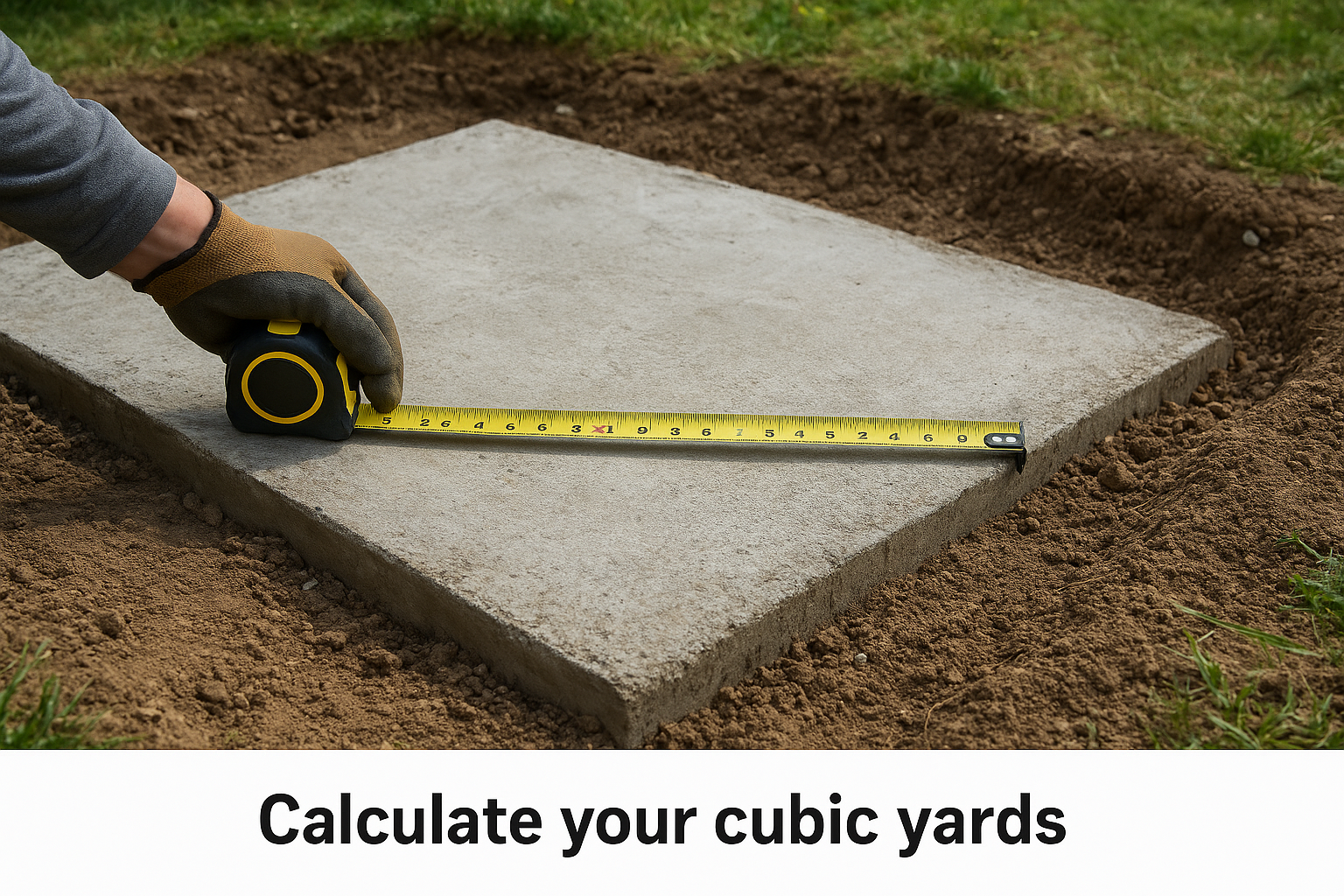
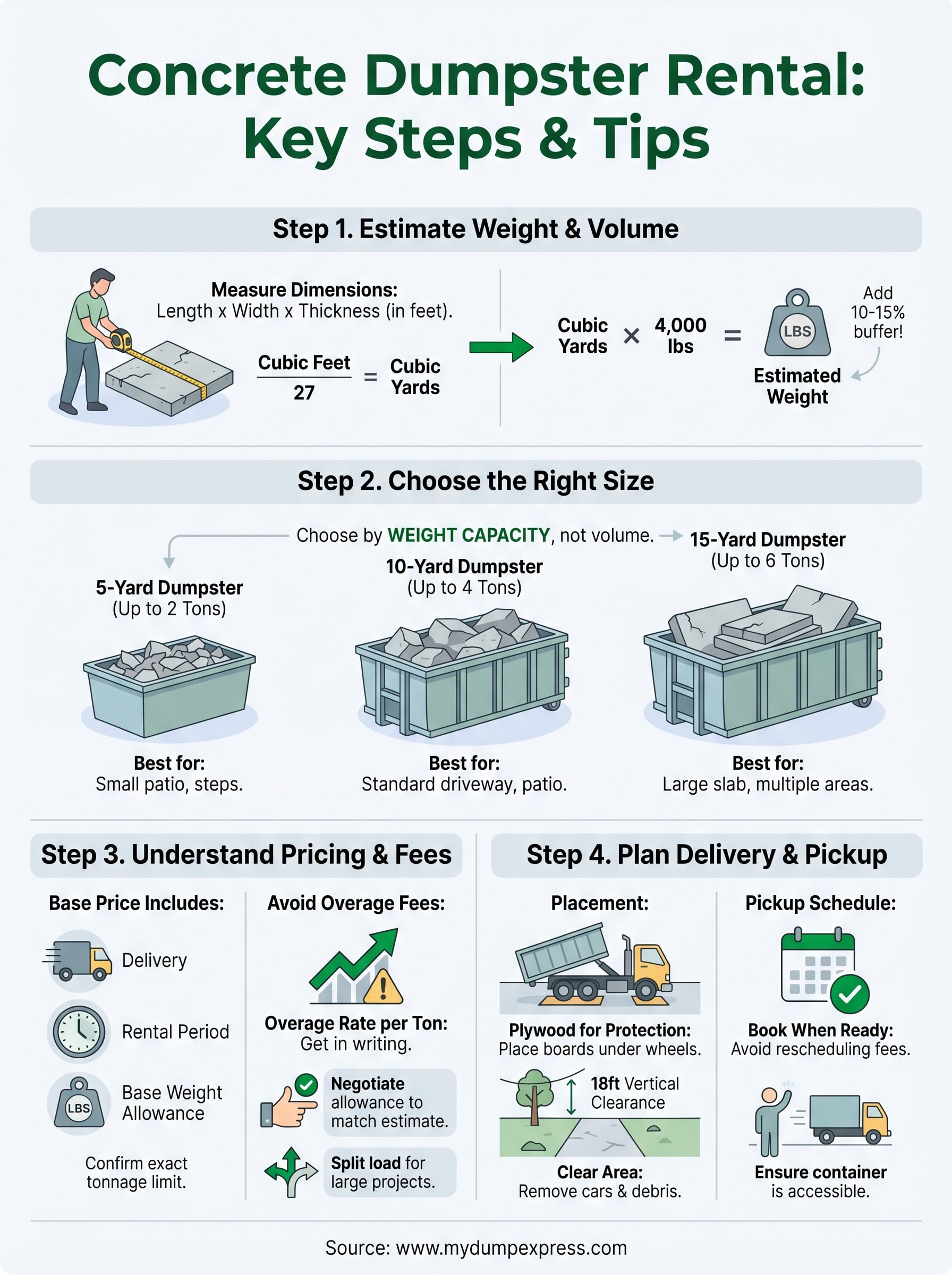
Start by measuring your concrete in feet: length, width, and thickness. Multiply those three numbers together and divide by 27 to convert cubic feet into cubic yards. A 4-inch-thick slab equals 0.33 feet, so plug that number into your calculation.
| Slab Dimensions | Thickness | Estimated Cubic Yards |
|---|---|---|
| 10 ft x 10 ft | 4 inches | 1.2 cu yd |
| 10 ft x 20 ft | 4 inches | 2.5 cu yd |
| 20 ft x 30 ft | 4 inches | 7.4 cu yd |
Convert volume to estimated weight
Once you have your cubic yard figure, multiply it by 4,000 pounds to get a working weight estimate. That 10×20 patio above comes in at roughly 10,000 pounds, or 5 tons, before you’ve added a single piece of extra rubble.
Always add 10-15% to your estimated weight to account for broken edges, soil attached to the slab, and loose gravel mixed into the debris.
Step 2. Choose the right dumpster size
Once you have a weight estimate, match it to a container that fits both your volume and weight capacity. For concrete jobs, the practical rule is: go smaller than you think you need. A smaller dumpster filled to its weight limit costs less than an oversized container loaded with overage charges.
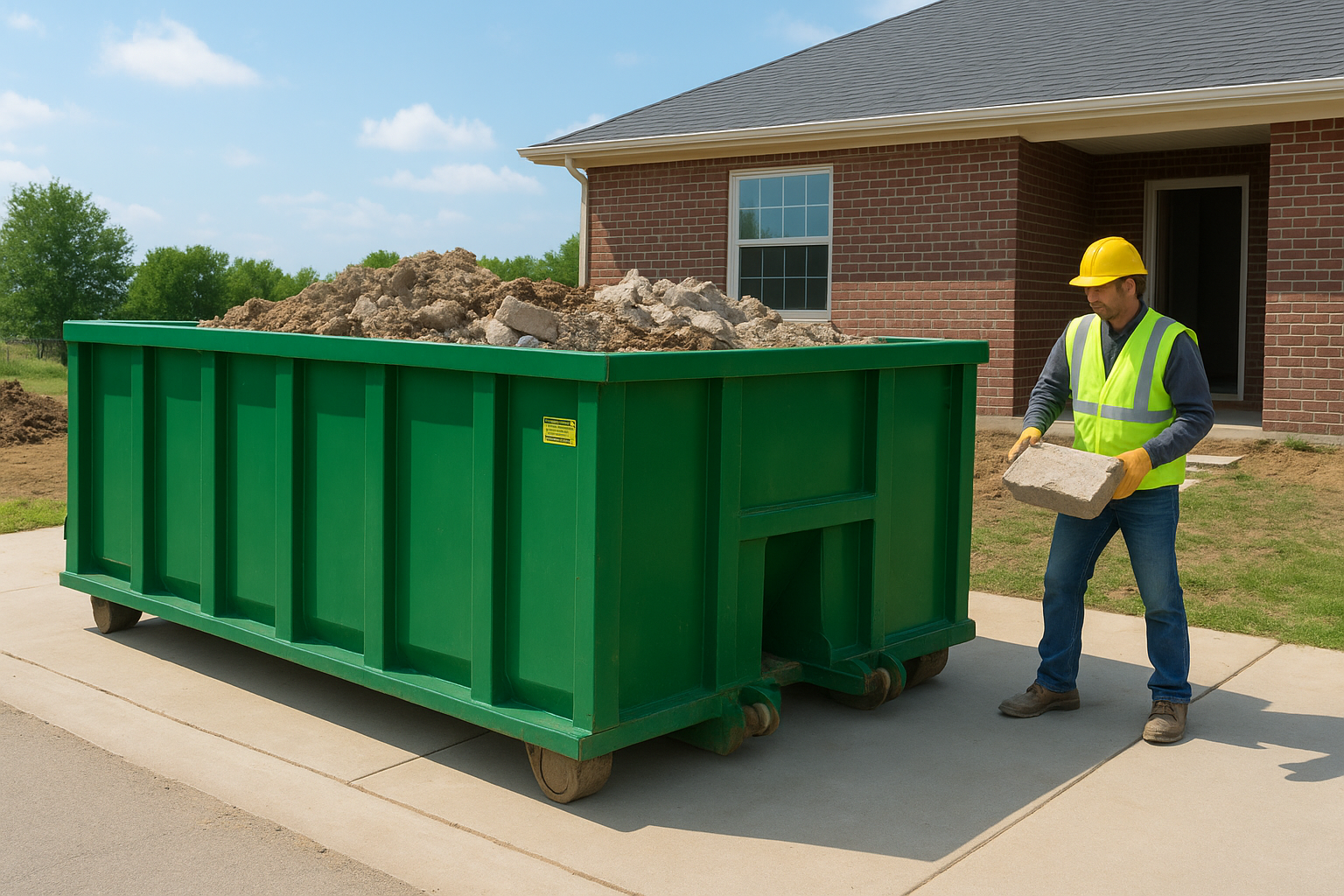
A 10-yard dumpster is the most common choice for concrete because it balances a manageable weight allowance with a footprint that fits most driveways and job sites.
Concrete size guide by project type
When you search for a concrete dumpster rental near me, size selection depends directly on your project scope. Smaller tearouts like a patio or steps work well with a 5-yard or 10-yard dumpster, while large slab removals push into 15-yard territory. Avoid ordering a 20-yard container for a pure concrete job. You’ll hit the weight limit long before you fill the volume, and you’ll pay for space you cannot use.
| Project Type | Recommended Size | Estimated Concrete Capacity |
|---|---|---|
| Small patio or steps | 5-yard | Up to 2 tons |
| Standard driveway or patio | 10-yard | Up to 4 tons |
| Large slab or multiple areas | 15-yard | Up to 6 tons |
When to split your load
If your project produces more concrete than one container can handle, schedule a second haul instead of upgrading to a larger dumpster. Keeping each load under the weight cap gives you predictable pricing and avoids the steep overage fees that come with overloaded containers.
Step 3. Understand pricing and avoid overage fees
Concrete dumpster pricing works differently from a standard junk removal rental because weight is the primary cost driver, not container size alone. When you compare options for a concrete dumpster rental near me, look past the base rental rate and focus on the included weight allowance and the per-ton overage fee, because those two numbers determine your final bill.
What goes into your base rental price
Your rental rate typically covers delivery, pickup, a set rental period, and a base weight allowance measured in tons. For concrete jobs, that allowance gets consumed fast. Always ask the rental company for the exact ton limit included in your quote before you book, so you’re comparing apples to apples across providers.
Getting the per-ton overage rate in writing before you load the first piece of concrete protects you from surprise charges on pickup day.
How to keep costs predictable
Your best tool against overage fees is the weight estimate you calculated in Step 1. Use that number to negotiate a rental that covers your projected tonnage upfront. Follow these steps to stay on budget:
- Request a rental with a weight allowance that matches or slightly exceeds your estimate
- Avoid loading soil, wood, or mixed debris into a concrete-only container
- Schedule a second haul if your project grows rather than overloading one dumpster
- Confirm the overage rate per ton in writing before delivery
Step 4. Plan delivery, placement, and pickup
Getting your concrete dumpster rental near me delivered and removed without complications requires planning before the truck arrives. Concrete loads are heavy by nature, so where you place the container and when you schedule pickup matters more than it does with lighter debris.
Choose your placement spot before delivery day
Think through your placement location before you confirm your booking. The driveway is the most common spot, but concrete-filled dumpsters can crack softer asphalt surfaces, especially in summer heat. Place plywood boards under the container’s contact points to distribute the weight and protect your surface from damage.
Confirm with your rental company that they can safely position the container given your overhead clearance, since delivery trucks typically need around 18 feet of vertical space.
Your driver also needs enough maneuvering room to back in and set the container down cleanly. Clear the area of vehicles, equipment, and any debris at least one day before your scheduled delivery window so there are no delays when the truck arrives.
Coordinate pickup timing with your project schedule
Schedule your pickup only when you’re confident the container is fully loaded and nothing else is going in. Changing your pickup date at the last minute can trigger rescheduling fees, depending on the provider. Confirm the specific pickup window in advance and keep the area around the container clear so the driver can get in and out without delays.
Quick recap
Renting a concrete dumpster rental near me comes down to four decisions: weight estimate, container size, pricing structure, and placement. Get those four right, and your project runs on budget with no surprises on pickup day.
Start by calculating your cubic yards and multiplying by 4,000 pounds to get a realistic weight figure. Match that number to a container size that keeps you under the weight cap, and add 10-15% as a safety buffer. For most concrete jobs, a 5-yard or 10-yard dumpster handles the load more cost-effectively than a larger container you can never fill by volume. Always confirm your per-ton overage rate in writing before the truck arrives, and use plywood under the container to protect your driveway surface.
If you’re working in Cape Cod or Plymouth, the team at Dump Express can help you size your container correctly, give you upfront pricing, and get your dumpster delivered fast.