
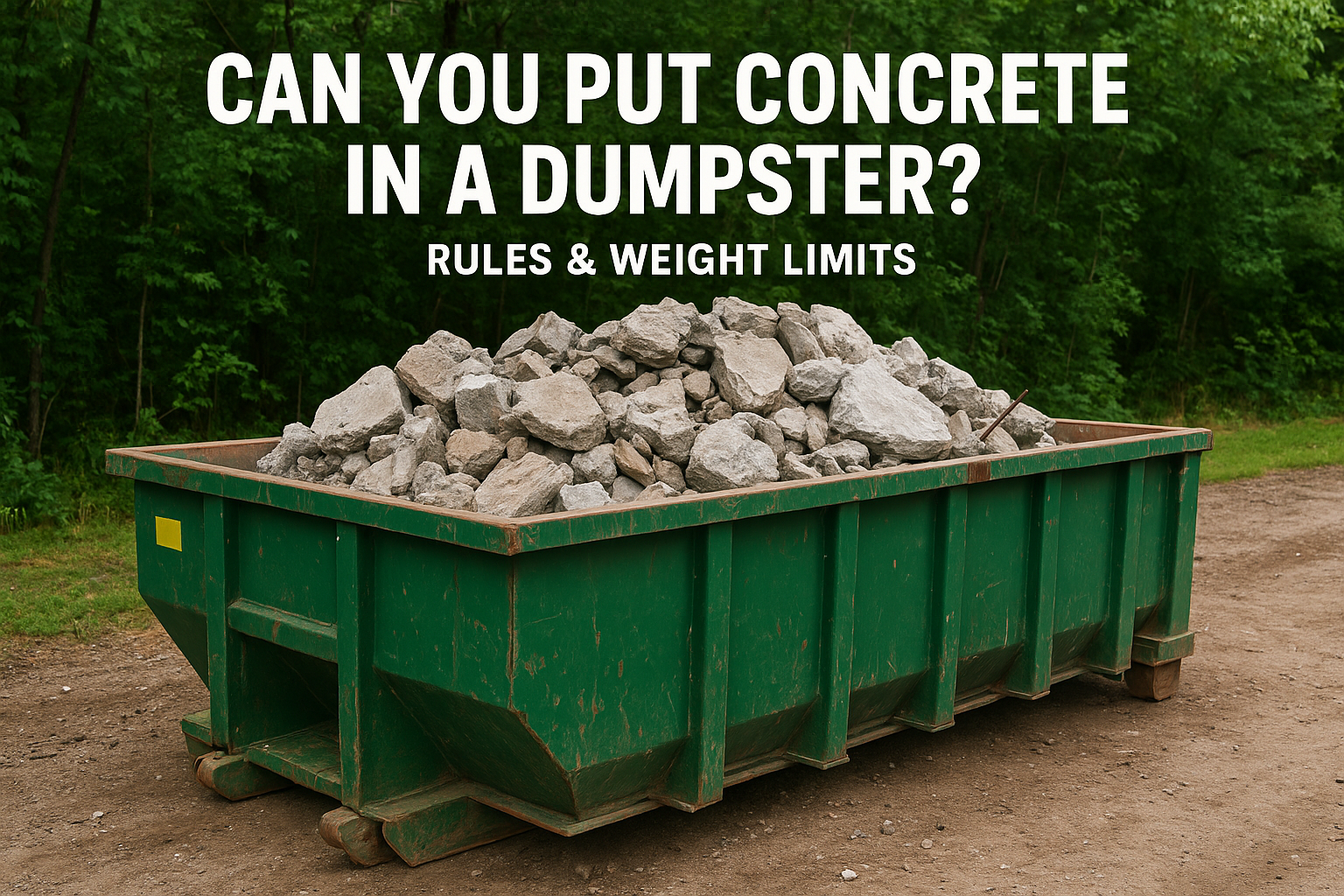
Short answer: yes, you can put concrete in a dumpster, but not just any dumpster. Concrete is heavy, and most standard dumpster rentals have weight limits that a pile of broken-up sidewalk or old foundation will blow through fast. Toss it in without knowing the rules, and you’re looking at overage fees or a refused load.
The key is knowing what type of dumpster to rent, how much weight you’re actually dealing with, and what your rental company allows. These details vary, and getting them wrong costs time and money. At Dump Express, we handle concrete disposal across Cape Cod and Plymouth regularly, it’s one of the most common questions our team fields from homeowners and contractors mid-project.
This guide breaks down the specific rules around putting concrete in a dumpster, weight limits you need to stay within, how to estimate your load, and when a dedicated heavy debris container is the smarter call.
What makes concrete different from regular dumpster debris
When you ask "can you put concrete in a dumpster," the answer depends on one core fact: concrete is one of the heaviest common construction materials, and that density changes how every part of the rental works. Drywall, lumber, and general household junk are bulky but relatively light. Broken concrete slabs, foundation rubble, and sidewalk chunks fall into a different category entirely, and most standard dumpsters are not designed to handle them at scale.
Why concrete is so much heavier than it looks
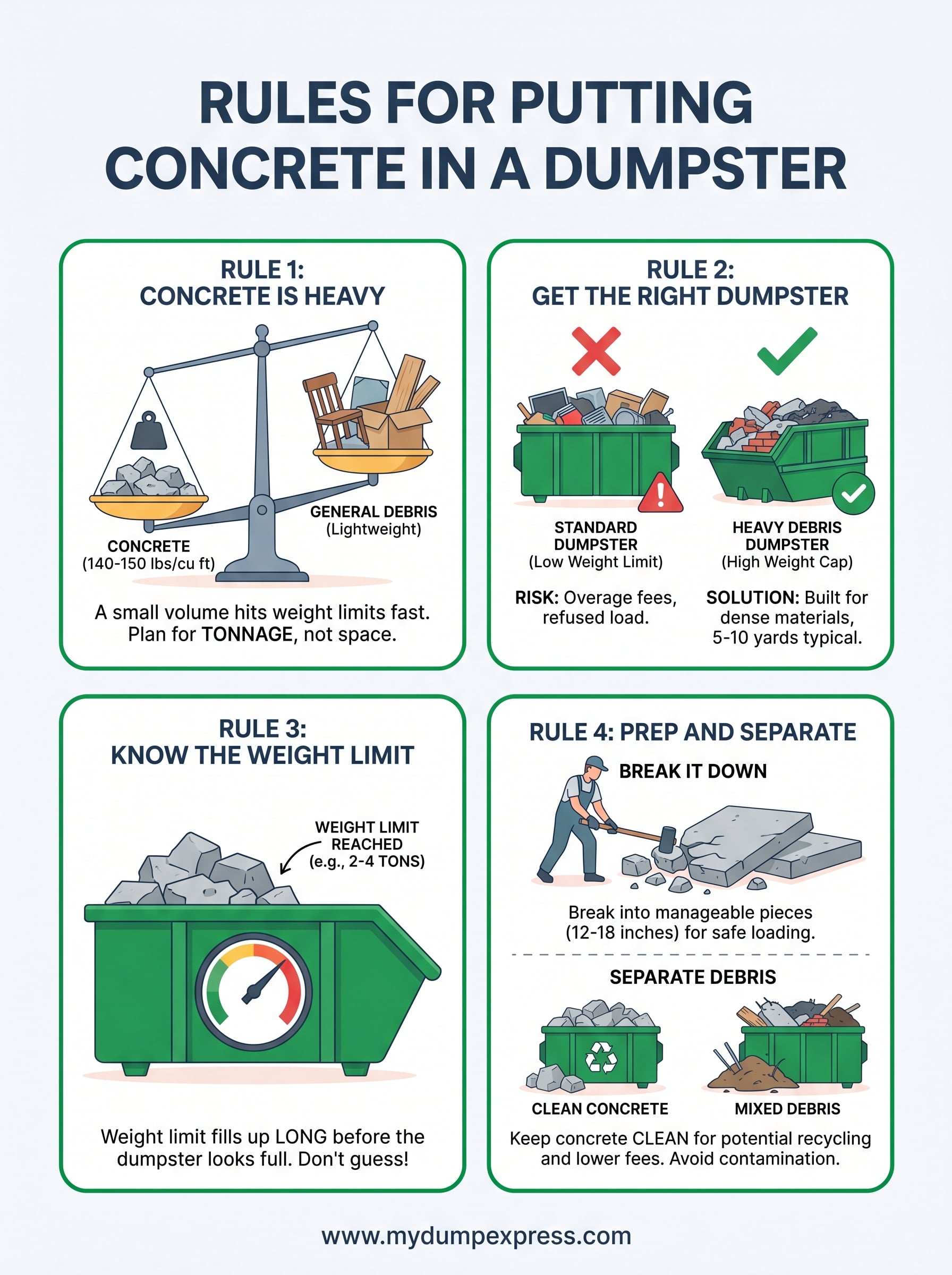
A single cubic foot of concrete weighs between 140 and 150 pounds. To put that in perspective, here’s how it compares to other common debris types:
| Material | Approximate weight per cubic foot |
|---|---|
| Concrete | 140-150 lbs |
| Brick | 100-120 lbs |
| Asphalt | 110-130 lbs |
| Drywall | 12-15 lbs |
| Framing lumber | 25-35 lbs |
| Mixed household junk | 10-20 lbs |
Even filling a standard 10-yard dumpster one-third of the way with concrete puts you well over most rental weight limits, which typically cap at 2 to 4 tons. A small broken patio slab might not look like much, but the weight adds up faster than the visual volume suggests.
Concrete is so dense that even a modest pile from a broken patio can weigh more than an entire truck bed of general construction debris.
What heavy debris dumpsters are built for
Heavy debris dumpsters are reinforced containers built specifically for dense materials like concrete, asphalt, brick, and stone. They come in smaller volumes, typically 5 to 10 yards, because the weight fills capacity long before the physical space runs out. Matching the container to your material type is the step most renters skip, and it’s the one that causes overage charges or a refused load at pickup.
These containers also come with load limits stated in tons rather than cubic yards, so you can plan against the actual weight of your material instead of guessing by appearance. For concrete, that framing matters because a pile that looks small can easily hit 2 tons, which is the floor of most heavy debris limit tiers, not the ceiling.
How mixing concrete with other debris complicates things
Loading concrete alongside lighter materials like wood, drywall, or household junk creates two problems. First, the combined load weight can spike faster than you expect, pushing you past the container’s limit before you’ve used up the visible space. Second, many recycling facilities process concrete separately from mixed waste, and a blended load may not qualify for recycled aggregate handling, which directly affects your final disposal fees.
Your best move is to plan separate disposal strategies for concrete and general debris from the start of your project. That approach protects you from unexpected overloads and keeps your total rental cost predictable rather than subject to per-ton overage charges you didn’t budget for.
Step 1. Confirm what concrete you have and what’s allowed
Before you rent a container or ask can you put concrete in a dumpster, you need to know exactly what type of concrete you’re dealing with. Not all concrete is treated the same by rental companies or disposal facilities. Some loads get accepted without issue; others trigger surcharges or outright refusal based on what’s embedded or mixed into the material.
Clean concrete vs. concrete with rebar or contaminants
Clean concrete means broken slabs, poured footings, or sidewalk sections with no embedded metal, tile, wood framing, or chemical residue. This type is the most straightforward to dispose of and often qualifies for recycled aggregate processing, which can reduce your overall disposal cost. Facilities crush it into base material used in road construction and drainage work.
Reinforced concrete with rebar is a different situation. The embedded steel doesn’t automatically disqualify it from dumpster disposal, but many facilities charge extra to process it, and some rental companies require you to disclose rebar presence upfront before booking. If your demolition work involves foundation walls or structural slabs, assume rebar is present and confirm with your provider before the container is dropped.
Mixing tile, dirt, or asphalt into a concrete load can push the entire load into a higher-cost disposal category, even if concrete makes up most of the weight.
What rental companies typically prohibit alongside concrete
Most rental providers will not accept certain materials in the same container as concrete, regardless of how small the volume is. Here is what typically falls on the prohibited list:
- Hazardous materials: paint, solvents, oils, or chemicals absorbed into the concrete
- Asbestos-containing materials: found in older floor tiles, pipe insulation, or pre-1980 construction products
- Dirt and soil in large quantities: treated separately due to disposal facility rules
- Treated or pressure-treated lumber: contains preservatives that complicate processing
Call your rental company before loading if your project involves a structure built before 1980. Older foundations and slabs sometimes contain contaminants that require specialty handling, and disclosing this upfront protects you from refused loads and fees you did not budget for.
Step 2. Estimate concrete weight so you don’t overload
Knowing whether you can put concrete in a dumpster safely comes down to one number: total weight. Before you book a container, run a quick estimate using your project dimensions. Eyeballing a pile of broken slabs is not reliable, and rental companies charge per-ton overage fees once you exceed the agreed limit, so getting this number right before the truck shows up saves you a real cost.
Use a simple formula to calculate weight
The math is straightforward. Measure your concrete in length, width, and depth (all in feet), multiply those three numbers together to get cubic feet, then multiply by 150 pounds. Divide by 2,000 to convert to tons.
Weight formula:
(Length ft × Width ft × Depth ft) × 150 lbs = Total lbs
Total lbs ÷ 2,000 = Tons
Here are a few common project examples to give you a concrete reference point:
| Project type | Approximate dimensions | Estimated weight |
|---|---|---|
| Small patio slab (10×10, 4" thick) | 10 × 10 × 0.33 ft | ~2.5 tons |
| Sidewalk section (20×4, 4" thick) | 20 × 4 × 0.33 ft | ~2.0 tons |
| Driveway apron (12×6, 6" thick) | 12 × 6 × 0.5 ft | ~2.7 tons |
| Foundation footing (30×2, 8" thick) | 30 × 2 × 0.67 ft | ~3.0 tons |
Even a small backyard patio can hit 2.5 tons, which exceeds the weight allowance on most standard dumpster rentals.
Add a buffer for broken material
Broken concrete takes up more physical space than intact slabs because irregular pieces don’t stack tightly, but the weight stays the same. Your estimate from the formula reflects solid material volume, which is the correct number to use for weight planning regardless of how the pieces break apart during demolition.
Add a 10 to 15 percent buffer on top of your calculated weight to account for moisture trapped in older slabs, soil or mortar still attached to the pieces, and any rebar you didn’t factor in separately. This buffer keeps you from landing right at the weight limit and tipping into overage territory when the driver weighs the load at the facility.
Step 3. Pick the right dumpster size for concrete
Once you have your weight estimate, you can match it to the right container. Dumpster size selection for concrete works differently than it does for general debris, because you’re optimizing for weight capacity, not cubic yard volume. Renting a large container and filling it partially with concrete still puts you over the weight limit if the tonnage exceeds what the rental agreement covers.
Why smaller is often better for heavy material
When people ask can you put concrete in a dumpster, they often assume bigger is safer. The logic makes sense on the surface: more space means less chance of overflow. But with dense material like concrete, the weight limit is what you’ll hit first, not the volume limit. A 20-yard container rated for general debris may carry a weight allowance of 2 to 3 tons, which a modest patio can exceed before you’ve filled even a quarter of the physical space.
Smaller heavy debris containers, typically 5 to 10 yards, are built with higher per-yard weight tolerances specifically for materials like concrete, brick, and stone. They’re the right tool for the job, and renting one costs less than paying overage fees on a larger general container you filled with two tons of broken slab.
Choosing a container based on physical size rather than weight capacity is the single most common mistake renters make with concrete projects.
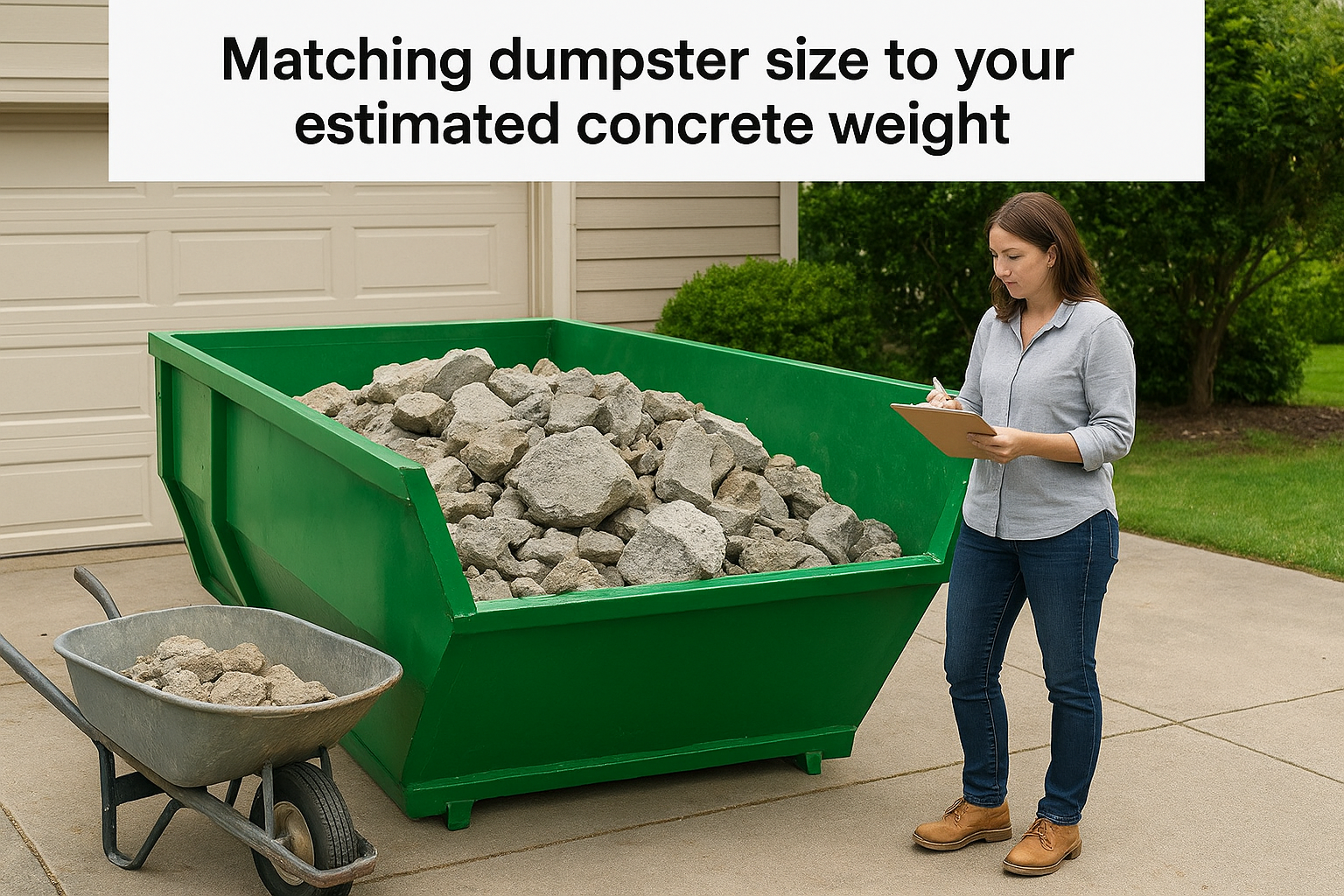
Matching dumpster size to your estimated concrete weight
Use your weight calculation from Step 2 to find the right fit. Here’s a practical reference for common project types and the container size that works:
| Estimated concrete weight | Recommended container | Typical project type |
|---|---|---|
| Under 1.5 tons | 5-yard heavy debris | Small patio, steps, or curbing |
| 1.5 to 3 tons | 10-yard heavy debris | Driveway section, sidewalk, small slab |
| 3 to 5 tons | 10-yard with confirmed limit | Large slab or foundation footing |
| Mixed concrete and debris | Separate containers | Any project combining concrete with light materials |
Talk to your rental provider directly before booking if your estimate lands near the upper end of any tier. Dump Express sizes containers to your actual project weight, not just the dimensions you describe, so you get the right container the first time.
Step 4. Prep and load concrete safely
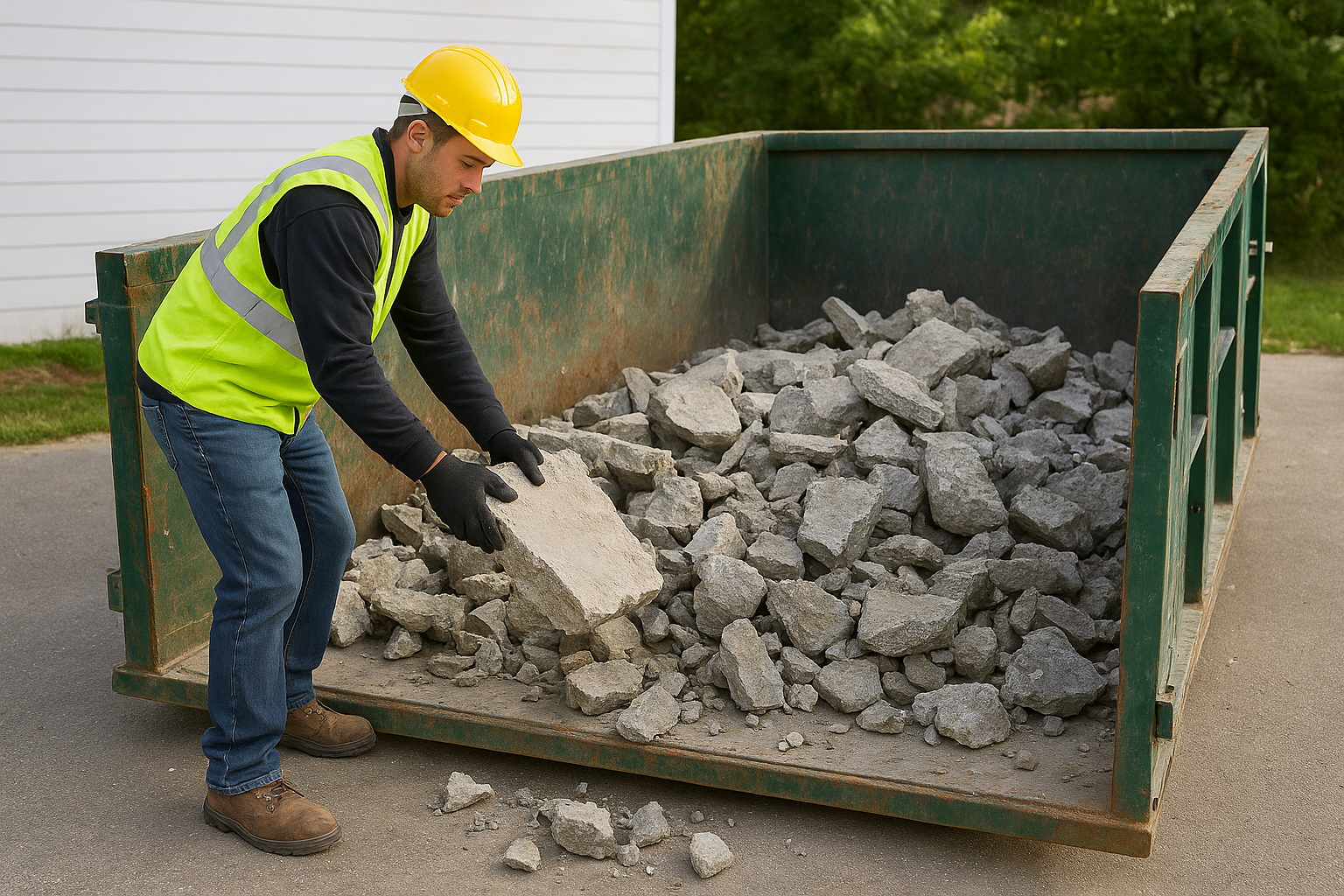
Before you start loading, a little prep work protects both you and the container. Dumping large, intact slabs into a dumpster strains the container walls and makes weight distribution unpredictable. Breaking down your concrete before the container arrives puts you in control of the load and keeps the job moving without surprises.
Break concrete into manageable pieces
Smaller chunks load more efficiently and reduce the risk of uneven weight distribution inside the container. For most residential projects, pieces in the 12 to 18-inch range are workable by hand or with basic equipment. Use a sledgehammer for thin slabs and a rotary hammer or jackhammer for anything thicker than 4 inches.
Here’s a quick reference for the right tool by concrete thickness:
| Concrete thickness | Recommended breaking tool |
|---|---|
| Under 3 inches | Sledgehammer |
| 3 to 5 inches | Electric rotary hammer |
| 5 inches and above | Gas-powered jackhammer |
| Rebar-reinforced slabs | Jackhammer + bolt cutters for steel |
Pull rebar out of broken sections before loading if your rental company requires clean concrete. Leaving long rebar sections protruding from the pile creates loading hazards and can complicate processing at the facility.
Load heavy material first and distribute weight
Start loading concrete directly into the center and back of the container, not stacked against one side. Uneven loading shifts the weight off-center, which creates problems when the driver lifts and hauls the container. Spread broken pieces evenly across the floor of the dumpster as you go.
Front-loading all your heavy concrete pieces against one wall is one of the fastest ways to end up with a container the driver cannot safely transport.
Do not stack concrete above the fill line marked on the container walls. If you’re wondering can you put concrete in a dumpster all the way to the top, the answer is almost never, because you’ll hit the weight limit well before you reach the volume limit. Stop loading when you approach your pre-calculated weight estimate, not when the container looks full.
Step 5. Plan pickup, recycling, and local rules in MA
The final step in figuring out can you put concrete in a dumpster properly is understanding what happens after the container leaves your property. In Massachusetts, concrete disposal and recycling rules vary by town and facility, and skipping this step can result in unexpected fees or delays on pickup day. Coordinating with your rental provider before the container is scheduled for haul-out keeps the process clean from start to finish.
Confirming recycling eligibility before your load is picked up can lower your disposal cost because clean concrete often qualifies for a reduced tipping fee at aggregate recycling facilities.
How Massachusetts handles concrete recycling
Massachusetts encourages concrete recycling through a network of licensed transfer stations and aggregate processors that crush clean concrete into base material for road projects, drainage systems, and fill work. Your concrete qualifies for this lower-cost stream if it is free of soil, rebar, tile, and chemical contamination. Mixed or contaminated loads get processed as general construction debris, which carries a higher tipping fee.
Check with your rental provider about which facilities they use and whether your specific load qualifies for recycled aggregate handling based on what you disclosed in Step 1. Dump Express routes concrete loads to appropriate facilities based on material type, so flagging rebar or tile presence when you book puts the right processing plan in place from the start.
What to check before your pickup date
Before your pickup is scheduled, run through this checklist to avoid delays or added charges:
- Confirm load weight: Make sure your estimate from Step 2 still holds; if you added more concrete after booking, notify your provider
- Verify no prohibited materials were added: Even small amounts of paint-soaked concrete or asphalt mixed in can shift your load to a higher disposal category
- Check access for the truck: The driver needs clear entry and exit without overhead obstructions like low-hanging wires or tree branches
- Confirm your town’s permit status: Some Cape Cod municipalities require a placement permit for containers on public streets, and your provider can advise if yours is one of them
Handling these items before pickup day means no last-minute calls, no refused loads, and no overage charges you did not budget for.
Next steps for hassle-free concrete disposal
Now you know the full answer to can you put concrete in a dumpster: yes, with the right container, the right weight estimate, and the right prep. The five steps in this guide give you everything you need to avoid overage fees, refused loads, and last-minute surprises. Clean concrete, accurate weight math, and a purpose-built heavy debris container are the three things that make the difference between a smooth project and an expensive one.
Your next move is simple. Estimate your concrete weight using the formula in Step 2, note whether your material is clean or rebar-reinforced, and reach out before you book so you get the right container matched to your actual load. The Dump Express team handles concrete disposal across Cape Cod and Plymouth regularly and can confirm sizing and pricing before anything hits the ground. Book your dumpster rental on Cape Cod and get your project moving.