
When you rent a 20 yard dumpster, you’re getting the largest container most residential and mid-size commercial projects will ever need. It handles full home cleanouts, major renovations, roofing tear-offs, and construction debris without breaking a sweat. But pricing, dimensions, and rental terms vary widely depending on where you are and who you’re renting from, and that’s where most people hit a wall.
At Dump Express, we deliver 20-yard dumpsters across Cape Cod and Plymouth, Massachusetts seven days a week. With over 20 years of local experience, we’ve helped thousands of homeowners and contractors figure out whether a 20-yard container is the right call, and how to get the most value out of their rental.
This guide breaks down everything you need to know before booking: exact dimensions, what fits inside, typical pricing, weight limits, and practical ways to keep your costs down. Whether you’re clearing out a house or managing a job site, you’ll walk away with the information you need to rent with confidence.
What a 20 yard dumpster is and who it fits
A 20-yard dumpster is a roll-off container that sits at the larger end of the residential and commercial rental spectrum. Most rental companies classify it as their largest standard option, making it the go-to choice when you have a serious volume of debris to deal with and you don’t want to order multiple pickups or constantly worry about running out of space. When you rent a 20 yard dumpster, you’re getting a container that holds the equivalent of roughly 10 full pickup truck loads of waste in a single unit.
Projects that call for a 20-yard container
Not every project needs this much capacity, but some projects practically demand it. The 20-yard size earns its place on job sites and in driveways because it handles debris loads that smaller containers simply can’t absorb without overflow. Trying to force a large project into a smaller container usually leads to a second haul, which costs more than just stepping up in size from the start.
If your project involves tearing out materials from multiple rooms, pulling off an entire roof, or clearing a full property, a 20-yard container is almost always the smarter choice over ordering a smaller size twice.
Here are the project types where a 20-yard dumpster consistently makes the most sense:
- Full home cleanouts: Clearing out furniture, appliances, and general household junk from an entire house generates far more volume than most people expect.
- Major kitchen or bathroom renovations: Cabinets, tile, drywall, flooring, and fixtures add up fast when you’re gutting a full room.
- Roofing tear-offs: Asphalt shingles are heavy and bulky; a full roof tear-off almost always fills a 20-yard container.
- Whole-room additions or demolitions: Structural debris from framing, insulation, and concrete work fills smaller containers quickly.
- Estate cleanouts: Clearing a property involves a high volume of mixed materials over a short window.
- Commercial job sites: Contractors managing renovation or light construction use 20-yard containers to keep sites clean without constant swap-outs.
When a 20-yard dumpster might be more than you need
Bigger isn’t always better. If your project is limited in scope, ordering a 20-yard container means you’re paying for capacity you won’t use. A single-room renovation, a small deck teardown, or a garage cleanout typically fits comfortably in a 10-yard or 15-yard container at a noticeably lower price.
The real question is the volume and type of debris your project will produce. If you’re unsure, a quick call to your rental company before booking can save you from overpaying or discovering mid-project that you’ve run out of room. An experienced local team can tell you what fits in each size based on your specific job rather than giving you a generic answer.
One practical rule: if you think your project might fill a 15-yard container completely, step up to the 20-yard. The price difference between sizes is usually modest, and a second delivery and pickup fee when you underestimate is almost always higher than simply upgrading upfront. Getting the size right the first time is the single easiest way to control your total rental cost.
20 yard dumpster dimensions, capacity, and weight
A 20-yard dumpster takes up a real footprint on your property, so knowing the physical size before delivery day matters more than most people expect. Understanding the weight limits and capacity also protects you from overage charges when your project generates more debris than anticipated.
Physical size and what it looks like on your property
Standard 20-yard roll-off containers measure approximately 22 feet long, 8 feet wide, and 4.5 feet tall. That footprint is roughly the length of a large SUV and a half, which means you need a clear, accessible driveway or staging area to place it safely. The relatively low sidewall height of 4.5 feet makes it easy to toss debris over the edge without lifting materials above your head.
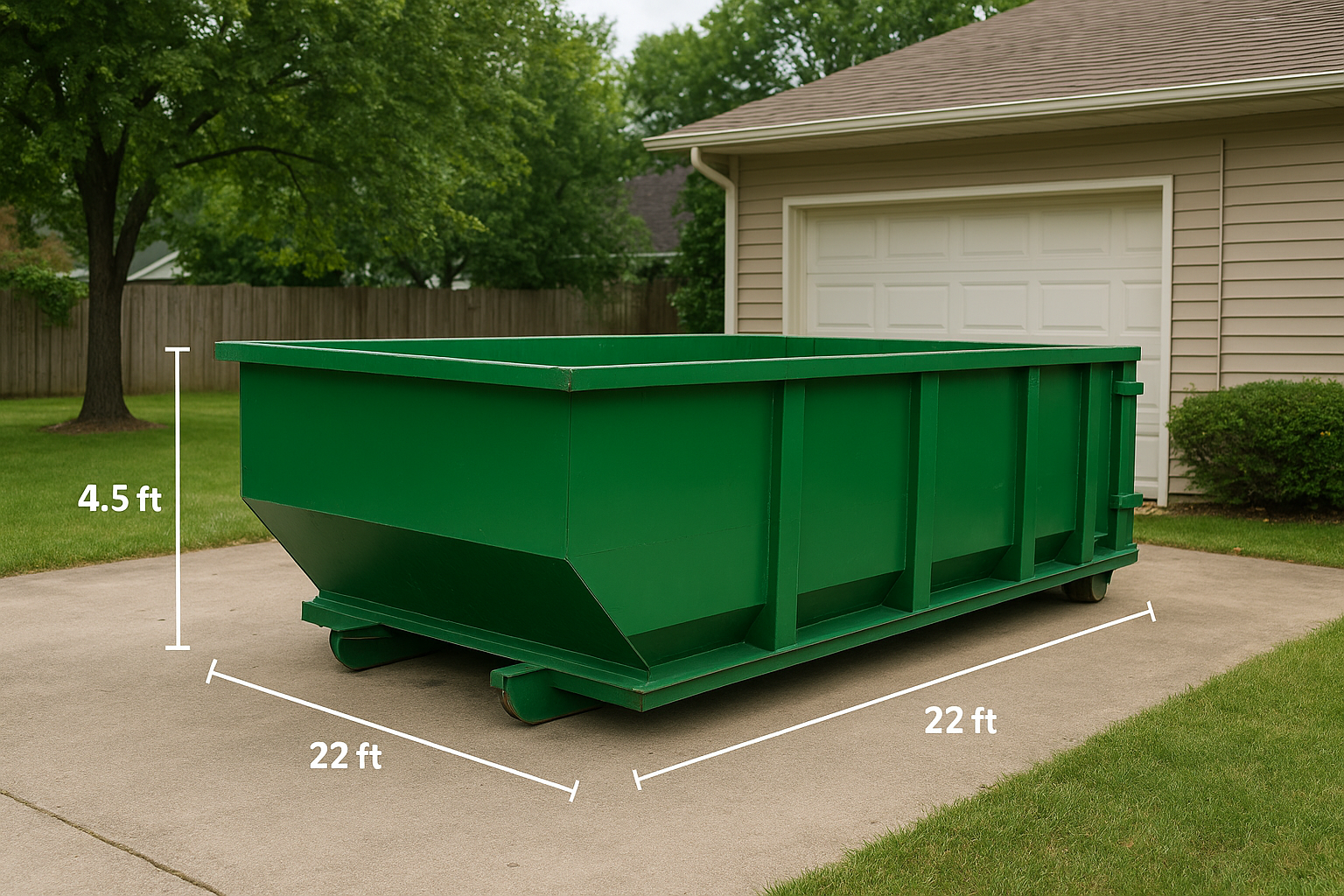
Before you rent a 20 yard dumpster, measure your driveway or staging area to confirm you have at least 22 feet of clear space plus room for the delivery truck to maneuver.
Because the container sits on your property for the duration of the rental, you’ll also want to check for overhead obstructions like tree branches, power lines, or low-hanging structures before your delivery driver arrives. A quick walkthrough of the drop zone saves everyone time on delivery day.
Weight limits and how debris type affects them
Most 20-yard dumpsters carry a weight limit between 2,000 and 3,000 pounds, though the specific cap depends on your rental company and the materials you’re disposing of. That range sounds generous, but heavy materials like concrete, roofing shingles, and soil consume that allowance far faster than lighter debris such as furniture or general household junk.
Rental companies typically build a base weight allowance into the rental price, then charge a per-ton fee for anything above it. If your project involves heavy construction debris, ask your provider upfront what the included tonnage covers and what the overage rate looks like. Separating heavy materials from lighter debris, or staging them across multiple loads, can help you stay within your included weight allowance and avoid a surprise charge at the end of your rental period.
20 yard dumpster rental pricing in Massachusetts
In Massachusetts, the price to rent a 20 yard dumpster typically falls between $650 and $800 for a standard rental period, though the Cape Cod and Plymouth area often sits toward the higher end of that range. Location, rental duration, and the type of debris you’re hauling all factor into your final bill. Getting a clear, itemized quote before you book protects you from unexpected charges when pickup day arrives.
What drives the price up or down
Several factors push your rental cost higher or lower, and understanding them helps you plan your budget accurately before the container shows up in your driveway. The two biggest variables are typically delivery distance and debris weight, since both directly affect what the rental company spends to complete your job. Local providers with yards close to Cape Cod almost always beat regional operators on haul fees alone.
Here are the main cost factors to keep in mind:
- Delivery distance: Companies with nearby yards charge less for transport than regional operators based far from your project.
- Rental duration: Most base prices cover a set number of days, and going beyond that window adds daily or weekly extension fees.
- Debris weight: Exceeding the included tonnage triggers a per-ton overage charge on top of the base price.
- Permit requirements: Some towns require a permit when a container sits on a public road or right-of-way, which adds a small cost.
- Prohibited materials: Certain items outside the standard waste stream carry surcharges when they appear in your load.
Asking for an itemized quote that separates the base rental fee from potential overage, extension, and permit costs gives you a realistic picture of your total spend before the container arrives.
What’s typically included in the rental price
Most Massachusetts rental companies build delivery, pickup, and a base weight allowance into a single flat price. That base covers the drop-off, the haul-away, and a tonnage cap, typically between two and four tons for a 20-yard container, depending on the provider.
What the base price rarely covers is extended rental time beyond the initial period, overage weight, or town permit fees. Confirming exactly what your quote includes before you book prevents bill shock at the end of your rental. A local company that publishes transparent, town-specific pricing on its website makes that verification straightforward from the start.
What you can and can’t toss in a 20 yard dumpster
Knowing what’s accepted before your container arrives saves you from surprise surcharges and rejected loads at the disposal facility. Most materials from standard residential and commercial projects go in without issue, but a handful of items fall outside what landfills and transfer stations accept, and your rental company passes those restrictions directly on to you. When you rent a 20 yard dumpster, confirming the acceptable materials upfront keeps your project on schedule and your bill predictable.
Accepted materials
The 20-yard container handles the full range of typical renovation and cleanout debris that most residential and commercial projects produce. Lighter general waste and bulky household items load in easily given the low sidewall height, while heavier construction materials fit as long as you stay within your included weight allowance.
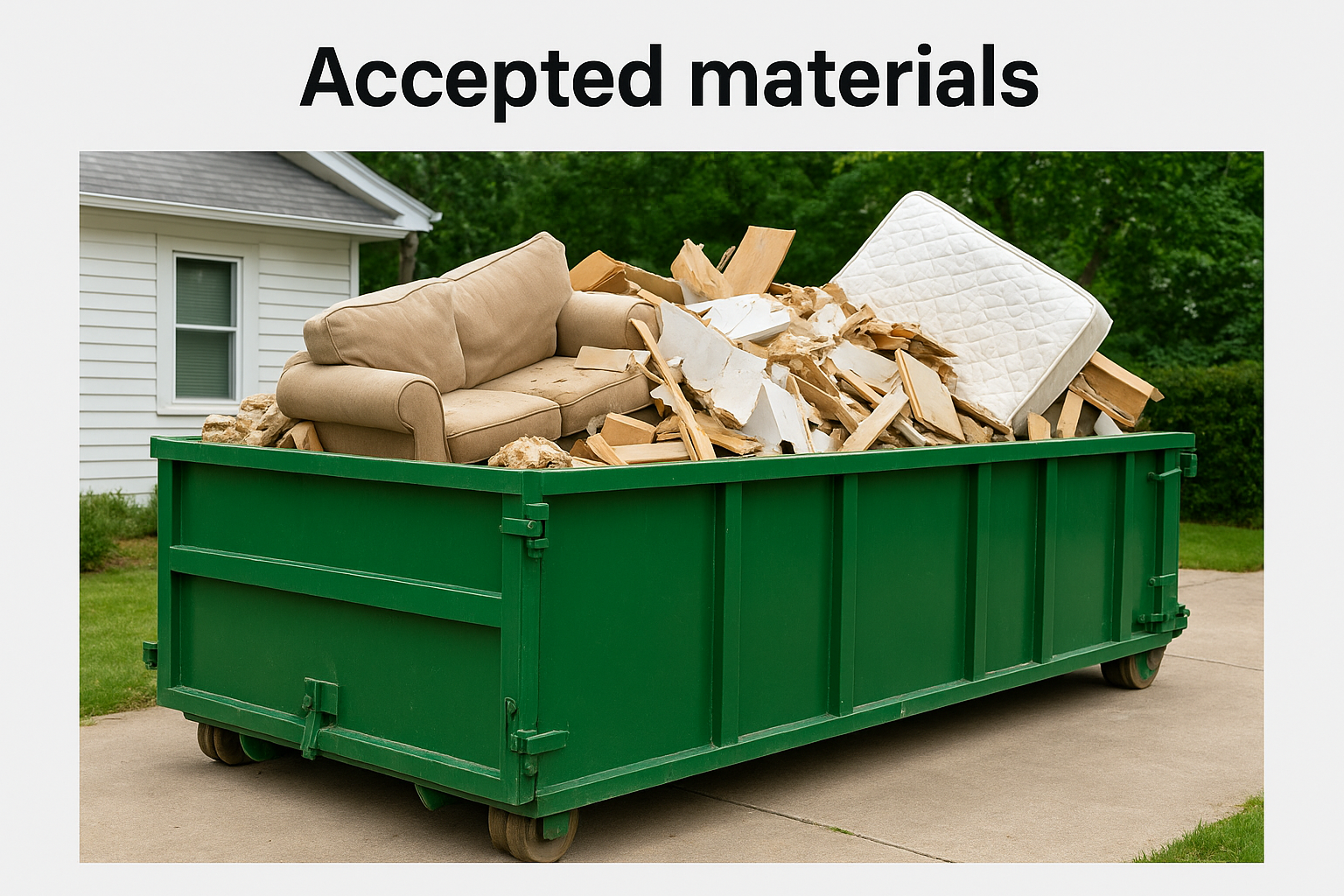
Common materials you can toss in without issue include:
- Furniture, mattresses, and general household junk
- Drywall, plaster, and insulation
- Wood framing, lumber scraps, and pallets
- Roofing shingles and felt paper
- Flooring including carpet, tile, and hardwood
- Siding, windows, and doors
- Metal scraps, pipes, and wiring
- Yard waste such as branches, brush, and sod (Only accepted in a separate dedicated dumpster, per Massachusetts law.)
- Mixed construction and demolition debris
Items that don’t belong in the container
Certain materials carry legal disposal restrictions that prevent them from going into a standard roll-off container regardless of project size. These prohibited items protect both the environment and the workers handling your load, and disposal facilities actively screen for them.
If you’re unsure whether a specific material is accepted, call your rental company before loading it into the container rather than after.
Items your driver cannot accept include:
- Hazardous materials: paint, solvents, motor oil, pesticides, and chemicals
- Appliances containing refrigerants: air conditioners, refrigerators, and freezers
- Batteries, both household and automotive
- Tires
- Asbestos-containing materials
- Medical or biohazardous waste
- Electronics such as televisions and computers (these often require separate e-waste recycling)
Liquid waste of any kind also stays out of the container. A local provider familiar with Massachusetts disposal regulations will walk you through exactly what applies to your specific load before your delivery date.
How to rent a 20 yard dumpster in Cape Cod
Renting in Cape Cod follows the same general process as anywhere else, but a few local factors make it worth choosing a provider who knows the area well. Many Cape Cod towns have specific rules about container placement on public roads, and access on older residential streets can be tight. Starting with a local company removes most of that friction before it becomes your problem on delivery day.
Check your drop zone and local permit requirements
Before you book, walk the spot where you plan to place the container. You need at least 22 feet of clear, level space with no overhead obstructions like low branches or power lines. If your driveway is too short or too narrow, a level section of your yard or a contractor-grade parking pad can substitute as long as the ground can support the container’s loaded weight.
If your container needs to sit on a public street or within the town right-of-way, contact your local Cape Cod municipality directly to confirm whether a permit is required before your delivery date.
Cape Cod towns handle permit requirements differently, so what applies in Barnstable may not apply in Falmouth or Sandwich. A local rental company with hands-on regional experience will tell you exactly what your specific town requires instead of leaving you to sort it out yourself.
Book your container and confirm the details
Once your drop zone is sorted, booking takes only a few minutes. When you rent a 20 yard dumpster through Dump Express, you get same-day or next-day delivery across Cape Cod and Plymouth most days of the week. You pick your size, confirm your town, and lock in a delivery date that fits your project timeline.
Before your delivery window closes, run through a short checklist to make sure everything lines up:
- Confirm the drop zone dimensions and clear any obstacles the driver will need to work around
- Verify the included tonnage and rental period so you know exactly what your base price covers
- Ask about prohibited materials specific to your project so nothing gets flagged at the transfer station
- Get the overage rate for excess weight and extended rental days in writing
These few steps take minutes upfront and prevent nearly every billing dispute or delivery delay that customers run into after booking.
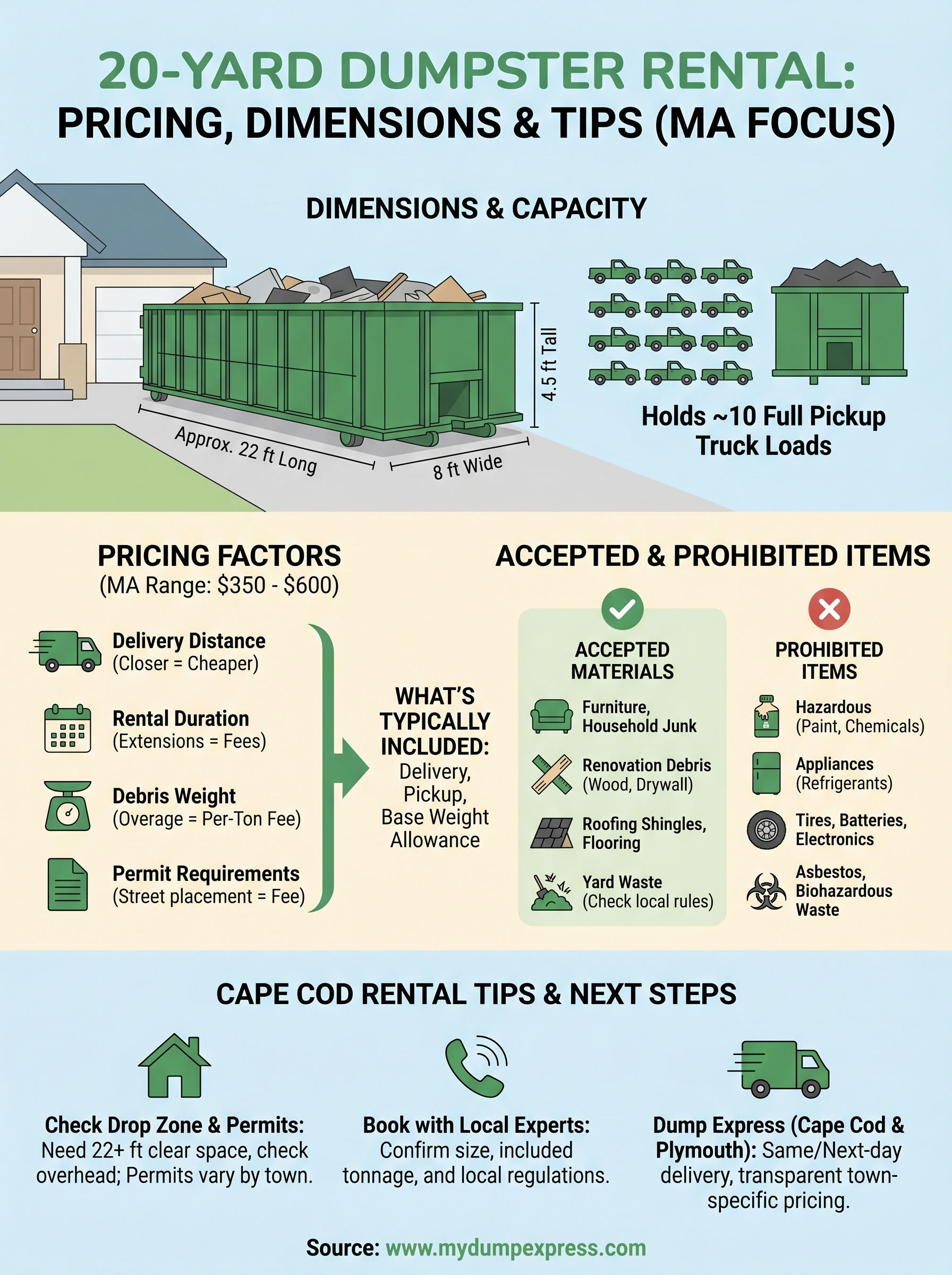
Next steps
You now have everything you need to rent a 20 yard dumpster with confidence. You know the exact dimensions, what fits inside, how pricing works in Massachusetts, which materials stay out of the container, and how to prep your drop zone before delivery day. The only step left is booking the right container for your project.
Dump Express delivers 20-yard containers across Cape Cod and Plymouth seven days a week, with same-day or next-day availability on most orders. Pricing is transparent and town-specific, so you know your costs before the container arrives. Whether you’re clearing out a full property, wrapping up a renovation, or managing a job site, the team will help you confirm the right size and answer any questions about your specific load before you commit. Book your 20-yard dumpster rental with Dump Express and get your project moving without the guesswork.