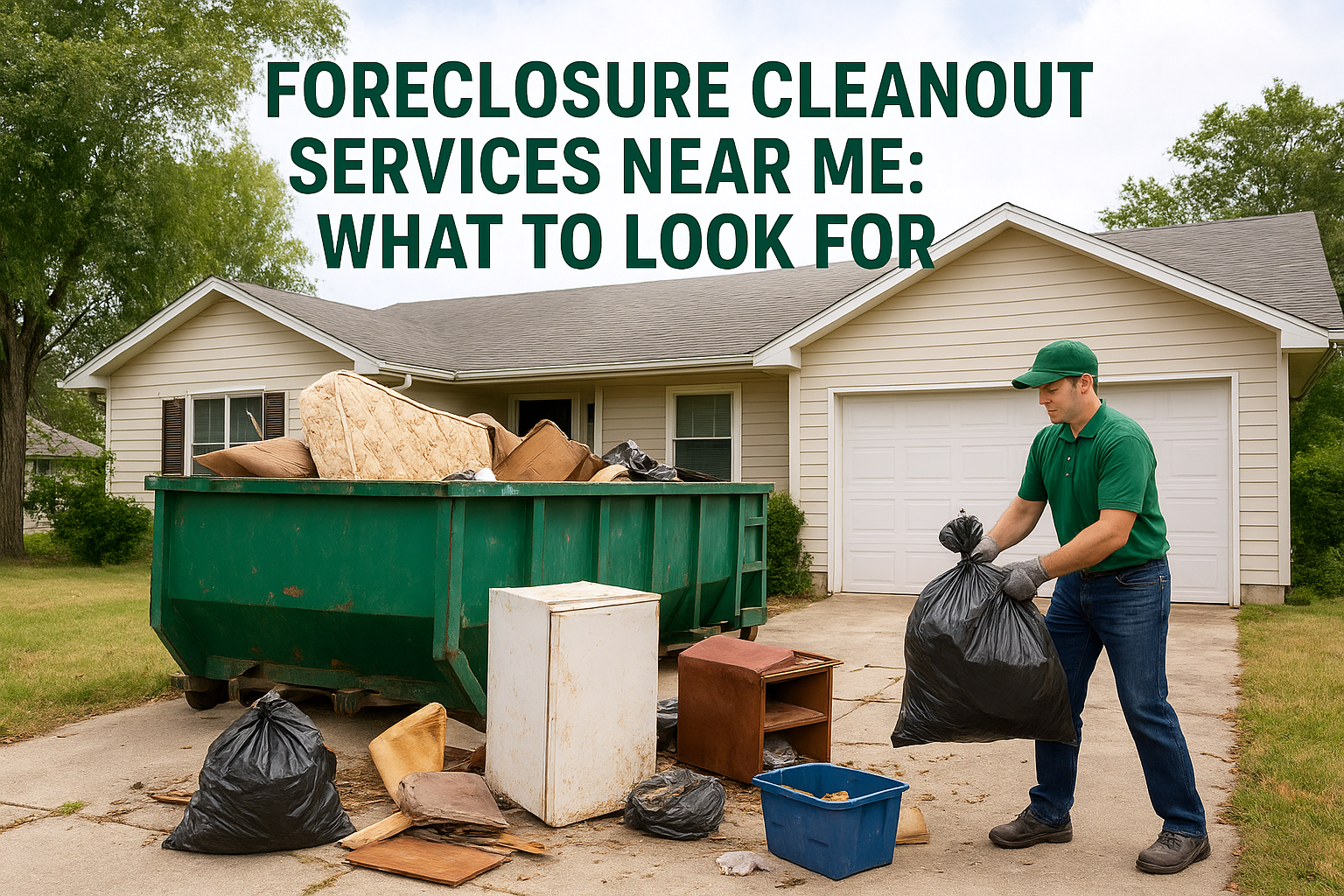
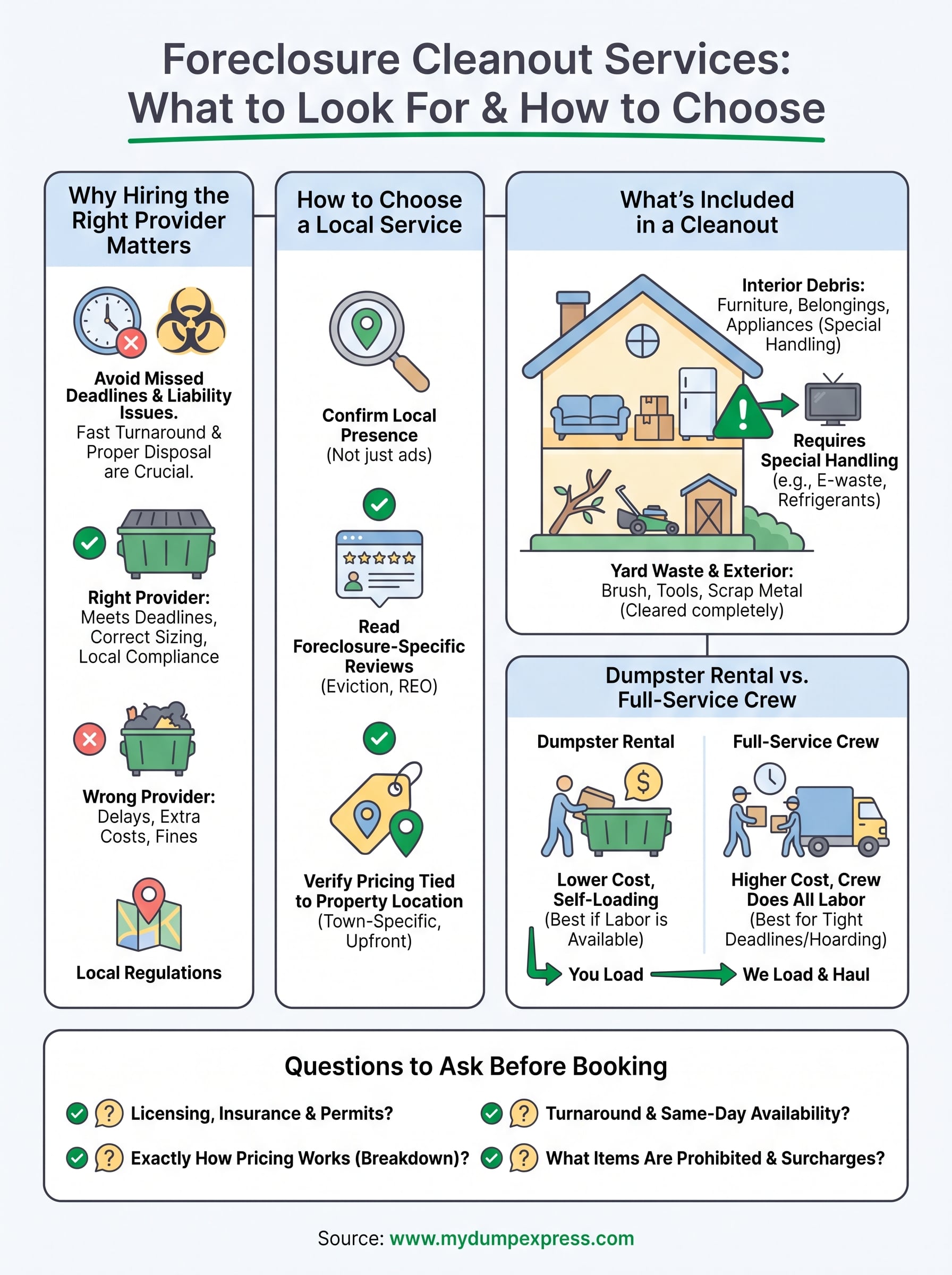
Foreclosure cleanouts are messier than a typical junk removal job. You’re often dealing with abandoned furniture, spoiled food, mattresses, and sometimes hazardous debris left behind after a bank takeover or eviction. If you’re searching for foreclosure cleanout services near me, you’re probably a realtor with a closing deadline, a bank representative managing an REO property, or a homeowner trying to move fast before auction. Whoever you are, you need a crew that shows up on time and clears the property completely, not one that leaves you scheduling a second visit.
The right service combines fast turnaround with a dumpster sized correctly for the volume you’re removing, plus clear guidance on what can and can’t go in it. You also want transparent pricing tied to your specific property location, not a vague quote that changes once the truck arrives.
This article breaks down exactly what separates a dependable local provider from a call center forwarding your job to a subcontractor. We’ll cover licensing, sizing, pricing structure, and the questions to ask before you book, based on what actually matters for foreclosure and REO cleanouts across Cape Cod and Plymouth.
Why hiring the right foreclosure cleanout company matters
A foreclosure cleanout isn’t a weekend garage-clearing job. Banks and asset managers work against strict REO timelines, and realtors often have a closing date already on the calendar before the property is even fully vacated. If the crew you hire shows up late, underestimates the volume, or leaves half the debris behind, that delay ripples into your listing photos, your inspection, and ultimately your closing. Choosing the wrong provider doesn’t just cost you money, it costs you time you don’t have.
Deadlines don’t move for slow crews
Contractors and property managers juggling several foreclosure properties at once can’t afford a crew that needs to "come back next week" for a second load. A dependable local company sizes the dumpster correctly on the first visit and schedules pickup around your actual closing window, not a generic multi-day estimate. When a provider guesses wrong on size or shows up without the right equipment, you end up paying for an extra haul or missing your window entirely.
The fastest way to blow a foreclosure deadline is trusting a crew that doesn’t plan for the volume before they arrive.
Hazardous debris creates real liability
Foreclosed properties frequently sit vacant for months before anyone clears them out, which means you’re often dealing with spoiled food, mold-damaged furniture, broken glass, and sometimes needles or chemical containers left behind. A careless disposal job doesn’t just look bad, it can expose the property owner to fines if debris ends up illegally dumped or improperly sorted. Reputable dumpster and cleanout providers know which items require special handling and which can go straight into a standard container, so nothing comes back to bite the bank, the realtor, or the new buyer later.
Local regulations vary town to town
What’s allowed in a dumpster in one Massachusetts town isn’t necessarily allowed in the next. Transfer stations across Cape Cod and Plymouth have their own rules on mattresses, electronics, and construction debris, and permit requirements can differ depending on where the dumpster sits on the property. A company that only operates regionally through a call center often doesn’t know these distinctions, while a locally based crew already understands which items trigger a surcharge and which towns require a placement permit before the truck even rolls out.
Here’s what’s actually on the line when you pick the wrong provider versus the right one:
| Risk | Wrong provider | Right provider |
|---|---|---|
| Timeline | Missed closing or listing date | Delivery and pickup scheduled around your deadline |
| Sizing | Second haul needed, added cost | Correct dumpster size on the first visit |
| Compliance | Fines for improper disposal | Familiar with town-specific rules |
| Communication | Vague quotes, surprise fees | Transparent, upfront pricing |
Getting this decision right at the start saves you from having to manage a second contractor, a second delay, or a second bill once the first one falls through.
How to choose a foreclosure cleanout service near you
Searching "foreclosure cleanout services near me" turns up a mix of national junk removal brands, local dumpster companies, and general contractors who take on cleanouts as side work. Not all of them understand the pressure of an REO timeline or the paperwork that comes with a bank-owned property. Narrowing the list starts with a few concrete checks rather than picking whoever answers the phone first.
Confirm local presence, not just local ads
Many national junk removal chains run ads targeting your zip code but dispatch a subcontractor from outside the area. Ask directly where the crew and dumpsters are based, and how many yards they operate near your property. A company with local yards turns a same-day delivery request into something realistic instead of a two-day wait behind other regional jobs.
Read reviews for foreclosure-specific work
General reviews about friendly drivers don’t tell you much about how a company handles a hoarding situation or a property full of water-damaged furniture. Look for reviews mentioning cleanouts, evictions, or estate work specifically, since that’s a different job than hauling away a broken couch.
A provider that’s never handled a full-property cleanout will underestimate both the time and the dumpster size you need.
Verify pricing is tied to your property’s location
Dumpster pricing on Cape Cod and Plymouth varies by town because disposal fees and hauling distance change from one transfer station to the next. A trustworthy company shows town-specific pricing upfront on its website or over the phone, not a flat regional rate that gets adjusted after the fact.
Use this shortlist when comparing providers:
- Do they operate from a yard within your county, or dispatch from farther away?
- Do they quote pricing by your specific town?
- Can they confirm dumpster availability and delivery date on the first call?
- Do they mention experience with REO, eviction, or estate cleanouts specifically?
- Do they explain what’s prohibited before you book, not after the dumpster arrives?
Running through that list before you commit saves you from discovering mid-project that the crew you hired isn’t equipped for the volume or the deadline in front of you.
What’s typically included in a foreclosure cleanout
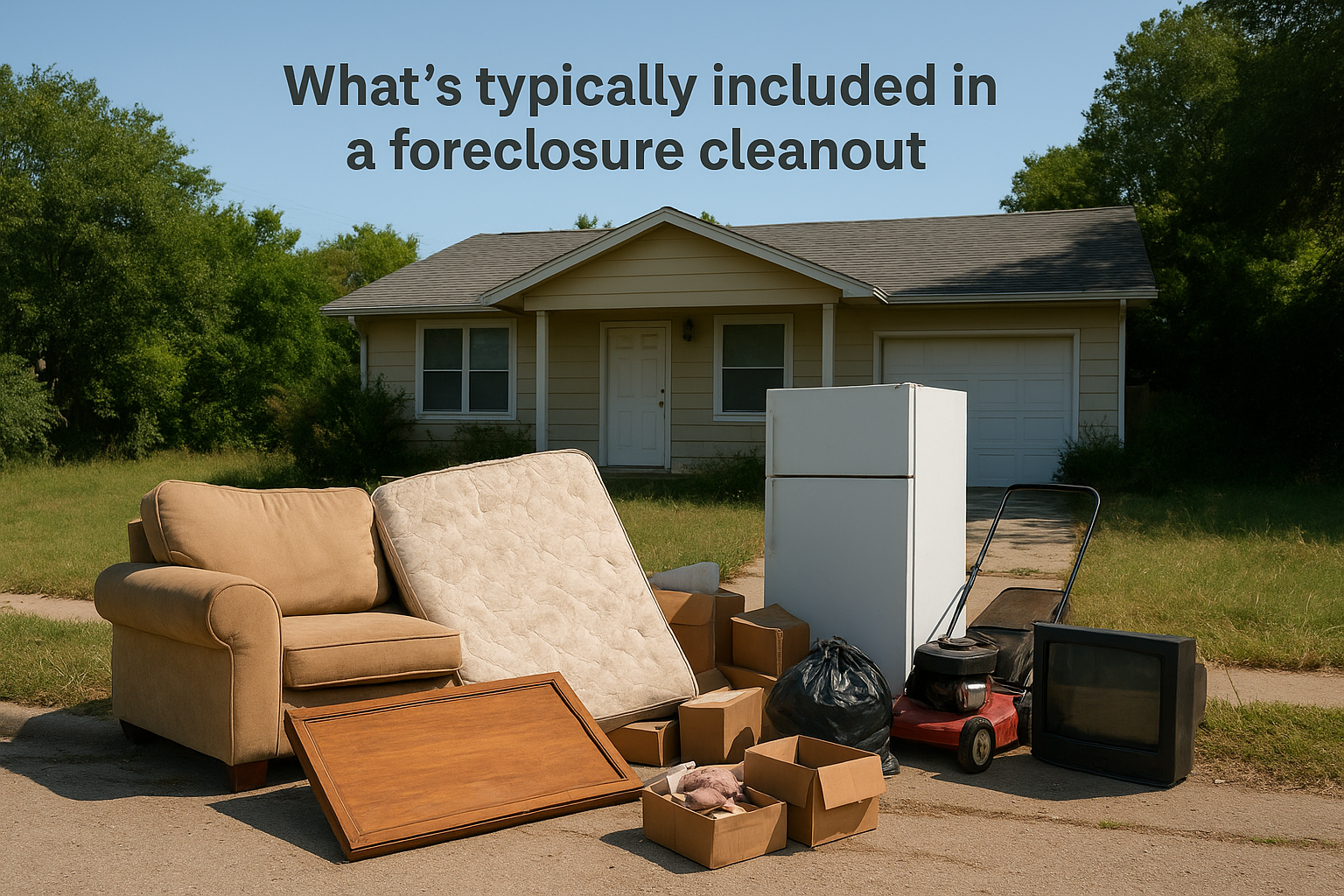
A foreclosure cleanout covers everything left behind once a bank takes possession or a tenant vacates under eviction order. That usually means furniture, mattresses, appliances, clothing, kitchenware, and whatever personal belongings the previous occupant didn’t take with them. Full-property removal is the goal, not a partial sweep of the rooms that look bad in photos. A provider quoting the job should walk the whole property first, including garages, basements, and yards, since debris piles up in places realtors don’t always think to check.
Interior debris and abandoned belongings
Inside the house, expect furniture, bedding, spoiled food, small appliances, and boxes of documents or personal items left behind in a hurry. Water-damaged materials like carpeting, drywall, or insulation often show up in properties that sat vacant through a winter without heat, and those need to be bagged separately to avoid spreading mold spores through the rest of the load.
Yard waste and exterior cleanup
Exterior cleanouts often involve overgrown brush, fallen limbs, discarded lawn equipment, and sometimes an old shed’s worth of tools or scrap metal. A thorough crew clears the exterior with the same attention as the inside, since a listing photo of an overgrown yard kills interest just as fast as clutter in the living room.
A cleanout that only handles the inside of the house isn’t a complete cleanout at all.
Appliances, electronics, and prohibited items
Appliances and electronics usually require separate handling because of refrigerant, batteries, or e-waste rules that vary by transfer station. Here’s what typically needs special treatment versus what goes straight into a standard dumpster:
| Item type | Standard dumpster | Requires special handling |
|---|---|---|
| Furniture, mattresses | Yes (may include surcharge) | |
| Refrigerators, AC units | Yes, refrigerant recovery | |
| Paint, chemicals, propane | Yes, hazardous disposal | |
| Electronics, TVs | Yes, e-waste rules | |
| Yard debris, brush | Yes |
A provider who flags these items before delivery, rather than after the dumpster’s full, saves you from a rejected load or an unexpected surcharge once the truck reaches the transfer station.
How dumpster rental compares to full-service cleanout crews
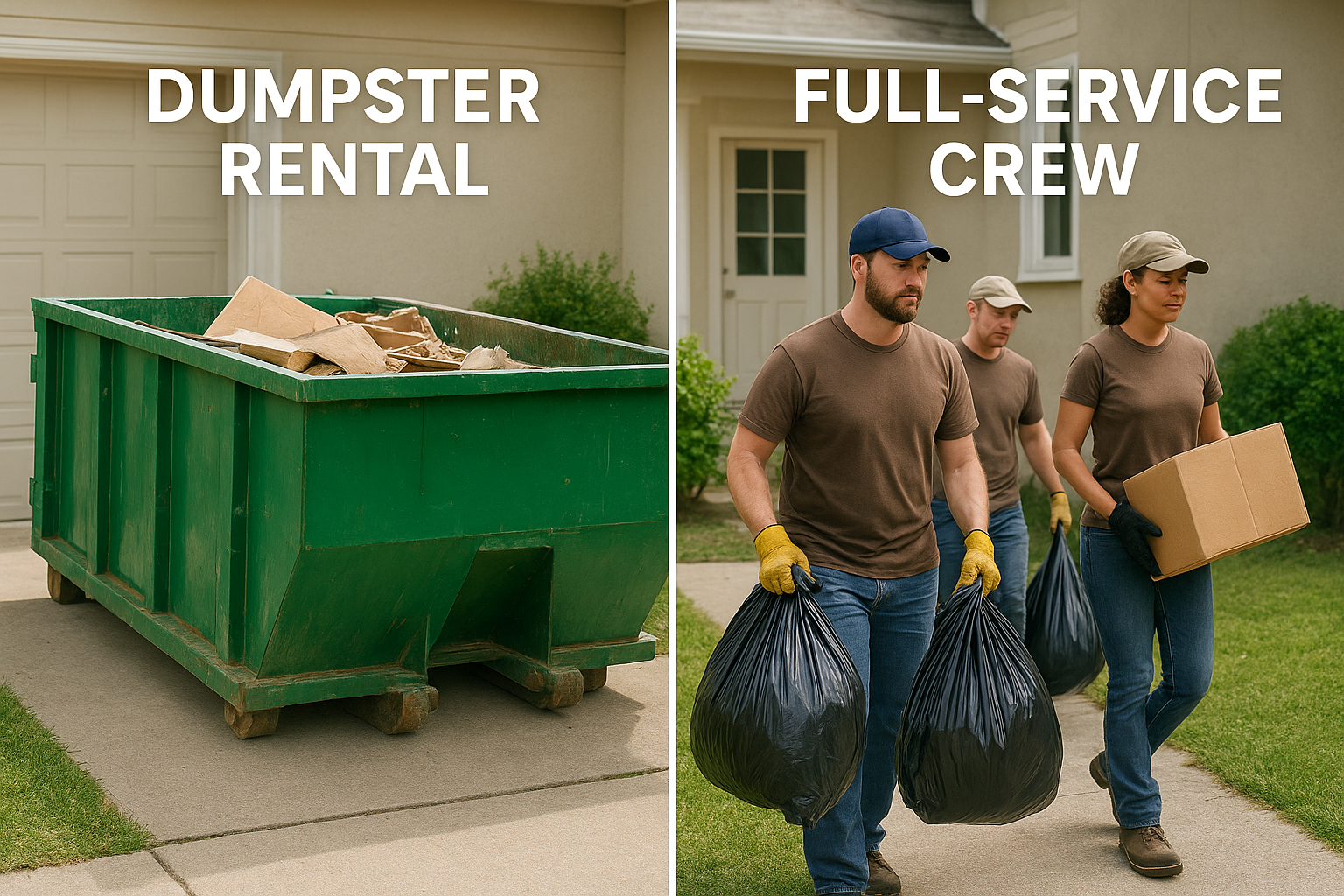
Once you know what’s inside the property, the next decision is who does the physical labor of hauling it out. Dumpster rental puts you or your crew in charge of loading, while a full-service cleanout crew handles everything from sorting to hauling to final sweep. Both options solve the same problem, but they fit different situations depending on who’s available to do the work and how fast the property needs to close.
When a dumpster rental makes sense
If you’ve already got a crew on site, whether that’s a contractor’s team, a property manager’s staff, or a realtor coordinating with the estate, renting a dumpster and loading it yourselves is the cheaper route. Self-loading cuts out labor costs entirely, and you control the pace instead of waiting on a scheduled crew visit. This works well for properties where the debris is manageable and someone already has hands available to move it.
When you need a full-service crew
Hoarding situations, large multi-room properties, or jobs with a tight closing date usually call for a full-service crew instead. When there’s no labor available on your end, or the volume is too large to move safely without equipment, paying for hauling labor saves the timeline even though it costs more upfront.
Renting a dumpster saves money when you have labor. Hiring a full crew saves time when you don’t.
| Factor | Dumpster rental | Full-service crew |
|---|---|---|
| Cost | Lower, no labor fee | Higher, includes labor |
| Labor required | Yours or your team’s | Provided by the company |
| Timeline | Depends on your crew’s pace | Set and completed on schedule |
| Best for | Contractors, hands-on realtors | Hoarding, large volume, tight deadlines |
Many foreclosure jobs actually end up using both: a dumpster delivered first for the bulk of the debris, with a smaller labor crew called in only for the heavy items that need two people to lift. Asking your provider whether they offer both options, rather than just one or the other, keeps you from paying for a full crew when a dumpster alone would’ve finished the job.
Questions to ask before you book a cleanout
Booking a cleanout over the phone in five minutes might feel efficient, but skipping the right questions is how homeowners and realtors end up with surprise fees or a missed deadline. A short phone call with the right questions filters out companies that can’t actually handle the job before you’ve signed anything or scheduled a delivery window around them.
Ask about licensing, insurance, and disposal permits
Find out whether the company carries liability insurance and holds the proper permits for dumpster placement in your specific town. Licensing and insurance protect you if something goes wrong on the property, whether that’s damage to a driveway or an injury during loading. A company that hesitates to answer this directly is one you should cross off the list.
Ask exactly how pricing works
Get a breakdown of what’s included in the quoted price and what triggers an extra charge. Ask whether the price covers delivery, the rental period, pickup, and disposal fees, or if any of those get billed separately once the job’s done. Upfront, itemized pricing should be available before the dumpster ever leaves the yard.
If a company can’t tell you the price by phone or website before delivery, expect a different number on the invoice.
Ask about turnaround and same-day availability
Confirm how fast they can deliver, especially if you’re working against a closing date or listing deadline. Run through this checklist on your call:
- Can you deliver today or tomorrow, and what’s the earliest pickup after that?
- What size dumpster do you recommend for a property this size, and why?
- What items are prohibited, and which ones carry a surcharge?
- Do you handle hazardous materials like paint, chemicals, or refrigerants?
- What happens if the debris doesn’t fit in the size we booked?
- Is your pricing specific to my town, or a regional average?
Walking through these questions takes maybe ten minutes, but it’s the difference between a provider who’s done hundreds of foreclosure cleanouts and one who’s guessing along with you. Straight answers, given quickly, tell you more about a company’s reliability than any ad or star rating ever will.
Getting your foreclosed property market-ready
A foreclosed property doesn’t sell until it’s empty, clean, and ready for photos. Everything covered here, from sizing the dumpster right to asking about town-specific pricing, comes down to one goal: getting the property listing-ready without a second visit or a surprise invoice. Whether you’re a realtor racing a closing date, a bank managing an REO timeline, or a homeowner clearing out before auction, the fastest path forward is a local crew that already knows the job, not one still figuring out Cape Cod’s transfer station rules on your dime.
If you’re managing a foreclosure cleanout anywhere across Cape Cod or Plymouth, get a same-day dumpster quote from Dump Express and skip the guesswork. You’ll get town-specific pricing, the right size the first time, and a crew that’s cleared out plenty of properties just like yours.