
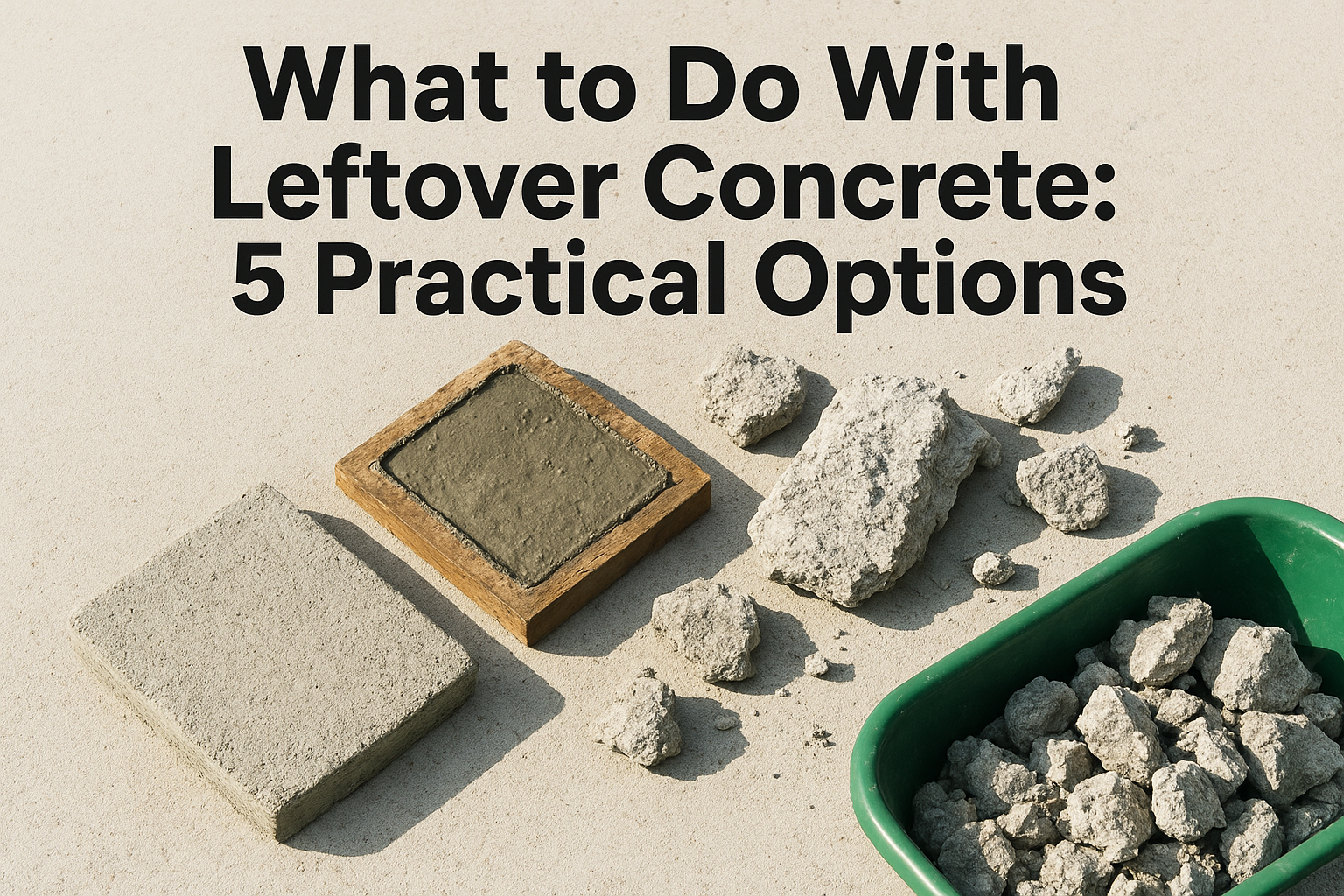
You mixed a little extra concrete to make sure you wouldn’t run short, and now you’re staring at wheelbarrows of hardening material with no clear plan. Figuring out what to do with leftover concrete matters because it hardens fast, it’s heavy, and most towns won’t let you toss it in the regular trash. Wait too long and you’re chipping cured chunks out of a wheelbarrow with a sledgehammer.
The good news is you have real options beyond letting it set into a useless block. You can repurpose small batches into stepping stones or garden edging, pour it into forms for future use, or haul it to a facility that recycles concrete into aggregate. For larger amounts from a driveway tear-out or foundation job, renting a dumpster built for construction debris is usually the fastest way to clear a site without multiple dump runs.
This article walks through five practical ways to handle leftover concrete, whether you’re a homeowner finishing a weekend patio project or a contractor closing out a job site. We’ll cover reuse projects, disposal rules specific to concrete debris, and when it makes sense to skip the hassle and call for a dumpster instead.
1. Rent a dumpster for fast, guaranteed disposal
When you’re dealing with a driveway tear-out, a demolished patio, or a full foundation pour that left more material than expected, a roll-off dumpster is the fastest way to clear the site. Concrete is heavy, dense, and awkward to move by hand, so having a container parked right next to the work area saves you from repeated trips to a transfer station. Dump Express delivers dumpsters sized for exactly this kind of debris across Cape Cod and Plymouth, with pickup scheduled on days the disposal facilities are open.
How it works
You call or book online, tell the team roughly how much concrete you’re dealing with, and they deliver a container to your driveway or job site. You load the broken slabs, chunks, or leftover mix directly into the dumpster, then call for pickup once you’re done or when it’s full. Because concrete is classified as heavy debris, most companies cap how full you can load a container, so ask before you start tossing everything in.
Who it’s best for
This option suits homeowners tackling a full patio or driveway removal and contractors closing out a job site with mixed debris. It’s not the most economical choice for a few leftover wheelbarrows of wet mix.
Estimated cost
| Dumpster size | Typical use case |
|---|---|
| 10-yard | Small patio or walkway removal |
| 15-yard | Driveway sections, mixed renovation debris |
| 20-yard | Full driveway tear-out, foundation work |
Pricing varies by town, but Dump Express lists transparent, location-specific rates upfront so you know the cost before delivery.
A dumpster turns a multi-day concrete cleanup into a single scheduled pickup.
What to consider
Weight matters more than volume with concrete. Overloading a container past its weight limit triggers surcharges, so ask your provider about limits before you start filling it.
2. Repurpose it into garden and landscaping features
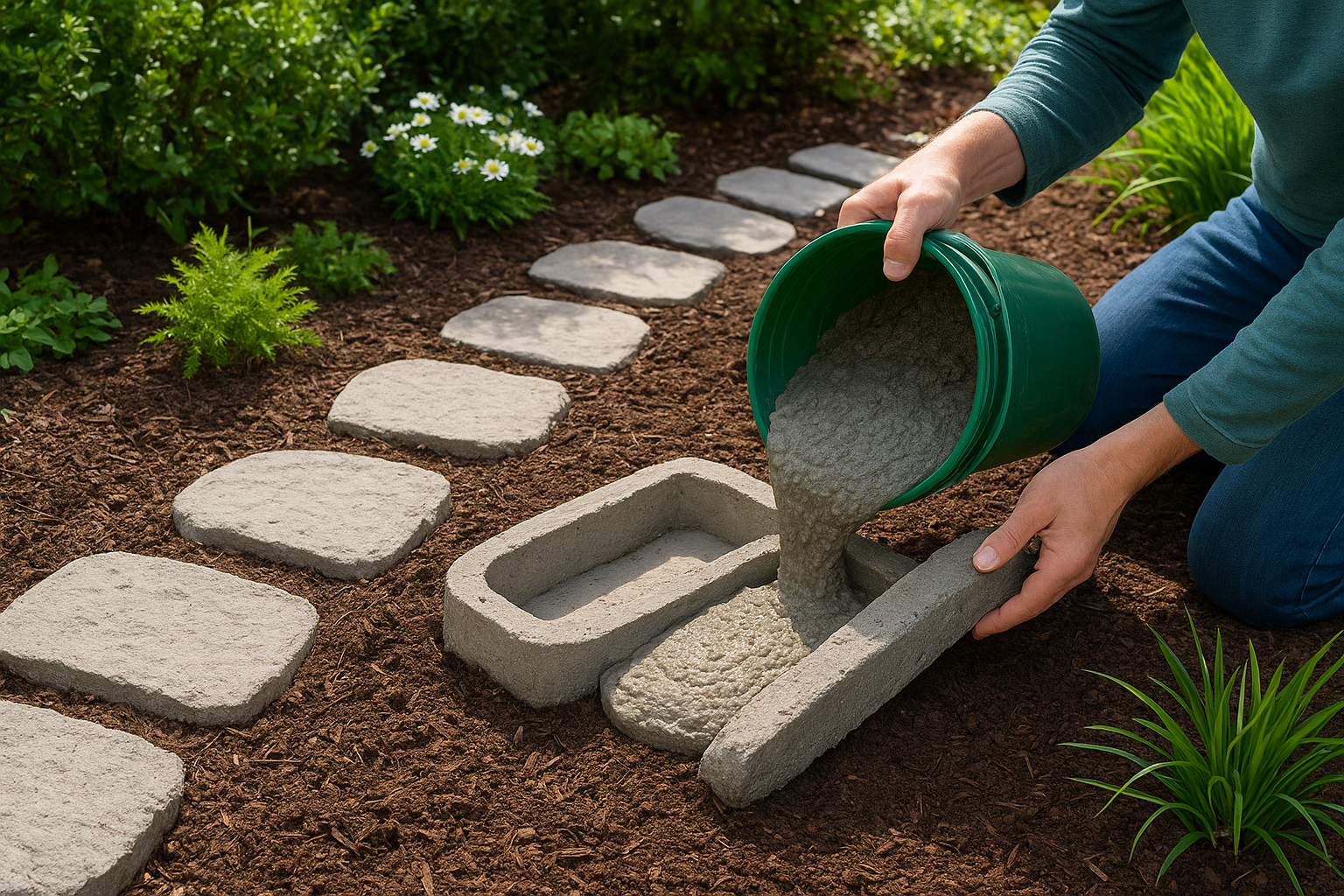
Small batches of leftover concrete don’t have to go anywhere at all. If you’ve got a few buckets of wet mix left after a small pour, you can turn it into stepping stones, garden edging, or decorative planters instead of hauling it away. This works best for homeowners doing DIY landscaping who want to stretch every bag of mix they bought.
How it works
Pour the leftover concrete into simple molds like old plastic tubs, cardboard forms, or dedicated stepping stone kits before it sets. Add texture with leaves, stones, or stamped patterns while it’s still workable, then let it cure for 24 to 48 hours before moving the pieces.
Who it’s best for
This suits homeowners with small leftover amounts, roughly a wheelbarrow or less, from patio or walkway projects. It’s not practical for contractors or anyone dealing with cubic yards of debris.
Leftover concrete becomes garden edging instead of landfill weight.
Estimated cost
There’s no disposal fee since you’re using material you already paid for. You’ll only spend a few dollars on molds if you don’t have containers on hand.
What to consider
Working concrete after it starts setting up gets difficult fast, so have your molds ready before you mix.
3. Take it to a concrete recycling facility
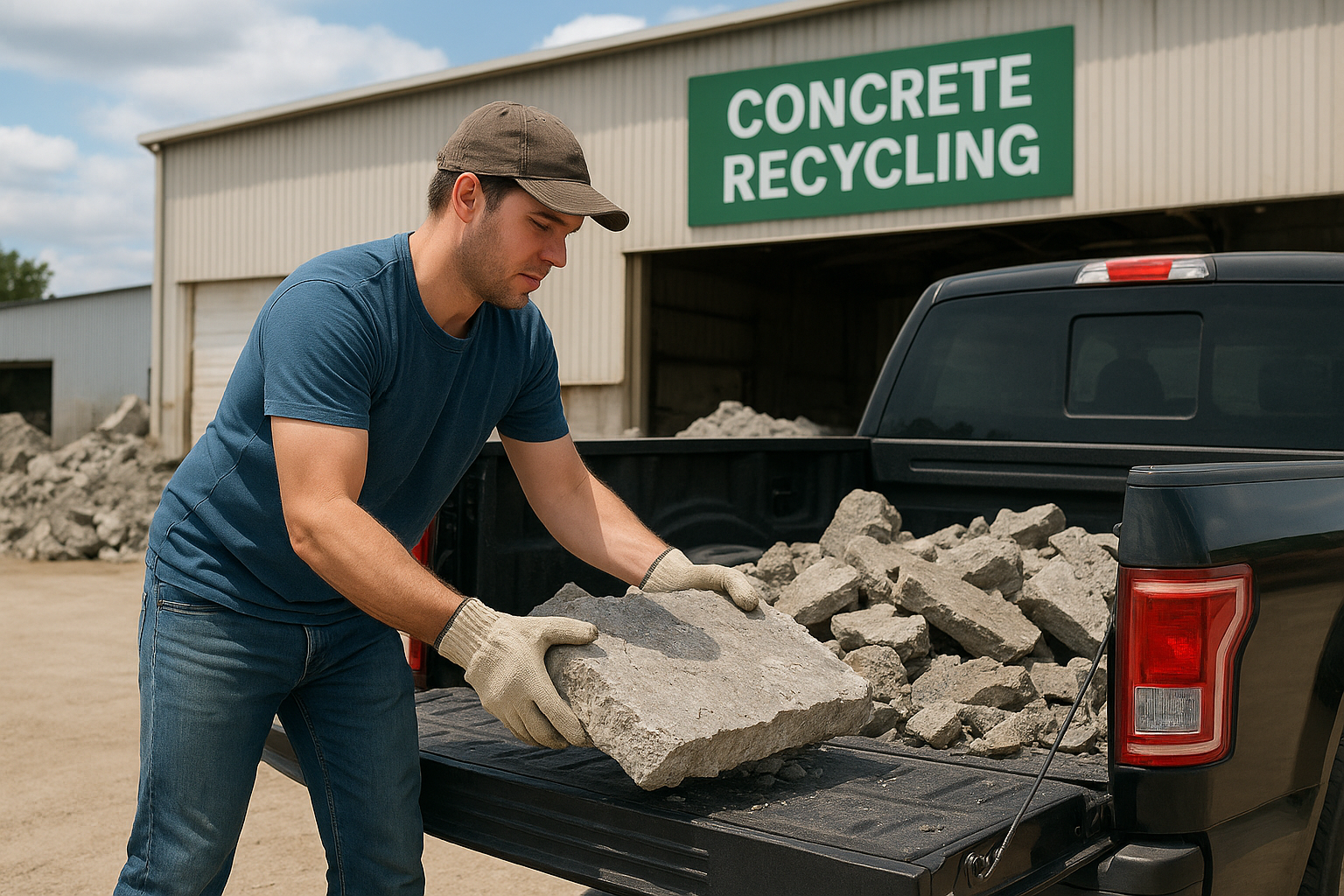
Some towns and private facilities accept broken concrete separately from regular construction debris, crushing it down into recycled aggregate for road base and new construction projects. Hauling it yourself skips dumpster rental fees entirely, provided you own or can borrow a truck sturdy enough for the weight.
How it works
Break large slabs into pieces small enough to lift, load them into a truck bed or trailer, then drive to a facility that specifically processes concrete recycling. Call ahead since not every transfer station separates concrete from general debris, and some require it be free of rebar, wood, or trash.
Who it’s best for
This route suits homeowners and small contractors with a truck, a bit of time, and a moderate amount of broken concrete, think a few hundred pounds rather than a full driveway.
Recycled concrete becomes someone else’s road base instead of landfill fill.
Estimated cost
Many facilities charge a per-ton tipping fee, often lower than general landfill disposal rates for the same weight.
What to consider
You’ll need your own transportation and muscle to load and unload, which adds up fast for larger volumes.
4. Give it away or sell it online
Broken slabs and clean chunks of leftover concrete have real value to other people, especially those building retaining walls or filling in low spots on their property. Posting a free listing online is one of the more overlooked answers to what to do with leftover concrete, and it costs you nothing but a few photos and a short description.
How it works
Snap a few pictures of the pile, note the approximate weight or volume, and post it on a local marketplace or community board. Include whether it’s broken into manageable pieces or still in slab form, since that affects who can actually haul it.
Who it’s best for
This fits homeowners with clean, rebar-free concrete and no urgent deadline to clear the space. It’s less practical for contractors on a tight job schedule.
Someone else’s landscaping project can start with your leftover slab.
Estimated cost
Listing it is free, and most people will offer to pick it up themselves.
What to consider
You’re relying on a stranger to actually show up, so give yourself a backup plan if nobody claims it within a few days.
5. Hire a junk removal service
When you’d rather not touch the concrete at all, a junk removal crew shows up, loads it, and hauls it away in one visit. This works well for homeowners with mobility limits, tight timelines, or a mixed pile of debris that includes more than just concrete.
How it works
You schedule an appointment, the crew arrives with a truck, and they do the lifting and loading themselves. Most companies charge based on how much space your debris takes up in their truck, so a few chunks costs far less than a full load.
Who it’s best for
This suits homeowners who want a hands-off experience and don’t mind paying more for labor included in the price. It’s less cost-effective for contractors generating debris regularly across multiple sites.
Paying for labor beats spending a weekend loading concrete yourself.
Estimated cost
Junk removal typically costs more per load than a dumpster rental, since you’re paying for labor on top of disposal.
What to consider
Confirm the company accepts concrete specifically, since some junk removal services exclude heavy construction debris or charge a premium for it.
Picking the right option for your project
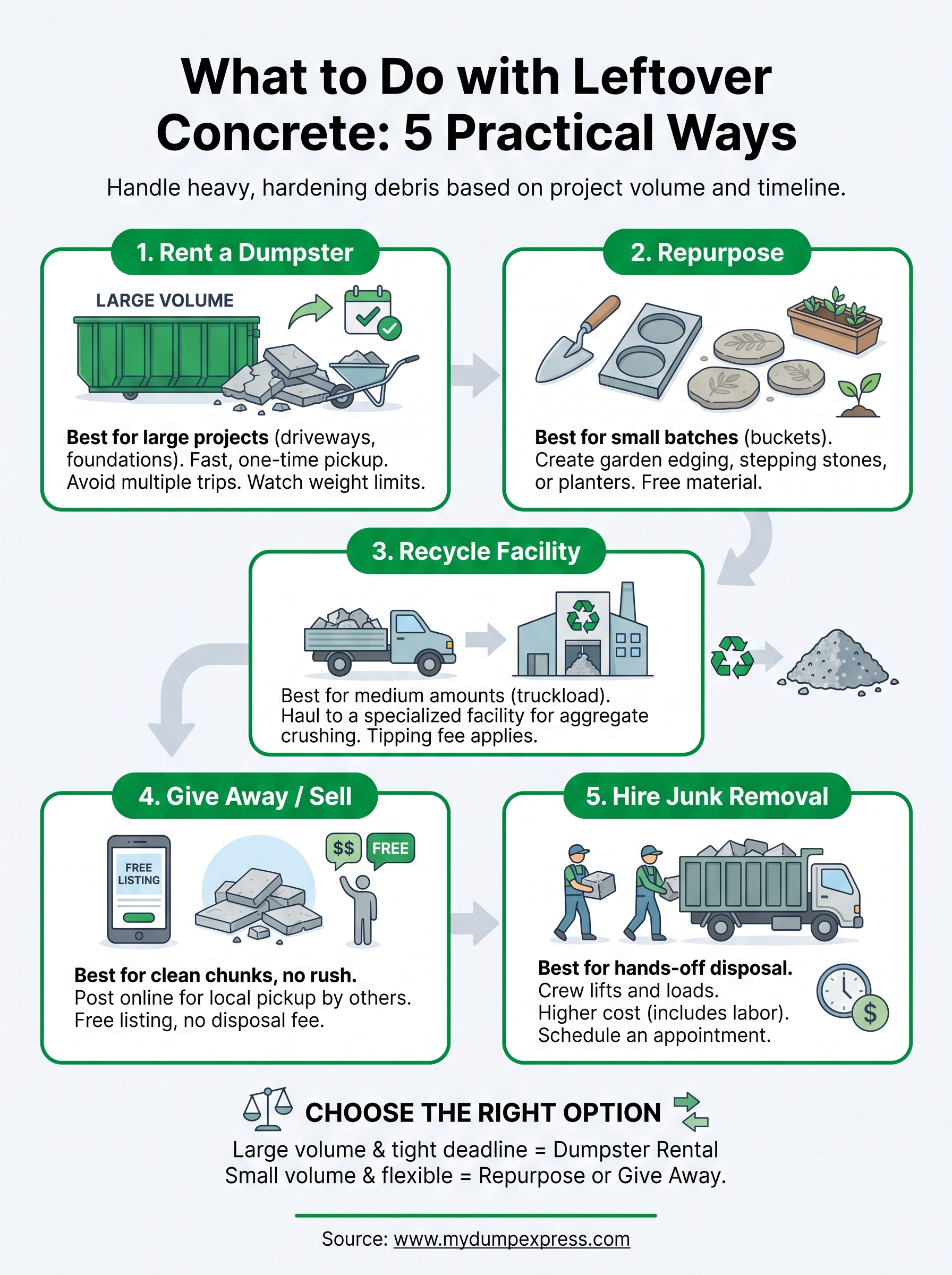
The right answer to what to do with leftover concrete comes down to volume and timeline. A few buckets from a small pour deserve a second life as garden edging or stepping stones. A truck bed of broken slabs might be worth the drive to a recycling facility, or a free listing if you’re not in a rush. But once you’re dealing with a full driveway tear-out, a demolished patio, or job site debris piling up by the yard, hauling it piece by piece stops making sense.
That’s where a dumpster rental earns its keep. One container parked at the curb replaces a dozen trips to a transfer station, and you get a firm pickup date instead of an open-ended cleanup. If your project has crossed that line from manageable to overwhelming, get a quote from Dump Express and get the debris off your site for good.