
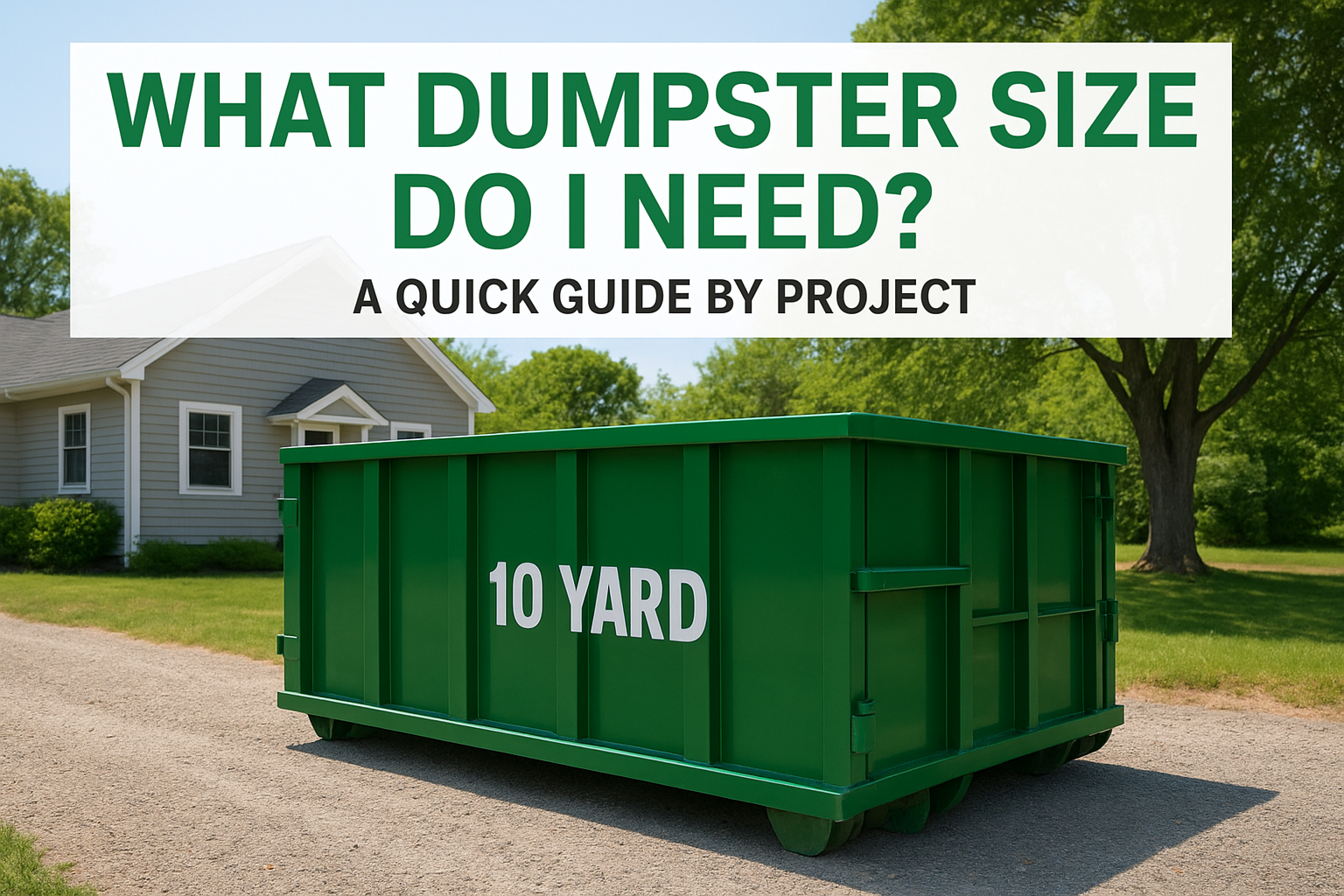
Figuring out what dumpster size do i need shouldn’t take an engineering degree, but most rental sites make it feel that way with vague size charts and no real-world context. You end up guessing between a 10-yard and a 20-yard, and guessing wrong means paying for a second haul or renting a container that sits half empty on your driveway.
Here’s the short answer: the right size depends on your specific project, not a generic formula. A bathroom gut job rarely needs more than a 10-yard container, while a whole-house cleanout or roof tear-off usually calls for a 20-yard or larger. Debris weight, material type, and how much you’re clearing out in one trip all factor into the decision.
In this guide, we break down the four common dumpster sizes, 5-yard, 10-yard, 15-yard, and 20-yard, and match each one to real project types we handle every week across Cape Cod and Plymouth. You’ll get straightforward sizing guidance for cleanouts, renovations, roofing jobs, and construction sites, so you can book the right container the first time and skip the surprise fees that come with under-ordering.
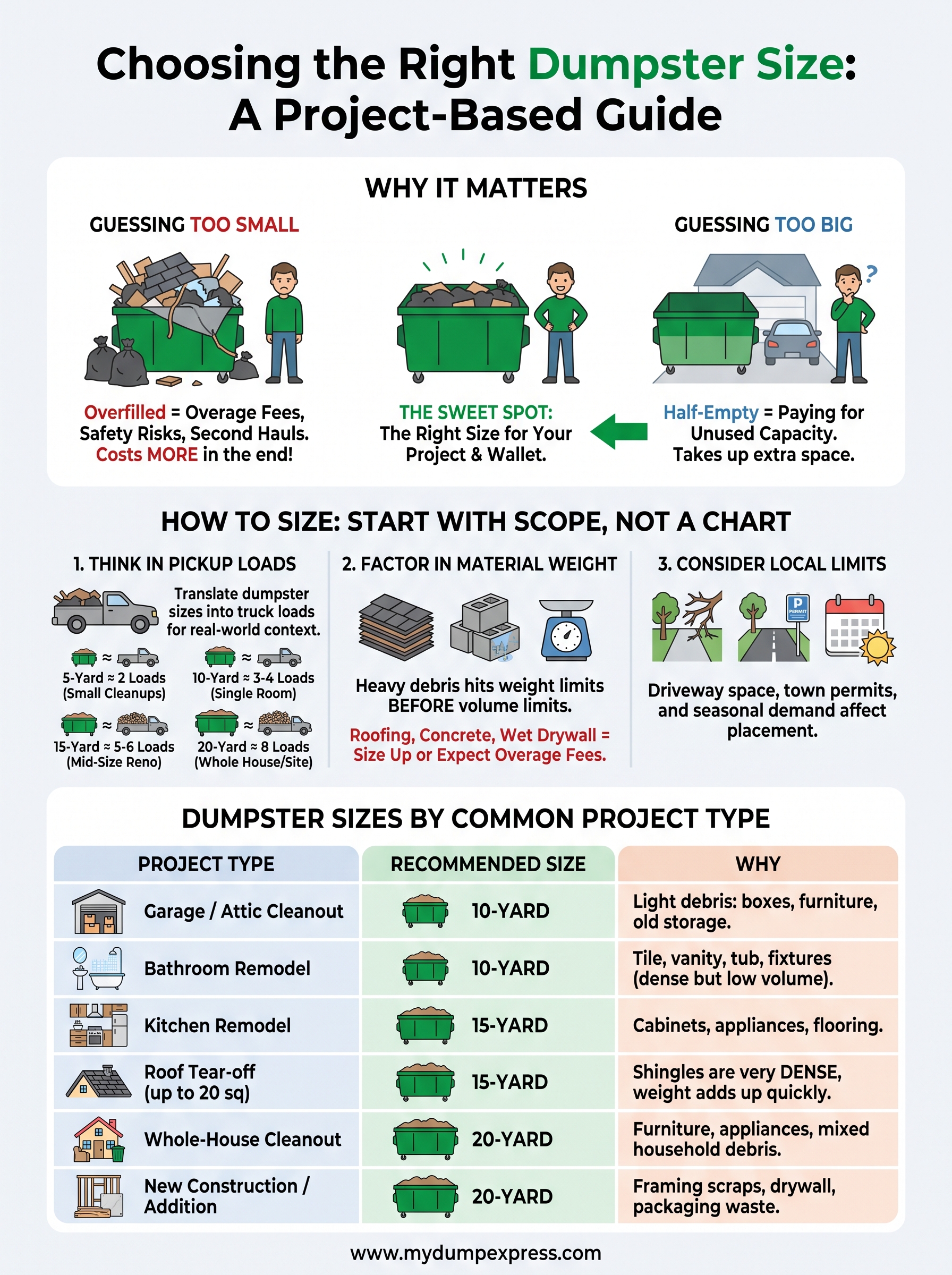
Why the right dumpster size matters
Guessing wrong on dumpster size costs you twice: once for the rental, and again for the fix. Order too small, and you’re stuck calling for a second pickup mid-project, which means paying another delivery fee and losing a day or two waiting for the driver to come back. Order too big, and you’re paying for capacity you never use, sitting on a container that takes up half your driveway for a week longer than it needs to. Neither outcome is a small inconvenience when you’re on a renovation timeline or trying to get a job site cleared before the next crew shows up.
The cost of guessing too small
Undersizing is the more common mistake, and it’s the one that costs the most in real dollars. Overfilled dumpsters often can’t be hauled safely, so the driver either refuses the load or charges an overage fee on the spot. Debris piled above the fill line also risks falling off during transport, which some municipalities fine for directly. If you’ve ever seen a dumpster with a tarp strapped haphazardly over a mountain of shingles, that’s a sizing failure playing out in real time.
Renting too small almost always costs more than renting too big.
The cost of guessing too big
Oversizing feels safer, but it’s not free either. A 20-yard container costs more to deliver and haul away than a 10-yard, and if you only fill it a third of the way, you’ve paid for space you didn’t need. On tighter residential lots, a bigger box also means less room to park, less clearance for contractors, and sometimes a container that simply doesn’t fit where you need it.
Why weight matters as much as volume
Size charts talk in cubic yards, but disposal facilities bill by weight, and heavy debris like shingles, concrete, or wet drywall fills the weight limit long before it fills the container. That’s why a 10-yard dumpster full of roofing debris can trigger overage charges even though there’s visible space left inside. Knowing your project’s material type matters as much as knowing its volume, and it’s the detail most generic sizing calculators skip entirely.
How to figure out the size you need
Sizing a dumpster starts with an honest look at the scope, not the container chart. Walk through the space you’re clearing and estimate the volume in truck loads, since most people have a better sense of what fits in a pickup bed than what fits in a 10-yard box. Project scope drives everything else, so nail that down before you even think about size numbers.
Start with a truck-load comparison
Every dumpster size roughly translates to a number of pickup truck loads, and that comparison makes the abstract cubic-yard number feel real.
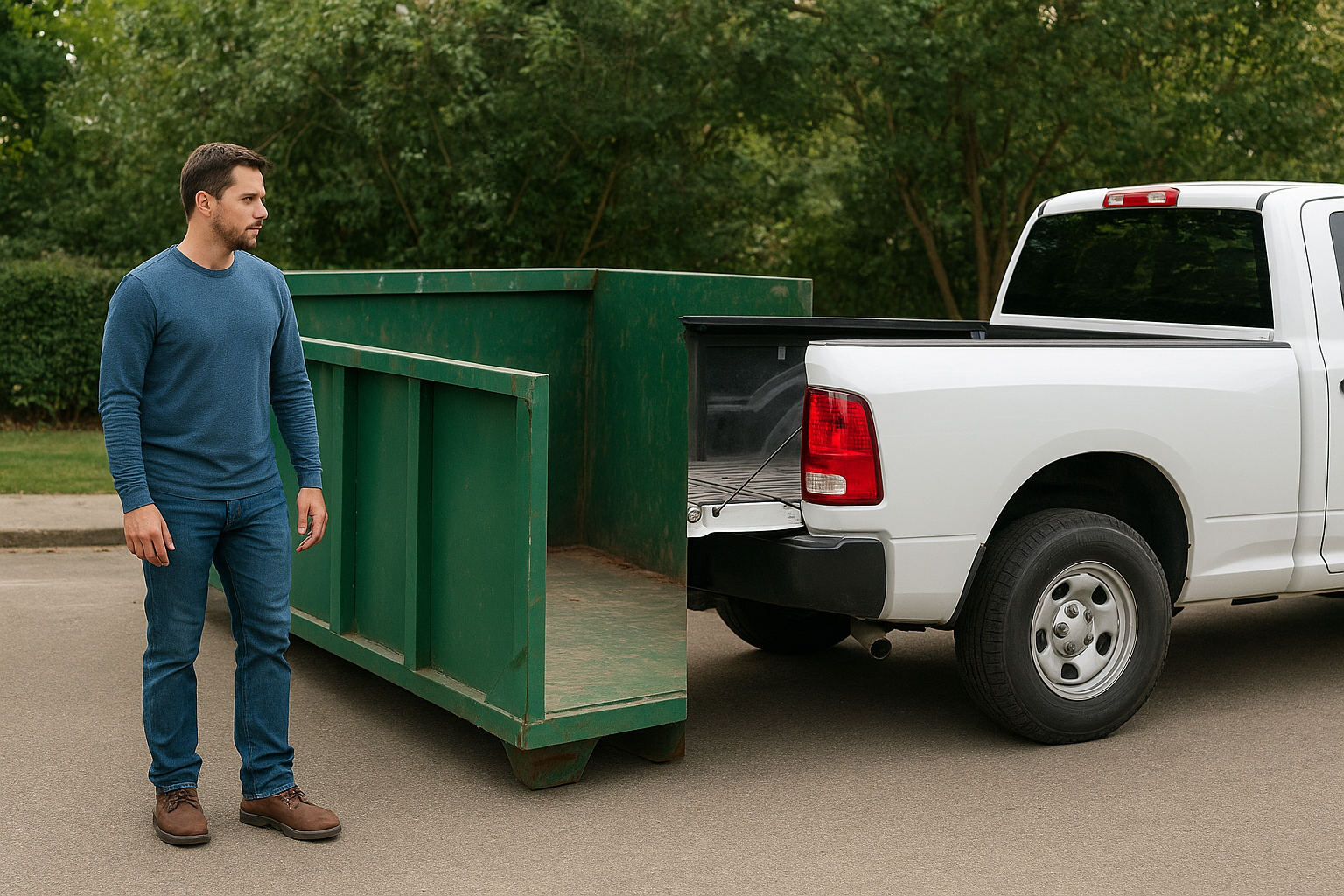
- 5-yard dumpster: about 2 pickup truck loads, good for small cleanups
- 10-yard dumpster: about 3 to 4 pickup truck loads, the go-to for single-room jobs
- 15-yard dumpster: about 5 to 6 pickup truck loads, common for mid-size renovations
- 20-yard dumpster: about 8 pickup truck loads, built for whole-house or job-site debris
Count truck loads before you count cubic yards, it’s the fastest way to size a dumpster correctly.
Factor in material weight, not just volume
Heavy materials change the math fast. Concrete, shingles, and wet drywall hit weight limits before they fill the container visually, so if your project involves any of those, size up or expect an overage charge. Weight limits matter more than the container’s visual capacity once you’re dealing with dense debris.
Ask before you book
When the scope is mixed, mismatched debris, multiple rooms, unclear volume, don’t guess. A quick call with a local rental team who knows the project type usually settles the size question faster than any online calculator.
Dumpster sizes by common project type
Every project has a natural fit, and lining yours up with the table below beats eyeballing a generic size chart. Project type tells you more than square footage ever will, since a cramped bathroom gut job produces less debris than a garage cleanout half its size. Treat these as your starting point, then size up if you’re mixing debris types or tackling more than one room at once.
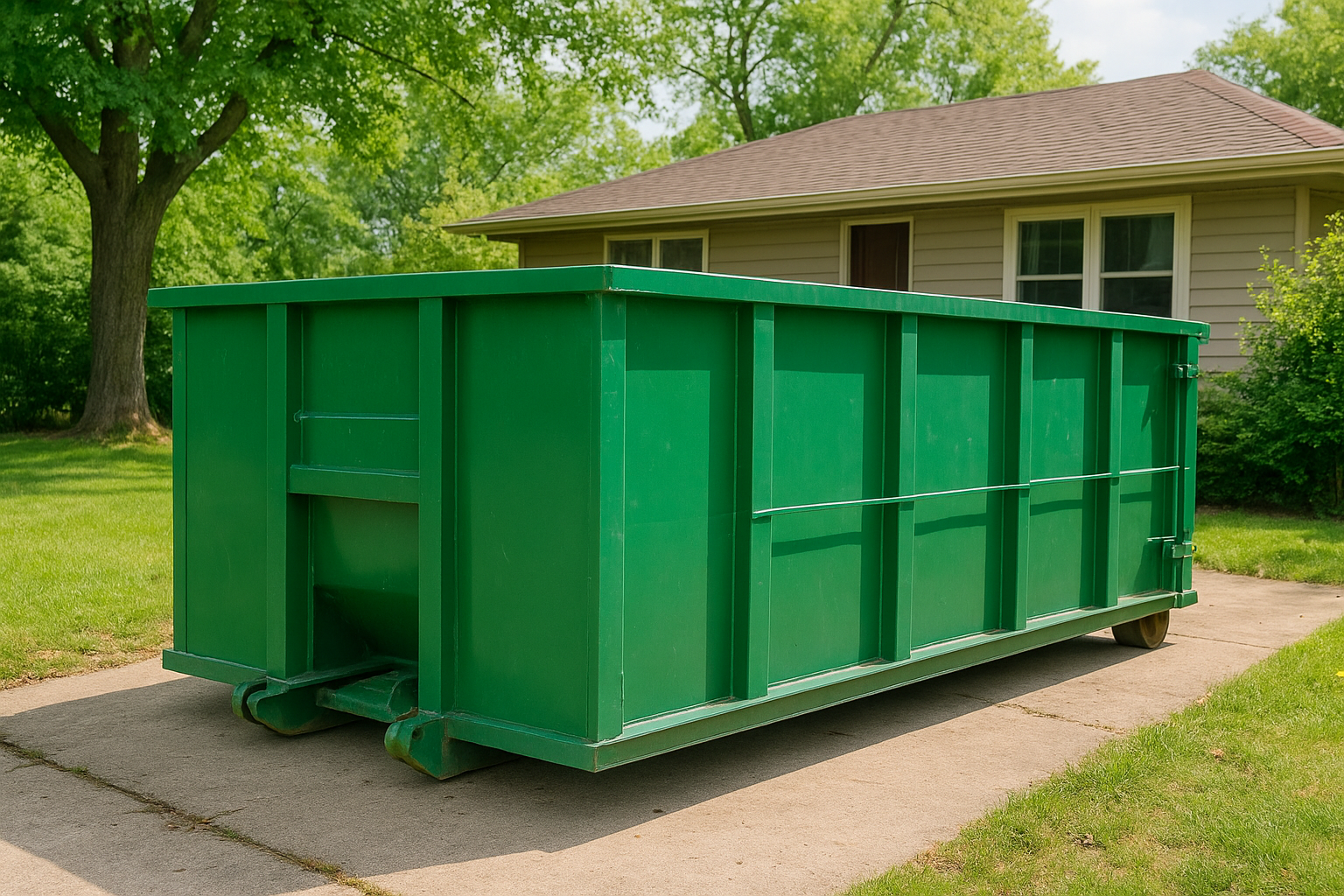
Matching size to the job
| Project Type | Recommended Size | Why |
|---|---|---|
| Garage or attic cleanout | 10-yard | Light debris: boxes, furniture, old storage |
| Bathroom remodel | 10-yard | Tile, vanity, tub, and fixtures |
| Kitchen remodel | 15-yard | Cabinets, appliances, flooring |
| Roof tear-off (up to 20 squares) | 15-yard | Shingles are dense, weight adds up fast |
| Whole-house cleanout | 20-yard | Furniture, appliances, mixed household debris |
| New construction or addition | 20-yard | Framing scraps, drywall, packaging waste |
Why roofing jobs need special attention
Roofing debris deserves its own line item because shingles are far heavier than they look. A 20-square tear-off can weigh two to three tons, which pushes a 10-yard container past its weight limit long before it looks full. Roofing projects almost always do better with a 15-yard, even though the visible pile might suggest something smaller would work.
Match the container to the job, not the square footage, and you’ll rarely order wrong.
If your project spans more than one category, say a kitchen remodel that also involves ripping out old flooring throughout the house, lean toward the larger size in that range rather than the smaller one.
Local factors that can affect your choice
Sizing charts assume ideal conditions, but Cape Cod driveways, town rules, and seasonal demand rarely cooperate with a chart. Local knowledge often changes the recommendation more than the project itself does, which is why a company that only works from a national size table can steer you wrong even when the math looks right on paper.
Driveway and placement limits
Narrow driveways, low tree branches, and tight turnarounds common in older Cape Cod neighborhoods sometimes rule out a 20-yard container even when the debris volume calls for one. Placement restrictions can force you toward a smaller size paired with a second pickup, and a local crew that has delivered in your neighborhood before will know that before the truck ever shows up.
The right dumpster size on paper isn’t always the right size for your driveway.
Town permit and placement rules
Some towns require a permit if the dumpster sits in the street or right-of-way rather than fully on private property, and rules vary block by block across the 40-plus towns we serve. Town-specific regulations like these rarely show up on a generic sizing calculator, so ask before you assume your street is exempt.
Seasonal demand and scheduling
Summer renovation season and post-storm cleanup periods stretch delivery windows across the region. If your timeline is tight, confirming same-day availability matters as much as confirming the size, since even the correctly sized container does you no good if it arrives two days late.
Choosing your size with confidence
Getting the size right comes down to matching your project type to real debris volume, then checking that choice against your driveway, your town’s rules, and the weight of what you’re actually hauling away. Skip the generic chart and think in truck loads, material weight, and local placement limits instead, and you’ll land on the right container far more often than not.
Still not sure whether your kitchen gut job needs a 10-yard or a 15-yard, or whether your street requires a permit before the driver shows up? That’s exactly the kind of question a local rental team answers in one phone call instead of another hour of guessing online. Reach out to Dump Express for straightforward sizing guidance and dependable delivery across Cape Cod and Plymouth, and get the right dumpster on the first try.