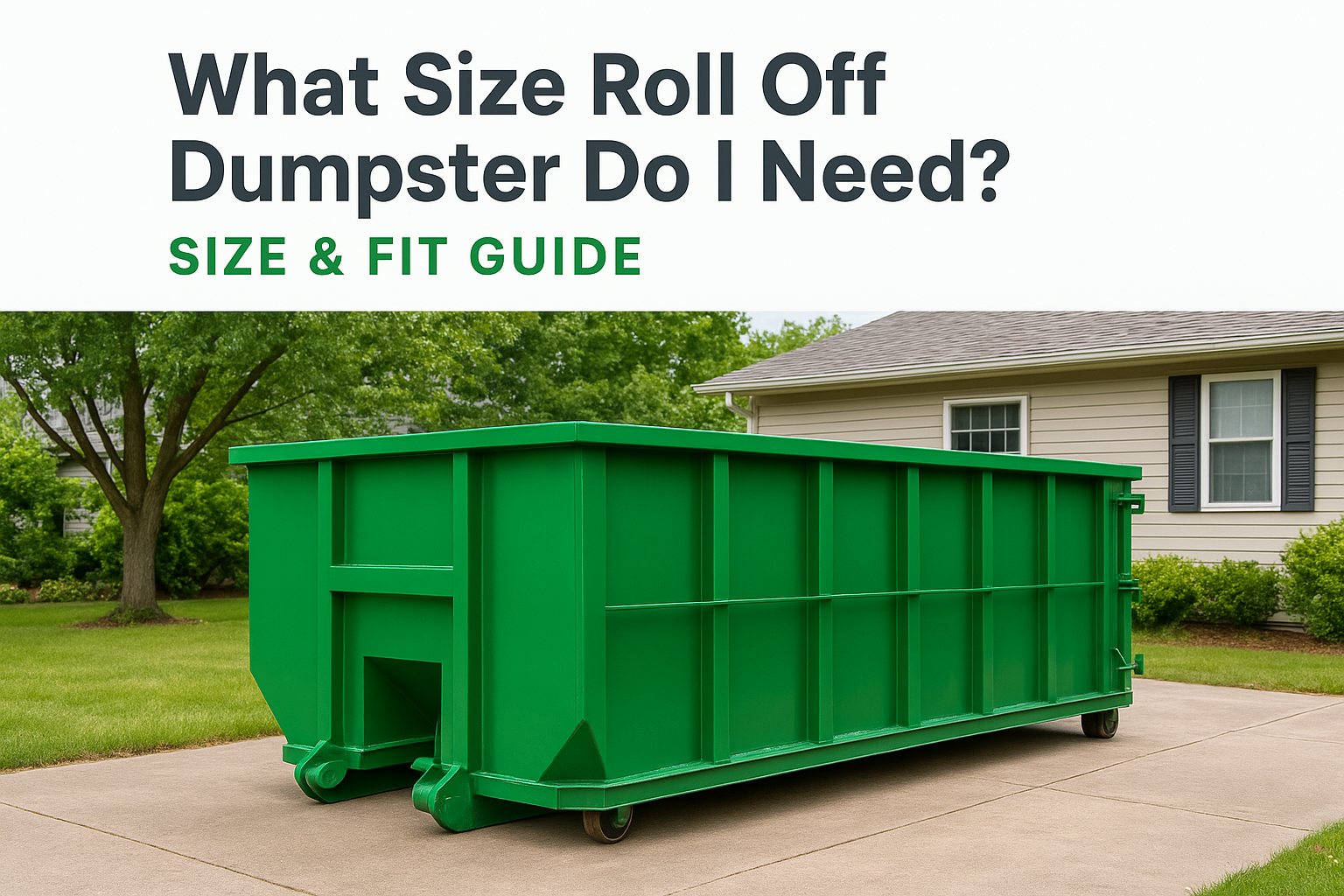
Renting a dumpster sounds simple until you’re staring at four different size options with no frame of reference. Too small, and you’re paying for a second haul. Too big, and you’re wasting money on space you didn’t need. The question "what size roll off dumpster do I need?" comes up constantly, and getting it right the first time saves you both cash and headaches.
At Dump Express, we’ve been delivering dumpsters across Cape Cod and Plymouth for over 20 years. We offer 5-yard, 10-yard, 15-yard, and 20-yard containers, and we’ve seen every type of project, from single-room cleanouts to full-scale renovations. That experience has taught us exactly which sizes match which jobs.
This guide breaks down each roll off dumpster size by dimensions, capacity, and the types of projects it handles best. By the end, you’ll know exactly which container fits your situation, no guesswork, no oversized rentals, and no surprise second trips.
How roll off dumpster sizes work
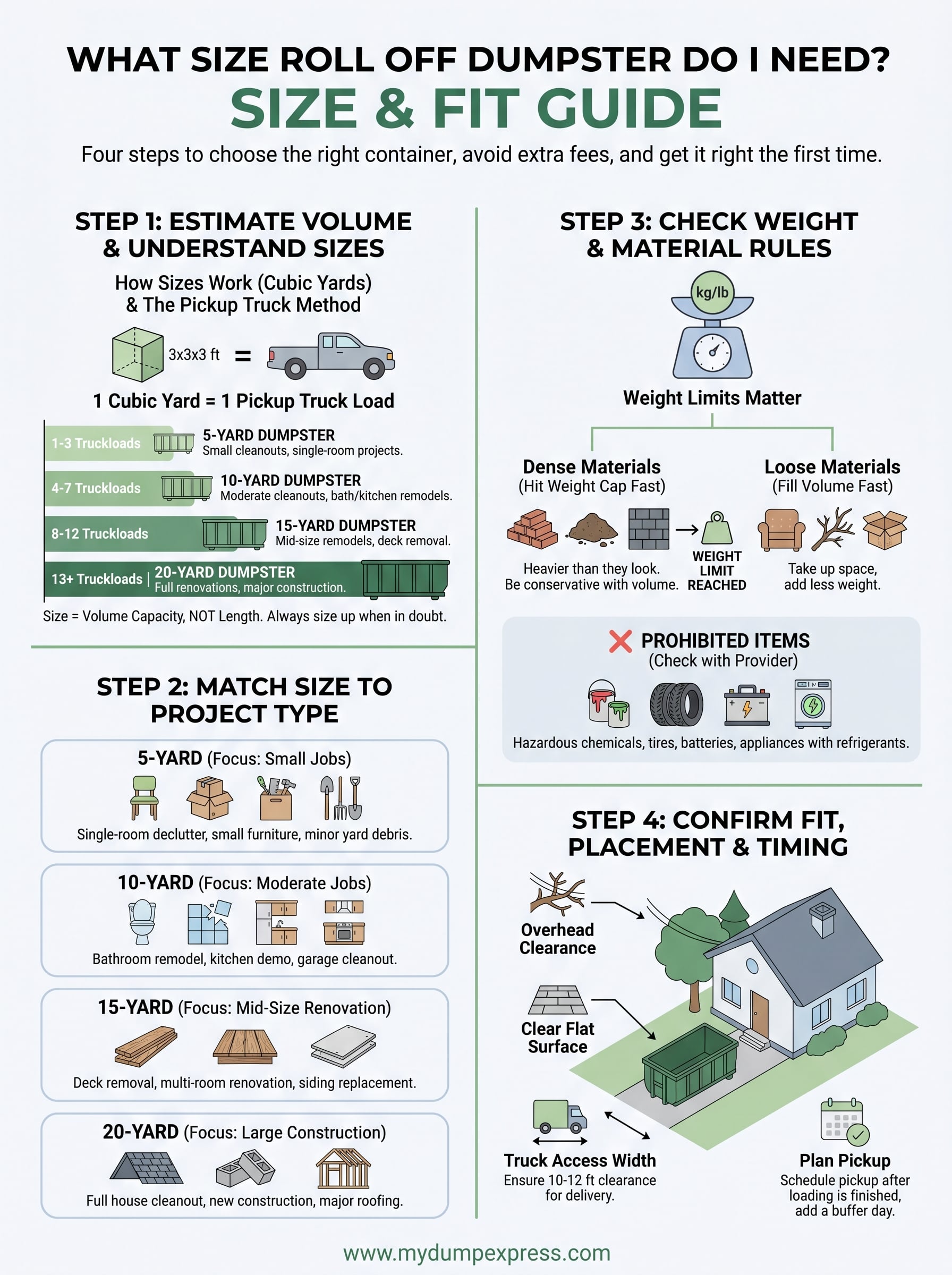
Roll off dumpster sizes are measured in cubic yards, which describes the total volume a container can hold. One cubic yard equals a 3x3x3 foot cube of material. So a 10-yard dumpster holds the equivalent of roughly 10 full pickup truck loads of debris. Understanding this measurement upfront is the key to answering what size roll off dumpster do I need without second-guessing yourself or making a costly mistake on booking day.
The size number refers to volume capacity, not container length. A "10-yard" dumpster does not mean it is 10 feet long.
Dimensions and what they mean for your property
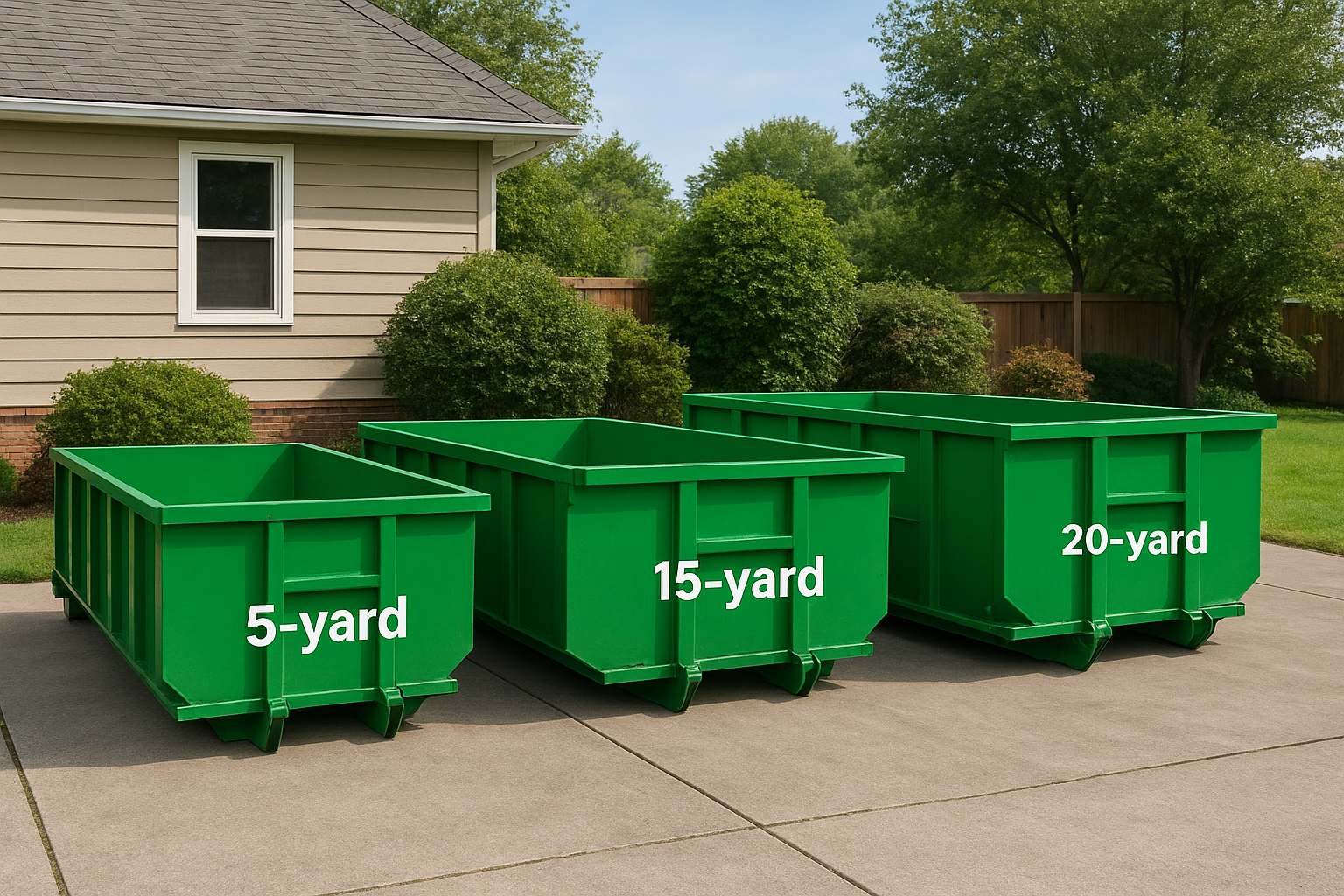
Each size has a physical footprint that directly affects where the container fits and how easily you can load it. Longer containers give you more surface area to toss material from different angles, while shorter containers fit into tighter driveways or side yards. Here is how the four Dump Express sizes compare:
| Size | Approx. Length | Approx. Width | Approx. Height | Typical Use |
|---|---|---|---|---|
| 5-yard | 10 ft | 8 ft | 4 ft | Single-room cleanouts, small yard debris |
| 10-yard | 12 ft | 8 ft | 4 ft | Moderate cleanouts, bathroom renovations |
| 15-yard | 16 ft | 8 ft | 4 ft | Deck removal, mid-size remodels |
| 20-yard | 22 ft | 8 ft | 4 ft | Full renovations, major construction jobs |
Weight limits matter as much as volume
Volume gets most of the attention, but weight limits are equally important to your rental decision. Dense materials like concrete, dirt, brick, and roofing shingles can hit a container’s weight cap long before they fill its cubic yard capacity. Each rental includes a set weight allowance, and going over that limit triggers overage fees. Always factor in what type of debris you plan to toss, not just how much space it takes up visually.
Step 1. Estimate how much debris you have
Before you can answer what size roll off dumpster do I need, you need a rough sense of how much material you’re actually clearing. Most people underestimate their debris volume, which leads to ordering too small and paying for a second haul. A quick visual walkthrough of your space before you book prevents that problem.
Use the pickup truck method
The most practical way to estimate volume is to think in pickup truck loads. One standard pickup truck bed holds roughly 1 cubic yard of loose debris. Use that as your unit and mentally count how many truckloads your project would fill:
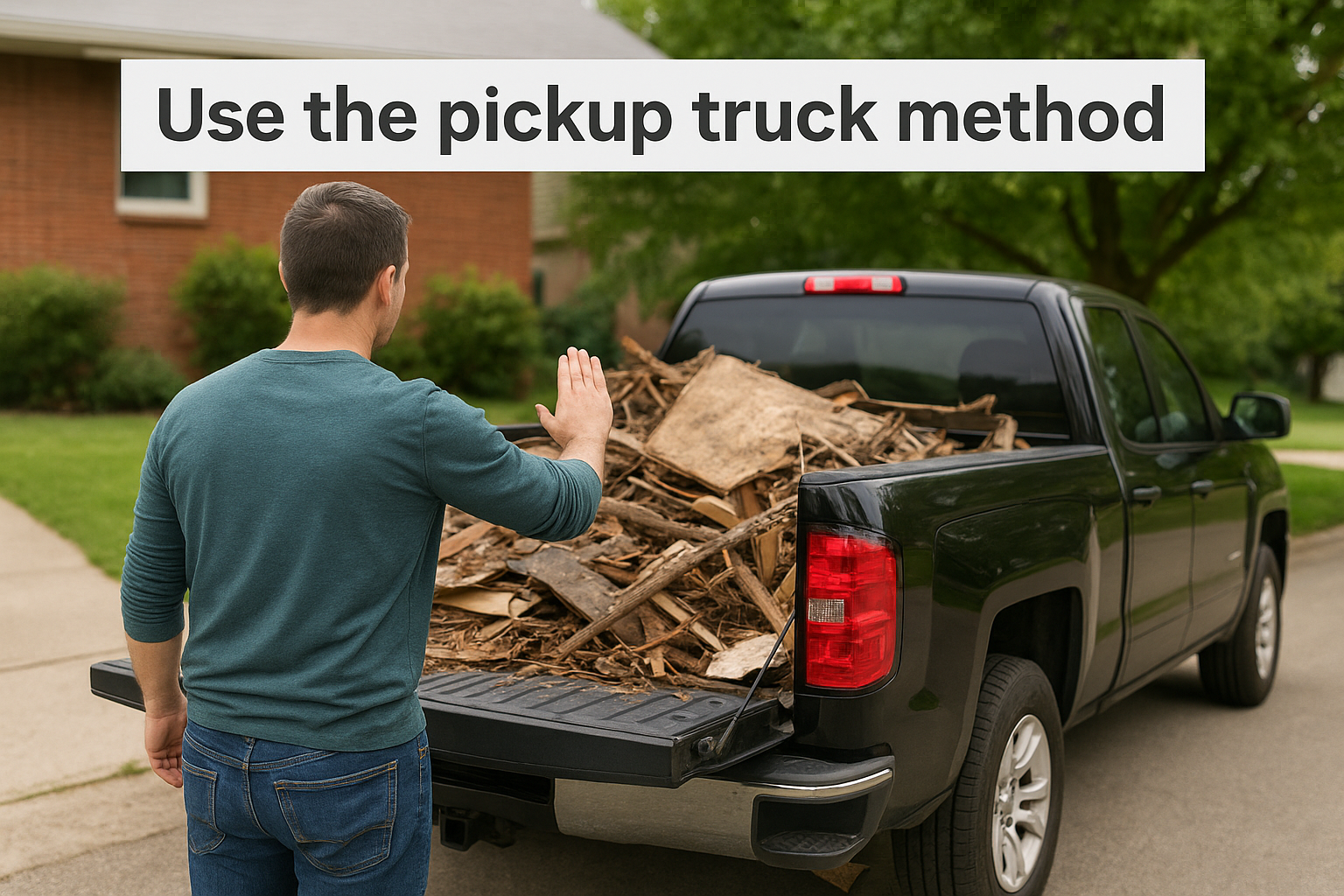
- 1 to 3 truckloads: a 5-yard container covers it
- 4 to 7 truckloads: a 10-yard handles most of these jobs
- 8 to 12 truckloads: step up to a 15-yard
- 13 or more truckloads: a 20-yard is your range
When in doubt, size up by one container rather than risk scheduling a second haul.
Account for how materials pack down
Loose materials like furniture or branches take up more space than they look. They fill cubic yards fast without adding much weight. Dense debris like concrete, brick, or tile works the opposite way: it hits weight limits long before it fills volume.
Factor in both the bulk and the weight of your specific materials so your size choice holds up on both dimensions.
Step 2. Match your project to a 5, 10, 15, or 20 yard
Once you have a rough debris estimate, you can match that number directly to a container. Answering what size roll off dumpster do I need gets much easier when you map your specific project type to the right size range rather than guessing from volume alone.
5-yard and 10-yard containers: focused residential jobs
These two sizes handle the majority of single-room or targeted cleanup projects. A 5-yard works well when your scope is tight and your debris load is light. A 10-yard covers more ground without the footprint of a larger container.
- 5-yard: Single-room declutter, small furniture haul, minor yard cleanup
- 10-yard: Bathroom remodel, kitchen demo, garage cleanout, small deck teardown
If your project involves more than one room or mixed materials, jump to a 10-yard rather than risking an overflow on a 5-yard.
15-yard and 20-yard containers: larger renovation and construction work
These sizes handle heavy debris volumes and multi-area projects. A 15-yard suits mid-size remodels and full room additions, while a 20-yard is built for whole-home renovations, roofing tear-offs, and active construction sites where debris accumulates fast.
- 15-yard: Large deck removal, multiple-room renovation, siding replacement
- 20-yard: Full house cleanout, new construction debris, major roofing jobs
Step 3. Check weight limits and material rules
Volume capacity tells only half the story when you’re figuring out what size roll off dumpster do I need. Every container also carries a weight limit, and exceeding it adds overage charges that can catch you off guard if you haven’t accounted for the type of debris you’re tossing.
Know your weight allowance
Each dumpster size includes a set tonnage allowance in your rental price. Dense materials like concrete, brick, roofing shingles, and soil hit that cap fast, often before the container looks anywhere near full. If your project involves heavy debris, stay conservative on volume and factor weight into your size decision from the start.
If you’re mixing heavy materials like concrete with lighter debris like wood or furniture, expect your weight total to climb faster than the visual fill level suggests.
Materials that are banned or trigger surcharges
Some items cannot go into a roll off dumpster under any circumstances, and others come with added fees. Knowing this before you load keeps your pickup on schedule and avoids delays on your project timeline.
Prohibited or restricted items typically include:
- Hazardous chemicals and paint
- Tires and batteries
- Appliances containing refrigerants
- Asbestos-containing materials
Check with your rental provider before tossing anything you’re unsure about.
Step 4. Confirm fit, placement, and pickup timing
Knowing what size roll off dumpster do I need is only useful if the container you choose actually fits your property and aligns with your schedule. Before you finalize your booking, run through two quick checks: physical placement and pickup timing. Skipping either one can create access problems or project delays you didn’t anticipate.
Check your driveway and access points
The container needs a clear, flat surface with enough room for the delivery truck to drop it without obstruction. Use the dimensions from the size table earlier and physically walk your placement area before you book.
- Overhead clearance: Confirm no low-hanging branches, wires, or structures block the drop zone
- Surface type: Paved driveways work best; soft ground may need plywood protection to prevent surface damage
- Width: The delivery truck needs at least 10 to 12 feet of clearance to maneuver safely
If your placement space is tight, contact your rental provider before booking so they can confirm the delivery is feasible.
Plan your pickup around your work timeline
Schedule your pickup date after you expect to finish loading, not the day you start. Most residential projects wrap up faster than planned, but build in at least one extra day as a buffer so you’re not rushing the final load or calling for a last-minute extension.
Ready to book the right size
You now have everything you need to answer what size roll off dumpster do I need with confidence. Work through the four steps in this guide: estimate your debris volume, match your project to the right container, check your weight limits and material restrictions, and confirm your placement space and pickup date. Follow that sequence and you sidestep the two most common rental mistakes: ordering too small and paying for a second haul, or renting too large and wasting money on space you never used.
Dump Express delivers 5-yard, 10-yard, 15-yard, and 20-yard dumpsters across Cape Cod and Plymouth with transparent, town-specific pricing and no hidden fees. If you still have questions about your specific project or debris type, our local team is ready to help you choose the right fit before you commit. Book your dumpster rental today and get the right container delivered to your property fast.