
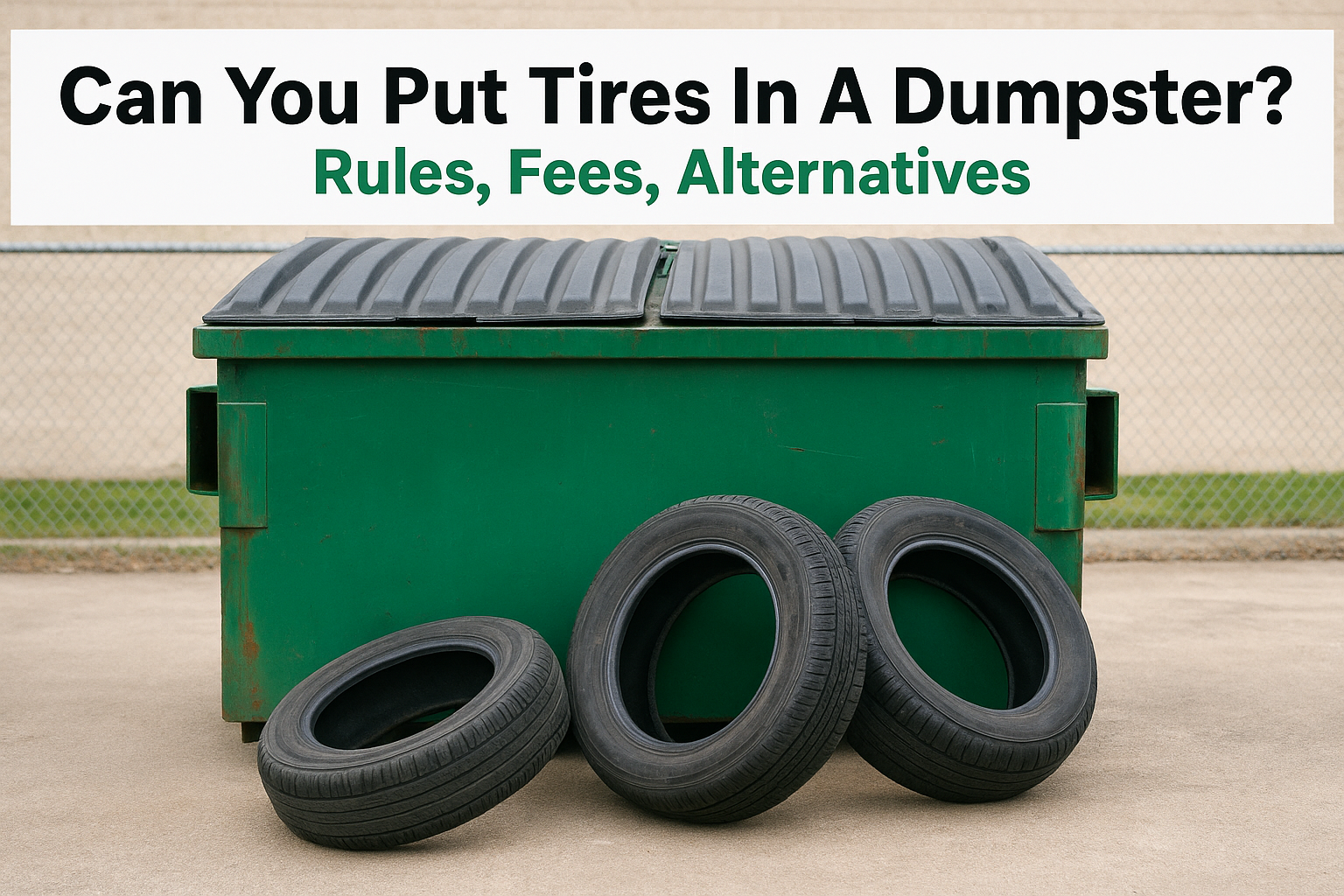
You’re staring at a pile of old tires in your garage or driveway, and you’ve got a dumpster rental on the way. The obvious question: can you put tires in a dumpster for free? The short answer is no, most dumpster rental companies, including us here at Dump Express, charge for tires in standard dumpster loads. There’s a good reason for that, and it goes beyond company policy.
Tires are one of the most commonly restricted items in waste disposal across Massachusetts and most of the country. Landfills won’t accept them because they trap gases, breed pests, and take up space inefficiently. That means your hauler can’t dump them even if you sneak a few into the bin, and you’ll likely face surcharges or rejection at the facility if you do.
After 20+ years of dumpster rentals across Cape Cod and Plymouth, we’ve heard every version of this question. This guide breaks down exactly why tires are banned from dumpsters, what fees you might face if you ignore the rules, and, most importantly, the proper ways to get rid of them in our area. Whether you’ve got four tires from a car swap or a shed full of old rubber, you’ll know exactly what to do by the end.
Why most dumpsters reject tires
When you ask “can you put tires in a dumpster,” the answer traces back to landfill restrictions, not just hauler preferences. Dumpster rental companies reject tires because the disposal facilities they use will not accept them. When a hauler arrives at a transfer station or landfill with tires mixed into the load, they face rejected hauls, fines, or surcharges that get passed directly back to you. So even if a few tires end up in the bin, there is a real downstream consequence waiting.
Why landfills will not take tires
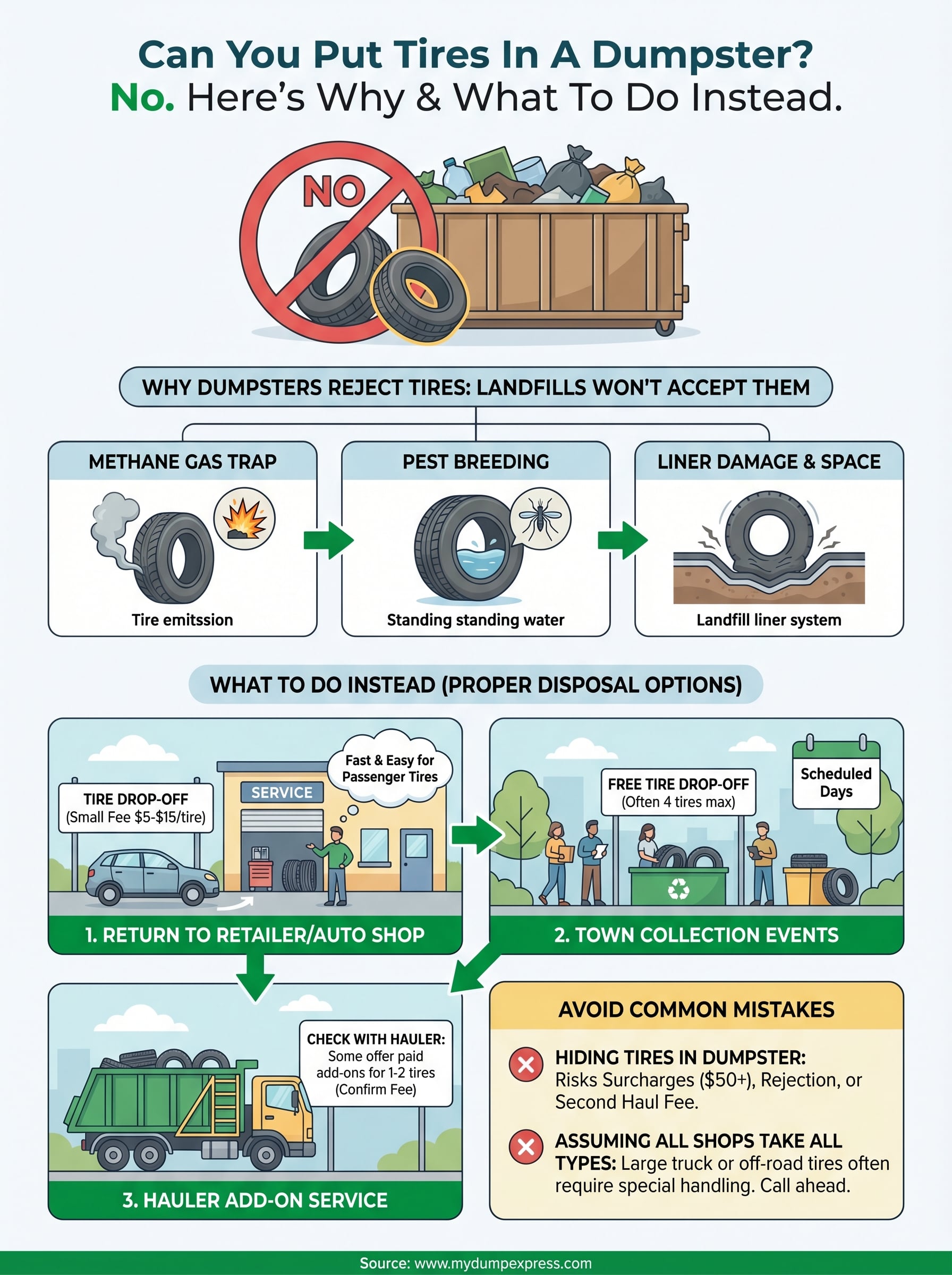
Tires create serious problems at landfills that go beyond simple volume. Whole tires trap methane gas as organic material decomposes around them, creating fire and explosion risks underneath the landfill surface. They also compress and shift over time, disrupting liner systems that prevent toxic leachate from reaching groundwater. On top of that, standing water collects inside tires, which turns them into breeding grounds for mosquitoes that carry diseases like West Nile virus.
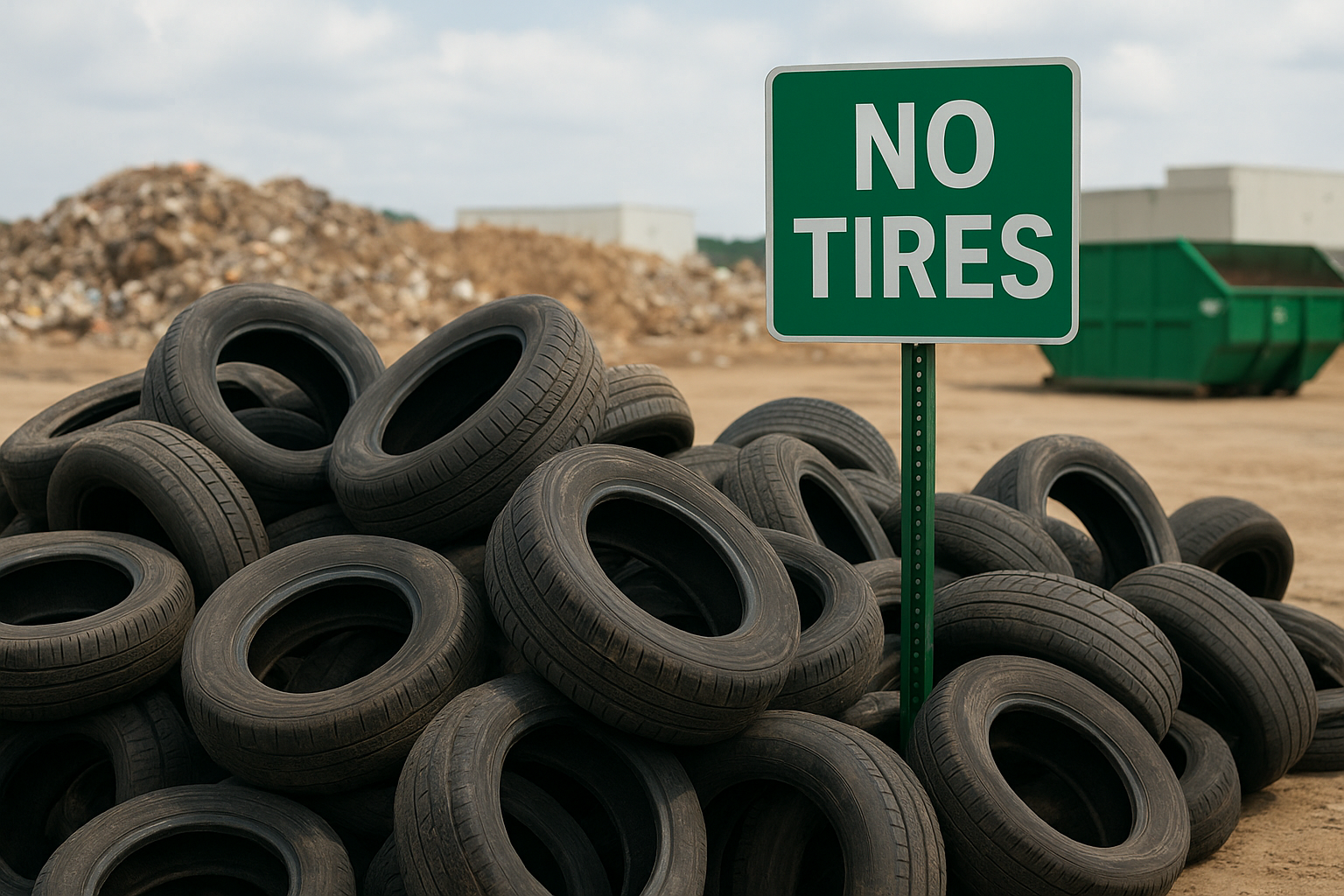
Landfills in Massachusetts are prohibited from accepting whole tires under state solid waste regulations, which means your hauler has no legal way to dump them even if they wanted to.
These hazards are exactly why most states regulate tire disposal as a separate waste category rather than general solid waste.
What Massachusetts law says about tire disposal
Massachusetts classifies used tires as a special waste that requires separate handling and tracking through licensed processors. State regulations do not allow tires to enter the standard solid waste stream at all. On the retailer side, automotive shops and tire dealers must accept used tires under the state’s extended producer responsibility rules, which actually works in your favor as a consumer. This framework gives you legal, accessible disposal options and explains why your dumpster rental company has zero flexibility on this item. It is a regulatory requirement, not a judgment call.
Step 1. Confirm local rules and your hauler’s policy
Before you book a dumpster or drop a tire anywhere, take five minutes to verify the rules that apply in your specific town. Regulations vary across Cape Cod and Plymouth, and knowing them upfront saves you from surcharges or a rejected load.
Check your town’s accepted materials list
Most Massachusetts towns publish waste disposal guidelines on their official town website. Search your town name plus “solid waste” or “tire disposal” to find the relevant page. Some towns offer free tire drop-off events a few times per year, which can save you money if your timing is flexible.
Here’s what to look for when you visit your town’s waste page:
- Scheduled tire collection or hazardous waste days
- Accepted quantities per visit (many towns cap at four tires per household)
- Any fees charged at the transfer station for tire drop-off
If your town hosts a hazardous waste collection day, tires are often accepted at no cost during those events.
Ask your hauler directly before loading
When you ask “can you put tires in a dumpster,” your hauler is the final word on what goes in their bin. Call or message them before your rental starts and ask specifically about tires. Get the answer in writing if possible. At Dump Express, we spell this out upfront so there are no surprises at pickup or at the facility.
Step 2. Decide if you will pay a tire fee or not
Some haulers and disposal facilities will accept tires for an additional fee, typically ranging from $25 to $65 per tire. Before you decide whether to pay, weigh the convenience against the cost and how many tires you actually need to move.
When paying a tire fee makes sense
Paying the fee works best when you have just one or two tires and your hauler already offers a tire add-on service. You handle everything in a single transaction with no extra trip involved. Always confirm the exact fee per tire in writing before you agree, so there are no surprises on your final invoice.
Paying a small per-tire fee is worth it when the time saved from skipping a separate drop-off trip outweighs the extra cost.
Signs that paying the fee is the right call:
- You have one or two tires to dispose of
- Your schedule is too tight for a separate drop-off trip
- Your hauler already includes a tire add-on option
When skipping the fee makes sense
Disposing of four or more tires makes the per-tire fees add up fast, so free or low-cost alternatives like retailer drop-off or a town collection event will save you real money. This is also the situation where asking “can you put tires in a dumpster” leads you straight to better options that require little extra effort.
Signs that skipping the fee is the smarter move:
- You have four or more tires to get rid of
- Your town offers free tire collection events
- A nearby tire retailer will accept them at no cost
Step 3. Use the best tire disposal option for you
If you’ve confirmed that you can’t put tires in a dumpster, the next step is picking the right disposal method for your specific situation. The options below cover the most practical routes available on Cape Cod and across Plymouth County.
Return tires to a retailer or auto shop
Tire retailers and automotive shops are your easiest route for standard passenger tires. Most shops accept used tires for a small handling fee, often under $5 per tire. Bring the tires in your truck or trunk, hand them over at the counter, and you’re done.

This is the fastest option if you’re replacing tires and the shop is already handling your new set.
Common places that accept used tires:
- Walmart Auto Care Center
- Firestone Complete Auto Care
- Discount Tire
- Local independent garages and dealerships
Use a town collection event
Scheduled town collection days let you drop off tires at no cost. Check your town’s public works or solid waste page to find the next event date. Quantities are typically capped at four tires per household visit, so plan ahead if you have a larger batch to move. Most Cape Cod towns run at least one hazardous waste or tire collection event per season, making this a reliable free option for patient homeowners.
Step 4. Avoid common tire disposal mistakes
Knowing where tires can go only helps if you also know what not to do. A few common missteps create unexpected surcharges or rejected loads, and they’re easy to sidestep once you know them.
Hiding tires inside the dumpster
If you’re still wondering “can you put tires in a dumpster” and thinking about sliding one under the debris, don’t. Transfer station staff scan loads at the gate, and a tire found in the bin can mean a surcharge on your full haul or an outright rejection.
A hidden tire in a mixed load puts your entire haul at risk of rejection at the transfer station.
Common consequences when tires are found in your dumpster:
- Surcharges of $50 or more added to your invoice
- A rejected load requiring a second haul at your cost
- Your hauler refusing future bookings
Assuming any shop takes any tire type
Commercial truck tires and oversized off-road tires are not accepted at every auto shop. Call ahead and confirm the specific tire type and size before you make the trip. Showing up without checking first wastes your time and sends you back to the beginning.
Tire types that often need special handling:
- Large truck or semi tires
- Farm or tractor tires
- Tires still mounted on rims
Quick recap and next steps
So, can you put tires in a dumpster? No. Most dumpsters, including ours at Dump Express, prohibit tires entirely because Massachusetts landfills won’t accept them. Sneaking tires into a load risks surcharges, rejected hauls, or a second pickup fee that costs you more than a proper disposal option ever would.
Your best moves are straightforward. Retailer drop-off works for standard passenger tires, and most shops charge under $5 per tire. Town collection events handle four tires per household at no cost, and scheduled hazardous waste days cover larger or specialty tires. If you only have one or two tires and your hauler offers a per-tire add-on, paying the small fee saves you a separate trip.
Ready to move forward on your cleanup project? Book a dumpster rental on Cape Cod and we’ll walk you through exactly what you can load before delivery day.