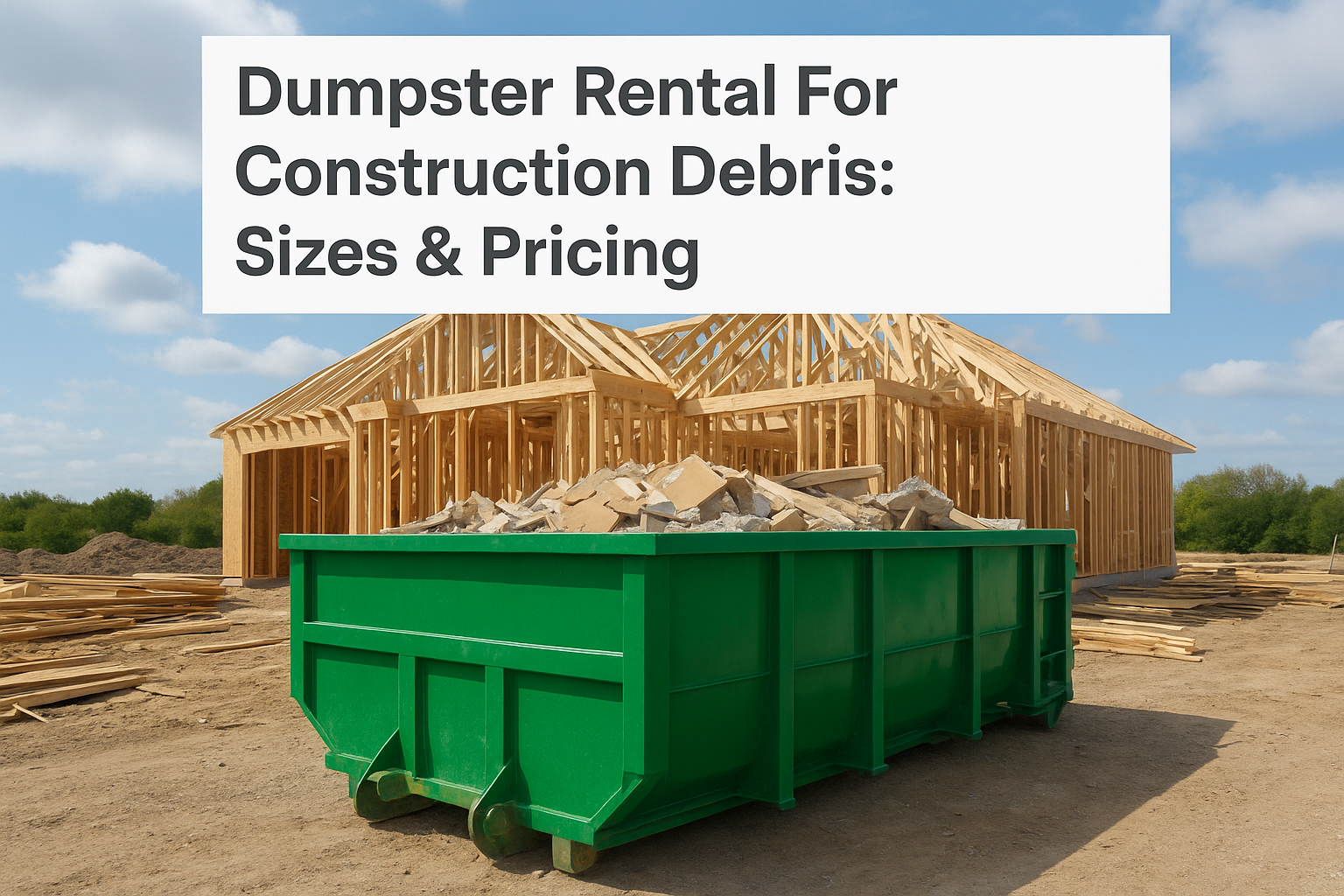
Construction projects generate a lot of waste, lumber scraps, drywall, roofing shingles, concrete, metal, and everything in between. Without a plan for removal, that debris piles up fast and turns your job site into a safety hazard. A dumpster rental for construction debris gives you a dedicated container on-site, so your crew can toss materials as they work instead of letting waste slow things down.
But picking the right dumpster isn’t always straightforward. Order one that’s too small and you’re paying for a second haul. Go too big and you’re wasting money on capacity you don’t need. Then there’s pricing, which varies by location, debris type, and weight limits that differ from town to town, especially across Cape Cod where local disposal regulations can catch people off guard.
At Dump Express, we’ve spent over 20 years helping contractors and homeowners across Cape Cod and Plymouth get construction debris off their sites without the guesswork. This guide breaks down dumpster sizes, what each one handles, pricing factors, and the details you need to make a smart rental decision for your project.
Why a construction debris dumpster helps your project
Having a central place for waste on your job site changes how your whole crew works. Without a dumpster, debris spreads across the site, workers step around piles of lumber and drywall, and someone has to stop the actual job to load a truck and make a dump run. A construction debris dumpster puts all of that waste in one spot, keeps your workflow moving, and removes the back-and-forth that burns hours on projects with tight timelines.
A dumpster on-site cuts down on debris-related delays, which can easily add a full day or more to a renovation or demolition project.
Keep your site safer and your crew focused
Construction sites carry real injury risk, and loose debris makes that worse. Scattered materials like broken drywall, roofing nails, and lumber scraps are tripping and puncture hazards that OSHA takes seriously. When you have a dedicated container on-site, your crew throws waste directly into it instead of leaving it on the ground, which keeps walkways clear and reduces accident risk throughout the project.
A rented dumpster also removes the temptation to burn or bury debris, which can lead to fines and compliance issues in Massachusetts. Having a legal, scheduled removal option on-site keeps your project in good standing from start to finish.
Avoid the cost of multiple dump runs
Every trip to a transfer station costs you driver time, fuel, vehicle wear, and per-load disposal fees that add up faster than most people expect. A single dumpster rental for construction debris consolidates all of those costs into one predictable rate, making it easier to budget the job accurately. You place the container, fill it over the course of the project, and schedule one pickup when you’re done.
Contractors working across multiple Cape Cod towns also benefit from working with a local rental company, since disposal rates and accepted materials vary from one facility to the next, and local knowledge prevents costly surprises at the gate.
How to choose the right dumpster size
The size you pick affects both your cost and your project timeline. Choosing too small a container means you’ll hit capacity mid-project and either pause work or pay for a second haul. Going too large means you’re paying for space you don’t need. Matching the container to your actual job scope is the single best way to control your rental cost.
The volume of construction debris a project generates is almost always more than it looks before demolition starts.
Match the container to your project type
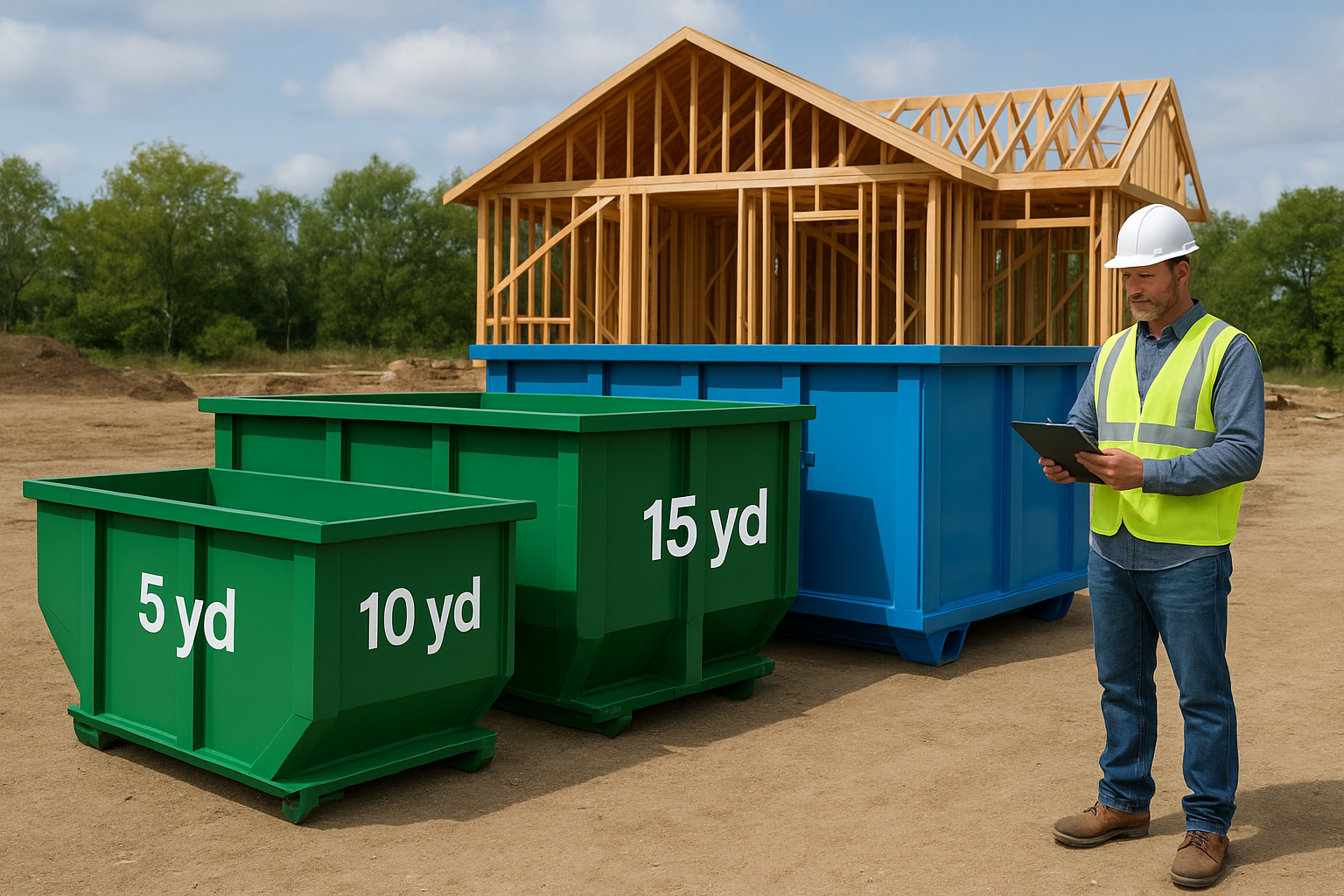
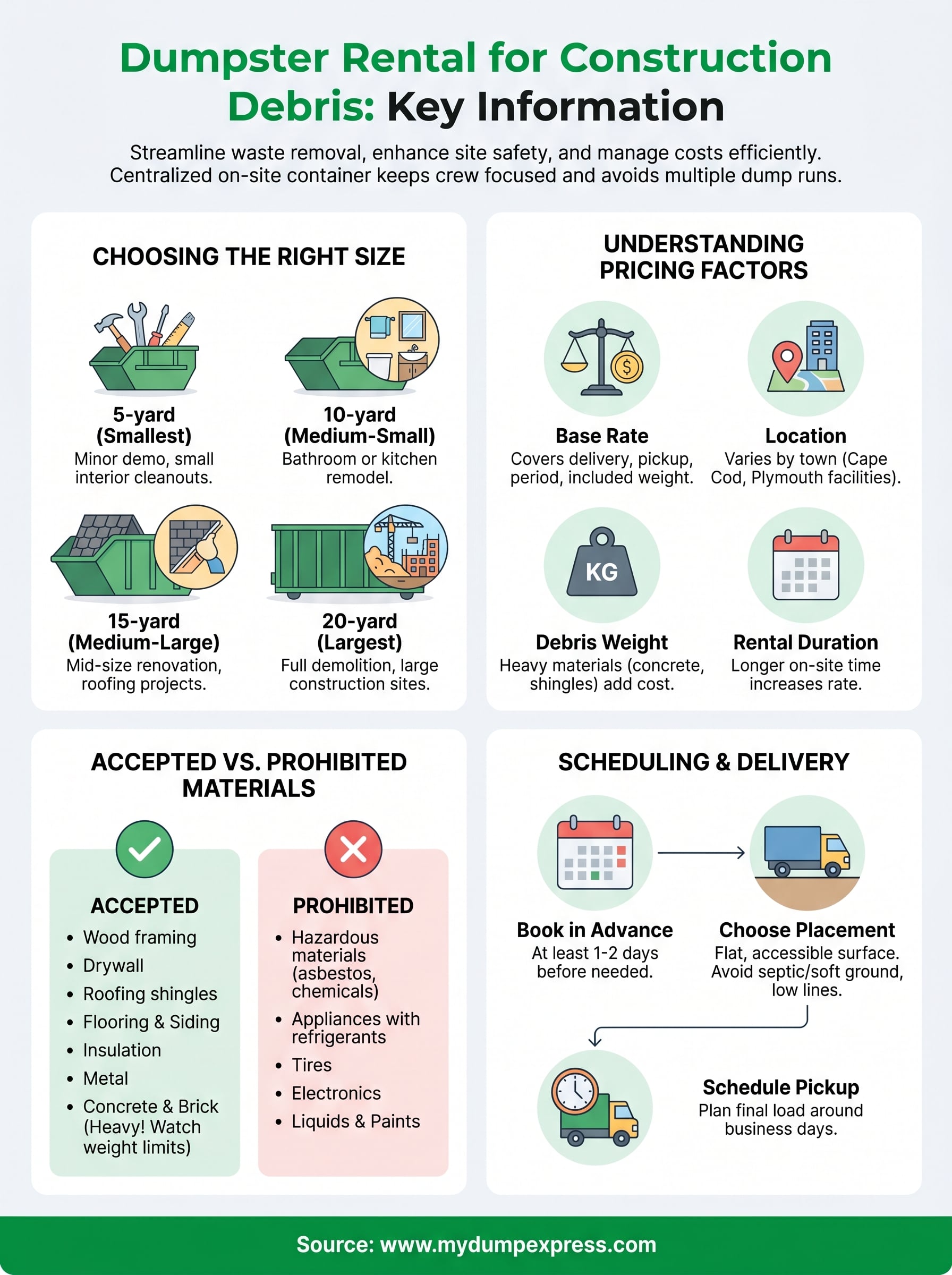
Dump Express offers four dumpster sizes built to cover the range of residential and commercial construction work across Cape Cod and Plymouth. The table below shows which size fits which type of project for a dumpster rental for construction debris.
| Size | Best For |
|---|---|
| 5-yard | Minor demo, small interior cleanouts |
| 10-yard | Bathroom or kitchen remodel |
| 15-yard | Mid-size renovation, roofing projects |
| 20-yard | Full demolition, large construction sites |
Consider debris weight, not just volume
Heavy materials like concrete, brick, and roofing shingles fill weight limits before they fill containers visually. If your project involves significant masonry or roofing work, talk to your rental company before booking so you understand the weight allowance included in your rate.
Common heavy debris types to plan for:
- Concrete and masonry
- Roofing shingles
- Tile and flooring materials
What dumpster rental for debris costs and why
Pricing for a dumpster rental for construction debris is driven by several factors, and understanding each one helps you budget accurately without surprises at the end. The base rental rate typically covers delivery, pickup, a set rental period, and an included weight allowance. What changes the final number is where your project is located, how heavy your specific debris is, and how long you need the container on-site.
Weight is the factor most people underestimate, especially on roofing and concrete projects where materials are dense.
What pushes your price up or down
Heavier materials like shingles, concrete, and tile trigger overage charges when they push your load past the included weight limit. The town your project is in also affects the price, since disposal facility rates vary across Cape Cod and Plymouth, and those costs pass through directly to your final bill. Rental duration plays a role too: the longer the container stays on your property, the more your total rate increases.
Key cost factors to keep in mind:
- Container size selected
- Type and weight of debris
- Your project location or town
- Length of the rental period
- Any prohibited materials requiring special handling
Knowing these variables upfront lets you have a straightforward conversation with your rental company before booking, so you lock in an accurate number rather than discovering additional charges after pickup.
What you can throw away and what you cannot
Understanding what goes into your container before you book a dumpster rental for construction debris prevents surcharges and delays at the disposal facility. Most standard construction and demolition materials are accepted without issue, but a handful of items require special handling or are prohibited from landfills across Massachusetts. Knowing the difference before you start loading saves time and avoids unexpected charges after pickup.
What you can load into your container
General construction debris covers a wide range of materials that your rental company handles through standard disposal. Wood framing, drywall, roofing shingles, flooring, siding, insulation, and metal all go in without issue. Concrete and brick are accepted too, though their density can push you past your included weight allowance faster than you expect, so flag heavy materials when you book.
Heavy debris like concrete and masonry fills your weight limit well before it fills your container visually.
What you cannot put in the dumpster
Certain materials are prohibited regardless of project size, and attempting to load them can result in fines or additional charges after pickup. Your rental company will flag anything it finds during processing, so knowing the restricted list upfront keeps your final bill predictable.
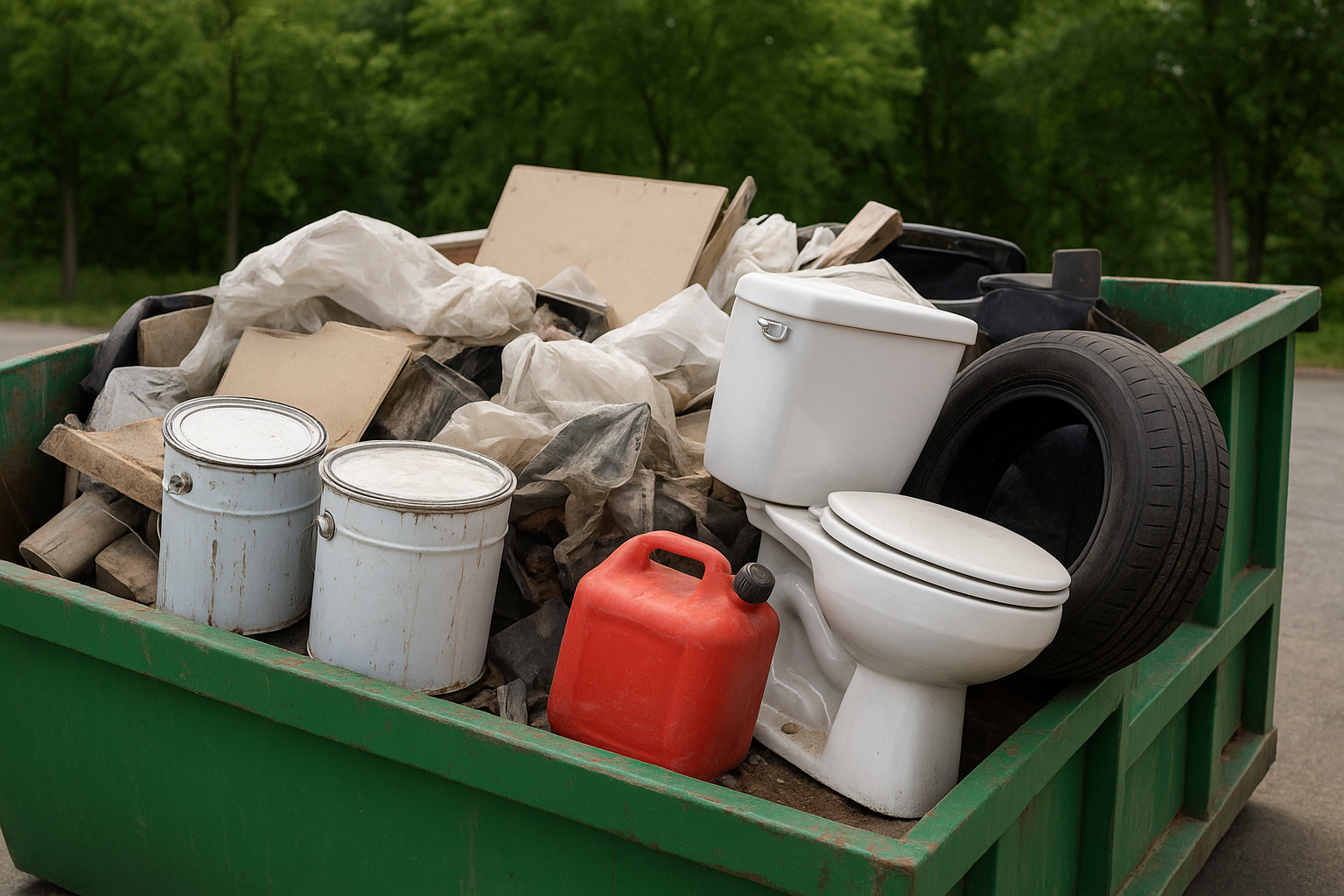
Items typically not accepted:
- Hazardous materials (asbestos, lead paint, chemicals)
- Appliances containing refrigerants
- Tires
- Electronics
- Liquids and paints
Identifying prohibited items before delivery lets you arrange compliant disposal without holding up your project. If you’re unsure about a specific material, contact your rental company directly before booking.
How to schedule delivery and avoid common problems
Scheduling your dumpster rental for construction debris goes smoother when you plan a few details ahead of time. Book your delivery date at least a day or two before you need the container on-site, and confirm your exact placement location so the driver can drop it without delays. If your project involves a tight driveway or limited street access, flag that when you call so your rental company can prepare accordingly.
Confirming your placement spot before delivery day prevents the most common scheduling issues.
Pick the right placement spot
Your dumpster needs a flat, accessible surface where the truck can reach it without obstacles. Avoid placing it over septic systems, soft ground, or under low-hanging utility lines. Gravel or paved areas work best and protect your property from surface damage during the drop.
- Confirm clearance for the delivery truck
- Avoid soft ground and septic areas
- Keep the container accessible for the full rental period
Know your pickup window
When your project wraps up, schedule your pickup in advance rather than calling the same day. Disposal facilities in Massachusetts operate on business-day schedules, so plan your final load around that window to avoid holding the container longer than you need and adding unnecessary days to your rental cost.
Get your construction debris off-site the right way
A dumpster rental for construction debris simplifies one of the most disruptive parts of any job: waste removal. When you match the right container size to your project, understand what materials you can and cannot load, and schedule delivery and pickup around your timeline, the whole process runs without friction. Debris stays contained, your crew stays focused, and your final bill stays predictable.
The details that trip people up, weight limits, prohibited materials, placement logistics, and town-specific pricing, are manageable when you work with a local company that knows Cape Cod. You don’t need to figure it all out before you call. A quick conversation before you book is usually enough to get every detail right the first time.
If you’re ready to get a container on-site for your next project, rent a dumpster from Dump Express and get straightforward pricing for your town today.