
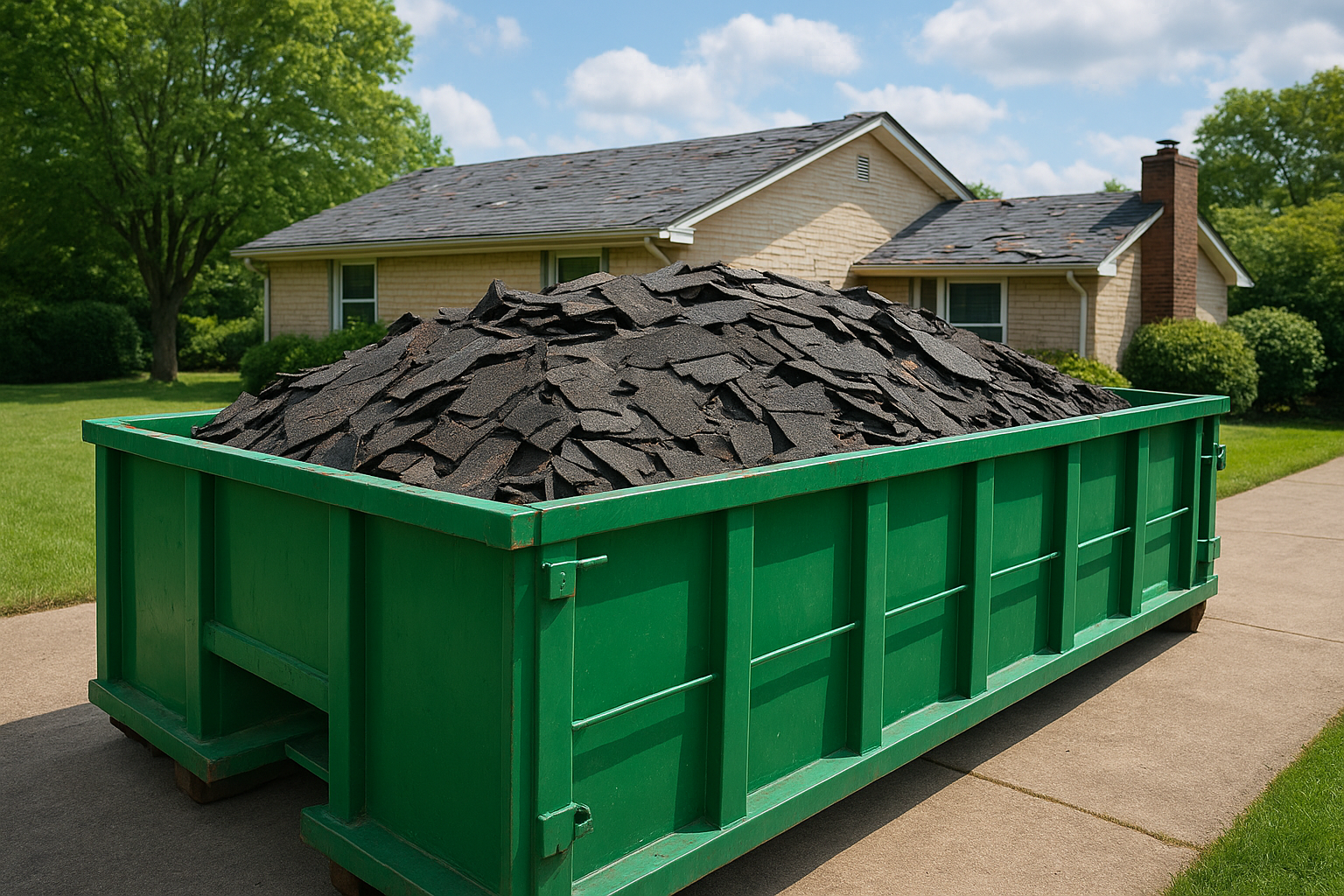
Roofing shingles are one of the heaviest materials you’ll ever throw into a dumpster. A single square of asphalt shingles, enough to cover 100 square feet of roof, weighs between 200 and 350 pounds depending on the type. That means even a modest re-roofing job can produce thousands of pounds of debris, making dumpster rental for roofing shingles a decision you need to get right the first time.
Pick a dumpster that’s too small, and you’re paying for a second haul. Pick one that’s too large, and you’re wasting money on capacity you don’t need. The real challenge with shingles isn’t volume, it’s weight. Most roofing tear-offs fill less space than you’d expect but hit weight limits faster than almost any other project type.
At Dump Express, we handle shingle disposal jobs across Cape Cod and Plymouth every week. This guide breaks down exactly which dumpster size fits your roofing project, along with the weight limits and cost factors you should know before you book.
What makes shingle dumpsters tricky
Shingles look manageable until you start stacking them. The problem is density: asphalt shingles compress into a tight, heavy mass that pushes against weight limits long before the dumpster looks full. This catches a lot of homeowners off guard when they book a dumpster rental for roofing shingles based on cubic yard capacity alone, then face overage charges they never saw coming.
Shingle weight adds up faster than you think
A single square of standard 3-tab asphalt shingles weighs around 200 to 250 pounds. Architectural shingles run heavier, typically 280 to 350 pounds per square. If you’re tearing off a 2,000-square-foot roof with two layers of architectural shingles, you could be looking at 12,000 to 14,000 pounds of material before you factor in underlayment, nails, and flashing.
Most roofing tear-offs hit the dumpster’s weight limit before they come close to filling it visually.
Here’s a quick reference for common roofing material weights:
| Shingle type | Weight per square |
|---|---|
| 3-tab asphalt | 200-250 lbs |
| Architectural asphalt | 280-350 lbs |
| Wood shake | 250-350 lbs |
| Slate | 800-1,500 lbs |
Multiple layers change your total weight completely
Many older Cape Cod homes have two or even three layers of shingles from previous re-roofing jobs. Each additional layer multiplies your total debris weight, not just your volume. If you only estimate based on roof square footage without counting layers, you’ll underestimate your weight load and risk overage fees or a refused pickup at the disposal facility.
Slate and tile fall into a separate category. These materials are so heavy that they often require smaller loads per haul or special arrangements with your provider. Always confirm the material type and layer count with your dumpster company before you book, so you get the right container from the start.
Step 1. Estimate shingles by squares and layers
Before you book a dumpster rental for roofing shingles, you need a reliable weight estimate. Start by calculating your total squares, then multiply by the number of layers you’re removing. Getting this number right upfront keeps you from booking the wrong dumpster and paying for it later.
Calculate your roof squares
Roof squares are the standard unit roofers use: one square equals 100 square feet of roof surface. To find your total squares, measure the length and width of each roof section, multiply to get the area, add the sections together, then divide by 100. A 2,000-square-foot home typically has between 22 and 28 squares once you account for pitch and overhangs.
Always measure your actual roof surface, not just your home’s footprint. Roof pitch adds significant square footage to the total.
Account for existing layers
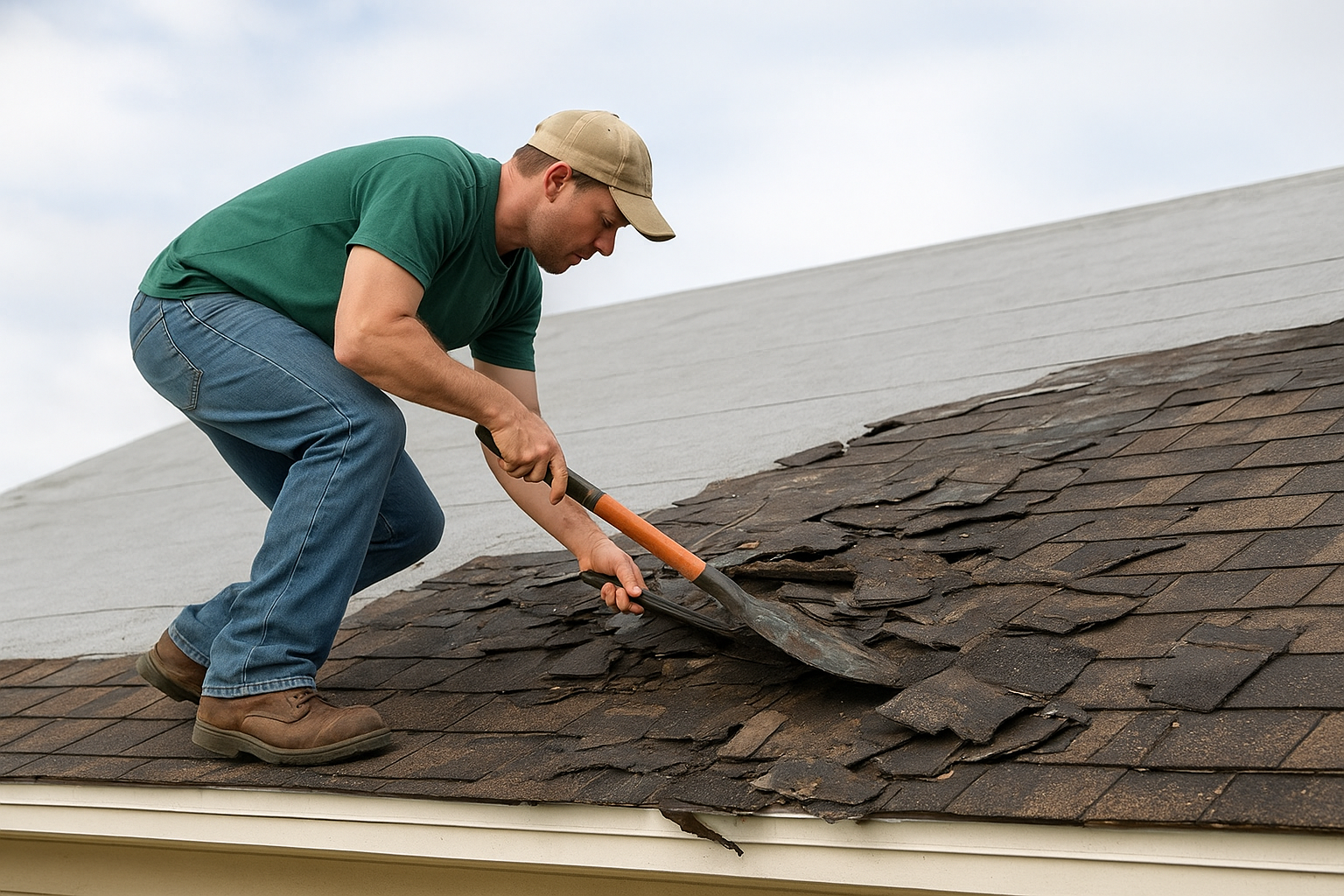
Each additional shingle layer you tear off adds the same weight as the first. A 25-square roof with two layers of architectural shingles produces roughly 14,000 to 17,500 pounds of material. Use the table below to estimate your total debris weight before you call.
| Squares | Layers | Shingle type | Estimated weight |
|---|---|---|---|
| 15 | 1 | 3-tab | 3,000-3,750 lbs |
| 15 | 2 | Architectural | 8,400-10,500 lbs |
| 25 | 1 | Architectural | 7,000-8,750 lbs |
| 25 | 2 | Architectural | 14,000-17,500 lbs |
Step 2. Pick a dumpster size that fits and stays legal
When you’re planning a dumpster rental for roofing shingles, your weight estimate from Step 1 is the most important input for choosing the right container. Booking based on cubic yards alone is how homeowners end up with overage fees or a dumpster that gets flagged at the disposal facility for exceeding the legal haul weight on public roads.
Match dumpster size to your weight estimate
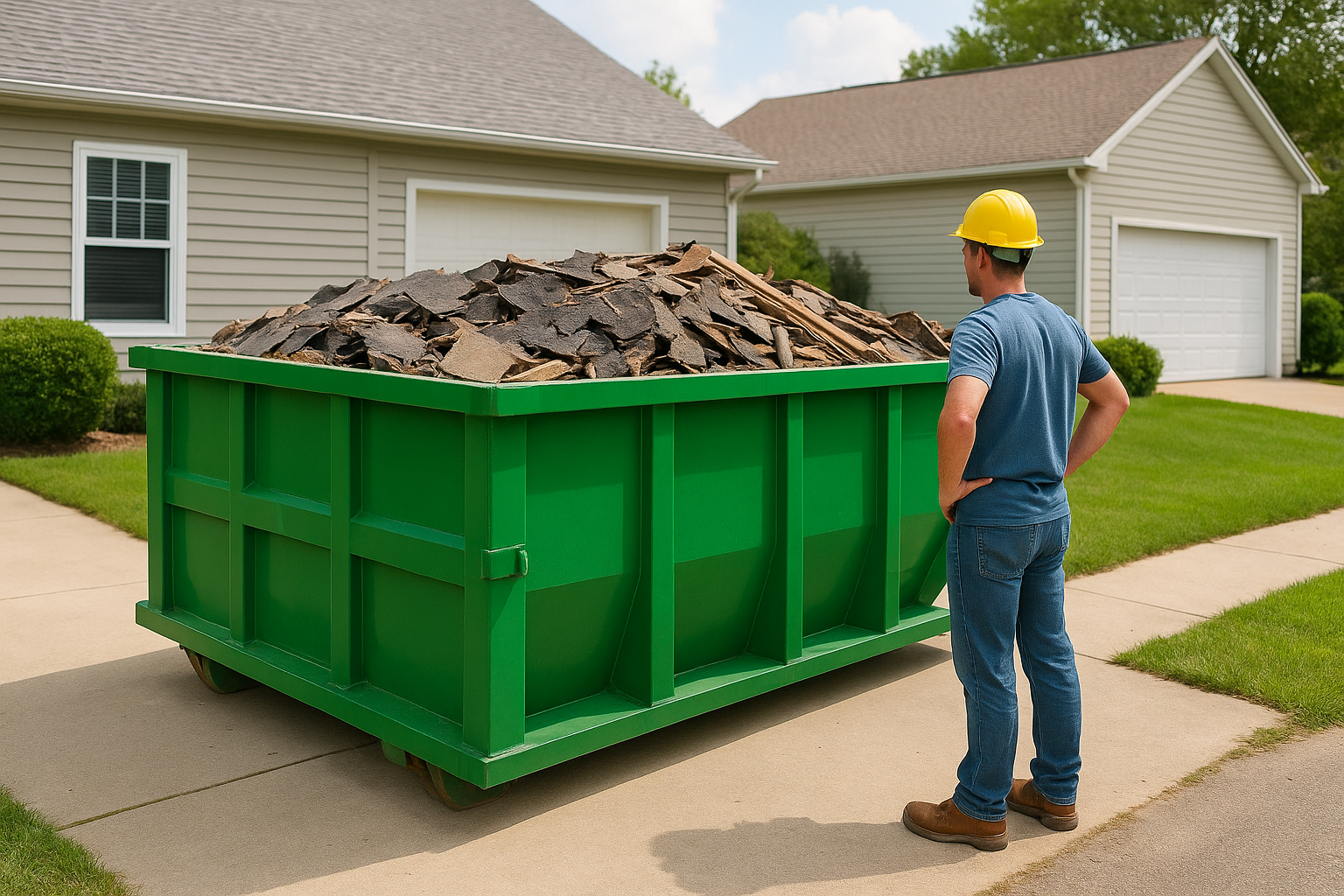
For roofing projects, smaller containers often perform better because they keep your load within the weight limit the truck can legally transport. Here’s how common dumpster sizes align with typical shingle jobs:
| Dumpster size | Typical weight limit | Best for |
|---|---|---|
| 10-yard | 2-4 tons | Small residential tear-offs, 1 layer, under 15 squares |
| 15-yard | 3-5 tons | Mid-size jobs, 1-2 layers, 15-25 squares |
| 20-yard | 4-6 tons | Larger projects or high layer counts |
Check placement rules before delivery
Your dumpster placement location affects both delivery logistics and local permit requirements. Many Cape Cod towns require a permit if you place the container on a public street or sidewalk. Placing it on your driveway avoids that requirement in most cases, but confirm with your provider before you book to avoid delays on delivery day.
Placing your dumpster on a hard, flat surface protects your driveway and makes pickup faster and cleaner.
Step 3. Plan for weight limits, loading, and pickup
Once you’ve booked the right container for your dumpster rental for roofing shingles, how you load and time the pickup determines whether the job stays on budget. Roofing debris needs to be managed during loading, not just before it.
Load shingles evenly and keep weight centered
Uneven loading shifts weight toward one end of the container and can make the dumpster harder for the driver to hook and lift safely. Spread each bundle of shingles across the floor of the container as you work, and avoid stacking all the heavy material on one side. Keep the load below the fill line marked on the container walls. Overfilled dumpsters cannot be legally transported and will require you to remove material before pickup happens.
Never pile shingles above the container’s rim. An overfilled dumpster will be left on site until you bring the load down to the fill line.
Confirm your pickup window before you finish loading
Schedule your pickup date before the job starts, not after the roof is done. Disposal facilities operate on business days and have set hours, which means a Friday finish could push your pickup to Monday. Call your provider on the last day of loading to confirm the truck is scheduled and the facility is open, so you don’t leave a full dumpster sitting in your driveway longer than necessary.
Step 4. Avoid banned items and surprise charges
Even when you’ve booked the right container for your dumpster rental for roofing shingles, unexpected charges can still show up at billing if you’re not careful about what goes in the container and how your load is handled at the disposal facility.
Know what you cannot put in the dumpster
Certain roofing materials are banned from standard dumpsters, and mixing them in triggers surcharges or a refused load. The most common restricted items on roofing jobs include:
- Asbestos-containing materials (common in roofs built before 1980)
- Lead-based flashing or paint-coated components
- Tar-based roofing products beyond standard shingles
- Hazardous adhesives or solvents used during installation
- Electronics, tires, or household chemicals
If your home was built before 1980, test for asbestos before you tear off any roofing material. Disposing of asbestos improperly carries serious legal and financial penalties.
Understand how surcharges get triggered
Weight overages are the most common surprise charge on shingle jobs. If your load exceeds the weight included in your rental agreement, the disposal facility charges the provider per additional ton, and that cost passes directly to you. Confirm your weight allowance in writing before the dumpster arrives so you know exactly where your threshold sits.
Mixing non-roofing debris into the container, such as dimensional lumber, old insulation, or drywall, can also trigger material surcharges at the facility. Keep your shingle load clean and separate from other job site waste to avoid fees you didn’t budget for.
Next steps
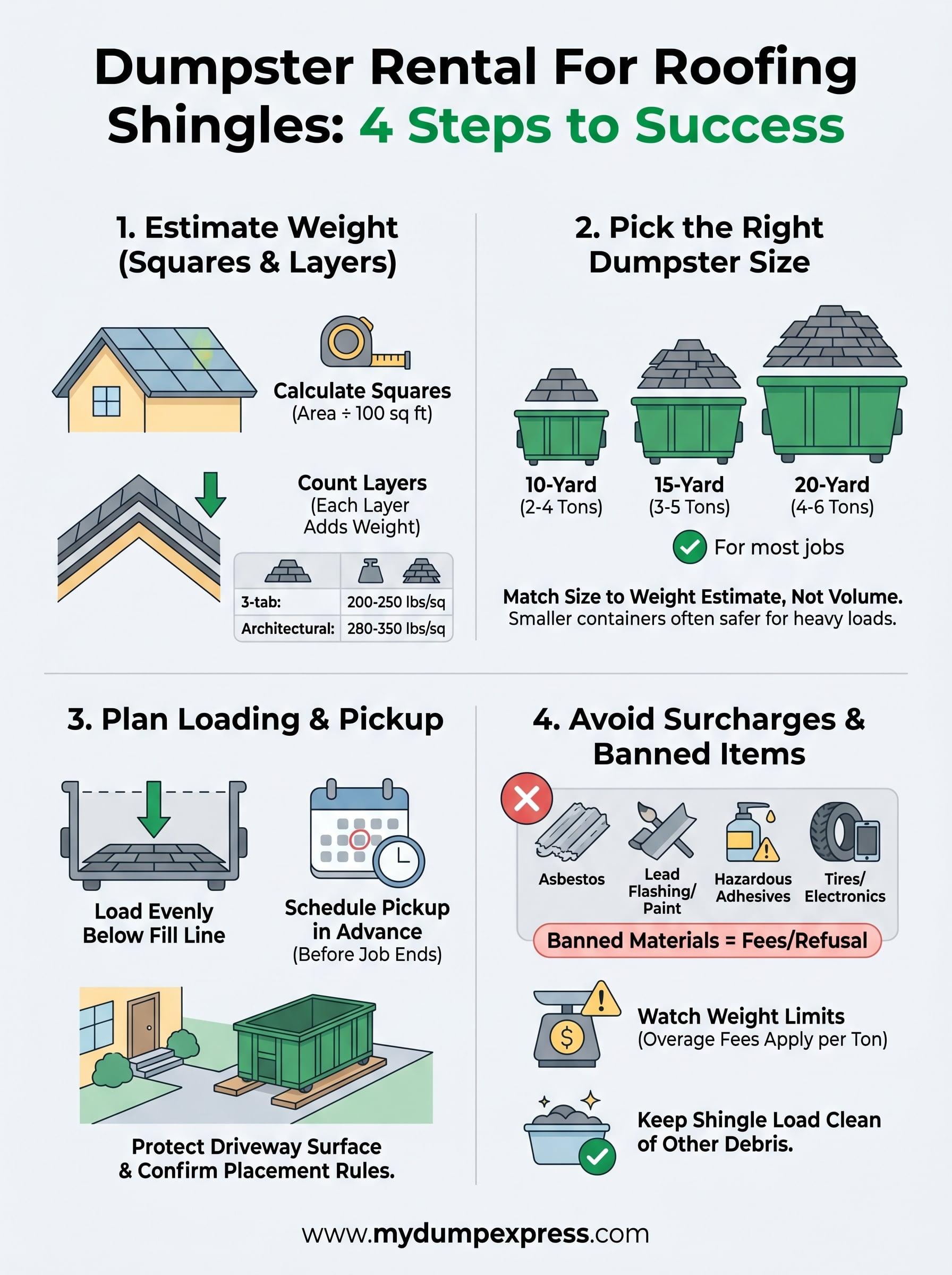
You now have everything you need to book the right dumpster rental for roofing shingles without overpaying or running into surprise charges at pickup. The process comes down to four things: estimate your weight accurately, pick a container that matches that weight, load it evenly, and keep banned materials out of the bin.
Before you call, have your roof square footage and layer count ready. That single piece of information determines which container fits your job and how much weight allowance you’ll need. If you’re unsure about the count, your roofer can confirm it before the tear-off starts.
Dump Express serves Cape Cod and Plymouth with same-day delivery, transparent pricing by town, and no hidden fees. You can get a quote or book a container today without pressure or guesswork. Get your shingle dumpster from Dump Express and keep your roofing project on schedule.