

If you’re planning a cleanout, renovation, or construction project, one of the first questions you’ll ask is how much does dumpster rental cost. The short answer: most rentals fall somewhere between $250 and $600, but the actual number depends on several factors, container size, rental duration, debris type, and where you live all play a role.
The problem is that pricing in this industry isn’t always straightforward. Some companies advertise low base rates, then tack on fuel surcharges, delivery fees, or overage charges that inflate the final bill. At Dump Express, we’ve spent over 20 years renting dumpsters across Cape Cod and Plymouth, and we’ve seen how confusing pricing can get when companies aren’t upfront about what’s included. That’s exactly why we put together this guide, to give you real numbers and clear explanations before you book anything.
Below, we’ll break down 2026 pricing by dumpster size, explain every factor that affects your total cost, and show you how to avoid surprise charges. Whether you’re a homeowner clearing out a basement or a contractor managing debris on a job site, you’ll walk away knowing exactly what to budget for your rental.
What dumpster rental costs in 2026
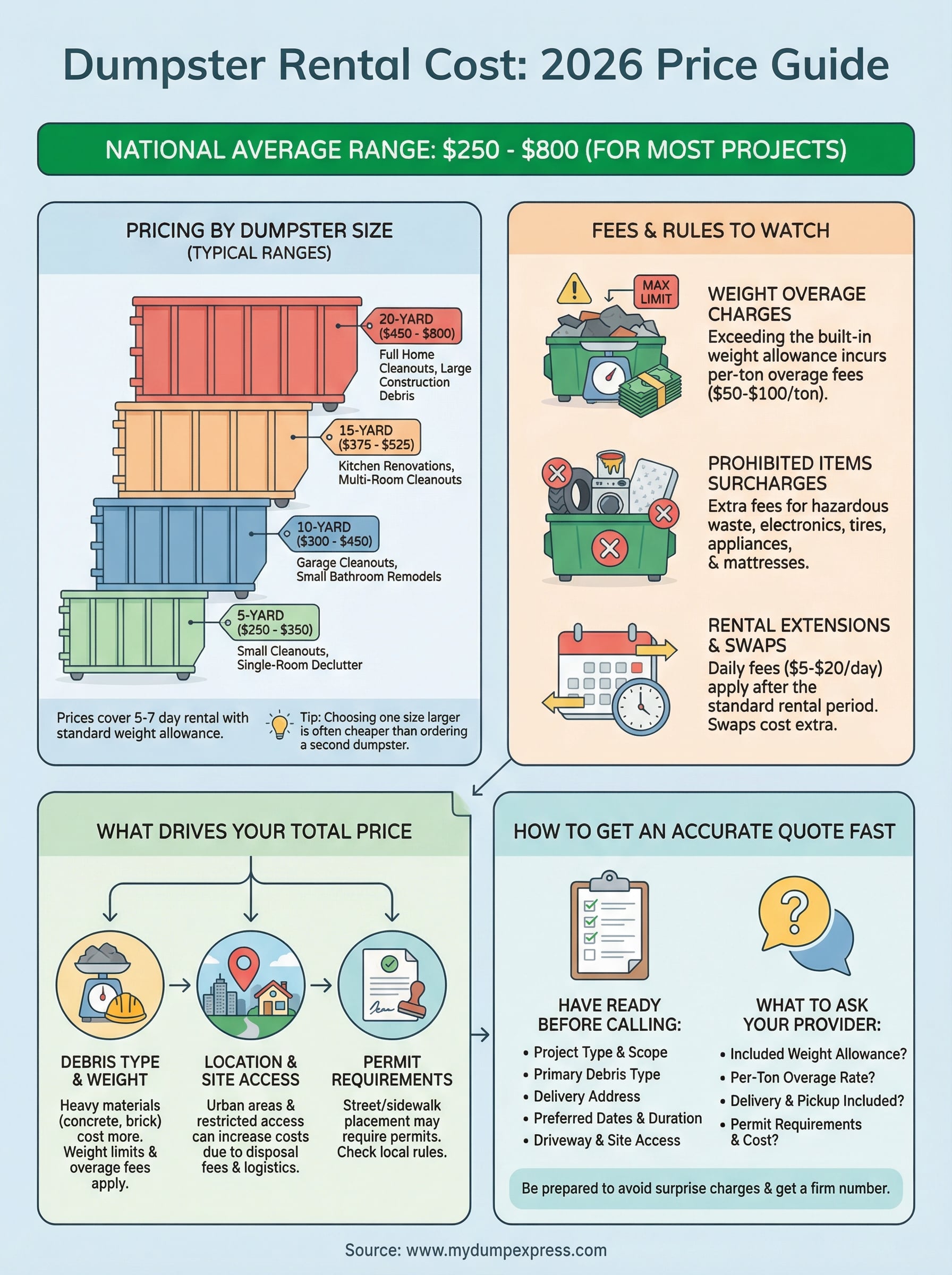
Nationally, dumpster rental prices fall between $250 and $800 for most standard residential and commercial projects. The wide range reflects real differences in container size, location, debris type, and how long you keep the bin. If someone quotes you a number on the low end without knowing your project details, treat it as a starting point rather than a guarantee. Understanding the typical ranges upfront helps you build a realistic budget and recognize a fair deal when you find one.
Pricing by dumpster size
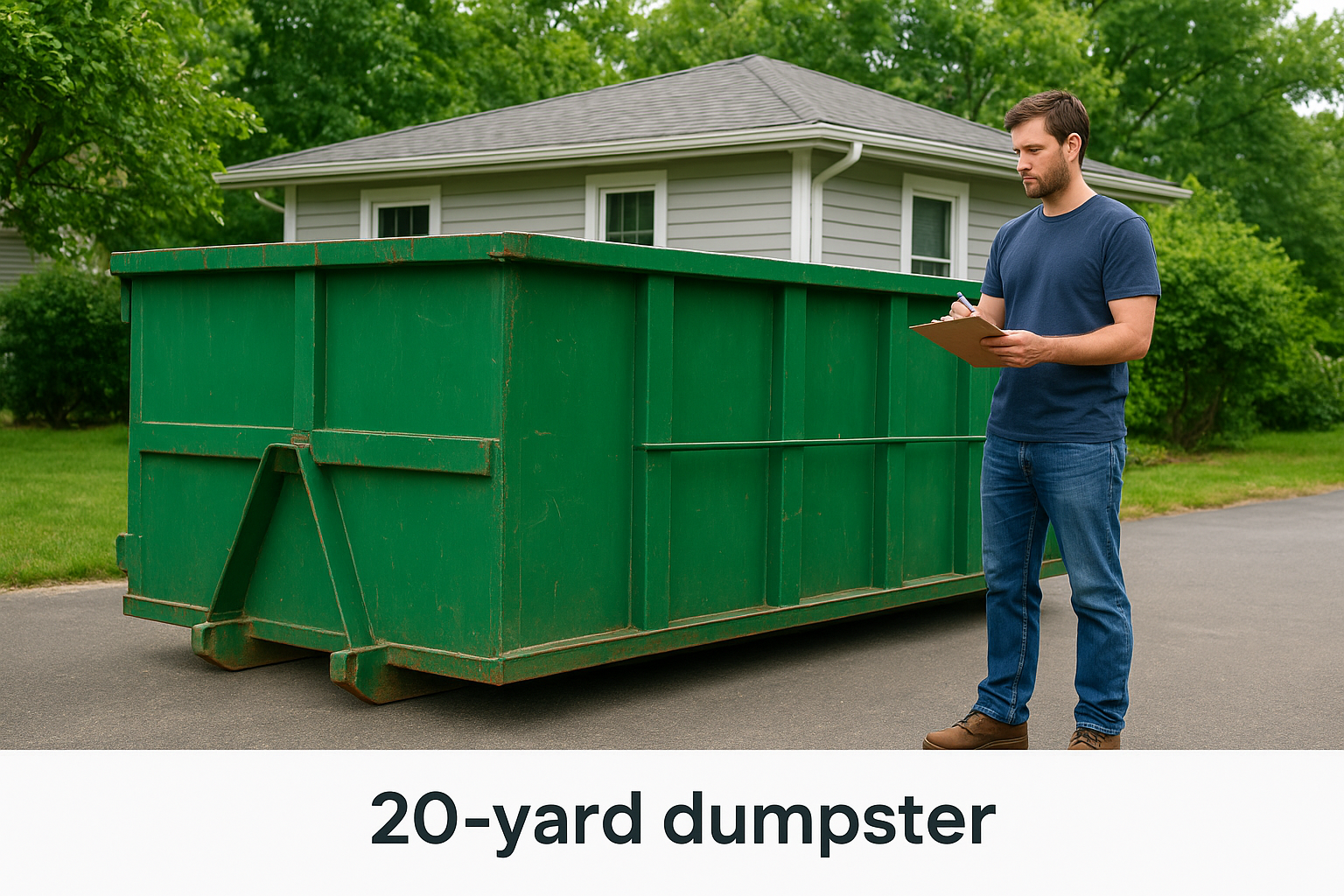
Container size is the single biggest driver of how much does dumpster rental cost. Larger containers hold more material, weigh more when full, and cost more to haul. Here’s what you can realistically expect to pay across the four most common sizes in 2026:
| Dumpster Size | Typical Price Range | Best For |
|---|---|---|
| 5-yard | $250 – $350 | Small cleanouts, single-room decluttering |
| 10-yard | $300 – $450 | Garage cleanouts, small bathroom remodels |
| 15-yard | $375 – $525 | Kitchen renovations, multi-room cleanouts |
| 20-yard | $450 – $800 | Full home cleanouts, large construction debris |
These ranges cover a standard rental window of five to seven days with a typical weight allowance built into the base price. Heavier materials like concrete, dirt, brick, or roofing shingles will push costs higher because they add significant hauling weight even in smaller containers.
Choosing one size larger than you think you need is almost always cheaper than ordering a second dumpster mid-project.
How rental duration affects your cost
Most rental agreements include a flat rate for a set number of days, typically between five and ten. Beyond that window, companies charge a daily overage fee that usually runs between $5 and $20 per extra day depending on the provider and your location. If you’re managing a longer renovation, negotiate the rental window upfront rather than absorbing daily add-on charges.
Projects run long more often than not. A bathroom remodel that looked like a one-week job can stretch into two once you factor in material delivery delays or unexpected structural work. Asking your rental company about extension pricing before you sign anything is one of the easiest ways to protect your final bill.
Regional price differences
Where you live has a direct impact on what you pay. Urban areas and coastal regions typically run higher because of disposal facility tipping fees, fuel costs, and local permitting requirements. Rural markets often land on the lower end of the national range since trucking distances and facility fees are generally lower.
In the Cape Cod and Plymouth area, prices track closely with the mid-to-upper range of national averages. Local disposal facilities, narrow roads, and town-specific permit requirements in some communities all factor into what local companies charge. Working with a provider who already operates in your specific area means fewer surprises, since they’ve already built those local variables into their pricing rather than discovering them after your rental starts.
What drives your total price
Once you understand the base price ranges, the next step is knowing what pushes your specific bill higher or lower. Several variables stack on top of container size to determine how much does dumpster rental cost for your actual project. Knowing these factors before you call gives you more control over your final number.
Debris type and weight
What you’re throwing away matters as much as how much of it there is. Heavy materials like concrete, asphalt, dirt, roofing shingles, and brick add significant weight to any container, even a small one. Most rental quotes include a built-in weight allowance, typically measured in tons, and anything above that limit triggers an overage charge at the disposal facility.
Light materials like furniture, household clutter, or drywall scrap rarely push you over the weight cap in a standard-sized bin. But if your project involves demolition work or landscaping debris, expect to pay more per ton for the extra haul weight. Telling your rental company what materials you plan to load helps them set accurate expectations on both sizing and final cost.
If you’re disposing of heavy debris like concrete or dirt, ask specifically about per-ton overage rates before you book.
Location and site access
Where your project is located affects pricing in two ways: disposal facility tipping fees and the cost to get the dumpster to you. Areas with higher operating costs for waste facilities pass those fees through to the rental price. Remote locations can also add to the total when trucking distances are longer.
Tight driveways, narrow streets, or restricted delivery windows increase the complexity of the drop-off and pickup, and some companies charge accordingly. Giving your provider an honest picture of your site conditions upfront prevents surprises on delivery day.
Permit requirements
Some municipalities require a permit when a dumpster sits on a public street or sidewalk. These permits vary by town, and the cost ranges from a small fee to several hundred dollars depending on local rules. Placing the container entirely on private property typically avoids the permit process altogether.
Your rental provider should already know the local permit requirements in your area. A company with genuine local experience can flag potential permit needs early so you can factor that cost into your budget before anything gets dropped off.
How to estimate your dumpster size and weight
Getting the size right before you book is one of the most practical things you can do. Ordering too small forces you into a second haul that costs nearly as much as the first rental, while ordering too large means paying for capacity you never use. Knowing how to estimate accurately gives you a better handle on how much does dumpster rental cost for your specific situation before you ever pick up the phone.
Match the container to your project type
The fastest way to narrow down your container size is to match the bin to your project category rather than trying to calculate volume in cubic yards. Most homeowners and contractors have a clear sense of what type of work they’re doing, and that project type maps directly onto a container range.
| Project Type | Recommended Size |
|---|---|
| Single-room declutter or small junk removal | 5-yard |
| Garage cleanout, small bathroom remodel | 10-yard |
| Kitchen renovation, multi-room cleanout, flooring removal | 15-yard |
| Full home cleanout, roofing job, large construction debris | 20-yard |
When your project sits between two sizes, default to the larger option. Running out of space mid-project and needing a swap costs significantly more than the price difference between container sizes.
If you’re unsure, describe your project to your rental provider and let them recommend a size based on what they’ve seen with similar jobs.
Think about weight, not just volume
Volume tells you whether your debris physically fits inside the container. Weight determines whether you owe overage charges at the disposal facility. These are two separate calculations, and confusing them is one of the most common ways people end up with a higher bill than expected.
Light debris like furniture, clothing, or household clutter rarely triggers weight overages even in a completely full container. Heavy materials are a different story. A single cubic yard of concrete weighs roughly 4,000 pounds, which means even a 5-yard bin loaded with concrete can blow past a standard weight allowance fast. If your project involves demolition, roofing, or excavation work, ask your provider specifically what the weight limit is and what the per-ton overage fee looks like before you commit.
Fees and rules that change the bill
Beyond the base rental price, specific fees and local rules can add meaningful dollars to your final bill if you’re not prepared for them. Understanding how much does dumpster rental cost means accounting for these add-ons before your project starts, not after the invoice arrives. Most of these charges are predictable once you know what to look for.
Weight overage charges
Every rental agreement includes a built-in weight allowance, usually expressed in tons. When your debris exceeds that limit, the disposal facility charges an overage fee per additional ton, and your rental company passes that cost through to you. These fees typically run $50 to $100 per ton over the limit, which adds up fast on heavy demolition or roofing jobs.
Always ask your provider what the weight cap is and what the per-ton overage rate looks like before you confirm your booking.
Prohibited items and disposal surcharges
Dumpsters accept general construction debris, household waste, and renovation materials, but certain items require special handling and separate fees. Common restricted materials include:
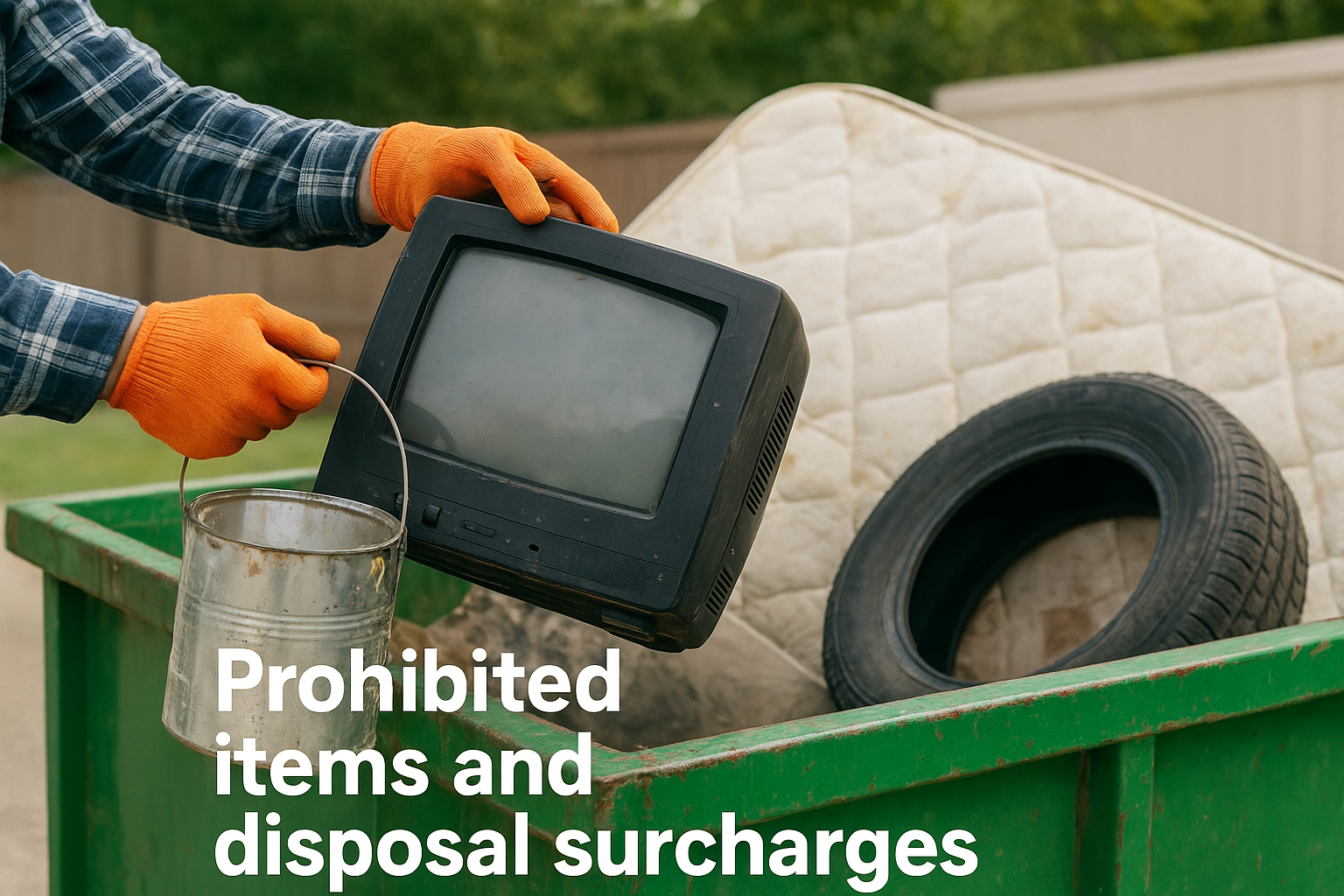
- Hazardous waste: paint, solvents, chemicals, and asbestos-containing materials
- Electronics and appliances: TVs, refrigerators, and items containing refrigerants
- Tires and batteries: both require specific disposal pathways
- Mattresses: many facilities charge a separate processing fee for these
If restricted items end up in your container without prior disclosure, your provider will add a surcharge to handle them correctly. Sorting out prohibited materials before your rental window starts keeps the final bill predictable and avoids delays on pickup day.
Rental extension and swap fees
Standard rental periods run five to ten days for most providers. If your project runs longer, expect a daily extension charge that typically falls between $5 and $20 per day. Needing a second container swapped in mid-project costs even more, since it triggers a full pickup and redelivery cycle.
Booking a slightly longer window upfront almost always costs less than paying daily overage rates once you’ve gone past your original agreement. If your timeline feels uncertain, ask your provider what a two or three day extension would run before you sign, so you already know the number if you end up needing it.
How to get an accurate quote fast
Getting an accurate quote doesn’t require a long back-and-forth. Most rental companies can give you a firm number in a single conversation if you walk in with the right information ready. Knowing how much does dumpster rental cost for your specific project comes down to giving your provider enough detail to match a container size, estimate haul weight, and flag any local requirements that apply to your address.
Know what to have ready before you call
Preparing a few key details upfront cuts the quoting process down significantly and reduces the chance of a number changing after delivery. Before you reach out to a rental company, have this information ready:
- Project type and scope: Are you doing a full home cleanout, a kitchen remodel, or a roofing job? A one-sentence description is enough.
- Primary debris type: Light household items, construction waste, roofing shingles, concrete, or mixed materials all affect pricing differently.
- Delivery address: Providers who operate locally can immediately flag permit requirements or access challenges for your specific street or neighborhood.
- Preferred delivery date and rental length: Even a rough timeline helps the company confirm availability and quote the correct rental window.
- Driveway or site access: Note any overhead obstructions, narrow driveways, or weight-restricted roads that could complicate delivery.
Having this information ready before you make a single call means you get a real number rather than a range that shifts once the driver actually shows up.
What to ask your provider
Once you’re on the call, asking the right questions protects you from add-on charges that aren’t obvious in the base rate. A reliable company will answer these clearly and without hesitation.
Start by asking what the included weight allowance is and what the per-ton overage rate looks like if you exceed it. Then confirm whether the quoted price covers delivery and pickup or whether those are billed separately. Ask about the rental window length and what an extension costs per day if your project runs long. Finally, check whether your town requires a permit for street placement and whether that cost is included or added on top.
A company that can’t answer these questions directly is one worth being cautious about before you hand over a credit card.
Quick recap
Dumpster rental pricing comes down to a handful of variables you can control before you ever place an order. Container size sets your base price, and debris type determines whether you’ll owe weight overage charges on top of that. Rental duration, local permit requirements, and site access round out the factors that shape your final number.
Knowing how much does dumpster rental cost for your specific project means preparing a short list of details before you call and asking your provider the right questions upfront. Prohibited items, weight limits, and extension fees are the most common sources of surprise charges, and all three are avoidable once you know to ask about them.
If you’re planning a project on Cape Cod or in the Plymouth area, get a quote from Dump Express for clear, upfront pricing with no hidden fees and a local team that already knows your area.