
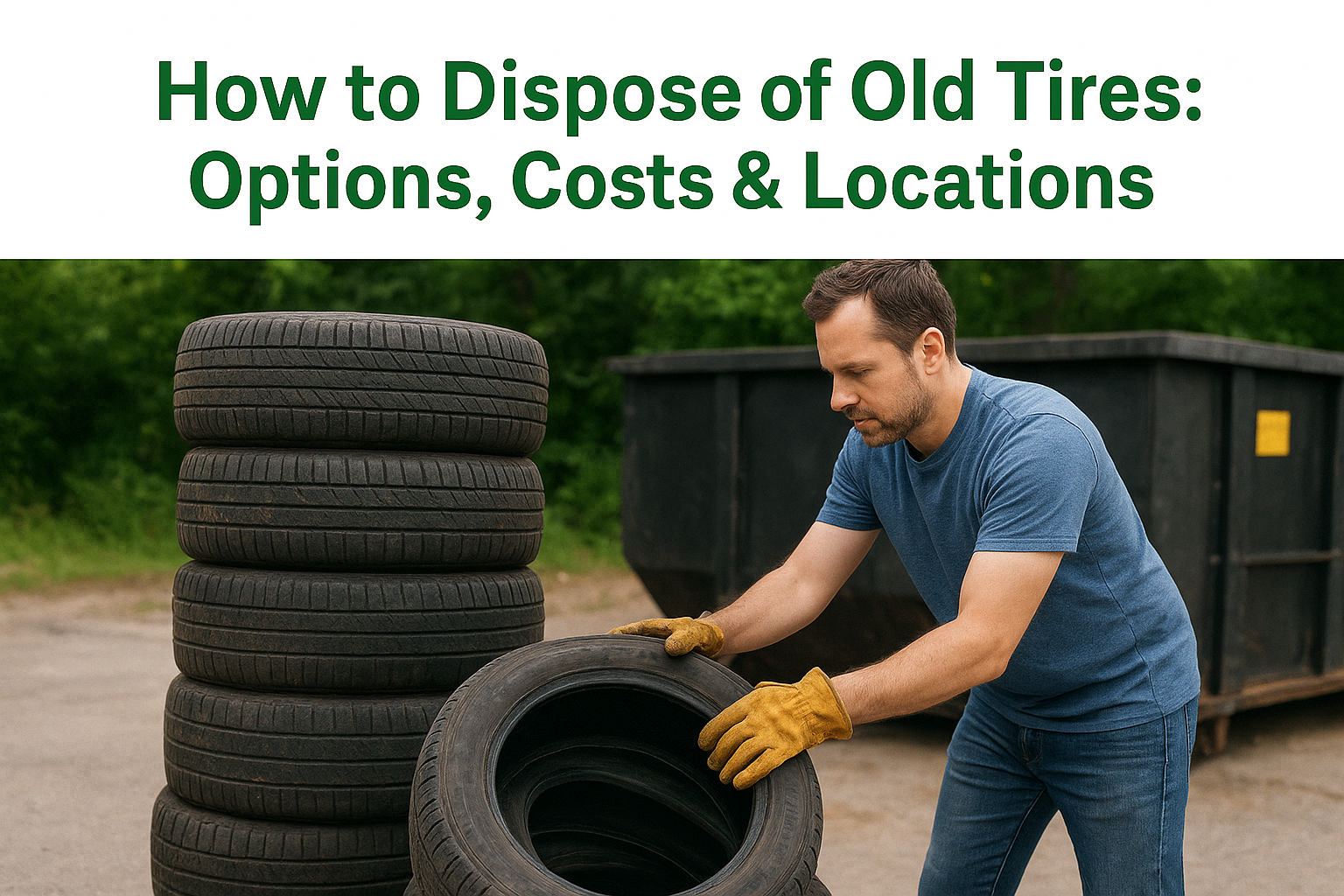
Old tires pile up faster than you’d think. A few from a car swap, a stack left behind after a driveway cleanout, or a dozen sitting in a contractor’s yard after a job. Figuring out how to dispose of old tires isn’t as simple as tossing them in your regular trash. Most municipal haulers and landfills across Massachusetts flat out refuse them, and for good reason: tires trap gas, take up landfill space, and create fire and mosquito breeding hazards when stacked outdoors.
The good news is you have real options, from tire retailers with take-back programs to town transfer stations that accept them for a per-tire fee, to dumpster rental when you’re dealing with volume alongside other renovation or cleanout debris. Costs typically range from $2 to $25 per tire depending on size and where you drop them off.
This guide walks through every practical route available on Cape Cod and in Plymouth, what each option costs, and when renting a dumpster makes more sense than hauling tires one at a time. We’ll also cover local disposal rules you need to know before you load up your truck, so you don’t get turned away or hit with surprise fees.
What to know before you get rid of old tires
Tires count as regulated waste in Massachusetts, not ordinary trash. The state banned whole tires from landfills and combustion facilities years ago because they take up space, trap methane, and burn dirty if they catch fire. That means your curbside hauler almost certainly won’t take them, and if you show up at a transfer station without knowing the local rules, you could get turned away on the spot.
Tires are banned from Massachusetts landfills, so you need a dedicated disposal path before you load up your truck.
Before you move a single tire, figure out three things: how many you have, what condition they’re in, and whether they’re still on rims. Rims add weight and sometimes a separate fee, since some facilities charge more to remove and recycle the metal. Tire count matters too, because most transfer stations and shops price per tire, and the fee jumps once you cross a threshold, often five or ten tires per visit.
Check your town’s specific rules before you go. Each Cape Cod and Plymouth-area town runs its transfer station a little differently:
- Some require a resident permit or sticker to drop off any waste, tires included
- Others cap the number of tires accepted per visit, per household, or per day
- A few only accept tires on certain days of the week or during specific seasonal hours
- Rim removal may cost extra, typically $1 to $3 per tire
A quick call to your local transfer station or DPW saves you a wasted trip. If you’re dealing with a handful of tires from a routine swap, this legwork is quick. If you’ve got a stack of a dozen or more from a cleanout or job site, it’s worth weighing whether hauling them piece by piece even makes sense, which is where the next few steps come in.
Step 1. Check your tires for reuse or resale
Before you haul tires anywhere, look at what you’re actually dealing with. Tread depth and sidewall condition tell you almost everything. Run a penny test: if Lincoln’s head disappears into the tread groove, you’ve got at least 2/32 of an inch left, which might be enough for a private buyer or a budget tire shop looking for used inventory. Cracked sidewalls, bulges, or exposed steel belts mean the tire is done, no exceptions.
A tire with decent tread left is worth more sold than scrapped, so check before you toss.
Separate your pile into three groups: tires with good tread and no damage, tires that are borderline, and tires that are clearly shot. For the first group, local buy-and-sell platforms and used tire shops on Cape Cod often pay $10 to $30 per tire, especially for common sizes off newer sedans and pickups. Borderline tires can sometimes go to a shop for retreading if they’re a commercial size, like those off box trucks or trailers.
This sorting step takes fifteen minutes and can turn a disposal cost into cash, or at least trim down the number you need to pay to get rid of. Anything left over moves to Step 2.
Step 2. Return tires to your retailer or tire shop
Most people don’t realize their nearest tire shop already has a disposal system built in. When you buy new tires, retailer take-back programs almost always include removal of your old set, and many shops will accept old tires even if you didn’t buy from them, for a modest fee. This is often the fastest route if you’re only dealing with four tires from a routine swap and don’t want to make a separate trip to a transfer station.
Buying new tires? Ask the shop to haul away the old ones on the same visit and skip a separate disposal trip.
Rates vary by shop and by whether the tires are mounted on rims. Here’s what to expect on Cape Cod and in Plymouth:
| Scenario | Typical fee per tire |
|---|---|
| Buying new tires, old set included | $0 to $3 |
| Drop-off only, no purchase | $3 to $6 |
| Tires still on rims | Add $1 to $2 |
Questions worth asking before you drive over: do they take passenger tires only or also light truck sizes, is there a per-visit limit, and do they charge extra for rim removal. Calling ahead beats showing up to a tire disposal near me search result that turns you away for exceeding their daily count.
Step 3. Take tires to a recycling center or landfill
When a tire shop isn’t practical, your town’s transfer station or landfill is the next stop. Most Cape Cod and Plymouth-area towns accept tires for a per-tire fee, though a handful ban them outright and point residents to a regional recycling center instead. This route works best when you’ve got more tires than a shop wants to handle in one visit, but not so many that you’re better off renting equipment.
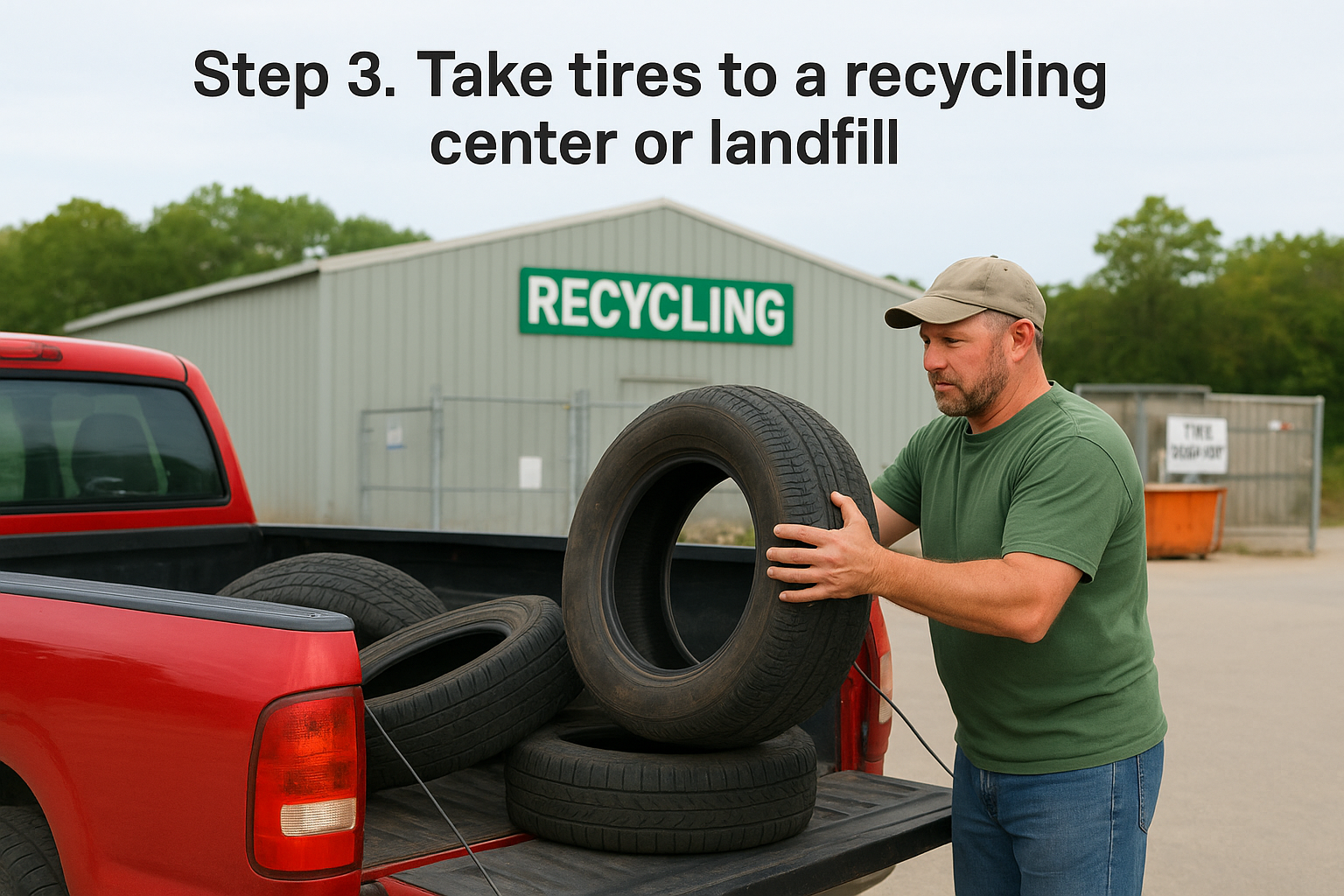
A town transfer station is often the cheapest legal option once your tire count climbs past what a retailer will take for free.
Pricing swings by town and tire size. Expect something close to this range:
| Tire type | Typical drop-off fee |
|---|---|
| Passenger car tire | $2 to $5 |
| Light truck or SUV tire | $4 to $8 |
| Tire on rim | Add $1 to $3 |
| Commercial or oversized tire | $10 to $25 |
Bring cash or a check, since many transfer stations don’t run card machines. Load tires flat in your truck bed or trailer, not standing upright, so they don’t roll during transport. Call ahead to confirm your town accepts non-resident drop-offs if you’re hauling tires collected from a job site outside your home municipality, since some facilities restrict access to local taxpayers only.
Step 4. Rent a dumpster for large tire removal jobs
Once you’re past 15 or 20 tires, especially mixed in with construction debris, old flooring, or a garage cleanout, a dumpster rental usually beats a dozen separate trips to the transfer station. Contractors clearing a job site with tires, rims, and general debris save time by tossing everything into one container instead of sorting loads for different drop-off points.
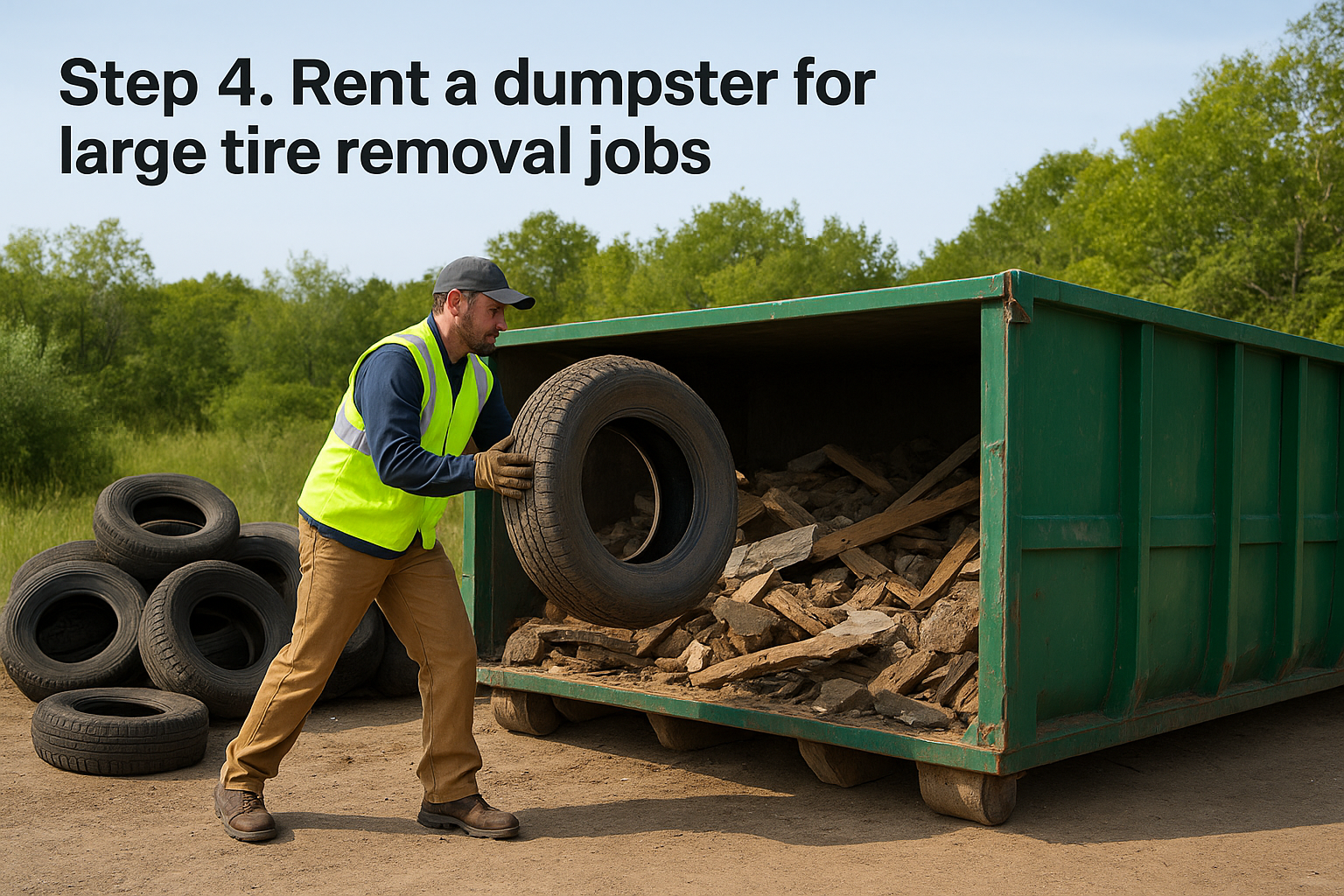
Once tire count climbs past what a shop or transfer station wants in one visit, a dumpster turns a multi-trip hassle into a single pickup.
When it makes sense
Dumpster rental fits these situations best:
- You’re clearing out a garage, barn, or storage unit with 15+ tires mixed with other junk
- A contractor needs debris and tires removed from the same job site
- You want one predictable cost instead of per-tire fees adding up across multiple stops
What to expect
Most providers charge a flat rental fee based on container size, sometimes with a per-tire surcharge since tires require separate handling at the disposal facility. A 15-yard container typically runs $350 to $500 depending on your town, plus a modest tire fee. Dump Express delivers containers across Cape Cod and Plymouth with transparent, town-specific pricing, so you know the total before booking, no surprise charges once the truck shows up.
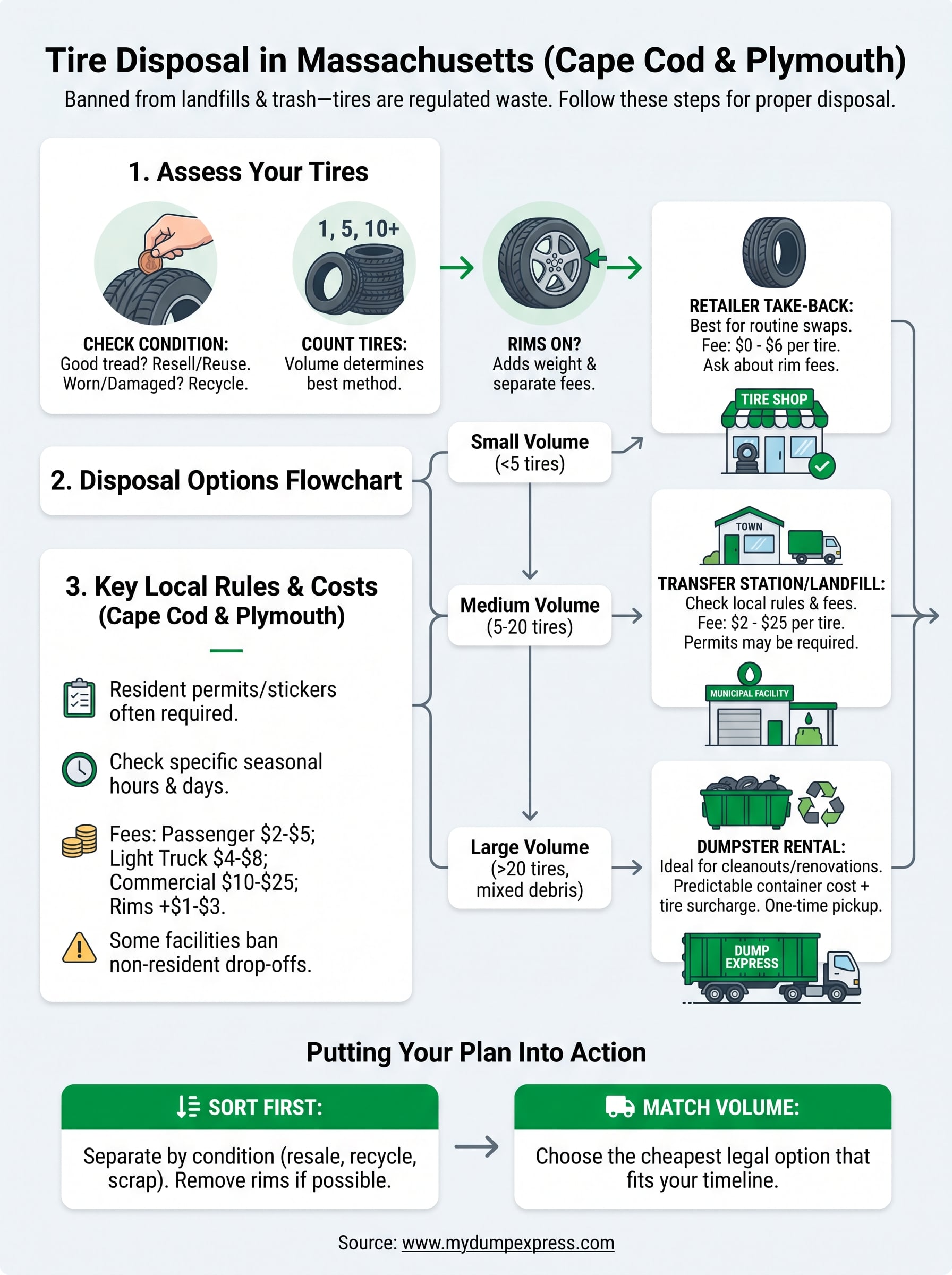
Putting Your Tire Disposal Plan Into Action
Getting rid of old tires comes down to matching your pile to the right method. A handful from a routine swap goes back to the shop or into resale. A stack from a cleanout heads to the transfer station. A job site full of tires, framing, and debris calls for a container that handles it all in one pickup.
Don’t guess your way through this. Sort first, then match your volume to the cheapest legal option that actually fits your timeline. Skipping that step is how people end up paying retail fees for tires they could’ve sold, or making four trips to the transfer station when one dumpster would’ve done the job.
If your tire count is climbing past what a shop or transfer station wants to handle, get a fast, transparent quote from Dump Express and have a container on-site as soon as tomorrow.