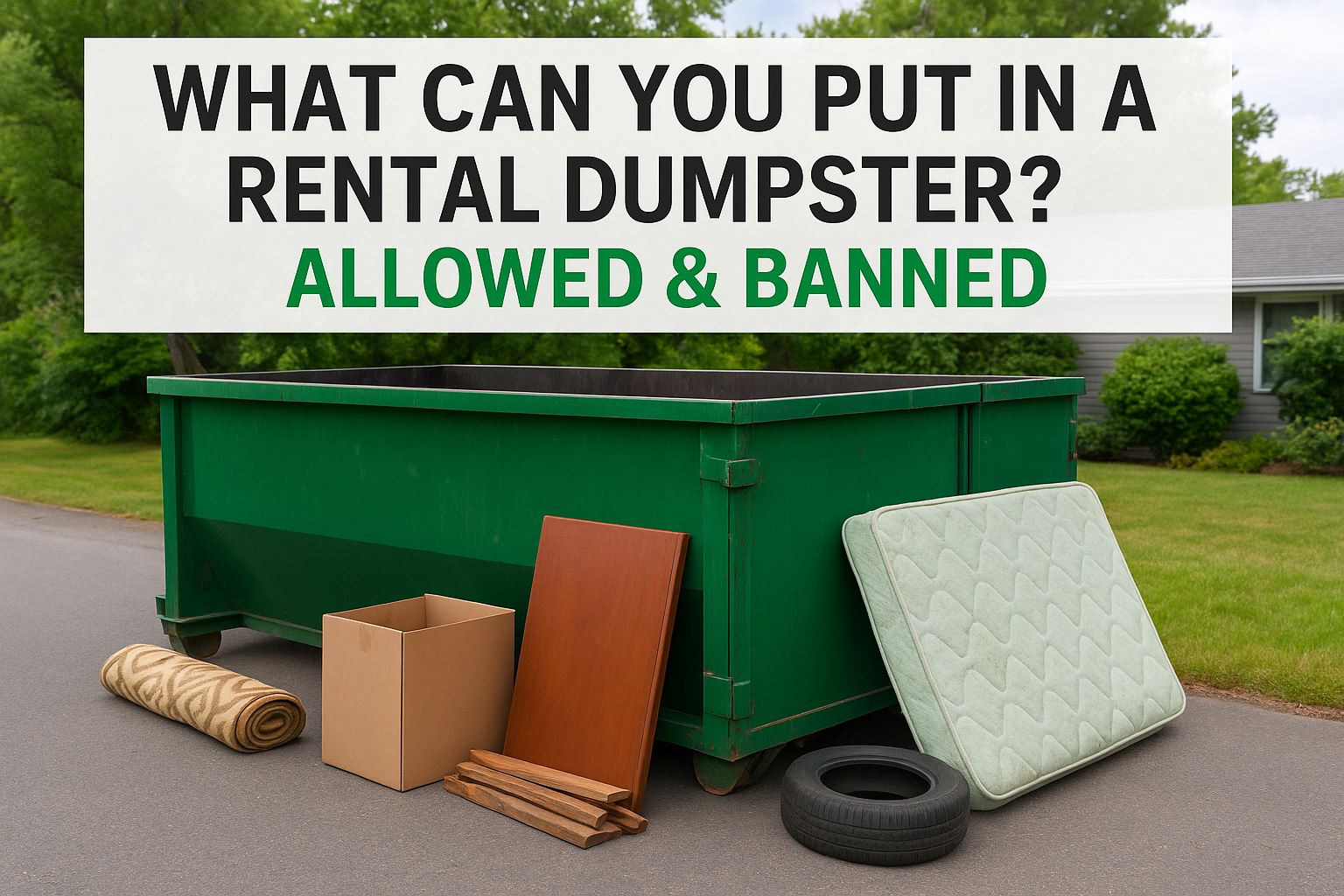
You rented a dumpster, it’s sitting in your driveway, and now you’re staring at a pile of stuff wondering what can you put in a rental dumpster, and what’s going to get you hit with a fee or a flat-out rejection. It’s a fair question. Most people don’t think about disposal rules until they’re mid-project with a container already on-site.
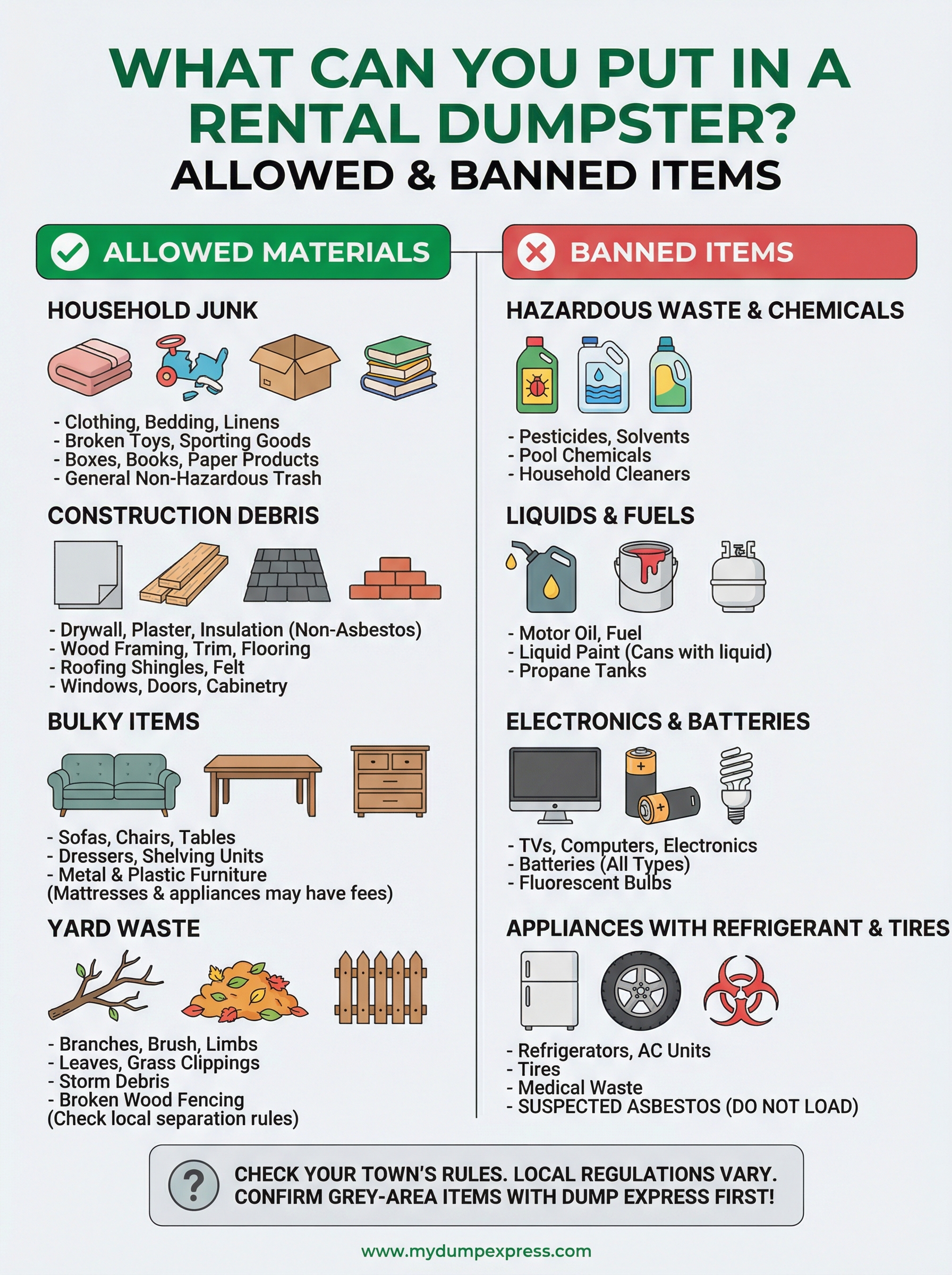
The answer depends on the material. Household junk, construction debris, and yard waste are generally fine. But certain items, like paint, batteries, tires, and appliances with refrigerants, are either restricted or banned outright due to local regulations and landfill requirements. Toss in the wrong thing and you could face surcharges, delayed pickups, or even refused loads.
At Dump Express, we’ve handled thousands of dumpster rentals across Cape Cod and Plymouth over the past 20+ years. We know exactly what local disposal facilities accept and reject, and we’d rather you have that information upfront than deal with surprises later. Below, you’ll find a straightforward breakdown of allowed materials, banned items, and the gray-area stuff that tends to cause confusion, so you can load your dumpster with confidence and keep your project moving without setbacks.
1. Confirm what your dumpster rental allows with Dump Express
Before you load anything, check in with Dump Express directly. What can you put in a rental dumpster varies by town, landfill, and the type of material you’re hauling. A quick call or message before your project starts saves you from costly surprises and wasted time mid-project.
Get the accepted and prohibited list for your town
Cape Cod and Plymouth area towns don’t all operate under the same disposal rules. Each municipality can have different restrictions based on the transfer stations and landfills that serve that area. Dump Express covers 40+ local towns and knows the specific rules for each one, so ask for the accepted and prohibited list that applies to your location before you start loading.
Some items are banned in certain towns but accepted a few towns over. Getting town-specific guidance upfront means you won’t load materials that will get flagged or refused at the facility.
Ask about surcharges, special handling, and landfill rules
Some materials are technically allowed in a dumpster but come with additional fees or special handling requirements. Mattresses, appliances, and loads that include heavy materials like concrete can trigger surcharges at the landfill. Ask Dump Express upfront about any items you’re unsure about so you can budget accurately and avoid a surprise charge when the dumpster gets picked up.
If you’re dealing with a renovation or cleanout that involves mixed materials, go through your pile before you book, not after.
Plan pickup timing around facility hours and job timelines
Dump Express schedules pickups on business days when disposal facilities are open. If your project wraps over a weekend or you finish earlier than planned, that timing matters. Give the team your expected completion window so they can line up a pickup that works with both your schedule and facility operating hours.
Avoid common mistakes that trigger extra fees
The most common issues come from prohibited items mixed into a load or going over the weight limit for your chosen container size. Heavy materials like soil, concrete, and roofing shingles add up fast. Follow the weight guidelines for your dumpster size and keep restricted materials out from the start. When you’re unsure about a specific item, contact Dump Express before it goes in.
2. Throw away household junk and non-hazardous trash
For most home cleanouts and decluttering projects, a rental dumpster handles the bulk of your load without complications. Non-hazardous household junk covers a wide range of everyday materials, and knowing what fits that definition helps you load faster and avoid unnecessary calls.
Put these common items in your dumpster
General household debris is fair game for most rentals. The following items are widely accepted at Cape Cod and Plymouth area disposal facilities:
- Clothing, bedding, and linens
- Broken toys, sporting goods, and small tools
- Boxes, books, magazines, and paper products
- General trash bags and small home goods
Keep these household items out of the dumpster
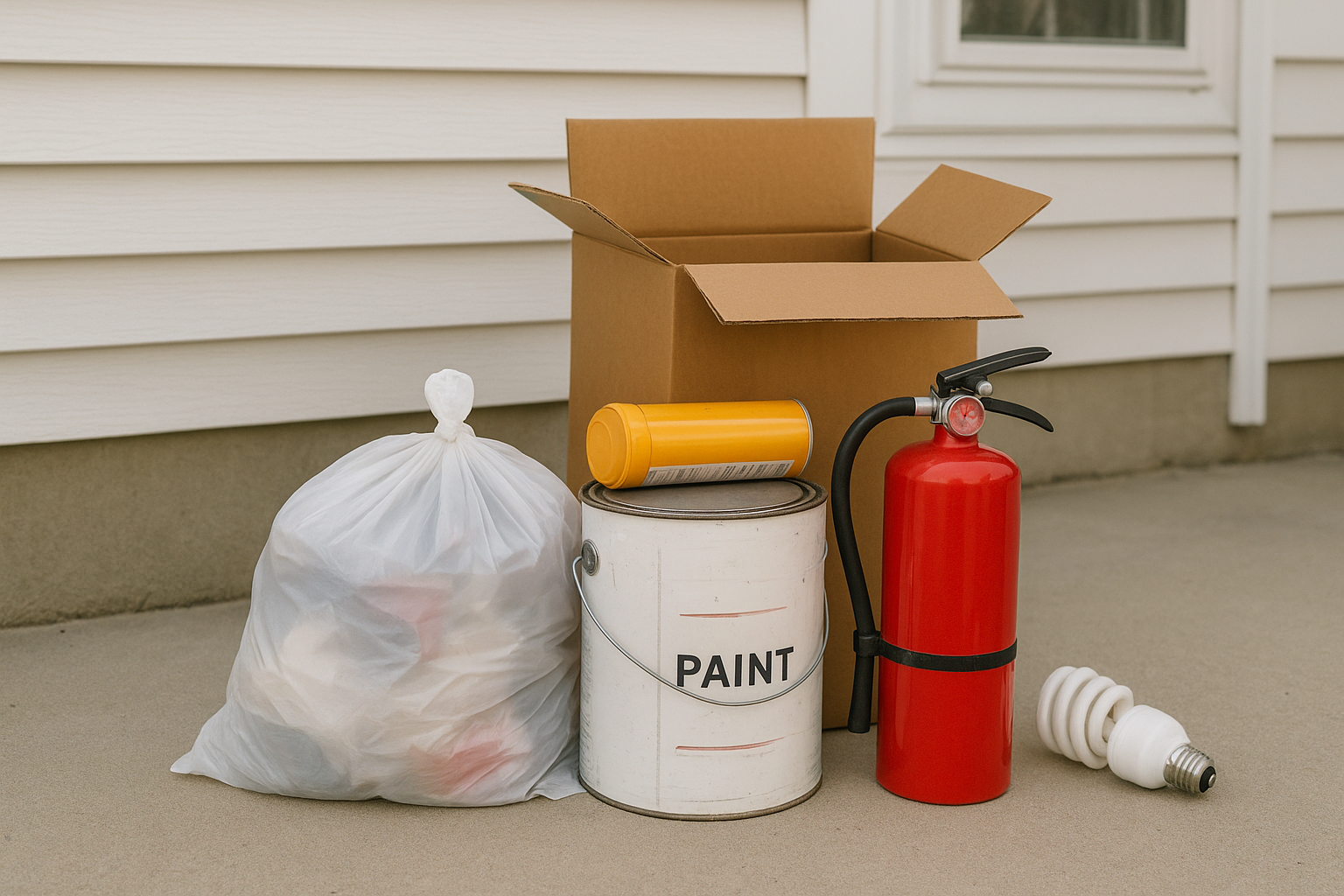
Not everything from a home cleanout qualifies as standard trash. Items that contain hazardous components need separate handling regardless of how harmless they look, including paint cans with liquid paint, aerosol cans, fluorescent bulbs, smoke detectors, and fire extinguishers.
If you’re unsure whether something is non-hazardous, set it aside and contact Dump Express before it goes in the container.
Bag, bundle, and load household debris the right way
Bag loose trash before tossing it in to keep the load contained during transport. Heavy items go on the bottom, with lighter debris stacked on top to keep the container balanced and within weight limits.
Prevent odors, pests, and windblown litter
Food waste and wet materials attract pests quickly, especially in warmer months. Double-bag anything perishable or damp so it doesn’t break open during the haul or create problems for the driver at pickup.
3. Load construction and renovation debris
Renovation and remodel projects generate a lot of mixed debris, and a rental dumpster is one of the most efficient ways to handle it. Knowing what can you put in a rental dumpster for a construction job prevents costly mistakes and keeps your project on schedule.
Dispose of common remodel materials safely
Most standard building materials are accepted at Cape Cod and Plymouth area disposal facilities. The following items are generally fine to toss in your container:
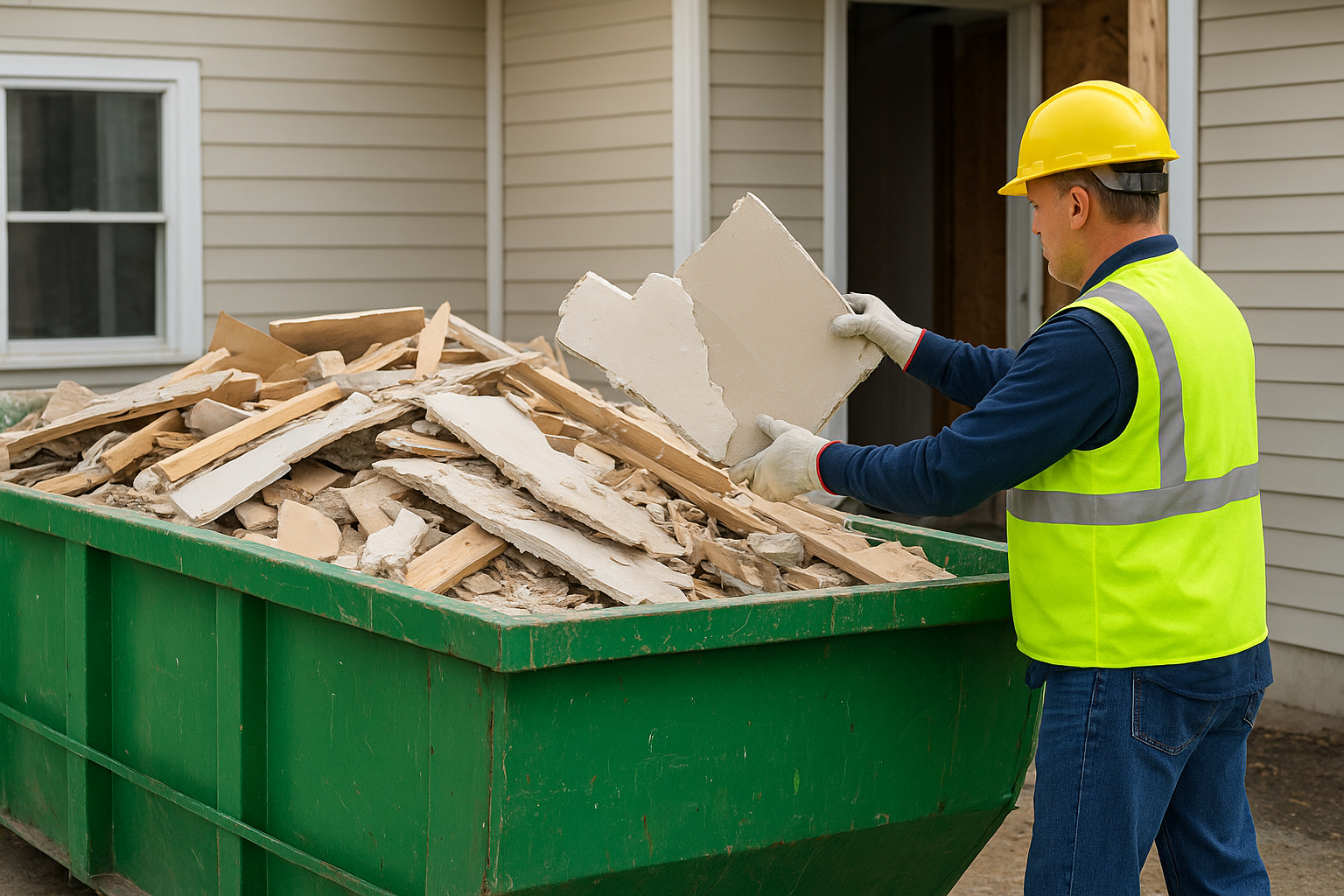
- Drywall, plaster, and insulation (non-asbestos)
- Wood framing, trim, and flooring
- Roofing shingles and felt paper
- Bricks, concrete, and masonry in smaller quantities
- Windows, doors, and cabinetry
Keep heavy materials like concrete and brick manageable by breaking them into smaller pieces before loading, since dense debris adds weight fast.
Watch for hidden hazards in demolition debris
Older homes often contain materials that require special handling before disposal. Drywall or insulation in homes built before the 1980s may contain asbestos. Do not load any suspected asbestos material into a dumpster without professional testing and abatement first.
Separate materials that often require different handling
Some construction debris, including treated wood, painted materials, and metal scraps, may need to be sorted depending on local facility rules. Ask Dump Express before mixing multiple material types into one load.
Control dust, nails, and sharp materials during loading
Wrap sharp debris like broken glass and exposed nails in cardboard or heavy plastic before placing them in the container. Keeping loose materials bagged or bundled protects drivers and speeds up the haul.
4. Dispose of furniture, mattresses, and bulky items
Bulky items are some of the most common things people wonder about when asking what can you put in a rental dumpster. The good news is that most furniture and large household items are accepted, but a few specific pieces carry restrictions or added fees depending on local facility rules.
Include these bulky items in most rentals
Most standard furniture loads without any issue. Sofas, chairs, tables, dressers, and shelving units are generally accepted at Cape Cod and Plymouth area disposal facilities. Wood furniture, metal frames, and plastic pieces all qualify as non-hazardous bulky waste and can go straight into your container.
Expect restrictions or fees for these bulky items
Mattresses and appliances are the two categories that most often trigger surcharges. Many facilities charge separately for mattress disposal due to recycling requirements. Appliances that contain refrigerant, such as refrigerators, freezers, and air conditioners, require certified refrigerant removal before disposal and cannot go into a standard dumpster.
Confirm with Dump Express before loading any appliance or mattress so you know the exact fee and handling requirement upfront.
Break down items to save space and reduce trips
Disassembling furniture before loading saves significant container space and helps you fit more into a single rental. Remove legs, take apart bed frames, and flatten any foldable or modular pieces to maximize the usable volume in your dumpster.
Choose drop-off, donation, or recycling when it fits
Items in good working condition can often go to a local donation center instead of the dumpster. Keeping reusable furniture out of your load reduces weight, cuts costs, and frees up space for debris that has no other disposal option.
5. Handle yard waste, brush, and storm cleanup
Yard cleanups and storm recovery jobs generate large volumes of organic debris quickly, and a rental dumpster handles most of it without complications. Knowing what can you put in a rental dumpster for outdoor projects prevents rejected loads and keeps your cleanup on schedule.
Toss yard debris that most landfills accept
Most standard yard waste is accepted at Cape Cod and Plymouth area disposal facilities. Common materials you can load include:
- Branches, brush, and small tree limbs
- Leaves and grass clippings
- Storm debris like fallen wood
- Broken fencing and wood garden structures
Avoid mixing yard waste when rules require separation
Some local facilities require yard waste to stay separate from general construction or household debris. Mixing organic material with other trash can trigger a facility rejection or surcharge, so confirm with Dump Express before combining materials in one load.
Check your town’s yard waste rules before you start loading to avoid a rejected haul.
Reduce weight and mess with smart loading habits
Wet leaves and saturated debris add significant weight fast. Cut branches into shorter lengths before loading to reduce air pockets and fit more into the container per trip. Dense, compact loads lower your overall disposal costs.
Use composting and town programs when they help
Many Cape Cod towns offer compost drop-off programs for leaves and grass clippings. Diverting clean organic waste to those programs frees up dumpster space for heavier storm debris and material with no other disposal option.
6. Keep these items out of every rental dumpster
No matter what project you’re tackling, certain materials are off-limits in every rental dumpster without exception. These restrictions exist because specific items pose serious risks to workers, transport vehicles, and disposal facilities. Knowing what can you put in a rental dumpster means understanding this hard line just as clearly as the accepted materials list.
Block hazardous waste and chemicals
Hazardous household chemicals like pesticides, pool chemicals, and cleaning solvents cannot go into a rental container. These materials require certified disposal through local hazardous waste programs to prevent environmental contamination and safety violations.
Do not dump liquids, oils, fuels, and propane
Liquid waste of any kind, including motor oil, fuel, and propane tanks, is strictly prohibited. Liquids leak during transport, contaminate other materials, and create serious fire and environmental hazards at the disposal facility.
Contact your town’s household hazardous waste program for proper disposal options before your project starts.
Keep batteries, electronics, and light bulbs out
Batteries and electronics contain toxic materials that require separate recycling streams. Fluorescent bulbs and compact fluorescent lamps hold mercury and cannot go into standard waste loads under Massachusetts disposal rules.
Avoid tires, appliances with refrigerant, and medical waste
Tires and refrigerant-containing appliances each require specialized disposal processes that a standard dumpster load cannot accommodate. Medical waste, including sharps and biological materials, is never accepted under any circumstances.
Treat asbestos and suspected asbestos as a stop sign
If your project involves any material you suspect contains asbestos, stop loading immediately. Asbestos requires licensed abatement and certified disposal completely separate from standard dumpster service.
Next steps
Now you know what can you put in a rental dumpster and what stays out. Accepted materials include household junk, construction debris, furniture, and yard waste. Banned items include hazardous chemicals, liquids, tires, refrigerant appliances, batteries, electronics, and anything containing asbestos. Getting clear on both lists before your project starts keeps your rental running smoothly and your costs predictable.
Your next move is to contact Dump Express before you book so you get town-specific guidance tailored to your location on Cape Cod or Plymouth. Bring your material list to that conversation and ask about any items that fall into a gray area. The team will confirm accepted materials, flag potential surcharges, and help you choose the right dumpster size for the job.
Book your dumpster rental with Dump Express and get the local guidance you need to load with confidence from day one.