
Whether you’re clearing out a garage, gutting a bathroom, or managing debris from a full renovation, one of the first questions that comes up is cost. Roll off dumpster rental pricing varies widely depending on where you live, what size container you need, and what you’re throwing away. Without a clear picture of what drives those numbers, it’s easy to overpay, or get hit with charges you didn’t see coming. Understanding the cost breakdown before you book saves you money and headaches.
At Dump Express, we’ve spent over 20 years delivering dumpsters across Cape Cod and Plymouth, Massachusetts. We talk to homeowners and contractors every day who want straight answers on pricing, not vague estimates buried behind a quote request form. That hands-on experience gives us a clear view of what actually affects your final bill, from container size and rental duration to landfill fees and debris type. We built our business around transparent, town-specific pricing because we believe you should know what you’re paying before the dumpster hits your driveway.
This article breaks down 2026 roll off dumpster rental costs by size, covering national averages for 10- to 40-yard containers and the key factors that shift pricing up or down. By the end, you’ll have the information you need to budget accurately and choose the right dumpster for your project.
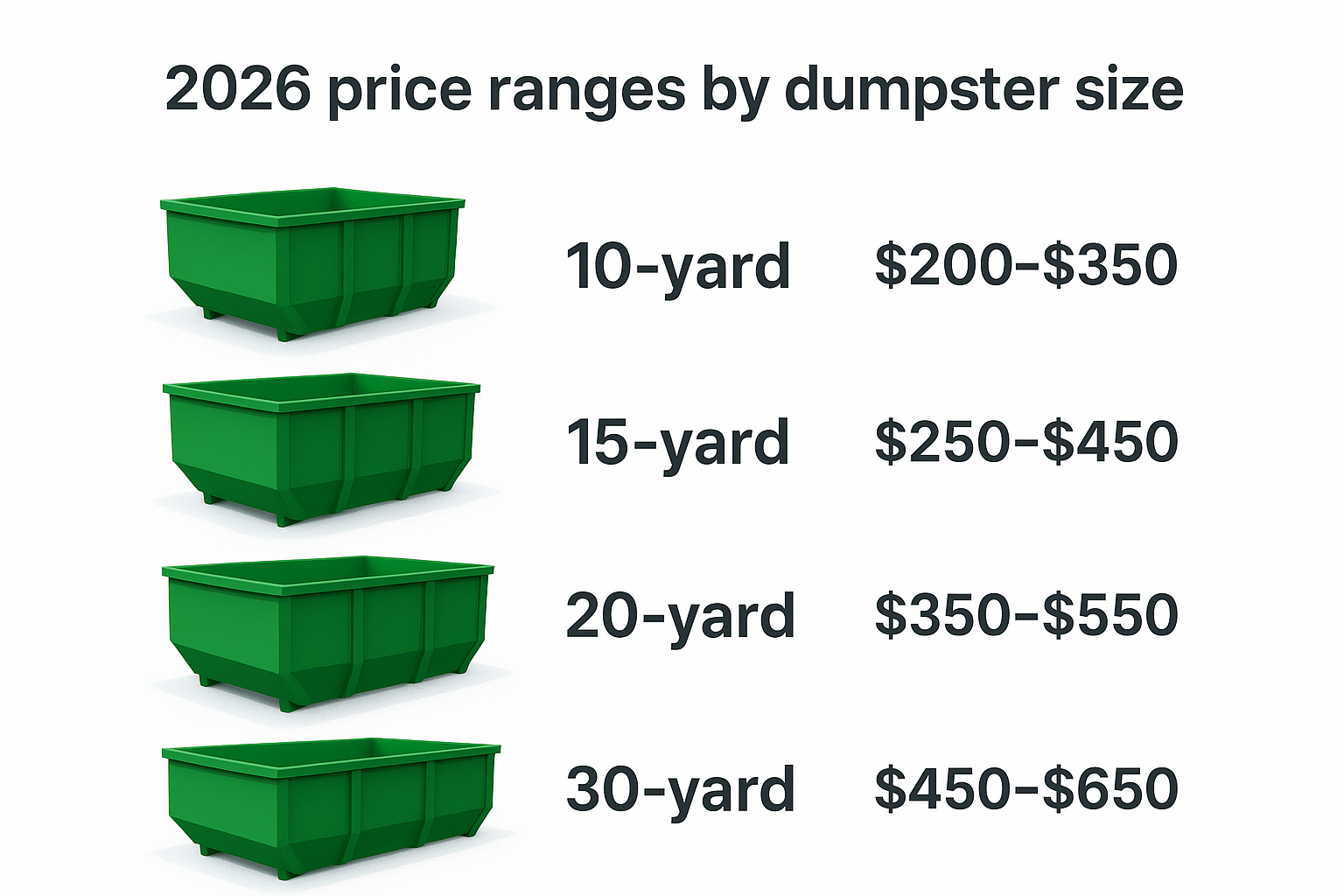
2026 price ranges by dumpster size
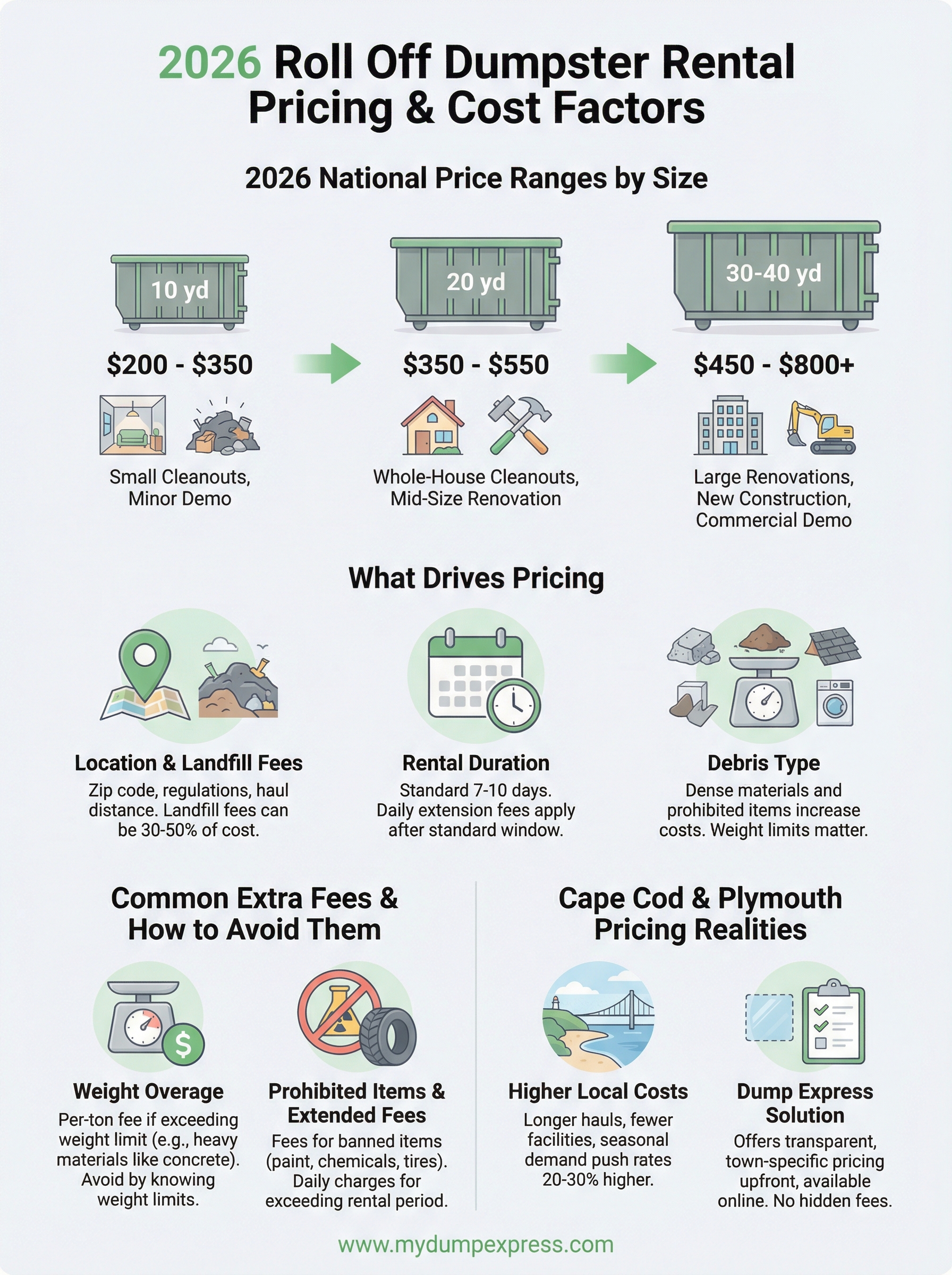
The clearest way to get a handle on roll off dumpster rental pricing is to start with container size. Dumpster size determines the base rate more than any other single factor, and choosing the wrong size either leaves you paying for capacity you don’t use or forces you to schedule a second haul mid-project. Nationally, rental prices in 2026 range from roughly $200 for a small 10-yard container to over $800 for a 40-yard unit. Your actual quote lands somewhere in that range based on your location, rental duration, and what you’re loading.
10- and 15-yard dumpsters
Small containers fit single-room cleanouts, small landscaping jobs, or light construction debris. A 10-yard dumpster holds about 10 cubic yards of material, which is roughly equivalent to three full pickup truck loads. Nationally, 10-yard rentals average between $200 and $350, while 15-yard containers typically run $250 to $450. These sizes suit homeowners who need short-term waste removal without a large volume of debris to move.
If you’re tackling a bathroom remodel or a garage cleanout, a 10- or 15-yard dumpster handles most of that debris without you paying for space you won’t fill.
| Size | National Average | Approx. Capacity | Best For |
|---|---|---|---|
| 10-yard | $200-$350 | ~3 truck loads | Small cleanouts, minor demo |
| 15-yard | $250-$450 | ~4.5 truck loads | Room renovations, yard debris |
20-yard dumpsters
The 20-yard container is the most commonly rented size for residential projects. It fits whole-house cleanouts, roofing tear-offs, and mid-size renovation debris without going bigger than necessary. Average national pricing for a 20-yard roll off runs between $350 and $550 for a standard rental period, usually seven to ten days. Contractors use this size regularly for smaller job sites where space is tight but volume is still substantial.
30- and 40-yard dumpsters
Larger containers serve full home renovations, new construction builds, and commercial demolition projects. A 30-yard unit averages $450 to $650 nationally, while a 40-yard container typically costs $500 to $800 or more depending on region. Both sizes carry significantly more material per load, but they also require more physical space on your property or job site. Some municipalities require a permit for containers this large when placed on a public street, so factor that into your budget from the start.
| Size | National Average | Approx. Capacity | Best For |
|---|---|---|---|
| 30-yard | $450-$650 | ~9 truck loads | Large renovations, new construction |
| 40-yard | $500-$800+ | ~12 truck loads | Commercial demo, major builds |
What drives roll-off dumpster prices
Roll off dumpster rental pricing doesn’t follow a single formula. Several variables push your quote up or down, and knowing which ones apply helps you make smarter decisions before you book. The three biggest cost drivers are your location, how long you keep the container, and what type of debris you load.
Location and landfill fees
Your zip code plays a significant role in what you pay. Landfill tipping fees vary by region, and haulers pass those costs directly to you as part of the base rate. Areas with stricter environmental regulations or longer haul distances to transfer stations consistently charge more for the same container size.
Landfill fees alone can account for 30 to 50 percent of your total rental cost, depending on the region.
Urban markets with multiple haulers competing often have lower base rates, while rural or coastal areas like Cape Cod see higher prices because of limited competition and longer routes to disposal facilities. This is why getting a locally sourced quote matters more than relying on national averages alone.
Rental duration and debris type
Most rental agreements include a standard window of seven to ten days. Going past that window adds daily extension fees, typically $5 to $15 per extra day. Beyond duration, what you load into the container affects your final bill just as much. Weight limits are built into every rental, and these materials push you over fast:
- Concrete and masonry
- Roofing shingles
- Soil and dirt
- Appliances and mattresses (often carry separate material surcharges)
Lighter debris like drywall or household junk rarely triggers overage charges. Dense construction waste, though, can push you well past the included weight allowance and add $50 to $100 or more per excess ton to your total.
How to estimate your cost before you book
Getting a rough cost estimate before you commit saves you from sticker shock and makes it easier to compare quotes side by side. The good news is that estimating roll off dumpster rental pricing doesn’t require a contractor or a spreadsheet. You need three pieces of information: your project scope, your location, and how long you plan to keep the container.
Match your project to a container size
Start by walking through your project and thinking about volume. A single-room cleanout rarely needs more than a 10- or 15-yard container. A full-home renovation or roofing job typically calls for a 20-yard unit. Large construction or demolition work lands in the 30- to 40-yard range. Overestimating your size is one of the most common ways people overpay, so be realistic about how much material you’re actually moving before you pick a container.
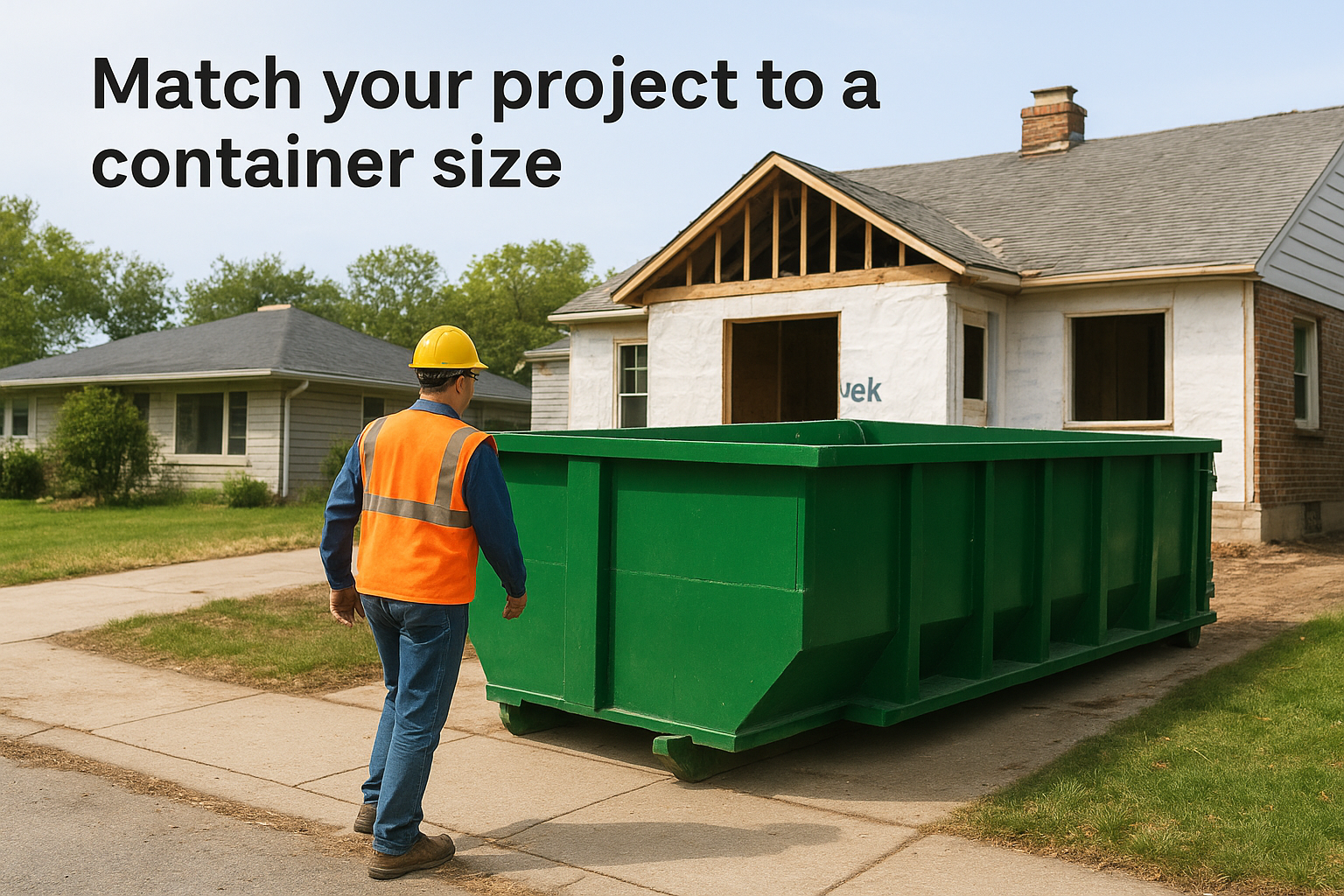
When in doubt, call your local hauler and describe the project. A good provider will ask the right questions and steer you toward the right size without upselling you.
A quick sizing reference:
- Small cleanout or single room: 10 yards
- Bathroom or kitchen renovation: 15 yards
- Full-floor renovation or roofing job: 20 yards
- Whole-home gut or large construction: 30 to 40 yards
Account for what you’re loading
Dense materials like concrete, brick, or roofing shingles add weight fast and often push you past the included weight allowance in your rental agreement. Before you book, identify the heaviest materials in your load and ask your hauler whether they fall under the standard limit or trigger a per-ton surcharge. This single conversation can prevent a surprise charge of $100 or more on your final invoice.
Running this checklist on scope, debris type, and rental duration gives you a solid baseline to evaluate quotes with confidence.
Common extra fees and how to avoid them
Extra charges are where roll off dumpster rental pricing gets unpredictable for most customers. Most quotes cover a set weight limit and a standard rental period, but going past either one adds costs that aren’t always obvious upfront. Knowing the most common surcharges before you book puts you in a much better position to avoid them.
Weight overage charges
Weight limits are built into every rental, and haulers calculate them based on the debris type they expect you to load. If you exceed that limit, you pay a per-ton overage fee, which typically runs between $50 and $100 per ton depending on your region and hauler. Dense materials are the main culprit: concrete, soil, brick, and roofing shingles add up fast and catch renters off guard.
Ask your hauler for the exact weight limit in your rental agreement before you load anything heavy, and flag dense materials upfront so they can advise on whether a smaller container with a higher weight tier makes more sense.
Common heavy materials that trigger overage fees:
- Concrete and masonry
- Dirt and soil
- Roofing shingles
- Asphalt and pavers
Prohibited items and extended rental fees
Certain materials are banned from landfills entirely, and loading them into your dumpster creates problems for the hauler and additional costs for you. Hazardous waste, paint, chemicals, tires, and large electronics typically fall into the prohibited category. If your hauler discovers restricted materials, they may charge a removal fee or refuse to pick up the container until you clear it out.
Extended rental periods also generate daily extension fees once you pass the standard window. Most agreements run seven to ten days, and each additional day adds $5 to $15 to your bill. Scheduling your project to wrap within the rental window keeps that charge off your invoice entirely.
Cape Cod and Plymouth pricing realities
Roll off dumpster rental pricing on Cape Cod and in Plymouth runs higher than national averages, and that’s not a surprise to anyone familiar with the area. Longer haul distances to regional disposal facilities, limited local competition, and seasonal demand spikes all push base rates above what you’d see in a denser metro market. If you’re budgeting based on a national average you found online, expect to add 20 to 30 percent to that number before you finalize your project budget.
Why local pricing runs higher
Cape Cod has fewer disposal facilities and tighter regulations on what materials haulers can accept, which directly affects your cost. Transfer stations in the region charge higher tipping fees than inland Massachusetts facilities, and those fees flow through to every rental quote you receive. On top of that, seasonal demand from late spring through early fall compresses availability and keeps rates elevated during the months when most homeowners and contractors are running projects.
Because local disposal costs are fixed, the only way to reduce your total is to load efficiently, stay within your weight limit, and finish within your rental window.
What to expect from Dump Express pricing
Dump Express publishes town-specific pricing on its website so you can see exactly what a rental costs in your area before you call. That means no waiting on a quote form, no vague estimates, and no surprises when the invoice arrives. Rental options cover 5-yard, 10-yard, 15-yard, and 20-yard containers to fit projects ranging from a single-room cleanout to a full renovation on a Cape Cod property.
With delivery available seven days a week across 40-plus towns, scheduling around your project timeline is straightforward. If you have questions about sizing or prohibited materials, the local team picks up the phone and gives you a straight answer before you book.
Next steps
You now have a clear picture of roll off dumpster rental pricing in 2026, from national averages by container size to the surcharges and local factors that shift your final cost. The most important steps before you book are matching your container size to your actual project volume, identifying any heavy or restricted materials in your load, and confirming the rental window so you don’t rack up extension fees.
If your project is on Cape Cod or in Plymouth, skip the guesswork. Dump Express publishes town-specific pricing upfront, so you can see exactly what a rental costs in your area before you make a single call. Sizes range from a compact 5-yard container for a small cleanout to a 20-yard unit for full renovations, with delivery available seven days a week. Visit Dump Express to check pricing for your town and get your dumpster scheduled.