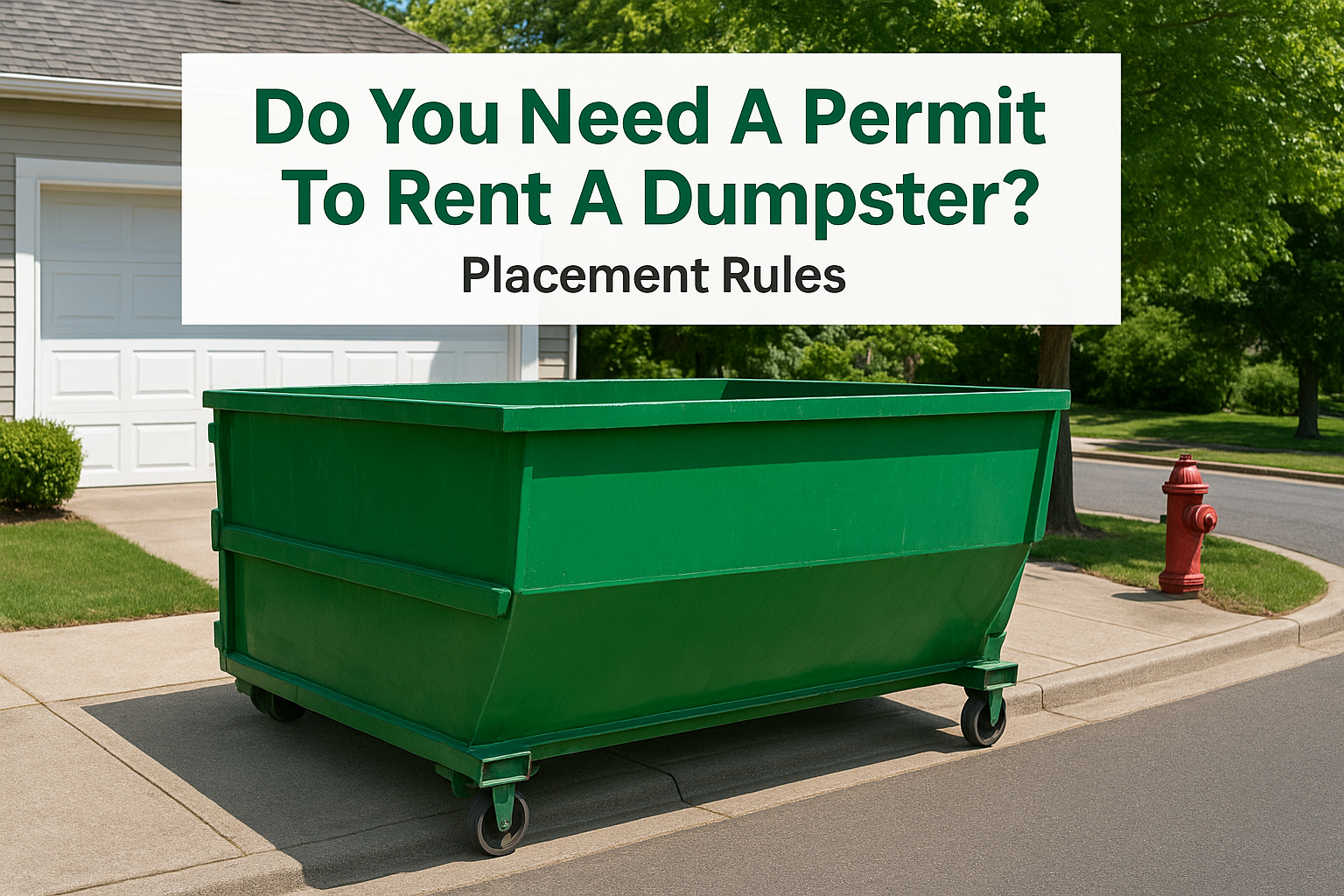
You’ve picked out your dumpster size, you’re ready to book, and then the question hits: do you need a permit to rent a dumpster? The answer depends almost entirely on where the dumpster will sit. Place it in your own driveway, and you’re usually fine. Roll it onto a public street, sidewalk, or right-of-way, and most municipalities will require a permit before that container touches the ground.
Here on Cape Cod and in the Plymouth area, permit rules vary from town to town. Some towns handle approvals quickly; others involve specific setback requirements, time limits, or fees. After 20-plus years of delivering dumpsters across 40+ local towns, we’ve seen just about every scenario at Dump Express, and we’ve helped customers navigate the process before they book, so there are no surprises on delivery day.
This guide breaks down when a permit is required, how to get one, what it typically costs, and how placement choices affect the whole process.
What a dumpster permit covers
A dumpster permit is a temporary authorization from your local municipality that allows a container to sit on public or semi-public space for a defined period. It has nothing to do with the dumpster rental itself – the rental company handles that side. The permit is strictly about placement. If the dumpster sits entirely on your private property, most towns don’t require one. The moment it moves onto a public street, sidewalk, or town right-of-way, the permit requirement kicks in, and skipping that step can result in fines or forced removal.
A permit protects you legally and confirms that the container placement meets local safety standards before the dumpster arrives.
What the permit actually authorizes
When you pull a permit, you get official approval to temporarily occupy a portion of public space. The permit specifies the exact location, approved dates, and conditions of the placement. Many towns limit how many consecutive days the dumpster can stay on the street, require reflective markers or lights on the container at night, and set minimum clearance distances from fire hydrants, intersections, and neighboring driveways. Your town’s public works or building department issues these, and they verify that the placement won’t block traffic or create a safety hazard for drivers and pedestrians.
What the permit does NOT cover
Knowing where the permit’s authority ends helps you avoid surprises when you ask yourself, do you need a permit to rent a dumpster and start the process. A dumpster permit does not cover the materials you load into the container – that falls under state and local waste disposal rules, which are separate. It also doesn’t grant unlimited time; most permits expire between 7 and 30 days depending on your town, and HOA approval is its own separate process entirely. Here’s a clear breakdown:
| Covered by the permit | Not covered by the permit |
|---|---|
| Container placement on public property | Prohibited materials (paint, tires, hazardous waste) |
| Duration of placement on public space | Weight limits and overage fees |
| Safety marking and lighting requirements | HOA or condo association approval |
| Required setback distances | State disposal facility regulations |
Step 1. Decide where the dumpster will sit
The first thing you need to figure out is the exact location where the container will be placed. This single decision determines whether you need a permit at all. Walk your property before you book and identify the most practical drop point – somewhere the driver can access safely and where the dumpster won’t block driveways, garage access, or utility boxes.
Private property vs. public space
If the dumpster sits entirely on your driveway, yard, or other private property, you typically won’t need a permit in most Cape Cod towns. But if your driveway is too short, too narrow, or the project requires placing the container on the street or sidewalk, a permit becomes necessary.
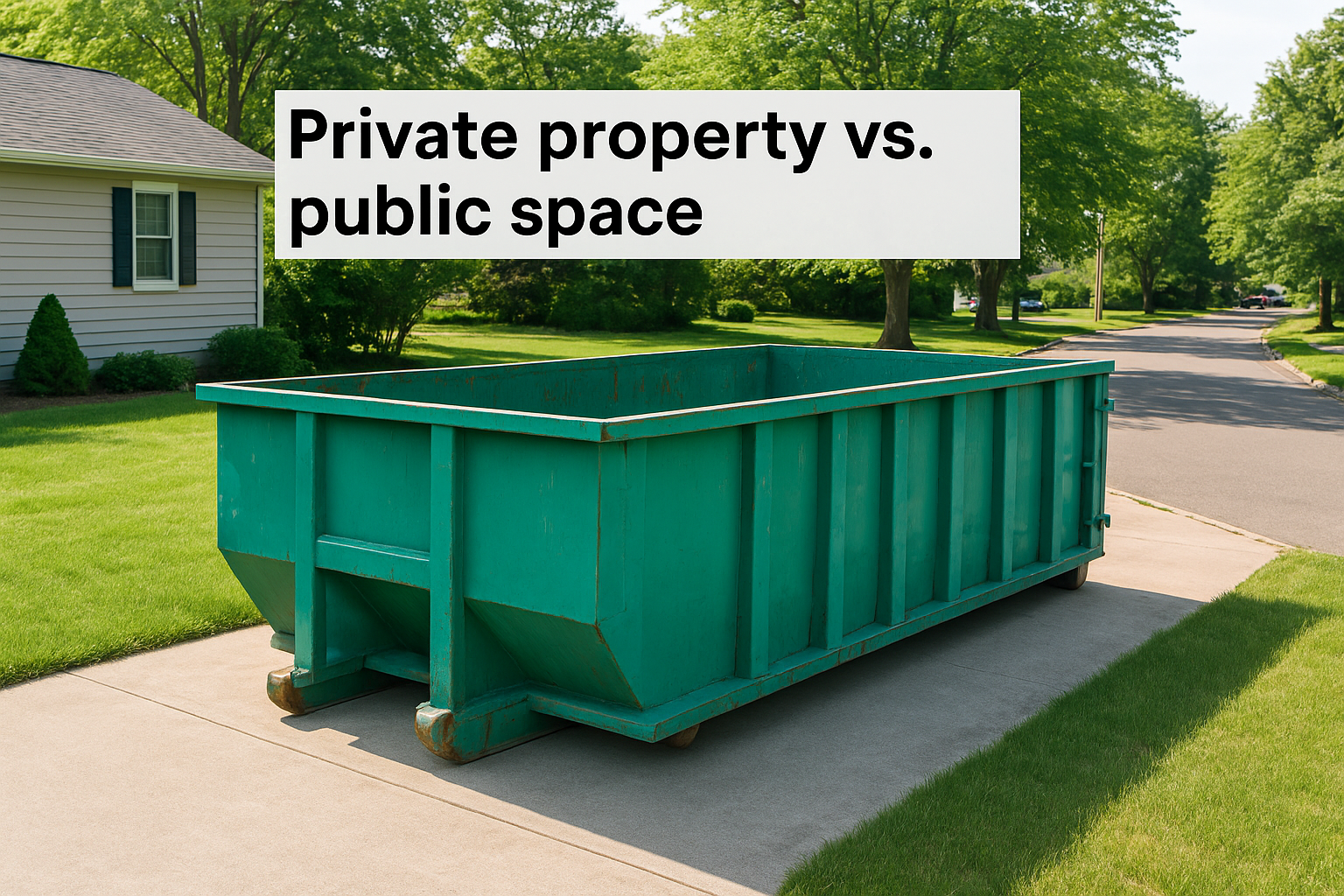
Your driveway is almost always the best placement option – it keeps you off public space, avoids permit fees, and simplifies the entire process.
| Placement location | Permit typically required? |
|---|---|
| Private driveway | No |
| Front yard on private property | No |
| Public street or road | Yes |
| Sidewalk or curb area | Yes |
| Shared or common driveway | Check with HOA |
What to measure before booking
Before you confirm placement and ask do you need a permit to rent a dumpster, measure your driveway width and length. A 10-yard dumpster runs roughly 12 feet long and 8 feet wide, so you need at least that much clearance plus enough room for the delivery truck to maneuver. Use this checklist before finalizing your drop zone:
- Driveway length: minimum 14 feet for most dumpster sizes
- Driveway width: minimum 10 feet for the driver to set the container down cleanly
- Overhead clearance: check for low branches or power lines above the drop zone
- Surface type: confirm the ground can support the loaded weight without cracking or sinking
Step 2. Check your town and HOA rules
Once you know where the dumpster will sit, verify the specific rules for your town before going any further. On Cape Cod, each municipality sets its own requirements, so what applies in Barnstable won’t necessarily apply in Falmouth or Yarmouth. Contact your town’s public works or building department directly and ask whether a street placement permit is required for a temporary dumpster, what the fee is, and how far in advance you need to apply.
How to look up your town’s requirements
Call the town office or visit the official town website to find permit information. When you call, have these details ready so the conversation goes quickly:
- Placement location: street address and which side of the road
- Container size: length and width of the dumpster you’re renting
- Planned dates: your estimated start and pickup dates
- Distance from intersections: how far the container will sit from the nearest corner
Calling ahead takes 10 minutes and can save you a fine or a forced removal mid-project.
HOA rules are separate from town permits
If you live in a homeowners association community, the permit question doesn’t stop with your town. HOAs set their own rules about container placement, approved locations, and time limits. Ask do you need a permit to rent a dumpster through your HOA’s management company before booking, and get written approval if they require it. A town permit and HOA approval are two different things, and you may need both.
Step 3. Apply and get approved before delivery
Once you confirm that a permit is required for your placement location, start the application process at least 3 to 5 business days before your planned delivery date. Many towns process permits quickly, but some have backlogs, especially during peak summer months on Cape Cod when project volume is high. Applying early gives you a buffer if the town asks for additional information or adjustments.
How to submit your permit application
Most Cape Cod towns accept permit applications in person at the public works or building department office, and some now offer online submissions through their town websites. When you apply, bring or submit the following details:
- Your name, address, and contact information
- Dumpster dimensions (length, width, and height)
- Planned delivery date and estimated pickup date
- Exact street address and placement location on the public way
- Distance from the nearest intersection and fire hydrant
Confirm that your application is received and ask for a written approval or permit number before your delivery date so there are no issues on the day the dumpster arrives.
What approval looks like
Once approved, your town will issue a permit document or reference number that outlines the approved dates, location, and any conditions attached to the placement. Keep a copy available on-site during the rental period. If someone asks do you need a permit to rent a dumpster and questions the placement, you can point directly to the approved documentation.
Step 4. Follow placement and safety requirements
Getting your permit approved is only part of the job. Once the dumpster is on the ground, you’re responsible for keeping it compliant with the conditions listed on your permit for the entire rental period. Before you ask do you need a permit to rent a dumpster and move on, take time to read every condition on the issued document and act on each one immediately after delivery.
Required markings and clearances
Most permits require you to mark the container so it’s visible to drivers at night. This typically means placing reflective cones, reflective tape on the container itself, or flashing safety lights around it. Your permit will specify what’s required. Beyond markings, you’ll need to maintain clearance distances throughout the rental:
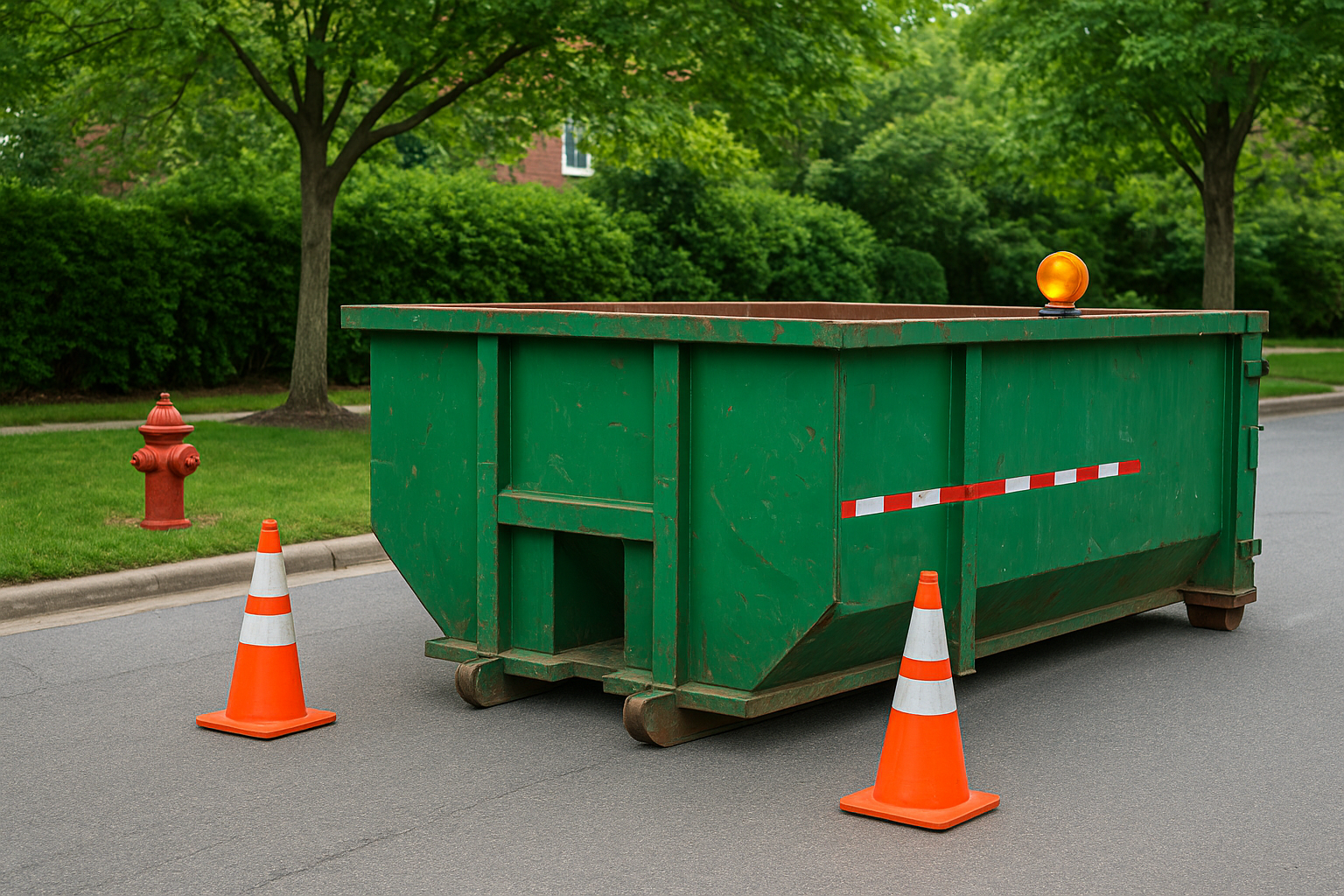
- Fire hydrants: keep a minimum of 15 feet of clear space between the container and any hydrant
- Intersections: most towns require at least 30 feet of clearance from a corner
- Neighboring driveways: do not block access to adjacent properties at any point
Check these clearances again after delivery, since the driver places the container as accurately as possible but conditions can shift.
What happens if you don’t comply
Towns can issue fines or require immediate removal if a container violates permit conditions. Either outcome adds cost and delays your project. Keep your permit document on-site, inspect the placement daily, and call your town immediately if anything changes.
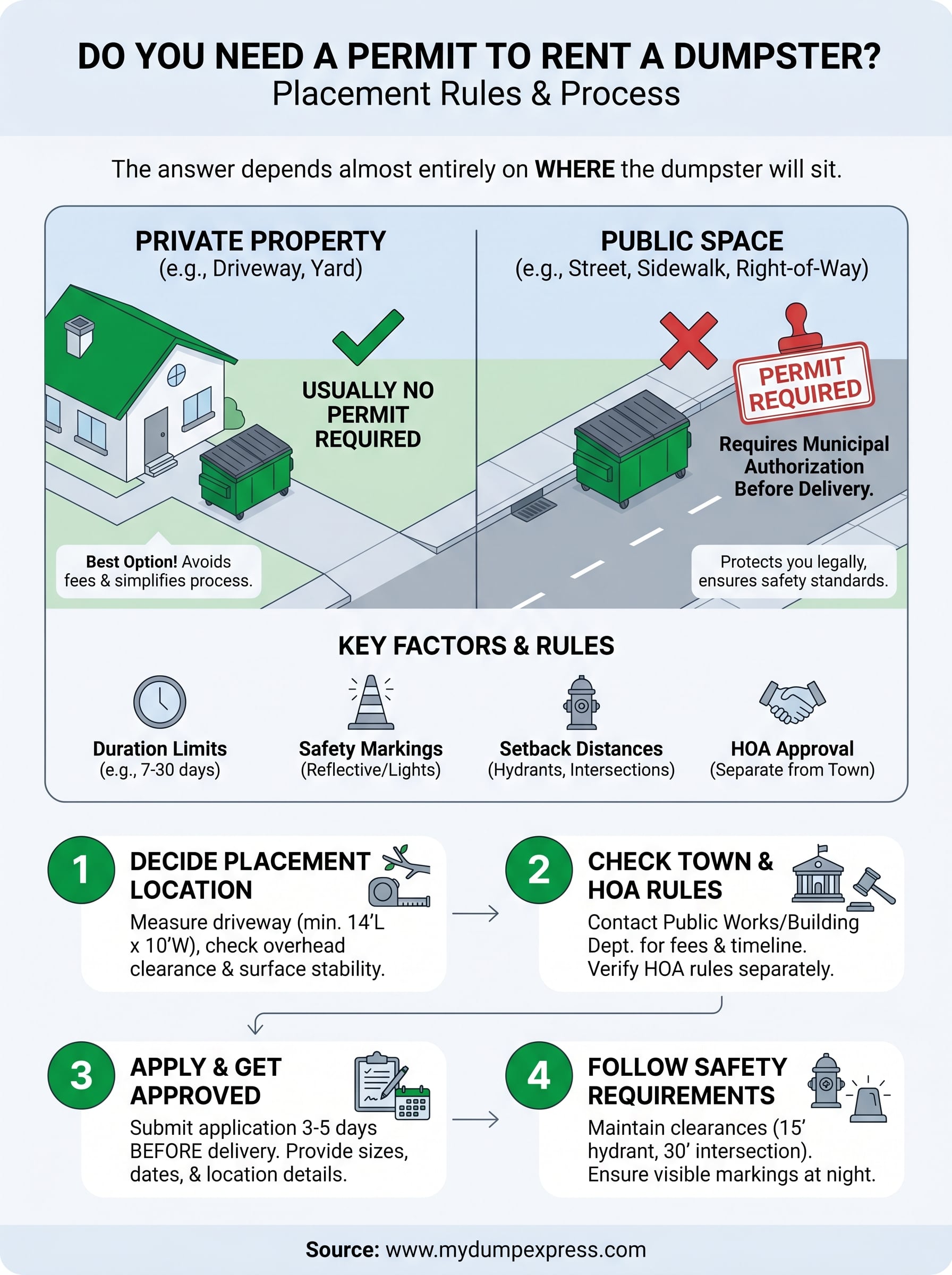
Quick recap and next steps
Whether do you need a permit to rent a dumpster comes down to one thing: placement. Keep the container on your private driveway or property, and you typically skip the permit process entirely. Move it onto a public street or sidewalk, and you’ll need town approval before delivery day.
Four steps cover the full process: choose your placement location first, check your town and HOA rules, apply for the permit at least 3 to 5 business days early, and follow every safety requirement listed on the approved document. Each step builds on the last, so skipping one creates real problems down the line.
If you’re planning a project on Cape Cod or in the Plymouth area, our team at Dump Express can help you sort out placement and sizing before you book. Get a quote or ask a question about your project and we’ll walk you through everything before your delivery date.