
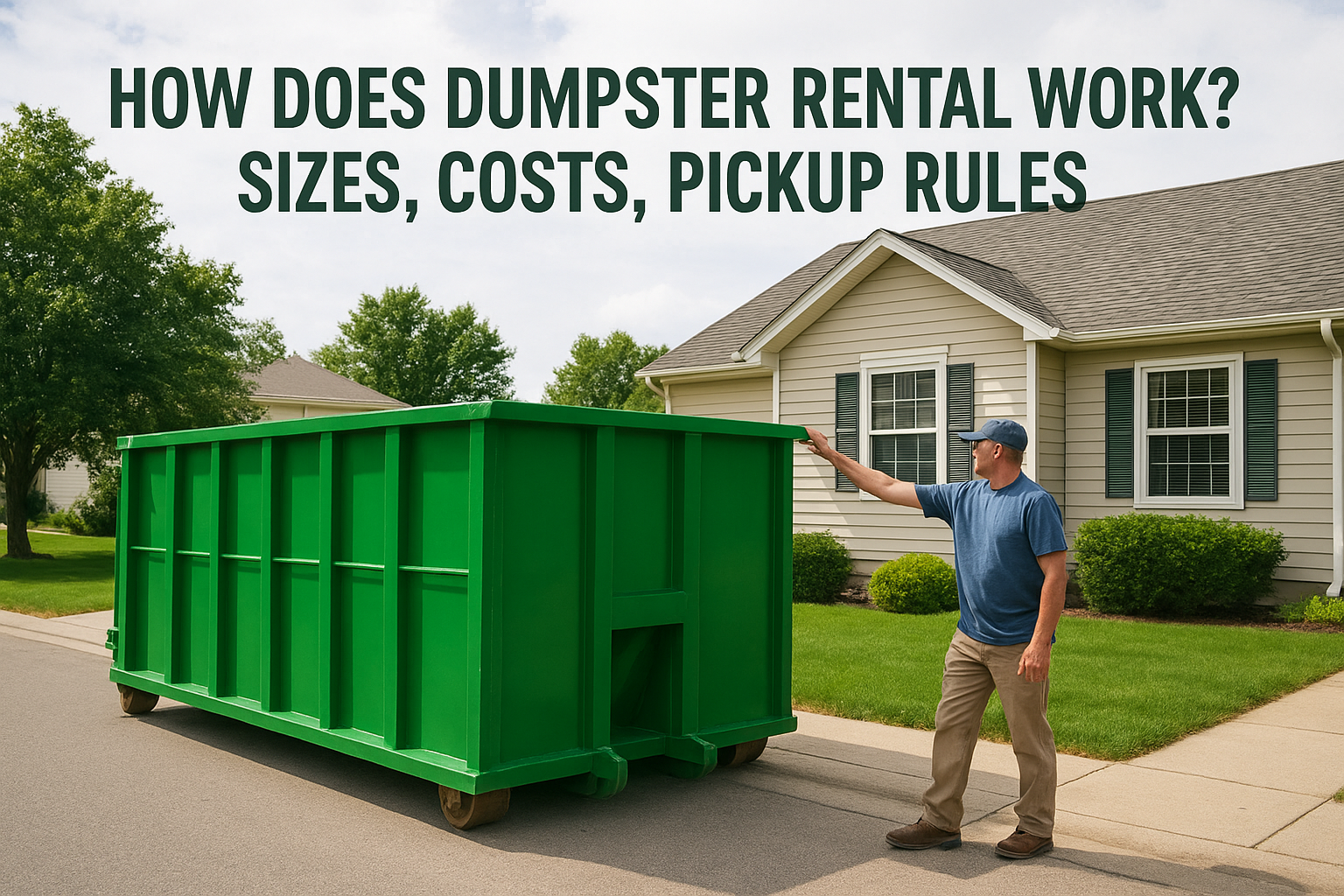
You’ve got a renovation, a cleanout, or a pile of debris that isn’t going to haul itself to the dump. A dumpster rental makes sense, but if you’ve never ordered one before, the process raises questions. How does dumpster rental work, exactly? What size do you need? What can you actually throw in it? And what’s it going to cost?
The good news: it’s more straightforward than most people expect. You pick a size, schedule a drop-off, fill it up, and we come get it. But the details between those steps, pricing, weight limits, rental periods, prohibited materials, are where things get tricky if you don’t know what to look for.
At Dump Express, we’ve been delivering dumpsters across Cape Cod and Plymouth for over 20 years. We’ve walked thousands of customers through this process, and we’ve learned exactly where the confusion tends to happen. This guide breaks down every step of a dumpster rental, from choosing the right container to what happens after pickup, so you can book with confidence and zero surprises.
What to know before you rent a dumpster
Before you book, a few core concepts shape every dumpster rental. Understanding them upfront saves you from surprise charges and scheduling headaches down the road. Rental periods, weight limits, prohibited materials, and placement logistics are the four areas that catch most first-time renters off guard. Get clear on each of these now, and every step that follows becomes straightforward.
Rental periods and how scheduling works
Most dumpster companies offer a standard rental window of 7 to 14 days, though this varies by provider. You schedule a delivery date, the driver drops the container at your location, and pickup happens either on a date you set in advance or when you call to confirm you’re done loading. Same-day and next-day delivery is available in many areas, including across Cape Cod, so you don’t always need to plan weeks out to get a container when you need one.
If your project runs longer than expected, most providers will extend your rental for a daily or weekly fee. Plan your project timeline realistically before you book so you’re not scrambling to extend at the last minute, which can affect both your cost and the company’s ability to schedule around other deliveries.
What you can and cannot throw in a dumpster
This is the part of how does dumpster rental work that surprises people most. General debris, construction waste, furniture, yard waste, and household junk are all fine in most dumpsters. What you cannot throw in are hazardous materials such as paint, solvents, motor oil, batteries, asbestos, tires, and appliances that contain refrigerants like freon.
Disposing of prohibited items in a dumpster can result in significant surcharges and fines, and some materials are restricted under state or federal regulation, not just company policy.
Prohibited items vary slightly by provider and location, so always ask for a written list before you start loading. In Massachusetts, certain electronics and hazardous household waste must go through approved disposal programs. Your local transfer station or the Massachusetts Department of Environmental Protection website can direct you to the right drop-off options for those specific materials.
Weight limits and what triggers extra charges
Every dumpster rental includes a weight limit built into the base price. If your debris exceeds that limit, you pay a per-ton overage fee on top of the original rental cost. This catches people who underestimate how heavy materials like concrete, dirt, roofing shingles, and ceramic tile actually are. A modest pile of concrete or brick can blow past a dumpster’s weight allowance even when the container looks only half full.
The safest move is to be specific with your provider about what you plan to load before you book. Heavy debris often works better in a smaller container filled to a safe weight threshold rather than a larger one loaded past its limit. Ask for the exact weight allowance upfront, and factor in your heaviest materials when you estimate the load.
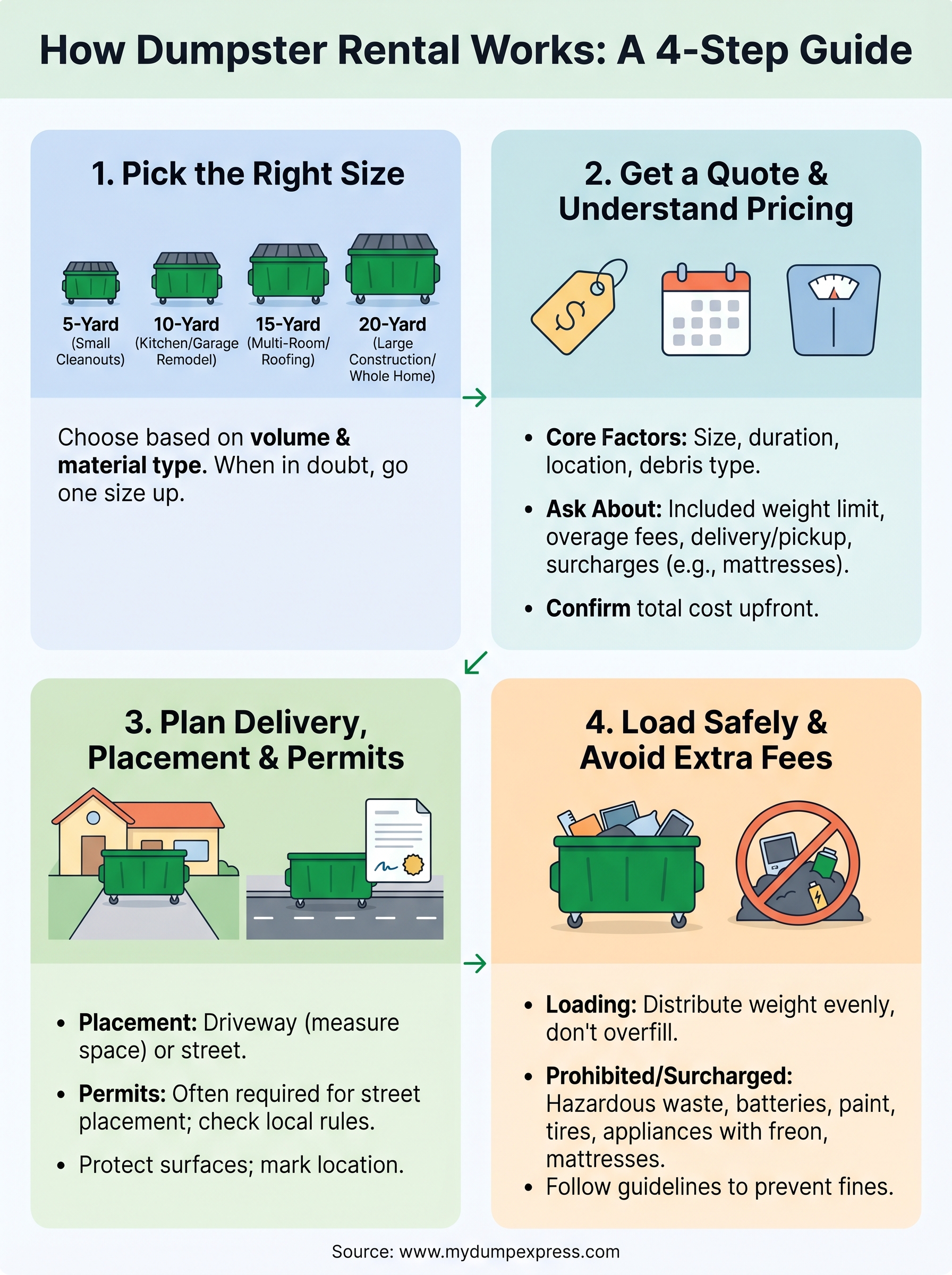
Step 1. Pick the right dumpster size
Choosing the wrong size is the most common first-time mistake in a dumpster rental. Go too small and you’ll need a second haul, which doubles your cost. Go too large and you’re paying for capacity you don’t use. Sizing comes down to two factors: the total volume of debris you expect to generate and the type of materials you’re loading.
The four standard dumpster sizes
Most residential and commercial projects fall into four container sizes: 5-yard, 10-yard, 15-yard, and 20-yard. Each serves a different project scale. Understanding how dumpster rental works at each size helps you avoid booking the wrong container before your project even starts.
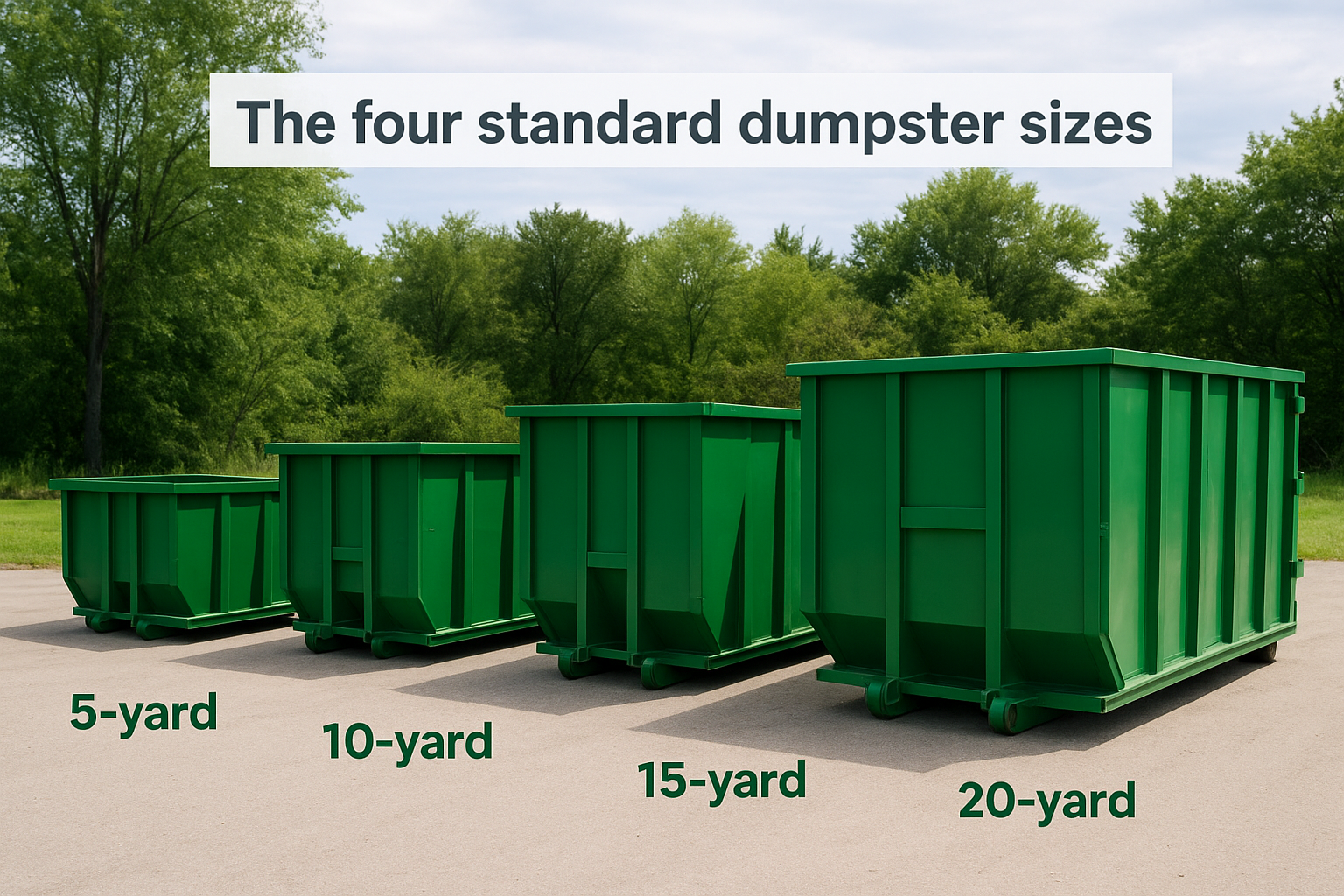
| Size | Cubic Yards | Best For |
|---|---|---|
| 5-yard | 5 | Small cleanouts, single-room clear-outs, minor yard debris |
| 10-yard | 10 | Bathroom or kitchen remodel, garage cleanout, small landscaping jobs |
| 15-yard | 15 | Multi-room renovations, roofing tear-offs, medium construction projects |
| 20-yard | 20 | Full home cleanouts, large construction sites, major remodels |
How to match your project to a container
Start by listing every material type you plan to load before you call for a quote. Heavy materials like concrete, brick, and tile require special attention because they max out weight limits fast, even in larger containers. For heavy debris, a 10-yard dumpster loaded to its weight limit often makes more practical sense than a 20-yard container half-filled with dense material.
When in doubt, go one size up rather than one size down. A slightly larger container costs less than a second pickup trip.
If you’re unsure, describe your project to the rental company in detail. A good provider will ask the right questions and point you toward the right container for your specific load, not the most expensive option. At Dump Express, that conversation happens before you ever commit to a booking.
Step 2. Get a quote and understand pricing
Once you know the size you need, getting a quote is simple, but reading the quote carefully is where most people save themselves money. Understanding how does dumpster rental work from a pricing standpoint means knowing what’s bundled into the flat rate and what triggers additional charges before you ever agree to a booking.
What drives the price of a dumpster rental
Dumpster rental pricing typically combines four core factors: container size, rental duration, your location, and the type of debris you plan to load. Providers in different towns often charge different rates based on local disposal fees at transfer stations, so two identical containers in two neighboring towns can carry different price tags. That’s why transparent, town-specific pricing is worth looking for when you compare options.
Always ask whether the quoted price includes disposal fees and delivery, or whether those are added at the end.
Heavy materials like concrete, roofing shingles, and tile often carry a separate surcharge or a lower weight limit than general household debris. Confirm this upfront so you can factor it into your total estimate before you commit.
What to ask before you confirm a booking
Before you book, run through this quick checklist with your provider to avoid surprises on your final invoice:
- What is the included weight limit, and what is the per-ton overage fee?
- Are delivery and pickup included in the base price?
- What is the rental period, and what does an extension cost per day?
- Are there surcharges for specific materials like mattresses, tires, or appliances?
- Is there a fuel surcharge or environmental fee added at checkout?
Getting clear answers to each of these questions takes less than five minutes and gives you an accurate total cost before any container shows up in your driveway. Reliable providers answer all of these without hesitation.
Step 3. Plan delivery, placement, and permits
Once you’ve confirmed your size and price, the next step in understanding how does dumpster rental work is figuring out where the container will sit and whether you need any local permits. Placement and permits are often an afterthought until the driver shows up, and sorting them out in advance prevents delays on delivery day.
Choosing the right spot on your property
Your driveway is the most common placement option for residential projects, and it works well in most cases. Before delivery, measure the available space to confirm the container fits without blocking garage access, mailboxes, or neighboring property. A standard 10-yard dumpster is roughly 12 feet long, 8 feet wide, and 4 feet tall, so get a clear picture of the dimensions before the driver arrives.
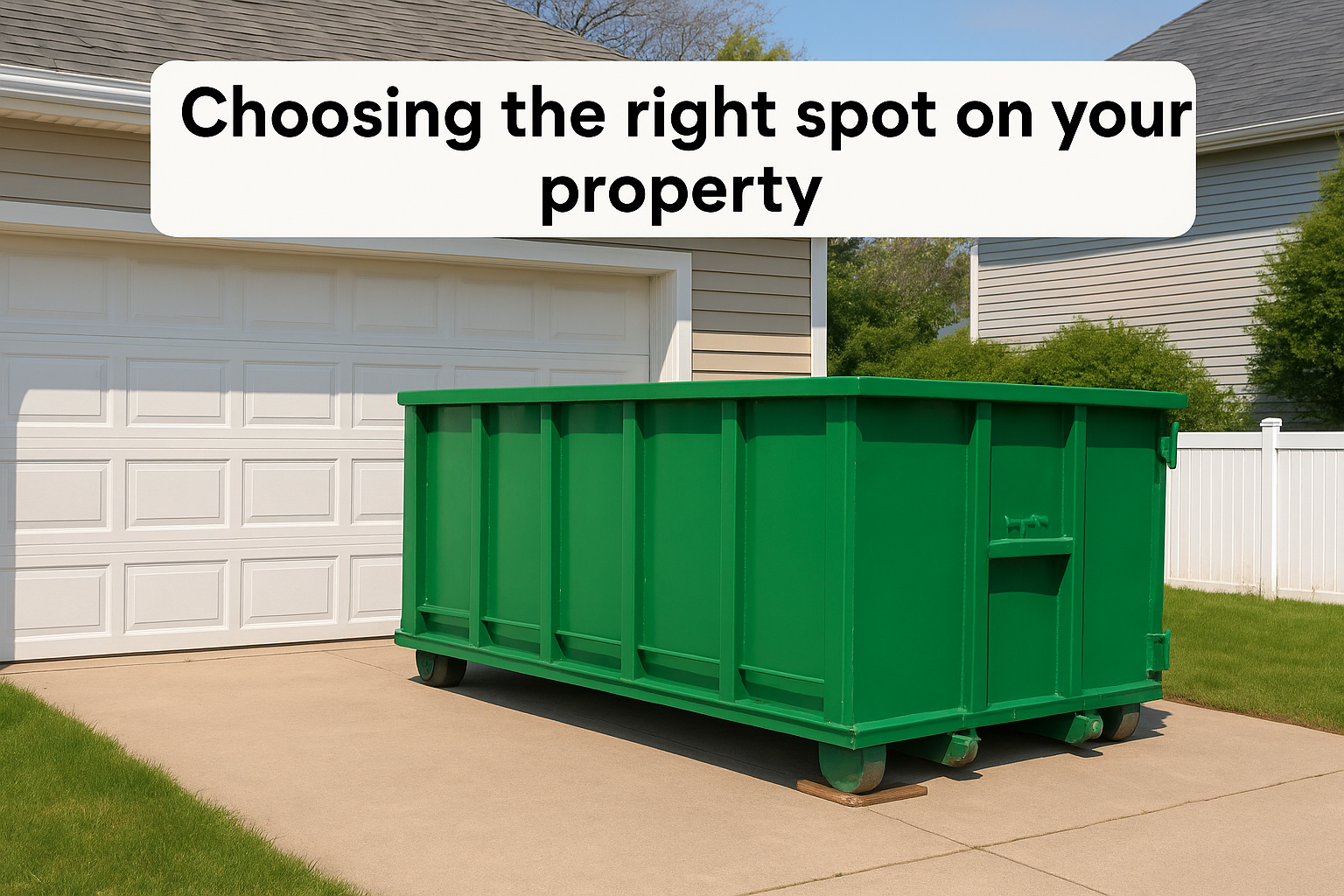
Drivers typically place boards under the container to protect paved surfaces, but heavy containers can still leave marks on older asphalt or soft ground. If your driveway is in poor condition or you have a gravel surface that shifts, flag this when you call so the driver can plan the placement accordingly.
If your driveway won’t work, a street placement is possible in many towns, but it typically requires a permit from your local municipality before the container arrives.
When you need a permit
Permit requirements vary by town. In Massachusetts, most municipalities require a permit for any dumpster placed on a public street or sidewalk, and processing times can range from 24 hours to several business days. Contact your town’s public works or highway department to confirm the requirement and timeline before you schedule delivery.
At Dump Express, we cover 40+ Cape Cod and Plymouth towns and can walk you through local permit requirements before you book. Handling this step early keeps your delivery on schedule and avoids the hassle of rescheduling because paperwork wasn’t in place.
Step 4. Load safely and avoid extra fees
Loading a dumpster sounds simple, but how you fill the container directly affects your final bill. The last part of understanding how does dumpster rental work is knowing how to load efficiently, stay under your weight limit, and keep prohibited items out so you don’t get hit with surcharges after pickup.
How to load without wasting space or triggering overages
Start by placing large, flat items like furniture, mattresses, and plywood sheets at the bottom of the container. This creates a stable base and lets you stack smaller debris on top without wasting capacity. Break down boxes, dismantle shelving, and cut down bulky items before loading whenever possible. Compact loading keeps the volume manageable and reduces the chance you’ll need a second haul.
Never pile debris above the top edge of the container. Overfilled dumpsters are a safety and transport hazard, and most providers will not haul a container loaded above the fill line.
Distribute heavy materials like concrete, tile, and brick evenly across the floor of the container rather than stacking them in one spot. Concentrated weight in one area stresses the container floor and makes it harder to transport safely. If you’re loading a mix of heavy and light debris, alternate layers so the weight stays balanced throughout the rental period.
Materials that will cost you extra if you don’t plan ahead
Certain items carry flat surcharges no matter how carefully you load them. Review this list before you start filling the container so nothing catches you off guard on the final invoice:
- Mattresses and box springs: most providers charge a per-unit fee
- Tires: prohibited at many disposal facilities and almost always surcharged
- Appliances with freon (refrigerators, AC units): require special handling
- Electronics: subject to state e-waste regulations in Massachusetts
- Asphalt shingles in large quantities: often trigger a separate weight rate
Confirming these specifics with your provider before the container arrives takes the guesswork out of your total cost.
Ready to book without surprises
Now you know how does dumpster rental work from start to finish. You’ve got a clear picture of sizing, pricing, placement, permits, and what to avoid when loading. None of it is complicated once you understand what to ask and when to ask it.
Your job at this point is simple: take stock of your project, pick the right size, confirm the full price before you book, and set up placement before delivery day. Every question you answer upfront is one less surprise on your final invoice. If anything is unclear, call your provider before you commit, not after the container is already in your driveway.
Dump Express has been handling dumpster rentals across Cape Cod and Plymouth for over 20 years. Upfront pricing, reliable delivery, and zero pressure are what you get every time. Request a quote for your project and we’ll get you set up fast.