
Dumping construction debris in the wrong place, or the wrong way, can trigger fines, project shutdowns, and serious environmental liability. Construction waste disposal regulations exist at every level of government, from federal agencies like OSHA and the EPA down to your local town hall on Cape Cod. Understanding how these rules overlap is the first step toward staying compliant on any job site.
At Dump Express, we’ve spent over 20 years hauling C&D debris across Cape Cod and Plymouth. That experience has taught us that most violations happen because of confusion, not carelessness. Contractors and homeowners alike run into trouble when they don’t know which materials require special handling, what their town specifically prohibits, or how federal safety standards apply to their waste management setup.
This article breaks down the key regulations you need to know, covering OSHA requirements, EPA guidelines, Massachusetts state rules, and local ordinances, so you can keep your project moving without running into compliance problems.
What these regulations cover on a job site
Construction waste disposal regulations don’t apply to just where the debris ends up. They govern how you handle, store, and transport waste from the moment it’s generated on site. That means the rules start the second a worker breaks a wall or strips a roof, not when the dumpster rolls away.
Material classification and handling
Every construction project produces a mix of waste types, and regulators treat them differently. Wood, drywall, concrete, and metal generally fall under standard C&D debris rules. But materials like asbestos-containing insulation, lead paint chips, or treated lumber with chemical preservatives trigger stricter requirements. Hazardous waste streams require separate containment, proper labeling, and disposal through licensed facilities.
Mixing hazardous materials with general C&D debris is one of the fastest ways to turn a routine cleanup into a regulatory violation.
Your obligation is to identify what’s in your debris before you choose a disposal method. That identification step affects which containers you use, which hauler you hire, and which disposal facility can legally accept your load.
Waste containment and site management
Beyond classification, regulations also cover how waste sits on your job site before pickup. OSHA standards require that debris doesn’t create fall hazards, block emergency exits, or pile up in ways that increase fire risk. Loose debris and open containers can also trigger issues under local nuisance ordinances, particularly in residential areas on Cape Cod where neighbors and town inspectors pay close attention to site conditions.
Proper containment reduces the chance that wind or rain carries material off site, which can create separate liability under stormwater and erosion control rules. Keeping your site clean is both a safety requirement and a compliance strategy.
Why compliance matters for safety and cost
Ignoring construction waste disposal regulations doesn’t just put you at legal risk. It creates real physical hazards for workers on site and can stop a project cold if an inspector shows up and flags a violation. Compliance is both a safety issue and a budget issue, and treating it as optional usually costs more than doing it right from the start.
The safety side
Improperly stored debris is a leading cause of on-site injuries. Piles of scrap material block sightlines, create tripping hazards, and can collapse onto workers. When hazardous materials like asbestos or lead paint are mixed into general waste, the exposure risk extends to everyone handling that container, including your hauler’s crew.
A single unreported asbestos incident can result in work stoppages, remediation costs, and OSHA citations that far exceed what proper disposal would have cost.
The financial side
Fines for improper disposal range from hundreds to tens of thousands of dollars, depending on the material and the violation. Beyond fines, your project can face permit holds or required remediation work that delays your timeline. Repeat violations can affect your contractor license and make bonding harder to obtain, which creates problems well beyond the current job.
Federal rules from OSHA and EPA you must know
Two federal agencies set the foundation for construction waste disposal regulations. OSHA focuses on worker safety, while the EPA governs environmental impact. Both have direct authority over how you manage debris on an active job site.

OSHA standards for site debris
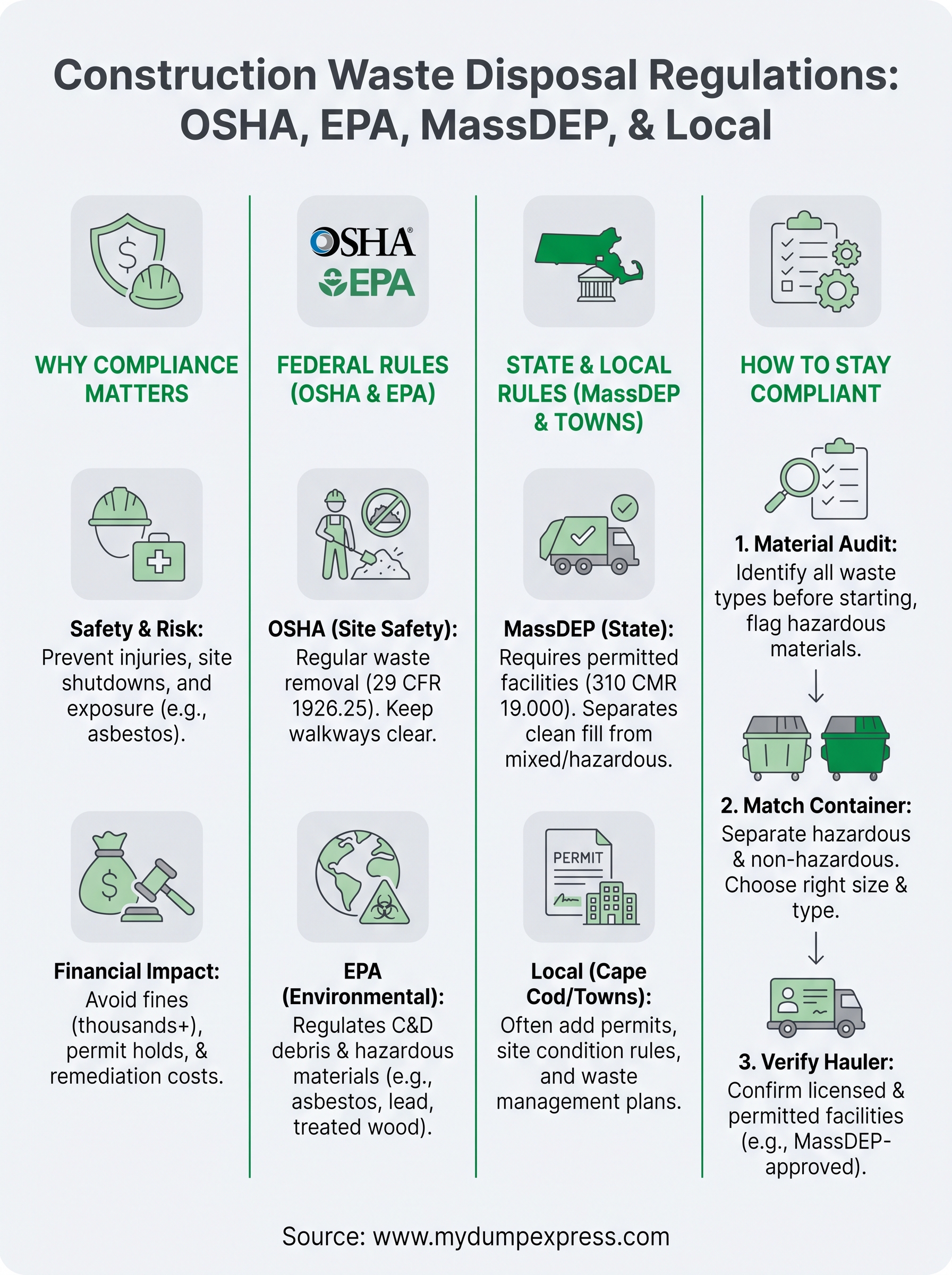
OSHA’s construction standards require you to remove waste regularly to prevent accumulation that creates hazards. Under 29 CFR 1926.25, you must keep work areas, passageways, and stairs free from debris and scattered materials. Violations are cited during routine inspections and can result in immediate fines with no grace period.
EPA rules on C&D waste
The EPA classifies most C&D debris as non-hazardous, but specific materials like asbestos, lead paint, and certain treated wood fall under hazardous waste rules governed by the Resource Conservation and Recovery Act. If your project disturbs these materials, you must use licensed waste transporters and approved disposal facilities to stay within federal guidelines.
Skipping proper hazardous material identification before disposal is the most common federal compliance mistake contractors make on renovation projects.
Knowing which agency covers which part of your waste stream helps you build a disposal plan that satisfies both safety and environmental requirements without doubling your administrative work.
Massachusetts and local requirements that often apply
Federal rules set the floor, but Massachusetts adds its own layer of construction waste disposal regulations on top. The Massachusetts Department of Environmental Protection (MassDEP) regulates solid waste management under 310 CMR 19.000, which requires that C&D debris go to licensed disposal facilities. You cannot simply haul waste to any open lot or transfer station that lacks state approval.
MassDEP rules for C&D debris
MassDEP separates clean fill from mixed debris, and that distinction affects where your load can legally go. Materials like brick, concrete, and asphalt may qualify for reuse under specific conditions, but mixed loads with drywall, wood, or contaminated material must go to a permitted facility. Unpermitted disposal carries fines and can require costly site remediation.

If you’re unsure whether a facility is MassDEP-permitted, you can verify its status directly through the MassDEP database before scheduling a haul.
Cape Cod and local town rules
Many Cape Cod towns add permit requirements or site conditions on top of state rules. Some towns require a waste management plan as part of the building permit process, and local health boards can inspect active job sites for improper storage. Knowing your specific town’s requirements before you start saves significant time and avoids permit complications.
How to stay compliant from planning to haul-off
Staying ahead of construction waste disposal regulations means building compliance into your project from the start, not scrambling at the end. The earlier you map out your waste management approach, the fewer surprises you’ll face when the dumpster arrives or an inspector shows up on site.
Start with a material audit
Before your crew picks up a single tool, walk the site and identify what materials you’ll generate. Note anything that could qualify as hazardous, including old insulation, painted surfaces, or treated wood. A written material inventory gives you a clear starting point for choosing the right containers, hiring licensed haulers where required, and flagging any materials that need separate disposal.
Match your container to your debris type
Once you know what you’re removing, select a dumpster size and type that fits your specific waste stream. Mixing hazardous and non-hazardous materials in one container creates compliance problems at the disposal facility and can expose you to liability. Keeping separate containers for materials that need special handling keeps your load clean and your haul-off straightforward.
Confirming your hauler uses a MassDEP-permitted facility before you book protects you from liability once the load leaves your site.
Next steps for your project
Construction waste disposal regulations touch every phase of your job, from the first demo swing to the final haul-off. Knowing what OSHA, the EPA, MassDEP, and your local town require puts you in control of your project timeline and keeps fines off your budget. The steps are straightforward: audit your materials early, separate hazardous from non-hazardous debris, use permitted facilities, and choose a hauler who knows the local rules.
Dump Express has served Cape Cod and Plymouth contractors and homeowners for over 20 years. Our team understands the specific disposal requirements across 40+ towns in the region, and we can help you match the right dumpster to your project before you start loading. Clear pricing, reliable delivery, and local expertise mean you spend less time worrying about compliance and more time getting the job done. Book your dumpster rental on Cape Cod and get your waste plan in place today.