
Tearing out an old patio, breaking up a driveway, or clearing a foundation leaves you with one heavy problem: what to do with all that concrete. Searching for concrete recycling near me is the right first step, but the answers you find can be confusing, different facilities, varying fees, weight limits, and rules about what they will and won’t accept.
Here’s the good news: recycling concrete is almost always cheaper than sending it to a landfill, and most areas, including Cape Cod and Plymouth, have options available. At Dump Express, we handle debris removal for renovation and construction projects every day, so we know exactly how concrete disposal works in this region and where the common headaches show up.
This guide breaks down the costs, rules, and easiest ways to recycle concrete. You’ll learn what facilities typically charge, how to prepare your material for drop-off, and when renting a dumpster makes more sense than hauling it yourself, so you can get that concrete off your property without overpaying or making extra trips.
What Concrete Recyclers Accept and Reject
Before you call any facility or rent equipment, you need to know what material qualifies for recycling. Most concrete recyclers keep a short list of accepted materials and a firm list of rejections. Showing up with a contaminated or mixed load can mean rejected loads, extra fees, or a wasted trip back to your property.
What most facilities accept
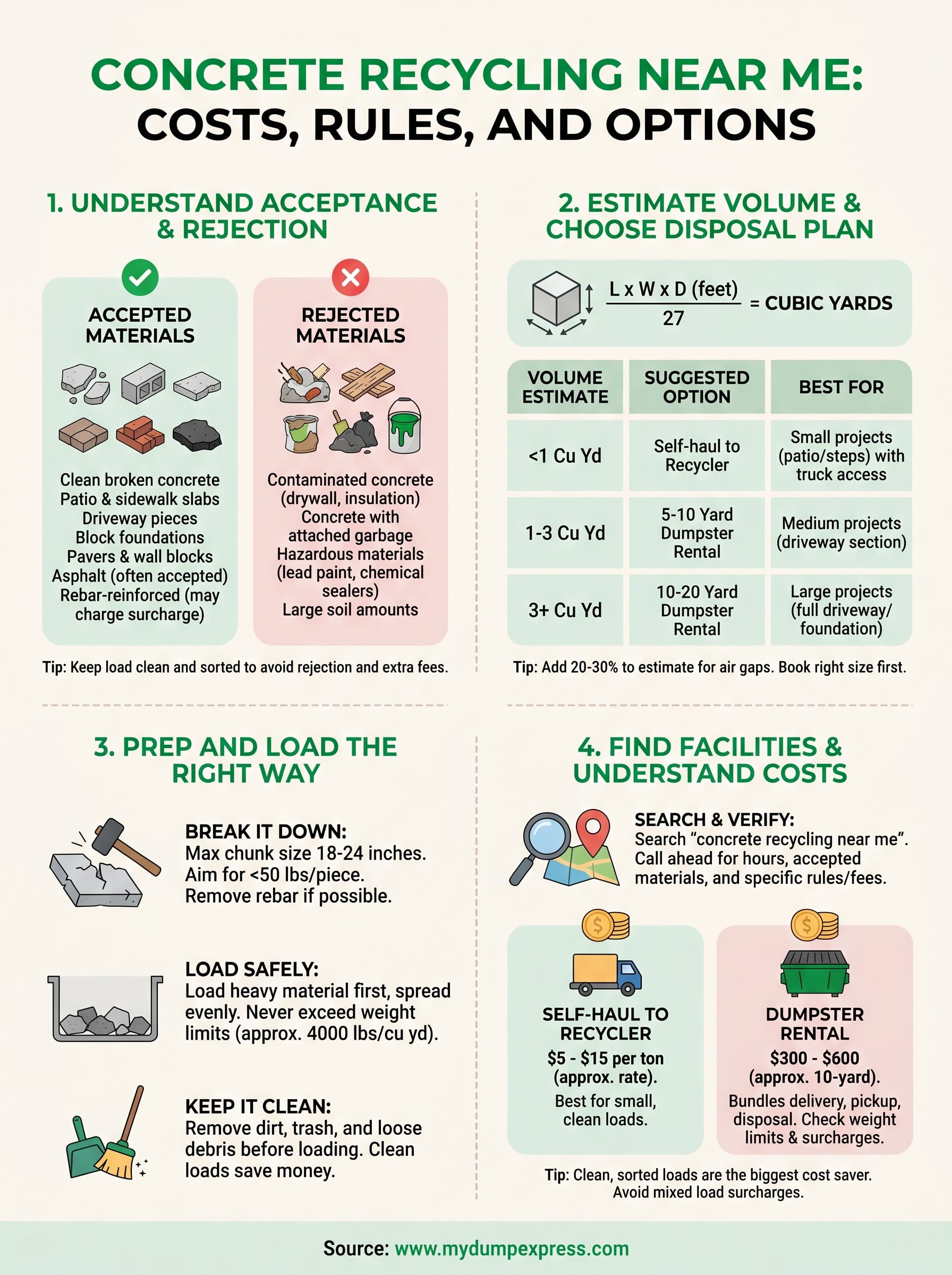
Recyclers primarily want clean, broken concrete, which includes old patio slabs, sidewalk sections, driveway pieces, block foundations, and retaining wall blocks. Many facilities also accept brick, block, and asphalt in the same load, though some require you to separate these materials at drop-off. Reinforced concrete with rebar is widely accepted, but some yards add a small sorting surcharge because they have to pull the metal out before processing. When you search for concrete recycling near me, check each facility’s specific list since accepted materials vary by location.
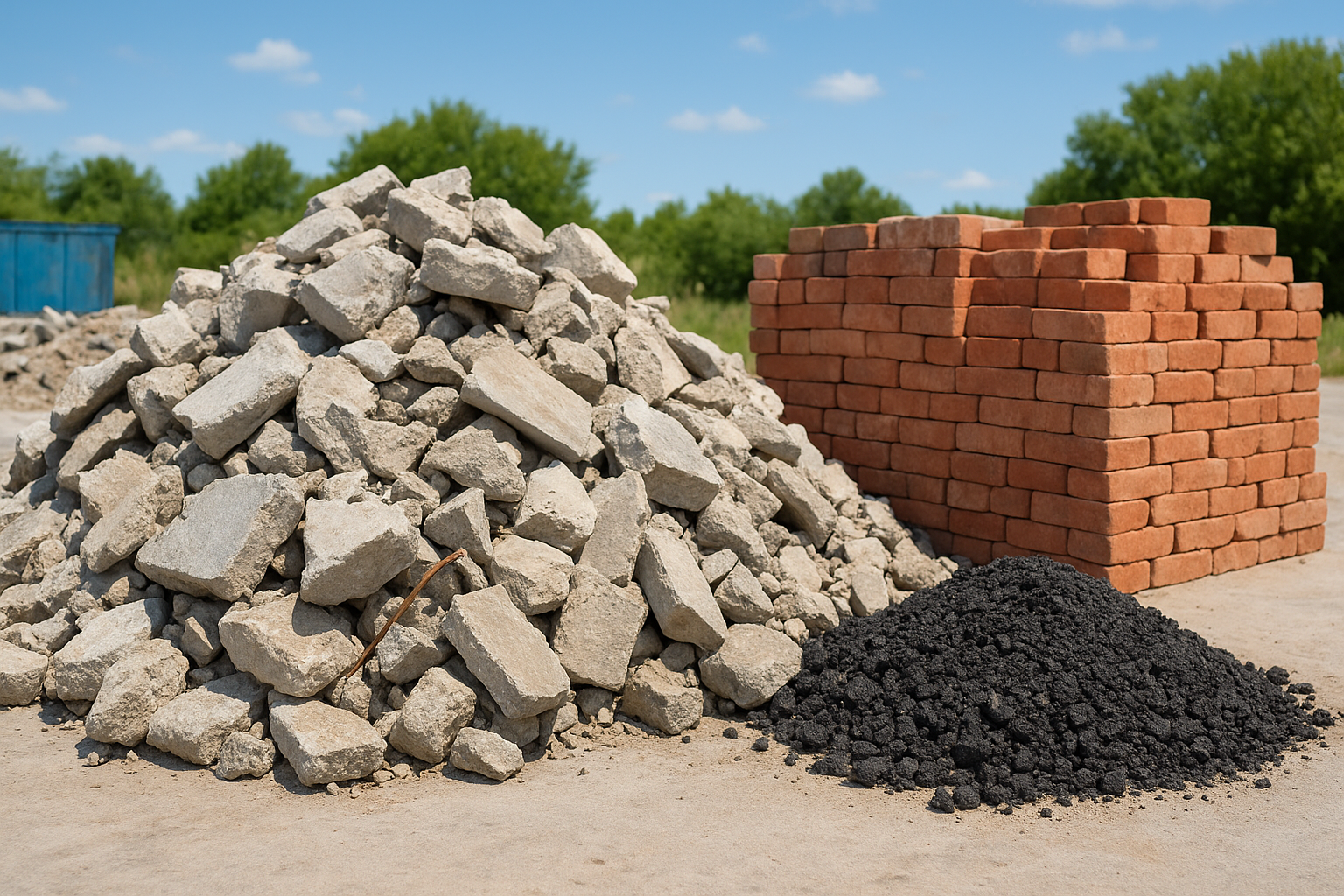
If you’re unsure whether a facility takes your specific material, call ahead and describe exactly what you have, including any coatings, contamination, or mixed debris.
- Broken concrete slabs, footings, and curbing
- Brick and cinder block (confirm with the facility first)
- Rebar-reinforced concrete (may carry a small surcharge)
- Concrete pavers and retaining wall blocks
- Asphalt (accepted at many recyclers, but not all)
What gets rejected
Contaminated concrete is the most common reason loads get turned away. If your concrete has attached drywall, insulation, wood framing, or loose debris stuck to it, most recyclers will refuse the whole load or charge you a much higher disposal rate. Concrete treated with hazardous materials, such as lead-based paint or chemical sealers, can trigger an outright rejection or require special handling at an added cost.
Mixing concrete with household garbage, heavy tile adhesive residue, or large amounts of soil is another frequent mistake. Keep your load as clean and sorted as possible before it goes into a container or your truck bed. That single preparation step saves you time and money when you arrive at the recycling facility.
Step 1. Estimate Volume and Choose a Disposal Plan
Knowing how much concrete you have before making any calls prevents you from renting the wrong container size or making unnecessary trips. A simple volume estimate helps you match your project to the right disposal plan and budget accurately from the start.
How to Calculate Your Concrete Volume
Measure length, width, and depth in feet, then multiply all three numbers together to get cubic feet. Divide that total by 27 to convert to cubic yards. A standard 10-by-10 patio slab four inches thick comes out to about 1.2 cubic yards of material.
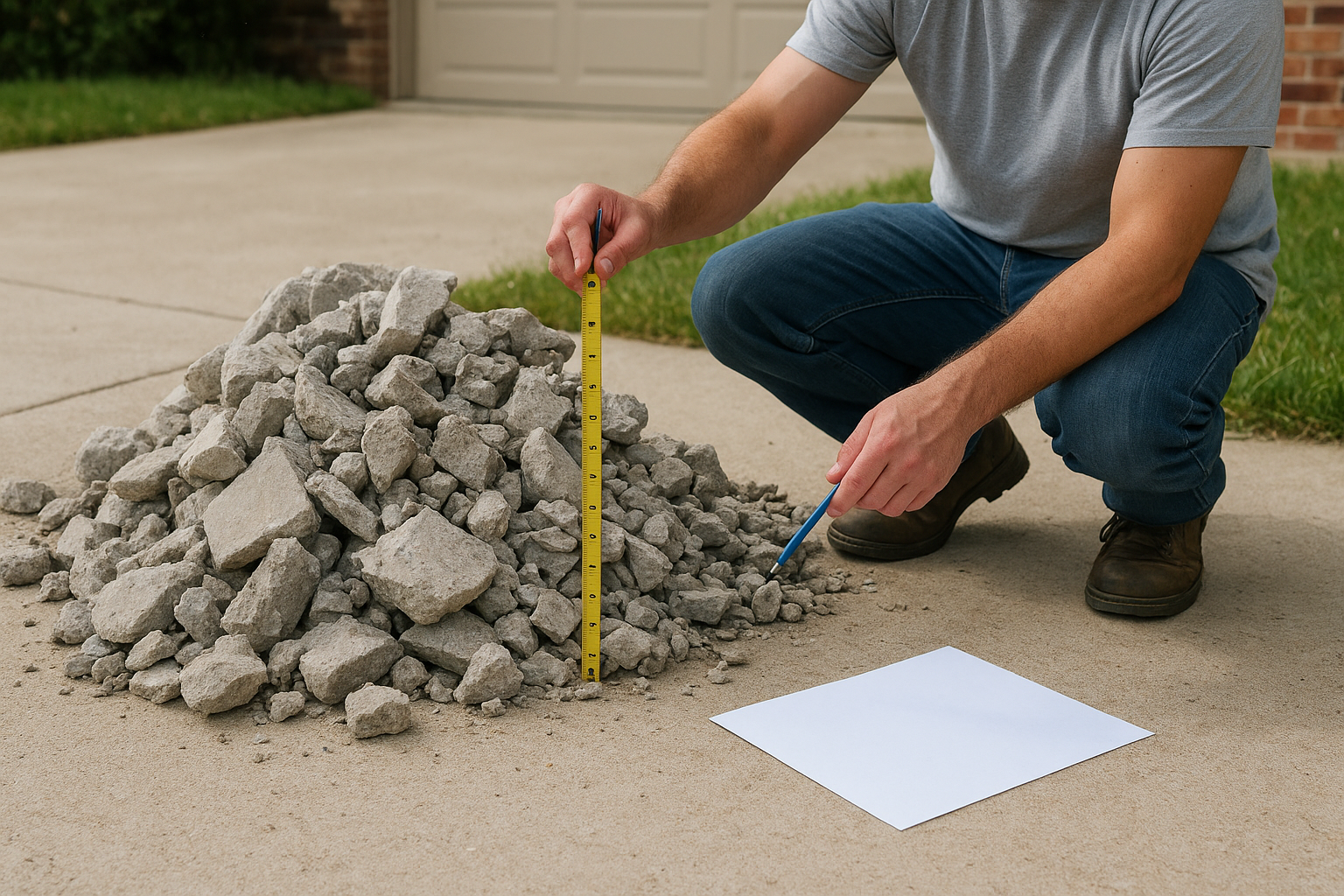
Add 20 to 30 percent to your estimate because broken concrete always takes up more space than intact slabs due to air gaps in the pile.
| Project Size | Estimated Volume | Suggested Option |
|---|---|---|
| Small patio or steps | Under 1 cu yd | Truck haul to drop-off |
| Driveway section | 1-3 cu yd | 5- or 10-yard dumpster |
| Full driveway or foundation | 3+ cu yd | 10- to 20-yard dumpster |
Choosing the Right Disposal Method
Once you have your volume number, match it to the right disposal method for your timeline and budget. Hauling under one yard yourself to a concrete recycling near me facility works well when you have a pickup truck available. For larger volumes, a dumpster rental keeps debris contained on your property until scheduled pickup, which is often the more practical choice.
- Self-haul: best for under 1 cubic yard with truck access
- Dumpster rental: best for 1+ cubic yards or tight timelines
- Contractor service: best when you need labor and hauling combined
Step 2. Prep and Load Concrete the Right Way
Proper preparation saves you from rejected loads and extra fees at the facility. Before any concrete leaves your property, take a few minutes to sort, size, and stage the material so your disposal option runs smoothly, whether you’re hauling yourself or filling a dumpster for pickup.
Break It Down to a Manageable Size
Most concrete recycling near me facilities and dumpster rental companies set a maximum chunk size of around 18 to 24 inches per piece. Oversized slabs are harder to process and can damage equipment, which is why many yards refuse them or charge extra. Use a sledgehammer or rented electric demolition hammer to break large sections into manageable pieces before loading.
Aim for pieces you can lift with one person, roughly 50 pounds or less, to keep the work safe and your load compliant.
- Break slabs into pieces 18 inches or smaller
- Pull out visible rebar with bolt cutters or a pry bar before loading if possible
- Separate concrete from attached soil, tile, or wood debris
Load Safely and Keep the Container Clean
Weight builds fast with concrete, so load heavy material first and spread it evenly across the container floor rather than piling it in one spot. A single cubic yard of concrete weighs roughly 4,000 pounds, so never exceed the weight limit stated in your rental agreement.
Keep your load clean by removing loose dirt, insulation scraps, or trash before filling. A sorted, debris-free load moves through recycling faster and avoids contamination surcharges on your final invoice.
Step 3. Find Nearby Recycling and Drop-Off Options
Locating the right facility is easier when you know what to search for and what questions to ask. Start with a simple Google Maps search using terms like "concrete recycling near me" or "concrete drop-off [your town]" to pull up nearby options. From there, call each facility directly before loading your truck or scheduling a dumpster pickup.
Search and Verify Before You Go
Most concrete recycling yards operate Monday through Friday, with limited Saturday hours, so confirming their schedule prevents a wasted trip. When you call, ask three things: whether they accept your specific material, what the weight limits or tipping fees are, and whether they require you to separate rebar or asphalt from pure concrete.
Write down the facility name, address, hours, and any material requirements before you show up, because rules change and websites are not always current.
- Search Google Maps for "concrete recycling," "rubble drop-off," or "aggregate yard" near your town
- Ask if the facility accepts small residential loads or serves contractors only
- Confirm whether you need to call ahead to schedule a drop-off or if walk-ins are accepted
When a Dumpster Beats the Drive
If you have multiple loads or no truck access, renting a dumpster and scheduling a haul removes the need to find a facility yourself. The rental company handles transport and disposal, which saves you multiple round trips and the fuel costs that add up fast on large projects.
Step 4. Understand Pricing, Fees, and Saving Tips
Pricing for concrete disposal varies more than most people expect, and knowing the typical cost ranges before you make any calls helps you avoid surprise charges on your final bill and compare disposal options accurately without having to renegotiate after you’ve already committed to a plan.
What Concrete Recycling Typically Costs
Concrete recycling near me facilities generally charge by weight, with rates ranging from $5 to $15 per ton for clean, sorted loads. Dumpster rentals bundle delivery, pickup, and disposal into one invoice, but the total depends on container size, your town, and how much weight you load. A 10-yard dumpster filled with concrete typically runs $300 to $600 all in, depending on weight limits and rental duration.
Always ask for a complete quote that spells out the weight allowance, overage rate per ton, and any surcharges for rebar or contaminated material before you confirm the booking.
| Disposal Method | Typical Cost Range |
|---|---|
| Self-haul to recycler | $5-$15 per ton |
| 10-yard dumpster rental | $300-$600 |
| Contractor haul-away | $200-$500+ per load |
How to Cut Your Total Cost
Keeping your load clean and sorted is the single biggest lever you have over the final bill. Mixed or contaminated loads trigger surcharges that can easily double what you pay. Accurate volume estimates also protect your budget by ensuring you rent the right dumpster size the first time rather than ordering a second container mid-project.
Quick Recap and Next Step
Recycling concrete is straightforward once you know the rules. Clean, sorted material costs far less to dispose of than mixed or contaminated loads, and estimating your volume upfront keeps you from renting the wrong container size or making extra trips when searching for concrete recycling near me options in your area. Breaking slabs into manageable pieces, separating rebar, and calling facilities before you show up eliminates most of the common mistakes.
Your next step depends on how much concrete you have. Self-hauling works for small jobs under one cubic yard, but anything larger is faster and often cheaper with a dumpster rental. You load at your pace, and the company handles transport and disposal for you. If you’re in Cape Cod or Plymouth and want a straight quote with no hidden fees, get a dumpster rental estimate from Dump Express before your project starts so you know the full cost upfront.