
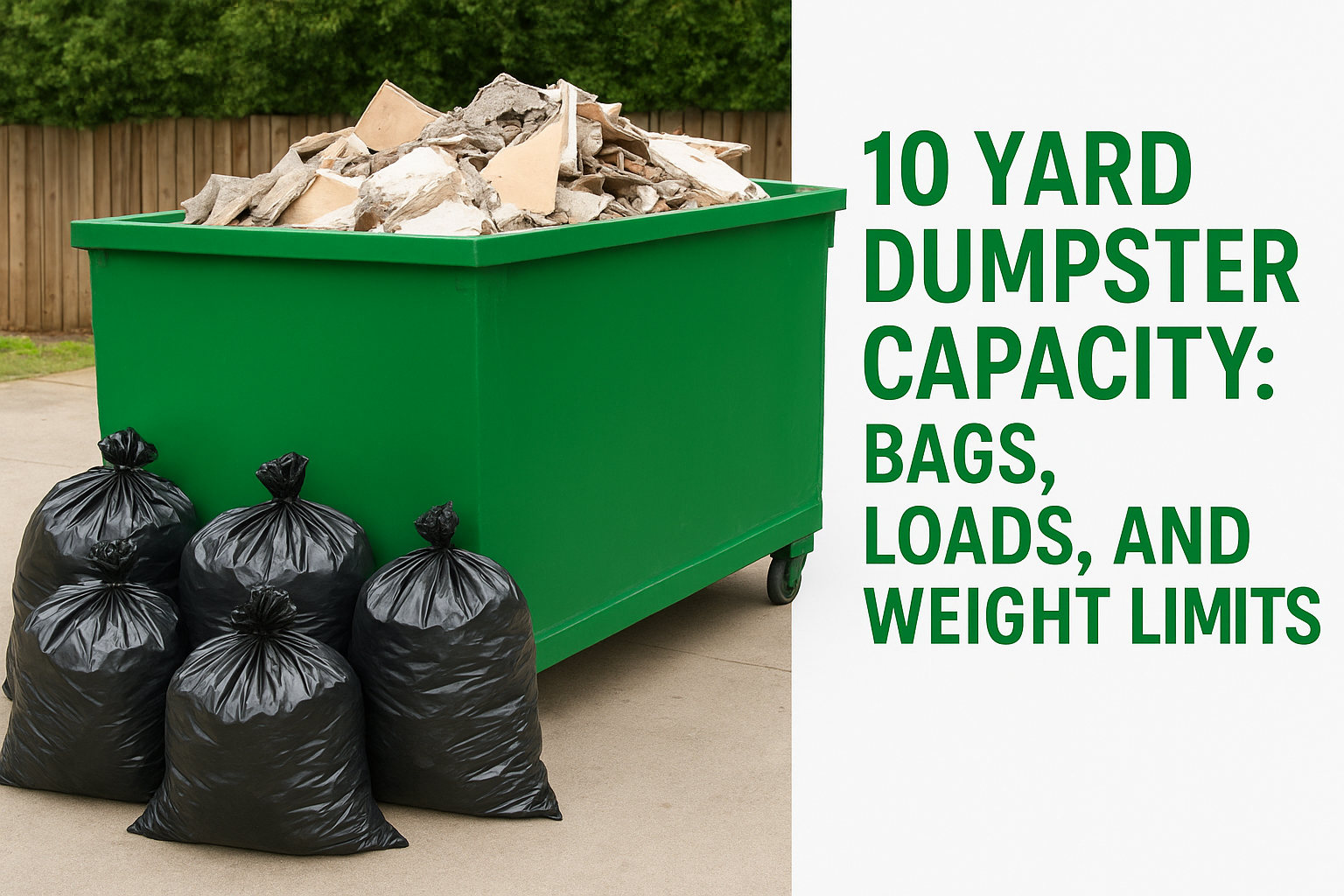
A 10-yard dumpster is one of the most popular sizes for residential projects, but understanding the actual 10 yard dumpster capacity can be tricky. How many trash bags does it hold? How does it compare to pickup truck loads? And what’s the weight limit before you start racking up overage fees? These are the questions that matter when you’re trying to pick the right container for a cleanout, renovation, or landscaping job.
At Dump Express, we deliver 10-yard dumpsters across Cape Cod and Plymouth every day. After 20-plus years of dropping off containers for projects of all sizes, we’ve seen what fits, what doesn’t, and where people tend to misjudge. Getting the capacity right upfront saves you from ordering a second dumpster or paying for space you don’t need.
This article breaks down the physical dimensions, volume comparisons, and weight limits of a 10-yard dumpster so you can decide whether it’s the right fit for your project before you book.
Why 10-yard dumpster capacity matters
When you get the dumpster size wrong, you pay for it. Either you run out of room mid-project and need a second container, or you book something oversized and pay for cubic yards you never use. Understanding the 10 yard dumpster capacity before you book is the most practical step you can take to keep your project on budget and on schedule. This is not about picking the biggest container to play it safe. It’s about matching the right size to your actual debris volume.
Getting the size wrong costs you twice
Most people underestimate how quickly debris adds up during a project. A single bathroom renovation can generate more waste than expected once you factor in tile, drywall, old fixtures, and flooring. Order a container that’s too small, and you’re looking at a second delivery fee, a second rental period, and extra time waiting for a swap. That adds up fast, especially if contractors are on-site billing by the hour.
If you need a second dumpster mid-project, you’re almost always paying more than if you had sized up from the start.
The right fit depends on your project type
Not every project fills the same amount of space. Lightweight materials like cardboard, insulation, or clothing take up a lot of volume but stay well under weight limits. Dense materials like concrete, dirt, or shingles can hit weight limits before the container even looks full. This matters because dumpster rentals include both a volume cap and a weight limit, and exceeding either one triggers overage charges.
Matching both the physical space and the weight of your debris to the right container is the goal. A 10-yard dumpster works well for small-to-mid residential projects, but only when your debris type and total load volume line up with what the container can legally handle.
Know the true size and dimensions of a 10-yard dumpster
Before you can estimate whether the 10 yard dumpster capacity fits your project, you need to understand what those 10 cubic yards actually look like in physical terms. Most people picture a dumpster as a large bin, but the actual footprint and depth determine both how much fits inside and whether it clears your driveway, gate, or work area.
What the physical dimensions look like
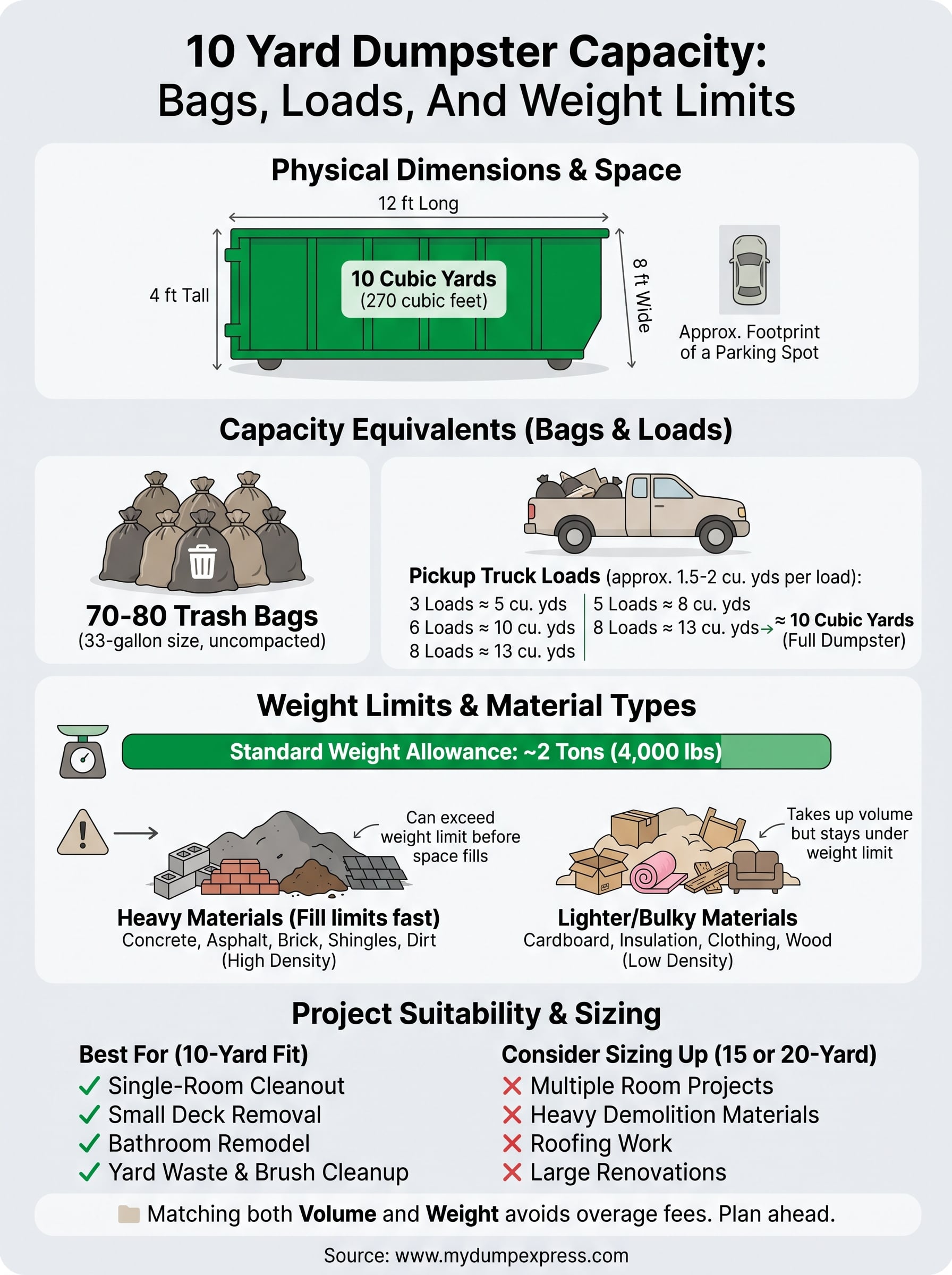
A standard 10-yard dumpster measures roughly 12 feet long, 8 feet wide, and 4 feet tall. Those dimensions give you 10 cubic yards of internal space, which equals 270 cubic feet. The container sits low to the ground, making it easier to load debris over the side without a ladder or heavy lifting.
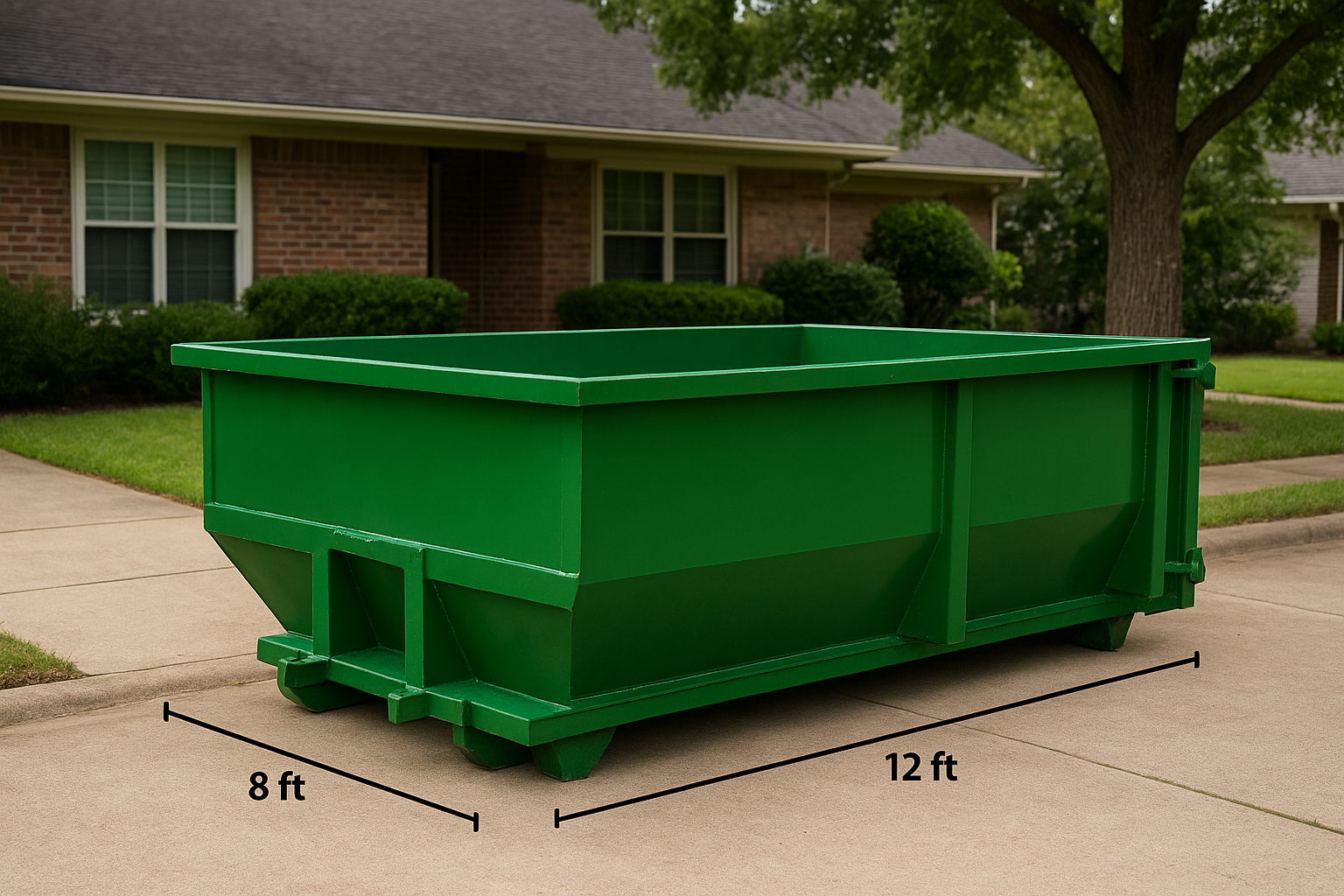
The low wall height is one reason the 10-yard container works so well for home cleanouts and small renovations.
The footprint takes up roughly the space of a standard parking spot in your driveway or on the street. Keep that in mind when you plan placement, especially on Cape Cod properties where driveways can be narrow or angled. You also want at least two feet of overhead clearance if the container needs to sit near overhead wires or low branches.
Understand weight limits and what makes loads heavy
A 10-yard dumpster comes with a weight allowance built into the base rental price, typically around 2 tons (4,000 pounds) for most rental providers. Going over that limit triggers a per-ton overage fee. Volume and weight are two separate constraints, and heavy material types can push you past the weight limit before the container looks anywhere close to full.
Exceeding the weight limit on a container that looks half-empty is one of the most common surprise charges renters face.
Heavy materials fill weight limits fast
Concrete, asphalt, brick, and dirt are the biggest offenders when it comes to weight. A single cubic yard of concrete weighs roughly 4,000 pounds on its own, which means a few loads of mixed concrete debris can max out the weight allowance without filling much of the physical space. If your project involves demolition, roofing, or soil removal, factor that in before you assume the 10 yard dumpster capacity covers everything you need to haul.
Roofing shingles and tile are another common trap. A full layer of asphalt shingles across even a mid-sized roof adds up to serious weight fast. Breaking heavier debris into smaller loads or mixing it with lighter material can help you stay within limits and avoid extra charges at pickup.
Convert capacity into trash bags and pickup truck loads
Translating cubic yards into familiar units helps you picture whether the 10 yard dumpster capacity actually covers your project. Abstract numbers like "10 cubic yards" are hard to visualize, but trash bags and pickup truck loads are reference points most people already understand.
How many trash bags fit
A standard 10-yard dumpster holds roughly 70 to 80 thirty-three-gallon trash bags. That estimate assumes bags are filled but not compacted down. Lighter, bulky materials like clothing or cardboard boxes let you fit more bags by count, while denser debris like broken tile or wood scraps reduces that number quickly.
Use 70 bags as your planning floor, not a guaranteed upper limit.
How many pickup truck loads it replaces
A full-size pickup truck bed holds roughly 1.5 to 2 cubic yards of loose debris. That puts a 10-yard dumpster at roughly 5 to 7 full truck loads. Use the table below to quickly convert loads into cubic yards as a planning check.
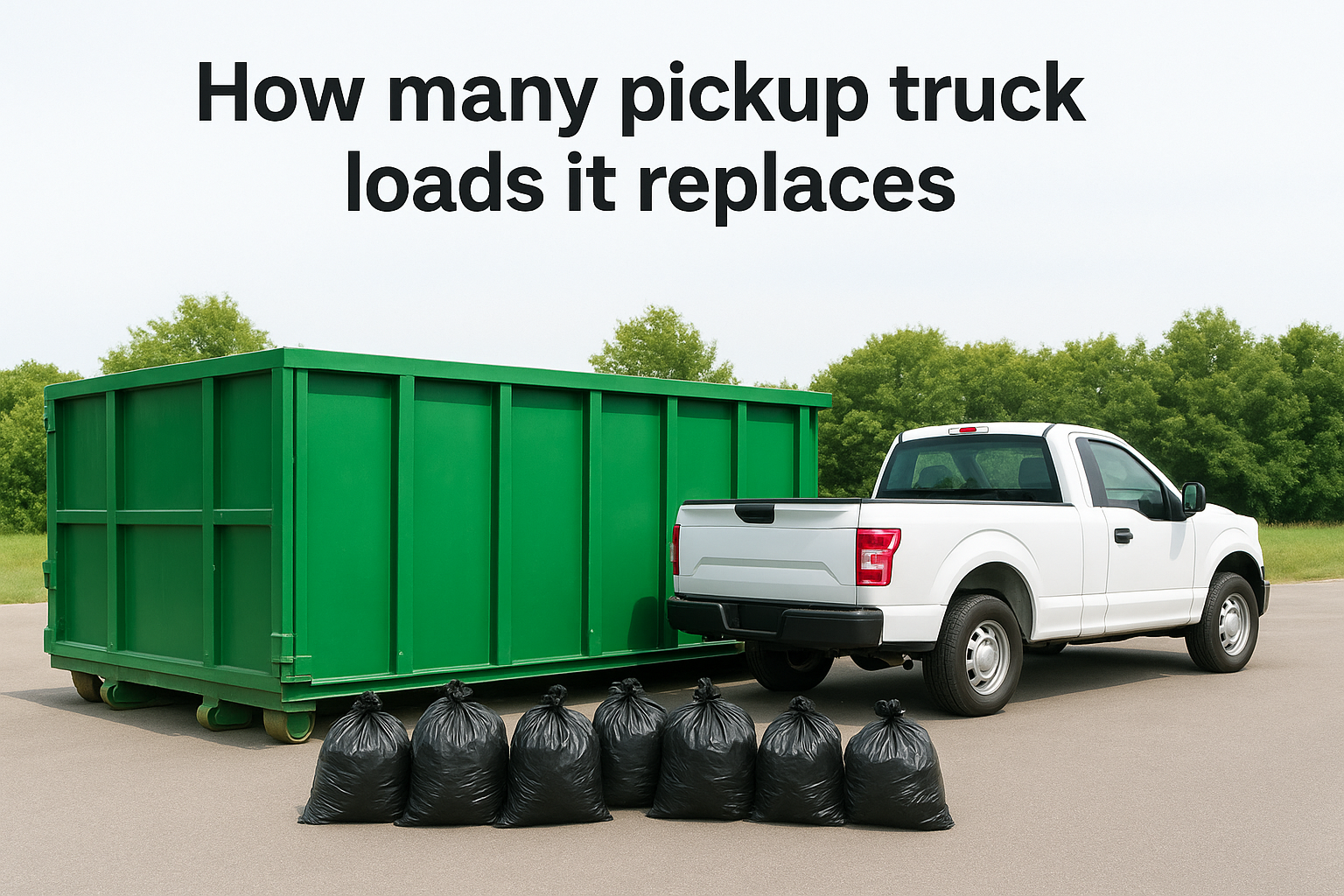
| Pickup Truck Loads | Estimated Cubic Yards |
|---|---|
| 3 loads | ~5 cubic yards |
| 5 loads | ~8 cubic yards |
| 6 loads | ~10 cubic yards |
| 8 loads | ~13 cubic yards |
If you’ve already made a few hauls and want to estimate the remaining volume, multiply your truck loads by 1.5 to get an approximate cubic yard total before you book.
Choose the right dumpster size for your project
Knowing the 10 yard dumpster capacity inside and out still leaves one question: is it the right fit for your specific project? The answer depends on your debris type, total volume, and how the weight breaks down. Use the information from the sections above as your checklist before you commit to a size.
When a 10-yard container fits your project
A 10-yard dumpster works well for small-to-mid residential projects where the debris stays relatively light. Common fits include single-room cleanouts, small deck removals, bathroom remodels, or yard waste and brush cleanup. If your estimated debris falls under six full truck loads and avoids heavy materials like concrete or tile, a 10-yard container likely covers you.
When in doubt about fit, describe your project to the rental company before booking.
When you should size up
If your project involves multiple rooms, heavy demolition materials, or roofing work, a 15-yard or 20-yard dumpster is worth the extra cost upfront. Ordering too small and needing a second delivery and rental period almost always costs more than upgrading the container from the start. A quick call to Dump Express before you book gets you an honest size recommendation based on your actual project, not a guess.
Next steps
You now have a complete picture of 10 yard dumpster capacity: the physical dimensions, weight limits, bag counts, truck load equivalents, and the project types it fits best. Use that information as your starting point, not a final answer. Every project generates debris differently, and a quick review of your specific materials against the weight and volume limits covered here will save you from ordering the wrong size.
If your project falls close to the limits, or you’re mixing heavy materials with bulky debris, talk to someone before you book. Dump Express has served Cape Cod and Plymouth for over 20 years, and the team can size your project accurately based on what you’re actually hauling. You get an honest recommendation, clear pricing by town, and a container delivered on your schedule. Book your dumpster rental with Dump Express and get your project moving without second-guessing the size.