
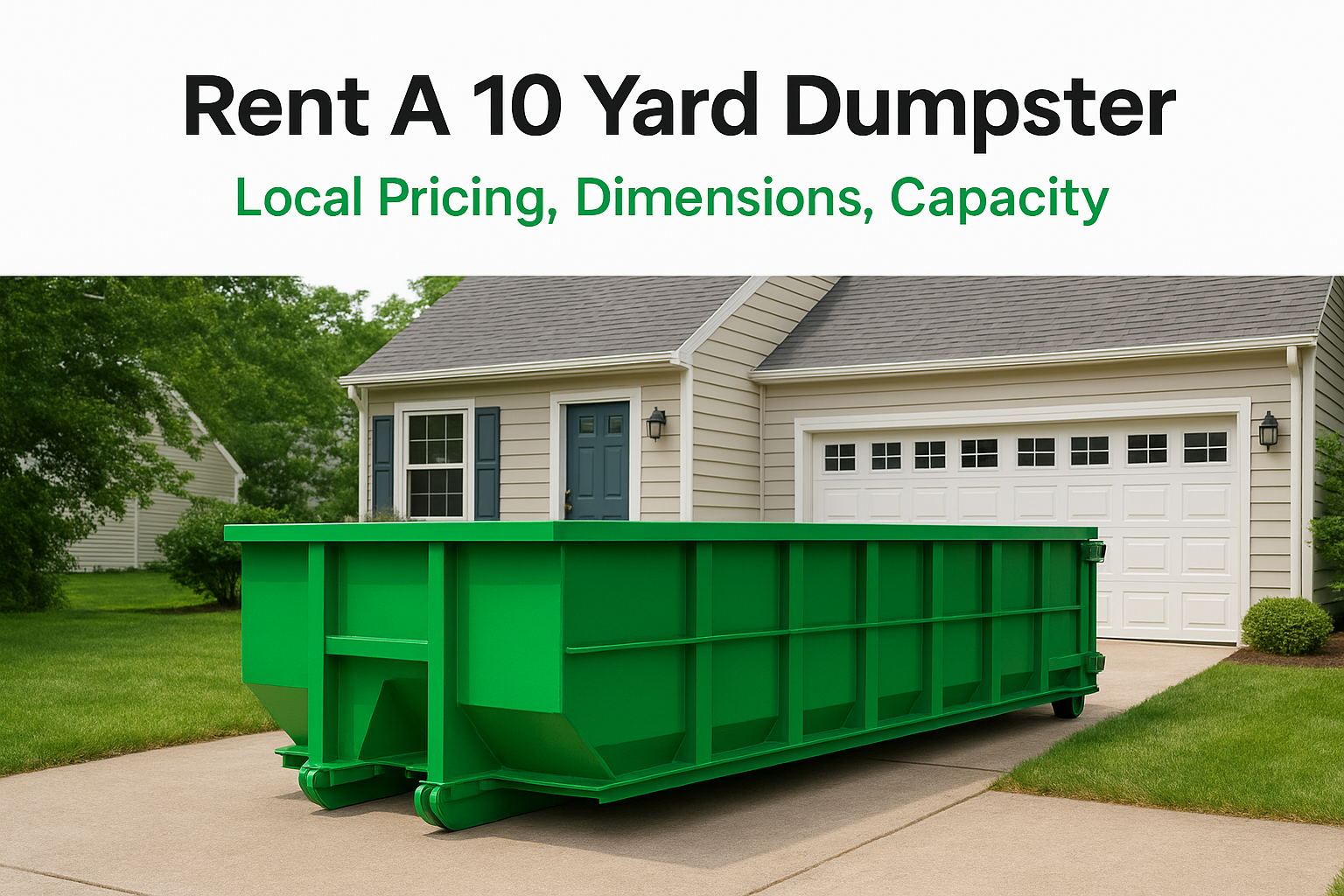
A 10-yard dumpster is one of the most popular sizes for residential projects, and for good reason. It hits a sweet spot between too small to be useful and too large for a typical driveway. Whether you’re clearing out a garage, pulling up old flooring, or tackling a bathroom remodel, choosing to rent a 10 yard dumpster often makes the most sense for the scope of work involved.
But “10 yards” doesn’t tell you much on its own. How much stuff actually fits inside? What does it look like sitting in your driveway? And what should you expect to pay, especially here on Cape Cod, where disposal costs vary from one town to the next? These are the questions that matter before you book, and they’re the ones most rental company websites gloss right over.
At Dump Express, we’ve delivered thousands of 10-yard dumpsters across Cape Cod and Plymouth over the past 20+ years. This article breaks down the real dimensions, weight limits, typical project uses, and local pricing so you can figure out whether a 10-yard container is the right call, before a dumpster shows up at your house.
Why a 10 yard dumpster makes sense
When you look at the full range of dumpster sizes, the 10-yard container tends to be the one most homeowners end up needing. It’s large enough to handle a full room’s worth of debris but compact enough to fit in a standard residential driveway without blocking traffic or taking up half your yard. That balance is genuinely hard to find in the sizes above and below it, which is why rental companies move more 10-yard units than any other size.
It handles most residential jobs without ordering too much
The most common mistake people make when ordering a dumpster is going too big. A 20-yard container sitting half-empty on a small cleanout job means you paid for capacity you never used, and that cost difference is real money. For the typical projects a homeowner runs into, including a single-room renovation, a garage cleanout, or removing old carpeting and drywall, a 10-yard dumpster matches the actual volume of material involved.
When you decide to rent a 10 yard dumpster for a project like these, you’re not guessing at capacity. You’re matching the container to what you actually need to move. Here’s the kind of work a 10-yard container fits well:
- Bathroom or kitchen remodel (one room, not a full gut job)
- Single-car garage cleanout with old tools, shelving, and boxes
- Removing flooring across several rooms
- Attic or basement declutter with furniture, appliances, and bags
- Small landscaping debris like brush, branches or sod (in a separate dedicated dumpster)
- Window or door replacement with framing and trim
A 10-yard dumpster holds roughly 3 to 4 pickup truck loads of debris, which covers most single-room or single-area projects without needing a larger container.
It fits where larger containers cannot
Driveway access matters more than most people expect before the truck shows up. A 20-yard dumpster is longer, heavier, and harder to position, and it can crack older asphalt, block garage access, or simply not fit on a narrow lot. The 10-yard container has a significantly smaller footprint, which makes placement far easier in residential areas where every foot of space counts.
This is especially relevant on Cape Cod, where older neighborhoods, tapered driveways, and smaller lot sizes are common. Many homes here have driveways that curve near the road or narrow toward the garage, leaving no practical room for a large container. Choosing the right size upfront avoids the problem of a driver arriving and having nowhere to set the dumpster safely.
It keeps your total cost in check
Dumpster pricing includes more than the rental fee. You’re also covering disposal fees, which vary by town and by the type of material you load. A 10-yard dumpster typically costs less overall than a 15 or 20-yard unit because the total weight of the load tends to stay lower, which reduces the chance of hitting weight limits that trigger surcharge fees.
On Cape Cod, disposal costs differ from one town to the next based on tipping rates at local transfer stations. That means your final bill depends on where you live, what you’re throwing away, and how much it weighs. Choosing a container size that matches your project rather than leaving extra room keeps that total in a reasonable range, and avoids situations where a half-loaded dumpster still costs nearly as much as a full one due to minimum weight charges.
10 yard dumpster dimensions and capacity
Knowing the physical size of a 10-yard dumpster before it arrives matters more than most people expect. You need to confirm it fits your driveway, clears any overhead obstacles like wires or tree branches, and leaves enough room around it to load comfortably. The numbers aren’t complicated, but they’re easy to overlook until the truck is already backing in.
Physical dimensions
A standard 10-yard dumpster measures approximately 12 feet long, 8 feet wide, and 3.5 to 4 feet tall. That height is one of the most useful features of this size. Because the walls sit lower than a 15 or 20-yard container, you can toss debris over the side without straining, which makes loading faster and safer when you’re working alone or moving heavy materials like tile or lumber.
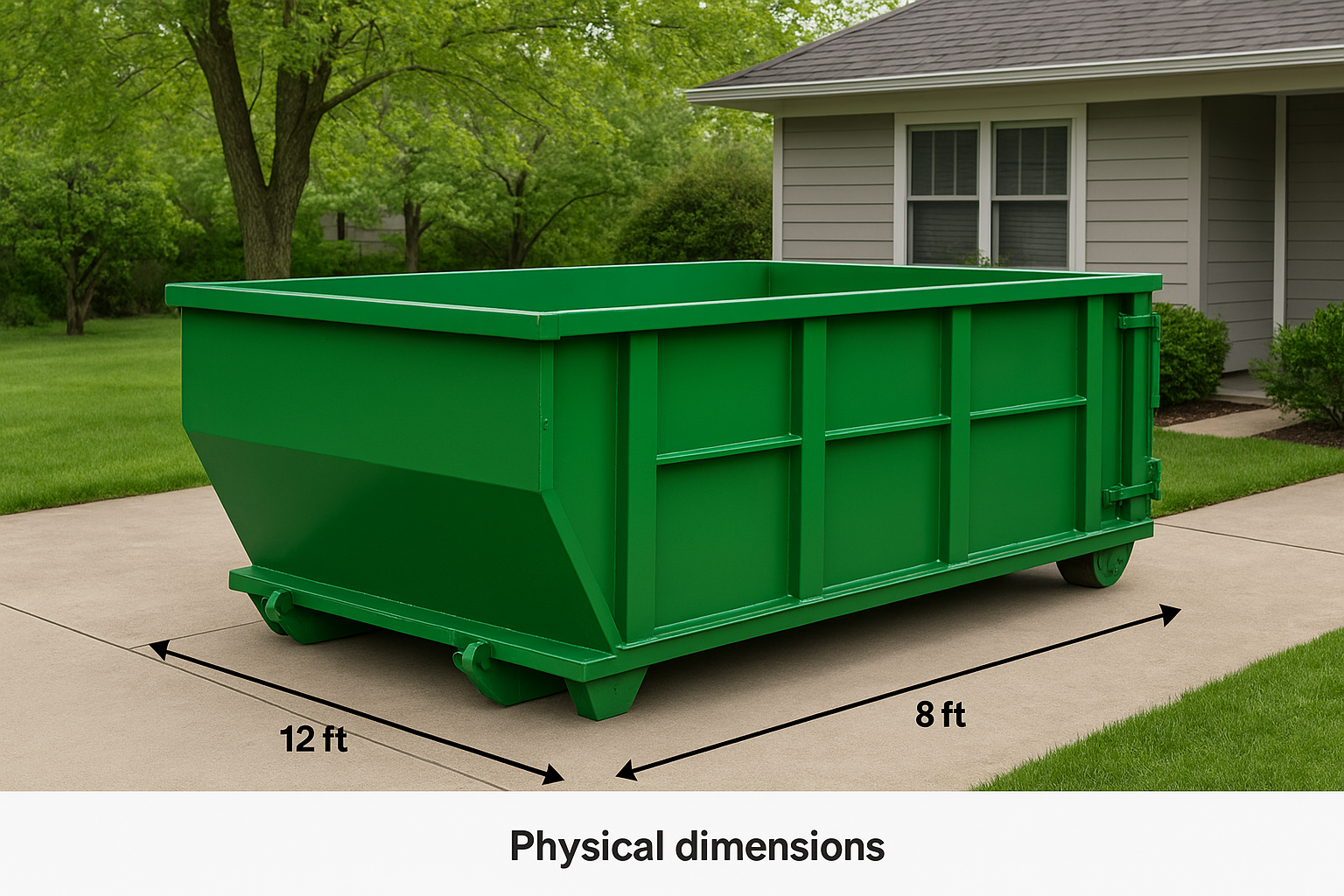
The footprint, roughly 12 by 8 feet, fits cleanly in most residential driveways. To picture it in your space, think of a standard parking spot, which runs about 18 feet long. A 10-yard dumpster takes up roughly two-thirds of that length, leaving room for the delivery truck to position the container and pull away without blocking the street. If your driveway is shorter or slopes steeply, it’s worth measuring before you book.
Check for overhead clearance too. Low-hanging branches, power lines, or covered entryways can prevent safe delivery even when the ground space looks fine.
Weight capacity
The 10-yard container holds a volume of 10 cubic yards, which translates to roughly 270 cubic feet of material. Most rental companies, including Dump Express, set a weight limit for this size dumpster at 1 ton, depending on the specific rental agreement and what materials you plan to load.
That weight limit exists because disposal facilities charge by the ton, and heavier loads increase the cost of every haul. When you decide to rent a 10 yard dumpster for a project involving heavy materials like concrete, brick, or soil, the container may reach its weight limit well before it looks full. In that case, lighter debris like drywall, wood framing, or household junk gives you more practical volume to work with before hitting the cap.
If your project involves dense or mixed materials, it’s a good idea to discuss the load type with your rental company before booking so you avoid overage charges at pickup.
What fits in a 10 yard dumpster
Understanding what actually fits inside a 10-yard container helps you decide whether this size covers your project, or whether you need to step up or down. The volume of 10 cubic yards sounds abstract until you think about it in terms of real materials and typical jobs. Most residential cleanouts and single-room renovations fall right in the range this container handles comfortably.
Household and renovation debris
When you rent a 10 yard dumpster for home projects, the container handles a wide variety of materials without issue. Drywall, flooring, trim, and framing lumber from a bathroom or kitchen remodel fit well, as do the bags, boxes, and bulky furniture that come out of a garage or basement cleanout. Old appliances, broken shelving, mattresses, and general household junk all load in without a problem.
A 10-yard dumpster holds roughly the equivalent of 3 to 4 pickup truck loads, which covers most single-room or single-area residential jobs.
Here’s a practical breakdown of what typically fills a 10-yard container:
- One room of drywall and subflooring from a remodel
- Furniture and appliances from a garage or basement cleanout
- Carpeting, padding, and hardwood flooring from several rooms
- Roofing shingles from a small shed or section of roof
- Yard debris including brush, tree branches, and sod (in a separate dedicated dumpster)
- Mixed household junk from an estate cleanout or move-out
What loads poorly in this size
Some materials fill up a 10-yard container much faster than they appear to because of weight, not volume. Concrete, brick, tile, and soil are dense enough that a load that looks only half full can already hit the weight limit, triggering overage fees at pickup. For projects involving large quantities of heavy masonry or excavated dirt, a dedicated conversation with your rental company before booking makes sense.
Bulky but lightweight materials like mattresses and loose insulation present a different challenge. They take up space quickly without adding much weight, which means they can fill the container visually before you’ve loaded the denser debris you actually need to get rid of. Breaking down large items and loading them flat helps you use the available volume more efficiently and avoids the need for a second haul.
How much it costs to rent a 10 yard dumpster
Pricing is where most rental company websites get vague, and that vagueness costs you. When you decide to rent a 10 yard dumpster, the number you see advertised is rarely the number you pay at the end. Understanding what goes into the final bill before you book keeps you from being caught off guard when pickup day comes.
Base rental rates
Most 10-yard dumpster rentals start somewhere in the range of $500 to $600, but that number reflects the base rate only. The actual cost you pay includes a disposal fee layered on top, which varies depending on your town, the weight of your load, and the type of material inside. Rental duration also factors in, with most companies offering a set number of days before additional daily fees apply.
The advertised rental price and your final invoice are two different numbers, and the gap between them depends almost entirely on what your load weighs and where you live.
What drives the final price up
Weight is the biggest variable in your total cost. Disposal facilities charge by the ton, and those charges pass directly to you. A light load of household junk from a garage cleanout will cost noticeably less than the same container filled with tile, concrete, or roofing shingles. Most 10-yard rentals include a weight allowance, and loading over that limit triggers per-ton overage fees at pickup.
Certain materials also carry surcharges regardless of weight. Items like tires, mattresses, televisions, and appliances often require separate handling at the disposal facility, which adds a flat fee per item to your invoice. Knowing which items on your list fall into this category before loading helps you avoid surprises.
Cape Cod pricing specifics
Pricing on Cape Cod varies from one town to the next because tipping rates at transfer stations differ across the region. A 10-yard rental in Falmouth may cost a different amount than the same rental in Barnstable or Brewster, even if the base rental fee is identical. That town-specific pricing reflects the actual disposal cost your rental company absorbs on your behalf.
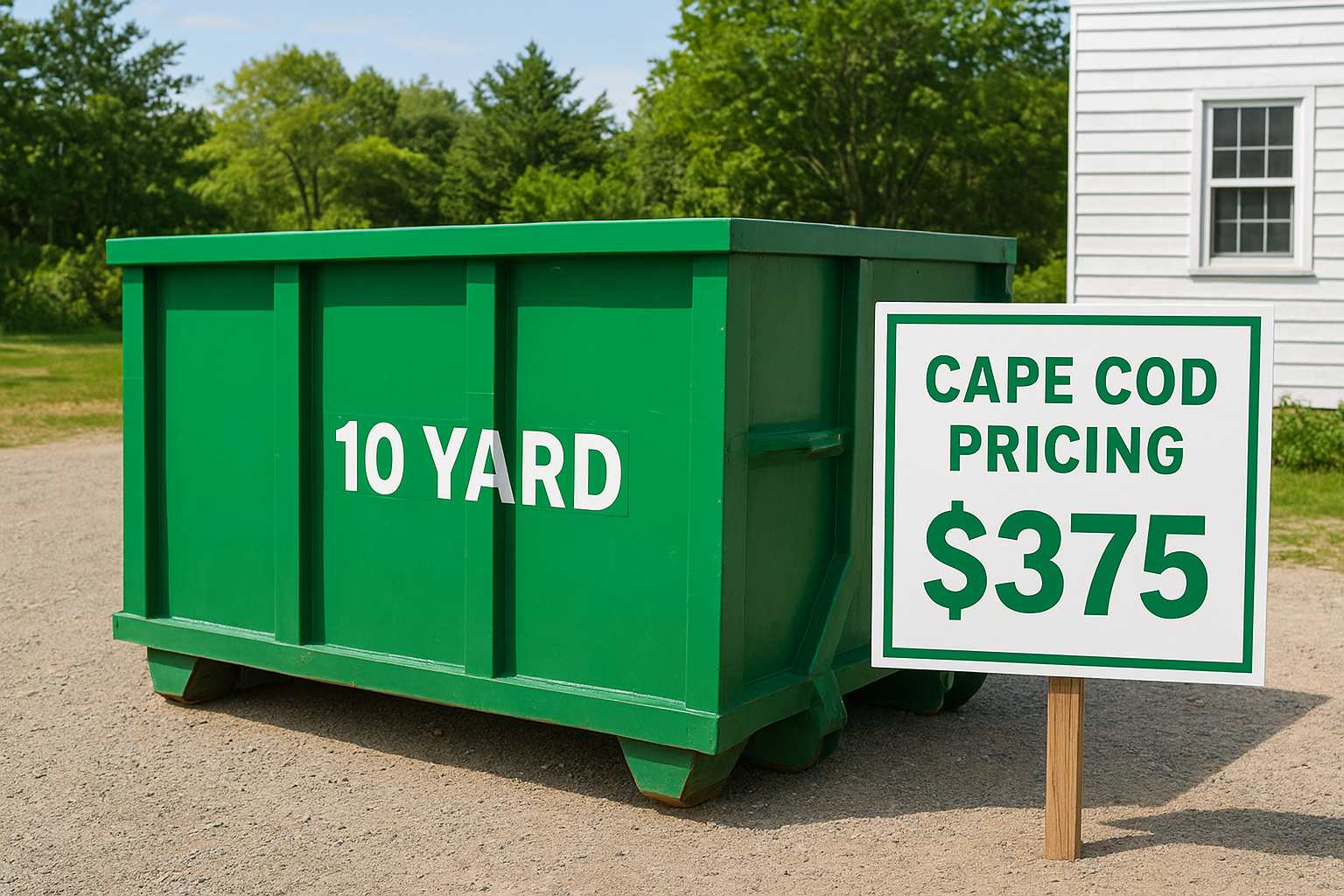
At Dump Express, town-specific pricing is listed directly on the website so you know what to expect before you book. There are no phone calls required to get a number, and no estimates that shift at pickup. The price shown for your town is the price you pay, assuming your load stays within the included weight limit.
What you can and cannot put in the dumpster
Before you start loading, knowing what materials are and are not allowed saves you from unexpected surcharges and rejected loads at the disposal facility. Most dumpster rental companies follow guidelines set by their local transfer stations, and those facilities have strict rules about hazardous and regulated materials. When you rent a 10 yard dumpster, knowing your list upfront keeps the job moving without complications at pickup.
What’s accepted
A 10-yard container handles the majority of residential and renovation debris without issue. General household junk, furniture, appliances, yard waste, and construction materials from typical remodels all qualify. You can load these materials without concern:
- Drywall, plywood, and framing lumber
- Carpeting, hardwood flooring, and tile
- Furniture including sofas, tables, and bookshelves
- Appliances such as washers, dryers, and refrigerators (surcharge may apply)
- Bagged household trash and general clutter
- Yard debris including brush, branches, and sod (in a separate dedicated dumpster)
- Roofing shingles and construction debris from remodels
If you’re unsure whether a specific item is accepted, contact your rental company before loading. It’s faster than dealing with a rejected item at pickup.
Appliances containing refrigerant, like air conditioners and older refrigerators, are accepted at most facilities but typically carry a flat surcharge to cover the cost of proper fluid removal before disposal. Asking about this fee upfront prevents confusion when your invoice arrives.
What’s not allowed
Certain materials are prohibited from all dumpster rentals because they require special handling under state or federal regulations. Loading these items creates disposal problems that the rental company cannot resolve at a standard transfer station, which leads to rejected loads and added fees passed directly to you.
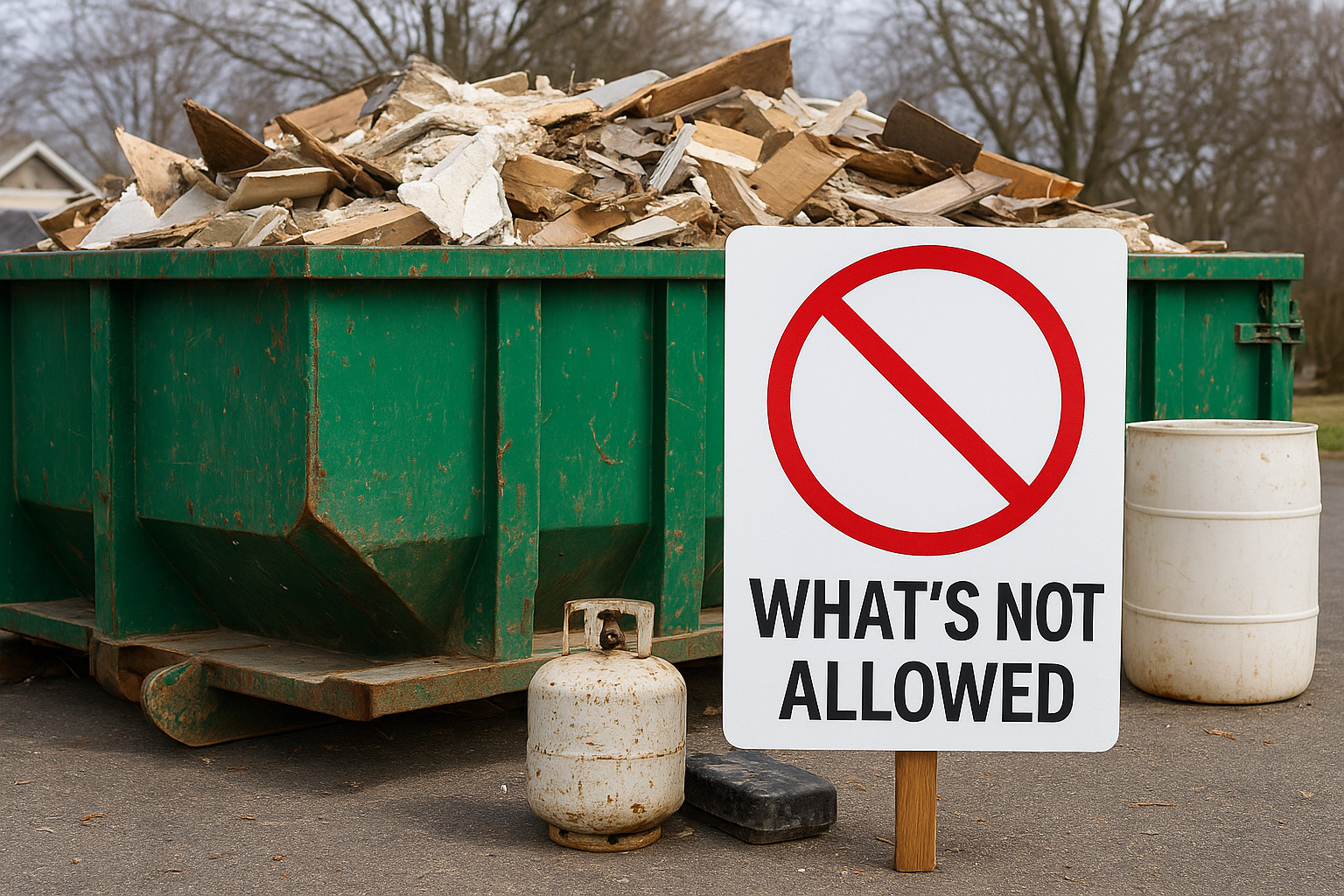
Materials that don’t belong in a dumpster include:
- Hazardous waste such as paint, solvents, pesticides, and motor oil
- Propane tanks, gas canisters, and other pressurized containers
- Asbestos-containing materials from older homes
- Batteries, including lithium and lead-acid types
- Medical waste and sharps
- Electronics like televisions and computers (e-waste rules vary by location)
Massachusetts has specific regulations for hazardous household waste, and most Cape Cod towns offer periodic collection events where residents can drop off restricted materials safely. Checking with your local town hall or the Massachusetts Department of Environmental Protection gives you the most current guidance on what qualifies and where to bring it.
How to rent a 10 yard dumpster step by step
The process to rent a 10 yard dumpster is straightforward once you know what decisions to make ahead of time. Most people who run into trouble, whether it’s a surprise fee or a delivery that doesn’t fit, skipped one of a few key steps before they booked. Going through the process in order takes less than an hour and prevents the issues that slow down the actual project.
Figure out what you’re loading
Before you contact any rental company, make a list of the materials you plan to dispose of. Walk through the project area and estimate the volume and type of debris. If you’re pulling out flooring, removing furniture, or demolishing a bathroom, you’ll get a clearer picture of how much room you’ll actually need. Knowing your load type upfront also helps you answer questions about weight and prohibited items when you call or book online.
The single most useful thing you can do before booking is identify any heavy materials like concrete or tile, since those affect both your size choice and your final cost.
Book your rental and confirm the details
Once you’ve assessed your load, contact the rental company and confirm the specifics: your town, delivery address, preferred drop-off date, and the type of project you’re doing. A local company familiar with Cape Cod can tell you immediately whether your driveway layout works for the size you want. Before you finalize the booking, confirm the weight limit, rental period, and what happens if you need an extension. Get those details in writing or make sure they’re clearly stated on your confirmation so there’s no dispute later.
Prepare your space for delivery
Before the truck arrives, clear the drop-off area of vehicles, yard equipment, and anything that could block access or get damaged when the container is set down. Mark the spot where you want the dumpster placed if there’s any chance the driver could set it in the wrong location. Check for low-hanging branches, overhead wires, or soft ground that could cause problems with placement, since dealing with those issues on delivery day slows everything down. Once the container is in place, you can load it at your own pace for the duration of your rental period.
Permits, placement, and pickup timing locally
Most people who decide to rent a 10 yard dumpster on Cape Cod focus entirely on the project inside the house and skip the logistics outside. That’s where problems come up. Permits, driveway placement, and pickup timing all have real consequences for your project schedule and your final cost, and each one depends on local rules that vary across the 40-plus towns in the area.
When you need a permit
Placing a dumpster entirely on your own private property, such as in a driveway or side yard, typically does not require a permit in most Cape Cod towns. The situation changes when the container needs to sit on a public road or town right-of-way, which sometimes happens when a driveway is too narrow or a job site requires street access. At that point, you’ll need to contact your town’s public works or highway department to find out what’s required and how long approval takes.
Check your town’s permit requirements before booking, not after, since some approvals take several business days and can delay your delivery date.
Requirements differ from one town to the next, so calling your specific town hall directly gives you the most accurate answer. Your rental company can often point you in the right direction based on past deliveries in your area.
Where to place the dumpster on your property
Flat, stable ground is the most important factor for safe placement. Soft soil, steep slopes, or freshly laid pavers can shift under the weight of a loaded container, creating problems for both your property and the pickup crew. If your driveway is asphalt or older concrete, placing plywood boards under the container’s contact points spreads the load and reduces the risk of surface damage.
Think through the loading process when you choose your placement spot. You want the container close enough to carry debris without a long walk, but positioned so that it doesn’t block vehicle access to your garage or the street. Your driver will confirm placement on arrival, but giving clear instructions at booking prevents any back-and-forth on delivery day.
Scheduling pickup on Cape Cod
Pickup happens on business days when disposal facilities are open, which affects how you plan your project timeline. If you finish loading on a Friday, a Monday pickup is the more realistic expectation. Building that buffer into your project schedule avoids the situation where debris sits longer than planned because the timing wasn’t confirmed upfront.
When you book with Dump Express, you schedule your pickup date in advance so there’s no waiting around for a call or a window that shifts. That predictability matters when you’re trying to clear a space on a deadline.
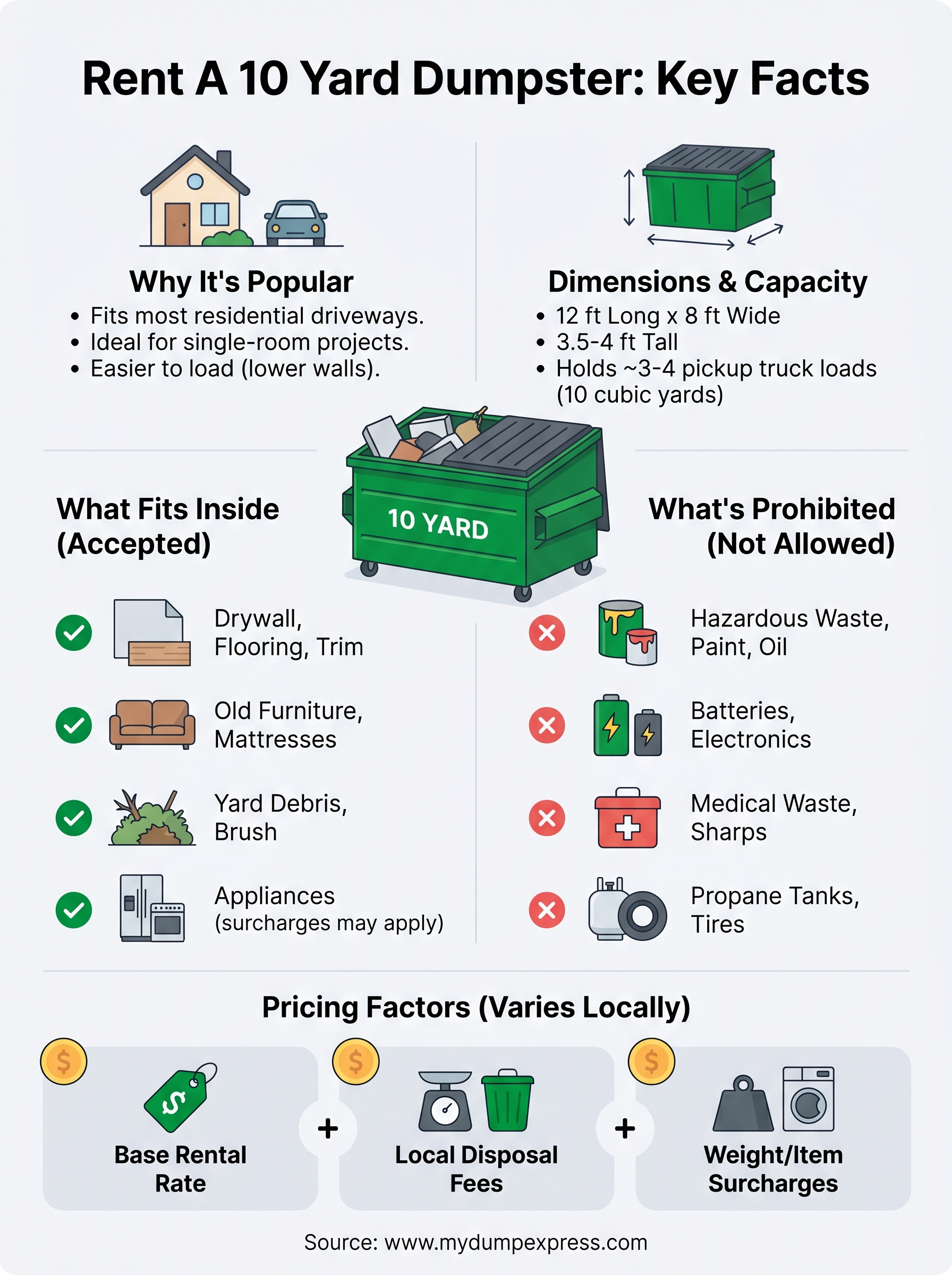
Quick recap
A 10-yard dumpster is the right size for most residential projects on Cape Cod, from single-room remodels and garage cleanouts to flooring removal and estate clear-outs. It fits in a standard driveway, loads easily due to its low wall height, and keeps your total cost predictable when you match the container to your actual project scope. Pricing varies by town because disposal fees differ across the region, so knowing your specific location before booking gives you the most accurate number upfront.
When you rent a 10 yard dumpster, the steps that matter most are assessing your load type early, confirming placement logistics before delivery, and scheduling pickup on a business day that fits your timeline. Getting those details right from the start prevents delays and surprise charges. If you’re ready to book or want to check pricing for your town, visit Dump Express to get started.