
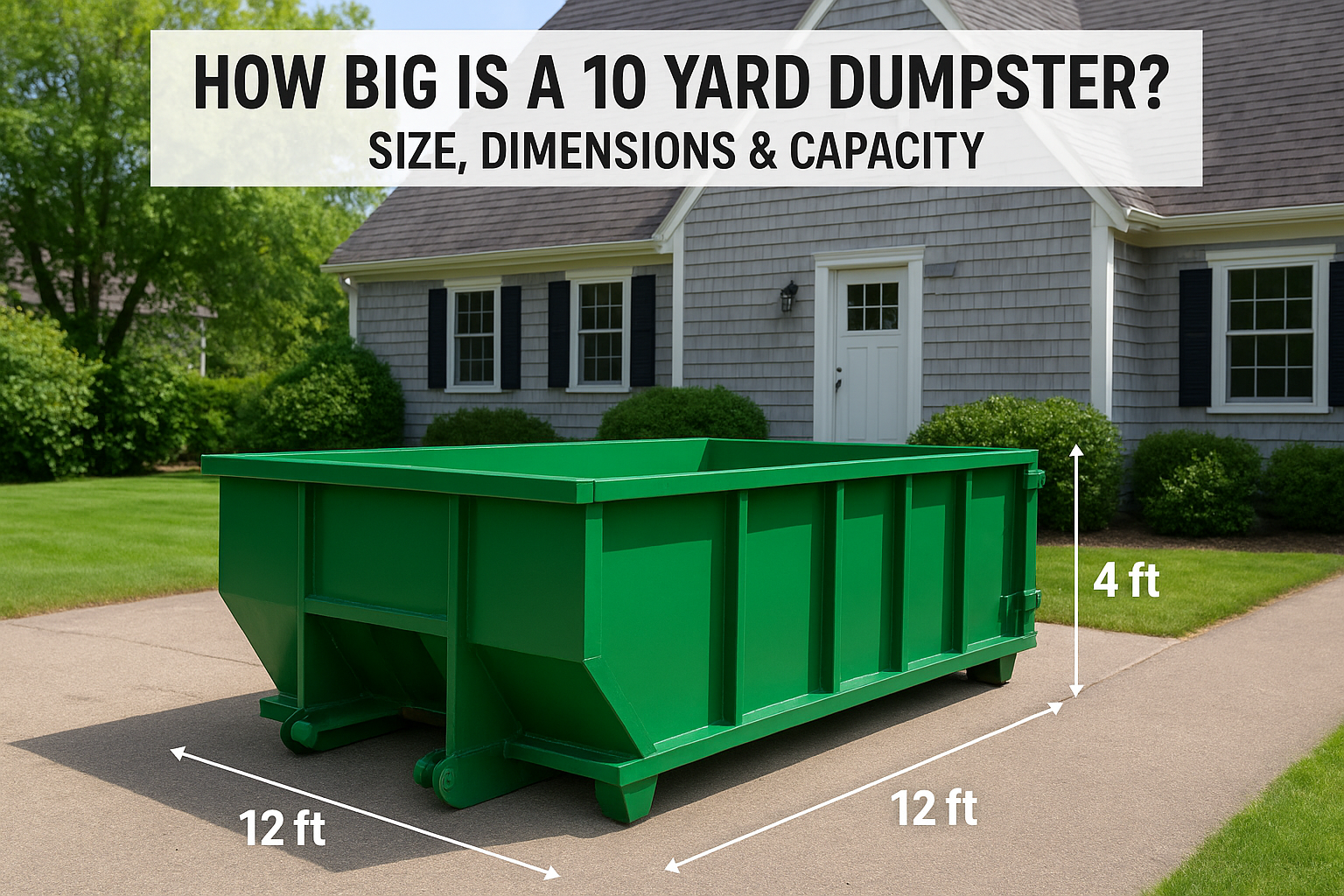
A 10-yard dumpster is one of the most popular sizes for residential projects, but if you’ve never rented one before, how big is a 10 yard dumpster actually? It’s a fair question. You need to know whether it’ll fit in your driveway and whether it’ll hold everything you’re tossing. Without those answers, you’re either overpaying for space you don’t need or stuck with a container that fills up too fast.
At Dump Express, we deliver 10-yard dumpsters across Cape Cod and Plymouth every day. After 20+ years of matching homeowners and contractors with the right container, we know this size inside and out, literally. We’ve seen what fits, what doesn’t, and where people tend to misjudge.
This article breaks down the exact dimensions, weight capacity, and volume of a 10-yard dumpster. You’ll also get real-world comparisons, think pickup truck loads and trash bags, so you can decide with confidence whether this is the right size for your project.
Why 10-yard dumpster size matters
Picking the right dumpster size before you book saves you money, time, and a phone call you don’t want to make mid-project. The size you choose determines your total cost, your placement options, and whether you can complete the job in a single haul. Understanding how big a 10 yard dumpster is before it shows up in your driveway puts you in control of all three.
Ordering the wrong size has real consequences
Most people underestimate how quickly a container fills up. A single bedroom cleanout sounds simple until you start stacking furniture, pulled flooring, and garbage bags. Misjudging volume is the most common mistake we see, and it leads to one of two problems: you need a second container, or you start piling debris past the fill line, which creates overage fees and a pickup refusal.
Overfilled dumpsters cannot be legally hauled. If debris sticks out above the rim, the driver cannot transport the load, which means you pay for the rental day and still have to deal with the excess material yourself.
When you order the wrong size, the financial fallout is predictable:
- Extra delivery and pickup charges for a second container swap
- Overage fees if debris exceeds the weight limit
- Project delays while you wait for a driver to return
- Wasted money on a larger size when a 10-yard would have done the job
Size affects where the dumpster can sit
The physical footprint of the container matters just as much as how much it holds. A 10-yard dumpster is considerably smaller than a 15 or 20-yard unit, which gives you more workable placement options on tight Cape Cod driveways, narrow side yards, and properties with low-hanging branches or overhead utility lines.
Placement also connects directly to permit requirements. Some towns require a permit when a dumpster sits on a public road or sidewalk. A smaller container is more likely to fit on your private property, which often means you skip the permit process entirely. That saves you administrative time before the project even starts, and it removes one more variable from your schedule.
10-yard dumpster dimensions, volume, and weight
If you’re trying to figure out how big is a 10 yard dumpster before it arrives, start with the numbers. Knowing the exact dimensions lets you confirm the container fits your space and holds what you’re hauling, before the driver is already in your driveway.
Physical dimensions
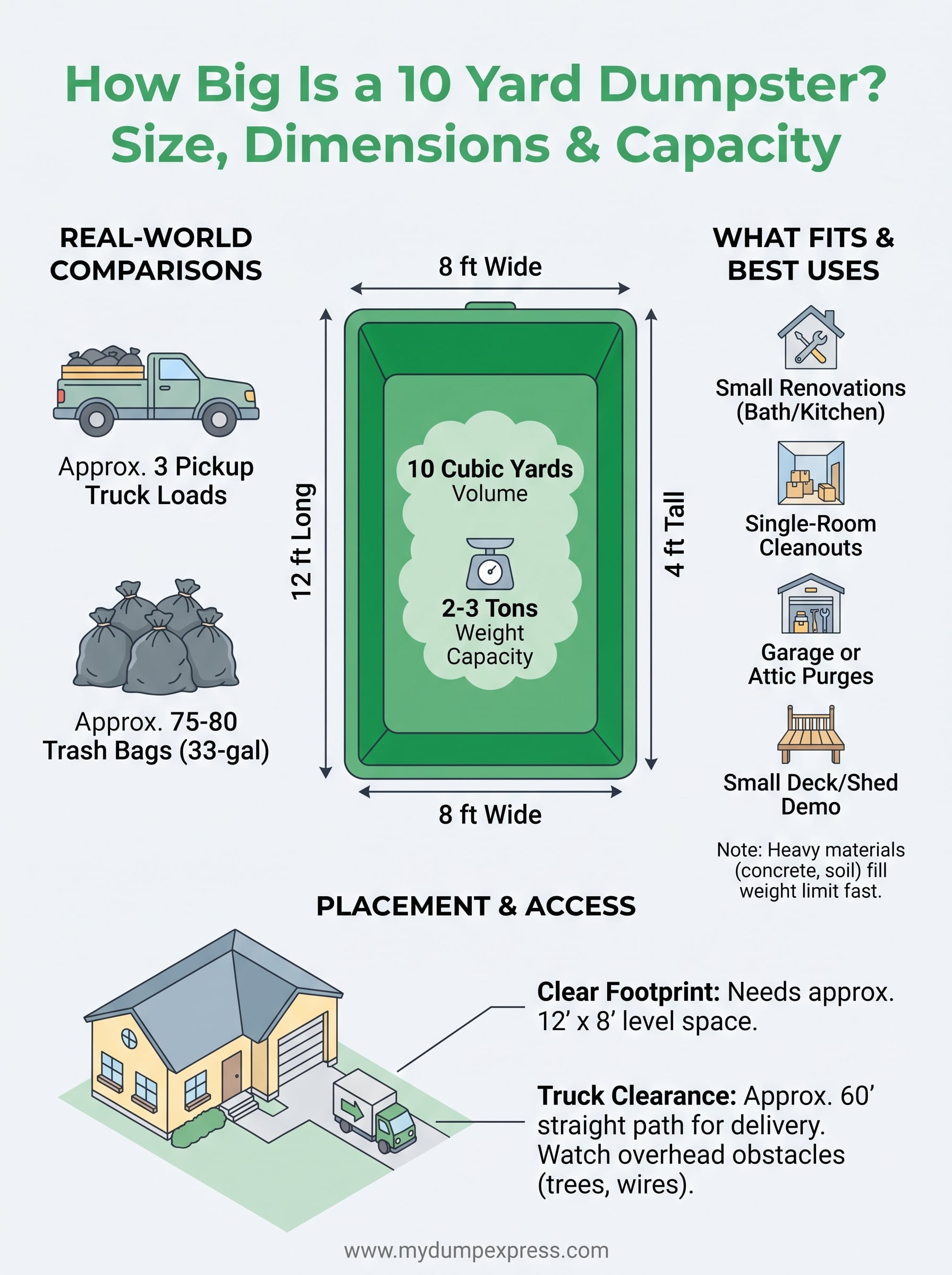
A standard 10-yard dumpster from Dump Express measures approximately 12 feet long, 8 feet wide, and 4 feet tall. Those are the exterior footprint numbers you need to plan placement. The height is the most surprising part for most people. At 4 feet, the sides sit roughly at waist level, which makes loading manageable without climbing or using a ladder. You’re tossing debris in, not lifting it over your head.
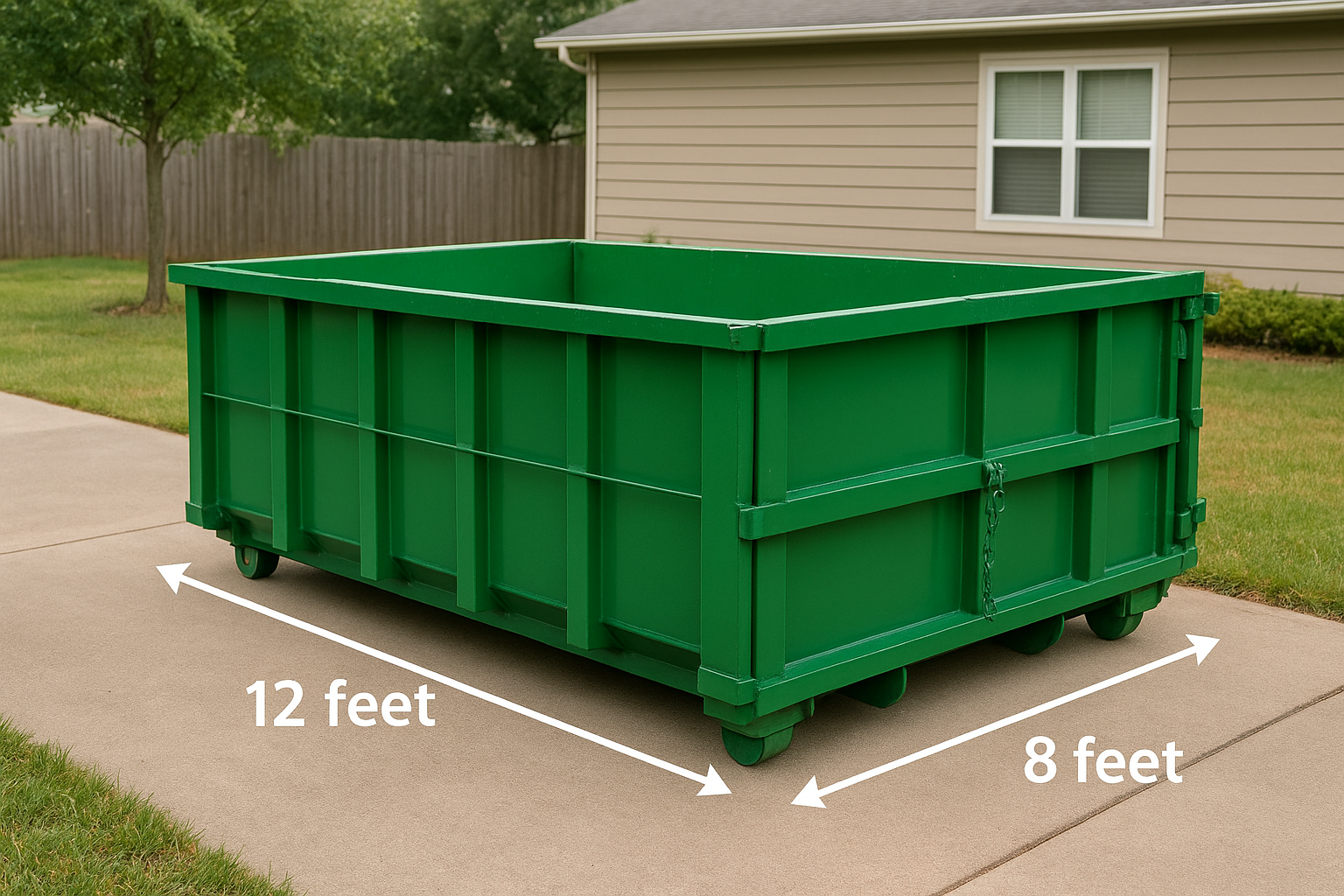
The low sidewall height is one reason the 10-yard works well for heavy materials like concrete, soil, or brick. Short walls mean less lifting, which reduces strain and speeds up loading.
Volume and weight capacity
The "10 yards" refers to 10 cubic yards of volume, not the container’s length. To put that in perspective, 10 cubic yards equals roughly 75 to 80 standard 33-gallon trash bags or about three full pickup truck loads of loose debris. That volume gives you a clear mental image when you’re stacking boxes or pulling out old carpet.
Weight capacity typically runs between 2 and 3 tons, depending on what you’re disposing of. Dense materials like concrete or tile fill the weight limit long before they fill the volume. Light materials like household junk or furniture will hit the volume ceiling first. Knowing your material type helps you predict which limit you’ll reach.
What fits in a 10-yard dumpster
Understanding how big is a 10 yard dumpster is only useful if you know what that specific volume actually holds. The 10-cubic-yard space suits a defined range of projects, and matching your debris type to the container before booking saves you from guessing on delivery day.
Residential cleanouts and small renovations
The 10-yard works best for single-room cleanouts, small bathroom or kitchen renovations, and garage or attic purges. You can load old furniture, household appliances, pulled flooring, drywall scraps, and bagged junk from one or two rooms without pushing the limit. A bathroom gut produces tile, cabinetry, fixtures, insulation, and framing debris that fits comfortably within the container.
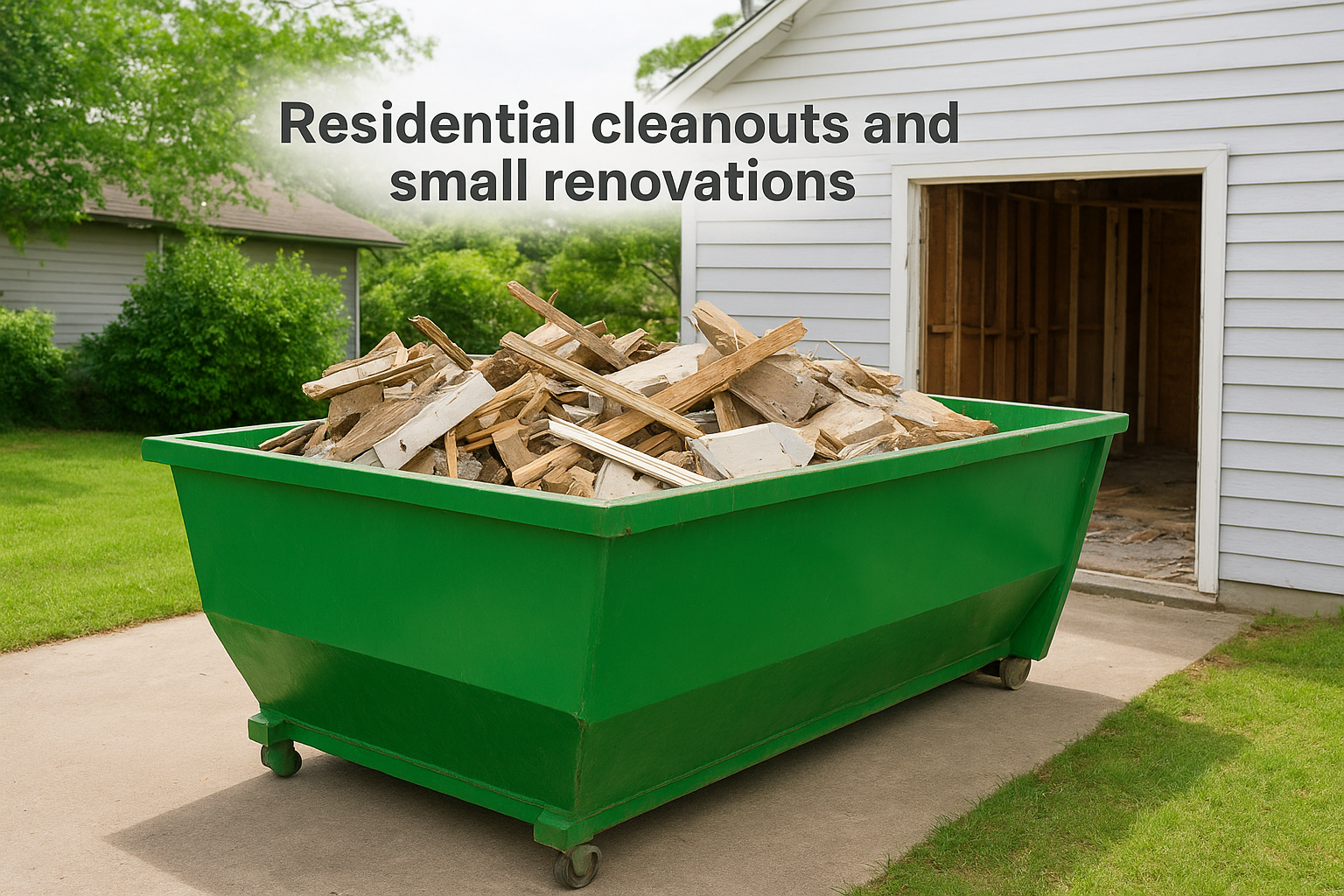
A single-room renovation typically generates 3 to 5 cubic yards of mixed debris, so a 10-yard gives you room to work without monitoring the fill line constantly.
A small deck teardown or basic shed demolition also lands within range for most homeowners. Treated lumber, shingles, and light framing debris fill volume before hitting the weight ceiling, which keeps you clear of overage charges on standard mixed-material loads.
What to keep out
Certain materials are prohibited in any roll-off container: paint, hazardous chemicals, tires, batteries, propane tanks, and electronics. Loading prohibited items risks a flagged pickup, which delays your haul and adds fees to your bill regardless of how the rest of the load looks.
Heavy materials like concrete, brick, or compacted soil eat through the weight limit fast without filling the volume. For those jobs, separating dense debris into a dedicated load makes more practical sense than mixing it with lighter household junk.
How to know if a 10-yard is the right size
Knowing how big is a 10 yard dumpster helps, but matching the size to your specific project takes one more step. Run through three quick questions before you book: How many rooms or spaces are you clearing? What type of material are you disposing of? And does your property have room for a 12-foot container sitting at waist height?
Signs the 10-yard fits your project
The 10-yard works well when you’re dealing with one to two rooms of material, a small renovation, or a targeted cleanout like a garage, attic, or basement section. If your debris mix is mostly light household material such as furniture, bagged clutter, or carpet, you’ll hit the volume ceiling before the weight limit, which is the easier limit to stay under.
If you’re unsure whether a 10-yard is enough, list every item you plan to throw away before calling. A physical inventory keeps you from guessing and gives us something concrete to work from.
Signs you should size up
Certain projects push past what a 10-yard handles comfortably. Jobs that regularly exceed the container’s capacity include:
- Whole-house or multi-room cleanouts
- Full kitchen gut jobs with cabinetry, flooring, and fixtures combined
- Roofing tear-offs with heavy shingle loads
- Large deck or structure demolitions
For those jobs, a 15 or 20-yard dumpster gives you the volume and weight margin to finish in one haul. When your project scope feels borderline, call us before booking. We ask a few direct questions about your debris type and total volume, then point you to the right container based on your actual job, not the largest option available.
Placement, access, and local rules on Cape Cod
Once you understand how big is a 10 yard dumpster, the next question is where it physically goes. A 10-yard container’s 12-foot length and 8-foot width require a clear, level surface with enough room for the delivery truck to back in and drop the container safely. Before delivery day, walk your driveway and measure the available space, including any tight turns near the curb or narrow sections close to the garage.
Driveway space and overhead clearance
The delivery truck needs roughly 60 feet of straight clearance to back in and lower the container correctly. Overhead obstacles are a separate concern: trees, power lines, and roof overhangs can all block the drop zone. If your driveway has a low-hanging branch or a sharp angle near the entrance, mention it when you call so we can plan the approach before the driver arrives. Placing plywood boards under the container’s corners also helps protect asphalt, especially during warmer months when the surface softens under concentrated weight.
Flagging access issues before delivery eliminates delays and keeps your project on schedule from day one.
Cape Cod permit requirements
Cape Cod towns each handle dumpster placement differently. If the container sits entirely on your private driveway, most towns do not require a permit. When the container needs to sit on a public road or sidewalk, you typically need a permit from your town’s public works or highway department before delivery. Requirements vary town by town, so contact your local town hall or public works office directly if you are unsure. Dump Express serves 40+ towns across the Cape and can point you toward the right local contact when you book.
Final sizing checklist
Before you book, run through this quick list to confirm a 10-yard container fits your job. First, confirm how big is a 10 yard dumpster against your actual project: 12 feet long, 8 feet wide, 4 feet tall, with room for roughly three pickup truck loads of debris. Second, count the rooms or spaces you’re clearing and identify your primary material type, whether that’s furniture, flooring, or mixed household junk. Third, walk your driveway and check for tight turns, low branches, or overhead lines that could block delivery.
If you’re clearing one to two rooms of light material, the 10-yard fits. Larger projects with mixed heavy debris point toward a 15 or 20-yard container instead. When you’re still not sure after going through the list, call before booking rather than after. Get your dumpster rental sorted today and our team will size your project correctly the first time.