
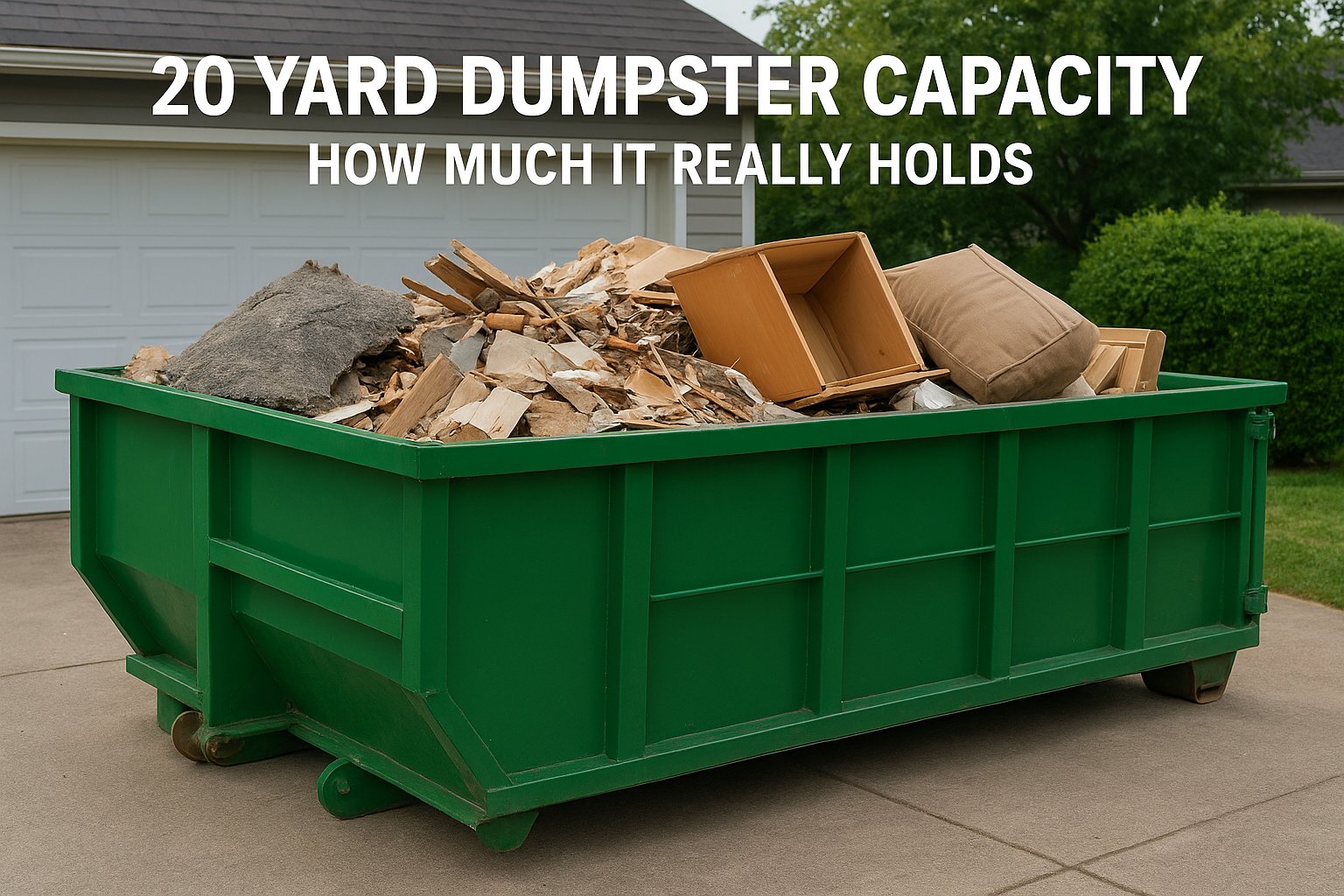
You’ve got a roofing job, a basement cleanout, or a kitchen remodel piling up debris, and you’re trying to figure out if a 20 yard dumpster will actually hold it all. 20 yard dumpster capacity confuses a lot of people because it’s measured in cubic yards, not the weight or bag count you’re picturing in your driveway. Order too small and you’re paying for a second haul. Order too big and you’re wasting money on space you never fill.
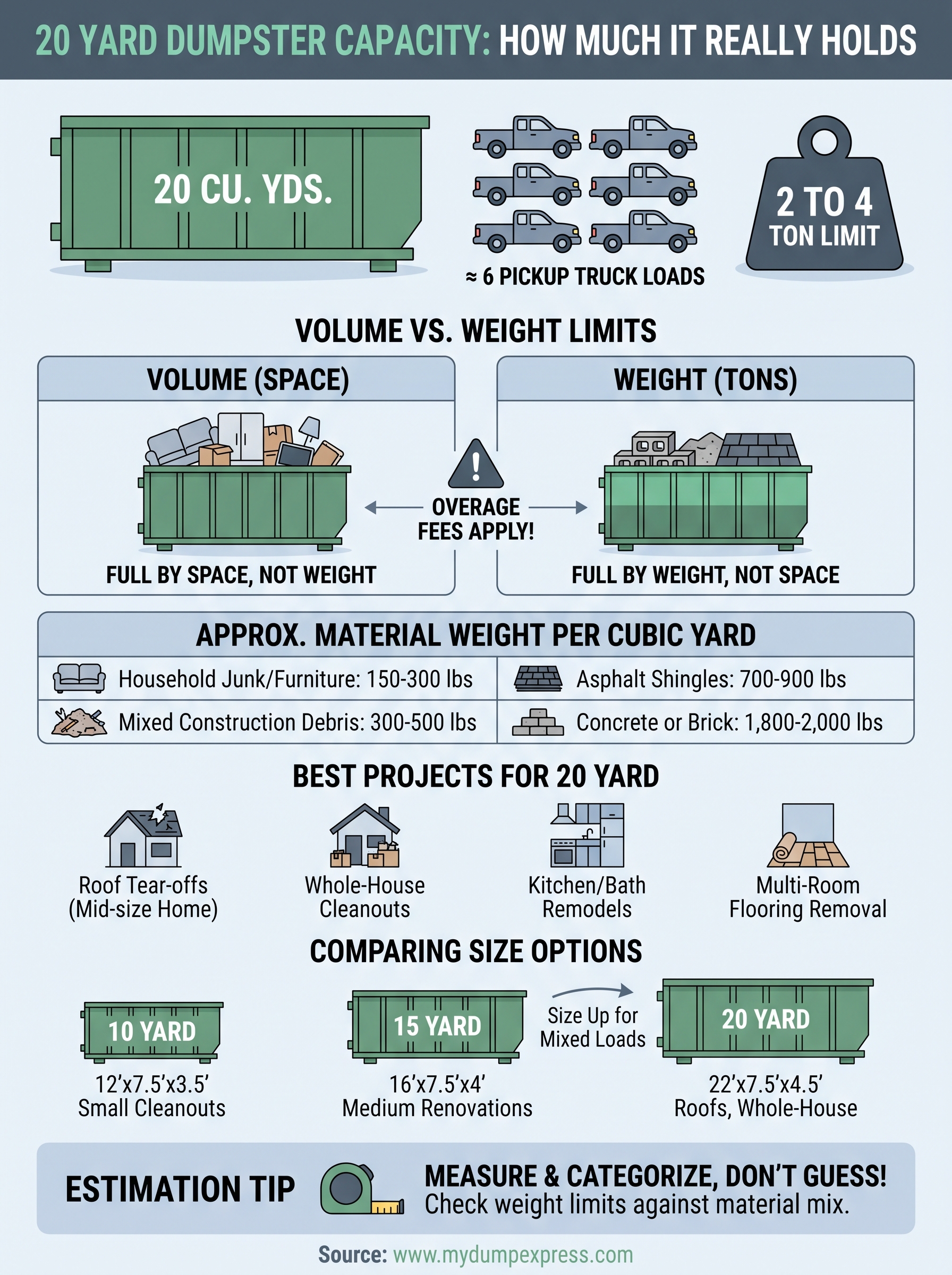
Here’s the direct answer: a 20 yard dumpster holds about 20 cubic yards of debris, roughly six pickup truck loads, and typically comes with a 2 to 4 ton weight limit depending on the material. That’s usually enough for a mid-size roof tear-off, a full basement or garage cleanout, or flooring removal from a good-sized house.
Below, we break down exact dimensions, what fits and what doesn’t based on material weight, and how a 20 yard container stacks up against the 10 and 15 yard options. If you’re renting in Cape Cod or Plymouth, we’ll also flag the local rules that affect how much you can legally load before pickup.
Why 20 yard dumpster capacity matters for your project
Getting the size right isn’t just about convenience. Overage fees hit hard when you load past the fill line or exceed the weight limit, sometimes adding $75 to $150 on top of your rental cost. Underestimate, and you’re stuck calling for a second dumpster mid-project, which stalls your timeline and doubles your delivery fees.
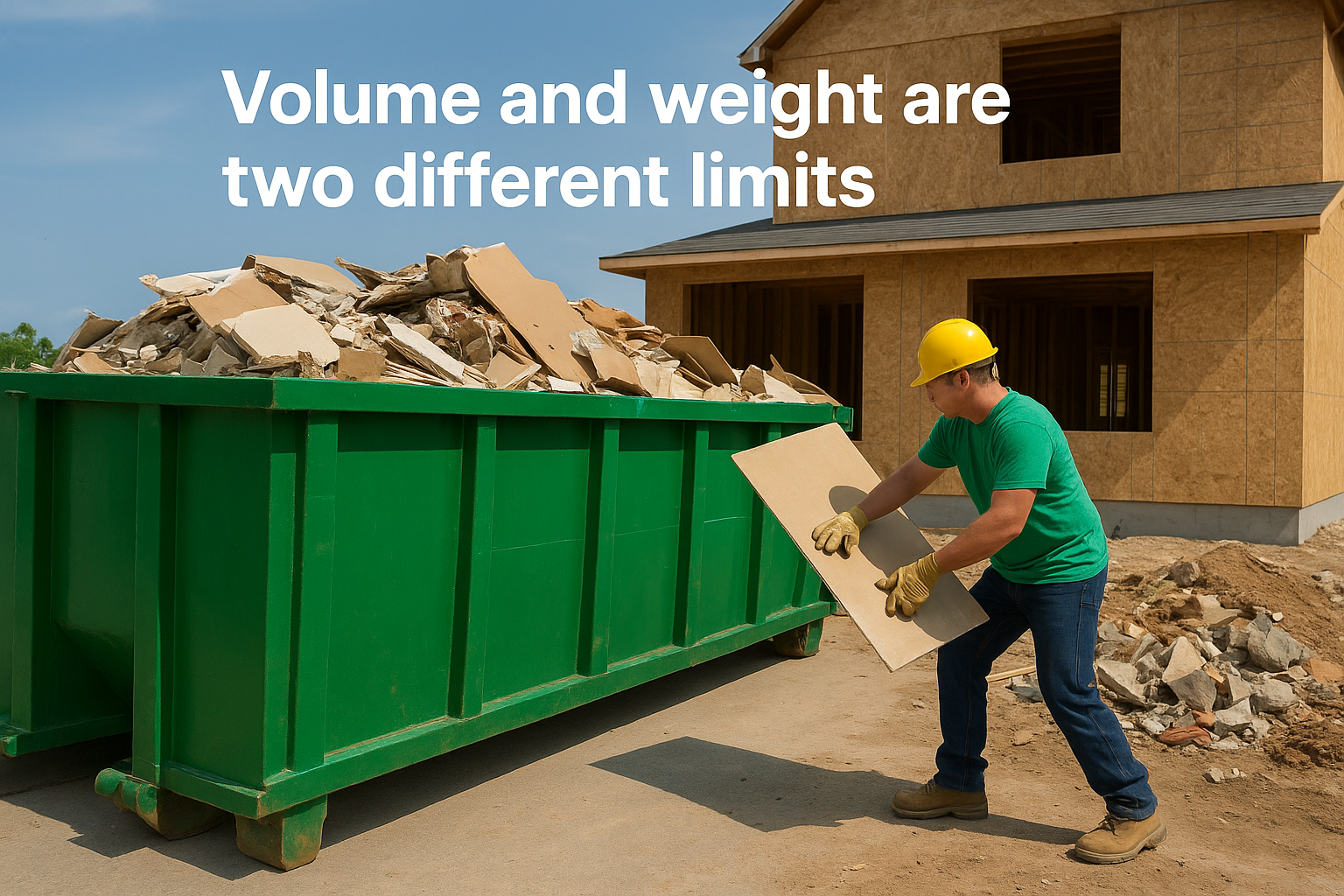
Volume and weight are two different limits
Most renters think only about how much space they need, but weight limit matters just as much as cubic yardage. A 20 yard dumpster might have room to spare and still hit its ton limit if you’re loading dense material like concrete, roofing shingles, or wet drywall. That’s why we always ask what you’re throwing away, not just how much of it there is.
| Material | Approximate weight per cubic yard |
|---|---|
| Household junk/furniture | 150-300 lbs |
| Mixed construction debris | 300-500 lbs |
| Asphalt shingles | 700-900 lbs |
| Concrete or brick | 1,800-2,000 lbs |
A 20 yard dumpster can be full by volume long before it’s full by weight, or the other way around, depending on what you’re tossing.
Local rules add another layer
Cape Cod and Plymouth towns enforce their own disposal facility hours and material restrictions, and pickup only happens on business days when those facilities are open. That means a dumpster loaded past its legal limit on a Friday afternoon can sit until Monday before it’s hauled, tying up your driveway or job site over the weekend. Knowing your capacity upfront avoids that scramble.
Understanding both numbers, cubic yards and tons, before you book protects your budget and your schedule. It’s the difference between a straightforward one-and-done rental and a frustrating string of surcharges and delays. When you call a local provider who asks about your project instead of just quoting a price, you’re far more likely to land on the right container the first time.
How to estimate what will fit in your dumpster
Start by measuring the actual pile, not guessing from memory. A 20 yard dumpster measures roughly 22 feet long, 7.5 feet wide, and 4.5 feet high, so picture six pickup truck beds stacked together. Walk your job site and estimate the volume of debris in cubic feet, then divide by 27 to convert to cubic yards. If the math feels off, round up rather than down.
Break the load into categories
Separating debris by type gives you a clearer read on both volume and weight before the truck ever shows up. Bulky, lightweight items like furniture and cabinetry eat up space fast without adding much tonnage, while dense material like tile or concrete fills only a corner but maxes out the weight limit quickly.
- Furniture, mattresses, and household junk
- Wood, drywall, and mixed construction debris
- Shingles, tile, or roofing material
- Concrete, brick, or dirt
Guessing by eye almost always underestimates weight and overestimates how much room you have left.
Check against the weight limit
Once you know your material mix, compare it against the tonnage cap listed in your rental agreement. Providers set that limit based on local disposal facility rules, and going over it triggers extra charges per ton, not a flat fee. Calling ahead with a rough inventory lets a local team flag likely overage risks before delivery, saving you a surprise on pickup day.
Projects that make the most of a 20 yard dumpster
Some jobs line up almost perfectly with 20 yard dumpster capacity, filling the container by volume without ever bumping the weight limit. Roof tear-offs on a typical 1,500 to 2,500 square foot home usually land right in that range, especially with asphalt shingles. Whole-house decluttering, garage cleanouts, and estate cleanups also fit well because the mix of furniture, boxes, and household junk fills space fast without adding excessive tonnage.
Renovation debris and mixed loads
[Kitchen and bathroom remodels generate a mix of cabinetry, drywall, tile, and old fixtures that pairs well with a 20 yard container.](https://alphaluxcleaning.com/post-construction-cleaning-cost/) Flooring removal across a multi-room house, including carpet, padding, and subfloor material, also tends to fill this size without maxing out the weight cap. Contractors handling these mixed loads appreciate that a 20 yard dumpster absorbs variety, heavy in one corner, bulky in another, better than smaller options.If your project mixes bulky and dense debris in roughly equal amounts, a 20 yard dumpster is usually the sweet spot.
Where it falls short
Heavy, single-material jobs push past the weight limit before the container looks full. Full concrete driveway removal, large landscaping projects with dirt and sod, or whole-home demolition debris often exceed the ton cap well before the 20 cubic yards are used up.
- Roof tear-offs (1,500-2,500 sq ft homes)
- Whole-house cleanouts and estate cleanups
- Kitchen or bathroom remodels
- Multi-room flooring replacement
- Garage or basement decluttering
Matching your project type to this list saves you from guessing and from paying for capacity you don’t need.
Choosing between a 20 yard dumpster and other sizes
Deciding between a 10, 15, or 20 yard dumpster comes down to matching container size to your debris mix, not just picking the biggest option available. Renting oversized wastes money on unused capacity, while undersizing means a second delivery fee and a stalled project timeline.
Comparing size options
Lining up the dimensions and typical uses side by side makes the decision easier than guessing from a phone quote.
| Size | Dimensions (L x W x H) | Best for | Typical weight limit |
|---|---|---|---|
| 10 yard | 12 ft x 7.5 ft x 3.5 ft | Small cleanouts, single-room remodels | 1-2 tons |
| 15 yard | 16 ft x 7.5 ft x 4 ft | Medium renovations, yard debris | 1.5-3 tons |
| 20 yard | 22 ft x 7.5 ft x 4.5 ft | Roof tear-offs, whole-house cleanouts | 2-4 tons |
When your project sits between two sizes, size up rather than down. A second haul costs more than the extra space ever will.
When to size up or down
Smaller jobs like a single bathroom gut or a garage declutter rarely need the full 20 yard footprint, and a 15 yard container often does the job for less. Larger demolition projects, full-home renovations, or multi-ton concrete removal sometimes call for two dumpsters instead of stretching one 20 yard container past its limit. Talking through your specific debris list with a local team before booking catches these mismatches early, before delivery day turns into a costly surprise.
Getting the right dumpster for your Cape Cod project
A 20 yard dumpster earns its popularity because it handles the widest range of jobs without forcing you to guess. Roof tear-offs, whole-house cleanouts, and mixed renovation debris all sit comfortably within its 20 cubic yard footprint and 2 to 4 ton limit, as long as you’ve sorted your debris and checked the weight math beforehand. Skip that step and you risk overage fees or a stalled timeline waiting on a second haul.
Before you book, walk your site, tally up your materials, and compare them against the limits we covered above. Local disposal rules across Cape Cod and Plymouth add another wrinkle that a national call center won’t catch, but a local crew will.
If you want a straight answer on sizing instead of a guess, get a fast, transparent quote from Dump Express and get the right container delivered on your schedule.