
Picking the wrong dumpster size costs you real money. Order too small and you’re paying for a second haul. Order too big and you’re paying for space you never use. Understanding dumpster rental sizes and prices before you book is the difference between a smooth cleanout and a frustrating, expensive one.
This guide breaks down exactly what you get with each container size, from a small 5-yard bin to a 20-yard roll-off, and what typical pricing by size looks like so you’re not guessing. We’ll match each size to real project types, like a garage cleanout versus a kitchen remodel versus a full roofing tear-off, so you know which one fits before the truck shows up.
We’ve spent 20+ years delivering dumpsters across Cape Cod and Plymouth, and sizing questions come up on nearly every call. Below, you’ll find straightforward breakdowns of dimensions, weight limits, and cost ranges for each option, plus practical tips on avoiding overage fees and choosing between comparable sizes when your project sits on the border. By the end, you’ll know exactly which dumpster to book and roughly what it should cost.
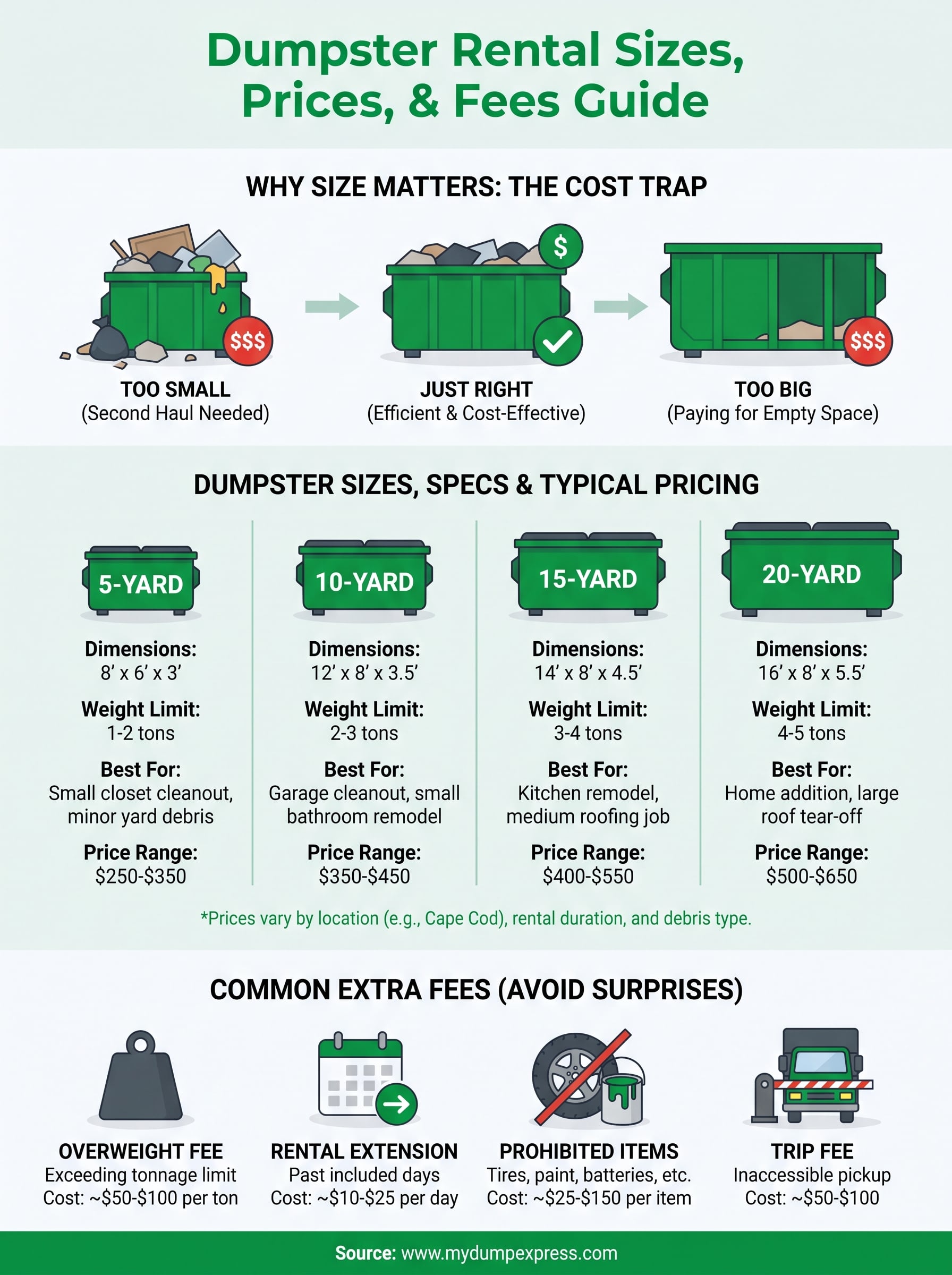
Why dumpster size matters for cost and project success
Getting the size right shapes almost every part of your rental experience, not just the sticker price. Dumpster capacity determines how much debris you can load before you hit the fill line, and going over that line triggers extra charges or forces you to book a second container. Weight limits work the same way. Each size comes with a maximum tonnage, and heavy materials like shingles, concrete, or wet drywall can max out that limit long before the bin looks full. Miss this detail and you’ll pay overage fees measured by the ton, which add up fast on a roofing job or a full basement gut.
The two-way cost trap
Most first-time renters focus on avoiding an undersized dumpster, but oversizing costs you too. A 20-yard container sitting mostly empty on a driveway still costs more to rent than the 10-yard that would’ve handled the job. You’re paying for volume you never use, and on tight residential lots, that extra footprint can block a driveway or crowd a work zone for no reason. The goal isn’t the biggest bin available. It’s the bin that matches your actual debris volume.
The right dumpster size is the one that gets filled close to the top, not the one with the most room to spare.
Project scope drives the right choice
A garage cleanout generates a fundamentally different waste stream than a kitchen remodel or a roof tear-off, and that difference should drive your size decision more than habit or guesswork. Cardboard, old furniture, and household junk are light and bulky, so volume matters more than weight. Construction debris like drywall, tile, and lumber is dense, so you’ll hit the weight cap before you fill the container visually. Roofing shingles are the extreme case: a 10-yard dumpster can look half-empty and still be at its weight limit because shingles are that heavy.
Timeline and scheduling ripple effects
Sizing mistakes don’t just cost money, they cost time. If you underorder and need a second delivery mid-project, you’re waiting on scheduling, and that can stall a contractor crew or push back a renovation timeline by days. Rental period length matters here too. Most companies, Dump Express included, build a set number of rental days into the price, and running over that window adds daily fees. If you guess wrong on size and need extra time to sort a second load, you’re compounding the delay with added cost.
What gets left off the invoice when sizing is right
Here’s the practical upside: when you size correctly the first time, you skip a whole category of hidden costs. No overage fees. No second trip fee for a swap-out. No extended rental charges from waiting on a follow-up delivery. No wasted yard space from an oversized container you didn’t need. This is why an honest conversation with your rental provider before booking matters more than picking whichever size sounds safest. A quick description of your project, square footage, material type, estimated volume, lets an experienced dispatcher steer you toward the size that actually fits, rather than the size that feels like a safe bet.
The EPA’s guidance on construction and demolition debris makes clear just how heavy and variable these materials can be, which is exactly why weight limits, not just volume, need to factor into your sizing decision. Getting this right up front is the single biggest lever you have over your total rental cost.
How to choose the right dumpster size for your project
Start with the project itself, not the dumpster. Walk through your space, estimate what you’re removing, and think in terms of truckloads rather than guesswork. A single pickup truck bed holds roughly 2 cubic yards, so if you’re picturing three full truckloads of debris, you’re in 6-yard territory before you even open a size chart. This kind of rough math gets you closer to the right container than picking a size because it sounds like a safe middle ground.
Match the size to your project type
Project type is the fastest shortcut to the right size, because most jobs fall into predictable debris patterns. Use this as a starting point, then adjust for volume:
- 5-yard dumpster: small closet cleanout, single-room decluttering, minor yard debris
- 10-yard dumpster: garage cleanout, small bathroom remodel, deck removal under 500 sq ft
- 15-yard dumpster: kitchen remodel, whole-home decluttering, medium roofing job
- 20-yard dumpster: home addition, large roof tear-off, whole-house renovation debris
Pick the dumpster that matches your debris type and volume, not the one that just sounds like the safe middle choice.
When you’re between two sizes
Sizing questions get tricky when your project sits right on the border between two containers. If your debris is heavy, like shingles, tile, or concrete, lean toward the smaller size and pay closer attention to the weight limit rather than the volume. If your debris is bulky but light, like furniture or yard waste, lean toward the larger size since you’ll run out of room before you hit the weight cap. When in doubt, a quick call to your rental provider beats a guess, especially since an experienced dispatcher has heard your exact project described dozens of times before.
Ask these questions before you book
Before you commit to a size, run through a short checklist with whoever’s taking your order:
- What’s the primary material (drywall, shingles, furniture, mixed household debris)?
- Roughly how many square feet or rooms does the project cover?
- Is any of the debris unusually heavy or wet?
- Do you have space constraints on where the dumpster can sit?
- Is there a chance the project scope grows mid-way through?
Answering these five questions honestly gives your provider enough detail to steer you toward the right container size for the job, rather than the size that just feels like it should be big enough. That short conversation, more than any chart, is what prevents the overage fees and second hauls that turn a simple cleanout into an expensive one.
Dumpster sizes and prices at a glance
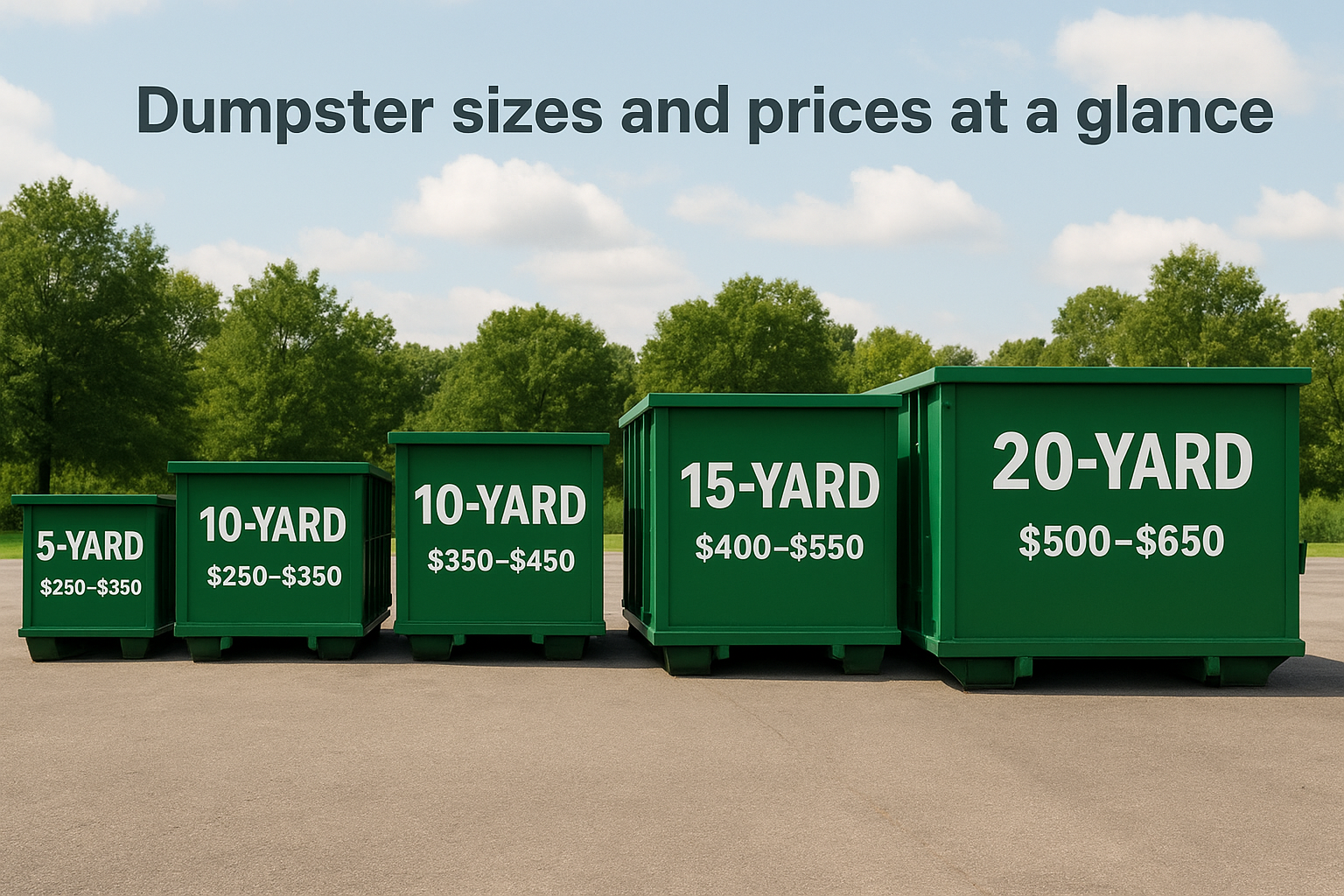
Seeing all four container sizes side by side makes the decision easier than reading through specs one at a time. Below is a quick reference for dumpster rental sizes and prices, covering rough dimensions, weight limits, and what each size typically costs before any extra fees get added.
Size-by-size breakdown
Use this table as your starting point, then adjust based on material weight and local pricing in your town.
| Size | Typical Dimensions | Weight Limit | Best For | Typical Price Range |
|---|---|---|---|---|
| 5-yard | 8′ x 6′ x 3′ | 1-2 tons | Small closet cleanout, minor yard debris | $250-$350 |
| 10-yard | 12′ x 8′ x 3.5′ | 2-3 tons | Garage cleanout, small bathroom remodel | $350-$450 |
| 15-yard | 14′ x 8′ x 4.5′ | 3-4 tons | Kitchen remodel, medium roofing job | $400-$550 |
| 20-yard | 16′ x 8′ x 5.5′ | 4-5 tons | Home addition, large roof tear-off | $500-$650 |
A 10-yard dumpster and a 20-yard dumpster can cost roughly the same per ton if you overload the smaller one and underload the bigger one, so match the size to your debris, not the sticker price.
Why prices vary within each size
Ranges exist because pricing depends on more than just container volume. Rental duration plays a role, since a 7-day rental costs less than a 14-day rental even in the same size bucket. Debris type matters too, since a 15-yard bin full of shingles runs closer to its weight cap than the same bin full of household junk, which can trigger overage charges even within the listed range. Location factors in as well, since fuel costs and disposal facility fees shift slightly from town to town across Cape Cod and Plymouth.
Generally speaking, the numbers above reflect what a straightforward, single-material job costs when you stay within the included weight allowance and rental period. Mixed debris, tight delivery access, or a job that runs longer than expected will push you toward the higher end of each range. Treat these figures as a planning tool, not a guaranteed quote, and confirm exact pricing for your town before you book.
Extra fees that can affect your final rental cost
The quoted price on a dumpster rental rarely tells the whole story. Extra fees show up when your project doesn’t fit neatly inside the assumptions baked into that base price, whether that’s weight, time, or what you actually toss in the bin. Knowing these charges ahead of time lets you plan around them instead of getting hit with a surprise invoice after pickup.
Overage and overweight charges
Overage fees kick in two ways: filling the container past the fill line, or exceeding the tonnage limit for your size. Weight is the one that catches people off guard, since dense materials like wet drywall, tile, or concrete can max out a 15-yard dumpster’s weight allowance while the bin still looks half full. Overweight charges are typically billed per ton over the included limit, and on a heavy job like a roofing tear-off, that can add up faster than most homeowners expect.
Weight limits, not fill lines, are usually what turn a budget-friendly rental into an expensive one.
Rental extension and prohibited item fees
Most rentals include a set number of days, and running past that window adds a daily extension fee. This matters most on projects that stall, like a renovation waiting on materials or a cleanout that takes longer than planned. Separately, prohibited items like tires, paint, batteries, refrigerants, and certain electronics either aren’t allowed at all or carry a disposal surcharge if they end up in the load. The EPA’s household hazardous waste guidance outlines why these materials require separate handling, and most rental companies pass that added disposal cost along if they show up mixed in with regular debris.
Common fees at a glance
Here’s a quick reference for the charges that most often surprise first-time renters:
| Fee Type | Typical Trigger | Typical Cost |
|---|---|---|
| Overweight fee | Exceeding included tonnage | $50-$100 per ton |
| Rental extension | Keeping dumpster past included days | $10-$25 per day |
| Prohibited item fee | Tires, paint, batteries, electronics | $25-$150 per item |
| Trip fee | Dumpster inaccessible on pickup day | $50-$100 |
Asking about these fees before booking, not after delivery, is the simplest way to avoid an invoice that doesn’t match your expectations.
Dumpster rental pricing on Cape Cod and in Plymouth
Local factors move the numbers more than most renters expect, and Cape Cod’s geography plays a bigger role than it does in a typical mainland market. Cape Cod pricing shifts town to town because access to disposal facilities, ferry-dependent delivery routes to places like the outer Cape, and seasonal traffic all affect how quickly a truck can deliver and pick up. A dumpster headed to Provincetown costs more to move than one headed to Hyannis, simply because of drive time and fuel, even though the container itself is identical.
Why yard location changes your quote
Dump Express runs multiple yard locations across Cape Cod and Plymouth specifically to shorten that drive time, and that setup directly affects turnaround speed and cost. A shorter haul from yard to delivery site means less fuel and less driver time, which keeps pricing tighter for towns close to a yard. Towns farther from any yard, or those requiring a longer ferry or bridge crossing, tend to sit toward the higher end of the pricing range for their size. This is also why same-day delivery is realistic in some towns and tighter in others, since proximity to a yard determines how fast a truck can get there.
Where you’re located on Cape Cod can matter as much as the dumpster size itself when it comes to your final price.
Seasonal demand across the Cape
Summer brings a spike in renovation and cleanout projects across Cape Cod, and that seasonal demand can tighten availability during peak months. Booking a week or two ahead in June through August gets you better scheduling flexibility than calling the day before you need a delivery. Winter months typically open up more same-day and next-day slots, which is worth knowing if your project timeline has any flexibility built in.
Getting an accurate quote for your town
Because pricing varies by town, the smartest move is checking town-specific pricing rather than assuming a flat rate applies everywhere. Dump Express displays this pricing transparently by location, so you can see what your specific town costs before you commit to a size or a delivery date. This transparency matters most for contractors juggling multiple job sites across different towns, since a rate that works in Sandwich won’t necessarily match a rate in Chatham. Checking your town’s actual pricing before booking, rather than relying on a rough estimate, is the surest way to avoid a mismatch between the quote you expected and the invoice you receive.
Finding the right dumpster for your project
Getting your dumpster rental size right comes down to matching your debris, weight and all, to a container that fits without leaving you paying for empty space or a second haul. Walk your project, estimate volume honestly, and lean on the size charts and fee breakdowns above when you’re stuck between two options. Pricing follows the same logic: know your town’s rate, know your rental window, and ask about weight limits before you book instead of after the invoice arrives.
Running the numbers yourself gets you close, but a quick conversation with a local dispatcher who’s heard your exact project before gets you exact. That’s the shortcut worth taking before delivery day.
If you’re ready to lock in a size and see real pricing for your town, check availability with Dump Express and get a straight answer before you commit to a container.