
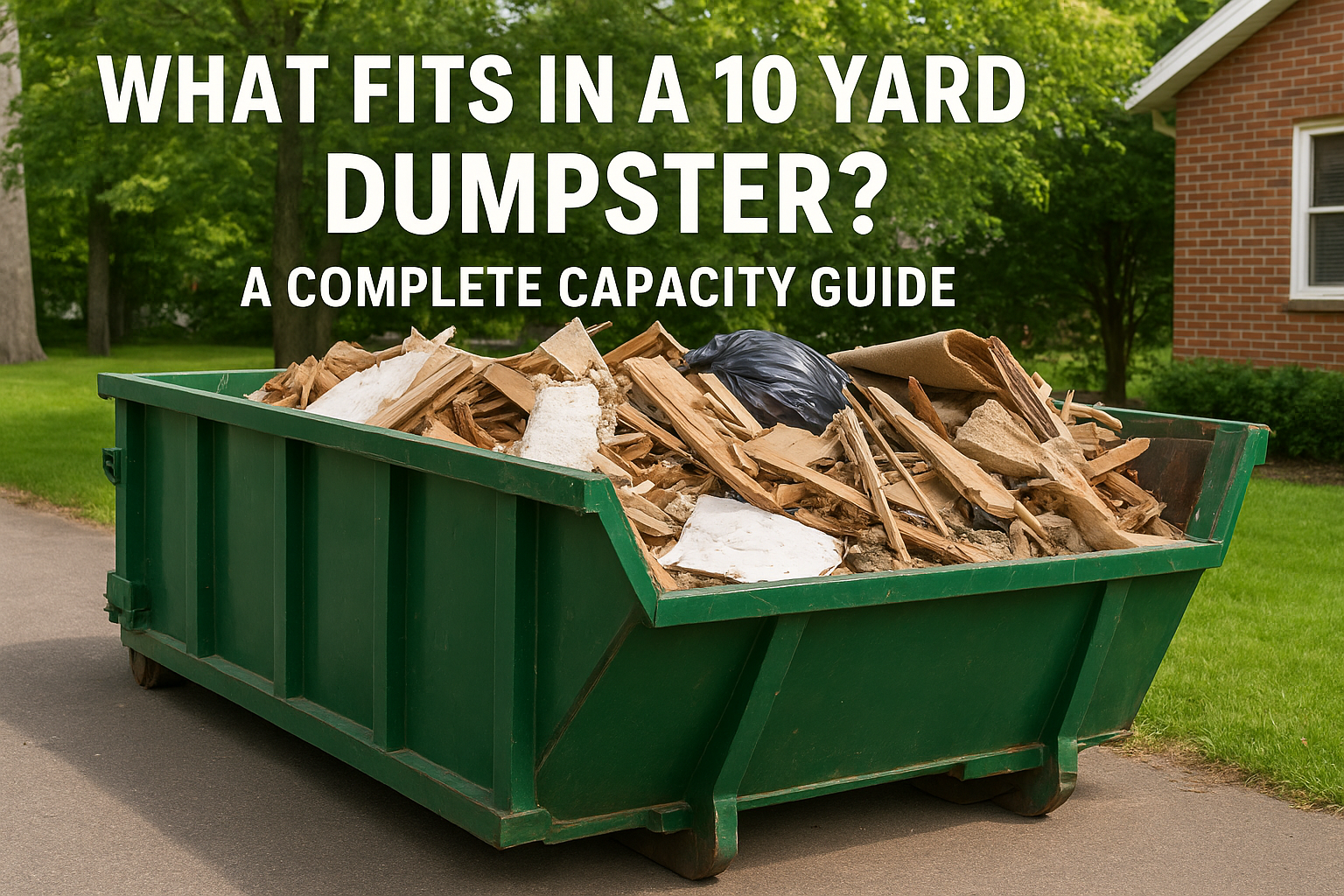
You’ve got a pile of debris and no idea if it’ll fit. Maybe it’s a bathroom gut job, a garage cleanout, or a few rooms of old furniture headed to the curb. Renting the wrong size dumpster means paying for space you never use, or worse, ordering a second one halfway through your project. What fits in a 10 yard dumpster comes down to a mix of volume and weight, and knowing that mix before you book saves you money and a second phone call.
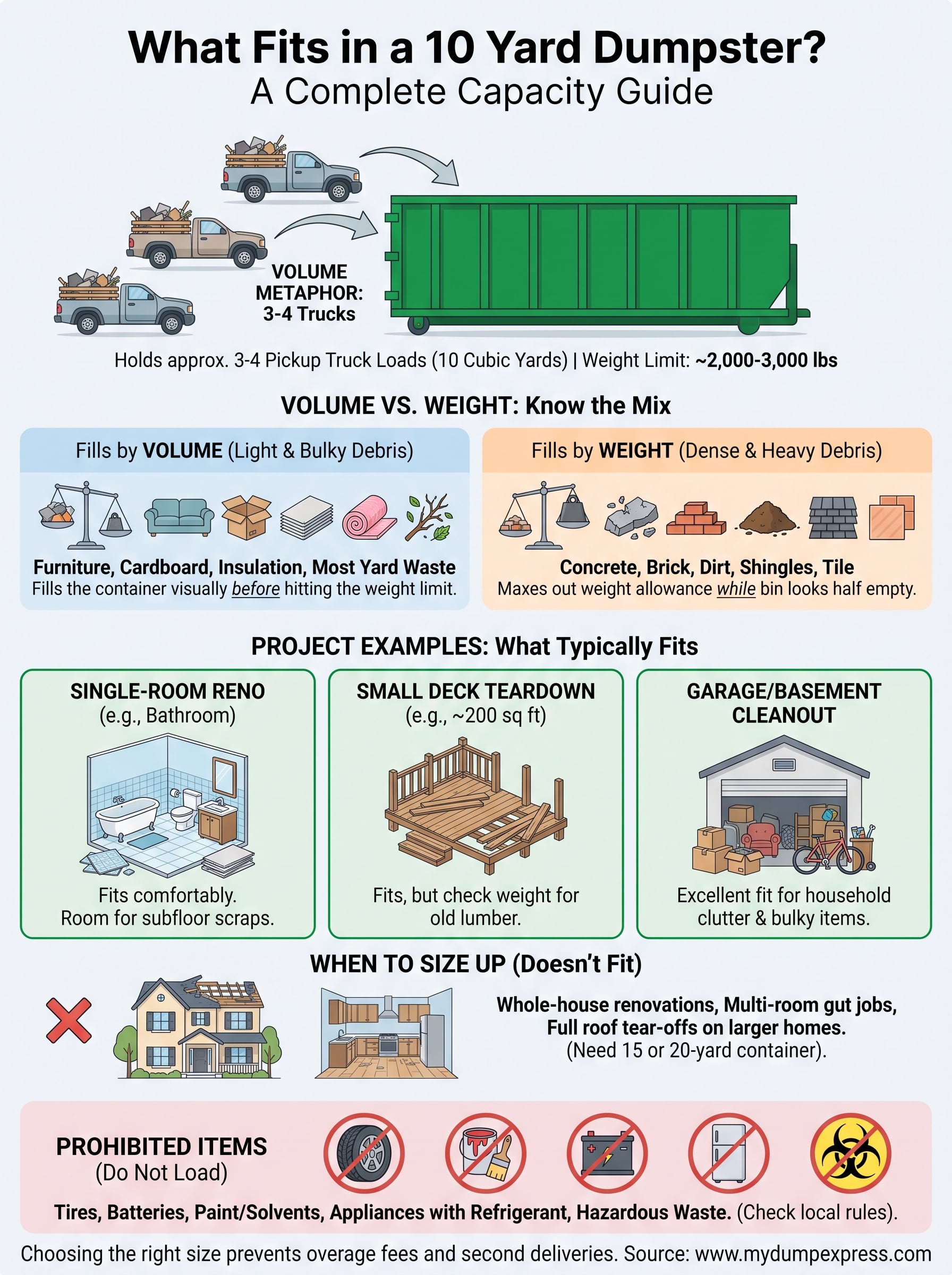
A 10-yard dumpster holds roughly 3 to 4 pickup truck loads of debris, which translates to about 10 cubic yards of material or 2,000 to 3,000 pounds depending on what you’re throwing away. That’s enough for a single-room renovation, a small deck teardown, or clearing out a garage packed with years of stuff. Heavier materials like concrete or shingles hit the weight cap long before the container looks full.
Below, we break down exactly what typically fits, what doesn’t belong in the container, and how to judge whether a 10-yarder matches your specific job or if you need to size up. We’ll also cover weight limits and real project examples so you can book with confidence the first time.
Why knowing your dumpster’s capacity matters
Guessing at dumpster size costs real money on Cape Cod job sites and residential driveways alike. Order too small and you’re stuck calling for a second container mid-project, which means paying two delivery fees and losing a day waiting for the truck. Order too big and you’ve paid for empty space that never held a single shingle. Capacity planning isn’t a formality here, it’s the difference between a smooth cleanout and a frustrating, expensive one.
The real cost of getting it wrong
A size mismatch rarely shows up as a small inconvenience. Contractors juggling tight renovation schedules can’t afford a stalled job while they wait for a bigger container to show up, and homeowners tackling a weekend cleanout don’t want to explain to the driver why the lid won’t close. Overfilled dumpsters also carry safety and legal risk, since most haulers won’t transport a container loaded above the fill line or over its rated weight.
Renting the right size the first time beats paying twice for the wrong one.
Volume and weight work against each other
A 10-yard dumpster has a fixed volume, but it also has a weight limit that often matters more than the space itself. Light, bulky debris like furniture or drywall can fill the container visually long before it hits the weight cap. Dense material like concrete, dirt, or roofing shingles does the opposite: it maxes out the weight allowance while the bin still looks half empty.
- Bulky, light debris: furniture, cardboard, insulation, most yard waste
- Dense, heavy debris: concrete, brick, dirt, shingles, tile
- Mixed loads: renovation debris that combines both, which is the most common real-world scenario
Why this matters before you call for delivery
Understanding both sides of the equation before delivery day lets you sort debris smarter and avoid surprise overage charges. Most rental companies, including Dump Express, bill separately for tonnage over the included weight allowance, so a load that looks fine can still trigger a fee if it’s heavy. Verifying your material mix against a container’s rated capacity, not just its cubic yardage, is the single best habit for keeping your project on budget.
How to estimate what will fit before you rent
Before you pick up the phone, walk your project and think in truck loads, not guesswork. A 10 yard dumpster holds about 3 to 4 pickup truck loads, so if you can picture the debris filling your truck bed three or four times, you’re in the right range. This mental exercise catches most sizing mistakes before they cost you a second delivery fee.
Measure the room, not just the pile
Count rooms, square footage, or linear feet of material instead of eyeballing a heap of debris. A single bathroom gut, a 12×12 deck teardown, or a two-car garage cleanout all land squarely in 10-yard territory. Bigger jobs, like a whole-house declutter or a kitchen remodel with cabinets and flooring, usually push past what a 10-yarder can hold.
Account for density, not just size
Volume estimates fall apart fast when heavy material enters the mix. Ask yourself what’s actually going in the container:
- Light and bulky: furniture, boxes, drywall scraps, yard waste
- Dense and heavy: concrete, dirt, shingles, tile, brick
- Mixed debris: most renovation jobs, which blend both types
If your project leans heavy, the weight limit will stop you before the container looks full.
Ask before you assume
When you’re unsure, call and describe the job instead of guessing at yardage. A quick conversation with a local Cape Cod team that’s sized thousands of these projects beats a rough estimate every time, and it’s the fastest way to avoid ordering the wrong container.
Project examples: what actually fits in a 10 yard dumpster
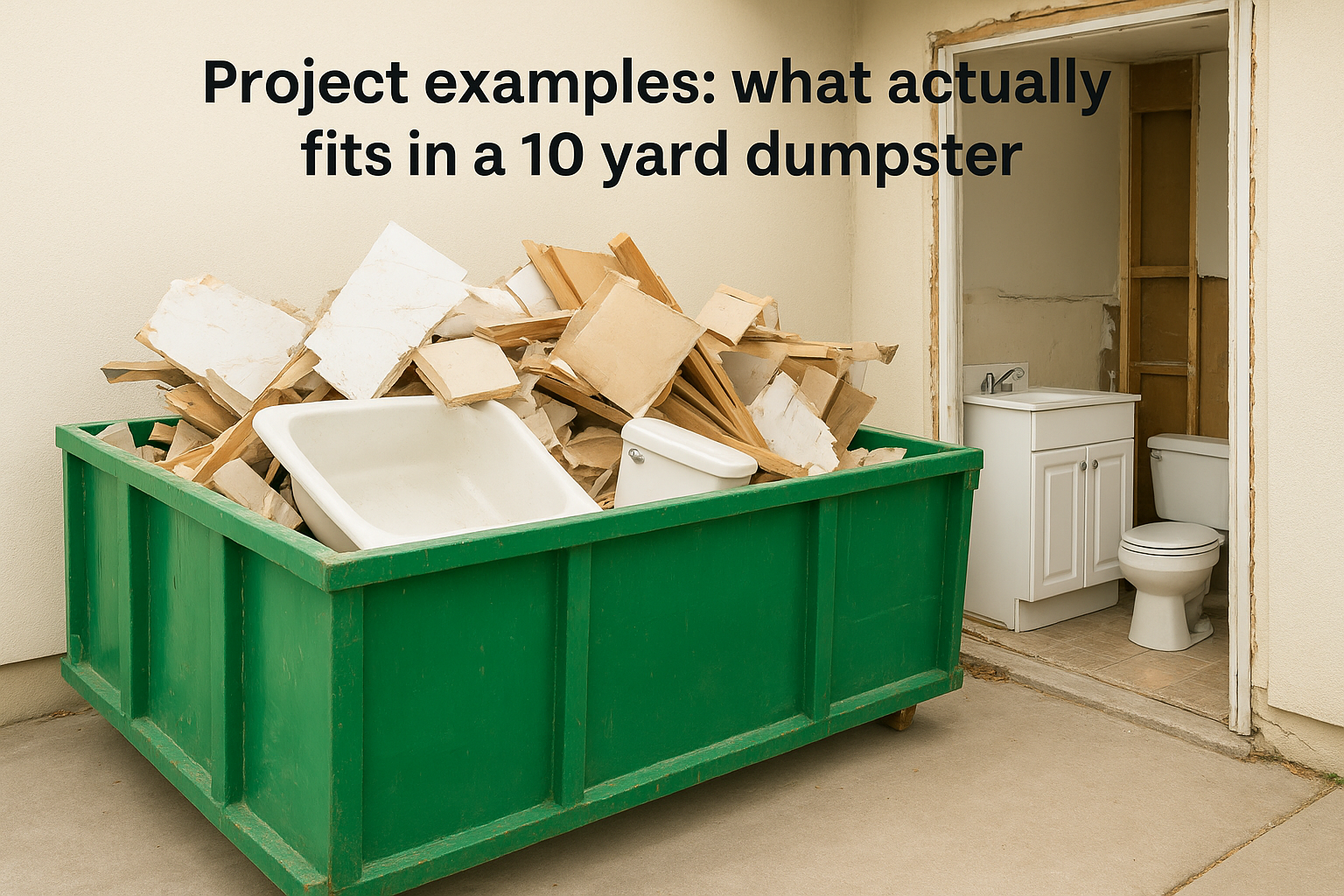
Real jobs make the abstract math click faster than any formula. A single bathroom remodel (tub, toilet, vanity, tile, and drywall) fills a 10-yard container almost exactly, with a bit of room to spare for the subfloor scraps. A 200-square-foot deck teardown using pressure-treated lumber fits comfortably too, though old decking runs heavier than most homeowners expect, so it’s worth checking weight limits before you load the last few boards. Garage and basement cleanouts, especially ones packed with boxes, old furniture, and bulky household junk, also land squarely in 10-yard territory since that debris is light relative to its size.
If your project fits in three to four truck loads, a 10-yard dumpster is your size.
Renovation debris
Small kitchen updates that stop at cabinets, countertops, and flooring (without touching structural walls) typically fit as well. The mix of wood, laminate, and drywall stays light enough that volume runs out before weight does.
Cleanout jobs
Household cleanouts, whether it’s a garage, attic, or a single-family estate cleanout limited to one or two rooms, are some of the most common uses for this size. Furniture, boxes, and old appliances (minus anything with refrigerant) pack in efficiently.
When a 10-yarder falls short
Whole-house renovations, multi-room gut jobs, or full roof tear-offs on anything larger than a small ranch usually exceed 10 cubic yards, the weight allowance, or both. If your project checklist includes more than one of the examples above combined, plan on a 15 or 20-yard container instead.
Weight limits and items that won’t fit
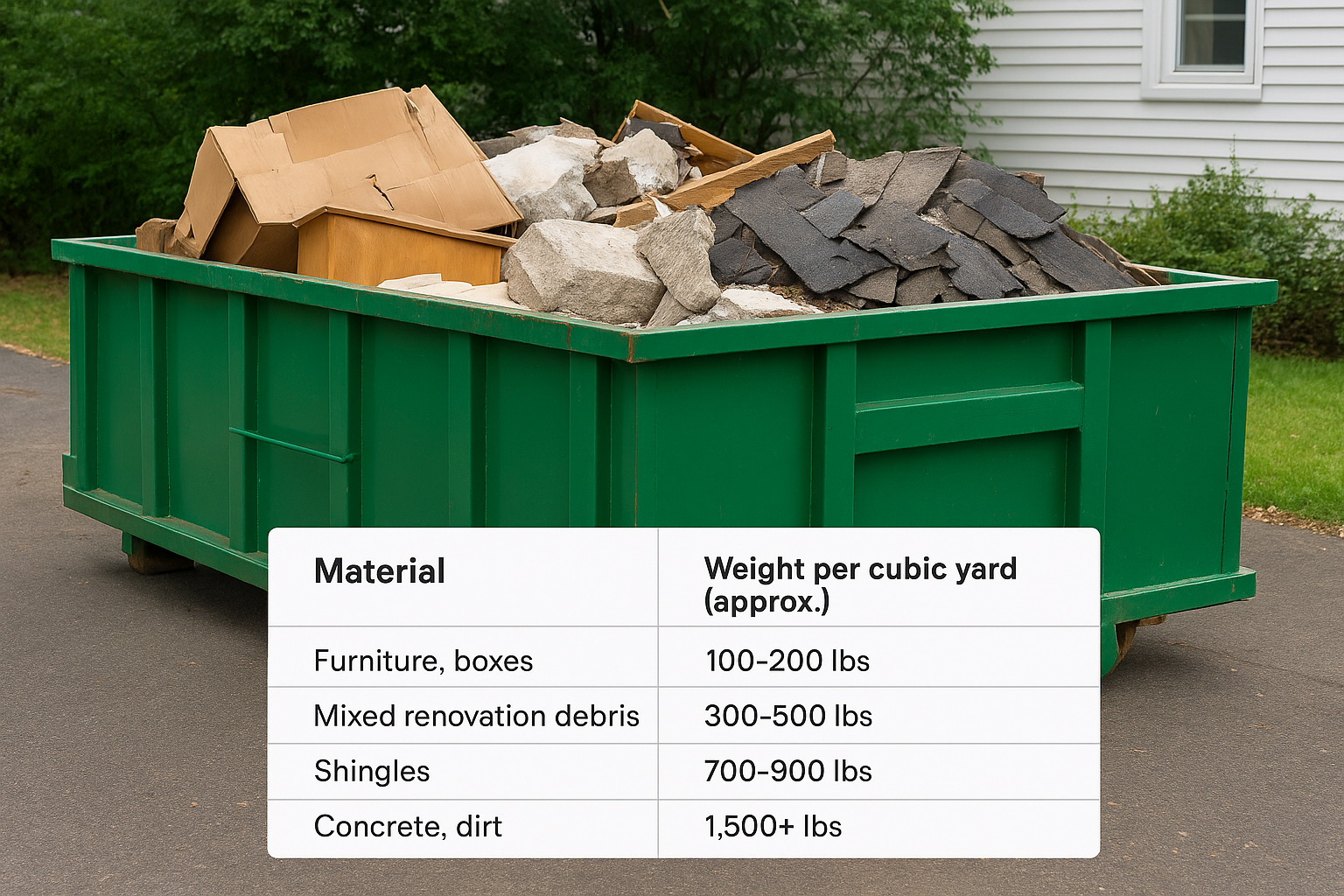
Exceeding a container’s weight allowance is the most common reason a job costs more than expected. A 10 yard dumpster typically includes 1 to 2 tons of debris in the base rental price, and every pound past that gets billed as overage. Dense materials like concrete, dirt, and roofing shingles chew through that allowance fast, even when the container still looks half empty.
Weight, not volume, is usually what stops a load first.
Typical weight allowances by material
| Material | Weight per cubic yard (approx.) | Fits in 10 yards? |
|---|---|---|
| Furniture, boxes | 100-200 lbs | Yes, easily |
| Mixed renovation debris | 300-500 lbs | Usually, check total |
| Shingles | 700-900 lbs | Limited quantity only |
| Concrete, dirt | 1,500+ lbs | Small amount only |
What can’t go in at all
Beyond weight, certain materials are banned outright for safety and disposal-facility rules. Loading these items risks rejected pickups or hefty removal fees:
- Tires and batteries
- Paint, solvents, and other hazardous liquids
- Refrigerators, air conditioners, and anything with refrigerant
- Asbestos-containing materials
- Medical or biohazard waste
Cape Cod disposal facilities enforce these restrictions closely, and haulers face real liability for violations, so check with your rental company before loading anything questionable. The EPA’s household hazardous waste guidance covers most of the materials that need separate disposal, and a quick call to your local yard clears up any gray area fast.
Picking the right size the first time
A 10-yard dumpster earns its popularity because it handles the jobs most homeowners and contractors actually face: single-room renovations, deck teardowns, and garage cleanouts. The math isn’t complicated once you separate volume from weight and picture your debris in truck loads instead of guessing at cubic yards. Dense material stops you at the weight cap, bulky material stops you at the fill line, and most real projects land somewhere between the two.
When your project checklist crosses into multiple rooms or a full roof tear-off, don’t force it into a 10-yarder just to save a few dollars upfront. A second delivery fee costs more than sizing up would have in the first place. If you’re still not sure which container fits your job, get a fast, no-pressure quote from Dump Express and talk to a local team that sizes these projects every day across Cape Cod and Plymouth.