
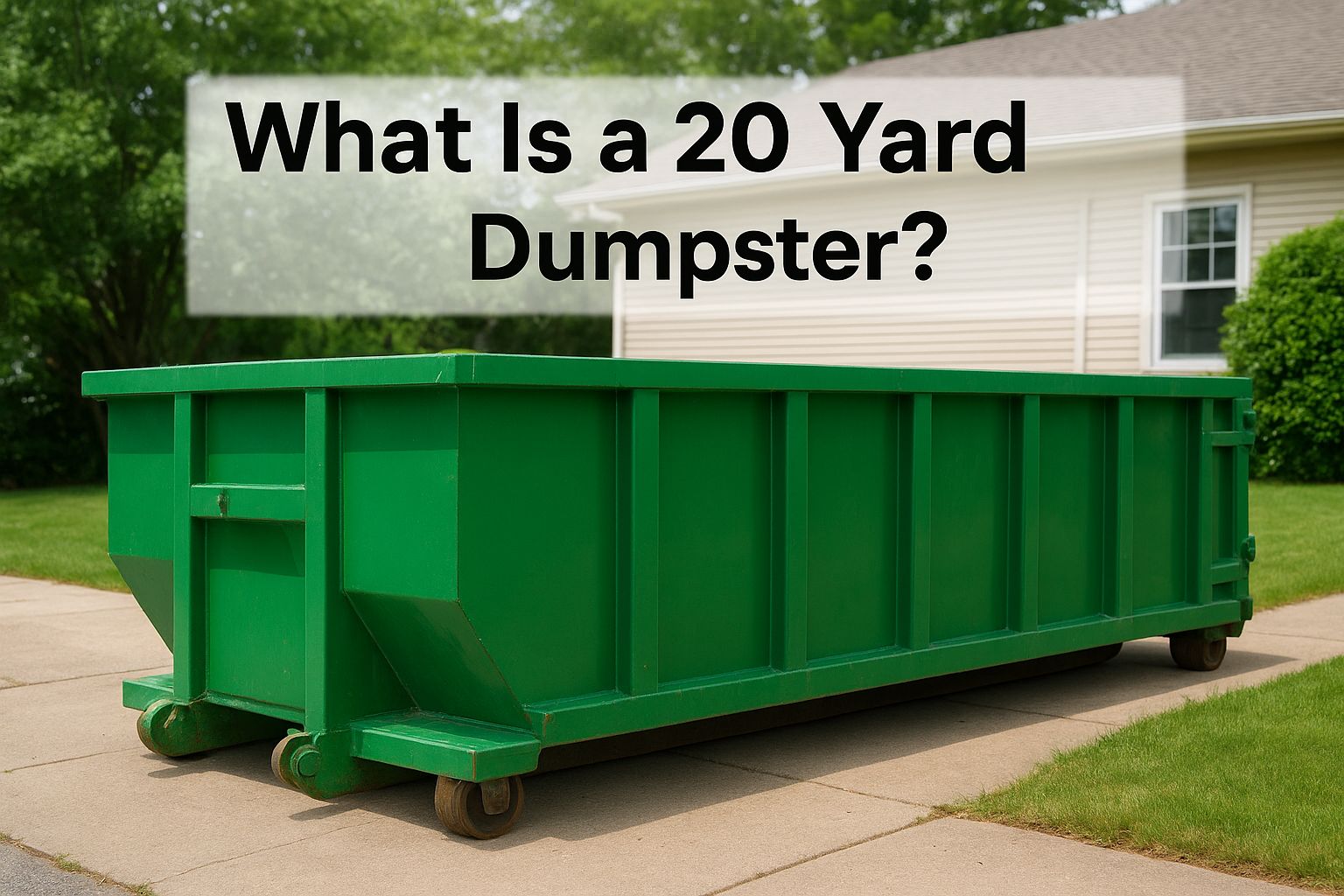
You’re staring down a garage cleanout, a roof tear-off, or a kitchen renovation, and you keep hearing the same suggestion: rent a 20 yard dumpster. But nobody explains what that actually means until you’re standing next to one wondering if it’ll swallow your whole pile or barely make a dent. A 20 yard dumpster is the size most Cape Cod homeowners and contractors land on when a project is too big for a small container but doesn’t need a full construction-grade box.
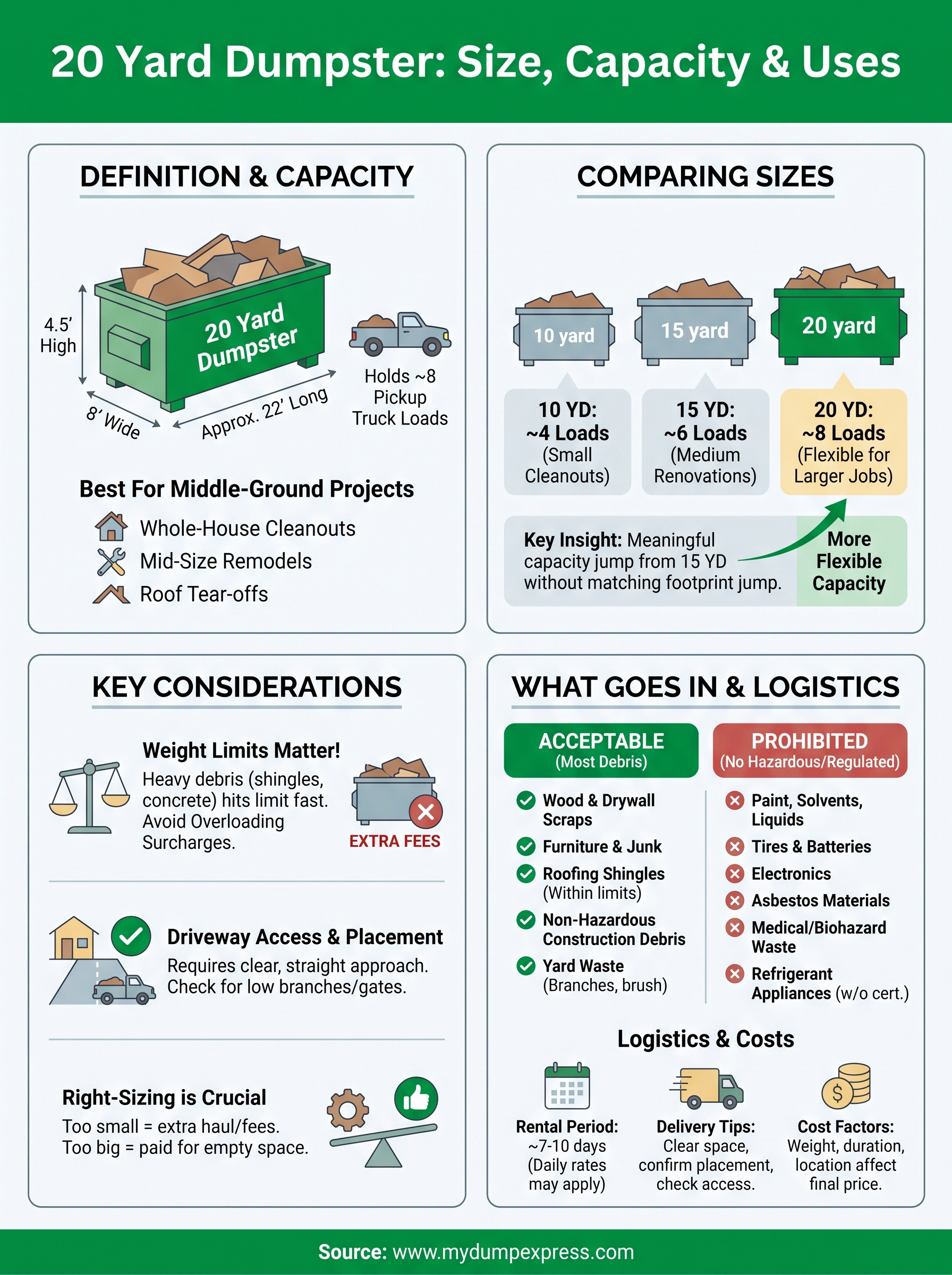
So what is a 20 yard dumpster, exactly? It’s a roll-off container measuring roughly 22 feet long, 8 feet wide, and 4.5 feet high, built to hold about 8 pickup truck loads of debris. That capacity puts it right in the middle of the size range, big enough for whole-house cleanouts and mid-size remodels, but still small enough to fit on most residential driveways.
Below, we break down the exact dimensions and weight limits, compare it against the 10-yard and 15-yard options, and walk through real project examples so you know whether this size actually fits your job before you book it.
Why choosing the right dumpster size matters
Getting the size wrong costs you twice. Order too small and you’ll pay for a second haul, or worse, a driver who shows up and can’t take an overloaded box back to the yard. Order too big and you’ve paid for empty space you never needed. Right-sizing your rental is the single decision that determines whether your project stays on budget or turns into a logistics headache halfway through.
The real cost of guessing wrong
Most first-time renters underestimate volume. A stack of drywall or a pile of old furniture looks smaller on the ground than it is once it’s thrown into a container, because debris doesn’t compact itself the way you’d like. That’s why homeowners doing a garage cleanout often call back mid-project asking for a bigger unit, and contractors on tear-off jobs sometimes fill a 10-yard box before lunch. Every extra pickup means another delivery fee, another wait for a truck, and another gap in your timeline.
Pick the size that matches your actual debris volume, not the one that looks big enough from across the driveway.
Comparing the common sizes
Seeing the sizes side by side makes the decision easier than trying to picture cubic yards in your head. Here’s how the 20 yard dumpster stacks up against its closest neighbors:
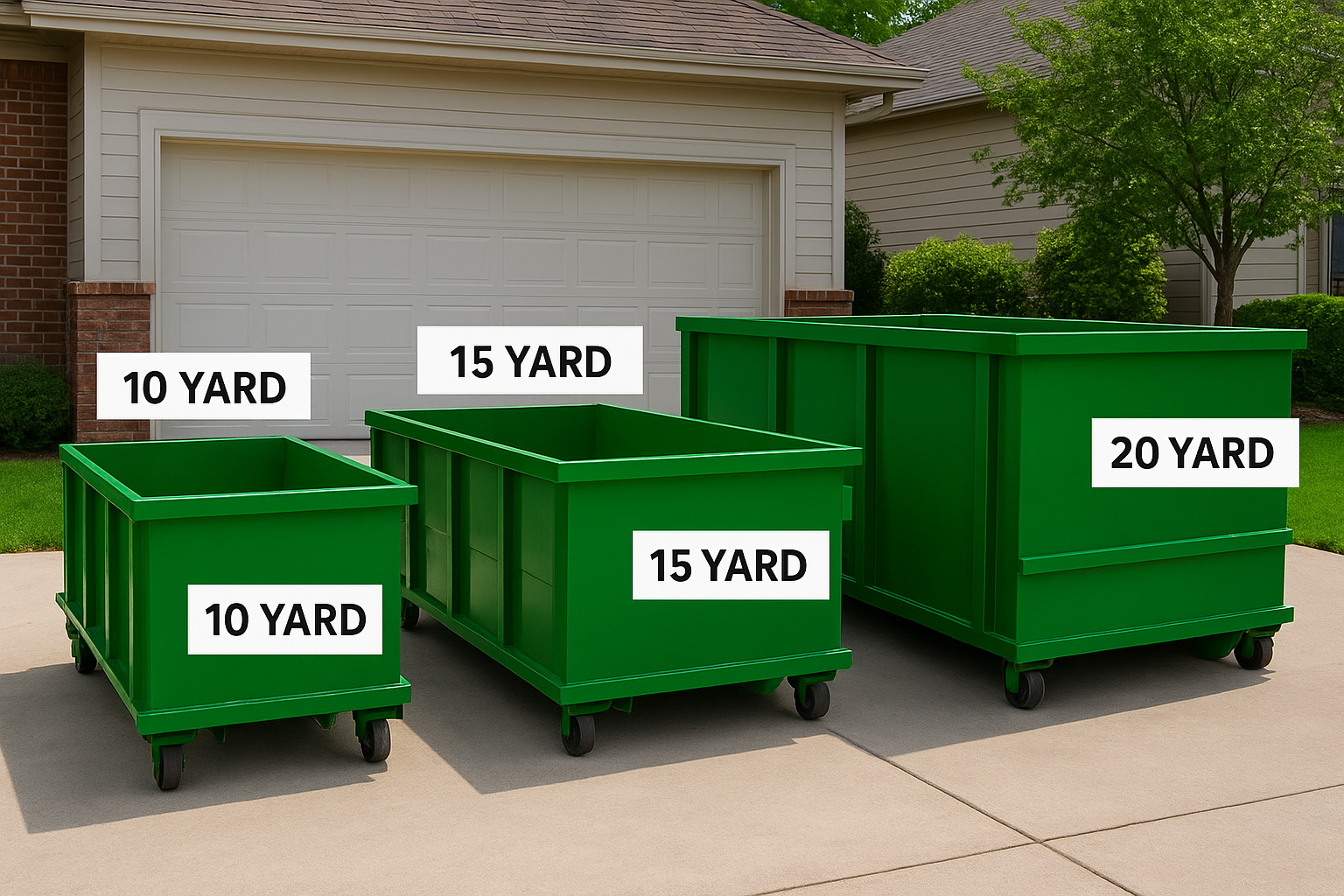
| Size | Dimensions (L x W x H) | Truck Load Equivalent | Best For |
|---|---|---|---|
| 10 yard | ~12 ft x 8 ft x 3.5 ft | ~4 truck loads | Small cleanouts, single-room remodels |
| 15 yard | ~16 ft x 8 ft x 4 ft | ~6 truck loads | Medium renovations, roofing jobs |
| 20 yard | ~22 ft x 8 ft x 4.5 ft | ~8 truck loads | Whole-house cleanouts, larger remodels |
Notice that the jump from 15 to 20 yards adds meaningful capacity without a matching jump in footprint. That extra room buys you flexibility when a project runs longer than expected or turns up more debris than you planned for.
Weight limits matter as much as volume
Size isn’t the only variable. Every roll-off container comes with a weight limit built into the rental agreement, and heavy materials like roofing shingles, concrete, or wet drywall can hit that ceiling long before the container looks full. A 20 yard dumpster typically handles more weight allowance than a 10 or 15 yard unit, which matters if your project involves dense debris rather than bulky, lightweight items like furniture or cardboard. Overloading past the weight limit triggers surcharges, so matching the container to both the volume and the type of material you’re removing keeps your final bill predictable.
Driveway space and access
Finally, size affects where the container can actually go. A 20 yard dumpster needs roughly the same footprint as a 15 yard, thanks to its low profile, but its length means you need a clear, straight approach for the delivery truck. Before you book, walk your driveway and check for low branches, tight turns, or narrow gates that could block placement. Getting this right the first time avoids a delivery delay on the day you need the container most.
How to tell if a 20 yard dumpster fits your project
Projects that generate a moderate to large volume of mixed debris tend to line up well with a 20 yard dumpster. Think whole-house cleanouts, garage or basement purges that have been piling up for years, roof tear-offs on mid-size homes, and kitchen or bathroom remodels that involve tearing out cabinets, flooring, and fixtures. If you’re clearing out a property before a sale, handling an estate cleanout, or ripping out a deck along with old siding, this size usually covers the job in one haul.
Signs you need this size, not smaller
A quick gut check helps before you commit to a size. Ask yourself these questions:
- Are you combining multiple rooms or areas into one cleanout, not just a single closet or garage corner?
- Does your project include bulky items like old furniture, appliances, or cabinetry?
- Are you tearing off a roof larger than 2,000 square feet?
- Do you expect the job to take more than a weekend?
Answering yes to two or more of these usually means a 15-yard container will fill up faster than you’d like, and you’ll end up paying for a second pickup.
If you’re combining more than one room’s worth of debris, size up before you regret it mid-project.
Signs a smaller or larger size makes more sense
Common materials like carpet, drywall scraps, and furniture from a single-room remodel usually fit a 10 or 15-yard box without wasted space. On the other end, full home demolitions, large commercial renovations, or new construction projects generate far more debris than 20 yards can hold, and you’ll want to size up to a 30-yard unit instead. Getting this distinction right matters because a 20 yard dumpster works best as a middle ground, not a catch-all for every job size.
Local knowledge helps close the gap between guessing and knowing. Cape Cod driveways, narrow lanes, and older neighborhoods sometimes limit which size actually fits, regardless of what your project calls for. If you’re unsure, a quick conversation with a local provider who’s delivered to your street before will save you from an expensive mistake.
What can and can’t go in a 20 yard dumpster
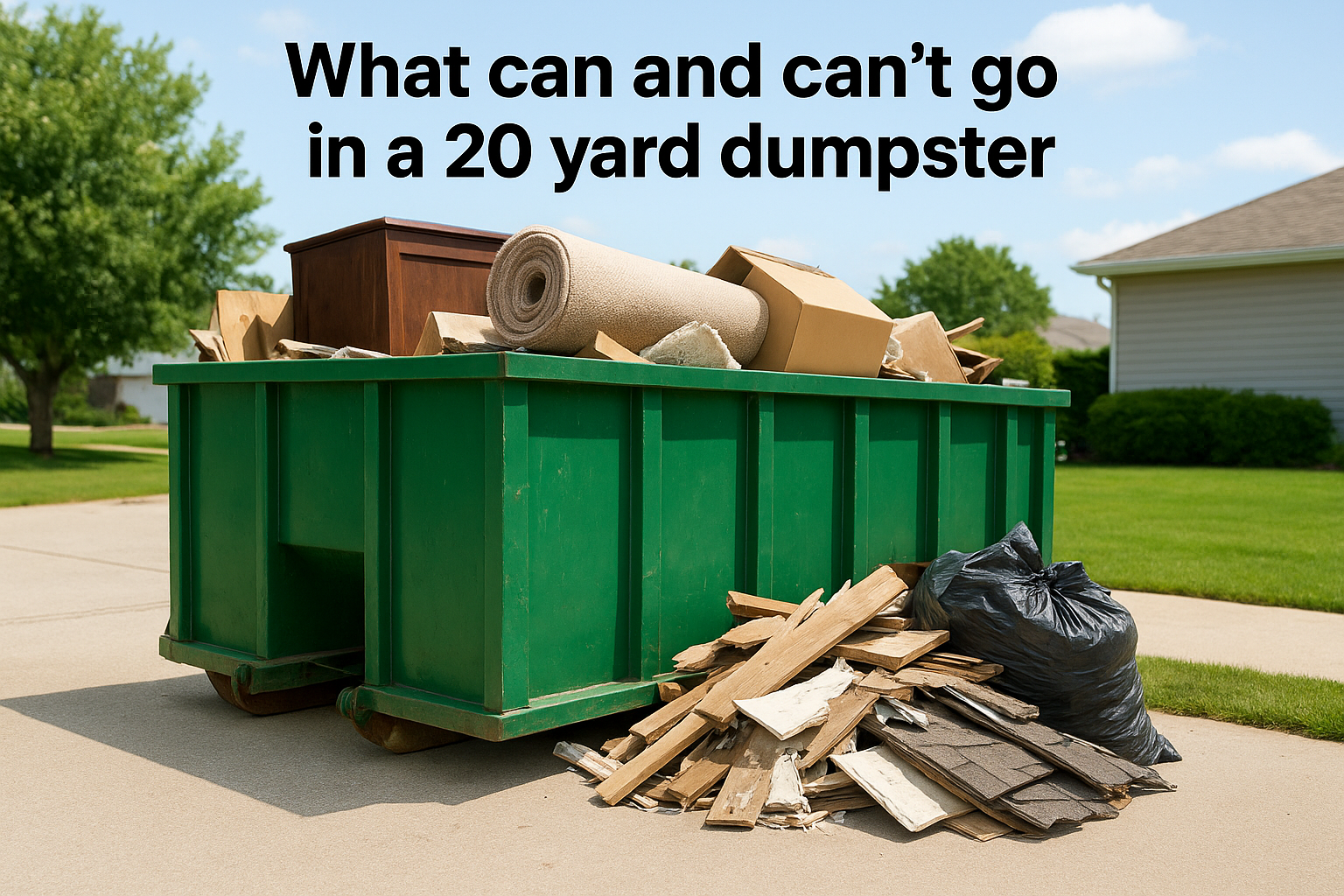
A 20 yard dumpster handles most everyday debris from home projects, but every rental comes with a list of restricted materials. Knowing this list before delivery day saves you from a rejected load or a surcharge you didn’t see coming. General household junk like furniture, cabinetry, carpet, and boxed-up belongings all go in without issue, and so does construction debris from a typical remodel.
What you can throw in
Most residential and light commercial projects generate debris that fits comfortably within a 20 yard dumpster’s limits. Common acceptable materials include:
- Wood, drywall, and flooring scraps
- Furniture, mattresses, and household junk
- Roofing shingles (within weight limits)
- Non-hazardous construction debris like siding and trim
- Yard waste such as branches, brush, and sod
- Appliances (in most cases, though some require a separate fee)
Know what’s banned before the truck shows up, not after the driver hands you a surcharge.
What stays out
Hazardous and regulated materials are off-limits in any standard roll-off container, and a 20 yard dumpster is no exception. These items typically require special disposal through a licensed facility rather than a rental dumpster:
- Paint, solvents, and other flammable liquids
- Tires
- Batteries and electronics (in most cases)
- Asbestos-containing materials
- Medical or biohazard waste
- Refrigerants-containing appliances without proper certification
The EPA’s guidance on household hazardous waste explains why these materials need separate handling: many contain chemicals that can contaminate soil and groundwater if they end up in a standard landfill.
Why the rules exist
Disposal facilities enforce these restrictions because mixing hazardous materials with general debris creates real environmental and safety risks at the landfill or transfer station. A local provider who knows the specific rules for Cape Cod and Plymouth facilities can flag questionable items before they become a problem on pickup day. If you’re not sure whether something belongs in the container, ask before you toss it in. It’s a five-minute phone call that beats an unexpected surcharge or a driver who won’t haul your load.
20 yard dumpster costs, rental periods, and delivery tips
Cost is usually the first question, but it’s the wrong one to lead with. Pricing on a 20 yard dumpster depends on your town, the disposal facility it’s headed to, and how long you keep it, so a flat national number won’t tell you much. What matters is finding a provider that shows town-specific pricing upfront instead of quoting a range and adding fees later.
What affects your final price
A few variables move the needle on cost more than people expect. Weight is the biggest one, since heavy debris like shingles or concrete can push you past the included allowance fast. Rental duration matters too, most standard periods run 7 to 10 days, and keeping the container longer usually adds a daily rate. Location plays a role as well, since some Cape Cod towns have farther drives to the disposal facility, which factors into the base price.
A clear, town-specific quote beats a vague estimate every time, because it tells you the real number before the truck ever leaves the yard.
Rental period basics
Most 20 yard rentals give you close to a week to fill the container, which covers a typical weekend renovation or a multi-day cleanout without rushing. Extending the period is usually possible if your project runs long, but ask about the daily extension rate before you book so it doesn’t surprise you on the invoice.
Delivery timing and access tips
Delivery scheduling is where local providers earn their keep. Some Cape Cod and Plymouth companies, including Dump Express, offer daily delivery and same-day service in many cases, which matters if your project starts sooner than expected. Before delivery day, clear your driveway of vehicles, confirm there’s a straight approach for the truck, and check for low branches or narrow gates. A quick call to confirm placement details ahead of time avoids a delayed drop-off on the morning you’re ready to start hauling debris.
Finding the right fit for your cleanup
A 20 yard dumpster fills the gap between small cleanouts and full demolition jobs. It handles whole-house purges, mid-size remodels, and roof tear-offs without leaving you short on space or paying for room you never fill. The dimensions, weight limits, and material rules covered above give you what you need to compare this size against a 10 or 15-yard box and decide with confidence.
Still unsure which size matches your project? That’s normal, and it’s exactly why a quick conversation beats a guess. Local expertise on Cape Cod driveways, town regulations, and disposal facility rules turns a risky booking into a straightforward one. Skip the call-center runaround and talk to a team that’s delivered on your street before. Get a town-specific quote from Dump Express and get the right container on your driveway, on your schedule, without the surprise fees.