
If you’re planning a renovation, major cleanout, or construction project, chances are you’ve already started searching for 20 yard dumpster rental price estimates. It’s one of the most common dumpster sizes people rent, big enough to handle serious projects, but not so large that you’re paying for space you don’t need. The problem is that pricing varies wildly depending on where you live, what you’re throwing away, and which company you’re renting from.
Most renters run into the same frustration: vague quotes, hidden fees, and final bills that look nothing like the original estimate. A national average only tells you so much when your actual cost depends on local disposal fees, weight limits, rental duration, and surcharges that many companies don’t mention upfront. Understanding what’s actually included in your rental, and what triggers extra charges, is the difference between a predictable expense and an unpleasant surprise. That’s something we deal with every day at Dump Express, where transparent, town-specific pricing across Cape Cod and Plymouth is how we’ve done business for over 20 years.
This article breaks down the real cost of renting a 20-yard dumpster, including national price ranges and the factors that shift them, what a standard rental typically covers, and how to avoid the fees that catch most people off guard. Whether you’re comparing quotes or booking your first dumpster, you’ll leave with a clear picture of what to expect before you spend a dollar.
What a 20-yard dumpster rental includes
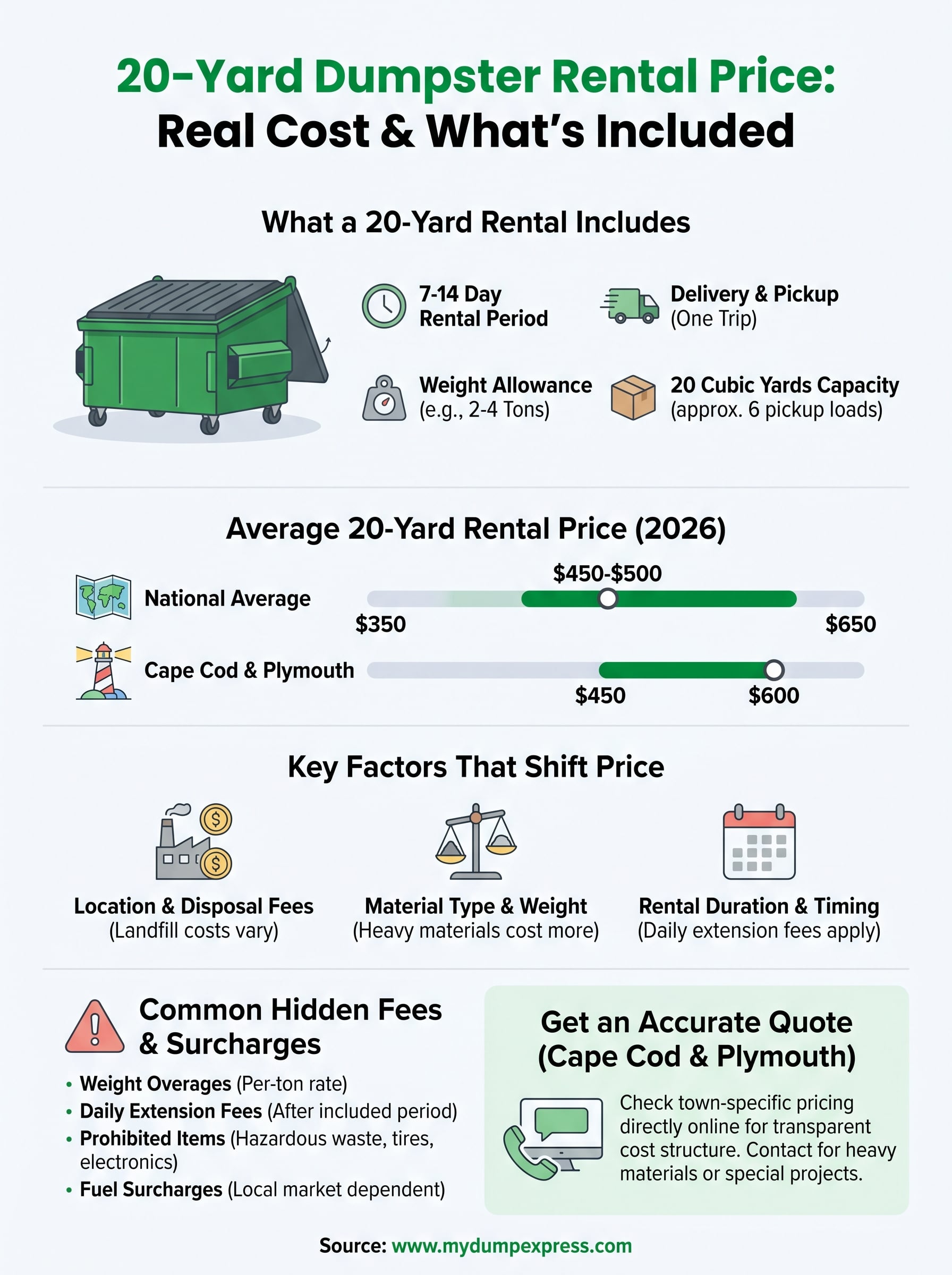
When you book a dumpster, you’re not just paying for a metal box. A standard 20-yard dumpster rental typically bundles several services into one price, but what’s actually included depends heavily on which company you rent from. Knowing what you should expect helps you compare quotes on equal footing and spot companies that charge separately for things that should come standard.
The container itself
A 20-yard dumpster holds 20 cubic yards of debris, which works out to roughly six full pickup truck loads of material. The typical dimensions run about 22 feet long, 8 feet wide, and 4.5 feet tall, though this varies slightly by company. Most containers have a swing-out rear door or walk-in gate, which makes loading heavy or bulky items like furniture and lumber much easier than tossing everything over the top.
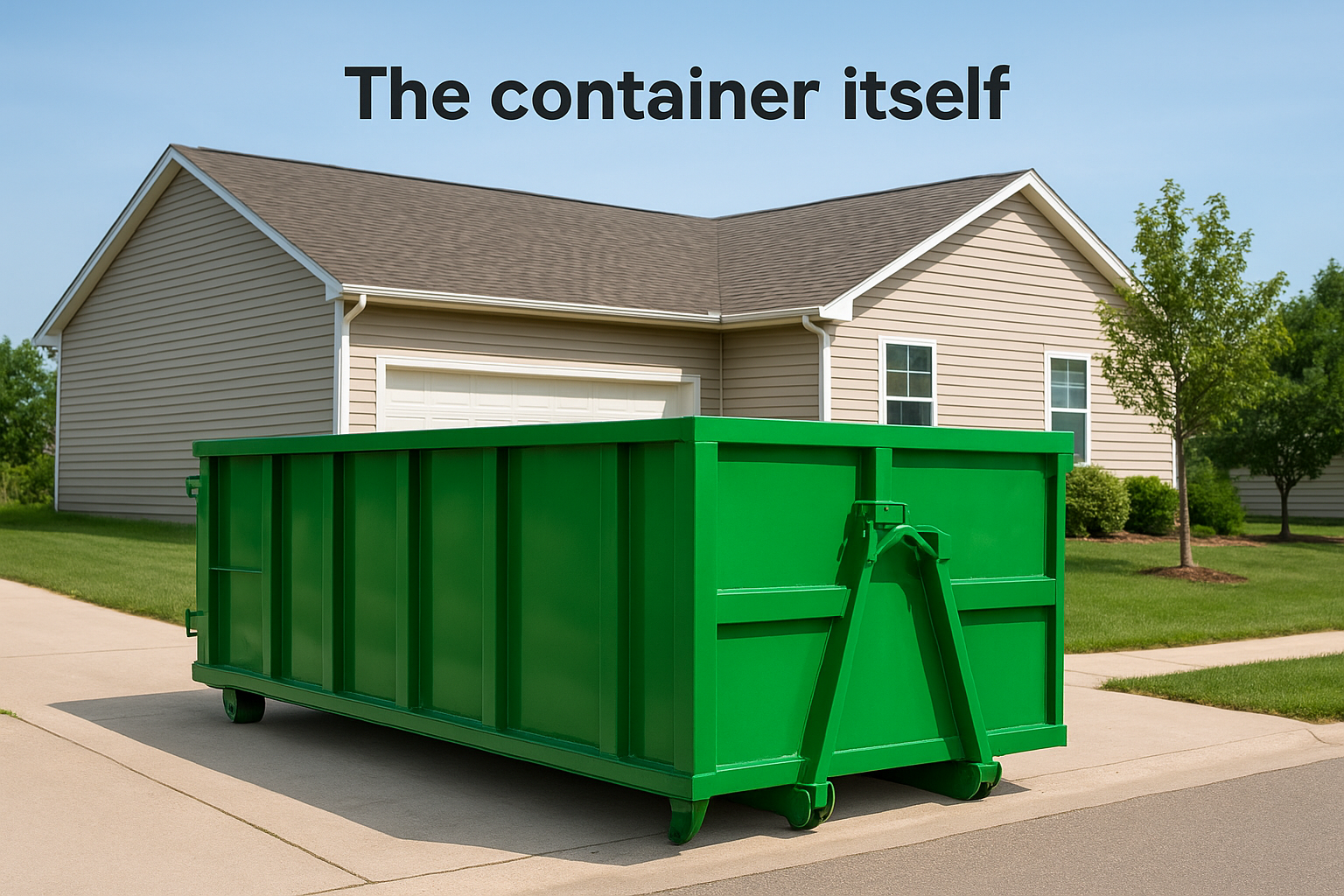
These containers are built for demanding use. You can expect them to handle mixed debris like drywall, flooring, wood, and general household junk without issue. There are specific prohibited materials you cannot throw in, such as hazardous waste, certain electronics, and tires, which is a topic covered in detail later in this article.
Delivery and pickup
Every rental includes delivery to your location and one scheduled pickup. A driver brings the container to your property, places it where you direct, and returns to haul it away when you’re done. That sounds simple, but delivery reliability directly affects your project timeline, so it’s worth asking specifically about the scheduling process before you commit.
Confirming exact delivery and pickup windows before booking prevents you from getting stuck with a full dumpster sitting in your driveway over a long weekend or holiday.
At Dump Express, delivery is available seven days a week, and pickup is scheduled for business days when disposal facilities are open. Local companies with their own trucks and drivers tend to give you far more control over timing and placement than larger regional providers who route through call centers.
Rental period and what it means for your cost
Most dumpster companies include a set number of rental days in the base price, typically somewhere between 7 and 14 days. If your project runs longer, you pay a daily extension fee on top of what you already agreed to. When you’re comparing 20 yard dumpster rental price quotes side by side, this rental window is one of the easiest details to miss.
Some companies offer flat-rate pricing that covers a specific timeframe without penalizing you for running a day over. Others start charging the moment the included period ends. Ask directly what the daily extension rate is before you book, because those fees add up quickly on longer projects like full home cleanouts or multi-phase renovations where timelines shift. Knowing the full cost structure upfront is the only way to budget accurately and avoid a bill that looks nothing like the original quote.
Average 20-yard dumpster rental price in 2026
The 20 yard dumpster rental price in 2026 runs somewhere between $350 and $850 nationally for a standard rental period, though that range shifts depending on where you live, what you’re tossing out, and which company you use. That’s a $500 swing, which matters when you’re budgeting for a project that already has plenty of moving parts. Understanding what drives the low and high ends of that range helps you evaluate any quote you receive with confidence.
National price range
The national average for a 20-yard dumpster falls around $550 to $700, assuming a typical rental period of 7 to 14 days and a standard weight allowance. Quotes at the lower end of the range, around $450, generally appear in competitive markets where disposal facility fees and labor costs are lower. Prices above $700 are more common in dense metro areas, coastal markets, or regions where landfill tipping fees have climbed sharply in recent years.
If a quote comes in significantly below $350, read every line of the agreement carefully because low base prices often hide charges for weight overages, fuel, or extended rental days.
What pricing looks like in Cape Cod and Plymouth
Rentals in Cape Cod and Plymouth, Massachusetts typically land between $550 and $800 for a 20-yard container, placing the area in the middle-to-upper portion of the national range. That reflects real operating costs in this market: fuel, local labor, and landfill access in coastal Massachusetts are all more expensive than national averages. Material type also affects pricing here, since certain debris categories carry higher disposal fees at regional facilities.
At Dump Express, town-specific pricing is listed directly on the website, so you know your actual cost before you ever pick up the phone. You won’t need to wait on a callback or navigate vague estimates, which is exactly where most billing surprises start. Comparing quotes becomes straightforward when one company shows you the number upfront and another asks you to call for details.
What changes the price most
Several variables can shift your 20 yard dumpster rental price by $100 or more in either direction, and most renters don’t find out about them until they see the final bill. Knowing which factors carry the most weight lets you plan accurately and ask the right questions before you commit to a booking.
Location and local disposal fees
Where you live affects your rental cost more than almost any other factor. Landfill tipping fees vary significantly from one region to another, and dumpster companies pass those costs directly to customers. Markets with high land costs, strict environmental regulations, or limited disposal capacity tend to have higher base prices regardless of which company you use. In a place like Cape Cod, the combination of coastal logistics, regional facility access, and higher fuel costs all push prices above the national average.
Even two towns 20 miles apart can have noticeably different rental prices depending on which disposal facility serves that area.
Material type and debris weight
Not all debris is treated equally at the disposal facility. Heavy materials like concrete, dirt, roofing shingles, and tile carry higher disposal costs than lighter mixed debris like drywall, wood, and furniture. Some companies charge a flat rate that accounts for average-weight loads, while others separate out weight-based surcharges that get added after pickup once the container is weighed at the facility. If your project involves demolition, roofing, or any dense material, clarify upfront whether the quoted price covers it.
Rental duration and timing
The number of days you hold the container directly affects your total cost. Most rentals include a set rental window of 7 to 14 days, after which daily fees apply. Projects that run longer than expected, such as phased renovations or estate cleanouts, can accumulate meaningful extension charges that weren’t part of your original budget. Booking during peak seasons, typically spring and summer when home projects and construction ramp up, can also affect availability and occasionally pricing, so scheduling ahead when you have flexibility is worth doing.
Weight limits, overages, and prohibited items
Every 20-yard dumpster rental comes with a weight allowance built into the base price, and going over that limit triggers additional charges. Most companies set their weight caps somewhere between 2 and 4 tons for a 20-yard container, though the exact figure varies by provider and region. Knowing your limit before you start loading prevents you from opening a bill that looks nothing like the quote you agreed to.
How weight limits work
The weight limit on your rental defines how many tons of material the base price covers. Once the container arrives at the disposal facility, it gets weighed on a certified scale, and anything above the included tonnage gets billed at a per-ton overage rate, typically ranging from $per 150 to $300 per ton depending on the market. Cape Cod and Plymouth rentals tend to sit toward the higher end of that range because regional disposal fees run above the national average.
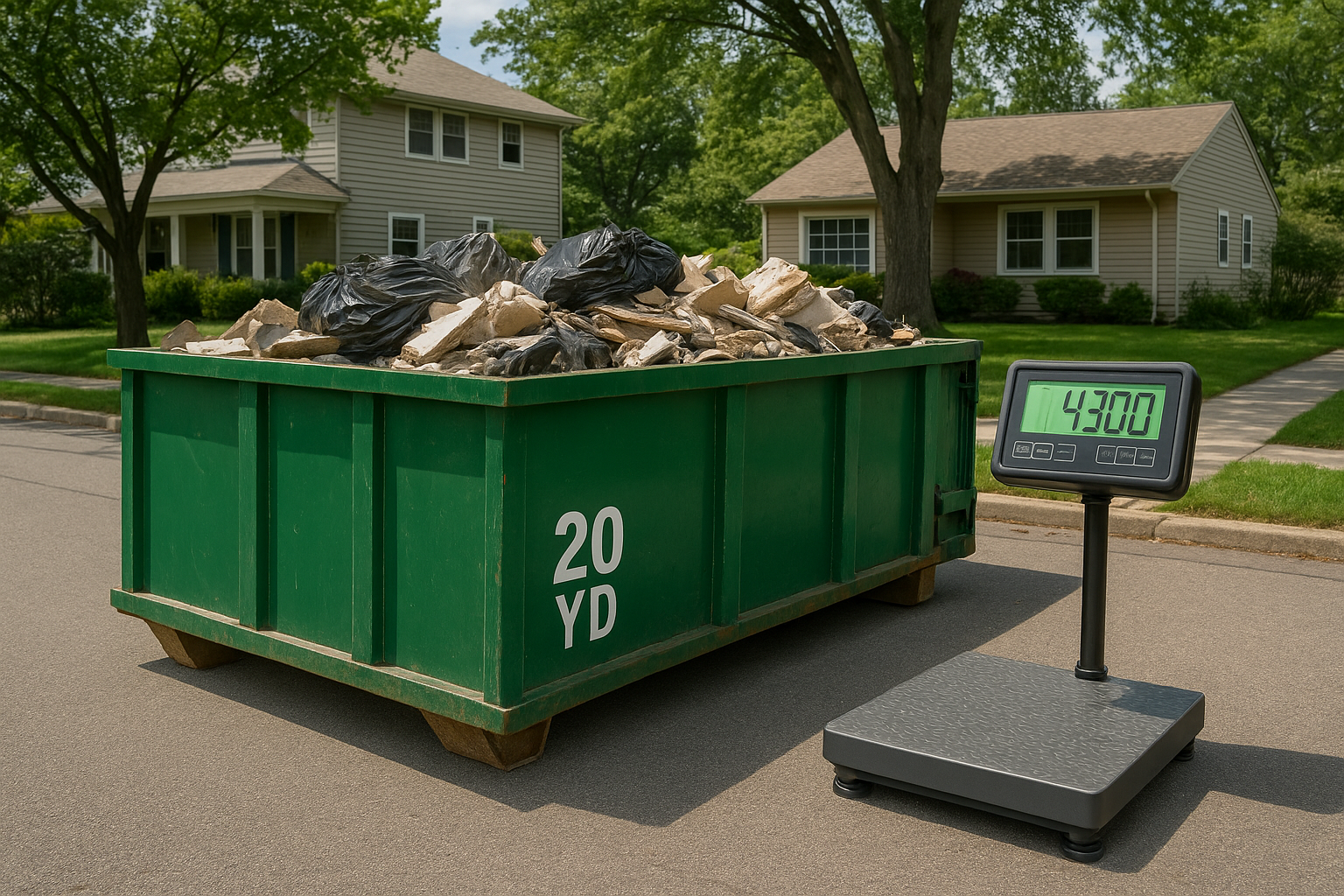
If your project involves roofing, tile, concrete, or similar dense materials, ask specifically how the company handles heavy-load pricing before you book.
Projects that mix light debris like furniture and drywall with heavy materials like shingles or compacted dirt are the most common source of unexpected overage charges. You may estimate a half-full container visually but still exceed the weight limit because dense materials pack a disproportionate amount of weight into limited space.
Prohibited items
Most dumpster companies maintain a list of materials they will not accept, and loading prohibited items into your container can result in additional fees or a refused haul. Common prohibited items include:
- Hazardous waste such as paint, solvents, asbestos, and chemicals
- Batteries and propane tanks
- Tires
- Certain electronics including televisions and monitors
- Medical or biohazardous waste
These restrictions exist because disposal facilities cannot accept hazardous materials in general waste streams under state and federal regulations. Building these restrictions into your 20 yard dumpster rental price planning upfront saves you the cost and delay of a rejected load.
How to get an accurate quote in Cape Cod and Plymouth
Getting an accurate 20 yard dumpster rental price in Cape Cod and Plymouth starts with giving the company the right information upfront. The more specific you are about your project type, material types, and timeline, the more accurate the quote you get back. Vague requests lead to vague estimates, and vague estimates lead to final bills that don’t match what you expected.
Know your project details before you call
Before reaching out to any dumpster company, gather a few basics: what you’re throwing away, roughly how much of it there is, and how many days you’ll need the container. If your cleanout involves roofing shingles, concrete, or other dense materials, flag that specifically. Those materials carry higher disposal fees at regional facilities, and a company that doesn’t account for them upfront will likely add surcharges after the fact.
Giving a rental company your town, material type, and project scope in a single message is the fastest way to get a quote that actually reflects your real cost.
Ask the right questions
When you contact a dumpster company, a few direct questions tell you quickly whether the pricing is transparent. Ask for the included weight limit and the per-ton overage rate. Ask whether the quoted price covers delivery, pickup, and disposal, or whether those are billed separately. Ask about the daily extension rate if your project runs past the included rental period.
These questions are straightforward, but most renters skip them and pay for it later. A company that gives you clear, immediate answers to all of them is telling you something important about how they operate.
How Dump Express handles quoting
Dump Express lists town-specific pricing directly on the website, so you can find your actual cost for Cape Cod and Plymouth towns without waiting on a callback. If your project involves mixed materials or an unusual scope, reaching out directly gets you a specific answer fast.
The goal is that you know your full cost before a single item goes in the dumpster, not after it has already been hauled away. That kind of upfront clarity is what separates a predictable rental experience from one that ends in frustration.
Next steps
You now have a clear picture of what a 20 yard dumpster rental price actually covers, what pushes it higher, and where the surprise charges tend to hide. The key is putting that information to work before you book, not after the container is already sitting in your driveway.
Getting started with Dump Express takes minutes. Town-specific pricing is listed directly on the website, so you can check your exact cost right now without waiting on a callback. If your project involves heavy materials, a tight timeline, or an unusual scope, reaching out directly gets you a specific answer fast. Reliable delivery, transparent pricing, and over 20 years of local Cape Cod experience are what you get when you work with a team that knows this area and handles every rental with the same care.