

Clearing out an old couch, a broken dresser, or a full bedroom set during a move sounds simple until you realize your local disposal rules might disagree. So can you put furniture in a dumpster? The short answer is yes, in most cases, but there are catches that trip up homeowners and contractors alike, especially with upholstered pieces and certain mattress types.
The rules depend on where the dumpster sits and what it’s for. A rented roll-off container on your property gives you far more flexibility than a shared apartment complex bin, and certain materials face restrictions or added fees no matter which one you use. Weight limits, town-specific disposal facility rules, and item-specific surcharges all factor into whether that old sectional sofa goes in easily or costs you extra.
This article breaks down exactly what furniture you can toss without issue, which pieces need special handling, and how Cape Cod disposal rules vary by town. We’ll also cover sizing your dumpster correctly so a houseful of furniture doesn’t turn into a second haul.
Why the dumpster rules for furniture matter
Furniture disposal isn’t just about tossing something over the side. Rented roll-off dumpsters and apartment complex bins both come with rules that homeowners rarely think about until they’re mid-project and stuck. Weight limits and disposal facility restrictions can turn what looks like a simple couch removal into an unexpected bill or a rejected pickup.
Weight and volume don’t always match
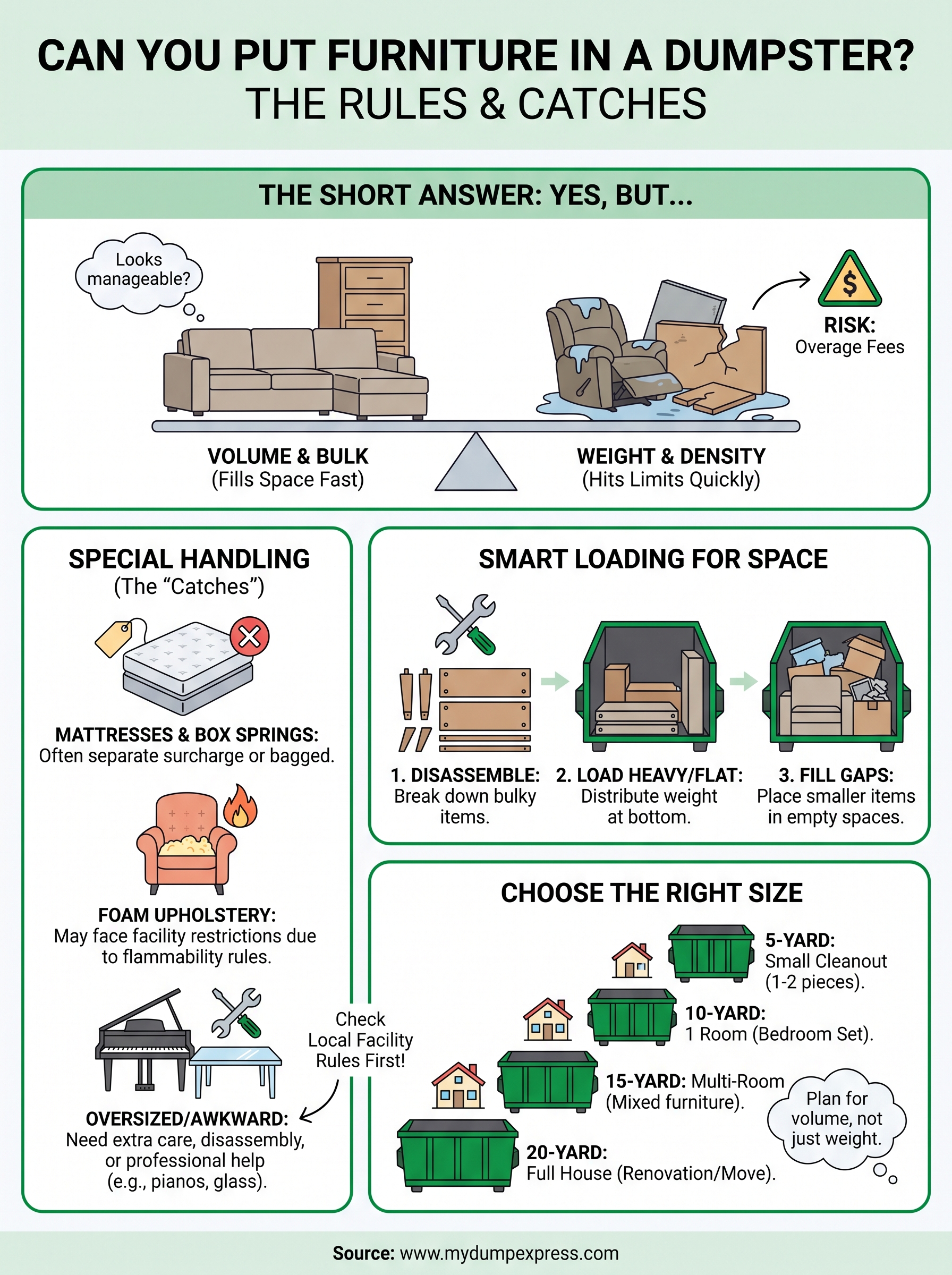
Bulky furniture like sectional sofas or oak dressers takes up a lot of space without necessarily weighing much, but wet upholstery, particleboard, or waterlogged wood can push a dumpster’s weight limit fast. Every rental agreement includes a tonnage allowance, and going over it means paying per-ton overage fees that add up quickly on a project involving a full house of old furniture. Guessing wrong here costs real money, which is why sizing matters as much as the item list itself.
Furniture that looks manageable by eye can still blow past a dumpster’s weight allowance once it’s wet or waterlogged.
Local facility rules shape what’s allowed
Disposal facilities across Cape Cod and Plymouth don’t all treat furniture the same way. Some transfer stations accept upholstered items without issue, while others flag anything with foam padding or require it bagged separately because of state fire-safety testing concerns tied to certain foam materials, a category the U.S. Consumer Product Safety Commission regulates closely for flammability. Towns also differ on mattress handling, and a dumpster loaded with items your local facility won’t take means a delayed pickup or a return trip, neither of which fits a tight renovation schedule.
Surcharges catch people off guard
Certain furniture categories trigger added fees even when they’re technically allowed in the dumpster. Mattresses, box springs, and some upholstered recliners often fall into this bucket because of how they’re processed or recycled after pickup, and surprise charges at the end of a rental frustrate homeowners more than almost anything else. Knowing these costs upfront, before the dumpster arrives, keeps your project budget accurate instead of getting adjusted on the final invoice.
| Furniture type | Typically allowed | Common catch |
|---|---|---|
| Wood dressers, tables | Yes | Breaks down easily, low fee risk |
| Sofas, sectionals | Yes | Weight and volume add up fast |
| Mattresses, box springs | Sometimes | Often a separate surcharge |
| Recliners with foam | Sometimes | Facility-specific restrictions |
Rules like these exist because disposal facilities have to sort, recycle, or landfill materials according to state and local requirements, not because rental companies enjoy adding fees. Understanding this pattern before you book, rather than after the dumpster is full, saves both time and money. A quick call to confirm what your specific town’s facility accepts is worth five minutes before the truck shows up.
How to dispose of furniture in a rented dumpster
Getting furniture into a rented roll-off dumpster is straightforward once you know the sequence that keeps you from wasting space or risking overage fees. Most homeowners toss the biggest pieces in first and figure out the rest later, but that approach fills a 10-yard dumpster with air pockets instead of debris. A little planning at the start of the project saves you from calling for a second container halfway through.
Break it down before it goes in
Disassembling furniture whenever possible is the single biggest space-saver you have. Removing legs from a couch, taking a bed frame apart, or flattening a dresser after pulling the drawers turns bulky shapes into flat pieces that stack instead of roll around empty space. Disassembly work upfront means fewer trips back to the dumpster and a lower chance you’ll run out of room before the project’s done.
Ten minutes with a wrench often buys you an extra cubic yard of usable dumpster space.
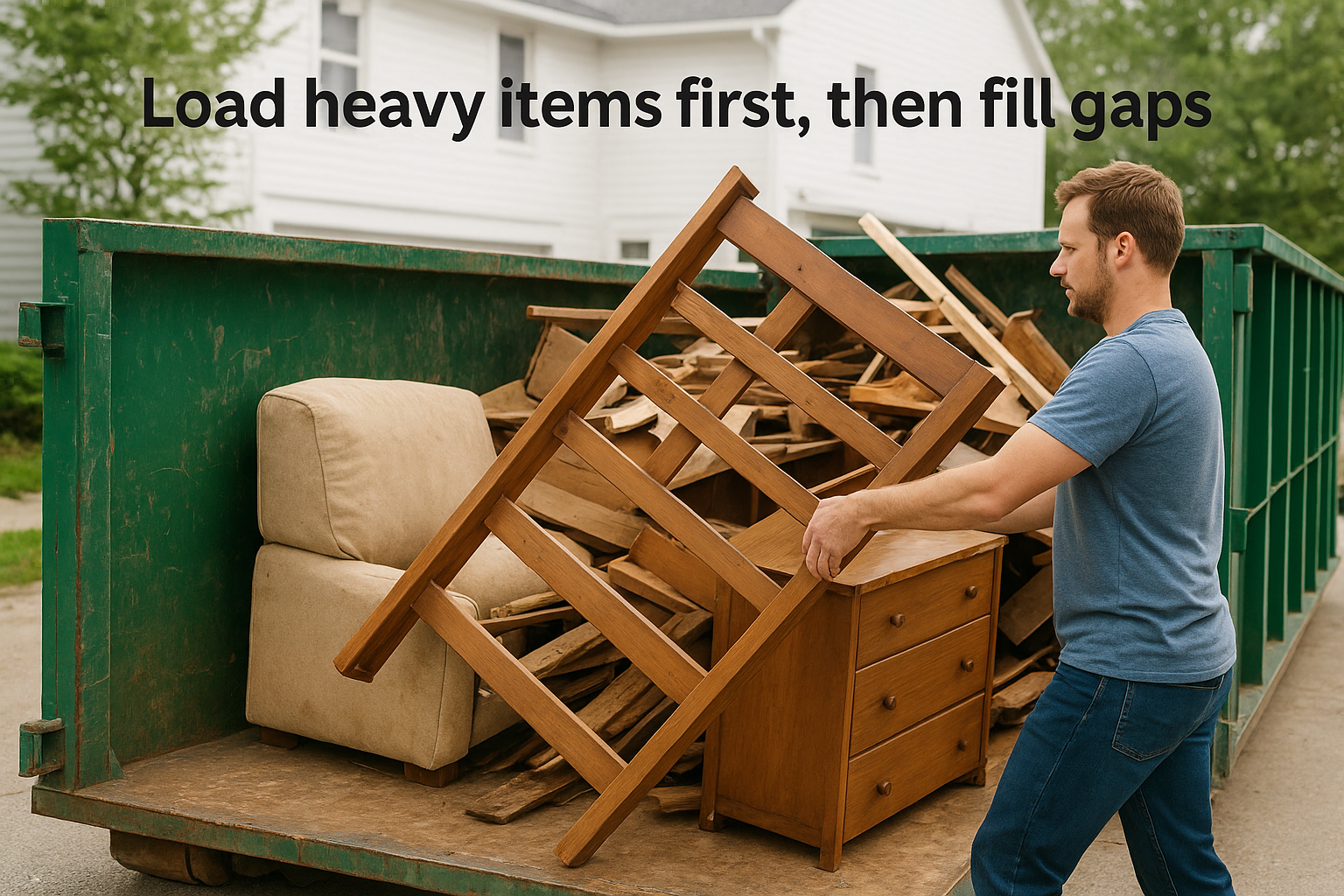
Load heavy items first, then fill gaps
Once furniture is broken down, load the heaviest and largest pieces along the bottom and against the walls of the dumpster. This distributes weight evenly and keeps the container from tipping during pickup. Smaller debris, packing materials, and lighter household items can then fill the gaps between furniture pieces instead of taking up separate space at the top.
A quick loading checklist keeps the process efficient:
- Disassemble anything with removable parts
- Place heavy, flat pieces on the bottom
- Stack smaller furniture on top of larger items
- Fill remaining gaps with loose debris
- Avoid overfilling above the dumpster’s rim
Confirm pickup timing in advance
Scheduling matters just as much as loading technique. Dump Express offers daily delivery across Cape Cod and Plymouth, but pickup happens on business days when disposal facilities are open, so timing your furniture removal around that schedule keeps your project moving without a container sitting full in your driveway longer than necessary.
Furniture that often needs special handling
Not every piece of furniture goes into a dumpster the same way, and some items carry restrictions that catch people off guard mid-project. Knowing which pieces need extra planning before the dumpster arrives keeps your rental on schedule instead of stalling out over a single mattress or recliner nobody warned you about.
Mattresses and box springs
Mattresses top the list of furniture that trips people up. Many Cape Cod and Plymouth facilities require mattresses bagged separately or charge a flat surcharge because of how they’re processed for recycling. Box springs often follow the same rule, even though they seem like simple wood-and-metal frames. Ask about mattress handling before booking so the fee shows up in your quote, not your final invoice.
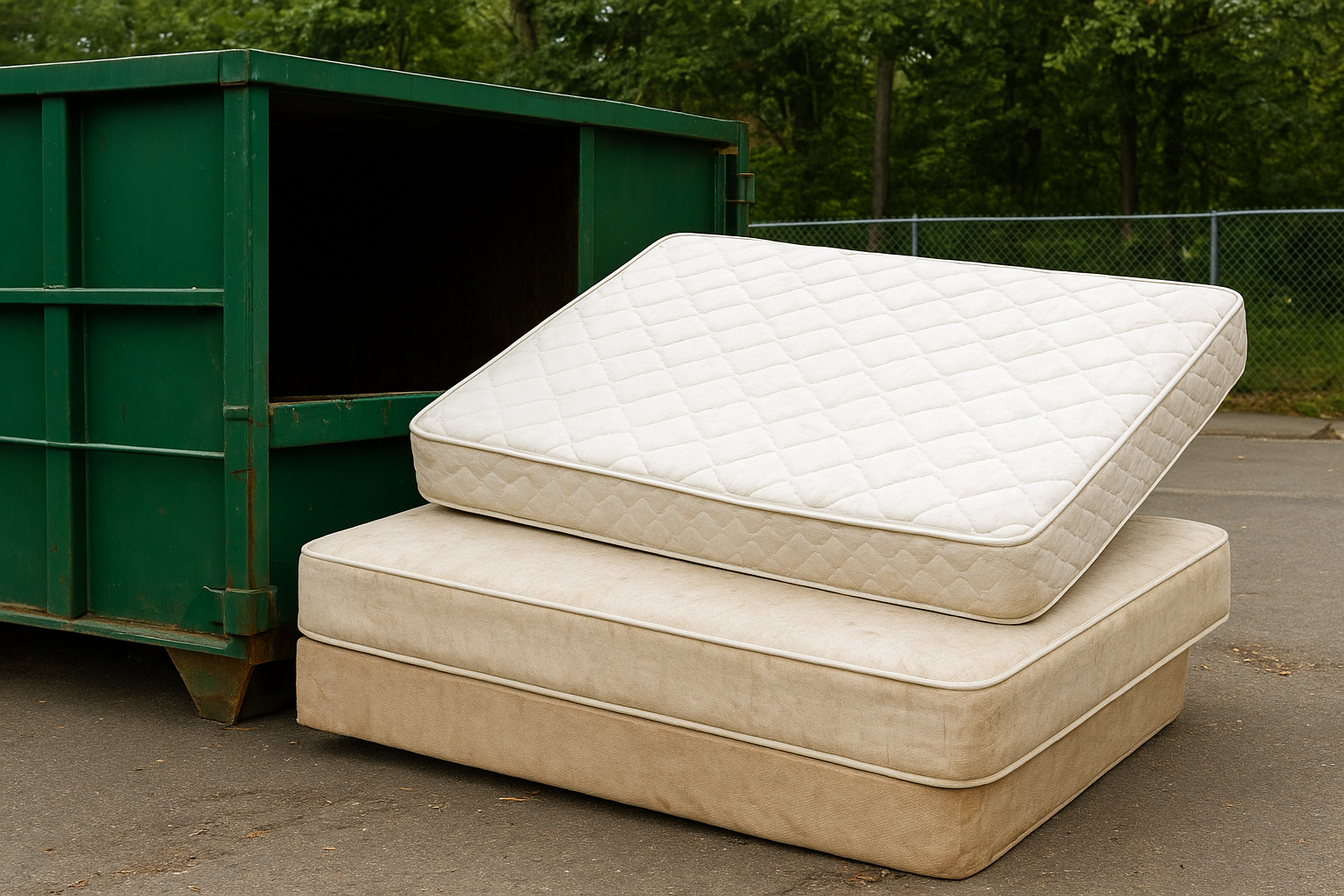
A single mattress can carry the same disposal fee as a full truckload of wood furniture, so confirm the rule before it’s loaded.
Upholstered pieces with foam padding
Sofas, recliners, and armchairs stuffed with foam sometimes face restrictions tied to flammability testing standards the U.S. Consumer Product Safety Commission enforces on certain foam materials. Some facilities accept these items without issue; others flag them for separate handling. This varies by town, which is exactly why local knowledge matters more than a generic rental company’s blanket policy.
Oversized and awkward pieces
A few furniture types need extra care regardless of your dumpster size:
- Pianos often require professional movers due to weight distribution
- Glass-top tables should be wrapped or broken down to avoid injury during loading
- Sleeper sofas with metal frames add unexpected weight that eats into tonnage limits
- Large armoires may need disassembly just to fit through doorways
Handling these correctly upfront means one clean haul instead of a scramble for a second container.
Choosing the right dumpster size for furniture
Getting the size right matters more with furniture than almost any other debris type, since bulky pieces eat up cubic yardage fast even when the actual weight stays low. Dump Express offers four dumpster sizes, from a 5-yard container up to a 20-yard, and matching the right one to your project keeps you from paying for space you don’t use or worse, running out of room halfway through a cleanout. Guessing on size is the most common mistake homeowners make when they wonder can you put furniture in a dumpster without knowing how much furniture actually fits.
Matching size to project scope
Small projects like clearing a single room rarely need more than a 10-yard dumpster, while a full house of furniture from a move or estate cleanout usually calls for the 15-yard or 20-yard option. Contractors handling renovation debris alongside old cabinetry or fixtures should size up rather than risk a second haul mid-project.
| Dumpster size | Best for | Furniture capacity |
|---|---|---|
| 5-yard | Single item or small cleanout | 1-2 pieces, like a sofa or dresser |
| 10-yard | One room cleanout | A bedroom set or small living room |
| 15-yard | Multi-room cleanout | Several rooms of mixed furniture |
| 20-yard | Full house or renovation | Whole-house furniture removal |
Sizing a dumpster for furniture means planning for volume first, since bulky pieces fill space long before they hit the weight limit.
When to size up
Erring toward the larger option makes sense whenever your project involves upholstered furniture, since sofas and recliners take up far more room than their weight suggests. Reliable guidance from a local team who knows how Cape Cod projects typically run beats guessing on your own, and a quick conversation before booking often prevents the cost and hassle of ordering a second container later.
The bottom line on furniture disposal
Yes, you can put furniture in a dumpster, but the details matter more than the yes-or-no answer. Mattresses, foam-filled upholstery, and oversized pieces often need special handling, and getting your dumpster size right upfront saves you from overage fees or a second haul. Cape Cod and Plymouth facilities each set their own rules, so local knowledge beats guesswork every time.
Projects go smoothly when you plan the load, confirm what your town’s facility accepts, and size the container for volume, not just weight. That’s the difference between a clean one-day cleanout and a frustrating week of scheduling delays and surprise charges.
If you’re staring down a houseful of old furniture and want straight answers before you book, get a transparent quote from Dump Express and talk to a local team that’s handled this exact situation for over 20 years.