
You’ve got the dumpster scheduled, the project planned, and a pile of stuff ready to go. But before you start tossing everything in, you need to know what can you put in a residential dumpster, and what will get you hit with extra fees or a rejected load. Not every material is fair game, and the rules vary based on local regulations and the type of waste involved.
At Dump Express, we deliver dumpsters across Cape Cod and Plymouth every day, and we see the same questions come up on nearly every rental. Customers want to do things right but aren’t sure where the line is between acceptable household debris and prohibited materials. After 20+ years of handling residential cleanouts, renovations, and moves in the area, we’ve learned exactly where people get tripped up, and how to avoid those costly surprises.
This article breaks down five clear lists covering what goes in, what stays out, what costs extra, and what requires special handling. Whether you’re cleaning out a garage, tearing up old flooring, or downsizing a family home, you’ll know exactly what belongs in your dumpster before the driver drops it off, and what you need to deal with separately.
1. Dump Express dumpster rules at a glance
Before diving into specific material categories, it helps to understand the baseline rules that apply to every Dump Express rental. These rules reflect disposal facility requirements across Cape Cod and Plymouth, so knowing them upfront keeps your project on track and your costs predictable.
What this list covers
This section gives you a fast overview of what’s generally accepted, what triggers additional charges, and what gets flagged at the facility before or during drop-off. Use it as your reference before you book or start loading.
Each of the four areas below covers a distinct part of the rental process. The goal is to help you avoid surprises on pickup day, not just give you a general checklist.
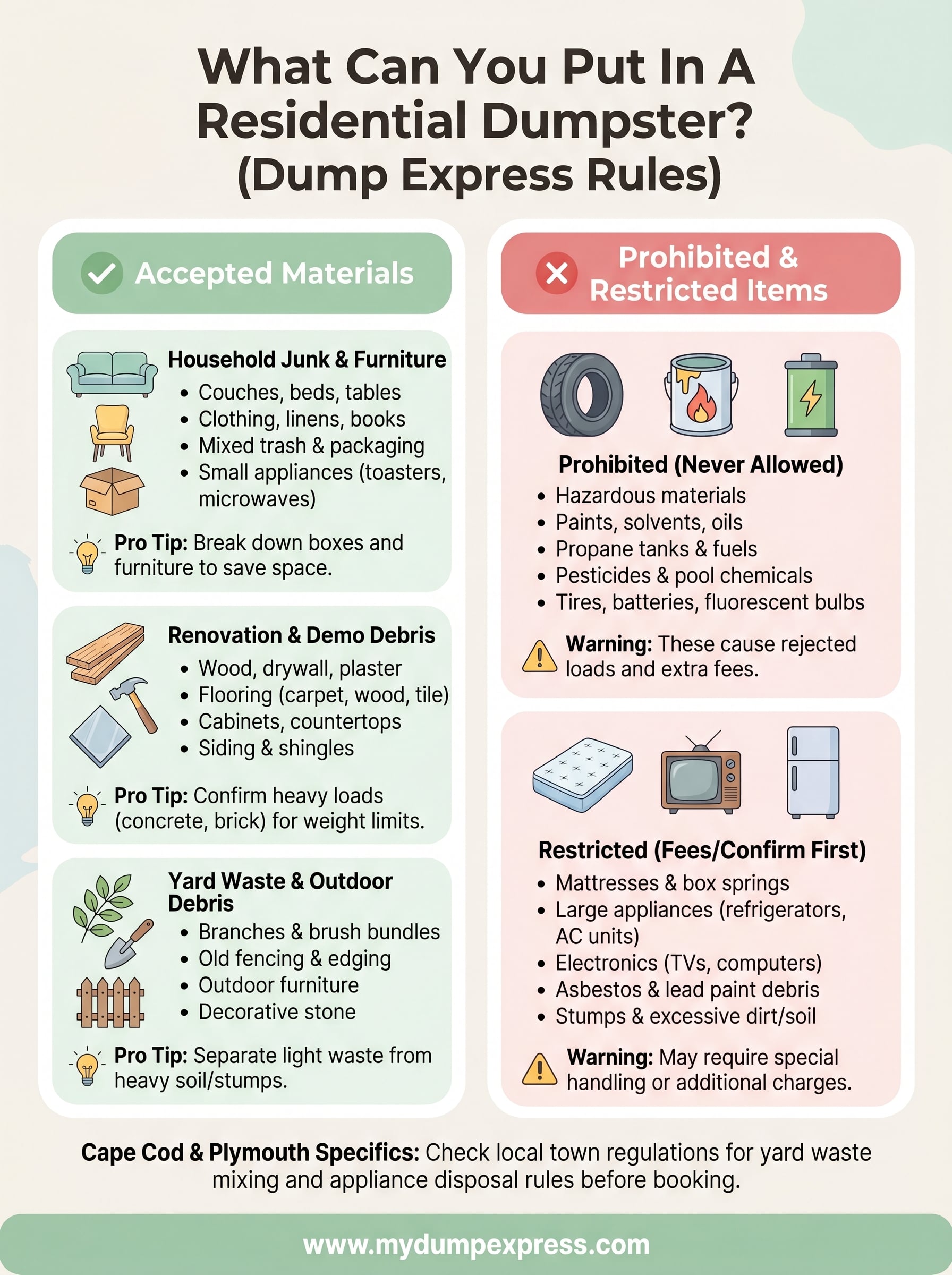
What you can usually toss in Dump Express dumpsters
Most residential waste goes in without a problem. Knowing what can you put in a residential dumpster starts with the everyday materials that fill most loads. Common household junk, furniture, and renovation debris are all standard and accepted across our service area.
- Furniture, clothing, and general household items
- Flooring, drywall, lumber, and trim
- Most appliances (confirm surcharges on specific items)
- Cardboard, packaging, and mixed trash from cleanouts
The more varied your load, the more important it is to pull out any restricted materials before the dumpster arrives.
What can trigger extra fees, rejection, or delays
Certain materials require special handling or aren’t accepted at the facilities Dump Express uses. If a prohibited item ends up in your load, you may face a surcharge or a rejected load that needs sorting before pickup can happen.
- Tires, batteries, and electronics
- Mattresses (may carry a disposal fee)
- Anything containing hazardous materials or liquids
What to confirm before delivery in Cape Cod and Plymouth
Cape Cod towns have specific local requirements that affect what you can dispose of through a standard dumpster rental. Before your delivery, confirm whether your town has restrictions on yard waste mixing or appliance disposal. The Dump Express team walks you through any town-specific rules during booking so nothing catches you off guard on the day of pickup.
2. Household junk you can put in a dumpster
When you’re clearing out a home, most everyday junk goes straight into the dumpster without any issues. Understanding what can you put in a residential dumpster starts here, since household junk makes up the bulk of most loads during moves, cleanouts, and decluttering projects.
What this list covers
This section focuses on standard non-hazardous household items that Dump Express accepts in any size dumpster. These are the materials that make up the majority of a typical residential load across Cape Cod and Plymouth.
Typical items that belong in this list
Furniture, appliances, and general household debris are all accepted in a standard residential load. Here’s what you can toss in without concern:
- Couches, chairs, tables, and bed frames
- Clothing, linens, and soft goods
- Boxes, packaging, and general mixed trash
- Small appliances like microwaves and toasters
- Mirrors, décor, and non-hazardous household products
Common exceptions and “check first” items
Mattresses and large appliances like refrigerators or air conditioners may carry a separate disposal fee. Confirm these with Dump Express before loading day to avoid surprise charges on pickup.
If you’re unsure whether an item qualifies, a quick call before delivery saves you from sorting through a loaded dumpster later.
How to prep and load to avoid mess and overfill
Break down large furniture and cardboard boxes before loading. Flat items take up less space, which means more room for the rest of your load and fewer overfill issues.
3. Remodeling and demolition debris that’s allowed
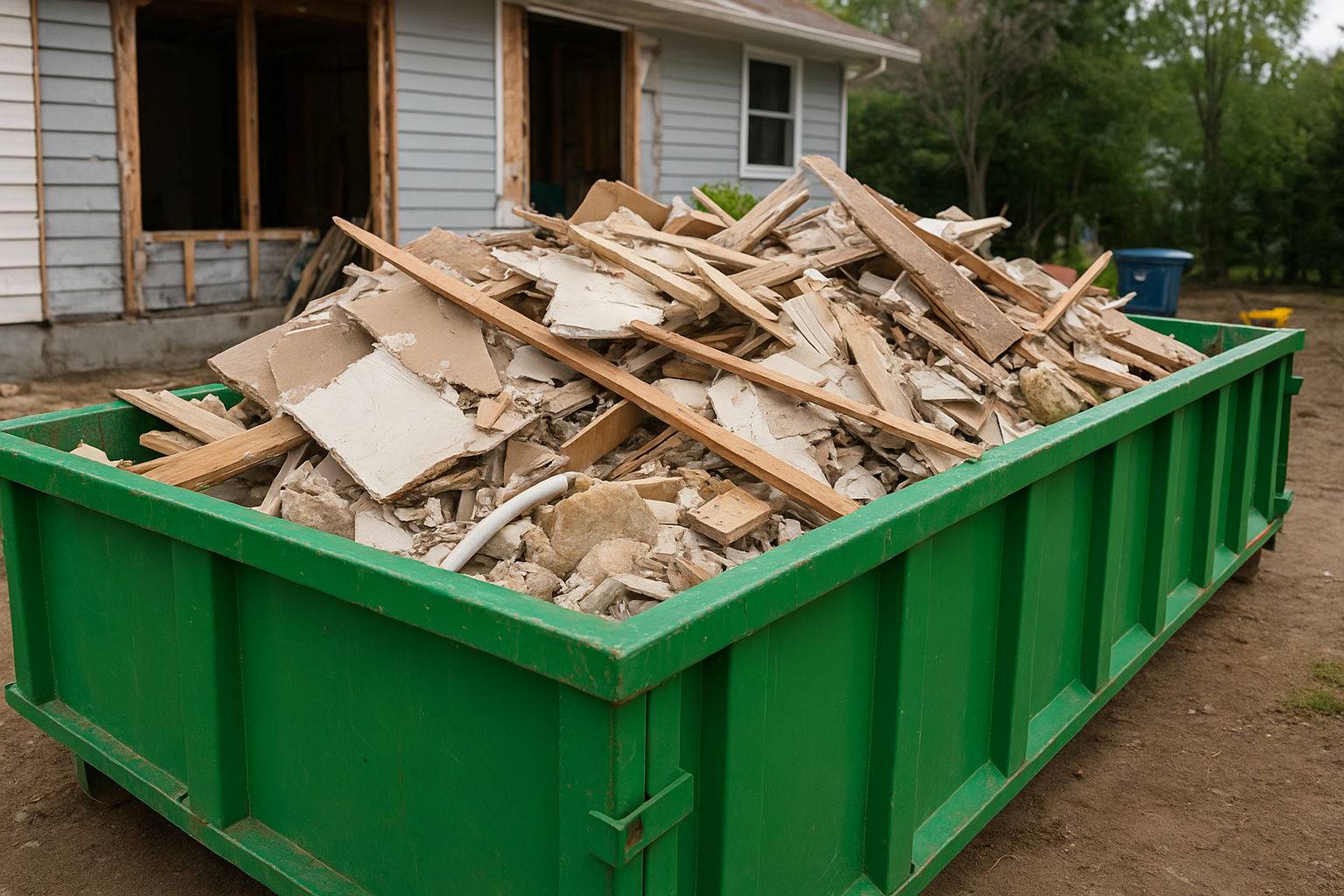
Renovation projects generate debris fast. Knowing what can you put in a residential dumpster during a remodel keeps your job site clean and your timeline on track.
What this list covers
This section covers construction and demolition materials from residential remodeling work. These are the debris types Dump Express handles regularly on Cape Cod and Plymouth renovation sites.
Typical items that belong in this list
Most standard building materials from demo and remodel work are accepted without issue.
- Drywall, plaster, and insulation
- Lumber, trim, and framing
- Flooring including tile, hardwood, and carpet
- Cabinets, countertops, and interior fixtures
- Roofing shingles and siding
Heavy material warnings and weight limit pitfalls
Concrete, brick, and stone are dense and hit the weight limit fast, even when the container looks partially empty. Loading too much heavy material in a single dumpster can push you over the weight threshold and add overage charges to your bill.
If your project includes significant masonry or concrete removal, confirm the right dumpster size before booking.
How to keep restricted materials out of the load
Asbestos and lead paint debris cannot go in a standard dumpster and require separate licensed disposal. Before you start any demo work, check whether your home was built before the regulations that restricted these materials in residential construction.
4. Yard waste and outdoor cleanup debris
Outdoor cleanup projects pile up fast, from seasonal pruning to full property overhauls. Knowing what can you put in a residential dumpster during yard work saves you from loading material that gets flagged or charged extra at the facility.
What this list covers
This section covers debris from outdoor cleanup and landscaping work on residential properties. Most light yard waste fits in a standard Dump Express dumpster, but a few high-density materials need attention before you start loading.
Typical items that belong in this list
Most brush, debris, and lightweight organic material from yard cleanups loads in without problems. Keep heavy items like stone pavers separate from this category.
- Branches
- Brush
- Plants and Shrubs
- Grass Clippings and Leaves
Stumps, dirt, and mixed loads that cause problems
Stumps and soil are extremely heavy and drive up weight costs quickly. Even a small amount of dirt mixed into a load adds up fast.
If your cleanup involves significant soil removal or stump grinding, talk to Dump Express before booking to confirm the right approach.
Cleaner alternatives for branches, leaves, and soil
Separating light organic debris like leaves from heavier material keeps your load weight manageable and your costs predictable. Chipping branches before loading reduces volume significantly and frees up space for the rest of your outdoor debris.
5. Items you cannot put in a residential dumpster
Knowing what can you put in a residential dumpster also means knowing what stays out. Loading prohibited items risks rejected loads, additional fees, or safety issues at the disposal facility.
What this list covers
This section covers the materials Dump Express cannot accept in any residential dumpster, regardless of size or project type. These restrictions come from state regulations and facility rules that apply across Cape Cod and Plymouth.
Hazardous, flammable, and liquid waste
Hazardous and flammable materials are never accepted in a standard dumpster load. Keep these items out of your container entirely.

- Paints, solvents, and motor oil
- Propane tanks and fuel containers
- Pesticides, herbicides, and pool chemicals
- Batteries and fluorescent bulbs
Restricted items that vary by town or facility
Electronics and certain appliances fall under restricted categories that depend on the disposal facility accepting your load. Confirm with Dump Express at booking whether refrigerators, televisions, or air conditioners need separate handling for your town.
When in doubt, pull the item out and confirm before your dumpster is picked up.
Where to take prohibited items in Massachusetts
Massachusetts residents can drop off hazardous household waste through the MassDEP Household Hazardous Waste program. These designated collection events and facilities accept the materials your dumpster cannot.
What to do next
Now you know what can you put in a residential dumpster, and more importantly, what stays out. Pulling restricted materials before delivery and confirming any town-specific rules upfront keeps your project on schedule and your bill predictable.
Dump Express serves 40+ towns across Cape Cod and Plymouth, and the team handles the details so you don’t have to guess. Whether you’re clearing a garage, finishing a renovation, or tackling a full property cleanout, the right dumpster size and a clean load make the whole process straightforward.
Ready to move forward? Book your dumpster rental with Dump Express and get transparent, town-specific pricing with no surprise fees. If you have questions about specific materials or sizing before you book, call the team directly and they’ll walk you through exactly what your project needs.