
Every dumpster has a weight limit, and exceeding it leads to overage fees, refused loads, or even safety hazards during transport. So before you start tossing shingles, concrete, or household junk into a container, you need to know how much weight can a dumpster hold, and how that limit changes depending on what you’re throwing away.
The answer isn’t one-size-fits-all. Weight capacity varies by dumpster size, and certain debris types, like roofing materials or dirt, can max out a smaller container long before it looks full. That gap between "looks empty" and "already overweight" is where most rental headaches start.
At Dump Express, we deliver 5- to 20-yard dumpsters across Cape Cod and Plymouth, and weight questions are some of the most common calls we get. This guide breaks down the typical weight limits by container size, explains how different materials affect your load, and helps you pick the right dumpster without paying for capacity you don’t need, or getting hit with surprise charges for going over.
Why dumpster weight limits matter
Dumpster weight limits exist because rental trucks have a maximum haul capacity, and exceeding that limit creates real risks on the road. When a load is too heavy, the truck’s brakes, axles, and tires all take on more stress than they’re rated for. Most states set legal weight limits for commercial vehicles, and rental companies are responsible for staying within those limits every time they pick up a container from your driveway or job site.
Overloaded dumpsters create safety risks
Heavy loads shift during transport, which affects how a driver controls the vehicle on turns or sudden stops. If debris is packed unevenly or the container is significantly over its rated limit, the driver may refuse the pickup entirely until weight is removed. That means your project stalls while you wait for someone to come out and offload material by hand. Beyond the truck itself, an overloaded dumpster sitting on your driveway can crack pavement or damage your property, especially if the weight is concentrated in one spot.
An overloaded container that gets refused at pickup can set your entire project timeline back by days.
Overage fees are a common and avoidable cost
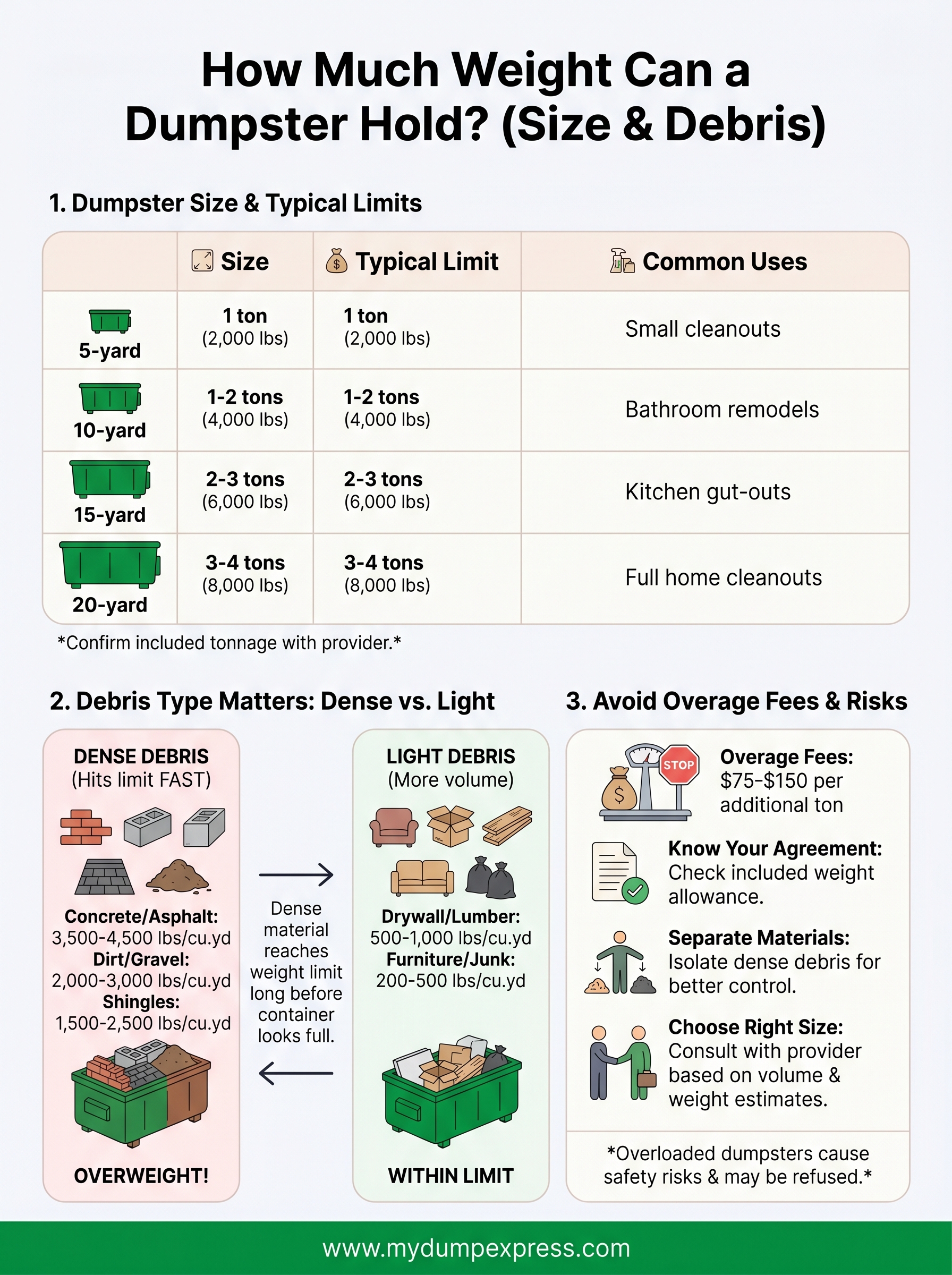
When you go over the weight limit on your rental, the company charges you for every ton above the included allowance. These fees typically run $75 to $150 per additional ton, depending on the rental provider and your location. On heavy debris projects like a roof tear-off or concrete removal, even a small miscalculation can push you over fast. Knowing how much weight a dumpster can hold before you start loading lets you make smarter decisions about which size to rent, which materials to separate, and whether a second container makes more sense than absorbing penalty fees.
How dumpster weight limits work
Every dumpster rental includes a weight allowance built into the base price, and that allowance represents the maximum tonnage the company will haul without charging extra. When you ask how much weight can a dumpster hold, you’re really asking two questions: what the container’s physical limit is, and what your rental agreement actually covers before fees apply.
What the rental agreement covers
Most rentals include a set tonnage, typically between 1 and 3 tons depending on container size, and any weight above that threshold triggers overage charges. The included tonnage and the dumpster’s physical capacity are not always the same number, so never assume a container that looks partially full is automatically within the allowed limit.
Always confirm the included tonnage with your rental provider before you load a single item.
Federal and state commercial vehicle laws also directly shape the weight ceilings rental companies set. The Federal Motor Carrier Safety Administration sets legal gross vehicle weight standards for trucks operating on public roads. Rental companies calculate container limits to stay within those road regulations, which is why your driver may refuse an overloaded pickup rather than risk a roadside violation or an accident caused by an unstable load.
Dumpster weight limits by dumpster size
Understanding how much weight a dumpster can hold starts with knowing that each container size comes with its own rated capacity. Larger containers hold more volume, but that doesn’t automatically mean they’re rated for proportionally more weight. Weight limits are shaped by truck haul capacity and road regulations as much as by the container dimensions themselves.
Typical weight ranges by container size
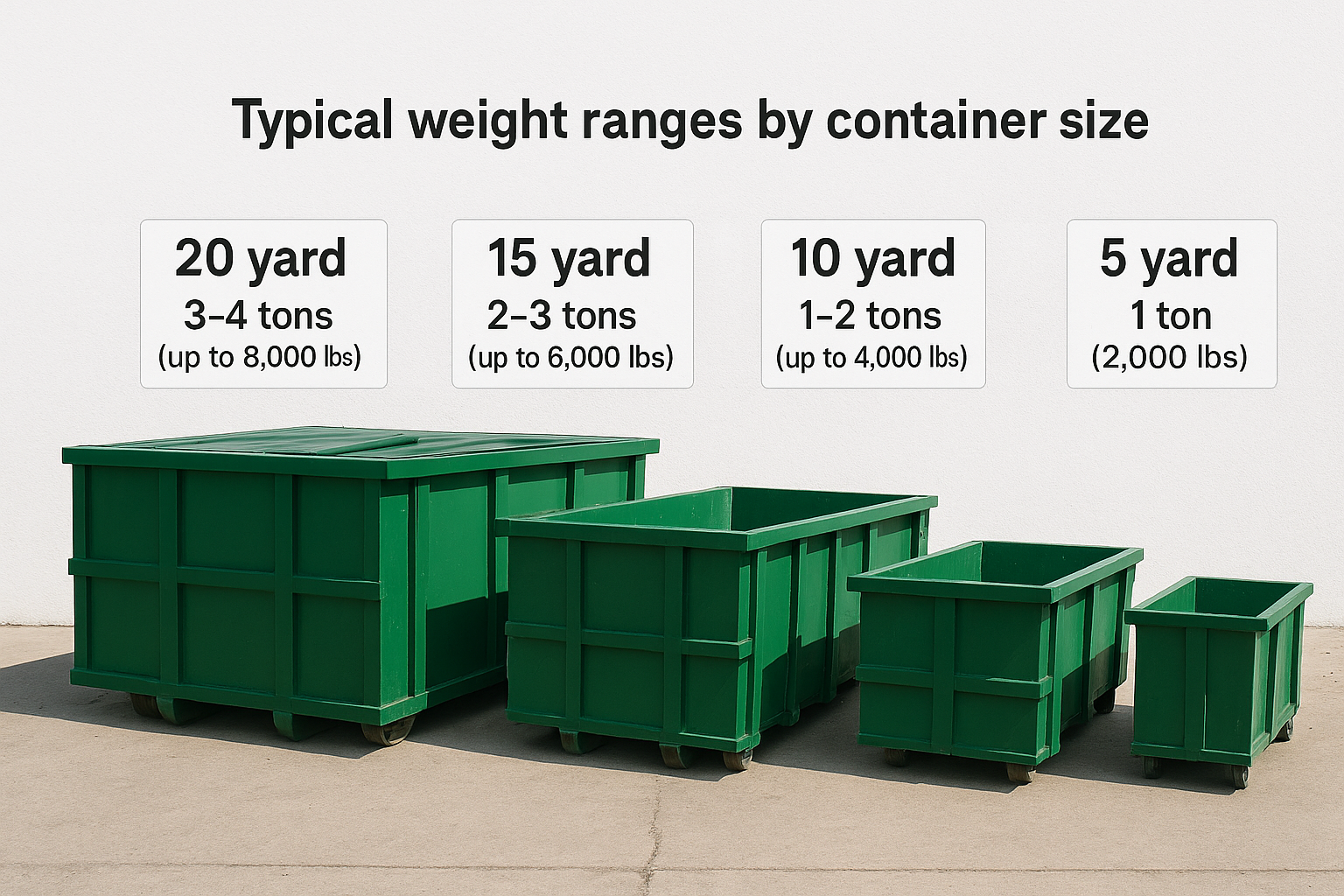
The table below shows standard weight ranges for four common roll-off sizes. These figures reflect industry averages, so your specific rental agreement may set a lower included tonnage than the container’s physical ceiling.
| Dumpster Size | Typical Weight Limit | Common Uses |
|---|---|---|
| 5-yard | 1 ton (2,000 lbs) | Small cleanouts, single-room purges |
| 10-yard | 1-2 tons (up to 4,000 lbs) | Bathroom remodels, small decks |
| 15-yard | 2-3 tons (up to 6,000 lbs) | Kitchen gut-outs, flooring removal |
| 20-yard | 3-4 tons (up to 8,000 lbs) | Full home cleanouts, roofing jobs |
Always confirm the included tonnage with your provider before you book, because the number in your rental agreement is what triggers overage fees, not the container’s rated physical maximum.
The gap between a container’s physical limit and your rental’s included tonnage is where most unexpected charges come from.
How debris type changes dumpster weight fast
Volume and weight are two separate variables, and your debris type determines which one you hit first. Certain materials will max out how much weight a dumpster can hold well before the container looks full, which is why knowing what you’re throwing away matters as much as how much.
Dense materials reach the weight ceiling fast
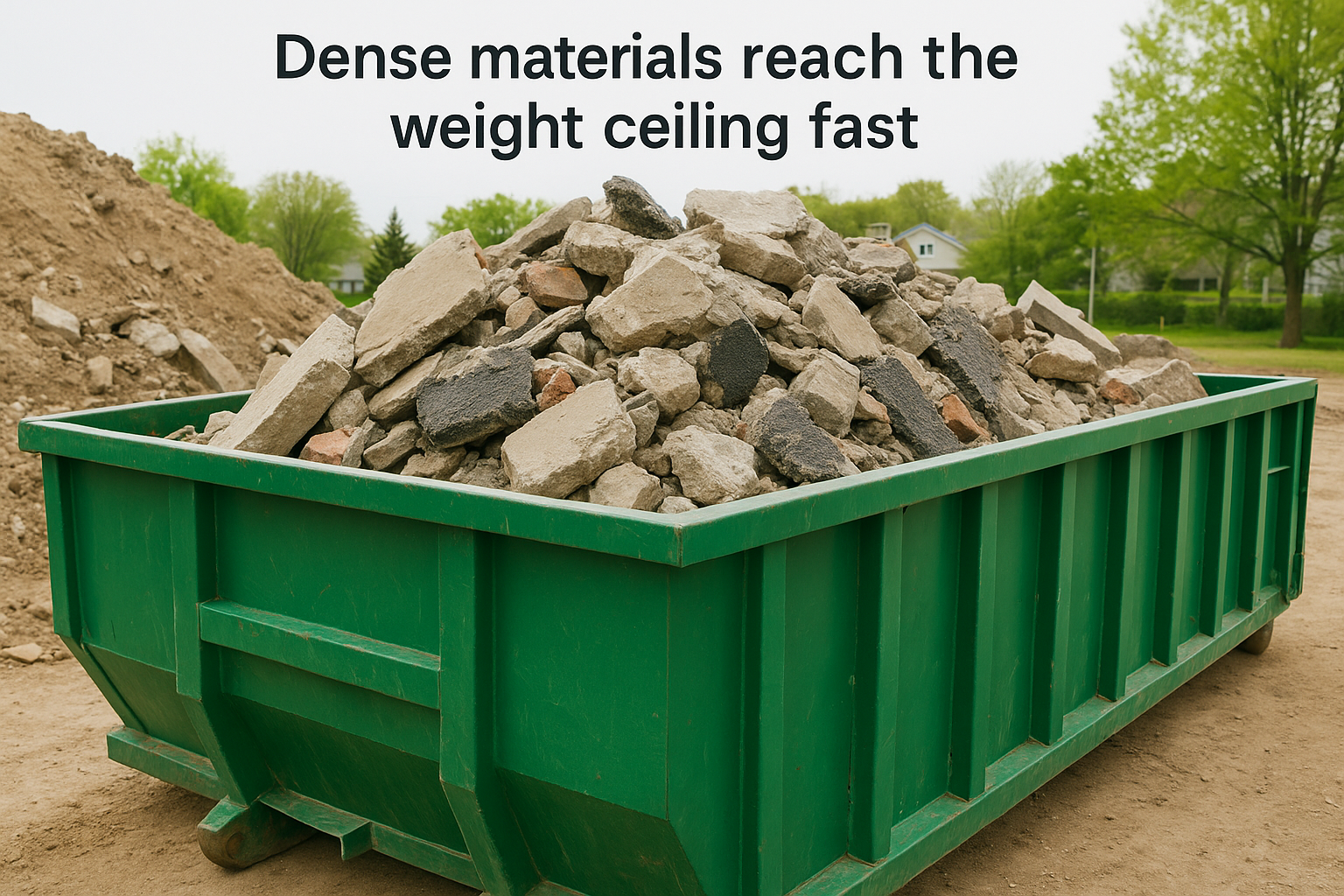
Concrete, dirt, brick, and asphalt are the densest common debris types. One cubic yard of concrete weighs roughly 4,000 pounds, so a modest pile of broken slabs can max out a 5-yard container before it looks half full. Roofing shingles run 150 to 400 pounds per square, making roof tear-offs especially weight-intensive.
Common debris weights per cubic yard:
- Concrete/asphalt: 3,500-4,500 lbs
- Dirt/gravel: 2,000-3,000 lbs
- Shingles: 1,500-2,500 lbs
- Drywall/lumber: 500-1,000 lbs
- Furniture/junk: 200-500 lbs
Dense debris like concrete will hit your weight limit long before the container looks full.
Light debris gives you more flexibility
General household junk, furniture, and bagged trash weigh far less per cubic yard, so you can often fill a container to the brim without hitting the weight ceiling. Lumber and drywall behave similarly, making them manageable across most dumpster sizes without triggering overage charges.
Mixing light and heavy materials in the same load can still push you over the weight limit unexpectedly, so track what you’re tossing in as you fill the container.
How to stay under the limit and avoid fees
Knowing how much weight a dumpster can hold is only half the equation. The other half is actively managing what goes in. Before you book a container, estimate the weight of your primary debris type using the figures in the section above, then compare that estimate against the included tonnage in your rental agreement. That one step alone catches most overage situations before they happen.
Estimate your debris weight before you call, not after the container is sitting in your driveway.
Separate heavy debris from general junk
Dense materials like concrete, dirt, and shingles load up quickly, so isolating them from lighter junk gives you more control over your total weight. If you have both heavy and light materials, consider loading heavy debris first and stopping when you approach the weight limit, then handling the remainder separately or with a second container.
Use the right dumpster size from the start
Renting too small a container and overpacking it costs more than stepping up to the next size. Talk to your rental provider about the specific debris you’re removing, and let them recommend the right container based on both volume and weight. A five-minute conversation upfront saves you from unexpected charges at pickup.
Key takeaways and next steps
Understanding how much weight a dumpster can hold comes down to three things: container size, debris type, and the tonnage included in your rental agreement. Weight limits and volume capacity are separate variables, and hitting one before the other is what catches most renters off guard and triggers unexpected charges.
Dense materials like concrete, dirt, and shingles reach the weight ceiling fast, often before the container looks half full. Knowing your debris type before you book is the single most effective way to avoid overage fees and project delays. If you’re unsure which size fits your project, a five-minute conversation with a local provider beats guessing, and often saves you money.
Cape Cod and Plymouth homeowners and contractors can get straight answers on sizing, weight limits, and transparent pricing before committing to anything. Book a dumpster rental with Dump Express and get the right container for your project without the guesswork or the surprise fees.