
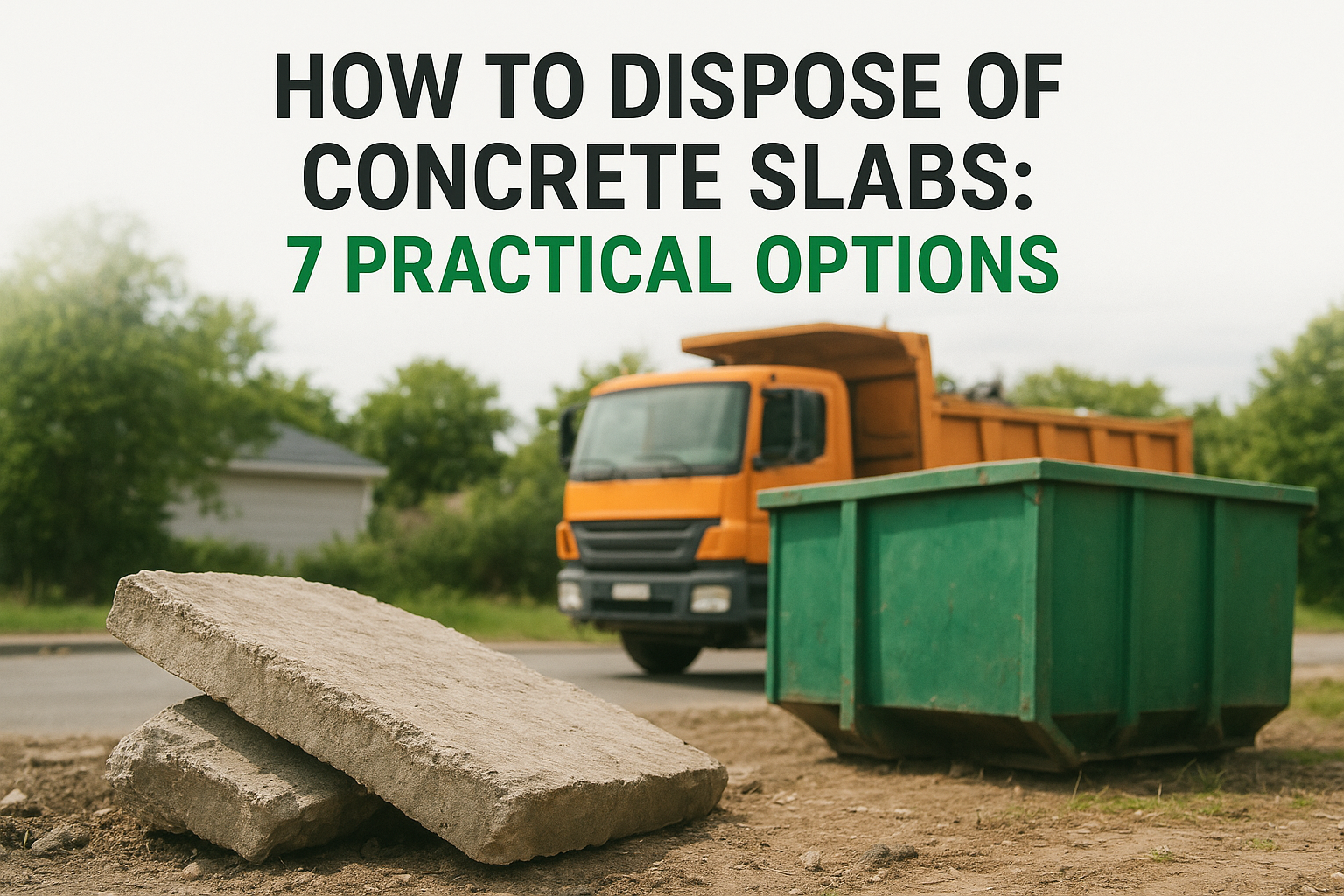
That old patio slab or cracked driveway isn’t going anywhere on its own, and it’s heavier and more stubborn than most homeowners expect. If you’re researching how to dispose of concrete slabs, you’ve probably already learned that concrete can’t just go in your regular trash pickup or curbside bin. It’s dense, it’s classified as construction debris in most towns, and the wrong disposal choice can mean fines or a truck that turns around at the transfer station.
The good news is you have real options, and picking the right one depends on the size of the job, your timeline, and whether you’re doing the work yourself or hiring it out. We’ll walk through seven practical methods, from renting a dumpster to hiring a junk removal crew to finding a recycler who’ll take broken concrete off your hands, sometimes for free.
Below, you’ll find the pros and cons of each approach, plus realistic cost expectations for Cape Cod and Plymouth area projects. If you’re removing a patio, breaking up a driveway, or clearing debris from a renovation, this guide gives you the information to choose the option that fits your project instead of guessing and paying for it later.
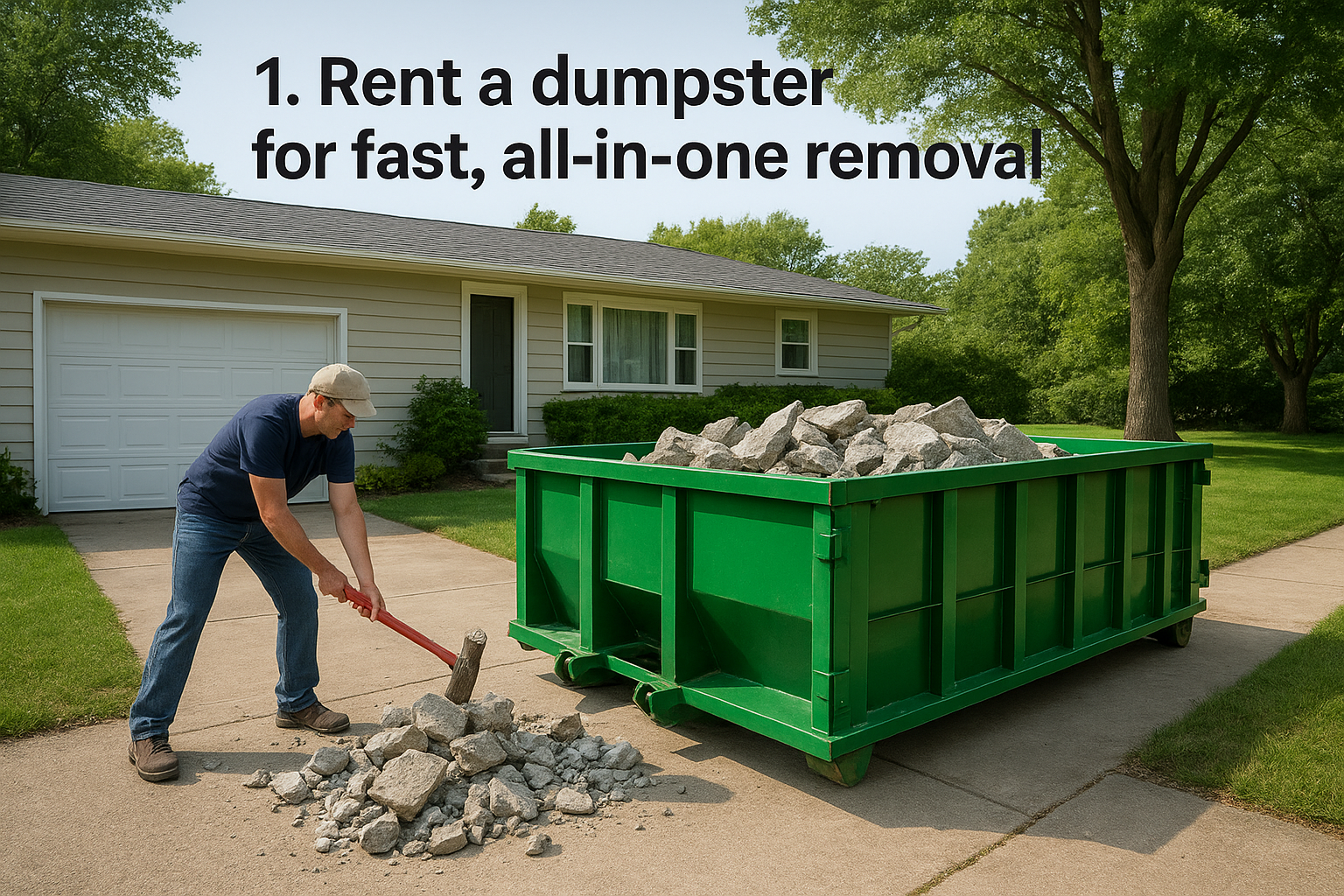
1. Rent a dumpster for fast, all-in-one removal
A dumpster rental is usually the fastest way to figure out how to dispose of concrete slabs when you’re breaking up a patio, walkway, or driveway yourself. You get a container dropped at your property, you load it at your own pace, and someone hauls it away when you’re done. No repeat trips to a transfer station, no borrowed truck, no guessing about weight limits on a trailer that wasn’t built for masonry.
How it works
A company like Dump Express delivers a roll-off container to your driveway or curb on a scheduled day. You break up the slab with a sledgehammer, jackhammer, or rented concrete breaker, then load the broken pieces directly into the dumpster. Once you’re finished, or once the rental period ends, the company picks it up and takes the debris to a facility that processes construction material. Concrete-specific dumpsters are typically smaller than general debris containers because concrete is so heavy, so many providers cap what you can load or charge by the ton past a certain point.
Best for
This option suits homeowners tackling a DIY concrete removal project on their own schedule, whether it’s a single patio slab, a small walkway, or a section of driveway. It also works well for contractors who want a dedicated container on-site during a renovation instead of coordinating multiple hauling trips.
Typical cost
Pricing depends on the size you need and how much concrete you’re loading, since weight drives the cost more than volume does with this material.
| Dumpster size | Typical concrete load | Best for |
|---|---|---|
| 5-yard | Small patio or walkway section | Light residential jobs |
| 10-yard | Standard driveway apron or patio | Most homeowner projects |
| 15-yard | Larger driveway or multiple slabs | Bigger renovation jobs |
| 20-yard | Full driveway tear-out | Contractor-scale demolition |
A dumpster rental turns a multi-day concrete disposal headache into a one-drop, one-pickup job.
Expect town-specific pricing to vary across Cape Cod and Plymouth, so ask for a quote based on your address rather than a generic estimate.
What to keep in mind
Concrete’s weight is the biggest variable here, and it catches people off guard. A full 10-yard dumpster loaded with dirt or household junk might weigh a fraction of the same container filled with broken concrete. Ask upfront about weight limits and overage charges before you fill it past the line. It also helps to confirm the yard has room for delivery and pickup trucks, since narrow driveways or tight lots common in older Cape Cod neighborhoods can affect placement. A quick call to a local provider who knows the area’s access challenges saves you from a surprise on pickup day.
2. Hire a junk removal or man and van service
If breaking up a slab yourself sounds like more effort than you want to put in, a junk removal crew can handle the whole job, from demolition to hauling. This is the hands-off answer to how to dispose of concrete slabs when you’d rather write a check than rent equipment.
How it works
A two-person crew shows up with a truck, breaks up the concrete on-site if it isn’t already in pieces, and loads it directly for disposal. Most junk removal companies price by volume, estimating how much space your debris takes up in their truck, and they handle the trip to a disposal or recycling facility themselves. You don’t touch a sledgehammer or coordinate a drop-off window.
Best for
This fits homeowners with a small to mid-size slab, like a shed pad, small patio, or short walkway, who want the job gone in an afternoon. It also suits anyone who’s physically unable to break and lift concrete themselves, or who simply doesn’t want the mess of a multi-day DIY project sitting in the yard.
Typical cost
Junk removal for concrete tends to run higher per cubic yard than a dumpster rental, since you’re paying for labor and disposal together. Expect pricing to scale with truck space used rather than a flat container rate.
Paying for labor upfront often costs less than the hidden expense of a delayed DIY job.
What to keep in mind
Not every junk removal company accepts concrete at all, since its weight can exceed what their trucks are rated for, so confirm this before booking. Ask how they calculate pricing, because a "minimum load" fee can make a small slab surprisingly expensive per pound compared to renting a small dumpster instead. Slabs with embedded rebar or wire mesh may also require extra cutting time, which some crews bill separately.
3. Haul it yourself to a local transfer station
If you already own a truck or trailer and don’t mind the physical work, hauling concrete to a transfer station yourself is often the cheapest way to get rid of a small slab. This route skips rental fees and crew labor entirely, but it puts the breaking, loading, and driving squarely on you.
How it works
You break the slab into pieces small enough to lift, load them into your vehicle, and drive to a local transfer station or construction debris facility that accepts concrete. Most Cape Cod and Plymouth towns operate a transfer station with a separate area for masonry and construction debris, and staff will direct you where to dump once you arrive. You’ll typically pay a per-load or per-ton fee at the gate, and some facilities require a resident sticker or permit before they’ll let you through.
Best for
This option works best for small, manageable loads, think a single walkway section or a few broken patio pieces, and for homeowners who already have a truck or trailer rated for heavy loads. It’s not realistic for a full driveway tear-out unless you’re prepared to make several trips.
Typical cost
Expect a modest dump fee per load, often based on weight, plus whatever fuel and time multiple trips cost you.
The savings on a transfer station run disappear fast once you factor in a second or third trip.
What to keep in mind
Before you load up, check a few things:
- Confirm your town’s transfer station accepts concrete, since some redirect it to a separate regional facility.
- Ask about resident-only rules, since non-residents sometimes pay higher fees or get turned away.
- Weigh your vehicle’s capacity carefully. Concrete is dense enough to overload a pickup bed or trailer faster than you’d expect.
4. Recycle at a concrete and aggregate facility
Concrete doesn’t have to end up buried in a landfill. Many regions run dedicated aggregate recycling facilities that crush old concrete into gravel, base material, or fill for new construction projects. If you’re focused on how to dispose of concrete slabs responsibly rather than just cheaply, this is often the most sustainable route available.
How it works
You (or your hauler) drop broken concrete at a facility equipped with a crusher, sometimes the same site as a quarry or landscaping supply yard. Workers sort out contaminants like rebar, wood, or trash, then feed the clean material through a crusher that turns it into reusable aggregate. That crushed product often gets sold right back into the local market for driveway base, drainage fill, or road work, which keeps the material in circulation instead of taking up landfill space.
Best for
This option suits homeowners and contractors who want an environmentally conscious disposal method and don’t mind a short drive to a specialty facility instead of the nearest transfer station. It’s also a good fit for larger loads, since many aggregate facilities charge lower per-ton rates than general waste disposal sites.
Typical cost
Recycling fees for clean concrete typically run lower than landfill tipping fees, and some facilities accept small loads free of charge. Pricing usually depends on weight and whether the concrete is truly clean, meaning free of rebar, wire mesh, or attached materials like brick or tile.
Clean, contaminant-free concrete is often the cheapest material you can dispose of, because facilities want it back as raw aggregate.
What to keep in mind
Most facilities are strict about contamination. A slab with embedded rebar, mesh, or painted surfaces may get rejected or hit with a surcharge, so it pays to knock out reinforcement before you load up. Not every facility is open to the public, either. Some serve contractors only or require advance scheduling, so a quick phone call before you drive out saves a wasted trip.
5. Repurpose the slabs right in your yard
Sometimes the cheapest disposal method is no disposal at all. If you’re still weighing how to dispose of concrete slabs, consider that broken concrete has real value as a building material right where it sits, and skipping removal entirely saves you money and labor.

How it works
Broken slabs get a second life as retaining walls, garden borders, or the base layer for a new patio. Larger chunks stack like fieldstone to hold back a sloped yard, while smaller pieces work as stepping stones or fill under a gravel path. Some homeowners crush leftover pieces themselves with a sledgehammer to create a compactable base layer for a shed foundation or new walkway, which cuts down on the amount of debris you need to haul away later.
Best for
This suits homeowners with a landscaping project already planned and a slab that’s breaking apart in usable, flat pieces rather than crumbling into rubble. It’s also a good fit if you’ve got the patience for a project that unfolds over a few weekends instead of one afternoon.
Typical cost
Repurposing costs you almost nothing beyond your own time and maybe a rented breaker or wheelbarrow rental. Compare that to hauling fees elsewhere:
| Method | Typical cost | Labor required |
|---|---|---|
| Repurpose on-site | Tool rental only | High |
| Dumpster rental | Container fee | Moderate |
| Recycling facility | Per-ton fee | Moderate to high |
The concrete you never have to move is the cheapest concrete to dispose of.
What to keep in mind
Not every slab breaks into usable pieces. Older, thinner concrete tends to shatter into unusable chunks, while thicker slabs with good rebar spacing hold together in workable sections. Check your town’s zoning rules before building a retaining wall of any real height, since some Cape Cod towns require permits once a wall exceeds a few feet.
6. Give away or sell the slabs locally
Someone in your area probably wants what you’re trying to get rid of. Landscapers, hobby builders, and DIY homeowners regularly search for free concrete slabs to use as fill, garden edging, or a base for their own projects, and connecting with one of them solves your disposal problem without a truck or a fee.
How it works
Post your slabs on a local classifieds site, a town Facebook group, or a community board with a clear description of size, thickness, and whether it’s broken or intact. Include a few photos and note if you’ll help load it or if the buyer needs to bring their own equipment. Most people arrange a pickup window within a few days, and you’re left with an empty spot in your yard and no hauling bill.
Best for
This works best for homeowners with flexible timelines, since you’re waiting on someone else to show interest and schedule pickup. It’s also a strong fit if your slab broke into large, intact, or stackable pieces that have obvious reuse value, rather than crumbled rubble that’s harder to sell.
Typical cost
Giving concrete away costs nothing, and some sellers even charge a small fee for larger, intact slabs that are clearly useful for retaining walls or fire pit bases.
Concrete someone else hauls away for free is concrete you never pay to dispose of.
What to keep in mind
A few practical points to plan around:
- Loading responsibility should be clear upfront, since most buyers expect you to have it accessible, not buried under other debris.
- Timelines can drag, so this isn’t the right choice if you need the space cleared by a specific date.
- Liability matters if someone injures themselves loading heavy pieces on your property, so stay present during pickup.
7. Bring in a demolition contractor for large jobs
When you’re dealing with an entire driveway, a full basement floor, or a foundation slab instead of a single patio, the job outgrows a DIY weekend fast. A demolition contractor brings the equipment and crew to break, load, and remove concrete at a scale that would take you weeks to handle alone, and figuring out how to dispose of concrete slabs at this size almost always means calling in professional help.
How it works
A demolition contractor shows up with heavy equipment like a skid steer, hydraulic breaker, or excavator, depending on the slab’s thickness and size. The crew breaks the concrete into manageable pieces, loads it into their own trucks or a rented dumpster on-site, and hauls it to a disposal or recycling facility as part of the job. Most contractors handle permitting, utility checks, and site cleanup too, so you’re not left figuring out separate logistics for each piece of the project.
Best for
This option suits large-scale removals, think a full driveway, a pool deck, or a home foundation, where the volume and equipment needed exceed what a rented dumpster or junk removal crew can reasonably manage. It also fits time-sensitive renovation projects where you need the old concrete gone before other trades can start work.
Typical cost
Demolition contractor pricing runs higher than any other option on this list, since you’re paying for equipment, skilled labor, and disposal all together, but it also gets the biggest jobs done in the fewest days.
Bigger jobs need bigger equipment, and trying to save money with hand tools on a full driveway usually costs more time than it saves.
What to keep in mind
Get multiple quotes before hiring, since pricing varies widely based on equipment needs and site access. Confirm whether disposal fees are included in the quote or billed separately, and ask about timeline commitments if your renovation schedule depends on the tear-out finishing on time.
Finding the right fit for your project
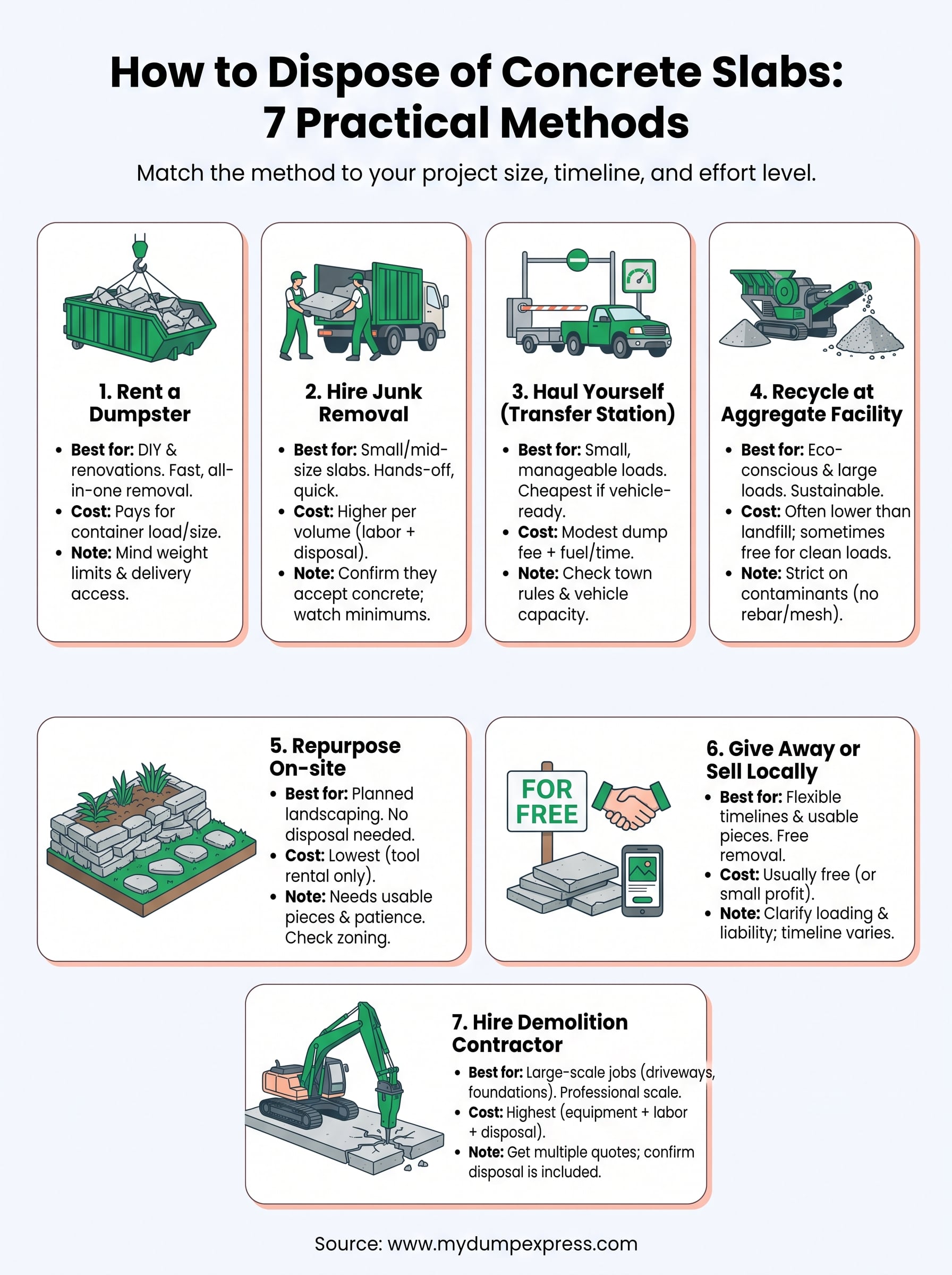
Seven options, one decision: match the method to your slab size, timeline, and how much physical work you want to take on. A small patio section might disappear with a weekend of DIY hauling to the transfer station, while a full driveway tear-out almost always calls for a dumpster rental or demolition contractor. Recycling and repurposing save money and keep material out of landfills when your project allows the extra time.
Whatever route you choose, don’t guess on sizing or pricing. Concrete’s weight punishes underestimates fast, turning a simple job into overage fees or a second trip you didn’t budget for. If you’re leaning toward the dumpster route, a local provider who already knows Cape Cod driveways, town rules, and disposal facilities takes that guesswork off your plate. Get a quote from Dump Express and get your slab removal scheduled instead of stuck in research mode.