
Every construction job produces waste you can’t just pile in the driveway. Shingles, drywall, lumber scraps, and old fixtures add up fast, and most towns won’t let you leave them curbside. If you need to rent a dumpster for construction debris, you’re probably weighing size, cost, and whether the company you call actually knows local rules, not just a national call center reading a script.
Here’s the short answer: contractors and homeowners tackling renovation or demolition work typically need a 10-yard to 20-yard dumpster, priced by weight and location, with pickup scheduled around when disposal facilities are open. The right size depends on your project scope, and guessing wrong means paying for a second haul or an overage fee you didn’t budget for.
This guide breaks down what actually determines your rental cost, how to match dumpster size to your specific project, whether it’s a bathroom gut job or a full teardown, and which materials come with restrictions or surcharges. We’ll also cover what separates a dependable local provider from one that leaves you guessing about delivery windows and hidden charges.
Why renting a dumpster matters for construction debris
Construction debris isn’t regular trash, and treating it that way creates problems fast. Weight limits, disposal fees, and local ordinances all work differently for construction waste than for household garbage, which is why a dedicated dumpster rental exists in the first place. Skip it, and you’re stuck hauling loose debris in a pickup truck bed, making multiple trips to a transfer station, and paying per-load fees that add up faster than a single rental would.
The real cost of skipping proper disposal
Homeowners and contractors who try to manage debris without a dumpster usually underestimate the volume. A single bathroom remodel can generate over a ton of tile, drywall, and fixtures. Renting a dumpster consolidates that waste into one container, one pickup, and one predictable invoice instead of a dozen scattered trips.
A dumpster rental turns unpredictable debris hauling into a single, scheduled cost you can plan around.
Local rules you can’t ignore
Most Cape Cod and Plymouth-area towns have specific requirements about where debris can sit, how it’s covered, and what facilities accept it. Some materials, like shingles or treated lumber, require separate handling at certain disposal sites. Working with a company that already understands these town-specific regulations saves you from fines or a container that gets flagged before pickup.
Keeping the job site safe and efficient
Piles of debris around a job site slow crews down and create trip hazards, especially on active renovation or demolition sites. Having a dumpster on-site gives workers a single, consistent place to toss materials as the job progresses, which keeps the crew moving and the site walkable. Contractors juggling tight timelines depend on that efficiency just as much as homeowners depend on not tripping over old drywall in their own driveway.
Ultimately, the dumpster isn’t just a container. It’s the difference between a controlled cleanup and a project that spirals into extra labor, extra trips, and extra cost.
How to rent a dumpster for your construction project
Renting a dumpster shouldn’t feel complicated, but plenty of companies make it that way with vague quotes and unclear timelines. Getting it right comes down to a handful of steps that any reliable provider will walk you through before you commit to anything.
The basic rental process
Start by figuring out your project scope, then match it against dumpster sizes and expected debris volume. A good provider will ask about the type of job (roof tear-off, kitchen gut, full demolition) before recommending a size, not after you’ve already signed. Here’s what the process typically looks like:
- Call or request a quote online with your project type, address, and rough timeline.
- Confirm size and price based on your town and debris type, not a generic flat rate.
- Schedule delivery, ideally with same-day or next-day availability if your timeline is tight.
- Load the dumpster as work progresses, keeping debris below the fill line.
- Arrange pickup on a day disposal facilities are open, so there’s no delay waiting on your driveway.
A rental company that explains pricing and pickup scheduling upfront is one you can trust to show up on time.
Questions to ask before booking
Ask about rental period length, overage fees, and whether the price includes delivery and pickup both ways. Vague answers here are a red flag.
Choosing the right dumpster size for the job
Sizing a dumpster wrong is the most common (and most expensive) mistake on a construction project. Order too small, and you’re paying for a second haul mid-job. Order too big, and you’re covering yard space and cost you didn’t need. Matching container size to debris volume is the single decision that determines whether your rental feels effortless or frustrating.
Matching size to project type
Most residential jobs fall into a predictable range, so use your project type as a starting point rather than guessing at cubic yards.
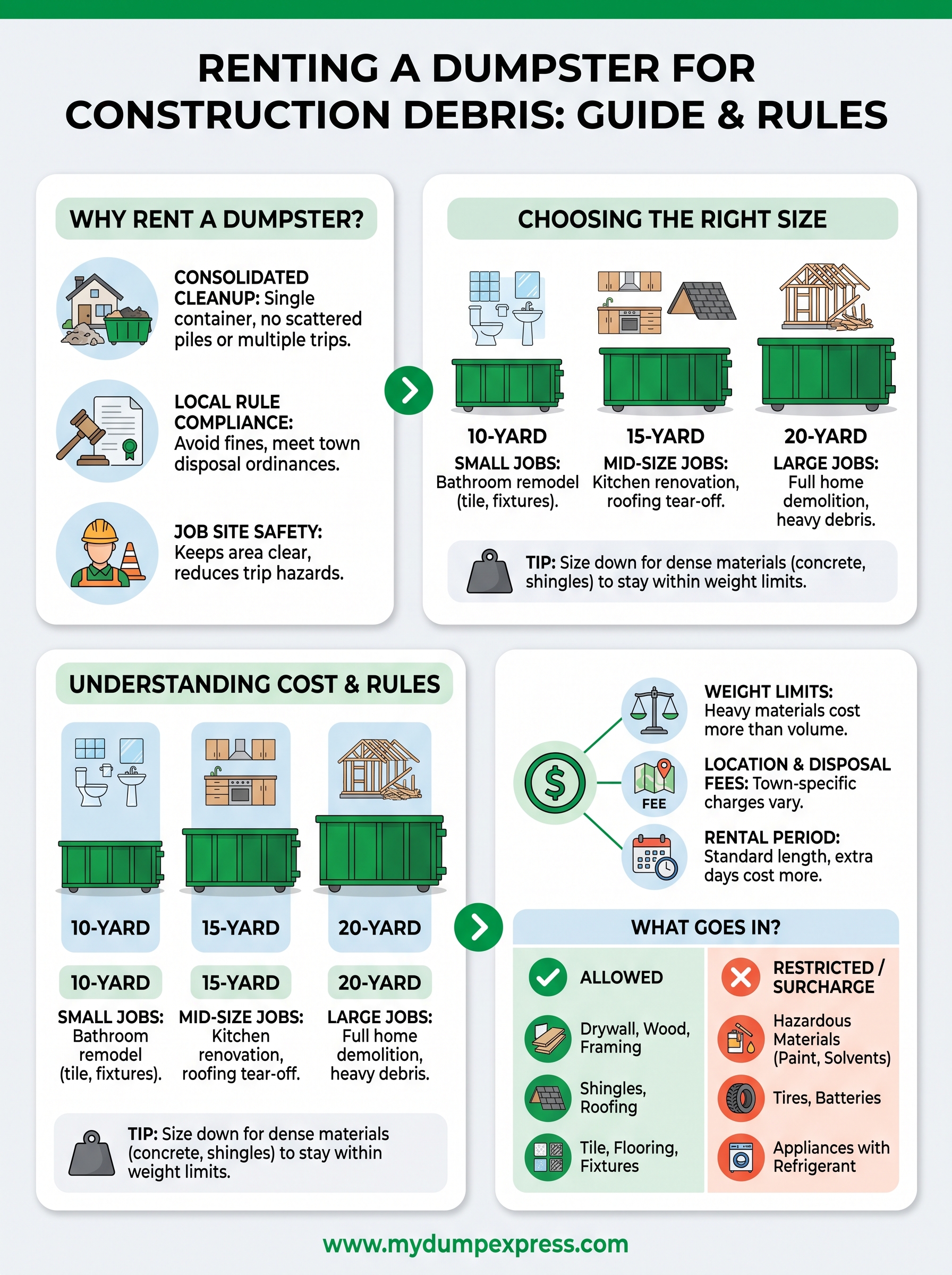
| Project Type | Recommended Size | Typical Load |
|---|---|---|
| Bathroom remodel | 10-yard | Tile, drywall, fixtures |
| Kitchen renovation | 15-yard | Cabinets, countertops, flooring |
| Roof tear-off | 15-yard to 20-yard | Shingles, underlayment |
| Full home demolition | 20-yard | Framing, mixed debris |
Choosing the wrong dumpster size costs more than choosing the wrong contractor tool, because you can’t return it halfway through the job.
When to size up
Dense materials like concrete, brick, or roofing shingles fill weight limits before they fill physical space, so a smaller container often makes more sense even on a large job. Talk through your specific debris mix with the rental company before booking. Experienced local providers ask the right questions upfront and steer you toward the size that avoids overage fees, not the one that pads their invoice.
What affects dumpster rental costs
Cost isn’t just about which size you pick. Weight limits, your town’s disposal fees, and rental duration all factor into the final price, which is why two identical-looking quotes can land far apart. A reliable provider breaks these costs down before delivery instead of surprising you with an invoice full of add-ons.
Weight matters more than size
Construction debris gets priced by weight, not just volume, because heavy materials like shingles or concrete can max out a container’s limit long before it looks full. Two 15-yard dumpsters loaded with drywall versus roofing tear-off will cost differently even though they’re the same size.
The size on the container tells you the price range; the weight ticket tells you the actual bill.
Location and length of rental
Where you live and how long you keep the dumpster both move the price up or down. Consider these factors before booking:
- Town-specific disposal fees, since transfer stations charge differently across Cape Cod and Plymouth towns
- Rental period length, with most standard rentals running 7 to 14 days before extra-day fees apply
- Debris type, since mixed construction waste often costs less than single-material loads like pure concrete
- Delivery distance, especially for same-day requests outside a provider’s usual service area
Ask for a breakdown of these line items upfront so you’re comparing real costs, not just a low advertised rate.
What you can and can’t put in the dumpster
Most construction debris is fair game, but a handful of materials come with restrictions, surcharges, or outright bans depending on your town’s disposal facility. Knowing this before you load the container saves you from a rejected pickup or an unexpected fee tacked onto your final invoice.
What’s typically allowed
Standard construction and demolition waste fills the bulk of most rentals without issue. You can generally load:
- Drywall, wood, and framing from renovation or demolition work
- Shingles and roofing materials, though these often count toward weight limits fast
- Tile, flooring, and fixtures pulled during a remodel
- Metal scraps, which some providers price separately since recyclers pay for them
What usually needs special handling
A few materials require separate disposal or come with added cost, so flag them before booking rather than after the dumpster arrives.
- Hazardous materials like paint, solvents, or asbestos
- Tires and batteries, which most transfer stations won’t accept in mixed loads
- Refrigerators or AC units containing refrigerant
- Treated or painted lumber in some towns, due to chemical content
Knowing what’s restricted before you load the dumpster beats finding out when pickup gets delayed.
When in doubt, ask the rental company directly. A provider who knows local disposal rules will tell you upfront instead of letting you find out at pickup.
Planning your debris removal with confidence
Getting a dumpster rental right comes down to three things: the correct size for your debris, a clear price with no surprise line items, and a provider who actually knows your town’s disposal rules. Skip any one of those and you risk a second haul, an overage fee, or a container that sits full because pickup got delayed. None of that has to happen on your project.
Dump Express has spent over 20 years handling this exact process for homeowners and contractors across Cape Cod and Plymouth. Transparent, town-specific pricing and flexible scheduling mean you get a straight answer before you commit, not after the invoice arrives. Whether you’re gutting a bathroom or clearing a full demolition site, matching the right container to the job is what keeps a renovation on track instead of stalled by debris.
Ready to get your project moving? Get a quote from Dump Express today and have your dumpster on-site when you need it.