You rented a dumpster. It’s sitting in your driveway. Now you’re staring at a pile of stuff wondering what can you put in a roll off dumpster, and what might get you hit with a surcharge or flat-out refused at the disposal facility. It’s a fair question, and the answer matters more than most people think.
Here’s the reality: tossing the wrong items into a dumpster can result in extra fees, rejected loads, or even fines depending on your town’s regulations. At Dump Express, we’ve been delivering dumpsters across Cape Cod and Plymouth for over 20 years, and this is one of the most common questions our customers ask, whether they’re cleaning out a garage, tearing down a deck, or clearing a job site. We’d rather you know the rules upfront than get surprised on the back end.
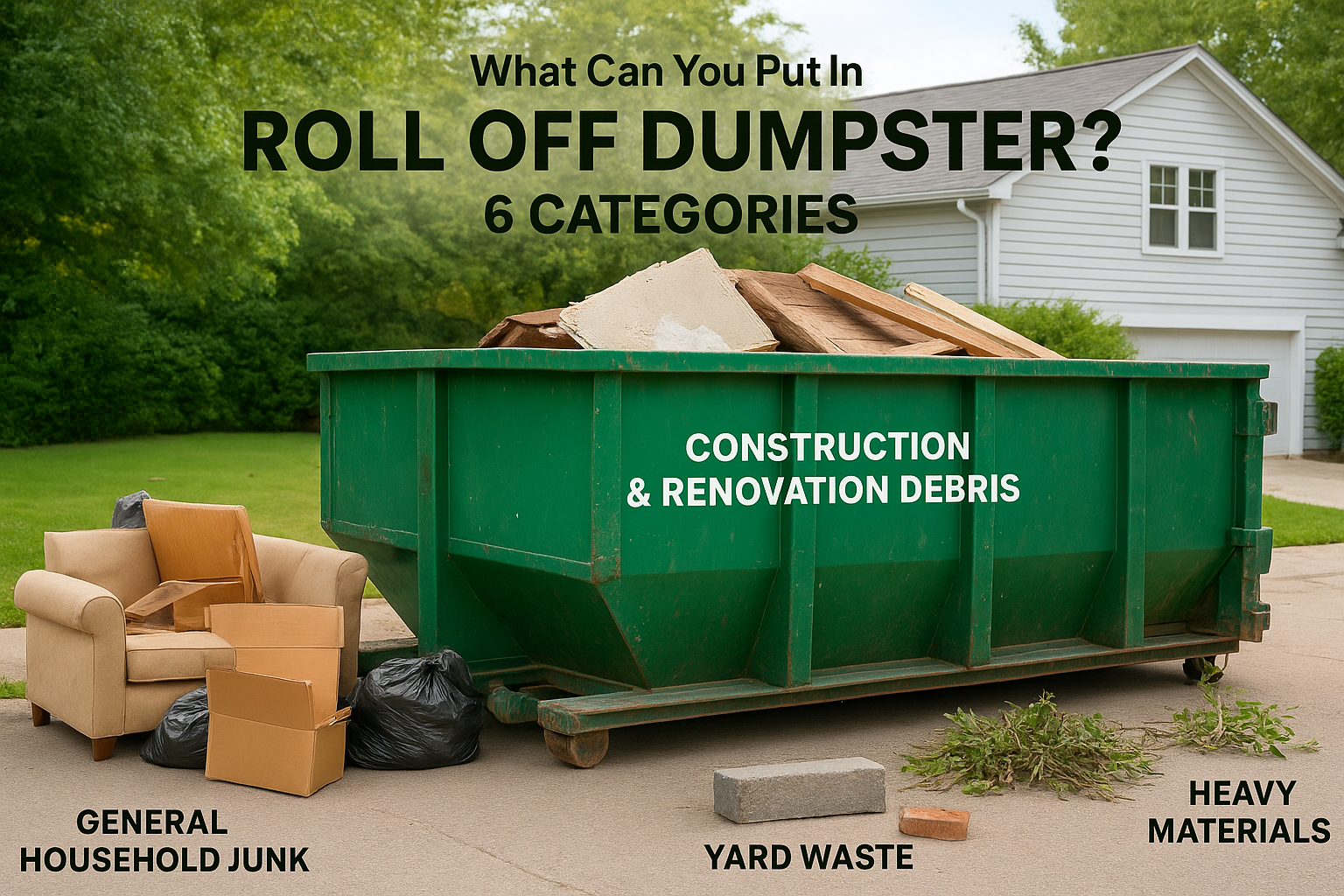
This article breaks down six categories of materials, what’s accepted, what’s restricted, and what’s banned outright, so you can fill your dumpster with confidence. Whether you’re a homeowner doing a one-time cleanout or a contractor managing debris across multiple sites, this list will help you avoid costly mistakes and keep your project moving.
1. Dump Express roll-off dumpster ground rules
Before you load a single item, you need to understand the basic rules that apply to every rental. These ground rules shape what you can put in a roll off dumpster and directly affect what you pay when the truck comes back for pickup.
What a roll-off dumpster is and when it makes sense
A roll-off dumpster is an open-top rectangular container delivered by truck directly to your driveway, job site, or property. It makes sense when your project generates more debris than bags or a pickup truck can realistically handle.
Common situations include full home cleanouts, kitchen or bathroom renovations, deck removals, and storm debris cleanup. Choosing the right size upfront prevents the cost and inconvenience of swapping containers mid-project.
How “allowed items” change by town and disposal site
Not every disposal facility accepts the same materials. Local regulations across Cape Cod and Plymouth vary by town, so an item accepted in one municipality may be flagged or surcharged in another.
What’s allowed in your dumpster depends on the disposal facility serving your town, not just general guidelines you find online.
Dump Express confirms the rules tied to your specific delivery location, which is why sharing your project type before booking helps us guide you correctly.
Weight limits, load level, and why they affect cost
Every rental includes a weight allowance built into the base price. Loads that exceed that limit trigger a per-ton overage fee. Beyond weight, filling above the container’s load line is prohibited on public roads, and anything piled above the walls must be removed before pickup can happen.
Mixing materials vs keeping loads clean and simple
Some disposal facilities apply lower tipping fees to single-material loads like clean concrete or separated yard waste. Mixed loads typically route to general waste facilities, which carry higher tipping fees and add to your final cost.
Keeping heavy debris separate from light household junk is one of the easiest ways to control what you spend on a single rental.
Quick questions to confirm before delivery day
Before your dumpster arrives, answer these quickly:
- What materials are you loading?
- Does your project include anything heavy like concrete or dirt?
- Are there any items you’re unsure about, such as paint, treated wood, or old appliances?
Sharing this with Dump Express before delivery takes two minutes and prevents costly surprises at pickup.
2. Household junk and everyday cleanup debris
Household cleanouts are one of the most common reasons people rent a roll-off dumpster. The good news is that most everyday junk loads without issue or surcharges, as long as you keep a few restricted categories separate.
What counts as household junk
Most junk in this category includes non-hazardous, non-electronic items that accumulate in homes over time. Think garage overflow, basement clutter, attic storage, and anything left behind from a move or estate cleanout.
Furniture, wood items, and non-electronic clutter
Sofas, chairs, tables, dressers, and wood-framed furniture all go in without issue. Non-electronic decorative items like mirrors, shelving, and picture frames are accepted as well.
Bagged HHGs, cardboard, and packing materials
Bagged household goods, broken-down cardboard boxes, and packing materials like bubble wrap and foam are all accepted. Keep cardboard broken down flat to save container space and keep the load manageable.
Clothes, toys, and general household throwaways
Clothing, shoes, and soft goods that aren’t worth donating can go right in. Kids’ toys, plastic storage bins, and general non-electronic household items are fine as long as they don’t contain batteries or built-in electronic components.
Common household items that trigger extra rules
A few items you might assume are fine actually carry restrictions or surcharges. Pull these out before you start loading:
- Paint cans (even partially full)
- Aerosol cans and fire extinguishers
- Fluorescent bulbs and mercury-containing items
If you’re unsure whether a specific item is accepted, contact Dump Express before delivery day, not after the dumpster is already full.
3. Construction and renovation debris
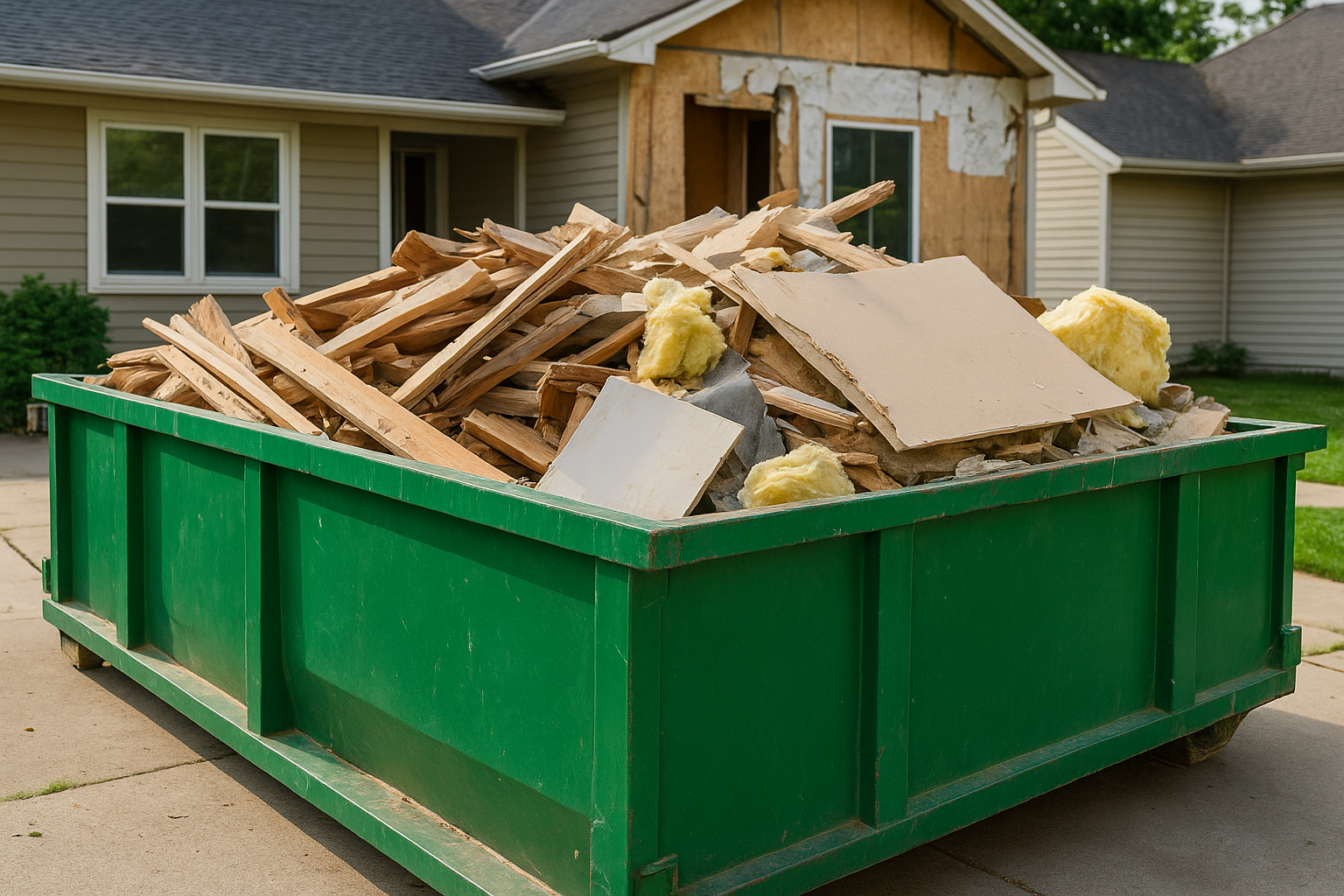
Construction and renovation projects give you some of the most straightforward answers to what can you put in a roll off dumpster. Most jobsite debris is accepted without issue, but a few materials carry specific handling rules that can affect your final cost if you load them carelessly.
Lumber, plywood, and framing scraps
Lumber, plywood, and dimensional framing wood all go in without issue. Longer pieces create problems when they stick out past the load line, so cut oversized boards down before loading when possible.
Drywall, insulation, and plaster debris
Standard drywall and fiberglass batt insulation are accepted in most loads. Plaster from older walls is also fine, though it adds significant weight fast, so load it early and fill around it with lighter materials.
If you’re working on a home built before 1980, have insulation or textured surfaces tested for asbestos before loading anything into the dumpster.
Flooring, tile, and carpet
Hardwood flooring, ceramic tile, and vinyl planks are all accepted. Carpet and padding are fine too, but roll carpet tightly and tie it off so it doesn’t unroll and consume excess space in the container.
Cabinets, vanities, and non-hazardous fixtures
Kitchen cabinets, bathroom vanities, sinks, toilets, and standard fixtures are all accepted. Remove any residual chemicals or cleaning products stored inside cabinets before you load them.
Jobsite loading tips that prevent pickup issues
Load heavy debris along the bottom of the container and stack lighter materials on top. Keep everything below the fill line, and distribute weight evenly across the container floor to prevent shifting during transport.
4. Yard waste and storm cleanup debris
Yard cleanups and storm jobs generate debris fast, and most organic material is accepted when you’re sorting out what can you put in a roll off dumpster. A few weight and separation rules apply, though, and ignoring them adds cost.
Branches, brush, leaves, and small limbs
Branches, brush, and bagged leaves all go in without issue. Break longer limbs into shorter sections before loading so everything fits below the load line and doesn’t create air gaps that waste container space.
Cut pieces also stack more efficiently, which means you get more material into fewer hauls.
Shrubs, roots, and stump disposal rules
Whole shrubs and root balls are accepted in most loads. Stumps are trickier because they carry dense compacted soil and moisture, which pushes your load weight up fast. Confirm stump disposal with Dump Express before loading any large root masses.
A single large root ball can add several hundred pounds to what looks like a light yard debris load.
Keeping yard debris separate when required
Some disposal facilities charge lower tipping fees for clean yard waste loads. Mixing branches and leaves with household junk or construction debris routes everything to a general waste facility, which costs more.
Wet loads and how they increase weight fast
Rain-soaked branches and muddy root balls weigh far more than dry material. Load yard debris as dry as possible, and avoid leaving the container open during wet weather to prevent unexpected weight overages at pickup.
Cleaner alternatives like mulching and composting
Leaves and light brush often work better through a chipper or a compost pile than a dumpster. Keeping lightweight organic material out of your container saves capacity for bulkier debris that genuinely needs a haul.
5. Heavy debris like brick, and concrete
Heavy materials are where what can you put in a roll off dumpster gets most complicated. Everything in this category is accepted, but weight limits make heavy debris the fastest way to exceed your rental allowance and trigger overage fees.
Concrete, brick, block and masonry
Concrete slabs, broken brick, cinder block, and cut stone are all accepted. These materials are dense, so even a small pile adds up to significant tonnage. Load them flat along the container floor and keep the layer shallow before adding lighter material on top.
Dirt, sand, and gravel and what “clean fill” means
Clean fill refers to uncontaminated soil, sand, or gravel with no debris, roots, or construction waste mixed in. Clean fill loads often qualify for lower disposal rates. Mixing dirt with other debris voids that classification and raises your tipping cost.
Confirm with Dump Express whether your fill material qualifies as clean before loading, since contaminated soil routes to a different facility.
Pavers, asphalt, and driveway debris
Concrete pavers, asphalt chunks, and broken driveway material are accepted. Asphalt weighs roughly 140 pounds per cubic foot, so a modest pile fills your weight limit quickly.
How to estimate weight before you load
A rough rule is one ton per cubic yard for heavy materials like concrete and compacted soil. Count your cubic yards before loading so you can catch a potential overage before the truck arrives.
When to split heavy materials into multiple hauls
If your project involves large quantities of concrete, dirt, or masonry, splitting into two smaller loads often costs less than one overloaded haul with overage fees tacked on. Talk to Dump Express about your volume before committing to a single container.
6. Items that do not belong in a roll-off dumpster
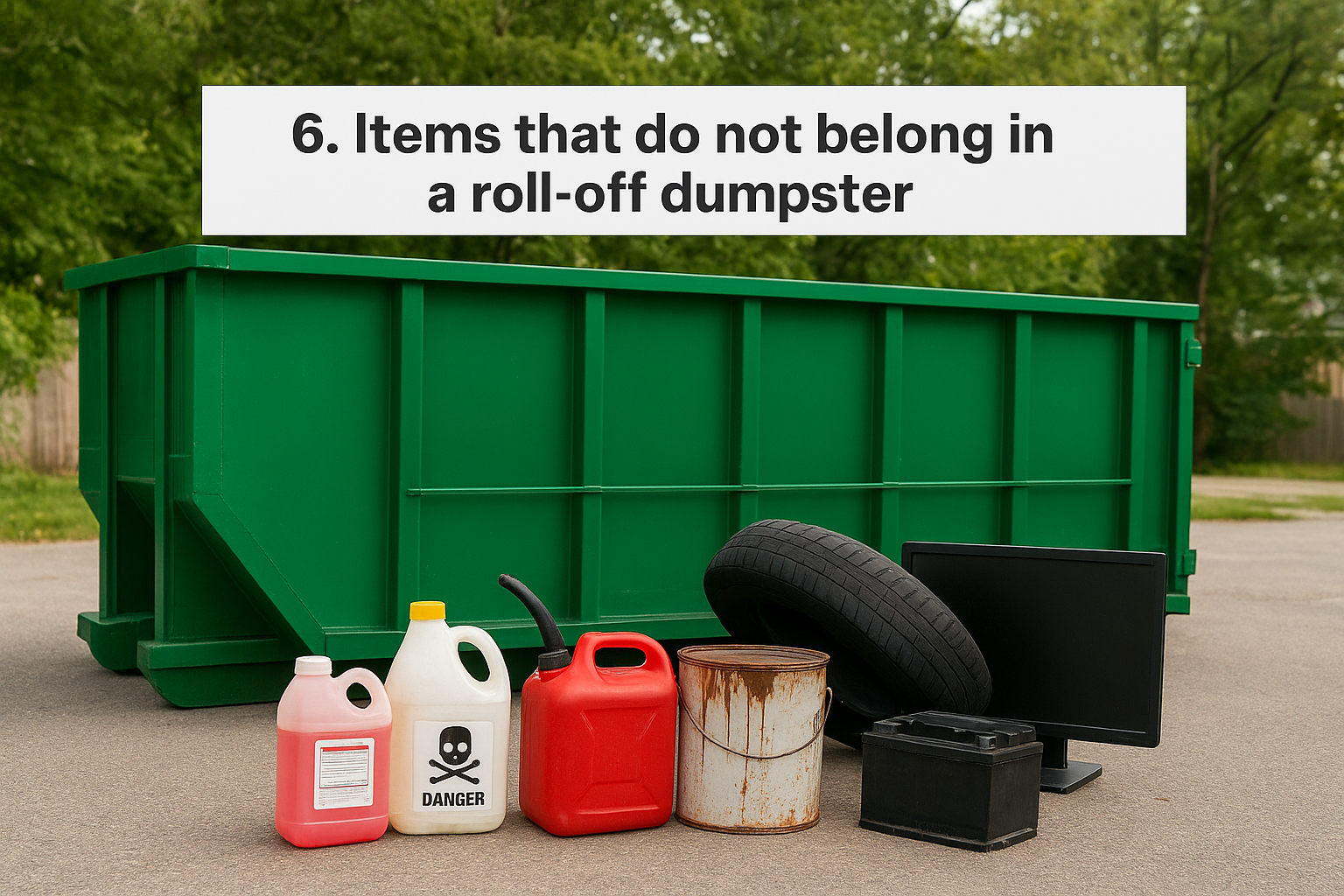
Knowing what can you put in a roll off dumpster is only half the picture. The items below are banned across most facilities, and loading them puts you at risk for rejected loads, surcharges, or fines.
Hazardous waste and anything labeled toxic or corrosive
Any product marked toxic, corrosive, flammable, or reactive on its label stays out. These materials require licensed hazardous waste disposal and cannot mix with general debris.
Liquids, oils, fuels, and propane tanks
Liquid waste of any kind, including motor oil, fuel, and hydraulic fluid, is prohibited. Empty propane tanks also stay out due to residual pressure and flammability risks.
Paint, stains, thinners, and other solvents
Liquid paint, wood stains, varnishes, and chemical thinners are not accepted. Dry, empty paint cans are generally fine, but any can with liquid remaining must go to a hazardous waste facility.
Contact your local Cape Cod or Plymouth transfer station for scheduled hazardous waste collection days.
Batteries, rechargeable devices, and lithium fire risks
Standard alkaline and lithium batteries are prohibited. Lithium-ion cells in particular pose serious fire risks during transport and at disposal facilities.
Electronics and e-waste including TVs and computers
Televisions, monitors, computers, and printers fall under e-waste regulations and require separate recycling.
Car batteries
Car batteries are always prohibited. Most auto parts retailers accept old batteries for recycling at no charge.
Appliances with refrigerant and other pressurized items
Refrigerators, air conditioners, and dehumidifiers contain refrigerant that requires certified removal before disposal.
Medical waste, needles, and biohazards
Sharps, needles, and biohazardous material cannot enter a roll-off under any circumstances.
Asbestos and any material you suspect contains asbestos
Never load material you suspect contains asbestos. Homes built before 1980 may have it in insulation, floor tiles, or textured ceilings, and removal requires licensed abatement contractors.
What to do instead in the Cape Cod and Plymouth area
Local transfer stations and hazardous waste collection events handle most prohibited items. Your town’s public works department can point you to the nearest drop-off location.
What happens if prohibited items end up in the dumpster
The disposal facility can reject your entire load, and you absorb the cost of a return haul. Dump Express will also charge a contamination fee for any prohibited items found at pickup.
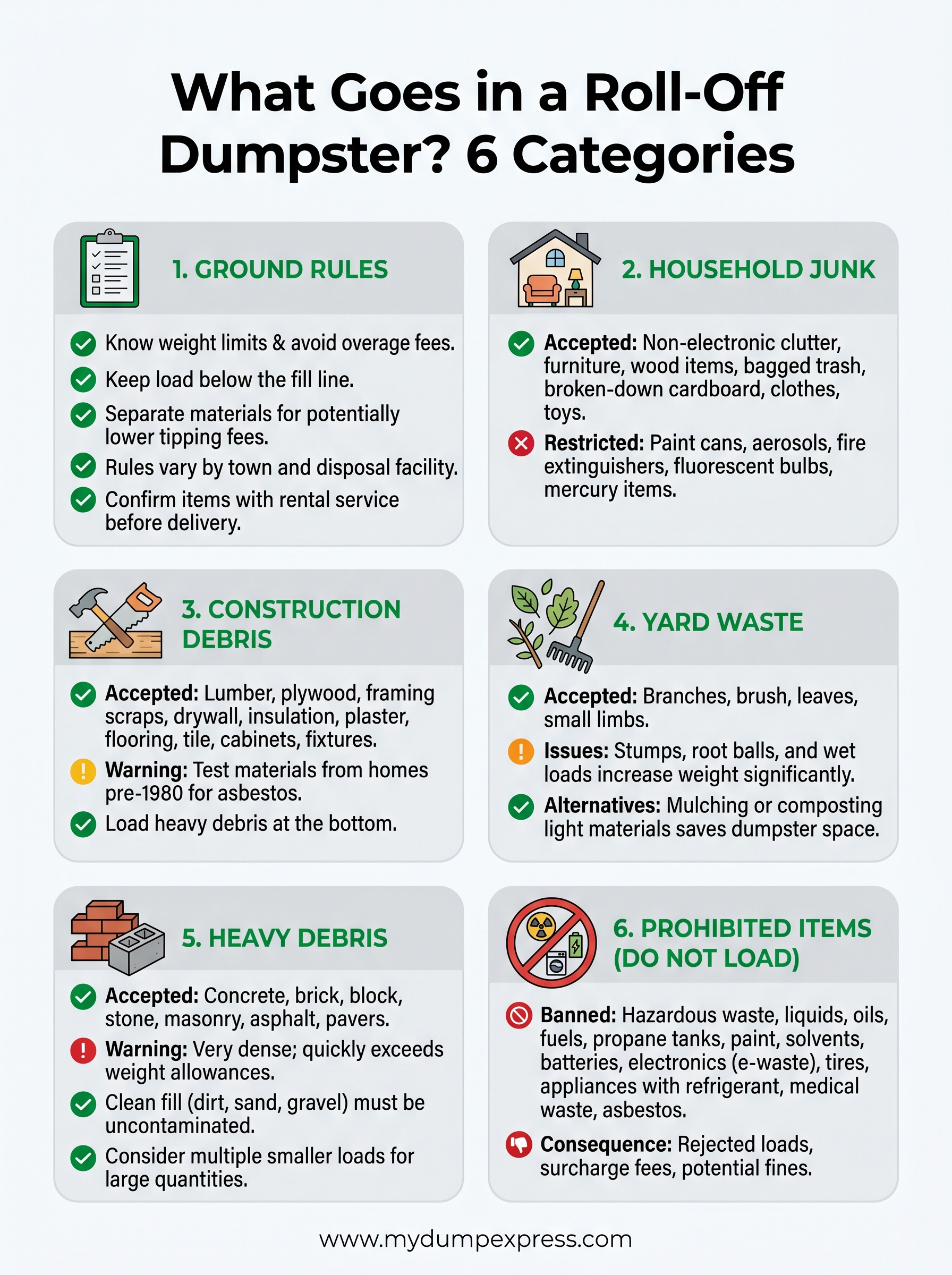
Final checklist before you load
You now have a clear picture of what can you put in a roll off dumpster and what stays out. Before your first item hits the container, run through this quick list:
- Confirm your materials with Dump Express before delivery, especially if your project involves concrete, soil, or anything you’re unsure about
- Separate heavy debris from mixed household junk to qualify for lower tipping fees
- Pull out all prohibited items including paint, batteries, electronics, and anything labeled hazardous
- Keep your load below the fill line at all times
- Break down large pieces like long boards and rolled carpet before loading
Getting these details right before delivery day prevents surcharges, rejected loads, and schedule delays. If you have questions about a specific material or need help picking the right container size, contact Dump Express before you book. A two-minute conversation upfront saves you money and hassle on the back end.