
That old fridge in the garage or the washer that finally quit, they’re not exactly something you can leave at the curb and hope for the best. Figuring out where to take old appliances matters because most towns have specific rules about how these items need to be handled, and getting it wrong can mean fines or illegal dumping charges.
The good news: you have more options than you probably think. From free municipal drop-off sites and utility buyback programs to scrap yards that pay cash, there are practical ways to get rid of appliances without overspending or breaking any rules. Some options even come to you, no hauling required.
At Dump Express, we’ve helped thousands of Cape Cod and Plymouth homeowners clear out old appliances as part of renovations, cleanouts, and moves. Below, we’ll walk you through every disposal option available, what’s free, what pays you back, and how to pick the right route for your situation. We’ll also cover when renting a dumpster makes the most sense if you’re dealing with more than just one or two items.
What counts as an appliance and what to check first
Before you start hauling anything out of your home, it helps to know exactly what you’re dealing with. Appliances fall into two broad categories, and the one your item belongs to determines which disposal rules apply and which services will accept it. Knowing this upfront helps you figure out where to take old appliances without a wasted trip or a rejected load.
Major vs. minor appliances
Major appliances, sometimes called "white goods," are the large items that run on dedicated electrical circuits or gas lines. Refrigerators, washing machines, dryers, dishwashers, ovens, ranges, water heaters, and HVAC units all fall into this group. Minor appliances are the countertop and plug-in items: microwaves, toasters, coffee makers, and window air conditioners. The key difference is that major appliances often contain refrigerants, compressor oils, or other regulated substances that require certified handling under federal EPA rules before disposal.
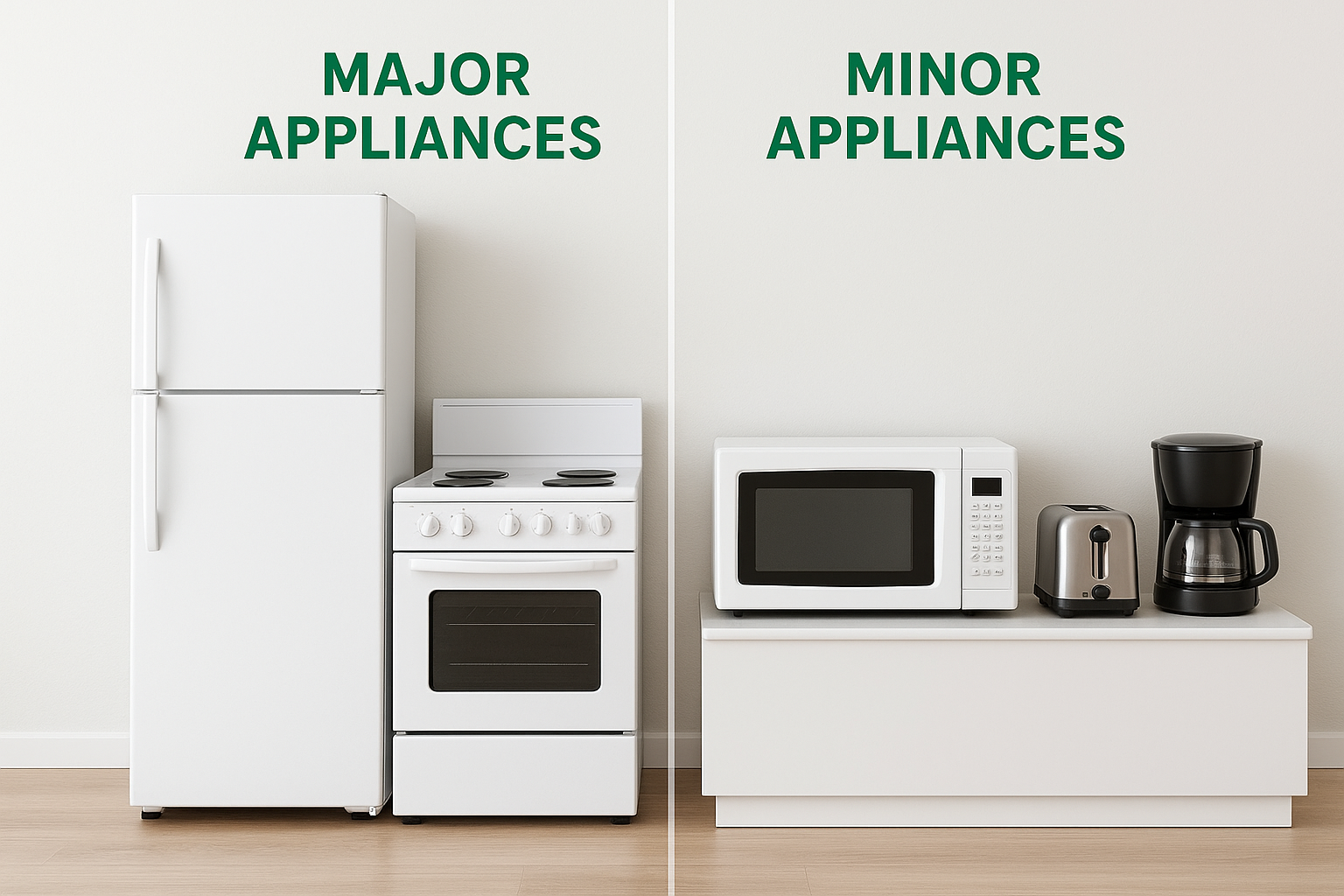
Major appliances with refrigerants must have those materials removed by a certified technician before they can be legally scrapped or disposed of.
What to check before you move it
Running through a quick checklist before you call anyone saves time and prevents surprises. Here is what to verify:
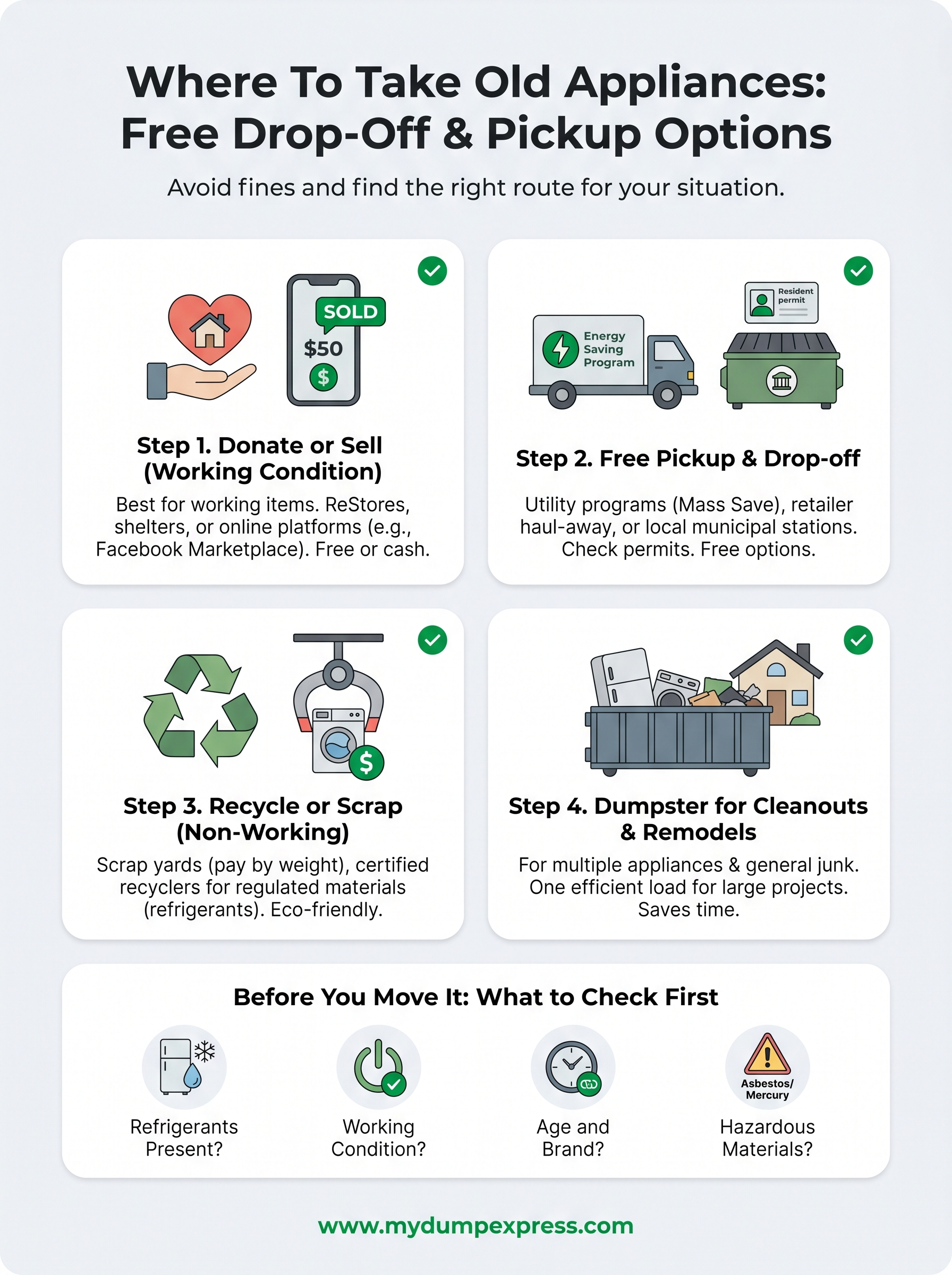
- Refrigerants present? Fridges, freezers, AC units, and dehumidifiers almost always contain refrigerants. Note the model number so a technician or scrap yard can confirm.
- Working condition? A working appliance opens up donation and resale options that a broken one does not.
- Age and brand? Appliances under 10 years old from major brands are more likely to be accepted by donation centers or resold for parts.
- Hazardous materials? Some older appliances contain asbestos insulation or mercury switches. Check the manufacture date if you are unsure.
- Local permit requirements? A few Cape Cod towns require a disposal permit or sticker before drop-off at transfer stations, so check with your town hall first.
Step 1. Decide if you can donate or sell it
Before you pay anyone to haul your appliance away, check if it still has usable life left. A working appliance in decent condition has real value, and several organizations and buyers will take it off your hands for free or even pay you for it.
Where to donate working appliances
Habitat for Humanity ReStores are one of the best options for large working appliances like refrigerators, washers, and stoves. Many locations offer free pickup if the item qualifies. Local shelters, community organizations, and thrift stores also accept smaller appliances in good working condition. Call ahead to confirm they have room and that your item meets their requirements.
If an appliance powers on and runs without major faults, donation is almost always the fastest and most responsible way to handle it.
How to sell it for cash
Platforms like Facebook Marketplace and Craigslist let you list appliances for free and reach local buyers quickly. Price a working washer or refrigerator between $50 and $150 depending on age and condition. If you want to figure out where to take old appliances for quick cash, local appliance dealers sometimes buy used units directly, especially if the brand is in demand.
Step 2. Use free pickup and city drop-off options
If selling or donating is not an option, free pickup services and municipal drop-off programs are the next best move. These options cost you nothing and keep appliances out of the landfill, which matters for both your wallet and local regulations.
Utility company and retailer pickup programs
Many utility companies on Cape Cod offer free appliance pickup as part of energy efficiency programs, particularly for old refrigerators and freezers. Mass Save, which serves most Massachusetts residents, provides free appliance recycling pickup at no charge. When you schedule a pickup, a certified technician removes the refrigerant before recycling the unit. Major retailers like Home Depot and Best Buy also offer haul-away when you purchase a replacement appliance.
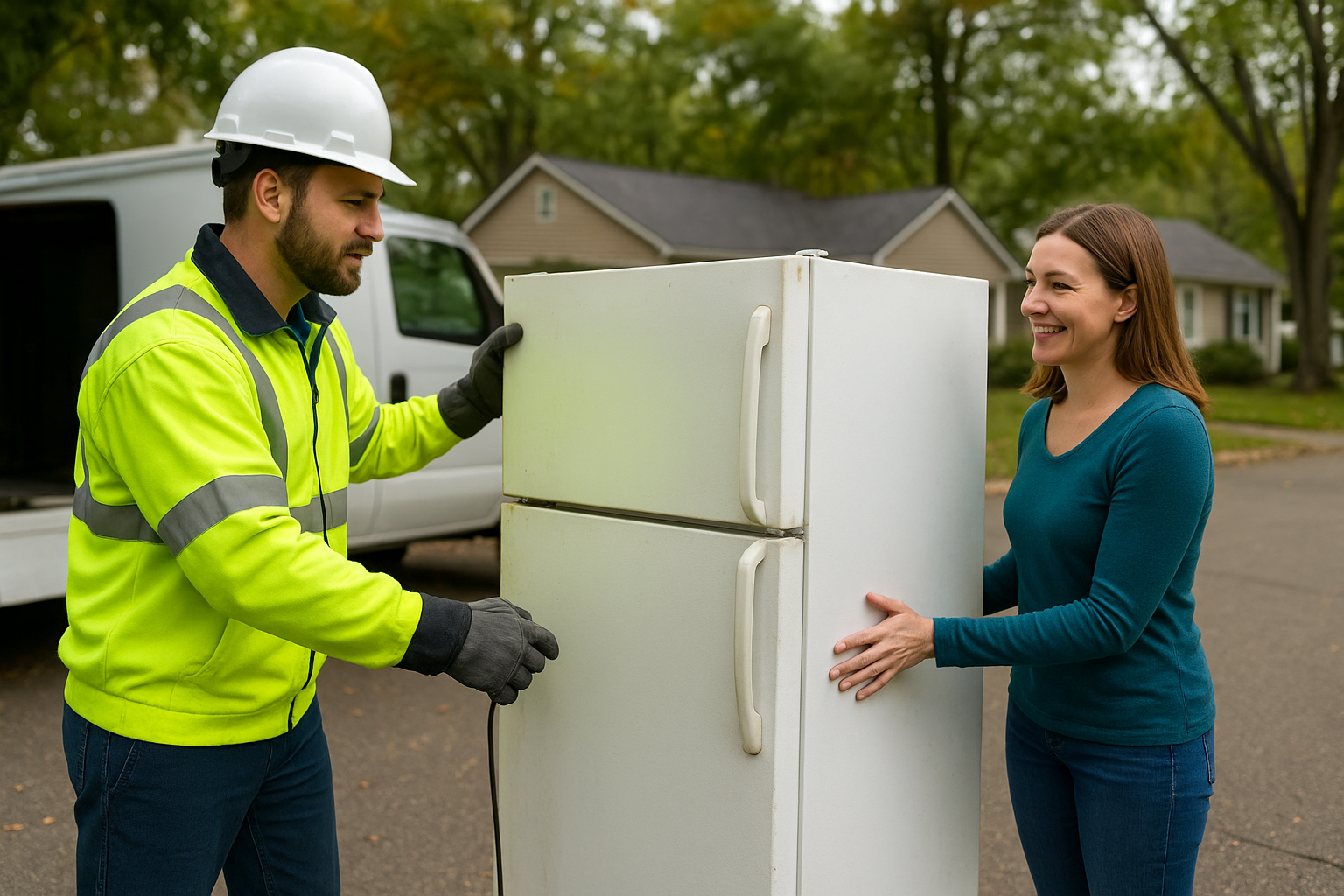
Check the Mass Save website directly to confirm your town’s eligibility and schedule a free pickup.
Municipal transfer stations and drop-off sites
Most Cape Cod towns operate transfer stations that accept large appliances on designated days. You typically need a resident sticker or disposal permit, so contact your town hall before loading anything into your truck. Call ahead to confirm accepted items, hours, and any fees. Knowing where to take old appliances through your town’s own system often turns out to be the simplest and cheapest route available.
Step 3. Recycle or scrap it the right way
When donation and free pickup are off the table, recycling or scrapping is your next move. This works well for broken, outdated, or heavily worn appliances that no organization will accept. Knowing where to take old appliances for recycling keeps hazardous materials out of landfills and, in some cases, puts money in your pocket.
Local scrap yards
Scrap yards accept metal-heavy appliances like washers, dryers, ovens, and water heaters and pay you by weight. Steel and copper components hold real value, so a standard washer might earn you $10 to $30 depending on current metal prices. Call the yard ahead of time to confirm they accept your item, and ask whether refrigerant needs to be removed before drop-off, since most yards require it for units that contain compressors.
Strip out any non-metal components like plastic drawers or rubber seals before dropping off at a scrap yard to maximize your payout.
Certified appliance recyclers
Certified recyclers handle regulated substances like refrigerants and compressor oils safely and legally. The EPA’s Responsible Appliance Disposal program lists certified partners who follow proper handling protocols. Your local waste authority can also point you toward approved recycling facilities in the Cape Cod and Plymouth area.
Step 4. Use a dumpster for cleanouts and remodels
When you are clearing out an entire kitchen, finishing a basement renovation, or handling an estate cleanout, hauling appliances one at a time gets expensive and time-consuming fast. Renting a dumpster lets you load everything at once, including appliances, general debris, and old materials, so you make one call instead of a dozen.
When a dumpster beats individual trips
A dumpster makes the most sense when you have multiple large items to remove at the same time. If you are pulling out a washer, dryer, and old stove during a renovation, loading them all into a single container is far more efficient than coordinating separate pickups for each one. This is especially true if you are still figuring out where to take old appliances while also managing demo debris and other job site waste.
If your project involves more than two or three large appliances, a dumpster rental almost always costs less than scheduling multiple individual hauls.
Choosing the right dumpster size
For most home cleanouts with appliances, a 10-yard or 15-yard dumpster handles the load comfortably. Larger remodels involving cabinetry, flooring, and multiple appliances often need a 20-yard container to avoid overflow and extra hauls.
Next Steps
Now you have a clear picture of where to take old appliances, from donation and utility pickup programs to scrap yards and dumpster rentals. Start with donation or resale if the item still works, then move to free municipal programs, certified recycling, and scrapping. That order saves you money and keeps usable appliances out of landfills.
For projects that go beyond one or two appliances, coordinating individual pickups gets complicated fast. A dumpster rental covers everything at once, including appliances, renovation debris, and general junk, so you avoid scheduling multiple hauls on top of an already busy project.
Dump Express serves Cape Cod and Plymouth with same-day delivery options, upfront pricing, and a local team that knows your town’s rules inside out. Book a dumpster rental with Dump Express and get your cleanout done in one efficient load.