
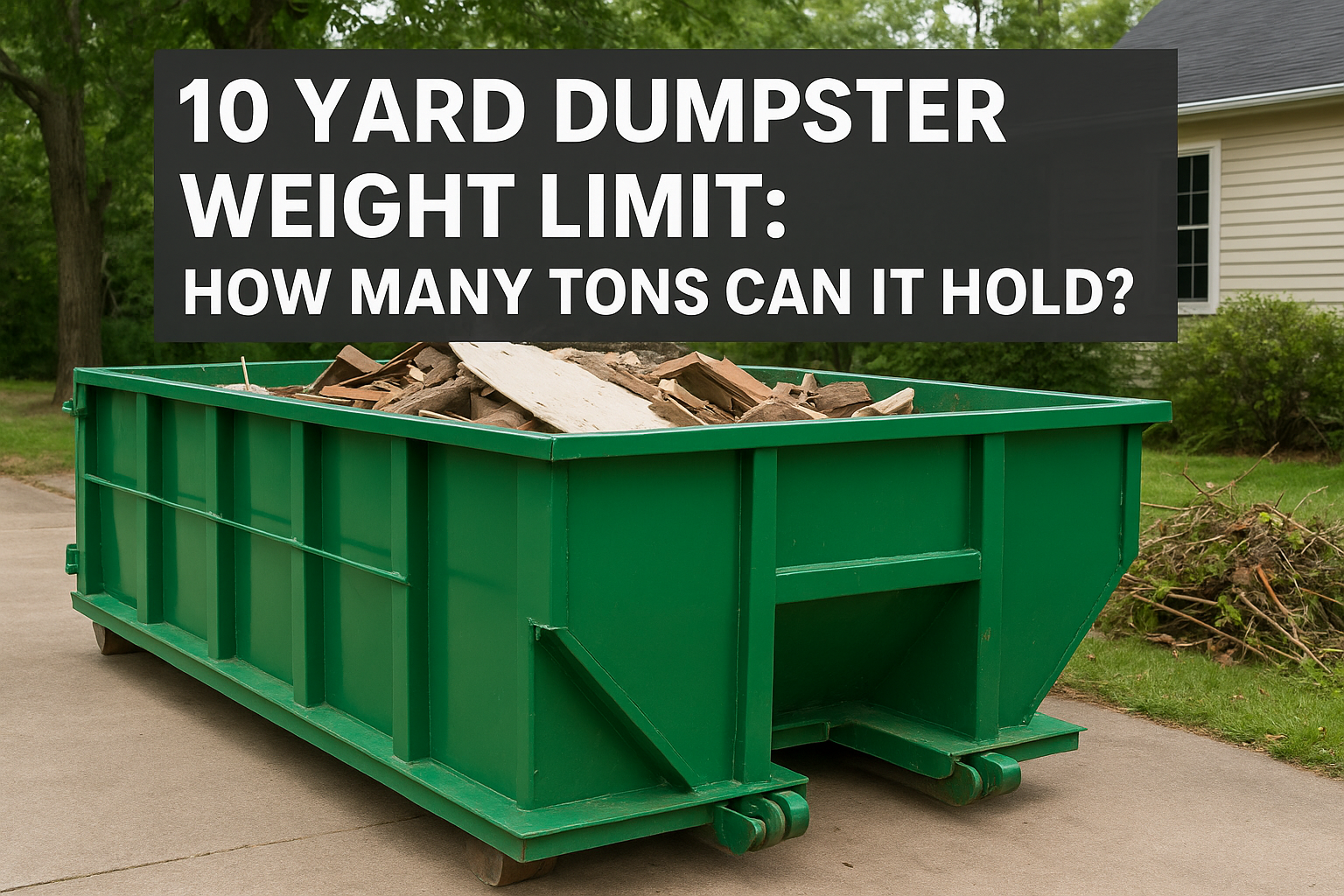
Renting a 10 yard dumpster feels straightforward until the bill arrives with an overage charge you didn’t expect. That surprise usually comes down to weight, not space. The 10 yard dumpster weight limit matters just as much as the container’s dimensions, and most homeowners never think about it until they’re staring at a pile of shingles or old furniture wondering if they’ve gone too far.
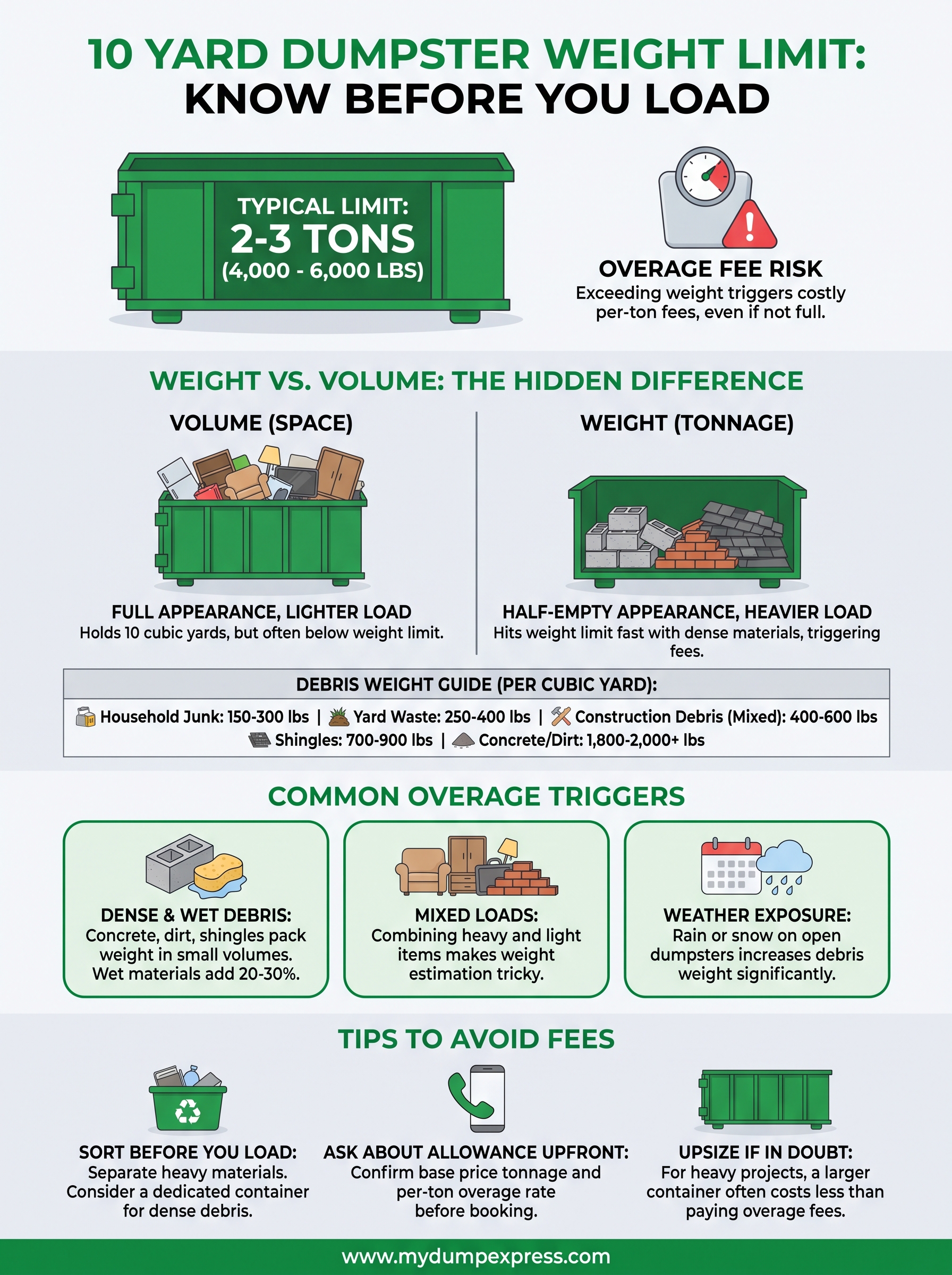
Here’s the short answer: most 10 yard dumpsters cap out between 2 and 3 tons (4,000 to 6,000 pounds), though the exact number depends on your rental company and local disposal facility. Heavier materials like concrete, dirt, or shingles hit that ceiling fast, while lighter household junk rarely comes close. Knowing your weight allowance upfront is the difference between a predictable bill and a costly surprise.
In this article, we’ll break down typical weight limits by debris type, explain how overage fees work, and share tips from our years serving Cape Cod and Plymouth customers on picking the right size before you book. That way, you order once and haul once.
Why the weight limit matters for your project
Every dumpster rental includes a weight allowance baked into the base price, and going over it triggers a per-ton overage fee that can add hundreds of dollars to your final bill. Companies set these limits because the disposal facility charges by weight, not by how full the container looks. A 10 yard dumpster can appear half-empty and still weigh in over its limit if you’re tossing in roofing shingles, wet drywall, or a stack of concrete blocks. That’s why understanding your weight allowance before you load anything matters more than eyeballing the container’s fill line.
Overage fees add up fast
Most companies charge somewhere between $50 and $100 per extra ton once you cross the included limit. On a project that runs just one or two tons heavy, that’s an unplanned $100 to $200 tacked onto a bill you thought was locked in. Contractors juggling tight job budgets feel this the most, since a miscalculated dumpster order eats straight into project margins.
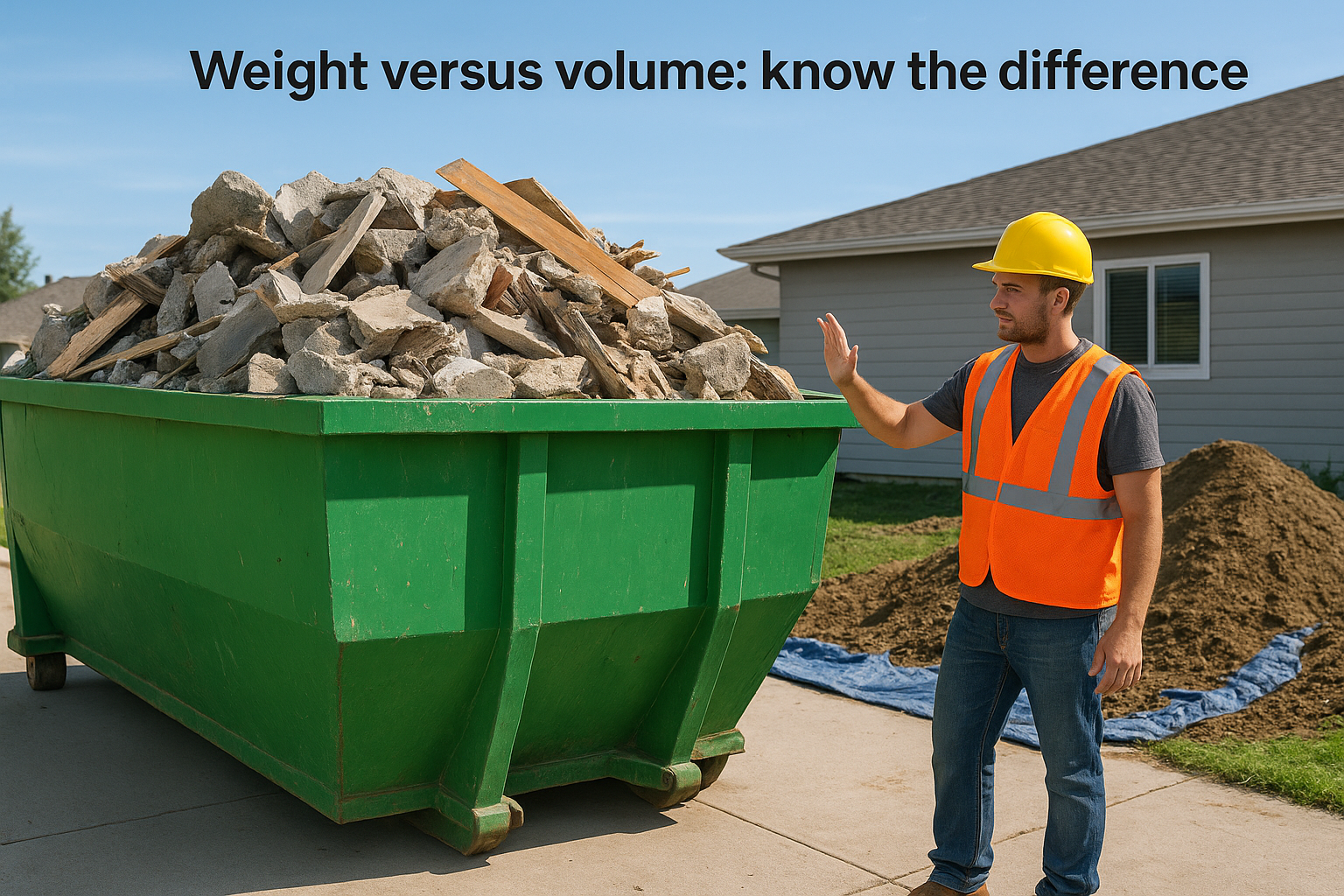
A dumpster that looks half full can still cost you an overage fee if the debris inside is heavy enough.
Weight versus volume: know the difference
Volume tells you how much space you have. Weight tells you how much that space can actually hold before you’re charged extra. A 10 yard dumpster holds roughly 10 cubic yards of material, but the tonnage that fits comfortably depends entirely on what you’re throwing away.
| Debris Type | Typical Weight per Cubic Yard |
|---|---|
| Household junk/furniture | 150-300 lbs |
| Yard waste | 250-400 lbs |
| Construction debris (mixed) | 400-600 lbs |
| Shingles | 700-900 lbs |
| Concrete/dirt | 1,800-2,000+ lbs |
This is exactly why local pricing matters. Dump Express posts town-specific rates on our site precisely because disposal fees vary by facility, and we’d rather you see the real number upfront than find out after pickup. Knowing where your project’s debris falls on that scale before delivery day saves you from guessing, and from paying for that guess later.
How to estimate your debris weight before renting
Guessing your debris weight before delivery day keeps you out of overage territory entirely. Start by identifying the heaviest materials in your pile, since a few hundred pounds of concrete or shingles can outweigh an entire truckload of cardboard and furniture. Mixed loads are the trickiest to estimate because they combine light and heavy debris, so break your project into categories before you start filling the container.
Use this quick process to get a realistic number before you book:
- List every material type going into the dumpster (drywall, wood, shingles, appliances, yard waste)
- Estimate the volume of each category in cubic yards
- Multiply by the average weight per cubic yard for that material
- Add the totals together for a rough tonnage estimate
- Round up, since debris almost always weighs more than it looks
Renovation projects tend to surprise people the most, since old flooring, tile, and drywall hide weight that isn’t obvious until it’s stacked. Home cleanouts, by contrast, usually skew lighter unless you’re clearing out old appliances or furniture with metal frames.
When in doubt, round your estimate up rather than down, since underestimating debris weight is what triggers overage fees.
Talking to your rental company before booking helps too. At Dump Express, we walk customers through their project details and flag anything that might push them close to the limit, so you’re not left calculating tonnage on your own.
What can push a 10 yard dumpster over its limit
Some materials sneak up on you because they don’t look heavy until they’re piled inside a container. A 10 yard dumpster weight limit gets tested most by dense debris that fills only a fraction of the space but tips the scale fast. Knowing which items to watch for keeps you from an unpleasant surprise on pickup day.
Dense materials are the usual culprit
Concrete, brick, dirt, and roofing shingles are the biggest offenders because they pack so much weight into so little volume. A single layer of concrete chunks across the bottom of your dumpster can already use up a third of your weight allowance before you add anything else. Wet materials make things worse too. Rain-soaked drywall, soggy carpet, or waterlogged wood can weigh 20-30% more than the same items dry, which catches a lot of renters off guard during outdoor cleanouts.
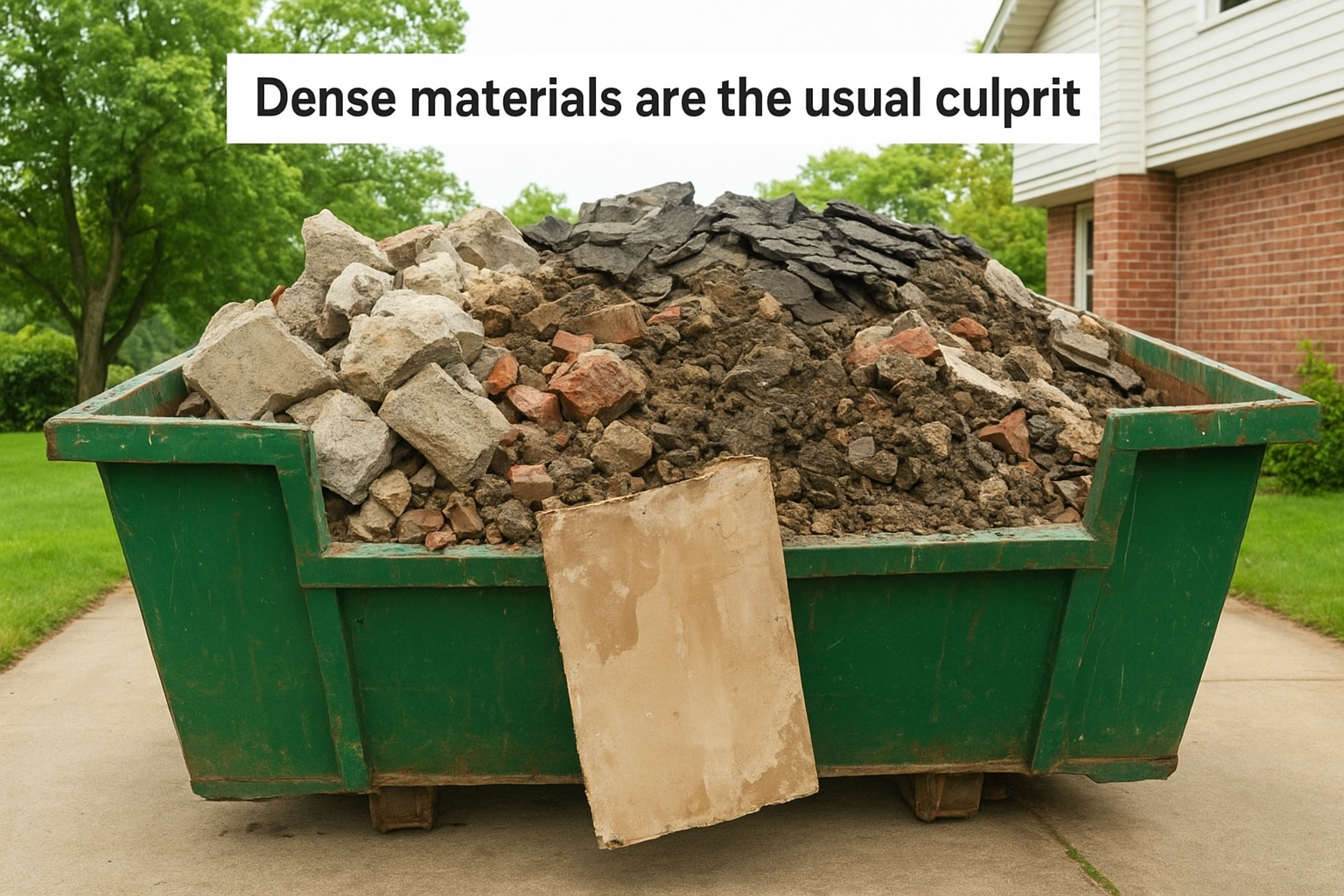
Dense debris like concrete or shingles can max out your weight limit long before the dumpster looks full.
Common overage triggers
- Overloading with construction debris instead of splitting it across multiple hauls
- Leaving furniture or appliances out in the rain before pickup
- Mixing heavy yard waste, like soil-packed root balls, with household junk
- Underestimating how much a full renovation tear-out actually weighs
Projects that combine several of these factors, like a bathroom remodel with tile, drywall, and old fixtures, are where overage fees show up most often. Recognizing these patterns ahead of time lets you plan around them instead of reacting after the bill arrives.
Tips to avoid overage fees on your rental
Smart planning before delivery day beats scrambling to explain a surprise charge afterward. A few simple habits keep your 10 yard dumpster weight limit in check without slowing down your project.
Sort before you load
Separating heavy materials like concrete, dirt, and shingles from lighter household junk lets you decide if you actually need a second, smaller container for the dense stuff instead of cramming everything into one load. This also helps if certain materials, like concrete or yard waste, need to go to a different disposal facility altogether. Sorting debris this way often saves money even beyond avoiding overage fees, since some materials have separate, lower disposal rates.
Ask about your allowance upfront
Confirm your included tonnage before the dumpster ever arrives, not after it’s sitting full in your driveway. A quick phone call clears up exactly what your rental agreement covers.
- Ask what weight is included in your base price
- Ask the per-ton rate for anything over that limit
- Ask if your project’s materials (like shingles or concrete) have special handling requirements
- Ask if splitting the job into two smaller dumpsters costs less than one oversized load
Asking the right questions before delivery costs nothing, but skipping that call can cost you hundreds later.
Dump Express walks every customer through this conversation before booking, because we’d rather flag a potential overage now than send you an invoice later. If your project leans heavy, upsizing to a 15 or 20 yard container upfront often costs less than paying overage fees on a 10 yard one.
Getting the right dumpster for your cleanup
Weight, not just size, decides whether your dumpster rental stays on budget. Knowing the 10 yard dumpster weight limit before you book means you can sort debris smartly, ask the right questions, and skip the surprise invoice that shows up after pickup. Dense materials like concrete and shingles fill the scale fast, while everyday household junk rarely gets close, so matching your project to the right container size from the start saves you both money and hassle.
Guessing wrong on tonnage almost always costs more than a quick conversation upfront. Our Cape Cod team has spent 20+ years helping homeowners and contractors pick the right size the first time, whether that’s a 10 yard container or something larger for a heavy tear-out. If you’re not sure where your project lands, get a free quote from Dump Express and we’ll help you size it right before delivery day.