
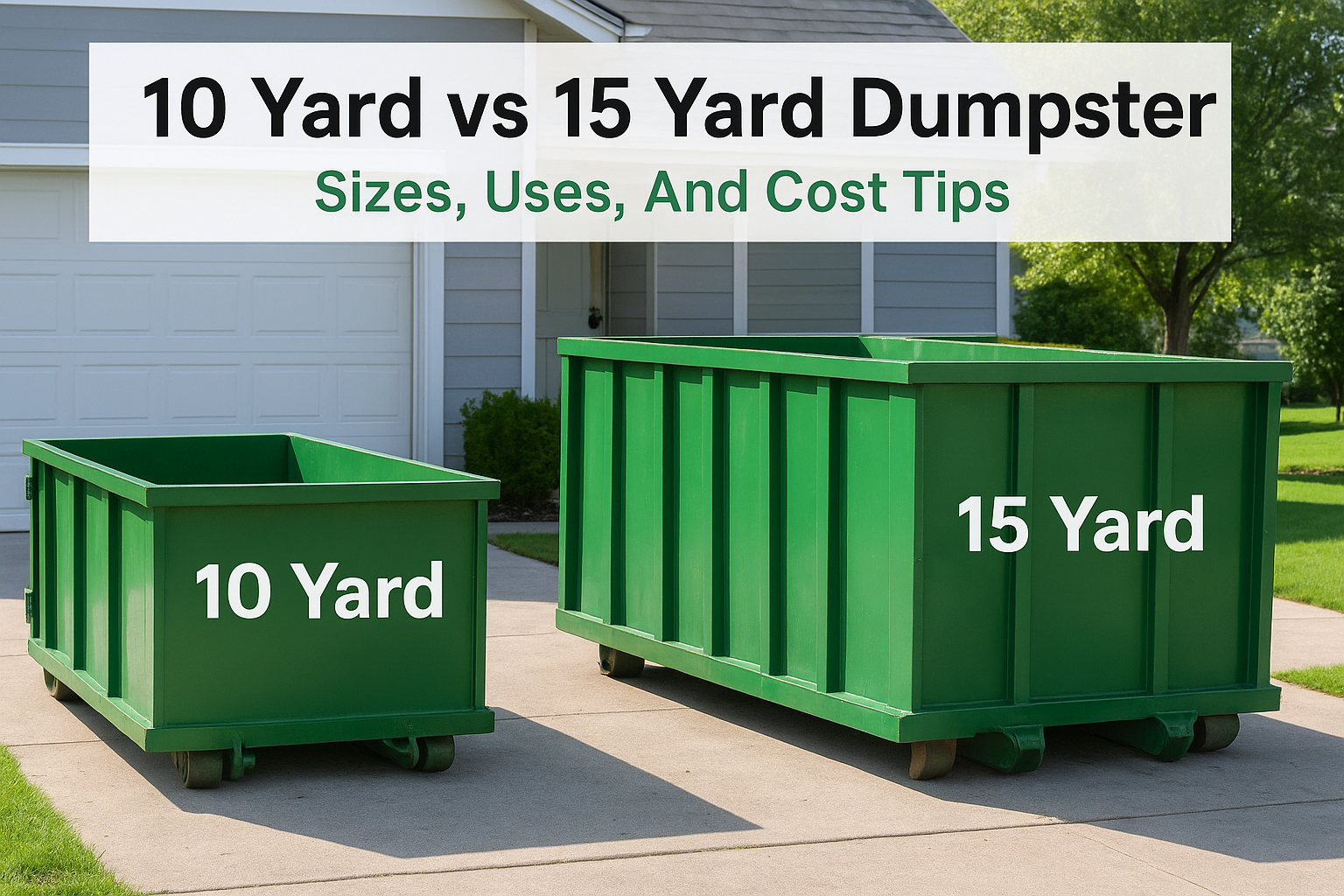
Picking between a 10 yard vs 15 yard dumpster comes down to one thing: how much stuff you’re actually getting rid of. Choose too small and you’ll need a second haul. Choose too big and you’re paying for space you don’t use. Either way, it costs you more than it should.
At Dump Express, we deliver both sizes daily across Cape Cod and Plymouth, and after 20+ years of dropping off dumpsters for cleanouts, renovations, and construction projects, we’ve seen firsthand how the right size choice saves people real money. We also know it’s not always obvious which one fits your project, especially if you’ve never rented a dumpster before.
This guide breaks down the actual dimensions, capacity, typical uses, and cost differences between 10-yard and 15-yard dumpsters so you can make the right call the first time, no guesswork, no wasted budget.
10-yard vs 15-yard dumpster at a glance
When you’re comparing a 10 yard vs 15 yard dumpster, the difference looks small on paper but matters a lot once debris starts piling up. A 10-yard dumpster holds roughly 3 to 4 pickup truck loads of material, while a 15-yard container bumps that up by about 50%. That extra room can be the difference between wrapping up your project in one rental or paying for a second haul.
Side-by-side comparison
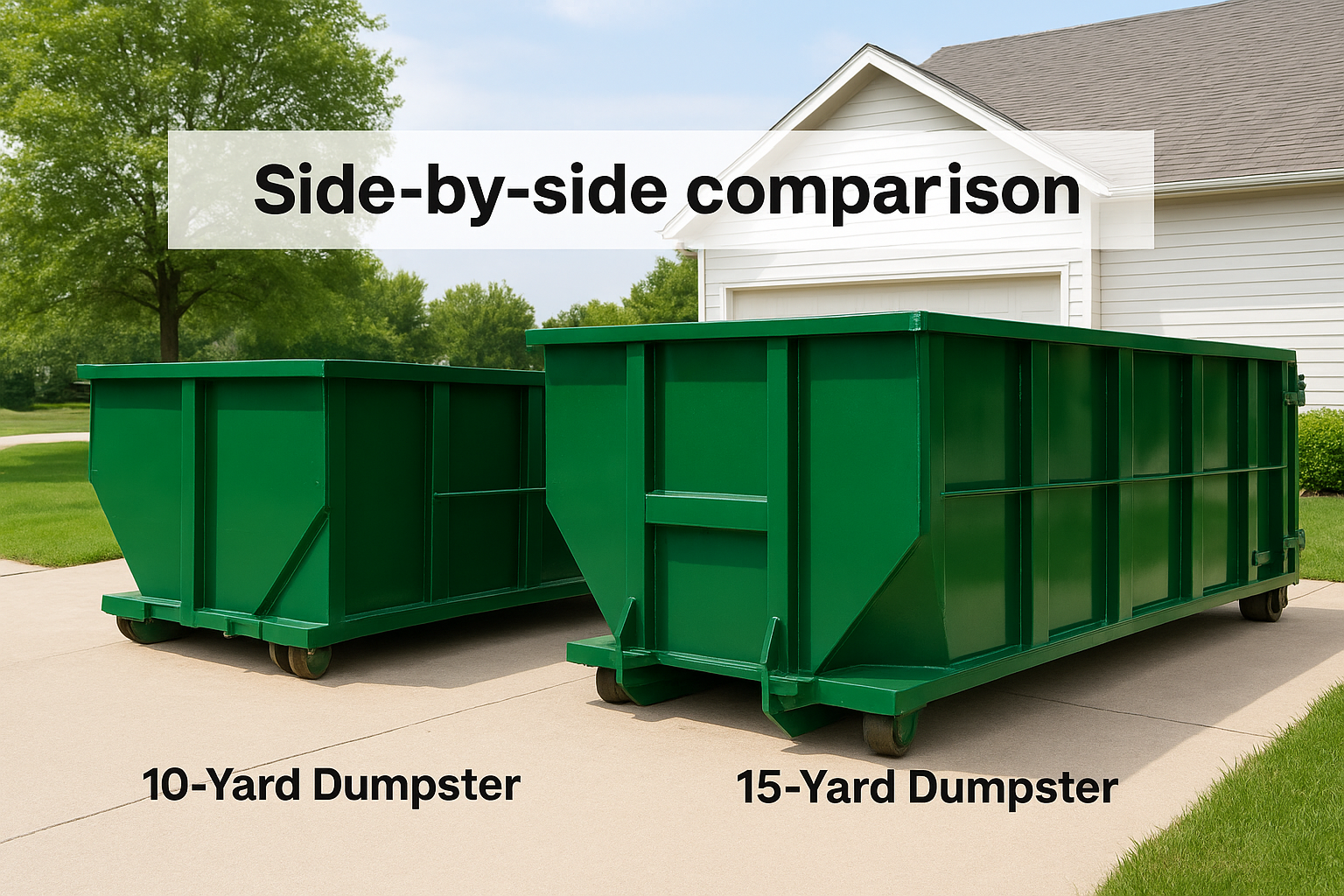
The fastest way to see the gap between these two sizes is to put them next to each other. Both dumpsters have a similar ground footprint, so the placement question on your driveway is nearly the same. The real difference is height: the 15-yard sits taller, which means it handles bulkier or lighter materials like brush, cardboard, or attic insulation better than the 10-yard can.
| Feature | 10-Yard Dumpster | 15-Yard Dumpster |
|---|---|---|
| Capacity | ~10 cubic yards | ~15 cubic yards |
| Pickup truck loads | 3-4 trucks | 5-6 trucks |
| Typical dimensions | 12′ L x 8′ W x 4′ H | 14′ L x 8′ W x 5′ H |
| Best for | Small cleanouts, single rooms | Multi-room cleanouts, mid-size renos |
| Typical weight limit | 2-3 tons | 3-4 tons |
Choosing the right size from the start is almost always cheaper than scheduling a second dumpster mid-project.
Which one fits most projects?
Single-room or small cleanout projects fit comfortably in a 10-yard dumpster. If you’re clearing out a garage, remodeling a bathroom, or tossing furniture from one or two rooms, the 10-yard handles it without leaving you with unused space you still paid for.
The 15-yard makes more sense when your project spans multiple rooms or involves bulky debris that stacks up fast. Whole-home cleanouts, kitchen gut jobs, deck tear-downs, and mid-size renovation waste regularly push past what a 10-yard can hold, and going larger from the start avoids the cost and scheduling headache of a second rental.
How big is a 10-yard dumpster
A 10-yard dumpster typically measures 12 feet long, 8 feet wide, and 4 feet tall. That footprint fits in most standard residential driveways without blocking access to your garage or the street. The low walls make it easy to toss debris over the side, which is helpful when you’re moving heavy items like furniture, appliances, or bags of concrete.
What a 10-yard dumpster actually holds
In real terms, a 10-yard dumpster holds the equivalent of 3 to 4 full pickup truck loads of material. For lighter loads like clothing, boxes, and general household junk, that works out to roughly 40 to 50 trash bags. When you’re comparing a 10 yard vs 15 yard dumpster for a contained project, the 10-yard hits the right balance between capacity and cost.
Underestimating volume is the most common sizing mistake, so always account for how debris actually stacks, not just how much you think you have.
Your project is a strong fit for a 10-yard if it stays within one room or one defined area, such as a bathroom remodel, single-room furniture removal, small garage cleanout, or minor yard debris removal. Going larger only makes sense once your project scope spills into multiple spaces or involves bulkier materials that stack high.
How big is a 15-yard dumpster
A 15-yard dumpster typically measures 14 feet long, 8 feet wide, and 5 feet tall. That extra foot of height over a 10-yard is where most of the added capacity comes from. The ground footprint stays close to the 10-yard, so placement on your driveway or job site works out roughly the same way.
What a 15-yard dumpster actually holds
A 15-yard dumpster holds roughly 5 to 6 full pickup truck loads of material, which is about 50% more than what the 10-yard handles. For lighter household debris, that translates to around 60 to 70 trash bags worth of space. When you’re weighing a 10 yard vs 15 yard dumpster for a larger project, that added volume often makes the difference between one rental and two.
If your project involves bulky items like mattresses, cabinets, or broken drywall, the 15-yard fills up faster than the numbers suggest.
Your project fits a 15-yard when it covers multiple rooms, a full floor, or a mid-size renovation with mixed debris. Think kitchen gut-outs, multi-room furniture removal, or a full deck tear-down where material stacks high and fast.
How to choose based on your project
The fastest way to settle the 10 yard vs 15 yard dumpster question is to think about your project in two terms: how many spaces you’re clearing and what type of debris you’re generating. Lighter, bulkier materials like insulation or brush fill a dumpster faster than dense waste like concrete or tile.
Match the size to your project type
Your project scope tells you most of what you need to know before you book. Single-space jobs like a bathroom remodel, a one-car garage cleanout, or a small furniture removal fit well in a 10-yard. Multi-room jobs like a full floor renovation, a kitchen gut-out, or a whole-house cleanout almost always push past a 10-yard’s limit.
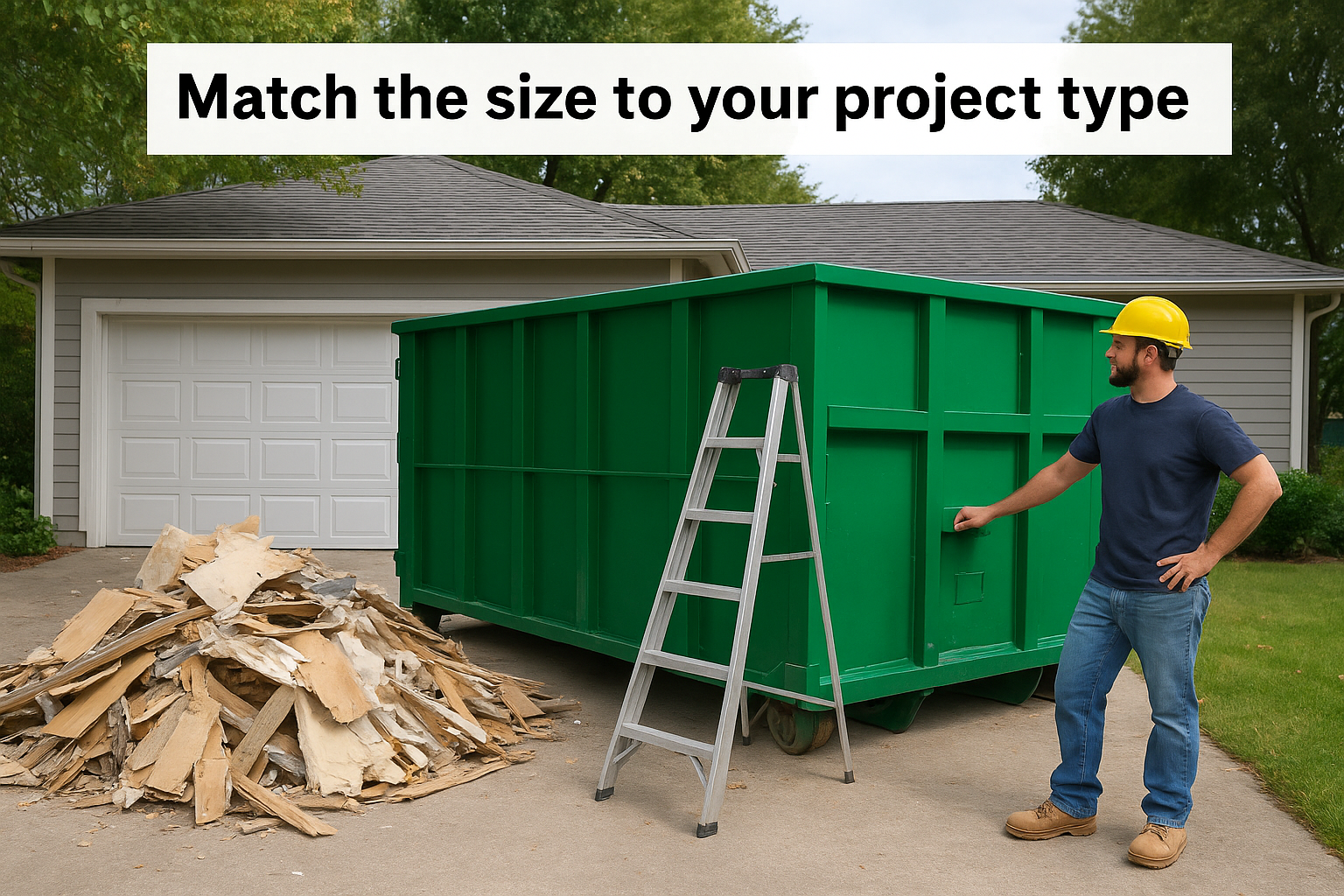
If you’re on the fence between sizes, go with the 15-yard. The cost difference is small, and avoiding a second rental saves both money and scheduling headaches.
When debris type changes your decision
Some materials stack poorly and eat up space faster than expected. Bulky items like cabinets, mattresses, and framing lumber take up significantly more room per pound than bagged household debris. If your project involves mixed or irregular waste, the 15-yard gives you the room to load efficiently without overfilling or needing an early pickup.
Cost, weight limits, and fee traps to avoid
The price difference between a 10-yard and a 15-yard dumpster is usually small, often $30 to $60 depending on your location. When you compare a 10 yard vs 15 yard dumpster, that gap looks minor until you factor in what a second haul actually costs. Getting the size right from the start almost always saves you money.
Weight limits matter more than you think
Every dumpster comes with a weight limit, typically 2 to 3 tons for a 10-yard and 3 to 4 tons for a 15-yard. Most companies charge per ton beyond your allowance, and those overage fees add up fast. Heavy debris like concrete, brick, and tile pushes limits quicker than you’d expect.
Watch for these common weight-related mistakes:
- Loading dense materials like dirt or gravel without checking your limit first
- Mixing heavy and light debris without thinking about total weight
- Assuming the cubic yard size reflects how much weight you’re allowed
Fee traps that catch renters off guard
Rental companies charge extra for prohibited items such as tires, paint cans, and certain appliances, so verify what your rental covers before delivery.
Always read the rental agreement in full before you confirm your booking.
Extended rental periods also trigger daily fees that quietly inflate your final bill if your project runs longer than planned. Confirm the rental window upfront.
Final sizing checklist
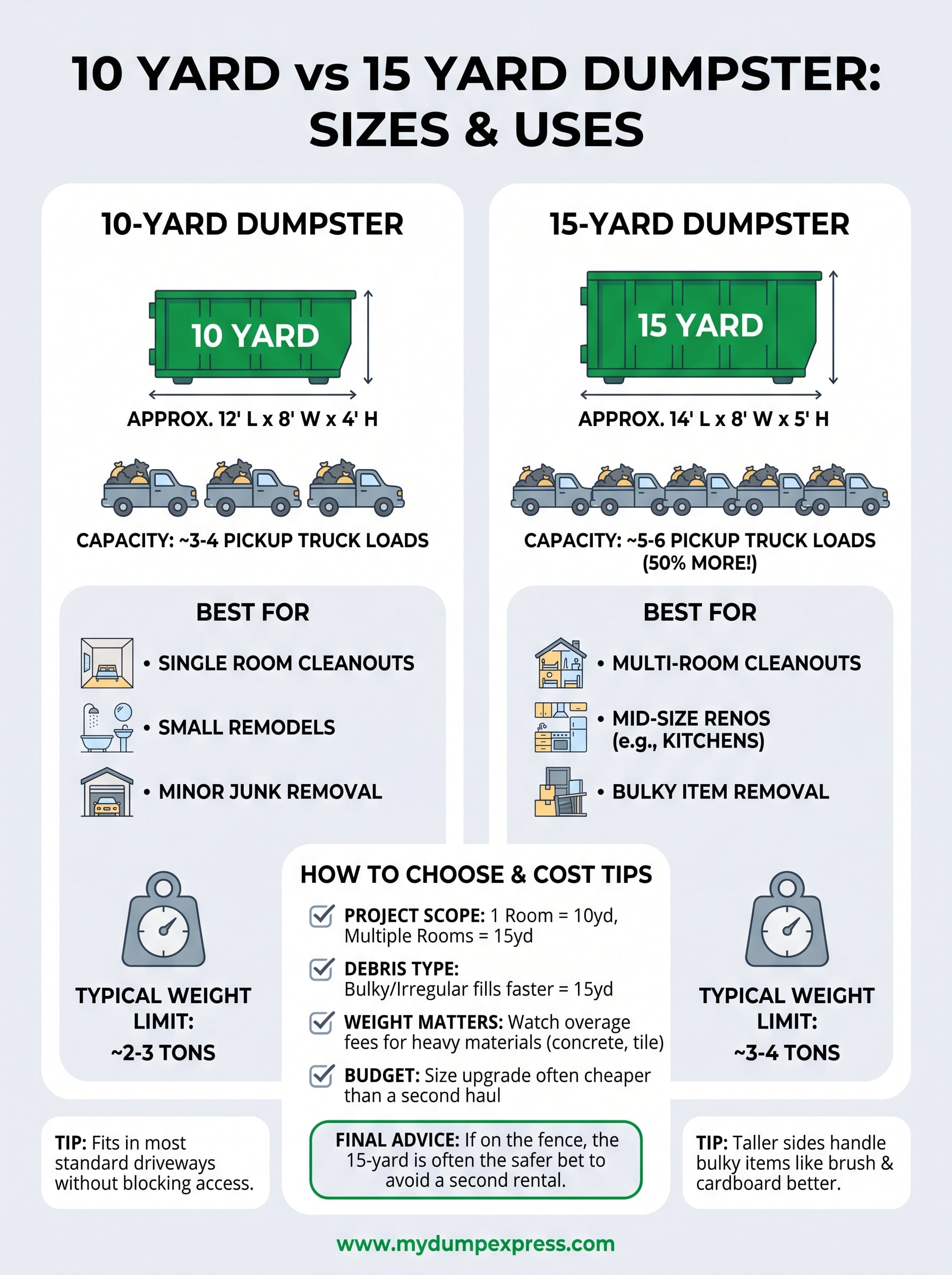
Before you book, run through this quick checklist to lock in the right size. If your project covers one room or one defined area with standard household debris, the 10-yard is the right call. If you’re clearing multiple rooms, running a renovation, or dealing with bulky mixed waste, go with the 15-yard. That’s the core of the 10 yard vs 15 yard dumpster decision.
Keep these points in mind before confirming your rental:
- Project scope: one room fits a 10-yard; multiple rooms need a 15-yard
- Debris type: bulky or irregular materials fill space faster than bagged junk
- Weight: heavy materials like concrete and tile push limits quickly
- Budget: the size upgrade is small; a second haul is not
- Timeline: confirm your rental window upfront to avoid daily extension fees
If you still have questions about which size fits your project, contact the Dump Express team before you book.